A 17-day Uganda and Rwanda tour offers a comprehensive East African adventure, featuring mountain gorilla trekking in Bwindi/Volcanoes, chimpanzee tracking, and Big Five game drives. Expect diverse landscapes, from rainforests to savannahs, with activities including boat cruises, cultural tours, and potentially visiting Lake Bunyonyi or the Source of the Nile.
17-days-best-safari-in-uganda-ending-in-kigali-rwanda
Primate Tracking
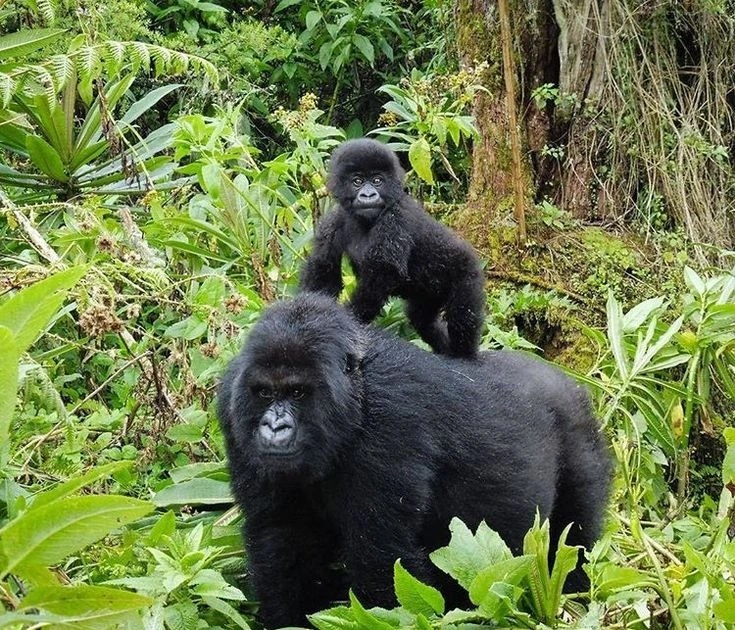
The cornerstone of any East African expedition is the profound connection found during primate tracking. In the misty, high-altitude slopes of Bwindi Impenetrable National Park and Volcanoes National Park, you encounter the mountain gorilla, a creature whose intelligent, soulful gaze remains etched in your memory forever. These treks are physical and emotional journeys; you navigate tangled vines and ancient ferns, guided by expert rangers who interpret the language of the forest. The moment you find a silverback—calm, powerful, and majestic—the world falls silent. You spend a sacred hour observing their human-like social structures, from playful juveniles to nurturing mothers.
The experience extends to the "Primate Capital of the World," Kibale Forest, and Rwanda’s Nyungwe National Park, where the energy shifts from the quiet dignity of gorillas to the high-octane social lives of chimpanzees. Tracking our closest cousins is a sensory-rich adventure marked by echoing hoot-series and the crashing of branches as they swing through the high canopy. Unlike the stationary nature of gorilla observation, chimpanzee tracking is often dynamic, following them as they forage, groom, and hunt. In Nyungwe, you might also track massive troops of black-and-white colobus monkeys, whose acrobatic leaps through the mahogany trees are a spectacular display of forest agility. These encounters are not merely wildlife viewing; they are a deep dive into our own biological heritage, highlighting the critical importance of protecting the Albertine Rift’s fragile forest corridors.
Wildlife Safaris
Stepping out of the dense forests and onto the sun-drenched savannahs reveals the classic "Big Game" heart of Africa. In Uganda’s Queen Elizabeth National Park, the landscape is dominated by volcanic explosion craters and open plains that host a staggering variety of species. The undisputed highlight here is the Ishasha sector, one of the few places on earth where lions have adapted to climbing trees. Seeing a 400-pound predator draped over a limb of a sycamore fig tree—escaping the heat and ground flies—is a surreal sight that challenges the traditional image of the "King of the Jungle." The park’s Kasenyi Plains also offer prime viewing of the Uganda kob, which in turn attracts elusive leopards and spotted hyenas in the soft light of dawn.
Further north, Murchison Falls National Park provides a grander scale of wilderness, where the Victoria Nile divides the savannah. Here, you find the world’s largest population of the endangered Rothschild’s giraffe, moving gracefully alongside massive herds of Cape buffalo and African elephants. The delta region, where the Nile enters Lake Albert, is a haven for water-loving mammals and rare birds. These game drives are masterclasses in biodiversity; every turn of the trail might reveal a martial eagle soaring above or a family of warthogs scurrying through the whistling thorns. The savannah experience provides the perfect terrestrial balance to the primate-heavy forests, ensuring a comprehensive look at the complex food webs and dramatic animal behaviors that define the East African wild.
Adventure Activities
Adventure in this region is defined by the unique geography of the Great Rift Valley, where water and mountains create a natural playground for the intrepid. A boat safari on the Kazinga Channel or the Victoria Nile is an essential experience that brings you eye-to-level with aquatic giants. From the safety of a vessel, you observe hippos in massive schools and Nile crocodiles basking on the muddy banks with prehistoric indifference. The boat trip to the base of Murchison Falls is particularly powerful; as you approach the "Devil’s Cauldron," the Nile—usually wide and calm—is forced through a seven-meter gap, exploding into a wall of mist and thunder. This is a display of natural energy that you can feel vibrating in your chest.
For those drawn to higher altitudes, the Rwenzori Mountains (the "Mountains of the Moon") and the Virunga Volcanoes offer some of the most challenging and rewarding hiking on the continent. Climbing the jagged, mist-covered peaks of Mount Sabinyo or Bisoke takes you through surreal Afro-alpine moorlands filled with giant lobelias and groundsel. These hikes are tests of endurance that reward you with panoramic views across three countries—Uganda, Rwanda, and the DRC. Whether it is the physical triumph of reaching a volcanic crater lake or the adrenaline of navigating Grade 5 rapids at the Source of the Nile in Jinja, the adventure activities here are designed to immerse you in the raw elements. These experiences allow you to interact with the landscape on its own terms, far beyond the confines of a safari vehicle.
Cultural & Scenic Tours
The human story of East Africa is as compelling as its wildlife, and a true safari must acknowledge the resilience and heritage of its people. In Rwanda, a visit to the Kigali Genocide Memorial is a somber, transformative experience. It provides a necessary perspective on the country’s dark past while celebrating its incredible journey toward reconciliation and modern progress. It is a place of deep reflection that fosters a profound respect for the Rwandan spirit. Moving into the rural highlands, cultural tours take a more ancient turn on the Batwa Cultural Trail. Here, the "First People of the Forest" share their ancestral survival skills, demonstrating traditional honey-gathering, fire-making, and medicinal plant use. Hearing their songs echo through the Garama Cave is a powerful link to a nearly lost way of life.
Scenic beauty ties these cultural threads together, particularly around the "Switzerland of Africa," Lake Bunyonyi. Dotted with 29 emerald islands, this deep, volcanic lake offers a serene atmosphere for canoeing in traditional dugouts and visiting local Bakiga communities. From the terraced hills of the Kigezi highlands to the vibrant markets of Fort Portal, the scenery is a constant companion that changes with every turn of the road. Engaging with local schools or visiting a community-run coffee plantation allows for genuine exchange, ensuring that your journey supports the livelihoods of those who call these landscapes home. These moments of human connection provide the heart and soul of the safari, turning a wildlife trip into a holistic exploration of life in the Albertine Rift.
17 days Rwanda and Uganda tour
The 17 days Rwanda and Uganda tour is an expertly curated journey through the Albertine Rift, offering a deep immersion into the most iconic landscapes of East Africa. This expedition bridges the pristine, rolling highlands of Rwanda with the untamed, biodiverse wilderness of Uganda. Throughout the 17 days Rwanda and Uganda tour, the focus remains on profound wildlife encounters, most notably the life-changing experience of standing among mountain gorillas in both Volcanoes and Bwindi National Parks. You will also track chimpanzees in the lush Kibale Forest and search for the famous tree-climbing lions of Ishasha. Beyond the wildlife, the 17 days Rwanda and Uganda tour explores the cultural heart of the region, from the moving history of Kigali to the ancient traditions of the Batwa people. It is a journey of contrasts—where volcanic peaks meet vast savannahs and powerful waterfalls flow into serene crater lakes—providing a comprehensive and transformative perspective on the "Land of a Thousand Hills" and the "Pearl of Africa."
Day 1: Arrival and Kigali Exploration
The 17 days Rwanda and Uganda tour begins in the clean, vibrant capital of Rwanda. After your arrival, you dive into the heart of Kigali to understand its remarkable journey of resilience. You visit the Kigali Genocide Memorial, a place of deep reflection that honors the past while showcasing the nation's path toward peace and unity. The tour continues through the city's modern neighborhoods and bustling local markets like Kimironko, where the colors and scents of Rwanda come alive. You will observe the impressive organization and hospitality that define this modern African city. As evening falls, you enjoy dinner overlooking the "thousand hills" that surround the capital. This first day of the 17 days Rwanda and Uganda tour provides a vital cultural foundation for the adventures that lie ahead in the volcanic highlands.
Day 2: Scenic Drive to Nyungwe Forest
Today, the 17 days Rwanda and Uganda tour travels south toward Nyungwe National Park, one of the oldest and largest montane rainforests in Africa. The drive is a visual feast, winding through terraced hillsides and vibrant tea plantations. You stop in Huye to visit the Ethnographic Museum, which houses a vast collection of traditional artifacts that explain Rwanda’s pre-colonial history. As you approach the forest, the air becomes cooler and the vegetation grows noticeably denser. Nyungwe is a critical sanctuary for thirteen primate species and hundreds of endemic birds. Upon arrival, you settle into your lodge on the forest’s edge, listening to the distant calls of colobus monkeys. This transition from the urban center to the ancient jungle is a signature shift in the early stages of the 17 days Rwanda and Uganda tour.
Day 3: Chimpanzee Tracking and Canopy Walk
An early start on the 17 days Rwanda and Uganda tour takes you deep into the mahogany forests of Nyungwe to find habituated chimpanzees. You follow expert rangers through the thick undergrowth, listening for the distinctive pant-hoots that echo through the canopy. Watching these intelligent primates socialise and play in their natural habitat is a thrilling experience. In the afternoon, the 17 days Rwanda and Uganda tour takes you 70 meters above the forest floor on the famous Canopy Walkway. Walking across this suspended bridge offers a bird’s-eye view of the ancient treetops and the deep ravines below. It is a spectacular way to witness the forest’s stratification and spot rare orchids or mountain monkeys. This day highlights the incredible primate diversity that makes the western arm of the Rift Valley so ecologically significant.
Day 4: Transfer to Lake Kivu
The 17 days Rwanda and Uganda tour follows the scenic Congo-Nile Trail toward the shores of Lake Kivu. This drive is often cited as one of the most beautiful in the region, offering constant views of the lake’s blue waters and the jagged mountains of the Congo in the distance. You pass through rural villages where local farmers tend to coffee and tea crops on steep slopes. Upon reaching the lakeside town of Karongi or Gisenyi, you feel the gentle tropical breeze and the relaxed atmosphere of the water. You can enjoy a sunset boat ride to see the traditional fishermen setting out in their unique three-hulled canoes. This day of the 17 days Rwanda and Uganda tour provides a peaceful "safari pause," allowing you to reflect on your forest encounters while enjoying the serenity of the lake.
Day 5: Volcanoes National Park and Culture
Moving north, the 17 days Rwanda and Uganda tour heads toward the dramatic Virunga Mountains. As you enter the region of Volcanoes National Park, the five massive peaks dominate the horizon. In the afternoon, you visit the Iby’Iwacu Cultural Village, a community-led project where former poachers now share Rwandan traditions. You will witness the powerful "Intore" dance, learn about traditional medicine, and see a demonstration of a royal wedding. This cultural immersion is a core pillar of the 17 days Rwanda and Uganda tour, demonstrating how conservation and community development go hand in hand. The day ends at a lodge overlooking the mist-covered slopes, setting a quiet and expectant tone for the gorilla trekking experience that serves as the centerpiece of the Rwandan chapter of your journey.
Day 6: Gorilla Trekking in Rwanda
This is a standout day for the 17 days Rwanda and Uganda tour. After a briefing at the park headquarters, you enter the bamboo-filled forest to track a habituated family of mountain gorillas. The hike through the volcanic terrain is an adventure in itself, but the moment you encounter the silverback and his family, all effort is forgotten. For one sacred hour, you observe these gentle giants as they forage, groom, and play just meters away. Their human-like expressions and peaceful demeanor offer a profound connection to the natural world. This encounter is a testament to the success of regional conservation efforts. Returning from the forest, you carry a sense of wonder that defines the 17 days Rwanda and Uganda tour, having witnessed one of the world's rarest and most significant wildlife spectacles.
Day 7: Golden Monkeys and Crossing to Uganda
Morning on the 17 days Rwanda and Uganda tour is spent tracking the endangered Golden Monkeys in the Virunga foothills. These fast-moving, colorful primates are endemic to this region and are a joy to photograph as they leap through the bamboo stalks. After the trek, you head north and cross the border into Uganda via the Cyanika or Katuna post. The 17 days Rwanda and Uganda tour enters the Kigezi highlands, often called the "Switzerland of Africa" for its steep, terraced hills and cool climate. You reach the edge of Bwindi Impenetrable National Park in the late afternoon. The change from the volcanic peaks of Rwanda to the ancient, multi-layered rainforest of Uganda marks the beginning of a new chapter in your 17 days Rwanda and Uganda tour, focused on the "Pearl of Africa."
Day 8: Gorilla Trekking in Bwindi
For many, the 17 days Rwanda and Uganda tour is a rare opportunity to see gorillas in two different habitats. Tracking in Bwindi offers a raw and adventurous experience as you navigate steep ridges and thick vines in one of the oldest forests on Earth. The forest here is exceptionally dense, earning its "impenetrable" name, and it hosts half of the world's mountain gorilla population. Spending an hour with a different family allows you to observe unique group dynamics and behaviors. In the afternoon, you can walk through the local village to meet the people who live alongside the park. This second trekking day provides a comprehensive understanding of gorilla conservation, a key objective of the 17 days Rwanda and Uganda tour, while allowing you to experience the distinct beauty of Uganda’s primary rainforest.
Day 9: Lake Bunyonyi Relaxation
After the intensity of the forest treks, the 17 days Rwanda and Uganda tour brings you to the tranquil shores of Lake Bunyonyi. This deep, volcanic lake is dotted with 29 emerald islands, each with its own history and folklore. You can spend the day canoeing in a traditional dugout, swimming in the bilharzia-free waters, or visiting the Punishment Island. The lake is a haven for birds, and the surrounding terraced hills provide a stunning backdrop for photography. This is a day for quiet reflection and recovery, allowing you to process the incredible primate encounters of the past week. The peaceful atmosphere of Bunyonyi is a well-earned highlight of the 17 days Rwanda and Uganda tour, ensuring you are refreshed for the savannah safaris that make up the final half of your trip.
Day 10: Ishasha Tree-Climbing Lions
The 17 days Rwanda and Uganda tour travels north into the Ishasha sector of Queen Elizabeth National Park. This remote southern area is famous for its tree-climbing lions, a rare behavior found in only a few places in Africa. You spend the afternoon scanning the large sycamore fig trees for these predators, who lounge in the branches to escape the heat and insects. Spotting a lion draped over a limb like a leopard is a surreal wildlife moment and a major highlight of the 17 days Rwanda and Uganda tour. The plains here are also home to large herds of Topi antelopes and elephants. This day illustrates the unusual animal behaviors that can emerge in specific habitats and marks your transition from the high-altitude forests to the vast, open savannahs of the Great Rift Valley.
Day 11: Kazinga Channel and Game Drive
An early start on the 17 days Rwanda and Uganda tour takes you to the Kasenyi Plains for a morning game drive. This area is the primary mating ground for Uganda kobs, which attracts predators like lions and hyenas. In the afternoon, you board a boat for a cruise on the Kazinga Channel. This natural waterway connects Lake Edward and Lake George and is a gathering point for massive schools of hippos, Nile crocodiles, and thirsty elephants. The birdlife here is staggering, with pelicans, kingfishers, and fish eagles lining the banks. Viewing these animals from the water provides a stable and intimate perspective on their social lives. This aquatic safari is a cornerstone of the 17 days Rwanda and Uganda tour, showcasing the park’s reputation as one of Africa’s most biodiverse wildlife sanctuaries.
Day 12: Rwenzori Foothills and Kibale
The 17 days Rwanda and Uganda tour heads toward the "Primate Capital of the World," Kibale Forest. The drive takes you past the dramatic Rwenzori Mountains, the legendary "Mountains of the Moon," whose snow-capped peaks often hide behind a veil of clouds. You explore the volcanic crater lakes of Fort Portal, enjoying a hike to viewpoints that offer panoramic vistas of the Rift Valley. You will also visit the Amabere Ga Nyina Mwiru caves to see stalactites and hear local legends of ancient dynasties. Passing through vibrant tea estates that look like endless green carpets, you arrive at the edge of Kibale in the late afternoon. The sounds of the forest signal the return to primate territory, an essential theme throughout the 17 days Rwanda and Uganda tour, as you prepare for tomorrow’s chimpanzee encounter.
Day 13: Chimpanzee Tracking and Bigodi
Today, the 17 days Rwanda and Uganda tour focuses on tracking chimpanzees in Kibale National Park. This forest holds one of the highest densities of primates in Africa. You follow a ranger into the woods to find a habituated community, observing their complex social structures and vocalizations. In the afternoon, you walk through the Bigodi Wetland Sanctuary, a community-led project famous for its birdlife and primates. You look for the Great Blue Turaco and various monkey species like the Red Colobus. This visit demonstrates the link between forest protection and local livelihoods, a recurring lesson on the 17 days Rwanda and Uganda tour. The day provides a deep dive into the rainforest’s ecology, from the high canopy dwellers to the unique flora and fauna that thrive in the swampy wetlands at the forest's edge.
Day 14: Transfer to Murchison Falls
Heading further north, the 17 days Rwanda and Uganda tour travels toward Murchison Falls National Park, Uganda's largest protected area. This is a long but scenic drive through rural landscapes, providing a window into the agricultural heart of the country. You pass through the town of Hoima and eventually descend the Albertine Rift escarpment, where views of Lake Albert stretch toward the Blue Mountains of Congo. As you enter the park, the landscape transitions into wide-open savannahs and borassus palm forests. You might spot your first herds of giraffes or buffaloes as you drive toward your lodge. This transit day on the 17 days Rwanda and Uganda tour sets the stage for the final big-game highlights, moving into a region defined by the dramatic power of the Nile River.
Day 15: Nile Delta and Powerful Falls
An early game drive on the 17 days Rwanda and Uganda tour explores the Buligi Peninsula, where you look for lions, leopards, and the endangered Rothschild’s giraffe. In the afternoon, you board a boat for a trip upstream to the base of Murchison Falls. You will see massive crocodiles and hippos along the banks before reaching the point where the entire Nile is forced through a seven-meter gap. The sight of the water plunging 43 meters into the "Devil’s Cauldron" is a breathtaking display of natural energy. You can choose to hike to the top of the falls to feel the earth vibrate beneath your feet. This combination of land and water safaris is a definitive highlight of the 17 days Rwanda and Uganda tour, capturing the wild spirit of the northern wilderness.
Day 16: Rhino Tracking and Jinja
The 17 days Rwanda and Uganda tour begins its final leg by driving toward the Ziwa Rhino Sanctuary. Here, you take a guided walk to track the only wild white rhinos in Uganda, a successful reintroduction project that brings you within meters of these prehistoric-looking giants. Afterward, you continue east to Jinja, the historic source of the Nile. Arriving in the late afternoon, you can relax at a lodge overlooking the river’s rapids. Jinja is the adrenaline capital of East Africa, and the sight of the Nile beginning its long journey toward the Mediterranean is a moment of great geographic significance. This day on the 17 days Rwanda and Uganda tour bridges the gap between the wild savannahs and the historic landmarks of central Uganda, providing a fitting conclusion to your circuit.
Day 17: Source of the Nile and Departure
On the final day of the 17 days Rwanda and Uganda tour, you take a boat ride to the exact point where the Nile exits Lake Victoria. Standing at this iconic landmark, discovered by Speke in 1862, offers a sense of historical perspective. You can explore Jinja’s colonial-style town or visit local craft markets for last-minute souvenirs. In the afternoon, you are transferred to Entebbe International Airport for your departure flight. This brings the 17 days Rwanda and Uganda tour to a close. You leave with a comprehensive understanding of the region’s geography, from the volcanic peaks of Rwanda to the northern Nile. The journey has provided a deep connection to the people, wildlife, and landscapes of East Africa, marking the end of a truly transformative 17-day expedition through the Albertine Rift.
What are the key differences between gorilla trekking in Uganda versus Rwanda?
The choice between these two nations often comes down to a balance of budget, logistics, and the style of adventure you prefer. In Rwanda, the experience is designed as a "premium" boutique encounter. Volcanoes National Park is located just 2.5 to 3 hours from the international airport in Kigali on smooth, paved roads, making it incredibly accessible for those with limited time. The terrain is characterized by open bamboo forests, which generally offer better light and clearer sightlines for photography. Rwanda’s strategy focuses on high-cost, low-impact tourism, with permits priced at $1,500.
Uganda, conversely, offers a more rugged and diverse "expedition" feel. Permits are significantly more affordable at $800 (as of 2026). However, the journey to Bwindi Impenetrable National Park is much longer—usually an 8 to 10-hour drive from Entebbe—leading many travelers to appreciate the "Pearl of Africa" through its changing landscapes. Bwindi’s vegetation is much denser than Rwanda’s, earning its "impenetrable" name with thick vines and ancient ferns that create a raw jungle atmosphere. Uganda also boasts more habituated gorilla groups across four different sectors, allowing for a wider variety of trekking experiences. Ultimately, Rwanda offers luxury and convenience, while Uganda provides a deep, adventurous immersion into a more diverse ecosystem at a more accessible price point for the permit itself.
How difficult is the hiking during gorilla and chimpanzee trekking experiences?
The difficulty of these treks is highly unpredictable because it depends entirely on where the primates spent the previous night. Gorilla trekking is generally the more strenuous of the two. In Bwindi or Volcanoes, you may hike anywhere from 1 to 7 hours at altitudes ranging from 2,000m to 3,000m. You are navigating steep, muddy ridges, tangled root systems, and thick undergrowth. Because there are no formal trails once you leave the park boundary, you are often walking through the "bush" where the ground can be slippery and uneven.
Chimpanzee tracking in Kibale or Nyungwe is typically less taxing but requires a different kind of stamina. In Kibale, the terrain is relatively flat, but chimps move much faster than gorillas. If the community is on the move, you may need to maintain a brisk walking pace through the forest to keep up with them. Nyungwe’s terrain is more mountainous and can be quite steep. For both experiences, the physical demand is categorized as "moderate to strenuous." However, the pace is always dictated by the slowest member of the group, and frequent stops are made. Hiring a porter is a highly recommended "secret weapon"—not only does it provide a local person with a livelihood, but they also provide a steady hand and carry your gear, making the physical challenge far more manageable.
Which major national parks will I visit during this 17-day itinerary?
This 17-day "Grand Circuit" is designed to hit the most ecologically significant parks in the Albertine Rift. In Rwanda, you begin with Nyungwe National Park, an ancient montane rainforest that is home to 13 primate species and the famous canopy walk. You then move to Volcanoes National Park, the legendary sanctuary where Dian Fossey conducted her research among the mountain gorillas.
Crossing into Uganda, the itinerary features Bwindi Impenetrable National Park, a UNESCO World Heritage site hosting nearly half of the world's remaining mountain gorillas. For a change of scenery, you visit Queen Elizabeth National Park, famous for its tree-climbing lions in Ishasha and the hippo-filled Kazinga Channel. The journey continues to Kibale Forest National Park, celebrated as the "Primate Capital of the World" for its high density of chimpanzees. Finally, you head to Murchison Falls National Park, Uganda's largest park, where the Nile River surges through a narrow gorge. Some variations also include Lake Mburo National Park for a walking safari or Ziwa Rhino Sanctuary to complete the "Big Five." Together, these parks provide a comprehensive view of East Africa’s transition from high-altitude volcanic forests to vast, palm-fringed savannahs.
What is the best time of year to undertake this two-country safari?
The most favorable time to visit is during the Dry Seasons: June to August and December to February. These months offer the most comfortable trekking conditions; the forest floors are less slippery, and the risk of being caught in a heavy tropical downpour during your hour with the gorillas is significantly reduced. For photography, the clearer skies during these months provide better lighting for capturing the "mist" of the mountains without the gloom of heavy clouds.
Wildlife viewing in the savannah parks like Queen Elizabeth and Murchison Falls is also at its peak during the dry months. As seasonal water holes vanish, animals congregate in high densities around permanent water sources like the Nile and the Kazinga Channel, making for spectacular game drives and boat cruises. While the "Wet Seasons" (March–May and October–November) are beautiful—often called the "Emerald Season" for the lush, vibrant green of the landscape—the trekking can be very challenging due to deep mud and steep, slick slopes. However, the wet season is excellent for birdwatchers as migratory species are present, and some luxury lodges offer "low season" rates that can make a high-end safari more affordable.
What kind of physical fitness level is required for the trekking activities?
A moderate to high level of physical fitness is recommended for this itinerary. You do not need to be an elite athlete, but you should be comfortable with long-distance walking on uneven, steep terrain. The most demanding aspect is often the altitude; trekking in Volcanoes National Park or Bwindi occurs at elevations where the air is thinner, which can make even a standard hike feel more exhausting than usual. If you regularly enjoy hiking or brisk walking in your home country, you will likely find the experience manageable.
For those with concerns about their physical ability, the "secret to success" is preparation and support. We recommend doing some hill walking or stair-climbing in the weeks leading up to your trip. On the day of the trek, hiring a porter (approx. $15–$20) is essential; they carry your daypack and provide a steady hand on the more vertical sections. For travelers with significant mobility issues, there is the option of a "sedan chair" or "stretcher" (affectionately called the "helicopter service") where teams of local porters carry you through the forest. This ensures that the life-changing experience of seeing a gorilla silverback is accessible to everyone, regardless of age or physical limitation, provided they are in good general health.
How do I obtain the necessary visas for both Uganda and Rwanda?
The most efficient and cost-effective way to handle this two-country journey is the East Africa Tourist Visa. This is a joint visa that allows multiple entries between Uganda, Rwanda, and Kenya for up to 90 days. It costs $100 and eliminates the hassle of paying for separate visas at each border crossing. Crucially, you must apply for this visa through the consulate or e-portal of the country that is your first point of entry. If your 17-day tour begins in Kigali, you apply via Rwanda’s Irembo portal; if it starts in Entebbe, you apply via the Uganda E-Visa website.
If you are not visiting both countries or prefer individual visas, Rwanda offers a 30-day tourist visa for $50, and Uganda offers a single-entry visa for $50. However, individual visas are often "single entry," meaning if you cross the border into the second country and try to return, your first visa may be voided. Most travelers find the East Africa Tourist Visa to be the "gold standard" for this itinerary. Please note that applications should be made at least three weeks in advance, and you will need to upload a digital passport photo, a copy of your passport bio-data page, and a yellow fever vaccination certificate.
What vaccinations and health precautions are recommended for this East African trip?
The most critical health document you need is the Yellow Fever vaccination certificate. This is a mandatory entry requirement for both Uganda and Rwanda, and health officials will often check your "Yellow Card" before you even reach the immigration desk. Additionally, both countries are Malaria zones. We strongly recommend consulting a travel clinic for a prescription of antimalarials (such as Malarone or Doxycycline) and being diligent with the use of DEET-based insect repellent, especially in the evenings.
Other recommended vaccinations include Hepatitis A and B, Typhoid, and Tetanus. Because gorillas and chimpanzees share nearly 98% of our DNA, they are highly susceptible to human respiratory illnesses. If you have a visible cold, flu, or cough, you will be prohibited from trekking to protect the primates. This is a strict conservation rule. During the trek, staying hydrated is vital, and you should only drink bottled or purified water. Most lodges provide safe water, but it is always wise to have a supply for long drives. Finally, consider carrying a basic first-aid kit with rehydration salts, blister pads, and any personal medications, as pharmacies in remote safari areas are limited.
What is the cost difference between gorilla permits in Rwanda and Uganda?
There is a significant price difference between the two nations, rooted in their different tourism philosophies. Rwanda has positioned itself as a high-end, luxury destination, with permits priced at $1,500 per person. This revenue supports high-level conservation efforts and provides substantial funding for the communities surrounding Volcanoes National Park. Rwanda’s pricing reflects the convenience of its infrastructure and the "exclusive" feel of its trekking operations.
Uganda offers a more mid-market price point, with permits currently costing $800 per person. Despite being more affordable, the quality of the encounter is identical—you are still guaranteed one hour with a habituated gorilla family under the guidance of expert rangers. The price difference of $700 is enough to cover several nights of mid-range accommodation or a flight between parks. Many travelers choose Uganda specifically because the lower permit cost allows them to book a "double trek" (tracking twice) to see two different gorilla families. Regardless of the country, it is vital to remember that permits are strictly limited (only 8 people per group) and should be secured 6 to 12 months in advance to guarantee your spot on your preferred dates.
What clothing and gear should I pack for trekking and game drives?
Packing for an East African safari requires a "layering" strategy, as temperatures can shift from a chilly 10°C in the misty mountains to a hot 30°C on the savannah. For trekking, you need sturdy, waterproof hiking boots with a good grip; do not attempt these hikes in sneakers. A pair of "gardening gloves" is a pro-tip—they protect your hands when you need to grab vines or branches that might have thorns or stinging nettles. Wear long-sleeved shirts and long trousers (tucked into your socks) to protect against scratches and biting insects like safari ants.
For game drives, neutral colors like khaki, tan, and olive are best as they blend into the environment and don't show dust. Avoid bright blue or black, as these colors are known to attract tsetse flies in certain park sectors. A lightweight, breathable rain jacket is essential even in the dry season, as the rainforests can live up to their name at any moment. Don't forget a wide-brimmed hat, high-SPF sunscreen, and a high-quality pair of binoculars to spot leopards or rare birds. Finally, bring a waterproof dry bag for your camera gear; the humidity and sudden downpours in the primate forests can be very hard on electronics.
Are there age restrictions for participating in gorilla or chimpanzee tracking?
The official minimum age for both gorilla and chimpanzee tracking in Uganda and Rwanda is 15 years old. This is a strictly enforced conservation rule established by the Uganda Wildlife Authority (UWA) and the Rwanda Development Board (RDB). The age limit exists for two main reasons: physical safety and disease control. Children may find the long, arduous treks through thick jungle too taxing, and their behavior around the primates—such as sudden movements or loud noises—could potentially trigger a defensive reaction from a silverback.
Furthermore, children are more prone to common "childhood diseases" like mumps, measles, or even simple colds, which can be devastating if passed to a gorilla population with no natural immunity. While there is no maximum age limit, older travelers must be in reasonably good health to handle the terrain. For families traveling with children under 15, we can arrange alternative activities. Many lodges offer supervised "nature walks," cultural visits to local schools, or craft workshops, ensuring the younger members of the family are engaged and safe while the adults are in the forest. In very rare cases, park wardens may grant an exception if a child is nearly 15 and exceptionally fit, but this is never guaranteed.
How does the 17-day tour mix primate treks with wildlife game drives?
The 17-day itinerary is a "rhythmic" journey designed to give you a complete East African experience without burning you out. We follow a forest-to-savannah transition. Typically, the first half of the trip is "primate-heavy," focusing on the high-intensity trekking in Nyungwe, Volcanoes, and Bwindi. These days are physically demanding and emotionally charged, requiring early starts and several hours of hiking. By placing these at the beginning, you tackle the most difficult parts while your energy is highest.
In the middle of the trip, we introduce a "bridge" of relaxation. This often includes a stay at Lake Bunyonyi or a boat cruise on the Kazinga Channel. These days allow your legs to recover while you observe wildlife from the comfort of a boat or a dugout canoe. The final week shifts toward the vast savannahs of Queen Elizabeth and Murchison Falls. Here, the pace changes; you spend more time in a 4x4 vehicle on game drives, scanning the horizon for lions, leopards, and giraffes. This mix ensures that every few days the scenery, climate, and activity style change completely—from the closed-in, emerald world of the jungle to the wide-open golden plains—keeping the experience fresh and exhilarating for the full 17 days.
What are the accommodation options like—budget, mid-range, or luxury lodges?
This safari can be tailored to three distinct "vibes." Luxury lodges (e.g., Bisate in Rwanda or Sanctuary Gorilla Forest Camp in Uganda) are world-class establishments often costing upwards of $1,000 per night. They offer "barefoot luxury," featuring gourmet farm-to-table dining, private butler service, and stunning architectural designs that blend into the landscape. These lodges are perfect for those who want the highest level of comfort and exclusivity after a long day in the forest.
Mid-range lodges are our most popular choice, offering a perfect balance of comfort and value. These are typically beautiful, eco-friendly lodges with ensuite cottages, hot showers, and great local and international food. They are often located in prime positions with incredible views of the Rift Valley or the forest canopy. For those on a tighter budget, Budget options provide clean, basic rooms or "lazy camping" setups. While the facilities are simpler (sometimes with shared bathrooms), these camps are often very social and are located just outside the park gates. Regardless of the level you choose, we prioritize lodges that are locally owned or have strong community-support programs, ensuring your stay contributes directly to the people living near the wildlife.
How long are the driving times between different national parks and locations?
One of the most important things to prepare for is the driving time. Because of the rugged geography of the Albertine Rift, travel between parks can be long. For example, the drive from Kigali to Nyungwe or Volcanoes takes about 3 to 5 hours. The cross-border journey from Rwanda to Bwindi usually takes 4 to 6 hours, depending on border formalities. The longest stretch is typically in Uganda, where the drive from Kibale to Murchison Falls can take 7 to 8 hours.
While these drives are long, we view them as an "unfiltered" part of the safari. You are not just in transit; you are traveling through the "Switzerland of Africa," seeing terraced hills, vibrant mountain markets, and tea estates. To make these journeys comfortable, we use extended 4x4 Land Cruisers with pop-up roofs, ensuring you have plenty of legroom and the ability to stand up and take photos if you see something interesting en route. For those who want to minimize time on the road, "fly-in" options are available between Entebbe and the parks (like Bwindi or Murchison), which can turn a 10-hour drive into an hour-long scenic flight, though this does add a significant cost to the tour.
What cultural experiences or community visits are included in this combined itinerary?
A safari is as much about the people as it is about the animals. In Rwanda, a visit to the Kigali Genocide Memorial is a somber but essential experience for understanding the nation’s history and its incredible spirit of reconciliation. In the rural highlands, you will visit the Iby’Iwacu Cultural Village, where former poachers now earn a living as cultural performers, sharing traditional dances, hunting skills, and king’s rituals.
In Uganda, a major highlight is the Batwa Cultural Trail in Mgahinga. The Batwa were the original inhabitants of the forest; during this walk, they share their ancestral knowledge of medicinal plants, fire-making, and honey-gathering. You will also visit Bigodi Wetland Sanctuary, a community-run project near Kibale where your walking tour directly funds local schools and women’s craft groups. In the north, you might visit a local market in Hoima or a village near Murchison Falls. These interactions provide a holistic view of East Africa, showing you the challenges and triumphs of the people who live on the front lines of conservation. We ensure these visits are respectful and mutually beneficial, fostering genuine human connection.
What safety measures are in place during the tours and treks?
Safety is our absolute priority and is managed through several layers of protection. During all forest treks, you are accompanied by armed park rangers and expert trackers. The "armed" status is primarily a safety precaution against wild, non-habituated animals like forest elephants or buffaloes, not people. Your guides are in constant radio contact with the park headquarters and each other to monitor animal movements and ensure every group is accounted for.
On savannah game drives, our guides are experts in animal behavior and ensure a safe "viewing distance" is always maintained. Our vehicles are specially maintained 4x4s equipped with first-aid kits and emergency tools. For health safety, we provide unlimited bottled water to keep you hydrated. Furthermore, we include "Flying Doctor" (AMREF) emergency evacuation insurance for all our guests. This ensures that in the unlikely event of a medical emergency in a remote area, an air ambulance can evacuate you to a high-quality hospital in Nairobi or Kampala. Both Uganda and Rwanda are stable, welcoming countries with dedicated "Tourism Police" units, making them some of the safest destinations in Africa for international travelers.
Booking Rwanda Uganda tour with us Roads of Adventure safaris
Roads of Adventure Safaris is a reputable East African tour operator specializing in combined Rwanda and Uganda primate and wildlife adventures. They offer various itineraries, from short 6-day trips to extensive 20-day "combo" tours that cover the highlights of both countries.
