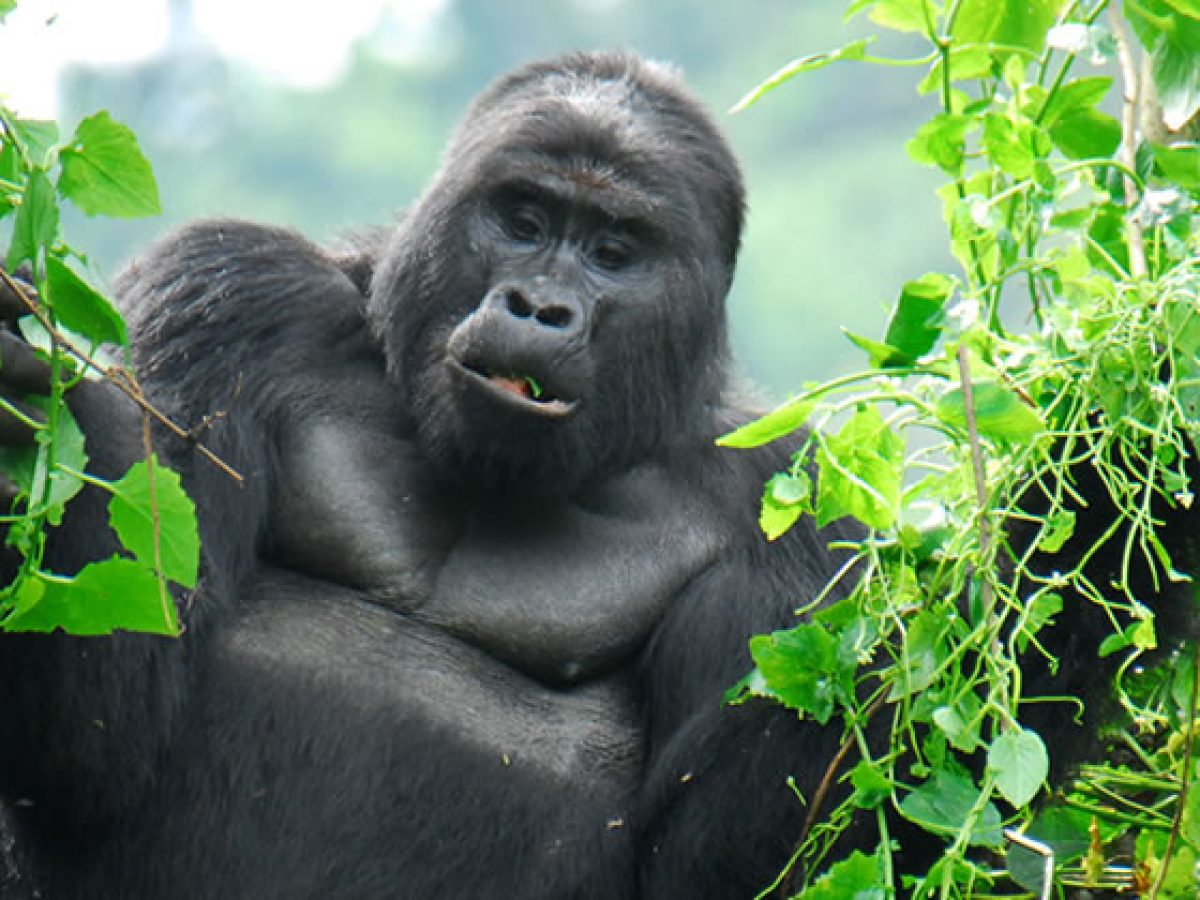
A 16-day Uganda-Kenya wildlife safari offers a comprehensive East African experience, combining primate trekking, Savannah game drives, and cultural encounters. Key highlights include gorilla trekking in Bwindi, chimpanzee tracking in Kibale, wildlife viewing in Masai Mara, Lake Nakuru, and Uganda’s Murchison Falls or Kidepo.
16-days-ultimate-uganda-safari-to-rwanda-safari-tour-package-combo
18-days-exclusive-kenya-tanzania-safari-to-uganda-primate-safari
16-days-classic-uganda-photography-safari
16-days-kenya-tanzania-safari-and-rwanda-gorilla-trekking
13-days-kenya-tanzania-safari-and-uganda-gorilla-trekking
17-days-luxury-kenya-tanzania-safari-and-bwindi-gorilla-trekking-in-uganda
Primate Capital Experiences
Bwindi Impenetrable National Park in southwestern Uganda and Kibale Forest National Park in western Uganda are premier destinations for close-up primate encounters that rank among Africa’s most moving wildlife experiences. Trekking to see the endangered mountain gorillas in Bwindi is an immersive, often emotional journey: small groups (maximum of eight people) are guided by experienced rangers and trackers through dense montane forest, following fresh signs—broken stems, dung, and nesting sites—that point the way to a habituated gorilla family. Treks can vary widely in duration and difficulty; some groups are found after a short walk while others require several hours of steep, muddy ascent through bamboo and giant lobelia. When the gorillas are located, visitors are granted one hour with the family—time to watch infants play, silverbacks keep vigilant watch, and to witness subtle social behaviors. Strict rules protect both gorillas and visitors: maintaining distance, minimizing noise, and avoiding direct eye contact or food-sharing. The experience is unforgettable not just for the spectacle, but for the conservation message: tourism revenue supports anti-poaching patrols, veterinary care, and community development.
Kibale Forest’s chimpanzee treks offer a contrasting primate experience in a lowland rainforest famed for its primate diversity. Habituated chimpanzee groups are tracked by primate experts who interpret vocalizations, feeding signs, and trail patterns. Chimp treks often involve quicker, more dynamic encounters—choreographed displays, boisterous vocalizations, and rapid movement as chimps braid through the canopy. Kibale’s trails are easier than Bwindi’s mountains, making chimp tracking more accessible to a wider range of travelers. Beyond chimps, Kibale supports a dozen other primate species—black-and-white colobus, grey-cheeked mangabeys, red-tailed monkeys—so guided walks frequently turn into broader primate safaris.
Both destinations are complemented by nearby nature walks: Bigodi Wetlands adjacent to Kibale is an excellent guided boardwalk and footpath system where birding, swamp primates, and swamp flora are highlighted. Local guides provide ecological context and point out small mammals, butterflies, and the region’s unique plant life. For travelers seeking ethical, close-range wildlife encounters, Uganda’s primate sites deliver profound, educational, and conservation-minded experiences that linger long after the trek ends.
Big Five & Diverse Wildlife
East Africa’s savannahs—especially Kenya’s Masai Mara and Lake Nakuru, and Uganda’s Murchison Falls and Queen Elizabeth National Parks—provide classic game-viewing that centers on the Big Five (lion, leopard, elephant, buffalo, rhinoceros) while also offering ecosystem diversity and abundant herbivores and predators. The Masai Mara, contiguous with Tanzania’s Serengeti, is famed for its sweeping grasslands and the annual wildebeest migration, where millions of grazing ungulates traverse the plains and attempt treacherous river crossings. Game drives here are often early-morning and late-afternoon outings in open 4x4s, guided by local drivers who use a combination of spoor, local knowledge, and radio networks to locate hunting prides, lone males, and ambushes by leopards in acacia trees. Masai communities often share the landscape, adding a cultural dimension as Maasai herders tend livestock near wildlife corridors.
Lake Nakuru National Park is a smaller but ecologically rich reserve set within the Great Rift Valley. Historically famed for its vast flocks of flamingos that edge the alkaline lake, Nakuru also protects both black and white rhino populations within secure enclosures and sanctuary zones, making rhino sightings reliable. Nakuru’s woodland and grassland mosaics support giraffes, waterbucks, warthogs, and a healthy predator presence.
In Uganda, Murchison Falls National Park stretches across varied habitat from savannah to riverine forests along the Victoria Nile. The park’s riverine corridors concentrate wildlife, producing views of elephant herds, buffalo, and lion prides, often seen near the water. Boat safaris along the Nile below the dramatic Murchison Falls are excellent for spotting hippos and crocs, while land drives target the big mammals. Queen Elizabeth National Park, with its crater lakes, savannah, and woodland habitats, supports a rich carnivore assemblage including leopards and lions, and large elephant and buffalo populations. Ziwa Rhino Sanctuary—an enclosure between Kampala and Murchison—offers one of Uganda’s few guaranteed rhino-viewing sites where white rhinos are protected and habituated for guided walks and drives.
Across these parks, sightings depend on season, water levels, and animal movements; expert guides increase success through tracking and behavioral reading. Conservation efforts—anti-poaching units, community engagement, and habitat protection—are essential to sustaining these icons. For travelers, combining Kenya’s open plains with Uganda’s riverine systems provides a rounded safari experience: dramatic predator-prey interactions, herd migrations, and close encounters with the continent’s most celebrated megafauna.
Spectacular Landscapes & Boat Cruises
The landscapes of East Africa are as compelling as their wildlife: dramatic rift escarpments, broad savannahs, dense montane forests, and powerful riverine features create postcard views and compelling adventure routes. The Great Rift Valley slices through Kenya and Uganda, forming high escarpments, crater lakes, and chain-linked shallow lakes like Nakuru that are focal points for flora and fauna. Sunrise and sunset over the Rift can bathe the valley rim in molten color, making early-morning drives and elevated viewpoints a photographer’s delight.
Murchison Falls is one of Uganda’s most iconic natural spectacles. Here the Victoria Nile funnels forcefully through a narrow gorge and plunges over a cliff, creating a thunderous waterfall and spray that can be felt in the air. The falls are striking from both the river level—where boat cruises deliver close-up views of sheer cliffs and the frothing whitewater—and from viewpoints above, which offer dramatic panoramic vistas downriver and across the surrounding savannah.
Boat cruises are central to many East African safaris because waterways condense wildlife and provide unique viewing angles. In Uganda, boat trips on the Kazinga Channel between Lake Edward and Lake George are renowned for dense congregations of hippos and crocodiles, and productive birdlife along the banks. Water-level cruises below Murchison Falls bring passengers near hippo pods and riverbank elephants that drink at the water’s edge. In Kenya, lake and river safaris around the Rift’s lakes offer peaceful, flamingo-dusted scenes and lakeshore game viewing inaccessible by road.
Beyond water, the landscapes invite walking, hiking and scenic flights. Trails through Bwindi’s montane forest, the escarpments near Lake Bunyonyi, or the volcanic cones around the Rift offer immersive ways to experience the terrain. Hot-air balloon safaris over the Masai Mara add a serene aerial perspective on predator-prey dynamics and the mosaic of rivers, kopjes, and grasslands. Together, these vistas and boat trips provide sensory variety—roaring waterfalls, placid lakes rimmed with birds, and sweeping valley panoramas—making East Africa a destination where geological power and wildlife richness are inseparable.
Birding & Nature
Uganda and Kenya are premier birding destinations: Uganda holds over 1,000 recorded species—more than 10% of the world’s birds—thanks to its dramatic habitat diversity, from lowland rainforests and swamps to savannahs and highland moorlands. Birders travel to see range-restricted African endemics and iconic species like the shoebill stork, whose prehistoric silhouette and deliberate stalking behavior make sightings special and often require patience, quiet, and skilled local guides. Prime shoebill habitat includes remote swamp systems and papyrus-lined waterways—guided boat trips that emphasize stealth and slow scanning.
Kibale and Bigodi Wetlands offer excellent forest-edge and swamp birding; species commonly observed include turacos, hornbills, sunbirds, raptors, and an array of transient migrants. Uganda’s Albertine Rift forests hold several localized endemics—golden-breasted pittas, Ruwenzori batises, and other montane specialties—making highland areas a magnet for specialist birders. In the Rift Valley, Lake Nakuru becomes an avian spectacle when alkaline conditions attract enormous flocks of flamingos that create vivid pink shorelines; the shorelines also support pelicans, cormorants, and waders.
Birding in these countries is often combined with general wildlife tours but can also be organized as focused trips. Local guides and birding tours are invaluable: they know seasonal movements, microhabitat preferences, and call recognition that turn fleeting glimpses into reliable sightings. Many lodges provide early-morning guided walks—when bird activity peaks—and binocular-friendly hides adjacent to wetlands for prolonged observation without disturbance.
Conservation initiatives emphasize protecting critical wetland habitats and forest corridors. Threats like wetland drainage, deforestation, and hunting imperil both resident and migratory species, so ethical tourism contributes to protection. Whether you’re seeking the cryptic shoebill or the chorus of forest passerines at dawn, East Africa’s birding rewards patience with rare encounters, spectacular flocks, and a deep appreciation for habitat variety.
Cultural & Adventure Activities
East Africa’s cultural landscape is as varied as its wildlife. Visitors can engage with pastoral communities such as the Maasai in Kenya—known for distinctive red shukas, beadwork, and pastoral traditions—who often host visits that include cultural dances, village tours, and explanations of livestock management and local cosmologies. In Uganda, the Karamojong in the northeast and the Batwa (Pygmy) communities near Bwindi represent different cultural experiences: the Karamojong retain pastoralist livelihoods and traditional crafts, whereas Batwa village visits (when conducted ethically and with community consent) can provide insight into forest-based hunter-gatherer heritage, music, and storytelling. It’s important to prioritize tours that are community-led, fairly compensate participants, and support local development rather than exploit cultural performance.
Adventure activities broaden a safari itinerary. Jinja, Uganda—considered the source region of the Nile—has become an adventure hub offering white-water rafting on the Nile’s rapids, bungee-jumping, kayaking, and jet-boating. Rafting grades vary seasonally; experienced outfitters supply safety gear and trained guides. For land-based adventure, guided hiking, mountain-biking, and chimp or gorilla habituation walks provide active engagement. In the Masai Mara, hot-air ballooning at dawn presents a serene way to observe wildlife from above, with champagne landings and complimentary breakfast camps often included.
Responsible cultural tourism and adventure operators follow safety and ethical guidelines: they obtain free, prior and informed consent for community visits, ensure meaningful revenue-sharing, and limit activities that stress wildlife (e.g., nocturnal visits near roosts). Travelers should prepare physically—some activities require fitness and appropriate gear—and mentally for genuine exchange rather than staged performances. When done respectfully, cultural and adventure activities enrich a visit by connecting natural history with human tradition, offering immersive experiences that support local livelihoods and deepen understanding of regional landscapes.
Accommodation
Accommodation in East Africa ranges from high-end luxury lodges to mid-range safari camps and budget tented options, each offering different balances of comfort, immersion, and proximity to wildlife. Luxury lodges—found in prime locations such as private conservancies bordering the Masai Mara, lakeshores, and within national parks—prioritize design, cuisine, and privacy. Expect spacious en-suite rooms or suites, attentive service, elevated viewing decks, private plunge pools, and curated game drives or guided walks. Many high-end properties incorporate local architecture and materials while offering conservation-oriented programming, such as guided nature walks, monitoring projects, and community initiatives funded by guest stays.
Mid-range lodges and permanent tented camps provide comfortable beds, en-suite facilities, and eco-conscious design at a gentler price point. Tented camps often blend a wilderness feel with modern conveniences: solid tents on raised platforms, hot showers, and communal mess tents where meals are served. These camps are ideal for travelers wanting to be close to the action—sometimes within sound of wildlife at night—without sacrificing basic comforts.
Budget accommodations—hostels, simple guesthouses, and basic campsites—make the region accessible to a broader range of travelers. In towns near parks, guesthouses with local hosts provide cultural contact and homely meals. Budget tented camps in some reserves supply communal ablution blocks and shared dining, emphasizing affordability and communal travel.
For gorilla and chimp treks, there are forest lodges and bandas near Bwindi and Kibale that offer early access and straightforward comforts; in remote areas expect limited electricity and water, which is part of the immersive experience. Many properties emphasize sustainability—solar power, water-saving measures, waste reduction, and hiring local staff. When choosing accommodation, consider proximity to target activities (game drives, trails, boat docks), included services (park fees, transfers, guided activities), and conservation credentials. Well-chosen lodging enhances the safari: it frames daily rhythms, provides a comfortable base after long drives or treks, and can itself be part of the region’s conservation story.
Seasonal Guide: The Best Time for an East African Adventure
Uganda’s equatorial climate offers two primary windows that are widely considered the gold standard for travel. Selecting between them often depends on whether your priority is the lush green of the rainforests or the prime visibility of the savanna.
The Long Dry Season (June to September)
The period from June to September is arguably the most popular time to visit Uganda. During these months, the rains subside, leaving behind clear blue skies and a landscape that gradually dries out. For wildlife enthusiasts, this is the peak season for game viewing. In parks like Murchison Falls and Queen Elizabeth, water sources become scarce, forcing animals to congregate around permanent watering holes. This predictable behaviour makes spotting lions, leopards, and large herds of elephants significantly easier.
For those venturing into the misty heights of Bwindi Impenetrable Forest or Mgahinga for gorilla trekking, the dry season is invaluable. The forest floor, while never entirely dry, is far less muddy and slippery than during the deluge of the wet months. This makes the steep, tangled climbs more manageable and reduces the physical strain of the trek. Additionally, the lack of thick foliage and lower humidity improves visibility for photography, ensuring that your encounters with the mountain gorillas are captured in the best possible light.
Birdwatchers also find this period rewarding, as many species are in their breeding plumage, and the clear weather allows for uninterrupted hours in the field. However, because this is the high season, it is essential to book permits and accommodation well in advance. The parks are more frequented, but the reward is the most stable weather conditions Uganda has to offer.
The Short Dry Season (December to February)
The second dry window occurs from December to February. This period is often characterised by slightly higher temperatures than the June-September stretch, making it a fantastic "winter sun" getaway. The savanna plains are golden, and the tracks remain firm, ensuring that the long drives between national parks are as efficient as possible.
This season is particularly excellent for chimpanzee trekking in Kibale Forest. As the fruit begins to ripen during these warmer months, the chimps are often found lower in the canopy or even on the forest floor, leading to more intimate and frequent sightings. The humidity remains manageable, and the mornings in the highlands, while still brisk, are often greeted by stunning, clear sunrises over the volcanic craters.
For photographers, the light during the short dry season is exceptionally crisp. While the migratory birds from Europe and North Africa are present in large numbers, the resident wildlife remains the star of the show. Similar to the long dry season, gorilla permits remain in high demand, particularly around the Christmas and New Year holidays. It is a time of vibrant activity across the ecosystems, offering a perfect balance between the heat of the northern reaches and the temperate coolness of the southern primate forests. Choosing this window allows for a comprehensive circuit where the roads are at their most reliable and the wildlife sightings are consistently high-quality.
16-Day Uganda & Kenya Wildlife Safari Itinerary
This 16-day expedition offers the definitive East African odyssey, seamlessly blending the rugged, untouched wilderness of Northern Uganda with the world-renowned savanna plains of Kenya. Your journey begins in the lush "Pearl of Africa," where you will track majestic rhinos on foot and navigate the dramatic landscapes of the Rift Valley. From the remote, mountainous horizons of Kidepo to the mist-shrouded ancient rainforests of Bwindi, home to the endangered mountain gorilla, this itinerary prioritises deep immersion.
As you cross into Kenya’s iconic Masai Mara, the scenery shifts to endless horizons and the theatre of the Great Migration. This safari is designed for those seeking a profound connection with nature, combining primate encounters that touch the soul with classic big-game viewing. Expect diverse ecosystems, vibrant cultural exchanges with the Karamojong, and the raw beauty of the African wild, all curated to provide a comprehensive and unforgettable professional safari experience.
Day 1: Arrival in Entebbe Upon arrival at Entebbe International Airport, you will be met by your guide and transferred to your hotel. Set on the shores of Lake Victoria, Entebbe offers a tranquil introduction to Uganda. Spend the afternoon relaxing or exploring the botanical gardens, acclimatising to the tropical air and preparing for the expansive journey ahead.
Day 2: Ziwa Rhino Sanctuary Leaving the lakeside behind, you head north toward the Ziwa Rhino Sanctuary. This conservation stronghold is the only place in Uganda to see rhinos in the wild. Led by expert rangers, you will track these prehistoric giants on foot, an exhilarating experience that allows for close-range photography and a deep appreciation for successful conservation efforts before continuing your northward drive.
Day 3: Journey to Kidepo Valley The drive to Kidepo Valley National Park is long but visually stunning, traversing the remote landscapes of Northern Uganda. As you approach the Sudanese border, the scenery transforms into semi-arid savanna framed by jagged mountains. Arrive at the spectacular Apoka Lodge, an oasis in the wilderness, where the wildlife often wanders right past your veranda in the golden evening light.
Day 4: Exploring Kidepo Valley Kidepo is arguably Africa’s most picturesque park. Today’s game drives focus on the Narus Valley, where wildlife congregates around the permanent water sources. Keep a sharp eye out for species unique to this region, such as cheetahs, caracals, and the majestic Rothschild’s giraffes. The vast, open plains and lack of crowds provide a sense of solitude rarely found in modern safari destinations.
Day 5: Karamojong Cultural Immersion Today is dedicated to the Karamojong people, traditional pastoralists with a rich, resilient culture. Visiting a manyatta (homestead) offers a genuine look at their lifestyle, from intricate beadwork to traditional jumping dances. This cultural exchange provides vital context to the region’s history and the relationship between the local communities and the surrounding wildlife, making for a deeply humbling and educational afternoon.
Day 6: Drive to Murchison Falls You depart the far north and head toward Murchison Falls National Park, Uganda’s largest protected area. The journey takes you through changing vegetation zones, eventually reaching the banks of the Victoria Nile. As you enter the park, the density of elephants and buffaloes increases significantly. Spend the evening relaxing at your lodge, listening to the distant roar of the mighty Nile.
Day 7: The Mighty Murchison Falls Start with an early game drive on the northern bank, searching for lions, leopards, and Jackson’s hartebeest. In the afternoon, a boat safari takes you upstream to the base of Murchison Falls. Here, the entire Nile is forced through a narrow seven-metre cleft, creating a thunderous explosion of water. It is a sensory highlight, featuring massive Nile crocodiles and pods of hippos along the banks.
Day 8: Transfer to Kibale Forest The route south to Kibale Forest is a scenic masterpiece, passing through verdant tea plantations and local villages nestled in the foothills of the Rwenzori Mountains. Known as the "Primate Capital of the World," Kibale is home to 13 different primate species. Arrive in time to enjoy the cool, crisp air of the rainforest and prepare for tomorrow’s highly anticipated chimpanzee encounter.
Day 9: Chimpanzee Tracking & Bigodi Enter the rainforest for chimpanzee tracking. Following the vocalisations of our closest relatives through the undergrowth is a thrilling experience. Once found, you spend an hour observing their complex social dynamics. In the afternoon, visit the Bigodi Wetland Sanctuary. This community-led project is a haven for birds, including the Great Blue Turaco, and offers sightings of several monkey species, including red colobus.
Day 10: Queen Elizabeth National Park The journey continues to Queen Elizabeth National Park, framed by the "Mountains of the Moon." You will cross the equator, pausing for a classic photo opportunity. An afternoon boat cruise on the Kazinga Channel provides unparalleled views of elephants, buffaloes, and hippos cooling off in the water. The birdlife here is phenomenal, with kingfishers and fish eagles frequenting the channel’s lush, fertile banks.
Day 11: Ishasha’s Tree-Climbing Lions Head to the remote Ishasha sector in the southern part of the park. This area is world-famous for its tree-climbing lions, which can often be found lounging in the sturdy branches of ancient fig trees to escape the heat. Searching for these unusual feline displays is a highlight of any Ugandan safari, complemented by sightings of the elegant Topi and large herds of buffalo.
Day 12: Bwindi Impenetrable Forest Leaving the savanna behind, you ascend into the ancient, mist-covered hills of Bwindi Impenetrable National Park. The drive offers dramatic views of terraced hillsides and deep valleys. This UNESCO World Heritage site is home to roughly half of the world’s remaining mountain gorillas. The evening is spent in the highland cool, briefing with your guides for the life-changing trek scheduled for the following morning.
Day 13: Gorilla Trekking Experience This is the pinnacle of the safari. After a morning briefing, you enter the dense forest to track a habituated gorilla family. The trek can be physically demanding, but the moment you encounter these gentle giants in their natural habitat is indescribable. Sitting just metres away from a silverback as the family grooms and plays is a profound, spiritual experience that justifies every mile travelled.
Day 14: Fly to Masai Mara Transition from the primates of Uganda to the big cats of Kenya. You will fly or travel to the Masai Mara National Reserve, a land of rolling grasslands and immense sky. Upon arrival, embark on an introductory game drive. The Mara is legendary for its high predator density; it is not uncommon to spot lions and cheetahs within your first hour on the plains.
Day 15: Full Day in the Mara Spend a full day exploring the Mara’s vast ecosystems. Depending on the season, you may witness the dramatic river crossings of the Great Migration. Even outside of migration months, the resident wildlife is spectacular. Your guide will track the "Big Five" and share insights into the delicate balance of the savanna. A picnic lunch in the wild allows for maximum time spent in the field.
Day 16: Return to Nairobi A final early morning game drive offers a last chance to catch the predators active before the sun climbs high. After breakfast, you will begin the journey to Nairobi. Whether flying over the Rift Valley or driving through the bustling Kenyan highlands, reflect on the incredible diversity of East Africa before arriving in the capital for your onward flight or final departure.
Gemini said
1. What is the main highlight of a 16-day Uganda-Kenya Safari?
The ultimate highlight of this trans-boundary expedition is its unmatched biological diversity. It is one of the few journeys on earth where you can transition from the humid, ancient rainforests of Uganda to the vast, golden grasslands of Kenya's Masai Mara within a single itinerary. In Uganda, the emotional pinnacle is undoubtedly the encounter with the mountain gorillas of Bwindi. Standing just metres away from these gentle giants is a profound experience that contrasts beautifully with the classic "Big Five" safari in Kenya. While Uganda offers the "Big Seven" (including tree-climbing lions and mountain gorillas), the Masai Mara provides the sheer scale of the Great Migration and world-class predator sightings. This safari is essentially two distinct adventures stitched together into one seamless narrative of African wilderness.
2. What should I expect during mountain gorilla trekking?
Gorilla trekking is as much a physical challenge as it is a spiritual reward. You should expect to navigate the "Impenetrable" forest, which involves trekking through thick undergrowth, across steep ridges, and over muddy slopes at altitudes between 1,160m and 2,607m. The duration can range from two to eight hours depending on where the gorilla family spent the night. You will be assigned a group of eight people and led by armed rangers and trackers. Once the gorillas are located, the "magic hour" begins. You will observe their social interactions, grooming habits, and playful juveniles. It is essential to bring sturdy hiking boots with good grip, garden gloves for grabbing vines, and a waterproof jacket, as rain can occur at any moment in the rainforest.
3. Are chimpanzee treks included?
Yes, chimpanzee trekking is a staple of this itinerary, typically occurring in Kibale Forest National Park. Often referred to as the "Primate Capital of the World," Kibale hosts the highest density and diversity of primates in Africa. Unlike the gorillas, chimpanzees are highly vocal and active, often spending time high in the canopy. The trek involves following their pant-hoots and screams through the forest. Once located, you will witness their complex social structures and occasionally see them hunting or patrolling their territory on the forest floor. Beyond the chimps, the forest is home to rare L'Hoest's monkeys, Red Colobus, and Black-and-White Colobus, making it a dream destination for primate enthusiasts and photographers alike.
4. What kind of vehicles are used?
To ensure the best possible experience on Africa’s varying terrain, we utilise specially modified 4x4 Safari Land Cruisers. These vehicles are rugged enough to handle the "African massage" provided by bumpy dirt roads while offering essential comfort. Each vehicle features a pop-top roof, allowing you to stand up for 360-degree views and unobstructed photography during game drives. They are equipped with heavy-duty suspension, long-range fuel tanks, and high-frequency radios for communication between guides. For passenger comfort, you will find charging points for cameras and phones, a cooler box for refreshments, and ample window seating to ensure everyone has a front-row seat to the wildlife action.
5. What is the typical daily routine on safari?
A day on safari is dictated by the rhythm of the wild. It usually begins with a "bush wake-up call" at dawn, followed by a quick coffee and biscuits before heading out for an early morning game drive. This is when predators are most active before the heat of the day sets in. You return to the lodge for a hearty mid-morning breakfast and a period of relaxation during the midday heat. After lunch, the afternoon might include a boat cruise, a community visit, or another game drive as the sun begins to set. The day concludes with a "sundowner" drink in the bush or back at the lodge, followed by a multi-course dinner and time spent around the campfire sharing stories of the day's sightings.
6. What is the best time for this safari?
The timing of your safari can significantly impact your experience. The primary dry seasons—from June to September and December to February—are considered the best times to visit. During these months, the tracks are firm, making travel between parks faster and less exhausting. For wildlife viewing, the lack of rain means animals congregate around known water sources, and the vegetation is thinner, making it easier to spot elusive leopards or lions. For those interested in the Great Migration in the Masai Mara, the window between July and October is peak season. However, the "green season" (March to May) offers lush scenery, fewer crowds, and lower prices, though trekking conditions can be significantly more slippery.
7. How close do you get to animals?
The proximity you achieve on safari is often surprising to first-time visitors. On savanna game drives, the wildlife is habituated to the presence of vehicles, allowing you to sometimes be within a few metres of a pride of lions or a herd of elephants without disturbing them. During boat cruises on the Kazinga Channel or the Nile, you can glide incredibly close to hippos and crocodiles basking on the banks. Primate trekking is more regulated; for the health of the animals, a minimum distance of 10 metres is required for gorillas and chimpanzees. However, the animals don't always read the rulebook and may occasionally move closer to you. In all cases, your expert guide ensures that encounters remain safe, respectful, and thrilling.
8. What is the accommodation like?
Accommodation on this route is designed to enhance your connection with the environment. You will stay in a mix of luxury lodges and high-end tented camps. These are not your average camping tents; they feature permanent wooden floors, en-suite bathrooms with hot showers, and comfortable beds with high-quality linens. Many lodges are strategically positioned on the edge of craters, along riverbanks, or overlooking the savanna, providing private decks where you can watch wildlife from your room. The architecture often incorporates local materials like volcanic stone and thatch, blending seamlessly into the landscape while providing all the modern comforts you need after a long day in the bush.
9. Can I visit local communities?
Cultural immersion is a vital component of a holistic safari. In Uganda, a visit to a Karamojong manyatta in the northeast provides a rare look into the lives of traditional cattle herders who have maintained their customs for centuries. You might also visit the Batwa Pygmies near Bwindi to learn about their ancient forest-dwelling heritage. In Kenya, a visit to a Maasai village offers insight into their iconic red cloaks, intricate beadwork, and traditional jumping dances. These visits are conducted respectfully and often support community-led conservation projects. They provide a human element to the safari, allowing you to understand the challenges and triumphs of the people living alongside these Great National Parks.
10. What is the food like?
The culinary experience on safari is surprisingly sophisticated. Most lodges employ professional chefs who prepare a fusion of international cuisine and local flavours. Breakfasts are typically a mix of fruit, cereals, and cooked-to-order eggs. Lunches may be served as a buffet at the lodge or as a "picnic bush lunch" during full-day game drives. Dinners are usually a three-course affair, often featuring fresh produce from the lodge’s own garden. You might try local staples like matooke (steamed green bananas) or ugali alongside perfectly grilled steaks or fresh Nile Perch. Most dietary requirements, including vegetarian, vegan, and gluten-free, can be accommodated with prior notice, ensuring you are well-fuelled for your adventures.
11. Is wifi available?
While the goal of a safari is often to "unplug," we understand the need to stay connected. Most lodges in Uganda and Kenya provide Wi-Fi in the main communal areas, such as the lounge or dining room. However, due to the remote locations of many camps—often nestled in deep forests or vast plains—the connection can be intermittent and slower than what you might expect at home. It is usually sufficient for sending messages or low-resolution photos, but video streaming is rarely possible. Many guests find that the limited connectivity becomes a highlight, allowing them to fully engage with the sounds of the African night and the company of fellow travellers without the distractions of the digital world.
12. What clothes should I pack?
Packing for a 16-day safari requires a balance between practicality and comfort. The mantra is "layers and neutrals." Neutral colours like khaki, tan, and olive green are best because they don't attract tsetse flies (which are drawn to blue and black) or scare away wildlife. For trekking, you need long-sleeved shirts and long trousers to protect against stinging nettles and insects. High-quality hiking boots are essential for Bwindi, while lightweight trainers are fine for game drives. Evenings and early mornings can be surprisingly cold, especially in the highlands, so a warm fleece or down jacket is a must. Don't forget a wide-brimmed hat, high-SPF sunscreen, and a lightweight waterproof layer for the rainforest sections.
13. Do I need vaccines?
Health is a priority when travelling through East Africa. A Yellow Fever vaccination is a mandatory entry requirement for both Uganda and Kenya, and you must carry your "Yellow Book" as proof for immigration officers. Malaria is present in most areas you will visit, so a course of prophylaxis (such as Malarone or Doxycycline) is highly recommended. It is also wise to ensure your routine vaccinations, such as Tetanus, Typhoid, and Hepatitis A and B, are up to date. We strongly suggest consulting a travel clinic or your doctor at least six weeks before departure to get the most current advice and to allow time for the vaccines to become effective before you arrive.
14. Are there boat cruises?
Boat safaris are a refreshing and distinct way to view wildlife from a different perspective. In Uganda, the launch cruise on the Kazinga Channel in Queen Elizabeth National Park is legendary, offering some of the highest concentrations of hippos in the world. You will also experience a boat trip to the base of Murchison Falls, where the Nile explodes through a narrow gap—a scene of raw power. These cruises allow you to get closer to water-dwelling animals like crocodiles and monitor lizards, and they are a paradise for birdwatchers, who can spot everything from the Malachite Kingfisher to the rare Shoebill Stork. It is a peaceful, scenic way to enjoy the "Pearl of Africa" without the dust of the road.
15. What are the roads like?
Road conditions in East Africa are an integral part of the adventure. While the main highways connecting major towns are often paved, the roads leading into and within the national parks are typically unpaved "murram" (dirt) roads. These can be dusty in the dry season and muddy during the rains. Some travel days are long, spanning 8 to 10 hours, but these are often broken up by scenic stops, market visits, and equator crossings. The 4x4 vehicles are designed to handle these conditions comfortably, and the changing landscapes—from tea plantations to volcanic craters—ensure that the journey is never boring. We view these drives as "extended game drives," as wildlife can often be spotted right from the roadside.
Booking Uganda Kenya wildlife safari holiday with us Roads of Adventure safaris
Booking your 16-day Uganda and Kenya wildlife safari with Roads of Adventure ensures a seamless, expertly guided journey through East Africa’s premier conservation areas. As specialists in primate trekking and savanna expeditions, we provide robust 4x4 Land Cruisers, secured permits, and hand-picked luxury or mid-range lodges. Our deep local knowledge allows us to navigate long drives with ease, incorporating cultural visits and scenic stops that enrich your travel experience. From the misty Bwindi highlands to the expansive Masai Mara, we handle every logistical detail with professional precision, ensuring your African odyssey is safe, immersive, and truly unforgettable.
