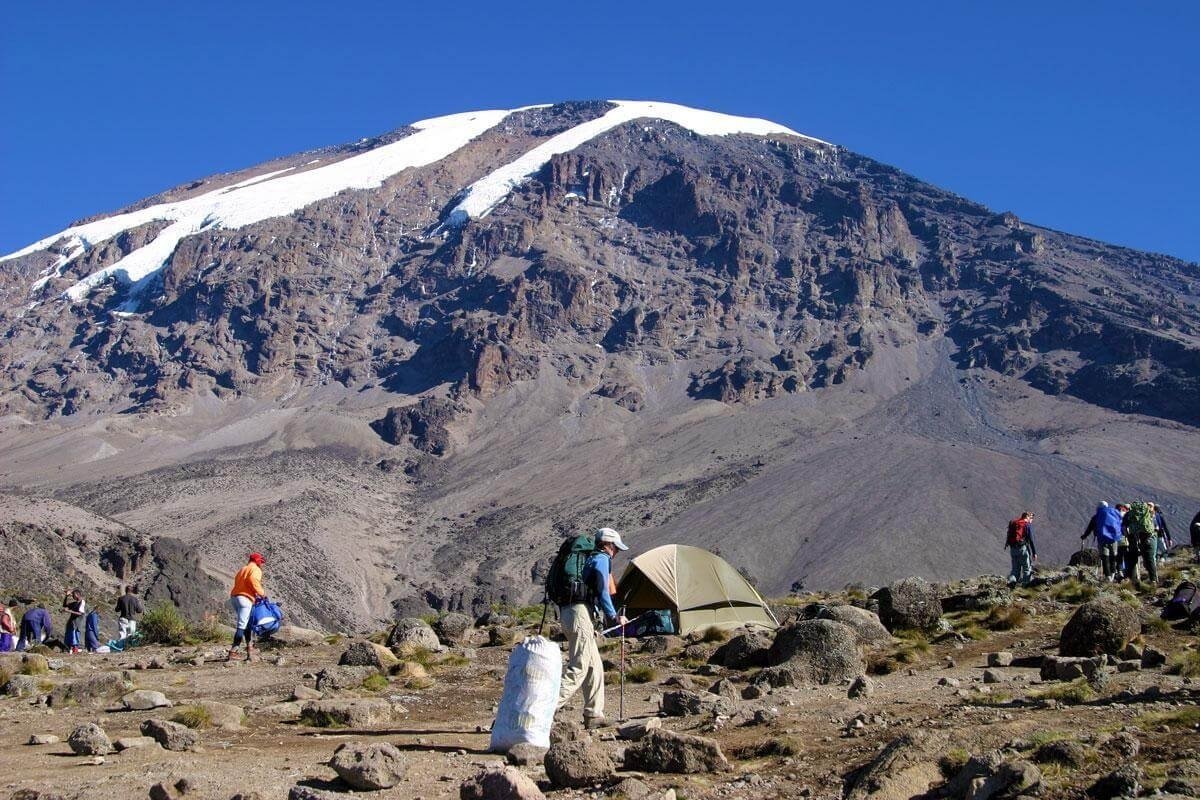
An 8-day Kilimanjaro climb (typically on the Lemosho or Northern Circuit routes) provides a spectacular, gradual trek. You will hike 5 to 7 hours daily through five climate zones, camp in tents, and tackle a challenging midnight summit push to reach Uhuru Peak at 5,895m
8-days-lemosho-route-kilimanjaro-climb
8 Days Lemosho route Kilimanjaro climb
The Lemosho Route is widely considered the most scenic and rewarding path up Mount Kilimanjaro. Starting from the western side of the mountain, this pristine trail begins with a drive to the Londorossi Gate before plunging you directly into a dense, vibrant rainforest. What sets the 8-day Lemosho itinerary apart from shorter routes is its exceptional acclimatization profile. By traversing the vast Shira Plateau and implementing the crucial "climb high, sleep low" strategy at Lava Tower, it gives your body the best possible chance to adapt to the thinning air. This significantly increases your summit success rate while guiding you through five distinct ecological zones—from lush montane forests to barren alpine deserts. With lower foot traffic early on and panoramic vistas at every turn, Lemosho offers an intimate, unforgettable encounter with the majestic Roof of Africa.
Day 1: Londorossi Gate (2,100m) to Forest Camp (2,750m)
Your Kilimanjaro adventure begins with a scenic drive from your hotel to the Londorossi Gate for registration and final packing. After completing the park formalities, you will drive a bit further to the trail start point. From here, you step directly into a vibrant, untouched montane rainforest. The trail is often damp and muddy, winding beneath a dense canopy of ancient trees covered in moss and ferns. Keep your eyes peeled and your camera ready, as this zone is home to unique wildlife, including beautiful black-and-white colobus monkeys jumping through the branches and colorful exotic birds. The trek is a relatively gentle, three-to-four-hour introduction to the mountain, designed to let you find your pacing. You will arrive at Forest Camp, also known as Big Tree Camp, by late afternoon to settle into your tent and enjoy a hot dinner.
Day 2: Forest Camp to Shira 1 Camp (3,500m)
On your second day, you will leave the dense rainforest behind as the trail steepens and emerges into the heath and moorland zone. The vegetation shifts dramatically to low shrubs, giant heather, and wild grasses. As you ascend, the path leads you out of the trees and onto the rim of the spectacular Shira Plateau. Crossing this expansive, high-altitude plateau offers your first truly expansive, panoramic views of the mountain slopes ahead. The air begins to feel noticeably cooler and crisper here. The trek takes about five to six hours, involving a significant gain in elevation that will test your legs. You will set up camp at Shira 1 Camp, a stunning location exposed to the elements, where you can watch the sunset over the valley far below and gaze at a brilliant blanket of stars.
Day 3: Shira 1 Camp to Moir Hut (4,200m)
Today’s trek is a steady, scenic journey across the ancient Shira Plateau, heading directly toward the majestic peak of Kibo. As you hike, the environment gradually transitions from moorland into the rugged, stark terrain of the alpine desert. The trail takes a turn off the main path, leading you toward the secluded Moir Hut, located at the base of the Lent Hills. This detour is a massive advantage of the 8-day itinerary, as it intentionally steers you away from the heavier crowds on the main route. The walk takes roughly five to six hours. After reaching camp and resting, you can take a short acclimatization walk up into the nearby Lent Hills. This extra effort helps your body adjust to the higher altitude before you head back down to camp for a hearty meal and sleep.
Day 4: Moir Hut to Barranco Camp (3,900m)
This is a critical day for your acclimatization strategy, following the classic mountaineering rule of "climb high, sleep low." You will ascend out of the Moir Valley and trek across a high ridge toward the towering Lava Tower, a massive 90-meter-tall volcanic rock formation sitting at 4,630 meters. You will stop here for lunch, which allows your body to experience the high altitude and thinning air. After lunch, the trail descends steeply into the breathtaking Barranco Valley. Along the way, you will pass through strange forests of giant groundsels and lobelias, prehistoric-looking plants unique to the mountain. Although you end the day at nearly the same altitude you started, the temporary ascent to the tower triggers your body to produce more red blood cells, preparing you beautifully for the grueling summit push ahead.
Day 5: Barranco Camp to Karanga Camp (3,995m)
Your day begins with one of the most exciting and famous challenges on Kilimanjaro: conquering the Barranco Wall. Though it looks intimidatingly steep from camp, the climb is non-technical, requiring you to scramble using both hands and feet along a well-defined path. There is no special gear needed, just focus and a steady pace. Reaching the top rewards you with an incredible sense of achievement and stunning views of the southern glaciers. From the summit of the wall, the trail rolls through a series of steep hills and narrow valleys, testing your stamina as you cross into the Karanga Valley. This shorter trekking day takes about four to five hours, allowing you to reach Karanga Camp by lunchtime. This gives you an entire afternoon to rest your muscles, rehydrate, and relax before the final approach.
Day 6: Karanga Camp to Barafu Camp (4,673m)
Today you will leave the Karanga Valley to join the Mweka Trail, turning upward toward your final destination before the summit: Barafu Camp. The trek takes about three to four hours through a bleak, windy, and entirely barren alpine desert landscape. The trail is a steady, rocky uphill climb that demands a slow and deliberate pace to conserve energy. Barafu is a high-altitude base camp perched precariously on a narrow, exposed rocky ridge. The wind can be fierce, and temperatures drop significantly here. Upon arrival, it is absolutely vital to organize your gear, prepare your warm layers, and check your headlamp batteries for the upcoming night. You will eat an early dinner and force yourself to get some sleep, as you will be awakened at midnight to begin the ultimate climb.
Day 7: Summit Night! Barafu Camp to Uhuru Peak (5,895m) then Horombo Hut (3,700m)
Wake up at midnight to freezing cold and darkness. Fueled by a quick hot drink, you begin your slow, grueling alpine ascent over heavy scree. The mental and physical challenge is intense as you march upward toward Stella Point at 5,756 meters on the crater rim. Arriving here just as the sun begins to rise over the clouds is an incredibly emotional experience. From Stella Point, you push through the snow for another hour to reach Uhuru Peak, the absolute highest point in Africa. Standing at the top of the continent is a moment of pure triumph. After taking photos next to the famous wooden sign, you begin a long, knee-jarring descent back down to Barafu Camp for a brief rest, before continuing all the way down to Horombo Hut for a well-deserved, deep sleep.
Day 8: Horombo Hut to Mweka Gate (1,640m)
Your final day on the mountain is a celebration of your incredible achievement. After a warm breakfast, you will say a heartfelt goodbye to your amazing team of guides, porters, and cooks during a traditional tipping ceremony filled with singing and dancing. The trail leads you on a pleasant, six-hour continuous descent back through the lush, misty rainforest. Walking through the thick greenery, with plenty of oxygen returning to your lungs, feels fantastic after days of cold rock and snow. You will finally arrive at the Mweka Gate, where you will sign the official park register and proudly receive your green certificate for reaching Stella Point, or your gold certificate for conquering Uhuru Peak. A vehicle will be waiting to drive you back to your hotel for a long-awaited hot shower.
What should I expect regarding the daily physical toll and fitness required?
Attempting an 8-day climb up Mount Kilimanjaro is less about explosive, athletic power and entirely about sustained cardiovascular endurance and mental grit. You should expect to hike between four to eight hours daily, culminating in a grueling 11 to 15-hour summit bid on Day 7. While the daily distances might not sound extreme on paper—often ranging between 5 to 12 kilometers—the true challenge stems from the relentless incline, uneven rocky terrain, and the rapidly thinning air. Your legs, knees, and lungs will be under constant, low-grade stress for over a week straight, meaning that your muscles will feel chronically fatigued by the time you reach base camp.
To prepare for this specific physical toll, your training regimen must focus heavily on simulated endurance. The single best exercise is loaded stair climbing or hiking up steep inclines while wearing a weighted backpack. You should aim to train with a pack weighing 6 to 8 kilograms to mirror the daypack you will carry on the mountain. Incorporating long, back-to-back weekend hikes is crucial because it teaches your body to perform when it is already tired from the previous day's exertion.
Additionally, you must prioritize lower body and core strength. Exercises like squats, lunges, step-ups, and planks build the stability needed to navigate rocky paths and protect your knees during the steep, jarring descents. Do not neglect cardiovascular conditioning; swimming, cycling, or rowing for 45 minutes three times a week will dramatically improve your lung capacity and heart efficiency. Ultimately, arriving in peak physical condition ensures that you spend your energy adapting to the high altitude rather than fighting basic muscular exhaustion.
What should I expect concerning acute mountain sickness (AMS) and acclimatization?
High altitude is the ultimate gatekeeper on Kilimanjaro, and you should expect to experience some mild symptoms of altitude adjustment, regardless of your physical fitness level. As you ascend past 3,000 meters, the atmospheric pressure drops, meaning there are fewer oxygen molecules per breath. Your body will react to this hypoxia (lack of oxygen) through a process of acclimatization. You can expect your resting heart rate to elevate, your breathing to become shallower and more frequent, and you may experience vivid dreams or disrupted sleep patterns at night.
Mild Acute Mountain Sickness (AMS) affects the vast majority of climbers. You should fully expect to experience occasional throbbing headaches, slight dizziness, mild nausea, loss of appetite, and localized fatigue. The mountain guides monitor these symptoms meticulously using pulse oximeters to check your blood oxygen saturation twice daily. If your oxygen levels stay within a safe range and your symptoms remain mild, your body is successfully adapting.
To give yourself the absolute best chance of acclimatizing over the 8-day itinerary, you must strictly follow the golden rules of high-altitude mountaineering. First, embrace the local mantra of "Pole, pole" (slowly, slowly). Walking at a snail’s pace prevents your heart rate from spiking and conserves vital oxygen. Second, you must aggressively hydrate, drinking four to five liters of water daily to combat the dry air and altitude-induced dehydration. Finally, the 8-day Lemosho route inherently helps by incorporating the "climb high, sleep low" strategy on Day 4 at Lava Tower, allowing your body to briefly sample 4,630 meters before sleeping lower, which naturally triggers the production of oxygen-carrying red blood cells.
What should I expect regarding the extreme weather shifts and ecological zones?
Climbing Kilimanjaro is often described as walking from the equator to Antarctica in a matter of days. You should expect to pass through five entirely distinct ecological zones, each featuring its own unique microclimate, temperature ranges, and weather hazards. On Day 1, you will begin in the Cultivation and Rainforest zones (800m to 2,800m), where the air is warm, humid, and thick. You can expect heavy rainfall, muddy trails, and temperatures hovering around 20°C to 25°C.
As you ascend into the Heath and Moorland zone (2,800m to 4,000m) on Days 2 and 3, the canopy thins, exposing you to direct alpine sun. Daytime temperatures are pleasant, around 15°C, but the lack of cloud cover means nights drop rapidly toward freezing. By Day 4, you enter the Alpine Desert (4,000m to 5,000m), a stark, windy landscape with intense solar radiation by day and sub-zero temperatures at night. Finally, the Arctic zone (above 5,000m) on summit night features loose scree, permanent ice, howling winds, and temperatures that routinely plummet between -7°C and -15°C.
To survive these radical shifts, your packing list must center around a strict layering system rather than one heavy jacket. You need a moisture-wicking base layer (merino wool) to keep sweat off your skin, insulating mid-layers (fleece and down jackets) to trap body heat, and a waterproof, windproof outer shell (Gore-Tex) to guard against sudden torrential downpours or driving snow. Because weather on the mountain changes in a matter of minutes, you should expect to constantly strip down or gear up throughout a single day's trek to regulate your core temperature.
What should I expect during the notorious "Summit Night" push?
Summit night is undeniably the most mentally demanding and physically punishing phase of the entire 8-day climb. You should expect to be awakened at roughly 11:00 PM on Day 6 after just a few hours of restless sleep at Barafu Base Camp. The environment will be pitch black, freezing cold, and incredibly tense. After a forced, hurried snack and a hot drink, you will switch on your headlamp and step into the sub-zero night at midnight to begin a continuous, agonizingly slow uphill march.
The climb from Barafu Camp to Stella Point takes about six hours of relentless zigzagging up steep, loose volcanic scree. At this altitude, every single step requires a conscious mental command and two or three deep breaths. You should expect to battle severe cold, extreme mental fatigue, and a powerful urge to quit as sleep deprivation kicks in. Your water bladder hoses will likely freeze solid if unprotected, and the extreme altitude will push your body to its absolute limit.
The reward for this suffering arrives as you reach Stella Point (5,756m) just as the golden sun begins to break over the horizon, casting a massive shadow of Kilimanjaro across the clouds below. From Stella Point, you face a final, triumphant one-hour push along the snow-covered crater rim to Uhuru Peak (5,895m). Standing at the official "Roof of Africa" provides an indescribable rush of emotion and accomplishment. However, you must expect to stay at the summit for only 15 to 20 minutes due to the extreme risk of hypoxia, followed by a brutal, knee-pounding three-hour slide back down the loose gravel to base camp.
What should I expect in terms of camping, toilets, and daily camp life?
Living on Kilimanjaro means fully embracing wilderness camp life, as there are no permanent lodges or cabins along the Lemosho route. When you arrive at camp each afternoon, you should expect to find an entire village of tents already fully pitched by your porter crew. Your personal living space will be a rugged, weather-resistant three-person mountain tent shared with one tentmate (or kept private if requested), containing your sleeping pad and duffel bag.
Sanitation is a common point of anxiety for climbers. The public park toilets at the campsites are notoriously basic, often consisting of simple concrete long-drop holes that smell heavily due to high volume. To avoid this, you should strongly expect to utilize a private portable toilet tent provided by your trekking agency. These feature a plastic flushable commode completely enclosed in a tall privacy tent, maintained strictly by your crew. For daily hygiene, porters will provide a small bowl of warm, soapy water outside your tent each morning and evening for washing your face and hands, supplemented heavily by your own supply of wet wipes.
Camp life follows a comforting, highly structured routine. After arriving and washing up, you will gather in a large, communal mess tent equipped with camp chairs and a table for "mountain afternoon tea"—hot popcorn, biscuits, peanuts, and tea. This is followed by a medical check-up where your guide tests your oxygen levels. Dinner is served in the mess tent around 6:30 PM, offering a social space to bond with your crew and fellow climbers before retreating to your sleeping bag by 8:30 PM to conserve energy.
What should I expect regarding food, nutrition, and dietary restrictions?
Maintaining your caloric intake at high altitude is vital, yet ironically, altitude sickness frequently kills your appetite. You should expect your trekking chef to serve surprisingly elaborate, high-carbohydrate meals specifically engineered to fuel your body through intense physical exertion. The food is cooked entirely from scratch on simple kerosene stoves in a dedicated kitchen tent, utilizing fresh ingredients carried up the mountain by the porters.
A typical breakfast consists of hot porridge, eggs, sausages, baked beans, toast, and fresh fruit like mango or avocado. Lunch is either packed in a box to eat on the trail (sandwiches, chicken legs, boiled eggs, and juice) or served hot in the mess tent if it is a short trekking day. Dinner always starts with a hot, nutrient-dense vegetable soup (potato, cucumber, or pumpkin), followed by a main course of pasta, rice, or potatoes served with beef stew, chicken, or a rich vegetable sauce.
You should expect the guides to closely monitor how much food you consume. If you lose your appetite due to the altitude, they will gently coax you to eat, as burning muscle tissue for energy drastically decreases your success rate. Trekking companies are highly adept at managing specific dietary restrictions, including vegetarian, vegan, gluten-free, and lactose-free diets, provided you inform them well in advance. To supplement these meals, you should expect to carry your own stash of high-energy trail snacks—like electrolyte tabs, chocolate bars, energy gels, and salted nuts—to nibble on during breaks when your energy levels dip.
What should I expect from the mountain guides, porters, and support crew?
The true heroes of any Kilimanjaro expedition are the local guides, porters, and chefs who make up your mountain support crew. For a typical group of four climbers, you should expect an astonishing support staff of 15 to 20 personnel. This massive crew operates like a finely tuned machine. Every morning, after you pack your daypack and step onto the trail, the porters will dismantle the entire camp, pack the heavy gear onto their heads and backs, and sprint past you on the mountain to ensure camp is fully operational before you arrive at the next stop.
Your lead guide and assistant guides are highly trained, certified wilderness first responders with years of high-altitude experience. You should expect them to act as your safety nets, mentors, and motivators. They set the daily walking pace, evaluate your health, and make the final call on whether it is safe for you to continue ascending. Their deep knowledge of the mountain's geology, flora, and history adds immense educational value to your journey.
The porters provide the emotional heartbeat of the climb. You should expect to hear them singing traditional Swahili encouragement songs, such as "Jambo Bwana" and the Kilimanjaro Song, to lift your spirits when morale drops. Because of their back-breaking labor, responsible tipping is a deeply ingrained cultural expectation. At the end of the climb on Day 8, you should expect to participate in a formal "Tipping Ceremony," where your climbing group pool their cash to present tips directly to the crew, acknowledging their invaluable role in getting you to the summit safely.
What should I expect concerning safety protocols, emergencies, and evacuations?
Safety on Kilimanjaro is taken with extreme seriousness, and you should expect your guiding team to have a comprehensive, ironclad emergency response plan. The mountain is isolated, and because there are no roads, any rescue operation requires immediate, coordinated teamwork. Your primary line of defense is prevention, which is why your guides conduct mandatory health screenings twice a day, measuring your heart rate, checking your blood oxygen levels, and using the Lake Louise Scoring system to quantify any symptoms of AMS.
If a climber develops severe altitude sickness, such as High-Altitude Pulmonary Edema (HAPE) or High-Altitude Cerebral Edema (HACE), the absolute rule of the mountain is immediate descent. You should expect your guides to react instantly. For non-life-threatening injuries or moderate exhaustion where a climber can no longer walk, the primary method of evacuation is a specialized, single-wheeled steel stretcher. Porters will manually wheel and carry the injured climber down the rocky terrain to the nearest rescue point or gate.
For critical emergencies, helicopter evacuation is available, provided you have specialized travel insurance that covers search and rescue up to 6,000 meters. Helicopter evacuation points are located at specific flat zones along the route, such as the Shira Plateau and Barranco Camp, though adverse weather and thick cloud cover can easily ground flights. Your guides will also carry a comprehensive medical kit containing emergency oxygen tanks, oximeters, and specific high-altitude medications like Dexamethasone and Diamox. Knowing these protocols are rigidly in place provides immense peace of mind as you push into hostile environments.
What should I expect about the Barranco Wall and other terrain challenges?
The Lemosho Route features a brilliant variety of terrain, but it also includes several iconic physical obstacles that intimidate many climbers. The most famous of these is the Barranco Wall, which you will face on the morning of Day 5. Standing nearly 257 meters tall, it looks like a sheer, vertical cliff face from camp. You should expect a thrilling, two-hour scramble that requires you to use both your hands and feet to navigate narrow ledges and steep rock steps.
Despite its imposing appearance, the Barranco Wall is entirely non-technical, meaning there are no ropes, harnesses, or climbing gear required. The main challenge is psychological, particularly for those with a fear of heights. There is one specific section known as the "Kissing Rock," where the trail narrows significantly, forcing you to hug the rock face closely to shimmy around a corner. Your guides will stand directly at these exposed points, physically guiding your footsteps and providing a steady hand to ensure absolute safety.
Beyond the wall, you must expect other distinct terrain challenges. The rainforest zone features slippery clay trails tangled with exposed tree roots that can cause twisted ankles if you lose focus. The alpine desert consists of dry, dusty paths that kicked-up wind can blow directly into your eyes and lungs, making a buff or bandana essential. Finally, the summit night terrain consists of steep, unstable volcanic gravel (scree). For every two steps forward, you will slide half a step back, requiring immense calf strength and the proper use of trekking poles to maintain your balance.
What should I expect regarding the financial costs, gear rentals, and hidden fees?
Climbing Kilimanjaro is a major financial investment, and you should expect a high base cost due to steep national park fees, which fund conservation, rescue services, and porter regulations. A reputable, ethically run 8-day Lemosho climb generally costs between $2,500 and $4,500 USD per person. You should actively avoid budget operators offering suspiciously low prices, as these outfits almost always cut corners by underpaying or underfeeding their porter staff, or compromising on critical safety equipment.
Beyond the baseline tour cost, you must expect significant additional expenses. High-quality mountaineering gear is non-negotiable for the Arctic summit conditions. If you do not own expensive items like a -15°C rated sleeping bag, a heavy down summit jacket, waterproof trekking pants, or sturdy trekking poles, you should expect to rent them from your tour operator in Moshi or Arusha before the climb. Rental costs can easily add another $150 to $300 USD to your budget.
Finally, you must factor in the traditional tipping structure, which is treated as a mandatory custom rather than an optional bonus. While tips are distributed at your discretion, the standard industry recommendation equates to roughly $250 to $350 USD per climber for a standard group size. You must ensure you bring this amount in crisp, clean, un-torn US dollar bills (printed after 2013) to distribute to the crew on Day 8. When you add the cost of mandatory high-altitude travel insurance, Tanzanian visas, and flights, the total financial expectation requires careful, comprehensive planning.
Booking 8 days Kilimanjaro climb with us Roads of Adventure safaris
To book your 8-day Kilimanjaro climb with Roads of Adventure Safaris, you will typically be placed on the scenic, high-success-rate Lemosho Route. This duration is highly recommended for proper acclimatization to reach the summit.
