Uganda offers a complete safari experience by merging East African savannah plains with West African equatorial rainforests. This unique geography allows travelers to track half the world’s mountain gorillas, watch tree-climbing lions, and view classic "Big Five" mammals across highly diverse, uncrowded ecosystems.
17-days-uganda-honeymoon-safari-holiday-tourn
15-days-best-uganda-honeymoon-safari-holiday
10-days-best-honeymoon-uganda-safari-tour-vacation-holiday
5-days-gorilla-trekking-and-jinja-white-water-rafting
5-days-perfect-uganda-honeymoon-safari-in-jinja
1-day-tubing-and-water-massage-jinja-tour-package
14-days-uganda-primate-safari-and-jinja-white-water-rafting
6-days-jinja-white-water-rafting-gorilla-trekking-and-chimpanzee-tracking-adventure
6-days-jinja-white-water-rafting-bwindi-impenetrable-and-lake-mburo-park
5-days-gorilla-trekking-and-jinja-white-water-rafting
The Primate Capital of the World
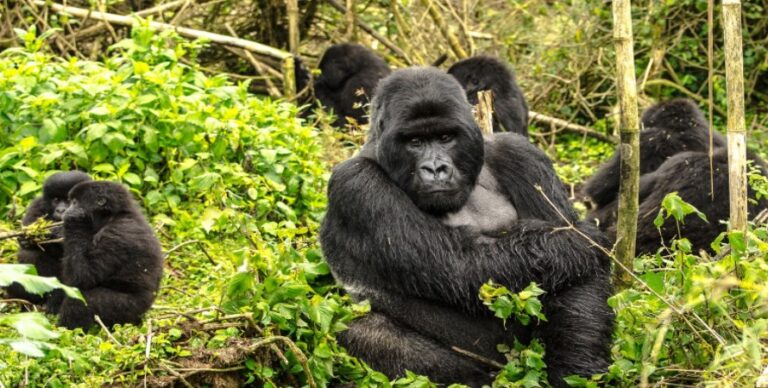
Imagine standing in a silent, misty forest, breathing heavily from a steep trek, when a massive, gentle eye locks onto yours through the thick foliage. This is the reality of a Uganda safari in Bwindi Impenetrable National Park. Uganda is the ultimate sanctuary for our closest cousins, harboring roughly 459 of the world’s remaining 1,063 endangered mountain gorillas—which is nearly half the entire global population.
When you set out on a trek, you aren't just taking a walk; you are entering a prehistoric, vine-tangled world. For example, tracking the Rushegura or Mubare gorilla families in Bwindi brings you within just a few meters of a 400-pound silverback lounging peacefully while toddlers somersault through the undergrowth. The strict one-hour tracking limit ensures these gentle giants remain wild, making every single second feel incredibly sacred.
But the primate adventure doesn't stop with gorillas. Just a few hours away lies Kibale National Park, a lush jungle that boasts the highest density and diversity of primates in all of Africa. Kibale is home to roughly 1,500 chimpanzees spread across its 795 square kilometers. During a chimp habituation experience, you don't just catch a fleeting glimpse; you spend hours following a community as they swing through the canopy at 40 miles per hour, hooting and drumming on buttress roots. Alongside them, you will likely spot some of the other 12 primate species inhabiting the park, including the vibrant red colobus and the rare L’Hoest’s monkeys. It is a noisy, thrilling, and deeply humanizing experience that connects you right back to our evolutionary roots.
The Tree-Climbing Lions of Ishasha
Game drives across Africa usually feature lions sleeping in the high golden grass, but a Uganda safari throws that conventional playbook right out the window. In the remote Ishasha sector of Queen Elizabeth National Park, the local lions have developed a fascinating, highly unusual habit: they spend their afternoons lounging high up in the sprawling branches of ancient sycamore fig and acacia trees.
Seeing a 400-pound apex predator balancing perfectly on a limb 20 feet above the ground is both surreal and comical. Wildlife biologists suggest they do this to escape the blistering heat of the ground and to get away from irritating tsetse flies, but watching a pride of 5 or 6 lions casually dangling their paws over thick branches feels more like watching oversized house cats. For instance, you might spot a magnificent black-maned male sound asleep on a horizontal bough, completely unfazed by the safari vehicle below.
Ishasha's unique ecosystem supports this behavior perfectly. The sector spans roughly 1,000 square kilometers, and its open savannahs are packed with Ugandan kobs, providing an abundant buffet for these aerial hunters. Because this behavior is incredibly rare—found consistently in only two places in the entire world (the other being Lake Manyara in Tanzania)—it turns a standard game drive into an extraordinary treasure hunt. Watching them scan the plains from their elevated vantage points gives you a profound appreciation for how wildlife adapts to thrive.
Epic Boat Safaris
While traditional 4x4 game drives are fantastic, there is something entirely magical about switching off the engine and drifting silently down a river. Water-based game viewing is a cornerstone of any great Uganda safari, offering an intimate look at wildlife from a completely different angle. The two crown jewels for this are Murchison Falls National Park and the Kazinga Channel in Queen Elizabeth National Park.
In Murchison Falls, a boat cruise takes you down the historic Nile River to the base of the world's most powerful waterfall, where the entire river forces itself through a tiny 7-meter gap. Along the way, the riverbanks act like a vibrant wildlife highway. It is estimated that the Nile here supports one of the world's largest concentrations of hippos, alongside massive Nile crocodiles that easily reach lengths of 15 feet. You will float past families of elephants wading into the shallows to bathe, spraying water over their backs to cool off in the afternoon sun.
Meanwhile, the 32-kilometer-long Kazinga Channel connects Lake Edward and Lake George, acting as a natural oasis. A two-hour launch trip here puts you face-to-face with hundreds of hippos honking in the water, while massive Cape buffaloes wallow in the mud just feet away. The sheer density of animals drinking at the water's edge means you don't even need binoculars; you just sit back, listen to the lap of the water, and watch Africa's greatest theater unfold right before your eyes.
Exceptional Birdwatching
For anyone with a love for feathers and flight, a Uganda safari is nothing short of paradise. Despite its relatively small size, Uganda is home to over 1,050 recorded bird species, which represents roughly half of all bird species found in Africa and about 10% of the global avian population. The country's unique position overlapping the East African savannah and the West African rainforest creates a massive melting pot of distinct habitats.
The ultimate holy grail for any birder visiting Uganda is the legendary Shoebill Stork. This prehistoric-looking giant stands nearly 5 feet tall, sports a massive, clog-shaped beak, and possesses a piercing, dinosaur-like yellow gaze. To find them, you venture into swampy wetlands like the Mabamba Swamp, just outside Entebbe. Gliding through narrow channels of papyrus reeds in a wooden canoe, the silence is broken only by the dip of the paddle until you suddenly spot one standing completely motionless, waiting to strike at a lungfish.
Beyond the shoebill, the country’s diverse biomes offer incredible variety. In Bwindi alone, you can search for 23 Albertine Rift endemics, such as the striking African Green Broadbill. Head to the savannahs, and you will see the elegant Grey Crowned Crane—Uganda’s national bird—dancing in pairs. Whether you are a hardcore twitcher looking to check off rare species or a casual traveler who simply appreciates a splash of color, the sheer volume of birds filling the morning air with song is unforgettable.
Diverse Landscapes in a Compact Area
One of the most remarkable things about a Uganda safari is how quickly the world changes right outside your window. Uganda packs an astonishing variety of ecosystems into an area of just 241,038 square kilometers—roughly the size of Great Britain. In a matter of days, you can easily journey through golden savannahs, dense equatorial jungles, dramatic volcanic crater lakes, and jagged, snow-capped mountain ranges.
Your journey might begin in the far north at Kidepo Valley National Park, a rugged, sweeping wilderness bordered by the mountains of South Sudan. Kidepo’s vast, sun-bleached valleys make you feel like you have reached the edge of the earth. Yet, a day’s drive south completely rewrites the script, plunging you into the dense, emerald canopies of the rainforests where wild ginger smells sweet in the damp air.
Travel further west, and the earth wrinkles into the dramatic Fort Portal crater lakes—over 50 volcanic caldera lakes dotting the landscape like shimmering blue jewels. Looming over it all are the legendary Rwenzori Mountains, the "Mountains of the Moon." Rising to a staggering 5,109 meters at Margherita Peak, these are Africa’s highest mountain range, topped with permanent glaciers right on the equator. Traveling through Uganda feels less like visiting a single country and more like exploring an entire continent packed into one beautifully diverse, welcoming destination.
Why a Uganda Safari Stands Alone
A Uganda safari is fundamentally different from any other African journey because it refuses to be just one thing. In most iconic wildlife destinations, you choose a lane: you either head to the sweeping, dry savannahs for big game or you plunge into the deep, humid rainforests for primates. Uganda completely shatters that divide. It is a geographical crossroads where East African plains collide with West African jungles, allowing you to track wild chimpanzees in the morning and look for tree-climbing lions in the afternoon. Because the country is relatively compact, you aren't spending days flying between vastly different ecosystems; you are watching the landscape transform outside your window every few hours, making the entire journey feel incredibly raw, spontaneous, and beautifully alive.
Where can you find mountain gorillas in the wild?
To look into the eyes of a wild mountain gorilla, your Uganda safari will lead you deep into the ancient, mist-shrouded valleys of Bwindi Impenetrable National Park or Mgahinga Gorilla National Park. These parks protect roughly half of the world's remaining mountain gorilla population. Bwindi alone is home to over 20 habituated gorilla families, meaning your trek is a highly intimate window into their daily lives. Guided by expert local rangers who know these gentle giants by name, you will push through dense curtains of wild celery and tangled vines. The moment the foliage clears to reveal a 400-pound silverback casually munching on bamboo shoots while toddlers swing from nearby branches is entirely transcendent. It requires a bit of sweat and grit to conquer the steep, muddy ridges, but the reward is an profound connection with a species that shares 98% of our DNA. It is a raw, humbling experience that instantly makes the rest of the world fade away.
Why do Ishasha lions sleep up in fig trees?
In the southern Ishasha sector of Queen Elizabeth National Park, the local lions have abandoned the traditional playbook to become masters of the canopy. While lions across Africa generally stay grounded, these specific prides spend their hot afternoons draped over the sturdy, horizontal limbs of ancient sycamore fig trees. Wildlife biologists believe this unique behavior is a clever adaptation to escape the suffocating ground heat and to find a breeze away from irritating tsetse flies. From a traveler's perspective on a Uganda safari, spotting a massive, black-maned male sleeping soundly twenty feet in the air, paws dangling lazily over a thick branch, is both comical and breathtaking. It turns a standard game drive into a thrilling treasure hunt. Watching these apex predators scan the golden savannah from their elevated lounges gives you a front-row seat to nature's incredible adaptability, offering a wildlife spectacle that you can find in only a couple of places on Earth.
How close can you get to wild chimpanzees here?
Kibale National Park offers an unparalleled, heart-pounding proximity to our closest living relatives. Housing roughly 1,500 chimpanzees within its lush borders, this vibrant rainforest boasts the highest density of primates in East Africa. When you set off on a chimp tracking excursion, you aren’t just looking at animals from a distance; you are actively walking through their living room. You will hear them long before you see them—a rising crescendo of pant-hoots, screams, and powerful drumming against the buttress roots of massive mahogany trees that echoes through the canopy. Once you catch up to a habituated community, you can stand just a few meters away as they groom each other, play, and squabble on the forest floor. If you opt for the full-day Chimpanzee Habituation Experience, you get to follow them from the moment they wake up and leave their nests until they build new ones at dusk, providing a deeply humanizing look into their complex social lives.
What makes a Nile boat safari so thrilling?
A boat cruise along the historic Victoria Nile in Murchison Falls National Park completely redefines the traditional safari experience. Instead of watching the landscape from the dusty seat of a 4x4, you glide smoothly down the river toward the base of the world’s most powerful waterfall, where the entire Nile forces itself through a tiny seven-meter gap in the rocks. The riverbanks act as a bustling wildlife superhighway. You will float past immense pods of hippos huffing and splashing in the water, alongside massive Nile crocodiles sunning themselves on the muddy banks with their jaws wide open. Elephants frequently march down to the water’s edge to drink and play, splashing water over their backs, completely unbothered by your presence. The perspective from the water is incredibly intimate; it allows you to get remarkably close to the action while listening to the gentle lap of the river and the wild calls of fish eagles soaring overhead.
Where can you spot the prehistoric shoebill stork?
For anyone with a love for rare wildlife, tracking the elusive shoebill stork in the vast Mabamba Swamp is the ultimate quest. This prehistoric-looking bird, standing nearly five feet tall with a massive, clog-shaped beak and an intense yellow stare, seems like a creature straight out of a dinosaur movie. To find them, you board a small wooden canoe steered by a local guide who expertly navigates the narrow, labyrinthine channels cut through thick walls of papyrus reeds. The journey itself is a peaceful, slow-paced adventure, filled with the quiet rustle of the wind and the flashes of colorful malachite kingfishers. The real magic happens when the canoe rounds a bend and your guide silently points to a lone shoebill standing completely frozen in the shallow water, waiting with infinite patience to strike at a lungfish. Witnessing this rare, solitary bird in its wild wetland home is a profoundly rewarding highlight of any specialized Uganda safari.
Can you see snow on the equator here?
It sounds like a geographical paradox, but a Uganda safari can take you from sweltering equatorial savannahs to permanent, glistening glaciers in a matter of days. The legendary Rwenzori Mountains, historically known as the "Mountains of the Moon," rise dramatically along the border of the Democratic Republic of Congo, with Margherita Peak reaching a towering 5,109 meters. Unlike isolated volcanic peaks like Kilimanjaro, the Rwenzoris are a massive, rugged alpine range filled with surreal landscapes. Trekking here feels like stepping onto another planet; you will hike through eerie forests of giant lobelias and heather covered in thick moss before reaching the stark, snow-capped summits. Even if you aren't an extreme mountaineer, simply gazing up at these jagged, ice-crowned peaks rising above the mist from the surrounding valley plains is a breathtaking reminder of Uganda’s stunning ecological diversity, proving that the tropics hold far more secrets than just sun and sand.
How diverse are the country’s natural landscapes?
The sheer speed at which the scenery changes is what makes traveling through Uganda feel so incredibly vibrant. Within a relatively compact territory, the country packs a dizzying array of distinct biomes that would normally require traversing an entire continent to see. You can start your journey in the rugged, sun-bleached savannahs of Kidepo Valley in the far north, where the horizons feel completely endless. A day's drive south pulls you into the dense, humid, emerald-green depths of equatorial rainforests. From there, the terrain wrinkles into the breathtaking crater lakes region near Fort Portal, where dozens of ancient volcanic calderas form deep blue pools surrounded by rolling tea plantations. You can seamlessly transition from open plains filled with giraffes to mist-covered mountains, rushing rivers, and vast wetlands. This incredible geographic tapestry ensures that no two days on the road ever look or feel the same, keeping your sense of discovery constantly alive.
What birds make this a top destination?
With over 1,050 recorded bird species packed into one country, Uganda is a vibrant, chaotic paradise for birdwatchers. This staggering number represents roughly half of all bird species found across the African continent and about 10% of the entire world's avian population. This incredible density is due to the country’s unique position, where East African savannahs meet the rich West African rainforests. On a Uganda safari, the air is constantly alive with color and song. You can spot the striking Great Blue Turaco bouncing through the jungle canopy, the elegant Grey Crowned Crane—Uganda’s national symbol—dancing gracefully in open wetlands, and brilliant little sunbirds darting between tropical flowers. Whether you are a dedicated birder trying to tick rare Albertine Rift endemics off your life list or simply a traveler who appreciates nature's soundtrack, the sheer volume and variety of birdlife filling the skies makes every single morning feel wonderfully magical.
Where is the most powerful waterfall located?
The raw, thundering heart of Uganda's wilderness can be found at Murchison Falls, located within the country's largest national park. Here, the mighty Nile River, which has been flowing wide and placidly through the savannah, suddenly hits a narrow rocky bottleneck. The entire volume of the river is violently forced through a canyon that is a mere seven meters wide, plunging forty-three meters down into the "Devil's Cauldron" below. The sheer physical force of this bottleneck creates a hypnotic, roaring spectacle that actually makes the surrounding earth tremble beneath your feet. You can take a boat to the turbulent base of the falls to watch the massive plumes of white foam and permanent rainbows, or hike up to the top of the falls to stand right at the edge of the chasm. Feeling the cool mist spray across your face while watching millions of liters of water explode through the rocks is an unforgettable encounter with nature's pure power.
How do locals enrich the safari experience?
While the wildlife and landscapes are undeniably spectacular, it is the warmth, genuine hospitality, and vibrant spirit of the Ugandan people that truly breathe life into a Uganda safari. The country is a beautiful mosaic of over fifty distinct tribes, each with its own rich history, language, and cultural traditions. When you visit a local community—whether you are learning traditional farming techniques from the people living near Bwindi or sharing stories around a campfire with the nomadic Karamojong pastoralists in the north—you are met with open arms and infectious smiles. Safari guides here don't just recite facts from a textbook; they share personal stories of growing up alongside these landscapes, infusing every drive with deep local insight and humor. It is this human connection, the shared laughter, and the heartfelt pride that locals take in showing you their beautiful homeland that transforms a great vacation into a deeply meaningful, unforgettable journey.
Booking Uganda safari with us Roads of Adventure safaris
Ready to turn these dreams into reality? Booking your Uganda safari is incredibly seamless with Roads of Adventure Safaris, based right in Seguku, Kampala. They take all the stress off your shoulders by handling every detail—from securing those highly competitive gorilla permits to booking beautiful mid-range or luxury lodges and arranging park entries.
Trips generally run between $300 and $1,000 per person, per day. To start planning, just shoot an email to info@roadsofadventuresafaris.com or call +256 701041637. Just lock in your dates with a 30% deposit, and you are all set for the adventure of a lifetime! Where should we head first?
