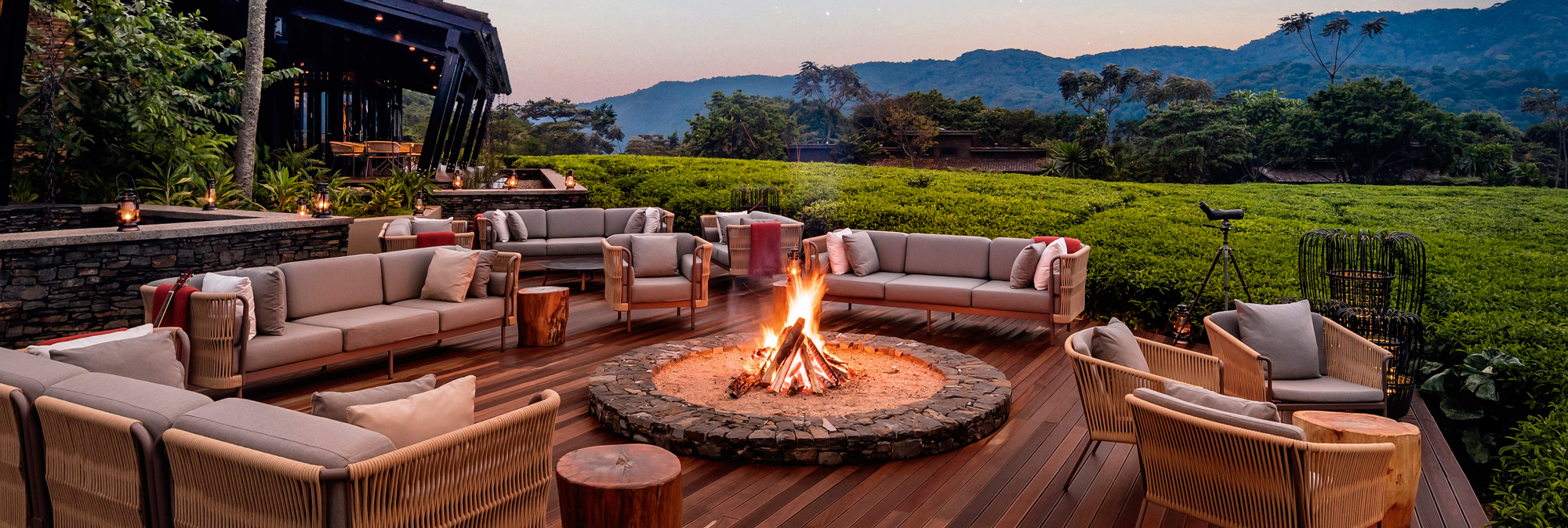
On a 12-day Uganda safari, you can expect a mix of accommodation types, ranging from luxury lodges and comfortable mid-range tented camps to cozy budget cottages. Many lodges are located near national parks, offering stunning savanna views or forest immersion with amenities like verandas and restaurants.
12-days-luxury-safari-in-uganda-parks
12-days-perfect-rwanda-uganda-gorilla-trekking-safari-holiday-vacation
12-days-uganda-wildlife-primate-experience-and-lake-mutanda-vacation
12-days-all-inclusive-uganda-wildlife-and-primate-safari
12-days-uganda-birding-tour-looking-for-rift-valley-endemic-birds-west-circuit
12-days-best-uganda-rwanda-primate-safaris-and-akagera-big-five-safaris
12-days-best-uganda-safari-big-five-and-uganda-primate-safari
12-days-uganda-safari-and-tours-combined-with-zanzibar-beach-vacation
Types of Accommodations
Luxury Lodges
Luxury lodges in Uganda are defined by their "prime-positioning" and architectural harmony with nature. These properties, such as Paraa Safari Lodge overlooking the Nile or Mweya Safari Lodge perched on a peninsula in Queen Elizabeth National Park, offer an immersive five-star experience in the heart of the wild. You can expect expansive suites with private balconies, high-end linens, and often, private plunge pools or bathtubs with panoramic views of the savannah or forest.
The service at this level is highly personalized, featuring professional chefs who prepare gourmet three-course meals and "sundowner" cocktails served at breathtaking viewpoints. Beyond the physical comfort, the "luxury" lies in the accessibility; these lodges are often located inside the park gates, meaning your game drive begins the moment you leave the lobby. For the gorilla trekking sectors, luxury options like those in the Buhoma or Nkuringo regions offer spa services and massage therapies—essential for muscle recovery after a grueling day of hiking through the Bwindi Impenetrable Forest.
Mid-range & Tented Camps
Mid-range accommodations and permanent tented camps represent the most popular choice for the modern traveler, offering a perfect "sweet spot" between cost and comfort. Properties like Isunga Lodge near Kibale or Marafiki Safari Lodge provide a "bush-chic" atmosphere. These are typically permanent structures or large walk-in canvas tents built on raised wooden platforms with thatched roofs.
Crucially, they feature en-suite bathrooms with flushing toilets and hot showers (often solar-powered). The focus here is on authentic hospitality and "eco-friendly" luxury. You get to fall asleep to the sounds of the jungle or the distant roar of a lion, protected by canvas but surrounded by the comforts of a hotel room. These lodges often have central dining areas and fire pits where guests gather in the evening to share stories. For many, the mid-range tented camp provides the "quintessential" safari feel—intimate, rustic, yet entirely comfortable and safe.
Budget & "Lazy Camping"
For the adventurous traveler or those mindful of their budget, "Lazy Camping" is an innovative solution that removes the hassle of traditional camping. Unlike "pitch-your-own" camping, these are permanent tents already set up in scenic locations, such as the fringes of Murchison Falls or the hills of Lake Bunyonyi. You are provided with a fixed bed, mattress, and clean linens, so you don't need to carry any gear.
While bathrooms are usually shared in a central block, they are kept well-maintained and often feature "bush showers" (bucket showers) that provide a surprisingly refreshing experience. This tier allows you to stay in the same stunning natural settings as the high-end lodges but at a fraction of the price. It is particularly popular with younger travelers and families who want a "raw" connection with nature. You’ll wake up to the dawn chorus of birds and enjoy meals in a communal dining hut, fostering a social atmosphere that is often missing in more secluded luxury properties.
City Hotels
As your 12-day safari begins and ends in the urban hubs of Entebbe or Kampala, the "City Hotel" provides a necessary bridge between international travel and the rugged wilderness. High-end establishments like the Kampala Serena Hotel or the Protea Hotel Entebbe offer world-class urban luxury. These hotels feature expansive swimming pools, international-standard gyms, and multiple dining outlets ranging from Italian to traditional Ugandan cuisine.
These stays are strategically used for "acclimatization" on Day 1 and "re-entry" on Day 12. They provide the high-speed Wi-Fi, laundry services, and air-conditioned comfort needed to reorganize your gear before heading into the bush or heading home. Staying in a high-end city hotel also offers a glimpse into the modern, vibrant side of Uganda—its bustling business districts and sophisticated nightlife—providing a well-rounded view of the country beyond its national parks. It ensures that your first and last nights in "The Pearl of Africa" are spent in total tranquility.
Common Locations & Highlights
Murchison Falls National Park
In the northern savannah, the choice of stay is often dictated by your relationship with the Nile. Fort Murchison Lodge has become a standout for those seeking a "Swahili-inspired" fortress aesthetic on the eastern banks of the Albert Nile. It is uniquely structured to cater to two distinct budgets: its 12 massive, earth-toned suites offer an upscale "fortress" feel with private balconies, while its "lazy camping" tents—set under permanent thatched roofs—provide a high-value alternative. These tents include proper beds and power outlets, allowing you to enjoy the raw sounds of the river without sacrificing basic electronics or a comfortable mattress.
The highlight of staying here is the rooftop terrace, which serves as the ultimate sundowner spot for watching the Nile transition from gold to twilight. Its location near the Tangi gate means you often start your game drives the moment you exit the lodge grounds. Whether you are aiming for a luxury experience or a more rustic connection with the bush, the proximity to the falls and the abundance of elephants and giraffes in the surrounding Aswa Lolim reserve make this northern hub a mandatory pillar of any 12-day circuit.
Bwindi Impenetrable Forest
Accommodation in Bwindi is as much about "conservation access" as it is about comfort. Lodges are clustered around the four main trekking gates, but Bwindi Lodge and Sanctuary Gorilla Forest Camp remain the premier choices for the Buhoma sector. Bwindi Lodge is celebrated for its dramatic views; its banda chalets are perched on a ridge that makes you feel as though you are floating above the ancient forest canopy. It’s a place where the mist literally rolls into your room in the morning, setting a prehistoric tone for your trek.
For those seeking total immersion, Sanctuary Gorilla Forest Camp holds the rare distinction of being located inside the national park boundaries. This is one of the only places where gorilla families have been known to occasionally wander through the camp itself. The "tents" here are engineering marvels—luxury canvassed rooms on wooden platforms featuring deep bathtubs that look directly into the jungle. After a grueling 6-hour trek, soaking in a tub while watching L'Hoest's monkeys play in the trees above is the pinnacle of the "high-end" Uganda experience. These lodges act as silent partners in your trek, providing the specialized meals and spa treatments needed to fuel and repair your body during your mountain adventure.
Kibale Forest & Queen Elizabeth National Park
The transition from the chimpanzee-filled canopies of Kibale to the open plains of Queen Elizabeth is often bridged by staying at Primate Lodge or The Bush Lodge. Primate Lodge is the heartbeat of Kibale; located right at the Kanyanchu tracking trailhead, it eliminates the need for early morning commutes. Its luxury cottages and safari tents are tucked so deeply into the rainforest that you are often woken up by the vocal "pant-hoots" of nearby chimpanzee communities. The lodge’s design focuses on "eco-minimalism," ensuring that the human footprint is small while the guest experience remains large.
As you move south into Queen Elizabeth, The Bush Lodge offers a masterclass in "safari chic" at a mid-range price point. Situated off the Kazinga Channel, its canvas rooms are spaced out to ensure total privacy, connected by winding paths through the indigenous bush. The highlight here is the outdoor shower experience and the communal dining deck, where you can watch hippos congregate in the channel below as you eat. These locations are strategically chosen to keep you "in the rhythm" of the wild—ensuring that even when you aren't on a formal game drive, the wildlife and the atmosphere of the Albertine Rift are ever-present.
12-day safari in Uganda
12-day safari in Uganda is the definitive journey through the "Pearl of Africa," offering a meticulously paced exploration of the continent’s most diverse landscapes. This 2026 itinerary avoids the exhaustion of shorter trips, allowing you to transition seamlessly from the thunderous cascades of the North to the ancient, mist-shrouded rainforests of the Southwest. You will traverse ecosystems ranging from semi-arid savannahs and palm-dotted plains to lush tropical jungles and volcanic crater lakes. This comprehensive loop secures the "Primate Double"—chimpanzees in Kibale and gorillas in Bwindi—while checking off the Big Five, including tree-climbing lions and on-foot rhino tracking. Beyond the wildlife, the 12-day timeframe provides essential "breathing room" at scenic retreats like Lake Bunyonyi, ensuring that your adventure remains as rejuvenating as it is exhilarating. It is a profound immersion into the heart of East Africa, promising deep cultural connections and wildlife encounters that are, quite literally, life-altering.
Day 1: Arrival in Entebbe
Your adventure begins at Entebbe International Airport, situated on the lush shores of Lake Victoria. Upon arrival, you will be met by your professional guide and transferred to your hotel. This first day is dedicated to acclimatization and relaxation after your international flight. Depending on your arrival time, you might enjoy a stroll through the Entebbe Botanical Gardens, home to diverse birdlife and colobus monkeys, or take a sunset boat cruise on the lake. The evening includes a welcome dinner and a detailed briefing on the upcoming circuit. Entebbe’s tranquil atmosphere provides the perfect entry point, allowing you to settle into the pace of "African time" before heading into the wild northern savannahs the following morning.
Day 2: Ziwa Rhino Tracking & Murchison Falls
Leaving the lakeside behind, you journey north toward Murchison Falls National Park. The first major stop is the Ziwa Rhino Sanctuary, the only place in Uganda where you can see rhinos in the wild. Accompanied by expert rangers, you will track southern white rhinos on foot, a thrilling "Big Five" encounter that supports vital conservation efforts. After a local lunch, you continue to Murchison Falls, entering the park and heading straight to the "Top of the Falls." Here, the entire Nile River is forced through a narrow 7-meter gorge before plunging 43 meters down. The roar of the water and the permanent rainbows created by the mist offer a dramatic welcome to Uganda’s largest and oldest national park.
Day 3: Savannah Game Drive & Nile Boat Safari
The morning begins with a sunrise game drive on the northern banks of the Nile. This is the prime time to spot predators like lions and leopards alongside massive herds of Rothschild’s giraffes, elephants, and Uganda kobs. In the afternoon, the perspective shifts to the water with a boat cruise upstream to the base of the falls. The riverbanks are a theater of wildlife; you will pass pods of hippos, Nile crocodiles, and buffaloes cooling off at the water's edge. The boat brings you close to the "Devil’s Cauldron," where the river’s power is most intense. This combination of land and water safaris provides a comprehensive look at the park’s rich biodiversity in a single, action-packed day.
Day 4: Scenic Drive to Kibale Forest
Today is a scenic "window safari" as you travel from the northern savannahs to the lush tropical forests of the west. The drive to Kibale National Park winds through vibrant trading centers, local villages, and expansive tea plantations that carpet the hills in brilliant green. Along the way, the fabled "Mountains of the Moon"—the Rwenzori Range—emerge on the horizon. You will stop in the town of Fort Portal for lunch before reaching the edge of the rainforest. This transition day showcases the geographical diversity of Uganda, moving from semi-arid plains to the primate capital of the world. You’ll arrive at your forest lodge in the late afternoon, greeted by the sounds of the jungle.
Day 5: Chimpanzee Tracking & Bigodi Wetland
Kibale Forest is home to 13 primate species, but today the focus is on our closest relatives: the chimpanzees. Following a ranger briefing, you enter the dense canopy. The forest floor is a tangle of roots, but the vocal "pant-hoots" of the chimps usually lead the way. You will spend an hour observing their complex social interactions, from grooming and playing to high-speed chases through the trees. In the afternoon, you visit the Bigodi Wetland Sanctuary for a guided walk. This community-run project is a birdwatcher's paradise and offers chances to see eight more primate species, including the Red Colobus. The walk provides a gentle contrast to the morning’s trek and directly supports local community development projects.
Day 6: Kazinga Channel & Queen Elizabeth NP
After breakfast, you depart for Queen Elizabeth National Park, driving through the stunning "Explosion Crater" region—a series of deep, emerald-green lakes surrounded by volcanic rims. Upon arrival, you will check into your lodge before embarking on an afternoon boat cruise on the Kazinga Channel. This natural waterway connecting Lake Edward and Lake George hosts one of the world's highest concentrations of hippos. From the safety of the boat, you will have eye-level views of elephants, buffaloes, and hundreds of bird species drinking at the water’s edge. The channel is a photographer’s dream, offering effortless wildlife sightings against the backdrop of a setting sun, making it a highlight for every traveler to the park.
Day 7: Lion Tracking & Savannah Exploration
The day begins in the Kasenyi Plains, the park’s primary mating ground for kobs and the best place to find lions. You may participate in a lion-tracking research session, using radio telemetry to locate prides for conservation monitoring—a rare chance to get closer to the predators than a standard game drive allows. The plains are also home to giant forest hogs, warthogs, and various raptors. After lunch, the afternoon can be spent on a traditional game drive or exploring the salt-mining history at Lake Katwe. This day is designed to showcase the park’s diverse habitats, from open savannah to swampy wetlands and volcanic craters, providing a comprehensive look at how these ecosystems support a massive array of life.
Day 8: Ishasha’s Tree-Climbing Lions
Leaving the northern sector, you drive south to the remote Ishasha sector. This area is world-renowned for its "tree-climbing lions," a behavior seen in very few places across Africa. These lions spend the heat of the day draped over the massive branches of ancient fig trees to escape insects and catch a breeze. Finding a 400-pound cat lounging ten meters above the ground is a highlight for any photographer. The landscape here is distinct, characterized by open woodland and a sense of wild isolation. You will spend the day searching the trees and riverbanks, where you might also spot topis and herds of buffalo. The night is spent at a lodge within the sector, soaking in the raw, untamed atmosphere.
Day 9: Journey to Bwindi Impenetrable Forest
The journey continues toward the southwestern corner of Uganda, ascending into the Kigezi Highlands. Often called the "Switzerland of Africa," this region is defined by steep, terraced hills and cool mountain air. The road winds higher until you reach the edge of Bwindi Impenetrable National Park, a UNESCO World Heritage site and home to half the world's mountain gorillas. The transition from savannah to ancient, mist-laden rainforest is profound. After checking into your lodge—perched on a ridge with views over the canopy—the rest of the day is for preparation. You may take a walk to a nearby village or simply relax, listening to the sounds of the forest and anticipating the life-changing encounter with the silverbacks scheduled for tomorrow.
Day 10: Gorilla Trekking – The Ultimate Encounter
This is the pinnacle of your safari. After an early briefing on trekking etiquette, you are assigned to a gorilla family and set off into the forest. The trek can be physically demanding, lasting between two and six hours as you navigate steep slopes and thick vegetation. However, the moment you find the gorillas, all fatigue vanishes. You are allowed exactly one hour to sit quietly in their presence. Watching a silverback protect his family while infants tumble through the vines is a deeply emotional, almost spiritual experience. There are no fences—just you and the giants of the forest. You return to the trailhead to receive your "Gorilla Graduation" certificate, carrying memories of an encounter that very few people on earth will ever experience.
Day 11: Relaxation at Lake Bunyonyi
Following the intensity of the gorilla trek, the itinerary takes a slower pace at Lake Bunyonyi. Known as the "Lake of a Thousand Islands," Bunyonyi is one of the deepest and most beautiful lakes in Africa. Its calm, bilharzia-free waters are safe for swimming and surrounded by hills terraced to the very top. You will spend the day decompressing—perhaps exploring the lake by traditional dugout canoe, visiting "Punishment Island," or birdwatching from the shore. The lake’s name translates to "Place of Little Birds," and the tranquility here is the perfect antidote to the rugged adventures of the previous week. It is a time for reflection, allowing you to process the emotional impact of the primate encounters before the final leg.
Day 12: The Equator and Departure
On your final day, you begin the drive back toward Entebbe. The journey offers one last iconic stop: the Equator crossing in Kayabwe. Here, you can stand with one foot in each hemisphere, participate in the "Coriolis effect" water demonstration, and pick up some last-minute handcrafted souvenirs. After a farewell lunch, you continue to Entebbe. Depending on your flight schedule, you may have time for a final cup of Ugandan coffee overlooking Lake Victoria. As you are transferred to the airport, the 12-day loop is complete. You leave not just with a full camera roll, but with a deep appreciation for the complex beauty of the Ugandan landscape, the resilience of its wildlife, and the undeniable warmth of its people.
What types of accommodation are available on a 12 Days Africa safari in Uganda?
The spectrum of accommodation in Uganda is impressively broad. Luxury Lodges represent the pinnacle of the experience, offering high-end architectural designs that blend into the landscape, often featuring private plunge pools and gourmet dining. Mid-range Tented Camps are the most popular choice, providing a "classic" safari feel with walk-in canvas tents on raised wooden platforms, equipped with proper beds and en-suite facilities. For those on a tighter budget, Budget Hotels or "Lazy Camping" options provide clean, functional, and safe places to stay without the high price tag of more remote lodges.
These choices allow for a highly customizable experience. You might choose to splurge on a luxury lodge in Bwindi for your gorilla trekking while opting for mid-range comfort in Queen Elizabeth National Park. Regardless of the tier, the common thread is a deep connection to nature. Most accommodations are designed to maximize views of the forest canopy, the winding Nile, or the vast savannah plains, ensuring that even your downtime feels like part of the adventure.
Are the accommodations on a 12 Days Africa safari in Uganda comfortable?
Yes, comfort is a high priority for Ugandan safari operators. Even at the mid-range level, you can expect a high standard of cleanliness and hospitality. Mid-range lodges are specifically designed to offer a "home away from home" atmosphere. They typically feature spacious rooms with comfortable mattresses, mosquito netting, and private verandas where you can relax with a drink. The staff are renowned for their warmth and attentiveness, often going out of their way to ensure guests are comfortable.
In more rustic settings, comfort is redefined as "bush luxury." While you may be in a tent, you are not "roughing it" in the traditional sense. You will have high-quality linens, solid furniture, and hot water for showers. The goal of these lodges is to provide a serene environment where you can decompress after the physical exertion of trekking or the heat of a game drive. In 2026, many lodges have also upgraded their communal areas to include cozy lounges and fire pits, which are perfect for evening relaxation.
Will I stay in tented camps on a 12 Days Africa safari in Uganda?
Tented camps are a staple of the 12-day itinerary. These are not the small, temporary tents used by mountain climbers; rather, they are permanent or semi-permanent luxury structures. They feature heavy-duty canvas walls, stone or wooden floors, and thatched roofs for extra insulation against the sun and rain. Staying in a tented camp allows you to experience the sounds of the African night—the distant roar of a lion or the rustle of a forest elephant—while remaining in a secure, comfortable environment.
These camps are often strategically located within or just outside the boundaries of national parks like Murchison Falls or Queen Elizabeth. This proximity minimizes travel time for early morning game drives. Inside, you will find all the amenities of a standard hotel room, including a private bathroom and electricity. For many travelers, the sound of rain on a canvas roof or the cool breeze blowing through the tent is the most authentic way to experience the Ugandan wilderness.
Are there luxury options available on a 12 Days Africa safari in Uganda?
For travelers seeking an exclusive and indulgent experience, Uganda offers world-class luxury and boutique eco-lodges. Particularly in the Bwindi and Queen Elizabeth sectors, you will find properties that rival the best in the world. These lodges often feature fewer than ten rooms, ensuring a highly personalized level of service, including private butlers and flexible dining schedules. The architecture often utilizes local materials like volcanic stone and papyrus thatch to create a "safari-chic" aesthetic.
Luxury lodges like Mahogany Springs or Bwindi Lodge offer premium amenities such as spa treatments, which are a godsend after a gorilla trek. The food at this level is often organic and locally sourced, with chefs capable of catering to any dietary requirement with international flair. While these options come at a premium, the combination of total privacy, prime location, and superior comfort makes them a popular choice for honeymooners, photographers, and those celebrating milestone events.
Do lodges on a 12 Days Africa safari in Uganda have electricity?
The short answer is yes, but the source and availability can vary. Most lodges utilize a combination of solar power, generators, and the national grid. In remote areas like Bwindi or Murchison Falls, solar power is the primary source, supplemented by generators during peak hours. You will almost certainly have lighting in your room and power outlets in the common areas or the rooms themselves to charge your cameras, phones, and tablets.
However, it is important to note that power may be "rationed" in some eco-lodges. For example, some lodges might turn off the generator at 10:00 PM to ensure a quiet night for guests and wildlife. While you will always have enough power for basic needs, high-wattage appliances like hair dryers are often discouraged unless the lodge is on the main grid. In 2026, most lodges have significantly improved their solar battery storage, making power outages much less common than in the past.
Will I have a private bathroom on a 12 Days Africa safari in Uganda?
Privacy and hygiene are standard in the Ugandan safari industry. In both mid-range and luxury lodges, you can expect private, en-suite bathrooms. These are fully equipped with flushing toilets, sinks, and showers. Most lodges have moved toward "safari showers"—large, walk-in spaces with rainfall showerheads that provide ample hot water, often heated by solar panels or wood-fired boilers (locally known as "donkeys").
Even in permanent tented camps, the bathroom is typically an extension of the tent, separated by a zipper or a wooden door. Having your own facilities is a major factor in the overall comfort of the safari, especially during the early morning hours before a game drive. The only exception to this rule is in the "Budget" or "Lazy Camping" tier, where bathrooms may be shared in a centralized, well-maintained block, though many modern budget camps are now adding private bathrooms to their units to meet rising guest expectations.
Do the accommodations on a 12 Days Africa safari in Uganda include meals?
Because many safari lodges are located in remote areas far from towns or restaurants, most operate on a Full Board basis. This means your breakfast, lunch, and dinner are included in the cost of your stay. Breakfast is typically a mix of a continental buffet and "cooked-to-order" eggs and bacon. Lunch is either served at the lodge or provided as a high-quality "packed lunch" if you are spending the entire day in the park.
Dinner is usually the highlight of the day, often a three-course affair featuring soup, a main course (with vegetarian and meat options), and a dessert. The quality of food in Ugandan lodges is remarkably high, with a strong emphasis on fresh, local ingredients like pineapple, avocado, and tilapia. Drinks, particularly alcoholic beverages and sodas, are usually an additional cost, though some high-end luxury lodges include these in their "all-inclusive" rates.
Where will I stay while gorilla trekking on a 12 Days Africa safari in Uganda?
Accommodation for gorilla trekking is specifically clustered around the four main gates of Bwindi Impenetrable National Park: Buhoma, Ruhija, Rushaga, and Nkuringo. Lodges like Rushaga Gorilla Camp or Mahogany Springs are selected based on their proximity to the specific gorilla family you are permitted to track. Staying close to the park headquarters is essential, as trekking briefings typically begin at 8:00 AM.
These lodges are often perched on ridges with stunning views into the "impenetrable" forest. Because the area is at a high altitude, these lodges are designed to be cozy, often featuring fireplaces in the lounge and hot water bottles in the beds. The atmosphere is one of shared excitement; in the evenings, guests gather to share photos and stories of their silverback encounters. The lodges also provide essential services like boot cleaning after the trek, which is a small but much-appreciated luxury.
Are there family-friendly accommodations on a 12 Days Africa safari in Uganda?
Uganda has become increasingly welcoming to families. Many lodges now offer family suites or interconnecting rooms, allowing parents to have their own space while keeping children close. These suites often feature extra beds and larger lounge areas. Lodges in the savannah parks, such as those in Queen Elizabeth or Murchison Falls, are particularly well-suited for families as they often feature swimming pools—the ultimate entertainment for children during the midday heat.
Family-friendly lodges also provide kid-friendly menus, offering simpler versions of meals like pasta or grilled chicken. While the age limit for gorilla trekking is 15, lodges are experienced in organizing alternative activities for younger children, such as nature walks or community visits, while the parents are in the forest. Choosing a lodge with a "homely" feel and secure grounds ensures that the safari is a safe and enjoyable educational experience for travelers of all ages.
Do I have to share a room on a 12 Days Africa safari in Uganda?
No, you are not required to share a room with a stranger. Most lodges offer Single, Double (one large bed), and Twin (two separate beds) configurations. If you are traveling alone, you will be assigned a private room. However, most safari packages are priced based on "double occupancy." This means that single travelers are often required to pay a "single supplement" fee.
This fee covers the costs the lodge incurs for providing a room and services to one person instead of two. In the "Budget" or "Lazy Camping" category, sharing a room is more common if you are part of a group tour, but even there, private options are usually available for a small extra cost. For families or groups of friends, "Triple" rooms are also frequently available, which can be a more cost-effective way to stay together.
Do the safari camps on a 12 Days Africa safari in Uganda have Wi-Fi?
As of 2026, most safari lodges and camps recognize the need for connectivity, even in the heart of the bush. You can expect Wi-Fi in the common areas (the lounge, dining room, or bar). However, due to the remote locations and reliance on satellite or cellular data, the connection can be intermittent and the speeds relatively slow. It is perfect for sending WhatsApp messages or uploading a few photos to social media, but not ideal for heavy video streaming or remote work.
In your actual sleeping quarters (tents or cottages), Wi-Fi is rarely available, as the lodges aim to preserve a "digital detox" atmosphere in the private areas. If staying connected is a priority, many travelers buy a local SIM card (Airtel or MTN) at Entebbe Airport. While cellular coverage is surprisingly good across much of Uganda, the dense forests of Bwindi remain "black spots" where you should expect to be completely offline for a day or two.
Are the lodges safe on a 12 Days Africa safari in Uganda?
Safety is a paramount concern for all Ugandan safari lodges. Properties located within or near national parks are typically patrolled by trained security guards, and in many cases, armed rangers from the Uganda Wildlife Authority (UWA) are stationed nearby. While the lodges are in wildlife areas, they are designed to keep guests safe. For example, at night, it is standard practice for a guard to escort you between your room and the dining hall to ensure you don't cross paths with a stray hippo or buffalo.
Inside your room, you will usually find a safe for your valuables. Most lodges are also "fenced" or use natural barriers to deter large animals from entering the guest areas. In 2026, safety protocols also include health measures, with many lodges having first-aid kits and "on-call" medical contacts in case of emergencies. The high level of security allows you to sleep soundly, knowing that you are in a protected and well-managed environment.
Will I stay near the attractions on a 12 Days Africa safari in Uganda?
Strategic location is one of the hallmarks of a well-planned 12-day itinerary. Tour operators prioritize lodges that are close to the "action" to minimize the time spent in the vehicle and maximize the time spent viewing wildlife. For example, in Murchison Falls, staying on the Nile's banks means you are just minutes away from the boat launch and the primary game drive tracks. In Kibale, you will stay right on the edge of the forest to ensure you are ready for your 8:00 AM chimpanzee briefing.
This proximity is especially important for primate trekking, where early starts are mandatory. Staying "close to the attractions" also allows you to enjoy the unique sounds and sights of each specific ecosystem from your own veranda. Whether it's the roar of the falls or the morning mist of the rainforest, your accommodation is selected to ensure that the beauty of Uganda is always within sight.
What is "lazy camping" on a 12 Days Africa safari in Uganda?
"Lazy camping" is a brilliant compromise for travelers who want the adventure of camping without the logistical headache. In this setup, the tents are pre-erected and fixed in a permanent location. You don't have to pitch your own tent or carry sleeping bags. Inside, you will find proper beds (usually twin beds) with mattresses, pillows, and clean linens.
While more basic than a luxury tented camp, "lazy camping" units usually have a small veranda and a shared or attached basic bathroom. It is a fantastic "Budget" option that keeps you close to nature. You get the authentic experience of sleeping under canvas and hearing the night sounds of the African bush, but with the added comfort of a bed and a roof over your head. It is particularly popular at sites like Fort Murchison or along the shores of Lake Bunyonyi, where the focus is on the spectacular outdoor setting.
Are there eco-friendly options for my 12 Days Africa safari in Uganda?
Sustainability is a major trend in Ugandan tourism for 2026. Many lodges are strictly eco-friendly, operating off-grid using extensive solar power arrays for electricity and water heating. These lodges often employ "grey-water" recycling systems and have eliminated single-use plastics, providing guests with reusable water bottles and filtered water dispensers.
Beyond technology, eco-friendliness in Uganda extends to the community. Many lodges are "community-owned" or partner closely with local villages to ensure that tourism revenue stays in the area. They often grow their own organic produce or source it from local farmers, reducing their carbon footprint while supporting the local economy. Staying at an eco-lodge allows you to enjoy the "Pearl of Africa" with the peace of mind that your visit is contributing to the preservation of its delicate ecosystems and the empowerment of its people.
Booking 12 Days Africa safari in Uganda with us Roads of Adventure safaris
Book a 12-Day Africa Safari in Uganda with Roads of Adventure Safaris, a highly-rated, Kampala-based tour operator specializing in gorilla trekking, chimpanzee tracking, and Big Five wildlife adventures. Their 12-day itineraries typically include visits to Murchison Falls, Kibale Forest, Queen Elizabeth National Park, and Bwindi Impenetrable National Park.
