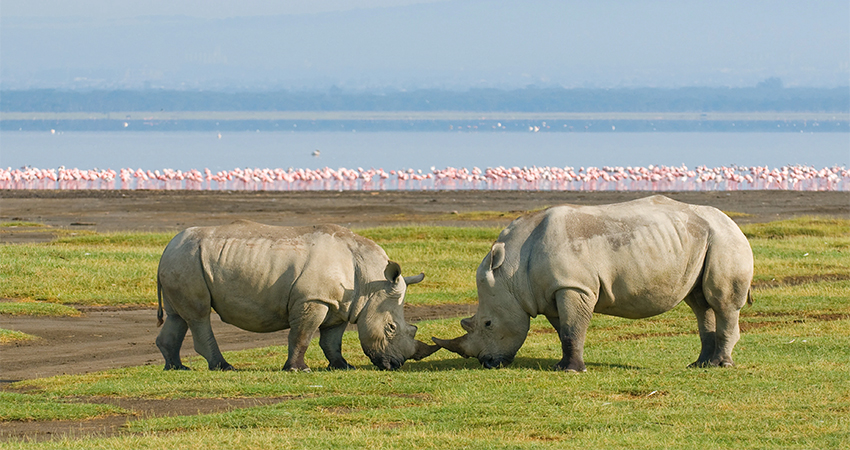
The best time to book a combined Masai Mara and Lake Nakuru safari is from July to October during the dry season, when you can witness the Great Migration River crossings in the Mara and enjoy clear game-viewing conditions around Lake Nakuru. January to February is also an excellent, less crowded alternative
4-days-masai-mara-and-lake-nakuru-kenya-safari-tour-package
5-days-best-of-kenya-wildlife-safari-to-masai-mara-lake-nakuru-and-amboseli-national-park
5-days-masai-mara-safari-lake-nakuru-and-hells-gate-national-park-kenya-tour
6-days-circuit-kenya-safari-to-masai-mara-lake-nakuru-and-amboseli-park
7-days-incredible-africa-big-five-kenya-tanzania-combined-tour
Peak Season: July to October
- Great Migration: Millions of wildebeest and zebras move into the Masai Mara, with dramatic Mara River crossings peaking between July and September.
- Lake Conditions: Lake Nakuru experiences dry weather, making it easy to spot rhinos, giraffes, and leopards along the shores.
- Drawbacks: High demand means top lodges book out months in advance and park prices are at their peak.
Shoulder Season: January to February
- Clear Weather: This short dry period offers warm, clear days and fantastic light for photography.
- Wildlife & Birds: Excellent predator sightings in the Mara and brilliant birdwatching with thriving flamingo populations at Lake Nakuru.
- Fewer Crowds: Visitor numbers are lower than the migration peak.
Low/Green Season: March to May
- Heavy Rains: Long seasonal rains can make dirt roads in the Masai Mara challenging to navigate.
- Budget Friendly: Accommodation prices drop significantly and crowds disappear entirely
When is the overall best time to combine Masai Mara and Lake Nakuru?
The premier window to combine both destinations runs from late June through October. This aligns with Kenya's primary dry season, creating optimal wildlife viewing conditions across both parks. In the Masai Mara, grass plains dry out, driving vast herds of wildebeest, zebras, and gazelles north from the Serengeti into the reserve. The sparse vegetation makes tracking resident big cats—lions, leopards, and cheetahs—significantly easier as they trail the migrating herds.
Simultaneously, Lake Nakuru experiences warm, pleasant weather with minimal rainfall. Water levels stabilize, attracting high densities of white and black rhinos, Rothschild’s giraffes, and waterbirds along the shores. Because animals gather around remaining waterholes in both locations, your game drives yield higher species density in shorter periods.
If you are aiming for seamless travel logistics, dry dirt tracks inside the parks mean smooth transit without getting bogged down in mud. Keep in mind that this is peak travel season across East Africa, so booking your accommodations and safari vehicles roughly 6 to 9 months ahead ensures you secure prime lodge locations near the Mara River and Nakuru shoreline.
What makes July to October the ultimate peak season?
July to October stands out because it hosts the Great Wildebeest Migration, often called the "Seventh Wonder of the Natural World". Over 1.5 million wildebeest, alongside hundreds of thousands of zebras and gazelles, brave predator-dense rivers to reach the sweet grazing pastures of the Mara. The dramatic Mara River crossings—where herds plunge through crocodile-infested waters—occur almost exclusively during this timeframe.
Beyond the migration spectacle, the dry weather triggers intense predator-prey dynamics. Lions, leopards, hyenas, and cheetahs take advantage of short grass and abundant prey, leading to frequent hunting sightings. Over at Lake Nakuru, the clear skies and lower water levels highlight the park's famous sanctuary for endangered black and white rhinos.
The downside to this incredible concentration of wildlife is popularity. Park gates, main safari circuits, and popular river crossing points see high vehicle numbers. Prices for luxury tented camps and boutique lodges reach their annual high. However, if seeing large numbers of animals and high-octane predator action is your dream, no other season matches the sheer energy of these four months.
How early should I book if I want to travel during the Great Migration?
If you plan to visit between July and October, you should ideally book your safari 8 to 12 months in advance. Peak season in the Masai Mara sees massive global demand, and the top-tier tented camps—especially those situated along the Mara and Talek rivers—have limited room capacity and fill up rapidly.
Booking early guarantees choice. It allows you to select camps in prime wildlife locations rather than settling for properties situated hours away from key game-viewing zones. Early planning also secures competitive rates on internal flight transfers if you prefer flying from Nairobi directly into Mara airstrips instead of taking the longer road transit.
Furthermore, park entry fees and permit structures require structured reservation steps. Working with an experienced ground operator well ahead of time ensures all transit logistics, private 4x4 Land Cruiser allocations, and accommodation dates line up smoothly. If you wait until 2 to 3 months before departure, you risk paying premium last-minute rates for sub-optimal lodge locations or finding that preferred properties are completely sold out for your exact travel dates.
Is January to February a good time for a Mara and Nakuru safari?
Yes, January and February form the "short dry season," making them fantastic months for a safari. The short rains of November and December have tapered off, leaving behind clear blue skies, pleasant morning temperatures, and minimal rainfall. While the massive migration herds have returned south to Tanzania's Serengeti, the Mara’s rich resident wildlife stays put year-round.
This season is particularly celebrated for wildlife birthings and big cat action. Many herbivore species give birth during this window, attracting opportunistic lions, leopards, and cheetahs searching for easier prey. Photographers adore January and February because the dust is settled, the light is crisp, and the landscapes remain green without heavy downpours interference.
At Lake Nakuru, dry tracks make rhino tracking very easy, and birding is exceptional as Palearctic migratory birds join resident species along the water’s edge. Best of all, visitor numbers are lower than the July–October peak. You enjoy intimate, quiet wildlife sightings and standard seasonal accommodation rates without fighting for position at lion sightings.
What is the safari experience like during the wet season (March to May)?
March to May represents the "long rains" across Kenya, bringing frequent, heavy downpours. While this is considered the low season, it offers a distinct safari experience that appeals strongly to budget-conscious travelers and seasoned safari goers seeking solitude.
The landscapes transform into vibrant, emerald-green paradises full of blooming flora. The rain washes dust from the air, creating clean atmosphere and dramatic cloudscapes for landscape photography. Newborn ungulates fill the plains, and birdwatching reaches its peak. Crucially, luxury lodges drop their rates significantly, and park visitor numbers hit their lowest point. You will frequently have sightings and vast stretches of savannah entirely to yourself.
However, the trade-offs require preparation. Black-cotton soil in the Masai Mara turns extremely muddy, causing vehicles to occasionally get stuck, and tall grass makes spotting smaller mammals trickier. Some seasonal camps close for maintenance during April and May. If you travel with an expert driver-guide in a customized 4x4 Land Cruiser and keep flexible expectations, the wet season offers magical, uncrowded encounters at a fraction of the cost.
How does the weather at Lake Nakuru differ from the Masai Mara?
Although both destinations sit within southern-central Kenya, their geography creates slightly different climatic conditions. Lake Nakuru National Park sits in the Great Rift Valley at an altitude of around 1,750 meters (5,700 feet) and experiences a dry, semi-humid climate. Because it is surrounded by an escarpment and fenced borders, weather variations tend to be milder. Temperatures are warm during the day and comfortably cool at night, with rain showers passing relatively quickly.
In contrast, the Masai Mara National Reserve consists of open savannah rolling hills ranging between 1,500 and 2,170 meters elevation. It experiences slightly more intense diurnal temperature shifts. Early morning game drives in the Mara can feel surprisingly chilly, requiring warm layers, fleece jackets, and windbreakers. By midday, temperatures rise under strong equatorial sunshine.
Rainfall in the Mara can also be localized and heavy, turning dirt tracks into slick mud in minutes. Lake Nakuru’s interior road network is generally firmer and better maintained, making game drives less prone to weather disruptions even during transitional months.
When is the best time to see flamingos at Lake Nakuru?
Historically, Lake Nakuru was world-famous for carpeted pink shorelines holding millions of lesser and greater flamingos. In recent years, rising water levels in the Great Rift Valley lakes altered the lake's salinity and reduced the abundance of Spirulina algae—the flamingos' primary food source. As a result, flamingo populations now shift dynamically between Lake Nakuru, Lake Bogoria, and Lake Elmenteita.
The best time to look for flamingos at Lake Nakuru is during the drier months from January to March and July to October. When rainfall decreases, evaporation slightly increases water salinity, encouraging algal blooms that draw flamingos back to feed in the shallow edges.
Even when flamingo flocks spread out, Lake Nakuru remains a world-class bird sanctuary hosting over 400 recorded bird species, including pelicans, cormorants, fish eagles, and African spoonbills. If seeing dense pink masses is your absolute top priority, your guide can easily arrange a day excursion to nearby Lake Bogoria, where natural hot springs maintain optimal conditions for flamingos year-round.
When can I see rhinos in Lake Nakuru, and does timing matter?
Lake Nakuru National Park is one of Kenya's premier, fully fenced sanctuaries for both white and black rhinos, making rhino sightings exceptional all year round. Because the park is compact and enclosed, rhinos cannot migrate out, ensuring high population density regardless of the month.
Seasonally, the dry months (June to October and January to February) make tracking them slightly easier. Lower grass levels near the acacia woodlands and lake edges improve visual range, allowing you to spot white rhinos grazing in open grasslands or black rhinos browsing in thick bush.
During the wet months (March to May), rhinos remain abundant but may retreat deeper into dense thickets during heavy rainfall. Early morning and late afternoon game drives yield the highest success rates, as rhinos are actively feeding before midday heat sets in. Unlike free-ranging ecosystems where rhinos are elusive, Lake Nakuru offers one of Africa's highest guarantees for ticking off both rhino species in a single day.
Is it worth visiting the Masai Mara outside of the Great Migration months?
Absolutely, 100% yes. A common misconception is that the Masai Mara loses its charm when the wildebeest migration returns to Tanzania. In reality, the Mara maintains one of the densest populations of resident wildlife in Africa year-round.
The park’s "Big Five"—lions, leopards, elephants, buffaloes, and rhinos—do not migrate. Famous lion prides, resident leopard territories, cheetah coalitions, hyena clans, and massive elephant herds remain anchored in the reserve 365 days a year. Visiting outside July–October means experiencing this rich ecosystem without safari vehicle traffic.
From November to June, game drives feel far more intimate. You can observe big cat behaviors, dramatic hunts, and tender parental interactions without ten other 4x4s surrounding the scene. Add in lower accommodation pricing, stunning green landscapes, and over 450 species of resident and migratory birds, and visiting during the "off-peak" months becomes an exceptionally rewarding choice for savvy travelers.
What clothes should I pack for a Mara and Nakuru safari?
Packing for a Kenyan safari requires a balance between comfort, sun protection, and temperature versatility. The key principle is dressing in layers. Early morning game drives in open-top 4x4 vehicles are cold, so start with a warm fleece, sweater, or light down jacket over a breathable shirt, plus a light scarf.
Essential items to pack:
- Neutral-colored, lightweight clothing (khaki, tan, beige, olive green). Avoid bright colors, white (which gets dusty quickly), and dark blue/black (which can attract tsetse flies).
- Convertible safari pants and breathable long-sleeved shirts for sun and bug protection.
- A wide-brimmed sun hat, polarized sunglasses, and high-SPF sunscreen.
- Comfortable closed-toe walking shoes or light hiking boots for camp walks and bush excursions.
- A waterproof light rain jacket, especially if traveling between March–May or November–December.
- Casual wear for evening lodge dinners.
Keep luggage light—soft-sided duffel bags are required if taking domestic safari flights due to strict 15 kg (33 lbs) weight limits and small hold spaces.
How many days are ideal for a combined Masai Mara and Lake Nakuru trip?
An ideal, well-paced itinerary combining both parks takes 4 to 6 days. This timeframe ensures you spend quality time observing wildlife without feeling rushed by long transit drives.
A typical 5-day breakdown works brilliantly:
- Day 1: Depart Nairobi, drive down the scenic Great Rift Valley to Lake Nakuru National Park, arriving for lunch and an afternoon game drive focusing on rhinos, giraffes, and waterbirds.
- Day 2: Morning game drive in Lake Nakuru, then travel south to the Masai Mara, arriving at your safari camp in time for sunset views over the savannah.
- Days 3 & 4: Two full days dedicated to exploring different sectors of the Masai Mara—tracking big cats, visiting the Mara River, and enjoying picnic lunches in the wild.
- Day 5: Early morning final game drive, brunch, and return travel to Nairobi or flight connection.
This flow balances Nakuru's compact, species-rich lake habitat with the Mara's vast, open predator territory.
How do I travel between Lake Nakuru and the Masai Mara?
The transit between Lake Nakuru and the Masai Mara is typically completed by road in a customized 4x4 safari Land Cruiser. The drive covers approximately 220 to 250 kilometers (depending on which gate/camp you are accessing in the Mara) and takes around 5 to 6 hours.
The journey carries you through diverse Kenyan landscapes. You start in the elevated Great Rift Valley town of Nakuru, head south through agricultural farmland around Mau Narok and Narok Town, before descending into the classic acacia savannahs surrounding the Mara.
While certain sections of the road—particularly the stretch between Narok and the reserve gates—can be bumpy and unpaved, traveling with a professional safari guide in a well-maintained 4x4 vehicle with pop-up roof features ensures safety and comfort. Stopping for lunch or local craft visits en route turns the transfer day into an engaging cultural land journey.
Is a road safari or a fly-in safari better for this route?
Both options offer distinct benefits depending on your budget, time, and travel style:
Road Safaris:
- Pros: Highly cost-effective, especially for couples, families, or small groups sharing vehicle costs. Allows you to see rural Kenya, the Rift Valley escarpment, and local towns up close. You keep the same guide and vehicle throughout your entire trip.
- Cons: Longer travel hours (4 to 6 hours per leg) over occasionally rough, bumpy roads.
Fly-in Safaris:
- Pros: Maximizes game-viewing time by reducing transit hours to 45-minute scheduled flights from Nairobi (Wilson Airport) straight to Mara bush airstrips. Extremely comfortable and offers stunning aerial views of the Rift Valley.
- Cons: Higher overall cost. Luggage is strictly limited to 15 kg in soft duffel bags. Requires game package arrangements where lodge 4x4s conduct shared game drives.
Many travelers choose a hybrid model: driving to Lake Nakuru and Mara, then flying back to Nairobi from the Mara to save time on the final leg.
What are the lodge and tented camp price differences across seasons?
Safari accommodation pricing varies significantly based on season:
- Peak Season (July – October & late December): High lodge and tented camp rates. Standard luxury camps range from $500 to $1,200+ per person per night. Masai Mara non-resident daily park fees also double during peak months.
- Shoulder Season (January – March & November): Moderate rates. Lodges offer 20% to 35% discounts compared to peak season, making high-end tented camps far more accessible. Park fees sit at standard rates.
- Low / Green Season (April – May): Lowest prices of the year. Premium luxury camps run aggressive promotions ("Stay 3 nights, pay for 2") or slash nightly rates by up to 50%.
By adjusting your travel dates by just a few weeks—for example, picking early June instead of mid-July—you can save substantial money while enjoying essentially the same high-caliber safari experience.
Are there fewer crowds if I visit in November or December?
Yes! November and early December represent a wonderful quiet pocket on the safari calendar. Following the departure of the large migration herds back into Tanzania, tourist numbers drop significantly in the Masai Mara.
This period coincides with the "short rains," which usually bring brief, refreshing afternoon showers rather than all-day washouts. The savannah responds with fresh green shoots, drawing resident grazers together and creating stunning backdrops for photography.
Game drives are peaceful. When your guide spots a lion pride or a hunting leopard, you will often enjoy the sighting with only one or two other vehicles present—a stark contrast to the busy convoys seen in August. Crowds spike briefy around Christmas and New Year's holidays, but overall, November to mid-December is one of Kenya's best-kept secrets for intimate wildlife encounters.
How does the Great Migration river crossing actually work?
The Mara River crossings are unscripted, natural wildlife events packed with suspense. As wildebeest and zebras gather along the banks of the Mara and Talek rivers, intense pressure builds within the herds. Thousands of animals pack tightly together on the high river banks, driven by thirst and the instinct to reach fresh grazing on the opposite side.
Hesitation is common. Herds may spend hours moving back and forth along the bank, spooked by steep drops, mud, murky water, or visible Nile crocodiles lying in wait. All it takes is one brave individual—often a zebra or confident wildebeest—to plunge into the current. Once the first animal moves, the rest follow in a chaotic, dust-filled stampede.
Patience is crucial. Experiencing a river crossing requires sitting quietly in your 4x4 vehicle for hours, letting nature take its course without rushing or crowding the animals.
What key wildlife will I see in Lake Nakuru compared to Masai Mara?
While both parks sit within Kenya's wildlife network, their species focus differs distinctively:
- Lake Nakuru National Park: Renowned as a premier sanctuary for endangered species. It offers top-tier sightings of white rhinos on open lakeside flats and black rhinos in bushy woodlands. It is also one of the best places in Kenya to spot the rare Rothschild’s giraffe, waterbucks, reedbucks, pelicans, and tree-climbing lions along acacia groves.
- Masai Mara National Reserve: Famed for sheer volume, vast open spaces, and predator density. Here you track massive lion prides, cheetahs sprinting across flat plains, leopards in riverine forests, spotted hyenas, large elephant herds, hippos, and crocodile colonies.
Combining both parks provides a complete, balanced wildlife experience covering both sanctuary-protected mammals and big game roaming open ecosystems.
Is a Masai Mara and Lake Nakuru safari safe for families traveling with children?
Yes, Kenya is a incredibly welcoming destination for family travel, and this specific circuit is ideal for children. Both parks offer high-density wildlife viewing, keeping young travelers fully engaged without needing long, empty hours of driving.
To ensure a smooth family trip:
- Vehicle: Book a private 4x4 safari vehicle. This gives your family total flexibility on bathroom breaks, meal timings, and game drive lengths tailored to your children’s energy levels.
- Lodging: Choose family-friendly lodges or tented camps with swimming pools, fenced grounds, and interconnected family suites.
- Health: Consult your travel clinic regarding malaria prophylaxis suitable for kids, and bring kid-safe mosquito repellent and sun protection.
- Activities: Integrate bushcraft activities, Maasai cultural visits, and nature walks designed for younger age groups.
Most kids are mesmerized by seeing wild rhinos, lions, and giraffes in person, creating lifelong family memories.
What photographic gear and camera settings work best on this safari circuit?
To capture professional-grade safari imagery in Mara and Nakuru, focus on versatility and speed:
- Lenses: A telephoto zoom lens (e.g., 100-400mm or 150-600mm) is ideal for distant wildlife and birding at Lake Nakuru. A fast medium zoom (24-70mm or 70-200mm f/2.8) works brilliantly for wide landscape shots and low-light predator encounters during early mornings or late afternoons.
- Camera Body: A body with fast autofocus tracking and solid high-ISO performance helps in dim twilight light.
- Settings:
- Action/Hunts: Shutter priority (
 to
to  ) to freeze fast movement.
 - Portraits: Aperture priority (
 or
or  ) to create smooth, blurred backgrounds behind animals.
 - ISO: Keep Auto-ISO capped around 3200 or 6400 to prevent heavy noise during dawn and dusk.
- Accessories: Beanbags resting on the 4x4 vehicle's pop-up roof frame provide far better stability than unwieldy tripods inside tight seating areas.
Do I need malaria medication or specific vaccinations for Nakuru and Mara?
Health requirements are a routine part of safari preparation:
- Malaria: Both Lake Nakuru and the Masai Mara sit at higher altitudes where mosquito numbers are lower than coastal regions, but risk remains present. Prophylactic malaria medication (such as Atovaquone/Proguanil or Doxycycline) is strongly recommended by travel health authorities.
- Vaccinations: Ensure routine vaccines (Tetanus, DTP, Hepatitis A & B) are up to date. Yellow Fever vaccination may be required depending on your country of origin or transit points.
- General Health Precautions: Drink bottled or filtered water provided by your safari operator. Pack a personal medical kit containing rehydration salts, antihistamines, antiseptic cream, motion sickness pills, and broad-spectrum insect repellent containing DEET or Picaridin. Always consult your travel clinic 4 to 6 weeks before departure.
What is the difference between staying inside Masai Mara Reserve vs. private conservancies?
Choosing between the main reserve and neighboring private conservancies shapes your day-to-day experience:
- Masai Mara National Reserve (Public):
- Pros: Home to core landmarks like the Mara River crossings and famous central plains. Open to all visitors.
- Cons: High vehicle density around sightings during peak months; off-road driving, night game drives, and walking safaris are strictly prohibited inside reserve boundaries.
- Private Conservancies (e.g., Mara North, Olare Orok, Naboisho):
- Pros: Land leased directly from local Maasai landowners. Strict limits on guest numbers and vehicles per sighting. Exclusive activities allowed: night drives, guided bush walks, and off-road driving for special sightings.
- Cons: Higher nightly accommodation cost; requires staying in camps located directly within that specific conservancy.
A popular strategy is staying in a conservancy for exclusivity while taking full-day game drive excursions into the main reserve.
How are the road conditions driving from Nairobi to Nakuru and Mara?
The road network from Nairobi connects through two distinct phases:
- Nairobi to Lake Nakuru (Tarmac): Excellent condition. You travel along the smooth, paved A104 highway descending the Great Rift Valley escarpment. It takes about 3 to 3.5 hours, offering scenic viewpoints over Mount Longonot and Lake Naivasha.
- Nakuru / Narok to Masai Mara (Mixed / Unpaved): The drive from Nakuru south to Narok Town is paved. However, once you leave Narok and approach the entry gates of the Masai Mara, tarmac transitions into unpaved, corrugated dirt roads.
During the dry season, these dirt roads are dusty and bumpy ("African massage"). During rainy months, unpaved tracks can become slick and muddy. Traveling in a heavy-duty, custom 4x4 Land Cruiser driven by an experienced professional driver ensures safety, traction, and mechanical reliability throughout the trip.
Can I do a hot air balloon safari in Masai Mara, and when is the best time?
Yes! A hot air balloon safari over the Masai Mara is one of Africa's most breathtaking adventure experiences.
- The Experience: You wake up before dawn, launch as the sun rises over the horizon, and drift silently above open plains, winding rivers, and wildlife herds. The flight lasts roughly 1 hour and ends with a traditional champagne bush breakfast out in the open savannah.
- Best Time: Weather conditions are best during the dry months (July to October and January to February) when wind conditions are stable and morning rain is rare. Flying during July–October offers mesmerizing aerial views of migrating herds spreading across the plains.
Balloon flights operate year-round weather permitting, but advance booking is essential as seats are limited per morning.
What cultural experiences can I expect with the Maasai community?
A safari to the Mara region offers rich opportunities to engage authentically with the Maasai people, who have coexisted alongside East Africa's wildlife for centuries.
- Village Visits (Manyatta): You can visit a traditional Maasai village surrounding the reserve border. Community members welcome guests with traditional welcome songs and the iconic Adumu jumping dance. Local guides explain traditional mud-and-thatch house construction, pastoral cattle-rearing customs, medicinal plants, and beadwork artistry.
- Maasai Safari Guides: Many top safari guides and trackers are Maasai locals raised in the region. Their deep cultural knowledge, bushcraft skills, and animal tracking expertise elevate every game drive.
- Ethical Tips: Ensure cultural visits are arranged through responsible tour operators who pay fair visitation fees directly to the local village elders and craft collectives. Always ask for permission before taking personal photos.
How do park entry fees work for Lake Nakuru and Masai Mara?
Park entry fees support conservation, anti-poaching units, and community development:
- Lake Nakuru National Park: Managed by the Kenya Wildlife Service (KWS). Non-resident adult park fees run around $60 to $80 per 24-hour entry depending on low vs. high season classifications.
- Masai Mara National Reserve: Managed by local county governments. Daily non-resident fees sit at $100 per adult per day during off-peak months (January to June) and $200 per adult per day during peak season (July to December).
- Payment & Logistics: Park fees are typically paid electronically via cashless systems or pre-arranged through your tour operator.
When you book a inclusive safari package through a licensed ground operator, all park entry permits, vehicle entry taxes, and guide fees are fully calculated and handled seamlessly in advance.
What is a typical day like on safari in these two parks?
Safari life follows the natural rhythm of wildlife activity:
- 05:30 AM: Morning wake-up call with tea, coffee, and biscuits in your room.
- 06:00 AM – 09:00 AM: First game drive at sunrise. Animals are active, big cats hunt, and morning light is spectacular for photography.
- 09:30 AM: Return to camp for a hearty hot breakfast, or enjoy a packed bush breakfast in the wild.
- 10:30 AM – 03:00 PM: Midday relaxation. Animals rest under trees during heat. Relax by the lodge pool, read, edit photos, or take a nap. Lunch is served around 1:00 PM.
- 03:30 PM: Afternoon tea and coffee.
- 04:00 PM – 06:30 PM: Afternoon game drive as temperatures cool down. Watch wildlife move towards waterholes, followed by sunset drinks ("sundowners") overlooking the savannah.
- 07:30 PM onward: Return to camp, refresh, gather around the campfire, and enjoy dinner under starry skies.
Should I hire a private safari vehicle or join a group tour?
Deciding between a private vehicle and a join-in group tour depends on your travel priorities:
Private Safari Vehicle:
- Pros: Total freedom over your daily schedule. You decide when to wake up, how long to stay at a lion sighting, when to stop for photos, and when to return to camp. Essential for serious photographers, families with young children, or couples seeking romance.
- Cons: Slightly higher price per person if traveling solo or as a couple.
Join-in Group Tour:
- Pros: Lower cost per person because vehicle expenses, fuel, and guide fees are split among 4 to 6 travelers. Great for meeting fellow international travelers.
- Cons: Fixed schedules and compromised window seats. You must accommodate the group's preferences on how long to watch sightings.
For the best experience, a private 4x4 Land Cruiser safari delivers unmatched comfort, flexibility, and personalized guiding.
What electrical plugs and charging options are available in safari lodges?
Staying connected and keeping camera batteries charged in the African bush is straightforward with basic planning:
- Plug Type: Kenya uses Type G electrical plugs (three square pins, same as the United Kingdom). Voltage is 240V at 50Hz.
- Lodge Power Systems: Most safari lodges and luxury tented camps operate on solar power supplemented by back-up generators. Standard power sockets are available in guest rooms or central lounge areas for charging phones, camera batteries, and laptops.
- Vehicle Power: Professional 4x4 safari Land Cruisers are equipped with built-in inverter systems and USB charging ports, allowing you to charge camera batteries and devices directly during game drives.
- Pro Tip: Pack a compact travel adapter and a multi-socket power strip so you can charge multiple camera batteries and phones overnight simultaneously from a single wall socket.
How can I practice ethical wildlife photography during game drives?
Ethical photography ensures wildlife remains undisturbed while keeping travelers safe:
- Keep Respectful Distance: Never encourage your driver to crowd, corner, or cut off wild animals. Maintain a safe distance, especially around mothers with cubs or young calves.
- Silence & Patience: Keep noise low at sightings. Loud talking or sudden movements inside open vehicles can startle predators or disrupt natural hunting behavior.
- No Animal Baiting or Flushing: Never clap, whistle, or throw objects to make sleeping animals look toward your camera lens.
- Respect Off-Road Rules: Stay strictly on designated tracks inside public reserves to prevent soil erosion and destruction of floral habitats.
- Drones: Note that recreational drones are strictly prohibited in all Kenyan national parks and reserves without specialized commercial permits and security clearances.
Why should I work with a reputable local ground operator like Roads of Adventure Safaris to organize this tour?
Organizing an East African safari involves complex logistics—coordinating park fees, timing game drives, managing vehicle maintenance, and securing prime lodge reservations. Partnering with a dedicated, expert ground operator like Roads of Adventure Safaris turns a good trip into an unforgettable journey.
- Local Expertise: Based directly in East Africa, our team possesses real-time knowledge on seasonal wildlife movements, road conditions, and camp updates.
- Tailored Itineraries: We customize every detail—from private 4x4 Land Cruisers to specialized photography routes—matching your exact travel dates, budget, and interest areas.
- Dedicated Drivers & Guides: Our professional driver-guides are certified, highly trained naturalists who know how to track elusive game safely and ethically.
- Seamless Operations: From seamless airport pickups in Nairobi to 24/7 ground support throughout your trip, working with Roads of Adventure Safaris guarantees peace of mind so you can focus entirely on experiencing the magic of the wild.
Booking Masai Mara and Lake Nakuru safari with us Roads of Adventure safaris
You can easily book a combined Masai Mara and Lake Nakuru safari directly through the Roads of Adventure Safaris Website or by reaching out to their team. Booking this tour takes you to two of Kenya's most famous wildlife spots to see big cats, rhinos, and beautiful birds.
