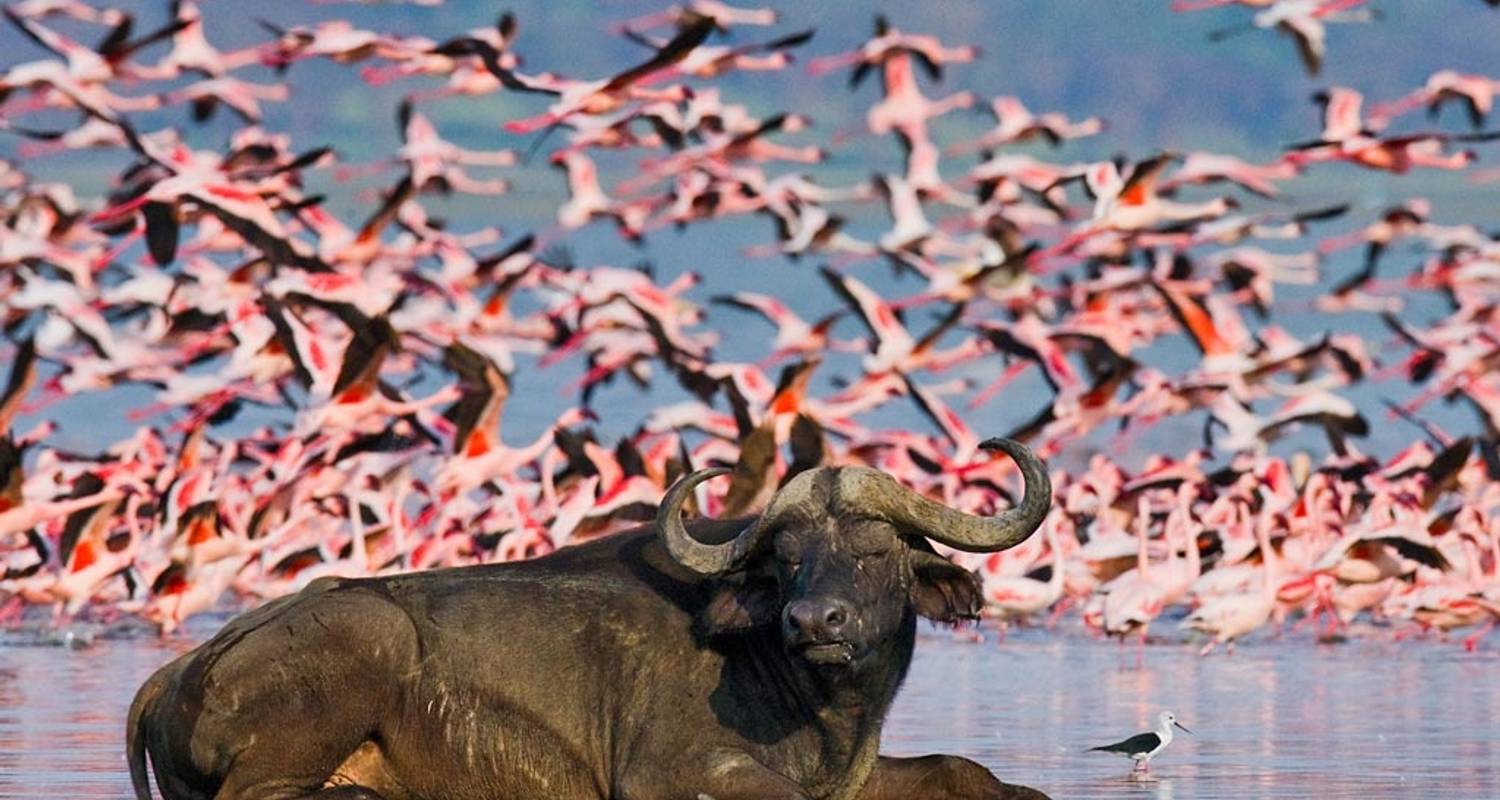
The best time for bird watching at Lake Nakuru is from October to March, when migratory species are present. The dry season, particularly January and February, offers excellent viewing conditions, while early mornings (6 a.m. to 11 a.m.) are the best time of day for viewing activity
Optimal Months: November to April
For birding enthusiasts visiting Lake Nakuru, the window between November and April is widely considered the most rewarding time of year. This period coincides with the "short rains" and the beginning of the "long rains," a transition that triggers a dramatic transformation in the park’s avian residents. During these months, many of the 450+ bird species enter their breeding season. This is the only time to observe many of the land birds, such as the Pin-tailed Whydah and various sunbirds, sporting their vibrant, elaborate breeding plumage. The males engage in competitive territorial displays and vocalizations that make them significantly easier to locate and identify than during the quieter dry months.
Furthermore, this window is perfect for seeing a massive influx of European and North African migrants. These Palearctic species travel thousands of miles to escape the northern winter, using the Rift Valley as a vital flyway. You can expect to see a variety of waders, storks, and ducks that are absent for the rest of the year. The lush greenery brought by the rains also provides an abundance of insects and seeds, ensuring that both resident and visiting birds are at their most active. While the rains can make some park roads muddy, the "species-per-hour" count is at its absolute peak, offering a sensory explosion of color and song that defines Nakuru as a world-class birding destination.
Daily Timing: Early Morning (6:00 AM – 11:00 AM)
In the world of ornithology, timing is everything, and at Lake Nakuru, the early morning is the undisputed "golden window" for birding. Most expert guides recommend being at the park gates by 6:00 AM to capture the peak hour of activity. As the sun rises over the Lion Hill cliffs, birds emerge from their overnight roosts in the acacia woodlands and euphorbia forests to feed. This is when territorial calls are at their loudest and most frequent, allowing birders to locate secretive species like the Narina Trogon or the African Hoopoe by sound before seeing them.
The cool morning air also encourages a high level of foraging activity. Pelicans can be seen in synchronized fishing groups along the northern shores, while raptors like the African Fish Eagle and Augur Buzzard use the early thermals to begin their patrols. By midday, as temperatures rise toward 25°C or 30°C, bird activity drops off significantly. Many species retreat into the deep shade of the yellow-fever acacia trees to conserve energy and avoid the heat, becoming largely silent and stationary. By focusing your birding efforts between dawn and 11:00 AM, you maximize your chances of seeing birds engaged in dynamic behaviors—hunting, feeding, and social interaction—rather than just resting in the shadows.
Migratory Season: October to March
The migratory season, stretching from October to March, transforms Lake Nakuru into an international crossroads for avian travelers. During this time, the park hosts a staggering diversity of Palearctic migrants—birds that flee the freezing temperatures of Europe and Asia. This seasonal shift adds hundreds of thousands of individuals to the park's resident population. You might spot the elegant Black-tailed Godwit, Northern Shovelers, and Garganeys foraging in the shallow inlets. For birders, this season offers the unique opportunity to see rare visitors like the Eleonora's Falcon, which times its arrival to coincide with the peak migration of smaller songbirds it preys upon.
This season is particularly important for waterbird diversity. As of the 2026 Waterbird Census, researchers have noted that while some resident numbers fluctuate, the arrival of northern migrants remains a consistent highlight, providing a reliable spectacle even during years of ecological change. The variety of habitats within the park—ranging from the alkaline lake shore to the freshwater marshlands created by storm drains—ensures that different migratory species find their specific niches. Whether it’s a tiny warbler in the acacia scrub or a large stork on the mudflats, the October-to-March window provides the highest "check-list potential," making it the most exciting time for serious "twitchers" to visit.
Flamingos: Population Fluctuations and 2026 Trends
While flamingos are often considered the "face" of Lake Nakuru, their presence is famously nomadic and unpredictable. These birds are not permanent residents in the traditional sense; instead, they are "seasonal visitors" whose movements are dictated by water levels and food availability. The Lesser Flamingo, in particular, is a specialist that feeds on Arthrospira platensis (spirulina algae). This algae requires very specific conditions: shallow, highly alkaline, and "soda-rich" water. If heavy rains cause the lake to deepen—as seen in 2026, where the lake surface has expanded to approximately 82 square kilometers—the salinity is diluted, the algae blooms collapse, and the flamingos fly to other Rift Valley lakes like Bogoria or Natron in search of food.
In the current 2026 landscape, the iconic "pink blanket" that once covered the entire shoreline has shifted into smaller, nomadic clusters. You are now more likely to see groups of 10,000 to 30,000 birds rather than the millions of the past. Interestingly, the deepening waters have favored the Greater Flamingo, which is taller and more resilient than its smaller cousin, as it can feed on crustaceans in deeper mud. This ecological "hide and seek" means that while you will still see flamingos, their density depends on the weekly fluctuations of the lake's chemistry. This makes the services of a professional spotter essential, as they can track the movement of the flocks to the shallower southern pockets where the algae still thrives, ensuring you still capture that quintessential "pink fringe" during your safari.
What is the absolute best time of day to go bird watching at Lake Nakuru?
The undisputed "golden window" for bird watching at Lake Nakuru is the early morning, specifically between 6:00 AM and 11:00 AM. This period aligns with the peak biological activity of most avian species. As the sun rises over the Rift Valley escarpment, birds emerge from their overnight roosts in the acacia woodlands and euphorbia forests to begin their daily foraging routines. This is when vocalizations—songs, territorial calls, and alarm signals—are at their most frequent, making it significantly easier for birders to locate more secretive or camouflaged species by ear before confirming them with binoculars.
During these hours, the cooler temperatures allow birds to exert energy without the risk of overheating. You will witness synchronized fishing displays by Great White Pelicans and the frantic feeding of waders along the shoreline. For the birder, the soft, morning light is not only aesthetically pleasing but functional; it reduces the harsh glare off the alkaline water, allowing for better identification of subtle plumage details. By 11:00 AM, the equatorial sun becomes intense, and many birds begin to retreat into the deep shade of the Yellow-fever trees, leading to a noticeable "midday lull" in activity.
Which months of the year offer the highest concentration of birds at Lake Nakuru?
While Lake Nakuru is a year-round destination, January and July are often cited as the peak months for sheer bird concentration. These months follow the short and long rainy seasons, respectively, creating an ecological "sweet spot." In January, the park is lush from the late-year rains, providing an explosion of insect life and flowering plants that support high densities of land birds. Simultaneously, the lake levels are usually stabilizing, which concentrates the soda-lake specialized algae—the primary food source for the iconic Lesser Flamingo.
July offers a similar advantage but often with slightly cooler, more temperate weather. This is a prime time for resident species that have just finished their breeding cycles, meaning there are many juveniles and active family groups to observe. The abundance of food—from the tilapia in the fresher inlets to the spirulina in the alkaline depths—ensures that the park's carrying capacity is at its maximum. Visiting during these months guarantees that no matter which direction you point your binoculars—whether toward the sky, the forest canopy, or the pink-fringed shoreline—you will be met with a dense and diverse array of avian life.
When is the best time of year to see the famous migratory birds at Lake Nakuru?
The most exciting time for serious "twitchers" is the window from October through March. During this period, Lake Nakuru becomes a vital sanctuary for hundreds of thousands of Palearctic migrants—birds fleeing the harsh winters of Europe, Northern Africa, and Asia. These travelers use the Great Rift Valley as a natural highway, stopping at Lake Nakuru to refuel in its nutrient-rich waters. This influx significantly boosts the park’s species count, adding variety that is simply absent during the northern summer.
You can expect to see an array of waders like the Black-tailed Godwit, Little Stint, and Marsh Sandpiper, alongside various species of ducks, storks, and even birds of prey like the Steppe Eagle or the occasional Osprey. This season is particularly fascinating because it allows for the observation of species in diverse plumage states—some arriving in their duller "winter" feathers and others beginning to transition back into vibrant breeding colors as they prepare for their journey north in March. The sheer scale of this migration transforms the lake into a bustling international avian crossroads.
Are the flamingos at Lake Nakuru best seen during the dry or wet season?
While flamingos are present year-round, they are generally best seen in high concentrations during the dry seasons (June–October and January–March). The reasoning is purely chemical: flamingos, particularly the Lesser Flamingo, feed on microscopic blue-green algae that thrives in shallow, highly alkaline water. During the dry season, evaporation causes the lake levels to drop, which increases the salinity and alkalinity of the water. This "soda" concentration triggers massive blooms of the flamingos' favorite food, drawing them in by the thousands.
In contrast, heavy wet seasons can dilute the lake's salinity and cause water levels to rise significantly, as seen in recent years where the lake expanded into the surrounding woodland. When the water becomes too deep or too "fresh," the algae levels drop, and the flamingos may migrate to other Rift Valley lakes like Bogoria or Natron. Therefore, for those seeking the quintessential "pink carpet" experience, the dry season offers the most predictable results. However, the Greater Flamingo—a taller, more resilient cousin—is often visible even in deeper water, ensuring that some "pink" is almost always part of the landscape.
Is it better to go birding in the morning or the evening at Lake Nakuru?
While both times have their merits, mornings are widely considered superior for serious birding. Between 6:30 AM and 10:00 AM, the avian activity level is at its absolute zenith. Birds are driven by a high metabolic need to feed after the night’s fast. This results in more movement, more social interaction, and more vocalizations, all of which make them easier to find and observe. The morning air is also still, which is better for hearing distant calls and spotting small birds in the acacia canopies.
Evenings (4:00 PM to 6:30 PM) offer a different, more atmospheric experience. As the day cools, there is a secondary "burst" of activity as birds return to their roosting sites. This is a fantastic time to watch large flocks of pelicans, cormorants, and egrets flying in formation toward their overnight spots in the trees or on the islands. The lighting is spectacular for photography, but the window is shorter than the morning session. Ultimately, a morning start allows for a broader range of sightings, but an evening session provides a dramatic and serene conclusion to a safari day.
When should I visit Lake Nakuru for the best bird photography opportunities?
For bird photography, the "quality of light" is just as important as the birds themselves. The best opportunities occur during the "Golden Hours"—the first hour after sunrise (approx. 6:30 AM – 7:30 AM) and the last hour before sunset (approx. 5:30 PM – 6:30 PM). During these times, the sun is low on the horizon, casting a soft, warm, and directional light that minimizes harsh shadows and prevents the white plumage of birds like pelicans and egrets from appearing "blown out" or overexposed.
The morning session is particularly prized because the air is often clearer and less dusty, allowing for sharper images at long focal lengths. It is also the time when you can capture dynamic action shots, such as flamingos taking flight or kingfishers diving. The afternoon light is deeper and more golden, perfect for capturing the silhouettes of birds against the shimmering lake surface. To maximize your portfolio, aim to be in position at the lake shore as the gates open, and stay until the very last light of the day, using the midday "lull" to review your shots and scout for different habitats like the forest edge or the rocky cliffs.
What is the best time of day to watch pelicans feeding on the lake?
Great White Pelicans are most active and visible during their communal feeding sessions in the early morning and late afternoon. These birds are social feeders; they often work together in a horseshoe formation, paddling toward the shore to trap schools of fish (specifically the salt-tolerant Tilapia $Alcolapia$ $grahami$) in the shallows. Watching dozens of these massive birds dip their pouches in unison is one of the park’s most impressive spectacles.
Morning (7:00 AM – 9:00 AM) is particularly good because the water is often calmer, making it easier to see the fish ripples and the pelicans' coordinated movements. Afternoon (4:00 PM – 5:30 PM) is also rewarding as the birds fuel up one last time before heading to their roosts on the northern shore or the rocky islets. Pelicans are sensitive to heat; during the heat of the day, you will often find them resting on sandbars or soaring high on thermals to stay cool, which makes observing their fascinating "fishing choreography" much more difficult.
When do the long rains occur and how do they affect birding in the park?
The "long rains" in Kenya typically occur in April and May. During this period, Lake Nakuru receives heavy, often daily showers. For the birder, this presents a "high risk, high reward" scenario. The heavy rains can make the park’s tracks muddy and occasionally impassable without a high-quality 4x4 vehicle. Furthermore, heavy rain often causes birds to seek deep cover, making sightings more challenging during active downpours.
However, the benefits are significant. The rains trigger an immediate "greening" of the park, creating a stunningly lush backdrop for photography. The influx of fresh water creates new marshlands and expands the lake, attracting an array of water birds such as jacanas, herons, and rails that thrive in flooded vegetation. This is also the start of the breeding season for many resident species, meaning you will hear a cacophony of mating calls and see birds actively building nests. If you are a hardy birder who doesn't mind a bit of rain, this "quiet" season offers some of the most vibrant and biologically active conditions in the park.
Are there specific times during the day when birds are less active and harder to find?
Yes, the period between 12:00 PM and 3:00 PM is the most difficult time for bird watching at Lake Nakuru. Because the park is situated on the floor of the Rift Valley, midday temperatures can climb significantly. Birds, like most wildlife, are highly sensitive to this heat and will reduce their energy expenditure to avoid dehydration. Most species will stop singing and foraging, retreating instead into the thickest, shadiest parts of the acacia woodlands or the dense euphorbia forests.
During these hours, the lake shore can appear strangely quiet, with flamingos and pelicans standing motionless on one leg or tucking their heads under their wings to sleep. The heat haze (shimmer) also makes it difficult to get clear views or photographs of distant birds on the water. For the most productive safari, use this time to have a leisurely lunch, visit the viewpoints like Baboon Cliff, or move into the higher-altitude forest zones where it is slightly cooler, saving your intense birding energy for the resurgent activity of the late afternoon.
When is the most advantageous time to visit for spotting endangered bird species?
The period immediately after the rains, specifically June and July, is highly advantageous for spotting resident rare or endangered species. Lake Nakuru is a sanctuary for several species of concern, including the Grey-crowned Crane and the Greater Spotted Eagle. After the rains, the abundance of frogs, insects, and small mammals is at its peak, making these larger, rarer birds more active and easier to spot as they hunt in the tall grasses and along the forest edges.
Additionally, the lush vegetation provides the necessary cover for shy residents like the Lesser Kestrel or the Schalow's Wheatear. Because the park is a relatively small and enclosed ecosystem, these "specialty" birds don't migrate far, but their visibility is highest when they are actively feeding their young or defending territories following the wet season. For those specifically looking to "tick" rare species, visiting during this transition from wet to dry ensures the birds are healthy, active, and vocal, providing the best possible chance for a sighting.
Can I still have a good bird watching experience during the rainy season?
Absolutely. In fact, many professional ornithologists prefer the rainy season (specifically the "short rains" in November and December). This is often the most dynamic time for birding in Lake Nakuru. The arrival of the rains coincides with the peak of the Palearctic migration, meaning you get the best of both worlds: a lush, vibrant landscape and the highest diversity of bird species. The presence of water in the seasonal "pans" and marshes away from the main lake shore allows for the sighting of shy species like snipes, crakes, and various herons that are rarely seen during the dry months.
The rainy season also brings out the "breeding finery" of many resident birds. For example, weavers and sunbirds will be at their most colorful and active as they compete for mates. While you should be prepared for the occasional afternoon thunderstorm, these are usually brief and are followed by incredibly clear air and dramatic, "washed" light that makes for world-class photography. As long as you have a reliable 4x4 vehicle and a bit of patience, the rainy season can be the most rewarding time of all.
When is the best time of day to visit Baboon Cliff for bird watching?
Early morning (6:30 AM – 8:30 AM) is the best time to visit Baboon Cliff, one of the park’s most famous viewpoints. From this elevated position, you have a 180-degree panoramic view of the entire lake. In the early morning, the sun is behind you (rising in the east), perfectly illuminating the lake surface and the "pink fringe" of flamingos below. It is the best time to appreciate the sheer scale of the bird colonies without the midday heat haze obscuring the view.
Aside from the panoramic views, the cliff area itself is a great spot for birding. In the early morning, you can see rock-dwelling species like the Mocking Cliff Chat and various swifts and martins that nest in the rock face, swooping through the air to catch the first insects of the day. It is also a prime spot for spotting raptors—such as Verreaux's Eagles or Lanner Falcons—that use the morning thermals rising from the cliff face to begin their hunts. Visiting early also ensures you avoid the tourist crowds that typically congregate here later in the morning.
Do the bird populations change throughout the day at Lake Nakuru National Park?
While the species present in the park don't change by the hour, their visibility and distribution change dramatically throughout the day. In the early morning, birds are widely dispersed as they move from their roosts to their various feeding grounds—shorebirds move to the mudflats, while forest birds begin active canopy foraging. This is the time of maximum movement and "noise."
By midday, the population seems to "shrink" as birds seek cover from the sun. The shoreline may still hold large numbers of flamingos and pelicans, but they are often stationary and "dormant." In the late afternoon, the distribution shifts again as birds fuel up for the night. You will see a "gathering" effect as species begin to congregate in communal roosting areas. For example, egrets and herons may start to gather in specific stands of acacia trees. Understanding these daily "rhythms" allows a birder to target different habitats at different times—forests in the early morning, viewpoints at midday, and the lake shore in the late afternoon—to ensure a diverse and successful day.
Is it better to visit during the dry season for better birding visibility?
The dry season (June–October) offers a distinct advantage for visibility and accessibility. As the seasonal pools and smaller water sources dry up, birdlife is forced to congregate around the main lake and the few permanent freshwater springs. This "concentration" makes it much easier to see a large volume of birds in a single location. Furthermore, the grasses in the savannah areas recede, making it significantly easier to spot ground-dwelling birds like plovers, bustards, and francolins that might otherwise be hidden.
The dry season also guarantees that all park roads are in excellent condition, allowing you to reach the more remote southern end of the lake where the habitat is often quieter and more "wild." However, the "trade-off" is that the landscape can appear dusty and parched, and you miss out on the migratory species that only arrive later in the year. If your primary goal is to see the "Big Spectacles"—like the largest possible gatherings of flamingos and pelicans in a clear, easy-to-navigate environment—the dry season is your best bet.
Which is the best season to avoid large crowds while birding at Lake Nakuru?
To avoid the peak tourist crowds while still enjoying excellent birding, the best time to visit is during the "shoulder seasons"—specifically June and November. June falls just after the long rains and before the "Great Migration" crowds arrive in the nearby Maasai Mara. The park is green, the birds are active, and you will often have the viewpoints and shoreline to yourself.
November is equally advantageous. It is the start of the "short rains" and the beginning of the migratory season. While the birding is world-class, it is considered a "low season" for general tourism, meaning lodge prices are often lower and the park is much quieter. Avoiding the peak months of July, August, and December ensures a more "meditative" birding experience, where you can spend long periods observing a single species without the pressure of other vehicles waiting for your spot. For a bird watcher, silence and patience are key, and visiting during these shoulder months provides the perfect environment for both.
Booking Kenya bird watching with us Roads of Adventure safaris
Book specialized Kenya bird-watching tours with Roads of Adventure Safaris, a reputable operator offering tailored itineraries focusing on Kenya's diverse habitats like Lake Nakuru and Masai Mara. Expert-guided tours provide opportunities to spot over 700 species, including raptors and migrants, with optimal viewing from June to October.
