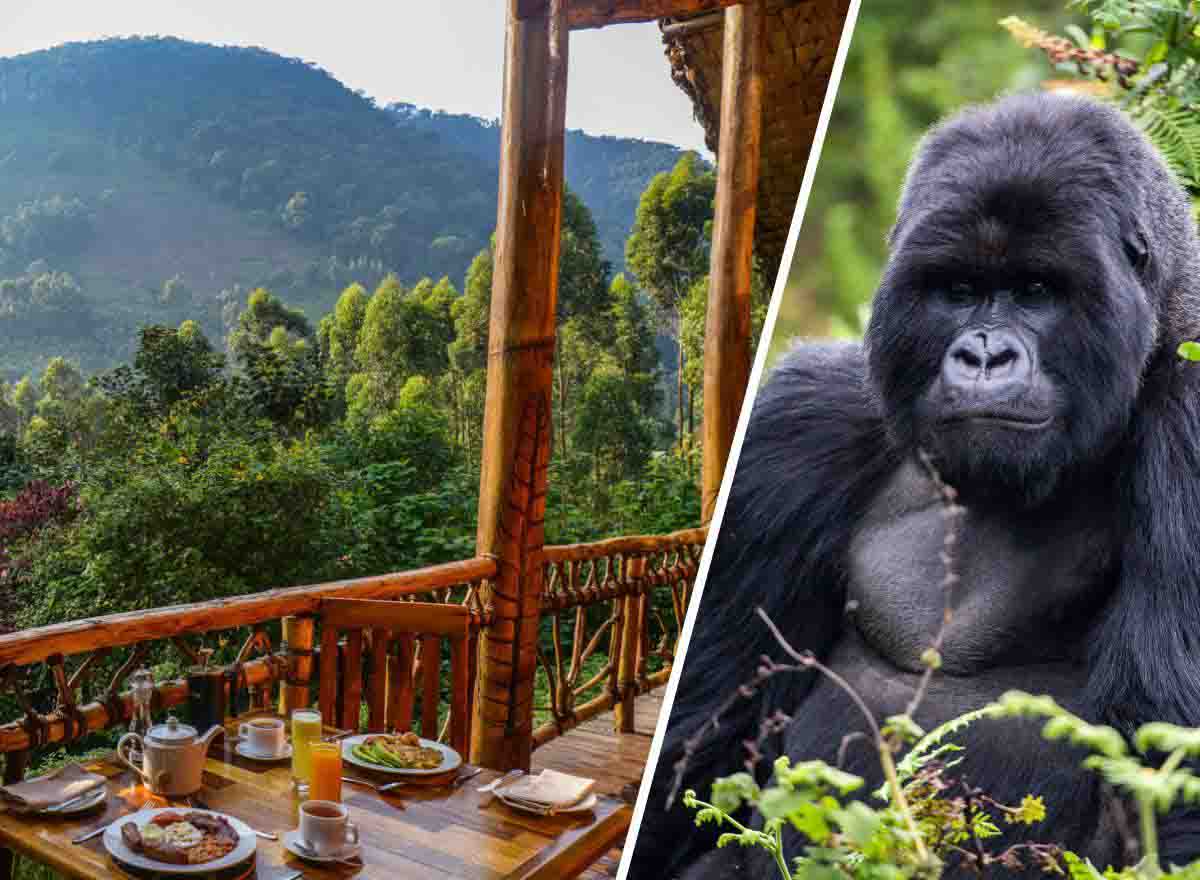
A typical 3-day gorilla trekking package covers your gorilla permit, two nights of lodging, 4x4 ground transport, meals, and park ranger services. You can explore specific itineraries through operators like Valiant Safaris or Memorable Gorilla Safari Uganda.
Popular 3 Days Uganda gorilla trekking safari holiday in Bwindi impenetrable
3-days-fly-in-uganda-gorilla-habituation-africa-safari-tour-package
3-days-gorilla-trekking-safari-and-lake-bunyonyi-relaxation-itinerary
3-days-affordable-uganda-budget-gorilla-trekking-via-kigali
3 Days Best Uganda gorilla trekking trip
This three-day gorilla trekking expedition takes you deep into the heart of Bwindi Impenetrable National Park, home to nearly half of the world’s remaining mountain gorillas. Designed for those with limited time, this fast-paced yet deeply rewarding safari perfectly balances scenic overland travel through Uganda's terraced hills with a once-in-a-lifetime primate encounter in the ancient rainforest.
Day 1: Scenic Drive to Bwindi Impenetrable Forest
Departing early from Kampala or Entebbe, you will embark on an eight-to-nine-hour drive traveling southwest across the lush Ugandan countryside. A stop at the Kayabwe Equator crossing offers a fantastic photo opportunity before continuing to Mbarara for a traditional lunch. By late afternoon, you will ascend into the misty Kigezi Highlands, checking into your wilderness lodge on the edge of the forest to rest up for tomorrow's trek.
Day 2: Mountain Gorilla Trekking & Community Walk
Following a hearty early breakfast, head to park headquarters for an essential safety briefing. Guided by expert rangers, you will hike through the dense, tangled jungle for two to six hours to locate a habituated gorilla family. You will spend one unforgettable hour observing these magnificent apes up close. In the late afternoon, enjoy an optional cultural visit to a Batwa community before returning to your lodge for dinner.
Day 3: Return Journey to Kampala or Entebbe
Enjoy a relaxed breakfast overlooking the rainforest canopy before beginning your scenic return journey. Driving back through the rolling terraced hills, you will stop again in Mbarara for lunch and pick up souvenirs from local artisans. You will arrive back in Kampala or Entebbe by late afternoon or early evening, ready for your onward flight or hotel drop-off, marking the end of a truly magical wildlife adventure.
Standard Package Inclusions
- Gorilla Permit: One official permit per person, which grants access to the park and one hour with a habituated gorilla family.
- Accommodation: Two nights of lodging near the park (options range from budget to luxury) on a full-board basis.
- Ground Transportation: Private 4x4 safari vehicle equipped with fuel and an experienced English-speaking driver-guide.
- Park Fees: National Park entry fees and official ranger-guided tracking services.
- Meals and Drinks: Breakfast, dinner at the lodge, en-route lunches on travel days, and bottled drinking water.
- Transfers: Airport or hotel pick-up and drop-off from Entebbe, Kampala, or Kigali.
Typical Exclusions
- International Airfares: Flights to and from your home country.
- Visas: Entry visas for Uganda or Rwanda.
- Personal Expenses: Tips for guides and porters, alcoholic drinks, laundry, and souvenirs.
- Personal Insurance: Medical or travel insurance
What exactly does the gorilla permit cover, and why is it such a crucial part of the package?
Think of the gorilla permit as your exclusive golden ticket into the rainforest. Because mountain gorillas are highly endangered, access to them is strictly regulated to minimize human impact. A significant portion of your package cost goes directly into securing this permit, which grants you one hour of face-to-face time with a habituated gorilla family. But it’s so much more than just an entry fee. That money is the lifeblood of gorilla conservation. It pays the salaries of the dedicated rangers who monitor the families daily, funds anti-poaching patrols, and supports community development projects for the villages surrounding the national parks. When a tour operator secures this for you in advance, they are navigating a highly competitive booking system, ensuring your spot is locked in on your chosen date without you having to worry about the logistics.
How is the 4x4 ground transportation arranged, and what is the journey actually like?
When you book a 3-day package, the journey itself is a huge part of the adventure. Typically, a professional driver-guide will pick you up directly from the airport or your hotel in a customized 4x4 Safari Land Cruiser or a safari van with a pop-up roof. These vehicles are specifically built to handle the rugged, sometimes muddy, and unpaved roads leading up into the highlands. The drive is spectacular—you’ll wind through terraced hills, vibrant local villages, and sweeping tea plantations. Your guide is there to do much more than drive; they act as your local host, answering questions, pointing out wildlife, and taking care of border crossings or park gates. While the journey can be long—often taking between 4 to 8 hours depending on whether you start in Kigali or Kampala—the comfortable 4x4 ensures you can sit back, take photos, and soak in the breathtaking East African scenery.
What kind of lodging can I expect for the two nights included in the package?
The accommodation on a gorilla safari is designed to completely immerse you in the wilderness, without sacrificing comfort. Depending on the tier you choose—budget, mid-range, or luxury—your operator will book you into an eco-lodge or a tented camp situated just minutes from the national park boundaries. These aren't standard city hotels; they are intimate properties often built from local timber and stone, blending seamlessly into the jungle canopy. Even standard mid-range lodges usually offer en-suite bathrooms, incredibly cozy beds with hot water bottles tucked under the blankets to ward off the evening chill, and private verandas where you can watch the mist roll over the mountains. The focus is on rustic charm and warm hospitality. After a long, muddy day trekking through the forest, returning to a roaring fireplace, a hot shower, and a welcoming staff makes the lodge stay an unforgettable part of the overall experience.
Are all my meals covered during the 3-day safari, or should I bring extra cash for food?
Almost all 3-day gorilla trekking packages are booked on a "full board" basis, meaning you don't have to worry about finding food in the remote wilderness. From the moment you begin your trip, your meals are covered. This typically includes a hearty breakfast to fuel you up for the trek, a packed lunch to eat in the forest while you hike, and a multi-course dinner back at the lodge. The culinary standard is surprisingly high, featuring a mix of comforting international dishes and delicious local specialties. You will, however, want to bring a little extra cash for personal indulgences. While water and morning coffee are always provided, alcoholic beverages, premium wines, sodas, or an extra cappuccino at the lodge bar are usually billed separately. It’s also wise to have a bit of cash on hand if you want to buy a snack during the long drive to the park.
What is the specific role of the park rangers included in the package?
The park rangers are the unsung heroes of your gorilla trekking experience. When you set off into the forest, you aren't just wandering aimlessly; you are led by an expert lead guide from the national park authority, accompanied by armed rangers. Their primary job is your safety and ensuring the wellbeing of the gorillas. They stay in radio contact with the "advance trackers"—a team that heads into the forest at dawn to find exactly where the gorillas slept the night before. Your ranger wields a machete to carve a path through the thick vegetation, creating a trail where none exists. Along the way, they share fascinating insights about the forest's medicinal plants, birdlife, and the intricate social dynamics of the gorilla family you are about to meet. They also enforce the strict trekking rules, making sure everyone stays safe and respectful when you finally encounter the silverback.
How physically fit do I need to be to handle the trekking day?
This is probably the most common worry, and the honest answer is that you need a moderate level of fitness, but you don't need to be a marathon runner. Gorilla trekking is inherently unpredictable. You are hiking in a high-altitude environment (often above 8,000 feet), and the terrain is steep, slippery, and tangled with vines—hence the name "Impenetrable Forest." Sometimes, a gorilla family is just a 45-minute stroll from the park gate; other times, it can take four to six hours of strenuous climbing to reach them. The key is endurance and mental grit. You can take it at your own pace, and the guides take plenty of water breaks. If you are concerned about your fitness, you can hire a local porter at the park headquarters. They will carry your heavy backpack and literally offer a hand to pull you up the steepest slopes, making the journey vastly more manageable.
Is it possible to customize a standard 3-day itinerary with my tour operator?
Absolutely. While the standard 3-day framework (travel, trek, return) is highly popular due to time and budget efficiency, a good operator will view this as a flexible template rather than a rigid rule. If you want to elevate the experience, you can customize almost every aspect. Don't want to spend a whole day in a car? You can arrange for a domestic bush flight directly to an airstrip near the park. Want a deeper cultural connection? You can add an afternoon visit to a local indigenous community, like the Batwa, or take a guided nature walk to spot golden monkeys. You can also mix and match your lodging, perhaps opting for a mid-range lodge on the first night and splurging on a world-class luxury property to celebrate on the night after your trek. It’s your dream trip, and operators are highly adaptable.
What does the daily schedule actually look like on a 3-day tour?
Your itinerary is built around making the most of your time in the region. Day one is your arrival and scenic transit day; you’ll meet your guide, drive through the beautiful countryside, check into your lodge in the late afternoon, and relax by the fire. Day two is the main event. You’ll wake up very early—often by 5:30 AM—have a hearty breakfast, and head to the park headquarters for a 7:00 AM safety briefing. You'll then head into the jungle. Once you find the gorillas, you get exactly one magical hour with them before hiking back. You usually return to your lodge by mid-afternoon, leaving time to rest, review your photos, or take a short community walk. Day three is relaxed; you’ll enjoy a final breakfast overlooking the forest before packing up and beginning the scenic drive back to the airport or your next destination.
Are tips and gratuities for guides and lodge staff included in the package price?
No, gratuities are generally not included in the upfront cost of your package, and tipping is an important part of the safari culture in East Africa. The people who make your trip special—your driver-guide, the park rangers, the advance trackers, and the lodge staff—rely on tips as a meaningful supplement to their income. While it is never mandatory, it is highly expected and deeply appreciated for good service. We usually recommend bringing small denominations of clean, crisp US dollars or the equivalent in local currency. A standard guideline is tipping your private driver-guide about $10 to $20 per day. For the trekking day, you might pool together $15-$20 for the lead ranger and trackers. Lodges typically have a communal tip box at the reception desk, where dropping $10 per night ensures that the behind-the-scenes staff—like the cooks and housekeepers—are fairly rewarded.
What are the absolute essentials I need to pack for the rainforest?
Packing correctly can make or break your trekking experience. The rainforest has a microclimate that is notoriously damp, cool, and unpredictable. You must bring sturdy, worn-in, waterproof hiking boots with excellent ankle support. Long pants and long-sleeved shirts are non-negotiable to protect your skin from stinging nettles, thorny branches, and safari ants. One of the best insider secrets is to bring a pair of thick gardening gloves; you will inevitably need to grab onto vines and branches to pull yourself up steep hills, and the gloves protect your hands. You should also pack a lightweight waterproof jacket or poncho, as downpours can happen even in the dry season. Finally, bring a good pair of gaiters to cover the gap between your boots and pants, keeping the mud and insects completely out. Leave the camouflage and bright colors at home; stick to neutral greens, browns, and khakis.
Can I choose exactly which gorilla family I get to track?
You cannot reserve a specific gorilla family in advance, but the park wardens do their best to match you with an appropriate group on the morning of your trek. During the 7:00 AM briefing, the head ranger assesses the tourists present. They look at age, physical fitness, and any special requests. There are usually a few families located relatively close to the edge of the forest, requiring a shorter, flatter hike, and other families that have moved deep up the mountainside, requiring a grueling climb. If you have mobility issues or are feeling under the weather, you should speak up during this briefing so the rangers can assign you to a "closer" family. While they try to accommodate everyone, the gorillas are wild animals constantly on the move, so even a supposedly "easy" trek can change if the family decides to travel rapidly that morning.
What happens if I wake up sick on the morning of my trek?
This is a very serious matter. Mountain gorillas share about 98% of our DNA, which means they are incredibly susceptible to human illnesses. A simple common cold, flu, or stomach bug that gives you a mild fever can be fatal to an entire gorilla family, as they have no natural immunity to our pathogens. If you wake up feeling sick, you must be honest and report it to your guide or the park rangers. You will not be allowed to trek. However, the wildlife authorities are very understanding of this. If you self-report an illness, they will usually offer to refund the cost of your gorilla permit or, if your schedule allows, allow you to reschedule your trek for a later date once you have fully recovered. It is a heartbreaking situation, but protecting the survival of the species must always come first.
How close am I actually allowed to get to the gorillas?
The official rule across all the national parks is that you must maintain a distance of at least 7 to 10 meters (about 23 to 32 feet) from the gorillas at all times. This rule exists to prevent the transmission of diseases and to ensure the gorillas don't feel threatened or crowded. However, gorillas don't know the rules! Because these families are habituated to human presence, they are quite relaxed. It is not uncommon for a curious juvenile gorilla to tumble through the bushes right past you, or for a silverback to stroll down the exact path you are standing on. If a gorilla moves toward you, the rangers will instruct you to stand completely still, crouch down, look away submissively, and hold your ground. You must never reach out to touch them, no matter how close they get.
Are there any age restrictions for joining a 3-day gorilla safari?
Yes, there is a strict, non-negotiable minimum age requirement of 15 years old for gorilla trekking. This regulation is strictly enforced by the wildlife authorities and there are no exceptions made, even if a 14-year-old is highly athletic or mature. You will be required to show your passport to verify your age before the permit is issued. This rule serves two main purposes. First, children are generally more prone to carrying communicable childhood diseases (like measles or chickenpox) which could devastate a gorilla population. Second, a close encounter with a massive, 400-pound silverback gorilla can be intensely intimidating. Unpredictable reactions from younger children—such as crying, shouting, or running in fear—could easily trigger an aggressive, defensive response from the gorillas, endangering the entire trekking group.
What safety precautions are taken to protect tourists in the forest?
Trekking into a dense African jungle to find wild silverbacks sounds inherently risky, but it is actually one of the most highly managed and heavily secured wildlife experiences in the world. First, the gorillas you visit are "habituated," meaning they have undergone a gentle, multi-year process of getting used to human presence; they see you as neutral parts of the landscape. Second, you are always escorted by highly trained, armed rangers. While they carry rifles, they are not there to shoot gorillas; the weapons are a precaution against unhabituated forest elephants or buffaloes, which can be easily scared away by a warning shot fired into the air. Before you ever step foot in the forest, you are given a comprehensive safety briefing on how to behave, how to read the gorillas' moods, and what to do if a silverback decides to beat his chest and show off.
Is travel insurance included, or do I need to arrange it myself?
Travel insurance is almost never included in the base price of a 3-day gorilla trekking package. It is entirely your responsibility to secure comprehensive coverage before you travel, and we strongly urge you not to skip this step. Because you are traveling to a remote area and engaging in a strenuous physical activity, you need a policy that specifically covers adventure tourism and high-altitude trekking. More importantly, your insurance must include coverage for emergency medical evacuation. In the unlikely event that you suffer a serious injury (like a badly sprained ankle on the slippery slopes) or a severe medical emergency, you may need to be airlifted out of the remote highlands to a world-class hospital in a major city. Services like AMREF Flying Doctors provide excellent regional coverage, but you must ensure your personal policy covers these high-cost logistics.
How do the lodges handle specific dietary requirements or food allergies?
The hospitality standards in East Africa are exceptional, and lodges are highly accustomed to catering to a wide variety of dietary needs. Whether you are vegan, vegetarian, gluten-free, lactose intolerant, or have a severe nut allergy, you will be well taken care of. The key is communication. When you book your package, you simply need to inform your tour operator in detail about your restrictions. They will pass this information on to the lodge managers well in advance. Because the lodges are remote, they order their fresh produce and supplies ahead of time; giving them advance notice ensures the chefs can prepare creative, delicious, and safe meals tailored exactly to your needs, rather than just removing ingredients from a standard plate. You won't miss out on the culinary experience at all.
When is the absolute best time of year to book this package?
You can track mountain gorillas 365 days a year, but the best times to book are during the two dry seasons: from June to September, and from December to February. During these months, the trails are significantly firmer, the sun is shining, and the risk of a torrential downpour is much lower, making the steep hike far more manageable and pleasant. Wildlife photography is also easier without a constant canopy of rain clouds. However, it is important to remember that this is a tropical rainforest, so you should expect rain at any time, even in July! Booking during the dry season also means permits sell out many months in advance, so you need to plan early. If you prefer avoiding crowds and don't mind getting a bit muddy, the rainy shoulder seasons offer lush, emerald-green scenery and sometimes shorter treks, as the gorillas tend to stay lower on the slopes.
Can I bring a professional camera, and what are the photography rules?
Yes, you are absolutely encouraged to bring a camera, and photographing the gorillas is often the highlight of the trip. However, there is one supreme rule: absolutely NO flash photography is allowed. The sudden burst of light can severely startle and agitate a silverback, which is dangerous for everyone. Before approaching the gorillas, double-check that your flash is manually disabled. Because the forest canopy is incredibly dense and dark, you will want a camera that performs well in low-light conditions, ideally with a fast lens (f/2.8 or better) and the ability to handle high ISO settings without too much grain. A versatile zoom lens (like a 70-200mm) is perfect. Remember to keep your movements slow and steady while shooting, and don't forget to occasionally put the camera down to just absorb the magic of the moment with your own eyes.
Besides the main gorilla trek, is there time to explore the local culture?
While the 3-day itinerary is tightly packed, there is almost always a window of free time, usually on the afternoon of day two, after you return from your trek and have a hot lunch. This is the perfect opportunity to stretch your legs and engage with the local community. Most operators can easily arrange an afternoon cultural tour. You might visit the indigenous Batwa pygmies, who lived in the forest for millennia alongside the gorillas, to learn about their ancient hunting techniques, medicinal plants, and traditional music. Alternatively, you could take a guided walk through a local village to see how coffee or tea is grown, harvested, and roasted, or visit a local women's craft cooperative. It adds a deeply rewarding human element to a trip that is otherwise heavily focused on wildlife.
Booking 3 Day gorilla trekking with us Roads of Adventure safaris
Booking a 3-Day Gorilla Trekking Safari through Roads of Adventure Safaris takes you on an immersive trip to southwestern Uganda's Bwindi Impenetrable Forest or Mgahinga Gorilla National Park. As a licensed operator registered with the Uganda Tourism Board, they handle the entire logistical layout—including the heavily restricted mandatory gorilla trekking permits, private 4x4 transport, and lodge accommodations
