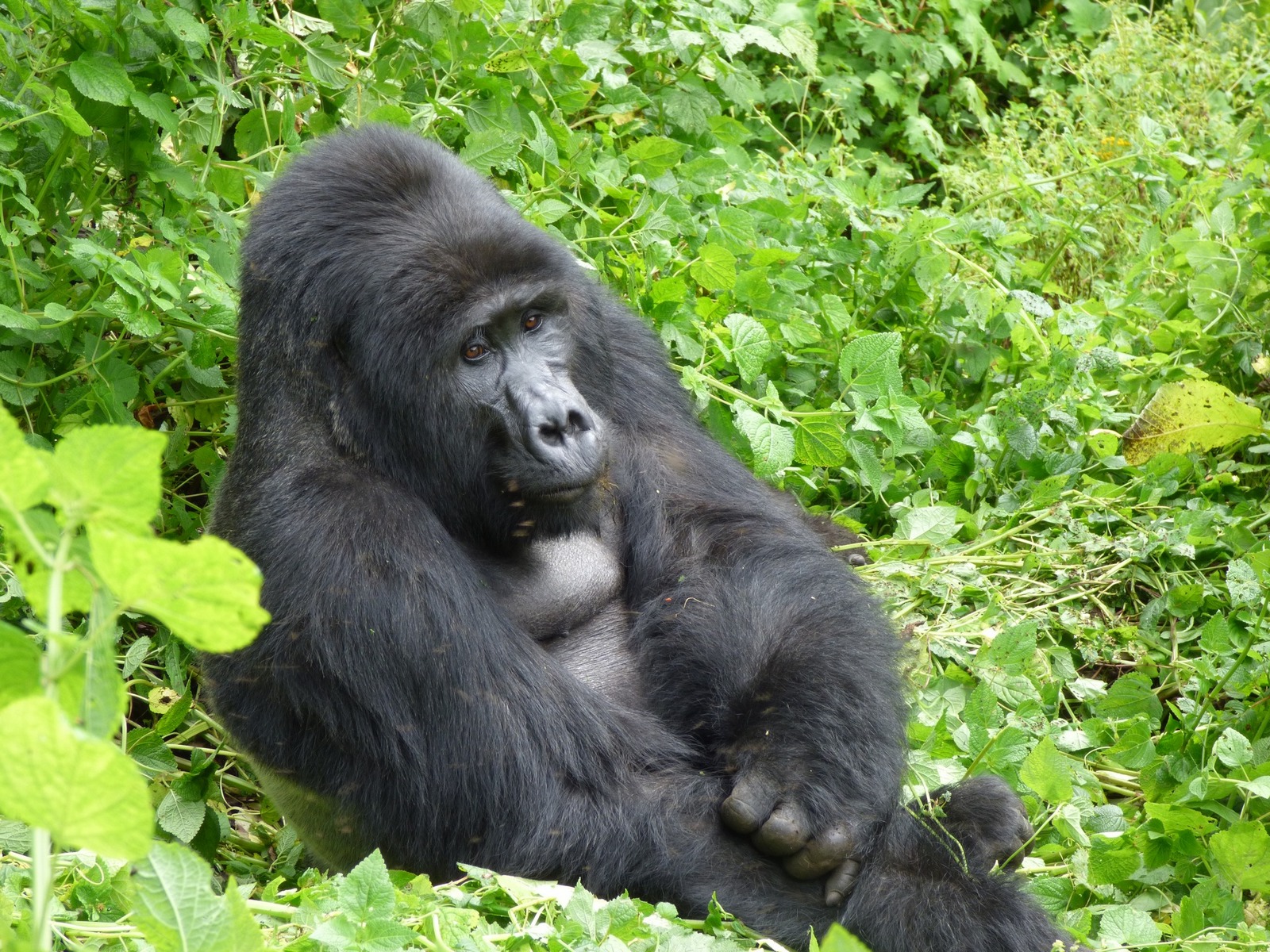
Bwindi Impenetrable Forest is world-famous for harboring roughly half of the Earth's endangered mountain gorilla population. Its ancient, biologically diverse rainforest provides the ultimate intimate trekking experience, allowing small groups to spend a magical hour observing these majestic primates up close in their natural habitat.
3-days-fly-in-uganda-gorilla-habituation-africa-safari-tour-package
2-days-best-gorilla-trekking-safari-tour-via-kigali-to-bwindi-impenetrable-forest-park
3-days-gorilla-trekking-safari-and-lake-bunyonyi-relaxation-itinerary
3-days-affordable-uganda-budget-gorilla-trekking-via-kigali
4-days-ultimate-gorilla-and-uganda-safari-and-chimpanzee-tracking
4-days-ultimate-gorilla-and-uganda-safari-and-chimpanzee-tracking
4-days-uganda-gorilla-safari-with-golden-monkey-tracking-from-rwanda
4-days-luxury-gorilla-trekking-safari-in-bwindi-fly-in-all-inclusive-tour
5-days-gorilla-and-uganda-safari-and-golden-monkey-trekking-tour-from-kigali
5-days-un-matched-uganda-gorilla-safari-and-chimpanzee-tour-itinerary
6-days-gorilla-and-uganda-safari-to-see-big-five
7-day-ultimate-uganda-primate-safari-chimpanzees-and-game-drives
Why Bwindi is Famous for Gorilla Trekking
Highest Gorilla Concentration: The Global Sanctuary
Bwindi Impenetrable National Park holds a legendary status in global conservation as the primary sanctuary for the world's remaining mountain gorillas (Gorilla beringei beringei). While these magnificent, gentle giants cannot survive in captivity, their total wild population hovers just above 1,000 individuals across the planet. Uniquely, Bwindi protects roughly half of this entire global population within its 321 square kilometers of rugged tropical rainforest. The remaining half is scattered across the Virunga Massif, shared between Rwanda, the Democratic Republic of Congo, and a small patch in Uganda's Mgahinga National Park. This immense concentration within a single, continuous forest habitat turns Bwindi into a critical biological fortress. The high density means that the park's carrying capacity is heavily optimized for primate survival, allowing different gorilla lineages to thrive natively. For wildlife enthusiasts, this statistical reality translates to unparalleled security and tracking reliability; because the forest is teeming with multi-generational families, the success rate of locating a wild gorilla group on any given morning exceeds 99%. Bwindi isn't just a park where you might spot mountain gorillas; it is the definitive cradle of their species' modern survival story, offering a living testament to successful, multi-decade international anti-poaching and habitat-preservation campaigns.
The Largest Number of Habituated Families: Four Specialized Sectors
Bwindi's operational infrastructure is unmatched globally, hosting more than 20 fully habituated mountain gorilla families—a number far exceeding any other primate destination on Earth. The process of habituation takes up to five years of gentle, daily human presence by trackers to ensure the wild gorillas view humans as neutral elements in their environment. To protect the forest from over-tourism and manage visitor footprints, Bwindi's habituated groups are strictly distributed across four geographically separate, specialized sectors.
Buhoma (North)
The historic cradle of gorilla trekking, Buhoma features gentler terrain, making it highly favored for travelers seeking a less physically demanding hike. It is home to the legendary Rushegura and Mubare groups.
Ruhija (East)
Perched at a much higher altitude (~2,300 meters), Ruhija offers a cooler climate and is an absolute favorite for birdwatchers, who track gorilla groups like the Bitukura through deep, misty valleys.
Rushaga (South)
Boasting the highest number of habituated families, Rushaga's steep ridges provide a rugged, classic tracking challenge and serve as the exclusive operational zone for specialized research treks.
Nkuringo (Southwest)
Renowned for having the most physically punishing, high-altitude terrain, Nkuringo rewards adventurous hikers with spectacular, sweeping vistas of the smoking Virunga Volcanoes while tracking highly active groups like the Christmas family.
Exclusive Gorilla Habituation Experience (GHEX): The Researcher's Trek
For travelers seeking a deeper, raw, and intellectually immersive wildlife encounter, Bwindi offers a globally unique, high-tier initiative known as the Gorilla Habituation Experience (GHEX). Standard gorilla tracking is strictly limited across Africa to a single, highly regulated hour of observation once a family is located. However, the GHEX—which is operated exclusively within the southern Rushaga sector of Bwindi—grants a maximum of four visitors per day the rare privilege of spending up to four hours in the direct presence of a semi-wild gorilla family. Accompanied by senior park rangers, conservation researchers, and native trackers, participants are not merely observers; they are active components in the habituation process. You follow a group that is still in the transitional phase of becoming accustomed to human presence. This extended duration allows you to witness the subtle, intricate nuances of gorilla behavior that a standard one-hour trek misses completely: the slow gathering of nesting materials, complex vocalizations, and the careful tracking decisions made by the silverback. It is a profoundly rewarding sensory immersion, designed for purists who want to understand the deep, scientific methodologies of primate conservation firsthand while listening to researchers decode the vocalizations and social shifts of a developing family.
UNESCO World Heritage Status: A Pleistocene Refugium
Bwindi is globally recognized not just for its charismatic megafauna, but for its staggering, ancient botanical significance, earning it a prestigious designation as a UNESCO World Heritage Site. This forest is one of the very few surviving African ecosystems that weathered the last harsh Ice Age, dating back an astonishing 25,000 years. As a confirmed Pleistocene Refugium, while most continental forests dried up and turned to savannah, Bwindi remained a lush, warm, and hyper-vibrant rainforest sanctuary. This extraordinary evolutionary longevity has resulted in an unparalleled matrix of biodiversity. The park is a maze of steep, razor-sharp ridges, plunging valleys, and dense, tangled undergrowth that justifies its "Impenetrable" title. Beyond the mountain gorillas, this ancient canopy shelters over 120 mammal species—including elusive forest elephants, chimps, and ten other primate varieties. It is also an internationally celebrated birding hotspot, protecting 350 avian species, including 23 Albertine Rift endemics that exist nowhere else on Earth. Standing beneath its giant ferns and mahogany towers, travelers feel the weight of deep geological time, experiencing a pristine, primeval jungle that has functioned as an evolutionary sanctuary for millennia.
To deeply analyze what makes gorilla trekking in Bwindi Impenetrable National Park so globally celebrated, we break down its unique biological, logistical, and historical features through 15 distinct structural questions.
1. Why is Bwindi's status as a Pleistocene Refugium vital to its gorilla population?
Bwindi is famous not just for its current beauty, but because it is an evolutionary time capsule. Dating back over 25,000 years, it is one of the few African rainforests old enough to have survived the last major Ice Age. When the planet cooled and dried, causing most continental forests to shrink into dry savannas, Bwindi’s unique geographic positioning kept it warm, wet, and lush. Because it acted as a "Pleistocene Refugium"—a safe haven for displaced species—the mountain gorillas found an uninterrupted, stable food supply here for millennia. This ancient longevity allowed a staggering array of plants, roots, and wild celery to evolve, creating the hyper-dense, nutrient-rich botanical buffet that sustains roughly half of the world's remaining mountain gorillas today.
2. What statistical significance does Bwindi hold for global mountain gorilla numbers?
Bwindi is globally famous as the ultimate fortress for mountain gorilla conservation. Unlike other endangered species that are scattered widely across continents, mountain gorillas are found in only two isolated pockets on earth. Bwindi protects roughly half of the entire global population—clocking in at over 450 individuals out of a worldwide total of just over 1,000. The remaining half is spread across the three volcanic parks of the Virunga Massif. This immense concentration within a single 321-square-kilometer Ugandan park makes Bwindi the single most important biological stronghold for the species' survival, offering travelers a near-guaranteed chance of encountering these gentle giants in their rawest habitat.
3. How do the four distinct tracking sectors alter the famous guest experience?
Bwindi is structurally unique and famous because its tracking operations are split across four completely distinct geographical sectors: Buhoma, Ruhija, Rushaga, and Nkuringo. Each sector functions as an independent tracking base with its own habituated families and distinct personality. Buhoma in the north offers lower altitudes and gentler slopes, ideal for those seeking a less strenuous hike. Ruhija in the east sits at a cool 2,300 meters, blending primate tracking with world-class montane birding. Rushaga in the south boasts the highest number of gorilla families and specialized research treks, while Nkuringo in the southwest offers the most punishingly steep, high-altitude terrain, rewarding intrepid hikers with dramatic, cinematic views of the smoking Virunga Volcanoes.
4. What makes the exclusive Gorilla Habituation Experience (GHEX) completely unique?
While standard gorilla treks across East Africa allow visitors to spend exactly one highly regulated hour with a habituated family, Bwindi is famous for offering the exclusive Gorilla Habituation Experience (GHEX). Operated solely in the southern Rushaga sector, this elite permit grants just four travelers per day the rare privilege of spending up to four hours with a semi-wild gorilla group. Accompanied by senior researchers and park trackers, guests participate in the actual process of teaching the gorillas to tolerate human presence. This extended window allows purists to observe intricate behaviors missed during standard treks, such as nesting rituals, subtle vocalizations, and the tactical leadership of the dominant silverback.
5. Why is the forest legally and physically defined as "Impenetrable"?
The park's formal name includes the word "Impenetrable," a title that is both a physical reality and a badge of honor. Bwindi is famous for its staggeringly dense, multi-layered vegetation structure. Giant tree ferns, massive mahogany towers, and thick carpets of wild vines interweave tightly over a landscape of steep, razor-sharp ridges and deep, vertical valleys. There are no manicured walking paths; trackers must literally use machetes to hack a trail through the dense jungle undergrowth. This intense physical barrier is precisely what saved the gorillas from extinction, serving as a natural fortress that historic poachers, farmers, and loggers simply could not breach.
6. How does the habituation process of Bwindi's gorillas compare globally?
Bwindi is famous for pioneering and perfecting the delicate art of primate habituation. The park hosts more than 20 fully habituated gorilla groups—the largest collection of human-fanned primate families on the planet. Habituation is a meticulous, multi-year process. For up to five years, dedicated teams of Ugandan trackers and researchers visit a wild family daily. They mimic gorilla vocalizations, chew on leaves, and maintain a respectful, non-threatening distance until the silverback formally accepts them as neutral parts of the ecosystem. This profound achievement allows modern travelers to sit just meters away from a 400-pound silverback while he grooms his young, completely unbothered by human presence.
7. What makes a silverback encounter in Bwindi a profound emotional experience?
The emotional pinnacle that makes Bwindi famous is looking into the eyes of an alpha silverback gorilla. Weighing up to 450 pounds ($200\text{ kg}$) with a chest twice the width of an athletic human, the sheer physical power of these primates is staggering. Yet, they are peaceful vegetarians. Sitting on the damp forest floor while a giant silverback lazily strips bark just a few steps away—exuding a calm, regal authority—shatters the old "King Kong" Hollywood myths of aggressive apes. The intense intelligence in their amber eyes and the uncanny, human-like structure of their hands and expressions create an intimate, deeply grounding connection that stays with travelers for a lifetime.
8. Why is Bwindi celebrated as a double-threat destination for gorilla tracking and birding?
Bwindi holds a dual crown in the travel world; it is an international hotspot for primate enthusiasts and a certified dream destination for serious birdwatchers. Recognized as a premier Important Bird Area (IBA), the park's ancient canopy protects over 350 avian species. It is famous because it shelters 23 Albertine Rift Endemic species that exist nowhere else on the planet, such as the African green broadbill, Shelley's crimsonwing, and the Grauer's swamp warbler. This rich avian tapestry means that as you track through the misty valleys for gorillas, the air is thick with rare birdsong, allowing travelers to tick off bucket-list primates and avian rarities simultaneously.
9. How does the Batwa cultural trail enrich the famous gorilla safari?
An authentic Bwindi safari is deeply intertwined with the cultural heritage of the Batwa pygmies, the indigenous "keepers of the forest." The Batwa lived nomadically inside Bwindi for millennia, existing in perfect ecological harmony with the mountain gorillas without ever hunting them. When Bwindi was gazetted as a national park in 1991 to protect the gorillas, the Batwa were evicted to the forest fringes. Today, the famous Batwa Cultural Trail allows travelers to hike with Batwa elders into the forest borders. They demonstrate ancestral survival skills, showing how they harvested honey, created medicine from roots, and built shelters, offering a vital human dimension to the conservation narrative.
10. What are the distinct logistical challenges and rewards of Bwindi's accessibility?
Bwindi’s remote, mountainous location in southwestern Uganda makes reaching it an adventure in itself. Overland, it requires a long, bumpy, but highly scenic 8- to 9-hour drive from Entebbe or Kampala, crossing the Equator and winding through the terraced hills of Kabale, a route famously dubbed the "Switzerland of Africa." To bypass this transit fatigue, Bwindi features quick, scenic 1-hour luxury bush flights from Entebbe International Airport into regional airstrips like Kihihi for the northern sectors or Kisoro for the south, making this deep, ancient wilderness remarkably accessible for high-end international travelers.
11. How does Bwindi’s terrain compare to Rwanda's Volcanoes National Park?
Bwindi is famous among trekking purists for offering a raw, highly adventurous hike compared to neighboring Rwanda. While Rwanda’s Volcanoes National Park features higher overall altitudes, its tracking occurs on open, volcanic slopes covered mostly in bamboo forests, which offer clear underfoot pathways. Bwindi’s terrain is a tangled, wild jungle matrix. The hiking involves navigating slick, muddy clay slopes, scrambling over slippery tree roots, and weaving through thick, thorn-filled brush. It is a more physically demanding, sensory-rich, and authentic jungle expedition that appeals to travelers who want to truly earn their encounter with the gorillas.
12. Why is Bwindi considered a world-class model for sustainable eco-tourism?
Bwindi is globally famous in conservation science as a gold standard for sustainable eco-tourism. Primate conservation is incredibly expensive, and Bwindi funds its own protection through the sale of high-value gorilla tracking permits. Crucially, 20% of all park entry fees are legally funneled directly back to the local communities surrounding the forest. This revenue builds schools, funds health clinics, and supports local businesses. By transforming former poachers into park rangers, porters, and lodge staff, Bwindi has turned the local population into the primary guardians of the forest, proving that wildlife tourism can successfully uplift human communities.
13. What unique wildlife highlights can you spot in Bwindi besides gorillas?
While mountain gorillas command the global spotlight, Bwindi’s ancient UNESCO-protected habitat supports an astonishingly diverse matrix of mammalian life. The park is home to over 120 mammal species, including 10 other primate varieties. As you track through the forest, it is common to encounter playful troops of L'Hoest's monkeys, black-and-white colobus monkeys, and olive baboons. Deep within the isolated valleys, the park even shelters a small, secretive population of wild forest elephants, along with side-striped jackals, giant forest hogs, and rare forest antelopes like the bushbuck and duiker, ensuring that every jungle turn holds surprises.
14. How does the park's misty, micro-climatic weather shape the tracking vibe?
Bwindi’s weather is an integral part of its international mystique. The park experiences a highly localized, tropical montane micro-climate where it can rain at any moment, regardless of the official season. The morning routinely begins with heavy, dramatic blankets of white fog hanging low over the emerald valleys, creating a classic "gorillas in the mist" atmosphere. As the equatorial sun breaks through the damp canopy, it creates columns of golden light that cut through the steam of the forest floor. This ever-shifting, moody weather lends a deeply cinematic, mysterious, and primeval energy to the entire tracking experience.
15. Why does Bwindi require a high level of physical fitness for visitors?
Gorilla tracking in Bwindi is famous for being a genuine, unscripted wilderness challenge. Because wild gorillas are constantly moving through the forest in search of fresh food, a trek can last anywhere from 2 to 7 hours depending on where the family nested the previous night. Hikers must be prepared to scale steep hillsides, cross small jungle streams, and navigate muddy ravines at altitudes ranging between 1,160 and 2,607 meters. This demanding physical investment is exactly why the park recommends hiring local porters; the intense effort required makes the final reward of sitting with the gorillas feel profoundly earned and deeply satisfying.
Booking Bwindi impenetrable gorilla trekking with us Roads of Adventure safaris
Booking your gorilla trekking with Roads of Adventure Safaris ensures a seamless, tailor-made experience. Packages typically include necessary transportation, lodge accommodations, and expert guides. The core requirement is securing your Uganda Wildlife Authority (UWA) gorilla permit, which costs ($800) for foreign non-residents.
