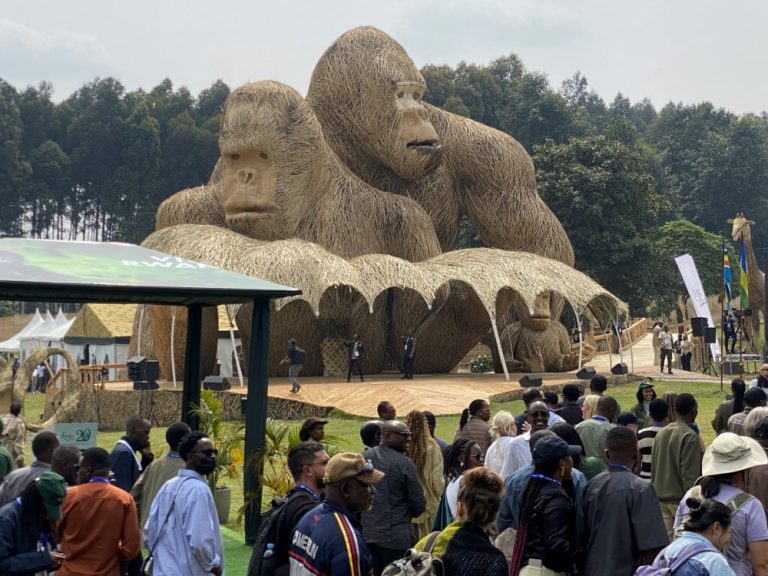
The Kwita Izina ceremony adapts the ancient Rwandan custom of gathering family and friends to name a newborn child into a grand conservation event for baby mountain gorillas. Held annually at the foothills of the Volcanoes National Park in Kinigi, it honors community-centered wildlife protection.
2-days-volcanoes-national-park-gorilla-trekking-and-ibyiwacu-cultural-village
3-days-rwanda-gorilla-trekking-and-golden-monkey-tracking-in-volcanoes
3-days-rwanda-gorilla-trekking-safari-itinerary-in-volcanoes-park
4-days-rwanda-primates-safari-gorilla-trekking-and-chimpanzee-all-inclusive-package
4-days-volcanoes-national-park-and-akagera-rwanda-wildlife-safari
5-days-rwanda-primate-safari-dian-fossey-hike-and-ibyiwachu-cultural-centre-visit
5-days-rwanda-double-gorilla-trekking-and-golden-monkey-tracking
5-days-rwanda-chimpanzee-tracking-and-lake-kivu-relaxation-tour-package
6-days-best-gorilla-and-rwanda-safari-tour-package
7-days-best-gorilla-trekking-and-other-highlights-of-rwanda-tour
Cultural Expressions and Customs
- Meaningful Naming: Just as human infants are given names reflecting their character or the hopes of the family, each baby gorilla receives a unique Kinyarwanda name that tells its specific story or trait.
- Music and Dance: Traditional performances, including energetic routines by traditional Intore dancers and drumming, fill the celebration with national pride.
- Art and Craft Displays: Local communities exhibit indigenous crafts, basket weaving, and creative arts that reflect heritage.
- Communal Gathering: The event acts as a massive public assembly uniting villagers, international guests, and global figures to share collective responsibility for the environment
What is the historical origin of the Kwita Izina naming tradition in Rwandan culture?
Ukwita Izina dates back centuries as a sacred family ritual where a newborn human child was introduced to their extended family and community. In traditional Rwandan society, naming a baby was never a casual task; it was a communal blessing that defined the child's identity, conferred protection, and integrated them into the lineage. Family members, elders, and neighbors gathered to share food, express gratitude, and offer well-wishes through spoken poetry and gifts.
By adapting this centuries-old tradition in 2005 for mountain gorillas, Rwanda transformed a local family rite into a national ecological celebration. The underlying philosophy remains identical: naming bestows intrinsic value, social identity, and communal responsibility. By treating gorilla infants with the same cultural reverence given to human children, the ceremony embeds wildlife protection directly into Rwanda's heritage fabric.
How does Kwita Izina mirror the traditional Rwandan ceremony for human newborns?
The gorilla naming ceremony mirrors human newborn naming down to its structural and symbolic details. In human Ukwita Izina, parents present the infant to the community, and elders offer names reflecting the circumstances of birth, hopes for the child's future, or character traits.
At Kinigi, park rangers, trackers, and international conservationists act as symbolic foster parents and elders, presenting each gorilla infant born in the Virunga massif over the past year. Names are announced publicly alongside their deep Kinyarwanda meanings, accompanied by blessings for health, growth, and strong family bonds within the gorilla troop. Just as a human baby receives protection from their extended clan, every named gorilla is symbolically adopted by both the local community and the global conservation family, establishing a lifelong pledge of stewardship.
What role does Intore dancing play in the Kwita Izina celebrations?
Intore—the celebrated "Dance of the Heroes"—is the central artistic performance at Kwita Izina. Originally performed by elite warriors returning victorious from battle or royal court duties, the Intore dance signifies bravery, grace, and triumph. Performers wear distinctive flowing grass wigs (ibishyishi), carry wooden spears and shields, and wear bells around their ankles that chime rhythmically with every step. Their movements mimic the noble stance of an elephant, the leap of a leopard, or the commanding presence of a silverback gorilla.
At Kwita Izina, the inclusion of Intore shifts the narrative from traditional warfare to ecological victory. Protecting the endangered mountain gorilla is framed as Rwanda's modern hero's journey, honoring rangers, community leaders, and conservationists as modern-day warriors defending the nation's natural heritage.
How are traditional Rwandan drums (Ingoma) used during the ceremony?
The Ingoma drum ensemble provides the rhythmic heartbeat and spiritual anchor of Kwita Izina. In pre-colonial Rwanda, drums were sacred symbols of royal authority, national unity, and seasonal renewal. During the ceremony, master drummers play large hollowed-log drums made from native trees, striking them with wooden sticks in powerful, synchronized rhythms.
The acoustic thunder of the drums announces the arrival of the naming procession and sets the cadence for ceremonial dances. Beyond music, the drum holds deep cultural weight: it commands silence, signals reverence, and summons the spirit of collective gathering (Umuganda). Hearing the Ingoma echo against the volcanic slopes of Mt. Sabyinyo creates a deep emotional connection, reminding attendees that safeguarding nature is bound to the pulse of the nation.
What is the significance of the Mushanana attire worn by attendees and hosts?
The Mushanana is the traditional formal dress of Rwanda, worn proudly by hosts, guests of honor, and performers at Kwita Izina. For women, it consists of a flowing floor-length skirt paired with a draped sash wrapped gracefully over one shoulder. For men, it includes a wrapped sash worn over a crisp shirt and tailored trousers.
At the ceremony, seeing thousands of attendees dressed in vibrant Mushanana transforms the amphitheater into a living tapestry of cultural pride. Wearing this traditional attire signifies dignity, respect, and celebration, signaling that naming gorillas is equal in solemnity and prestige to a royal court gathering, wedding, or national holiday.
What role do praise poems (Ibyivugo) play during Kwita Izina?
Ibyivugo are traditional praise poems recited with intense energy, rapid cadence, and theatrical gestures. Historically, Rwandan warriors composed Ibyivugo to recount their bravery, describe their lineage, and praise their cattle or leaders.
At Kwita Izina, poets take to the stage to declaim custom Ibyivugo dedicated to the mountain gorillas, park rangers, and the Virunga landscape. The poet adopts a commanding stance, raising a spear or walking stick while chanting lines that honor the strength of silverbacks, the beauty of the forest, and the resilience of the local community. These spoken-word recitations keep Rwandan oral literature alive, using poetic Kinyarwanda metaphors to elevate wildlife conservation from a scientific objective to a heroic cultural ideal.
How are names for the baby gorillas chosen according to Kinyarwanda customs?
In Rwandan custom, a name (izina) is never chosen at random; it carries intent, history, and spiritual energy. Gorilla names for Kwita Izina are carefully curated by rangers, trackers, and conservation teams who observe the infant during its first year of life.
Names are derived from Kinyarwanda words reflecting the baby's personality, birth circumstances, mother's lineage, or current social events. For example, a baby born during a period of harmony might be named Amahoro (Peace), while one born after a challenging recovery might be named Inzozi (Dreams) or Twaragano (Covenant). Selecting names anchored in Kinyarwanda linguistic tradition ensures that every gorilla carries a meaningful story, reinforcing local pride and emotional attachment among community members.
What is the significance of the Umutako headbands worn during the ceremony?
Umutako headbands are iconic traditional adornments worn during celebratory ceremonies like Kwita Izina. These headbands are woven from natural plant fibers and decorated with distinctive geometric beadwork patterns, often in bold black, white, red, and yellow colors.
Historically worn by nobility, dancers, and brides, the headband symbolizes elegance, beauty, and cultural identity. During Kwita Izina, performers, hostesses, and ceremonial namers wear Umutako as part of their regalia. Beyond decoration, the intricate geometric motifs reflect traditional Rwandan aesthetics found in Imigongo mud-art, signaling that the act of naming gorilla babies is an art form rooted in ancestral identity and visual tradition.
How does Kwita Izina express the Rwandan concept of Ubusabane (communal bonding)?
Ubusabane is the Rwandan cultural ideal of joyful communal gathering, sharing, and social cohesion. Kwita Izina embodies Ubusabane on a grand scale, bringing together thousands of local residents from Kinigi and Musanze alongside international dignitaries, scientists, and tourists.
The atmosphere resembles a massive family reunion. People gather on the grassy hillsides, sharing food, conversing, singing, and watching performances together. By breaking down barriers between local farmers, government officials, and foreign visitors, Kwita Izina fosters a shared sense of ownership over conservation. The collective celebration reinforces the belief that the gorillas belong to the entire community, and their protection requires communal unity.
How does Kwita Izina honor the traditional role of community elders?
In traditional Rwandan society, elders (Abasaza) are revered as custodians of wisdom, history, and cultural protocol. During Kwita Izina, local elders are given prominent roles in the ceremony, sitting in places of honor and often participating in the symbolic blessing of the names.
Their presence bridges the gap between historical land stewardship and modern conservation policy. Elders share stories of how their ancestors coexisted with the forest, offering traditional blessings for the gorillas' health and the prosperity of surrounding villages. By placing elders at the center of the event, Kwita Izina honors generational continuity, ensuring that traditional ecological knowledge is respected alongside modern veterinary science.
What connection does Kwita Izina have with Umuganura, the ancient harvest festival?
Umuganura is one of ancient Rwanda's most important cultural festivals, traditionally celebrated to mark the first harvest and give thanks for the fertility of the land, livestock, and people. Kwita Izina shares deep thematic roots with Umuganura. Both ceremonies celebrate life, abundance, and the fruits of collective labor.
Just as Umuganura honored farmers and cattle keepers for sustaining the kingdom, Kwita Izina honors park rangers, local cooperatives, and conservationists for nurturing the mountain gorilla population. The growth of gorilla numbers is treated as an ecological "harvest," proving that when communities care for the land, nature yields prosperity in the form of tourism revenue, community infrastructure, and biodiversity.
How are traditional Rwandan blessings incorporated into the naming ritual?
Before a name is publicly announced at Kwita Izina, it is accompanied by traditional spoken blessings (Umugisha). In Rwandan culture, blessings invoke peace, longevity, strength, and fruitfulness.
During the ceremony, namers—whether local conservation heroes or international icons—use traditional Kinyarwanda phrasing to wish the baby gorilla well. Phrases such as "Kura ugabe" (Grow and flourish) or "Kura ukomeye" (Grow strong) are pronounced over the infant's recorded image or symbolic representation. These spoken invocations reflect the traditional Rwandan belief in the power of the spoken word (Ijambo) to shape reality, bestowing positive energy and protection upon the baby gorilla as it grows in the Virunga canopy.
Who are the Abanamye (gorilla namers), and how does their role reflect traditional honor systems?
The individuals chosen to name a gorilla at Kwita Izina are known as Abanamye (the namers). Being selected as a namer is a high cultural honor, reminiscent of choosing a godfather or guardian in traditional Rwandan family life.
The roster of Abanamye includes local park rangers, dedicated village conservationists, research scientists, global celebrities, and heads of state. Each namer steps onto the central stage, dressed in traditional attire or ceremonial sashes, to reveal the chosen Kinyarwanda name and explain its significance. This tradition ensures that the honor of naming is shared between local guardians who protect the park daily and international allies who amplify Rwanda's conservation message.
How are local park rangers and trackers recognized in cultural terms during the event?
In traditional Rwandan culture, hunters and forest guides who protected the community were celebrated as heroes. Kwita Izina adapts this tradition by placing park rangers, trackers, and veterinarians at the very forefront of the celebration.
Before the naming begins, rangers march in formation or lead the procession, wearing their uniforms alongside traditional performers. They are introduced to the crowd not as mere employees, but as the primary custodians (Abarinzi) of the forest. The public acclaim, applause, and awards presented to rangers during the event elevate their status within their home communities, transforming ranger work into a highly respected and culturally prestigious profession.
What symbolic gifts or items are presented during the Kwita Izina ceremony?
Gift-giving (Gukwa / Gutanga impano) is an essential element of Rwandan ceremonial life, symbolizing friendship, goodwill, and shared responsibility. At Kwita Izina, symbolic gifts are exchanged among community groups, conservation organizations, and guest namers.
Local artisan cooperatives often present hand-woven peace baskets (Agaseke), traditional wood carvings, or local agricultural produce to guest namers. In return, revenue-sharing checks derived from park entry fees are symbolically presented directly to surrounding local communities to fund schools, clean water projects, and health clinics. This exchange reinforces the traditional ethic that every major milestone must be sealed with reciprocal generosity.
How does traditional Rwandan storytelling figure into the ceremony?
Oral tradition and storytelling have always been the primary vessels for passing down history, morals, and identity in Rwanda. Kwita Izina heavily incorporates theatrical storytelling into its program.
Dramatic reenactments depict the history of Volcanoes National Park, contrasting past poaching threats with present-day community protection efforts. Actors dressed as legendary figures, historical kings, or forest spirits tell stories through song, dance, and spoken monologue. These narrative performances educate younger generations about the historical co-existence between humans and wildlife, reinforcing the moral lesson that harming the forest damages the collective wellbeing of the Rwandan family.
What role does traditional Rwandan food and drink play in the Kwita Izina festivities?
No traditional Rwandan ceremony is complete without sharing food and drink. Kwita Izina culminates in communal feasting where traditional refreshments play a key role. Guests and community members partake in local staples like boiled sweet potatoes, cassava, roasted plantains, and grilled meats.
Traditional beverages like Urwagwa (banana beer) and Ikigage (sorghum beer) are prepared for community gatherings, served in traditional gourds or calabashes. Sharing food and drink seals the bonds formed during the ceremony, fulfilling the cultural obligation of hospitality (Ubwuzu) and leaving attendees with a sense of warm fellowship and shared triumph.
How do traditional songs pay homage to nature and cattle culture?
Rwandan music is deeply intertwined with pastoralist cattle culture, featuring songs called Inyambo or Amagambo y'inka that praise the grace, horns, and beauty of royal cattle. At Kwita Izina, musicians adapt these traditional poetic structures to praise mountain gorillas.
Songs blend classic folk melodies with lyrics that highlight the majesty of the silverback, comparing its protective strength to that of a herd bull. The acoustic backing features traditional stringed instruments and rhythmic clapping, creating a musical bridge between Rwanda's historical love for livestock and its modern dedication to wildlife conservation.
How does Kwita Izina reflect the Rwandan philosophy of Umuntumugabo (integrity and stewardship)?
Umuntumugabo is a core Rwandan moral concept representing integrity, nobility of character, responsibility, and self-reliance. Kwita Izina frames environmental conservation as an expression of Umuntumugabo.
Protecting endangered species is presented not as an external obligation imposed by international bodies, but as a duty of honor rooted in Rwandan dignity (Agaciro). By successfully saving the mountain gorilla from the brink of extinction through local initiative and community park revenue sharing, Kwita Izina demonstrates the principles of Umuntumugabo in action, showing how a nation takes prideful, responsible stewardship over its natural treasures.
What is the cultural symbolism behind holding the ceremony at the foot of the Virunga Mountains in Kinigi?
Kinigi, situated at the base of the majestic Virunga volcanoes (Sabyinyo, Gahinga, and Muhabura), holds immense cultural and geographic symbolism. In Rwandan folklore, these mist-shrouded volcanic peaks were viewed as sacred realms housing spirits and natural forces.
Holding Kwita Izina in Kinigi, outdoors on the green terraces directly facing the gorilla habitat, grounds the ceremony in the physical landscape. The natural amphitheater allows the sound of drums to echo against the mountain slopes, symbolically connecting the human celebration below with the wild gorilla habitat above, reinforcing that humans and mountains share one interconnected ecosystem.
How do youth performance groups pass down cultural traditions at Kwita Izina?
Kwita Izina features prominent performances by youth cultural troupes (Amatorero y'abana) from local schools surrounding Volcanoes National Park. Children as young as six perform complex Intore footwork, play traditional drums, and recite poetry praising nature.
Their inclusion is a deliberate cultural strategy to ensure intergenerational transmission of both traditional arts and conservation ethics. Watching young Rwandans execute ancestral dances while singing about gorilla protection instills a lifelong conservation mindset in the performers, ensuring that the legacy of Kwita Izina remains vibrant for decades to come.
How are pastoralist Inyambo cattle traditions subtly reflected in gorilla naming?
The Inyambo—the majestic, long-horned royal cattle of Rwanda—were historically groomed for performance, parade, and royal admiration. Their graceful movements and horns were celebrated as peak aesthetic beauty.
Kwita Izina draws clear visual and thematic parallels between Inyambo cattle culture and mountain gorilla appreciation. The pride, care, and respectful handling traditionally reserved for royal cattle are now extended to gorilla families. In ceremonial dances, performers simulate both the sweeping horn shapes of Inyambo and the chest-beating postures of silverbacks, blending pastoralist pride with wildlife reverence into a single unified performance art.
What traditional body ornaments and beadwork are displayed during the event?
The visual spectacle of Kwita Izina is enriched by traditional body ornaments, beadwork, and woven adornments. Dancers, hostesses, and ceremonial leaders wear handcrafted copper bangles (Umutako w'umuringa), beaded necklaces (Inyonga), and intricate chest bands (Inyonga z'ibifuri).
The color choices—frequently black, white, red, and gold—carry historical symbolism representing courage, purity, earth, and royalty. These traditional ornaments are crafted by local women's artisan cooperatives, showcasing indigenous craftsmanship while providing economic opportunities directly linked to the conservation event.
How does the ceremony use symbolism to bridge human kinship and animal protection?
In traditional Rwandan cosmology, humans share a deep spiritual kinship with the natural world, often reflected in clan totems (Iziga) associated with animals like the crane, lion, or leopard. Kwita Izina reawakens this ancient understanding of human-animal kinship.
By giving gorillas human names, celebrating their births like family members, and tracking their family trees, the ceremony dismantles the rigid boundary between humans and nature. It invites people to view gorillas not as wild beasts or tourist commodities, but as extended members of the Rwandan family (Umuryango), deserving of compassion, protection, and respect.
What is the cultural meaning behind specific words and linguistic roots in Kinyarwanda gorilla names?
The Kinyarwanda language is rich in proverbs, metaphors, and nuanced vocabulary. Gorilla names selected for Kwita Izina showcase this linguistic richness. Names often feature prefixes like Umu- (person/essence) or In- (attribute), creating multi-layered meanings.
For example, Twirakaye translates to "We are resilient," Umuco means "Light/Culture," and Ibere rya Bigogwe honors local geographic heritage. Deciphering these linguistic roots during the ceremony serves as an ongoing masterclass in Kinyarwanda poetry and grammar, celebrating the depth of the national language on an international platform.
How do traditional Rwandan musical instruments like the Inanga enhance the atmosphere?
While heavy drums energize the crowd, stringed traditional instruments like the Inanga (a carved wooden trough zither) provide contemplative, intimate musical moments during Kwita Izina. Master Inanga players pluck the strings while singing softly in a whispering vocal style.
Their songs recount historical legends, forest proverbs, and gentle lullabies dedicated to infant gorillas. The delicate sounds of the Inanga evoke the quiet atmosphere of the bamboo forest, offering a serene counterpoint to the high-energy drum ensembles and inviting listeners to reflect deeply on nature's quiet beauty.
How does the concept of Imihigo (performance vows) connect to Kwita Izina's conservation goals?
Imihigo is an ancient Rwandan practice where individuals or communities publicly declare performance goals and commit to achieving them with honor, holding themselves accountable to their peers. Kwita Izina operates under the spirit of Imihigo.
Local leaders, park authorities, and conservation partners use the gathering to declare their annual commitments—such as reducing poaching to zero, building new schools from park revenues, or restoring degraded forest corridors. Fulfilling these vows is a matter of public honor, transforming Kwita Izina from a mere festival into a yearly audit of community conservation promises.
How are female leadership and motherhood honored through traditional motifs at Kwita Izina?
In traditional Rwandan culture, the mother (Umubyeyi) holds a sacred position as the nurturer and protector of the household. Kwita Izina places special emphasis on honoring gorilla mothers and female leadership.
The ceremony explicitly celebrates the adult female gorillas who endure an 8.5-month gestation to bring new life into the Virungas. Female rangers, researchers, and community leaders are highlighted throughout the event. This focus aligns with traditional reverence for motherhood, sending a powerful cultural message about the vital role women play in sustaining both human families and wildlife populations.
How has Kwita Izina evolved culturally from a local gathering to a global event without losing its roots?
When Kwita Izina was formalized in 2005, it was primarily a local initiative aimed at resolving human-wildlife conflict around Volcanoes National Park. Over two decades, it has evolved into an internationally acclaimed event attracting global leaders, conservationists, and cultural icons, without forfeiting its authentic Rwandan soul.
The event maintains its cultural integrity by keeping Kinyarwanda language, local dance, traditional regalia, and community participation at its center. This evolution proves that indigenous cultural traditions can serve as dynamic, modern frameworks for addressing global environmental challenges.
What legacy does Kwita Izina leave for future generations of Rwandans regarding their cultural heritage?
Kwita Izina leaves a lasting legacy by redefining how young Rwandans perceive their cultural heritage and natural environment. It teaches future generations that culture is not a static museum piece, but a living tool for environmental problem-solving.
By celebrating gorillas through ancestral dance, song, and naming rites, Kwita Izina ensures that conservation is embedded in Rwandan identity. Children grow up viewing mountain gorillas not as dangerous wild animals or isolated scientific subjects, but as a source of national pride, prosperity, and enduring cultural heritage.
Booking Kwitai Izina ceremony and Rwanda gorilla trekking with us Roads of Adventure safaris
Book your 2026 Kwita Izina ceremony (scheduled for September 4, 2026, in Kinigi) and Rwanda gorilla trekking through Roads of Adventure Safaris. They specialize in custom primate tracking packages, handling park permits, transport, and local lodging logistics near Volcanoes National Park
