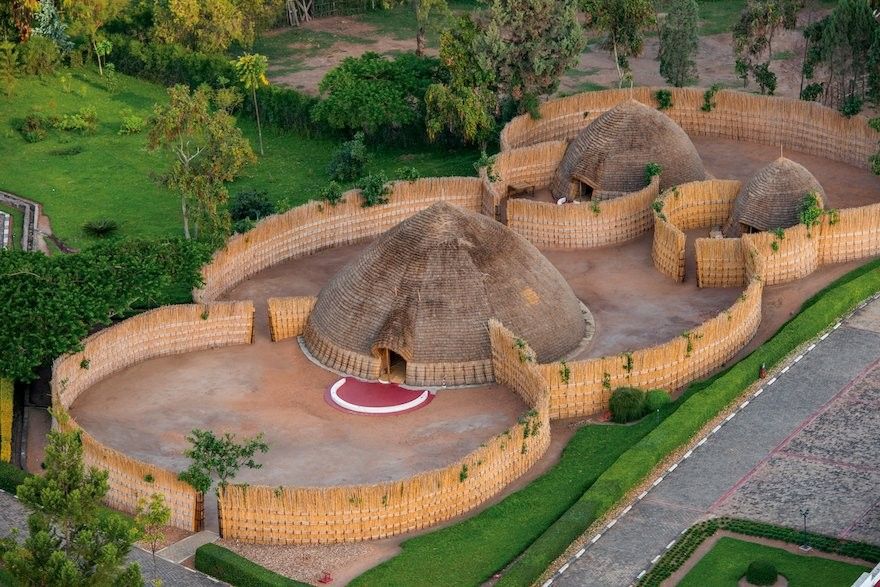
A Rwanda cultural safari offers immersive experiences including visiting the Iby'Iwacu Cultural Village to interact with former poachers, engaging in traditional dance (Intore) and drumming, trying banana beer brewing, making Imigongo cow-dung art, exploring the King’s Palace Museum, and reflecting at Kigali Genocide Memorial sites.
21-days-rwanda-primate-safari-culture-history-and-wildlife-holiday
9-days-best-family-rwanda-safari-holiday-big-five-canopy-walk-and-chimpanzee
6-days-akagera-safari-and-volcanoes-gorilla-trekking-and-ibi-wacu-cultural-village
5-days-rwanda-primate-safari-dian-fossey-hike-and-ibyiwachu-cultural-centre-visit
2-days-volcanoes-national-park-gorilla-trekking-and-ibyiwacu-cultural-village
Iby'Iwacu Cultural Village (near Volcanoes National Park)
Iby’Iwacu Cultural Village is a thoughtfully designed living museum located near Volcanoes National Park that offers visitors an immersive introduction to Rwandan traditions, cultural practices, and contemporary conservation-linked livelihoods. The village is notable for its program of community involvement: many of the performers and guides are former poachers and local community members who have transitioned to tourism and conservation work. This dynamic makes the experience both authentic and socially impactful — visitors meet people whose lives have changed through conservation employment and community development, and learn about the link between wildlife protection and local wellbeing.
A visit typically begins with a warm welcome in traditional attire and a guided walk through reconstructed cultural homesteads that demonstrate traditional architecture, household practices, and agricultural techniques. Demonstrations include activities such as banana beer brewing, traditional cooking, basket weaving, and imigongo artistry — each presented with hands-on opportunities so visitors can try their hand at local crafts. One of the most memorable components is the chance to learn traditional weaponry skills like bow shooting, offered in a safe, supervised setting that helps contextualize hunting heritage without glamorizing poaching.
The cultural program culminates in an energetic performance of traditional music and dance, where guests witness Intore-style movements, drumming, and storytelling that celebrate Rwandan history and identity. Importantly, the village frames these expressions within present-day life: performers share personal stories about their transition into cultural tourism, and how income from performances and craft sales supports household needs and education. Guided discussions often cover reconciliation, conservation, and community-led tourism models.
Souvenir opportunities are community-based: baskets, woven items, and artworks are sold by cooperatives, ensuring that revenue flows directly to artisans. For travelers interested in ethical tourism, Iby’Iwacu provides clear value: cultural immersion, meaningful community interaction, and visible conservation impact — all within easy reach of the gorilla trekking zone, making it a logical and enriching complement to primate-focused visits.
Traditional Dance and Music
Traditional Rwandan dance and music form a vibrant core of national culture, and experiencing these performances provides both visceral entertainment and deep cultural insight. Among the most famous and dramatic is the Intore, or “Dance of Heroes,” a performance ritual that blends athleticism, rhythm, and historical memory. Intore dancers, usually male, wear traditional costume elements, carry spears or sticks, and execute highly controlled leaps, stomps, and sharp arm movements that evoke martial prowess and communal valor. The dance is accompanied by a powerful drumming ensemble and vocalists whose call-and-response patterns drive the performance tempo.
Beyond Intore, Rwandan musical traditions include a wide range of styles, instruments, and forms that vary by region and historical context. The ingoma (drum) is central: large, calfskin-covered drums produce deep, resonant beats foundational to ceremonial drumming ensembles. Other traditional instruments include the inanga (a stringed zither), the umuduri (a one-string musical bow), and various shakers and flutes made from natural materials. Each instrument carries specific cultural meaning — drums often accompany rites of passage and royal ceremonies, while stringed instruments are associated with storytelling and accompaniment for sung poetry.
Performances typically unfold as a narrative: music establishes mood, dancers enact episodes of history or allegory, and vocalists and storytellers connect the present audience with ancestral traditions. In community settings, music and dance are participatory; visitors may be invited to clap, sing, or attempt simplified dance steps, deepening the learning experience. Modern presentations found at cultural centers or festivals often blend traditional forms with contemporary elements, highlighting how Rwandan artists reinterpret heritage for new audiences.
Attending a live performance also offers practical insights into cultural preservation. Many dance troupes operate as cooperatives or social enterprises that fund education and community projects. Observing rehearsals, meeting troupe members, and purchasing recorded music or crafts helps sustain these cultural practitioners. For photographers and cultural tourists, performances provide striking visual material: colorful costumes, dynamic movement, and rhythmic staging create memorable, photogenic moments — provided that guests respect performance etiquette and any photography restrictions set by troupe leaders.
King’s Palace Museum, Nyanza
The King’s Palace Museum in Nyanza is a reconstructed royal compound that brings Rwanda’s pre-colonial monarchy to life, offering an accessible and richly contextualized view of royal customs, architecture, and cattle-centered culture. The site’s centerpiece is the carefully rebuilt traditional palace, constructed using traditional materials and techniques. Nearby are the iconic Inyambo long-horned cattle enclosures; these cattle are a living cultural symbol, historically associated with royalty and prestige. Visitors get a tangible sense of how the monarchic court functioned, and how pastoralism and ceremonial life intertwined.
The museum’s exhibits and guided tours explain royal governance, ritual roles, and the symbolic importance of cattle in social relations, dowries, and status display. Furnishings, regalia, and reconstructed spaces such as the king’s audience hall and family quarters are interpreted to demonstrate daily court life and ceremonial practice. Knowledgeable guides—often local historians or trained interpreters—provide narratives on succession, royal customs, and the palace’s place within Rwanda’s broader historical landscape. They can explain how rites, music, and specific artifacts connected the monarchy to spiritual and political authority.
The Inyambo cattle herd offers a particularly evocative element: these animals, with their impressively long and curved horns, are cared for in a traditional kraal and presented with ceremonial attention. Special events or demonstrations sometimes show traditional cattle-tending rituals, and knowledgeable keepers describe feeding, breeding, and pastoral practices. The cattle’s presence anchors abstract historical concepts—status, ritual, and agricultural economy—in living form.
The museum complex typically includes displays of traditional crafts, textiles, and oral histories that document regional variation in dress, agricultural tools, and social organization. Exhibits are curated to highlight continuity and change—how monarchy-era customs influenced modern identity and how colonial and post-colonial transformations reshaped political life. For visitors, the King’s Palace Museum is both educational and photographic: the palace’s thatched architecture, ceremonial objects, and the long-horned cattle provide vivid imagery, while guided explanations root visual impressions in historical context.
Genocide Memorial Sites
Visiting Rwanda’s genocide memorials—such as the Kigali Genocide Memorial and the Nyamata Church Memorial—is a solemn, necessary step for understanding the country’s recent history, the scale of the 1994 tragedy, and the nation’s subsequent processes of justice, reconciliation, and remembrance. These sites are curated with sensitivity and purpose: exhibits combine personal testimony, forensic evidence, photographs, and audiovisual materials to convey both the human scope of loss and the resilience of survivors. Memorials are designed as spaces for reflection, education, and respectful commemoration.
At memorial centers, visitors encounter detailed timelines that situate the genocide within historical and political developments, helping to dismantle simplistic narratives. Personal stories—through recorded testimonies, letters, and photographs—humanize the statistics and present the lived experience of survivors, witnesses, and those who perished. Many memorials include preserved sites where mass graves have been respectfully marked, and in places like Nyamata, the physical space of a church—where thousands sought refuge—remains a poignant focal point.
Educational components often cover the legal and restorative frameworks that followed the genocide. Exhibits explain the gacaca community courts, International Criminal Tribunal processes, and local reconciliation initiatives that combined traditional practices with formal justice mechanisms. Memorial staff and trained guides—often survivors themselves—offer context and facilitate conversations on memory, forgiveness, and the hard work of rebuilding social fabric. For many visitors, time spent at a memorial is emotionally heavy; institutions typically provide quiet spaces and counseling information for guests needing support.
Engaging with these sites requires respectful behavior: modest dress, quiet demeanor, and attentiveness to photography rules are expected. Visitors can contribute positively by supporting memorial centers through entrance fees, donations, or purchasing educational materials. For those seeking deeper engagement, many memorials organize talks, survivor-led discussions, and educational programs that encourage ongoing learning about prevention of mass violence and the importance of human rights. A visit to Rwanda’s genocide memorials is not merely tourism; it is an act of bearing witness and acknowledging a profound chapter in the country’s history.
Village Life & Homestays
Village life and homestay experiences in Rwanda invite travelers to step beyond guided tours and participate in the rhythms of daily rural community life. Homestays are designed to be immersive and reciprocal: guests share households with local families, participate in domestic tasks, and often sleep in family homes or locally run guesthouses. Typical activities include preparing local meals—such as ugali and isombe—learning to brew traditional banana beer, tending small plots, or joining women’s cooperatives for weaving and basketry. These hands-on engagements are framed by hosts as cultural exchange rather than performance, and strong programs prioritize mutual respect and beneficiary consent.
Homestays provide direct economic benefits to host families and communities, with fees usually contributing to household income, school fees, or cooperative projects. Guests gain intimate insight into family structures, rural livelihoods, and agricultural cycles—how planting schedules, livestock care, and market days shape life. Mornings might begin with tea, fetching water, or accompanying a market run; afternoons can include craft-making sessions or storytelling around shared meals. Language barriers are overcome with smiles, gestures, and often the assistance of a local translator or guide who helps interpret customs and norms.
Ethical homestay programs emphasize appropriate behavior: modest dress, clear consent for photography, and time allocated for private family life. Hosts are often part of vetted programs associated with fair-trade cooperatives or community tourism networks that ensure standards and equitable compensation. For travelers, homestays offer rich opportunities for slow cultural learning—observing child-rearing, experiencing local humor, and being invited into life-cycle observances such as communal meals or agricultural rituals. The depth of connection forged in a homestay can be one of the most memorable and humbling aspects of a Rwanda visit, providing stories, friendships, and a meaningful sense of place.
Artistic Expression: Inema & Niyo Arts
Kigali’s contemporary arts scene has grown vibrantly, with centers like Inema Arts Center and the Niyo Arts Gallery leading creative engagement and cultural entrepreneurship. These institutions showcase a wide range of artistic expression: painting, sculpture, performance, and community art projects that blend traditional themes with modern aesthetics. Inema, founded by local artists, functions as both gallery and creative hub—hosting workshops, artist residencies, and community programs that nurture young talent. Niyo Arts similarly supports artists through exhibitions and collaborations that explore identity, memory, and innovation.
A visit to these centers offers more than static viewing. Many galleries host live demonstrations, where artists explain techniques such as imigongo (cow-dung relief painting), a traditional medium revived by contemporary practitioners to striking effect. Workshops allow visitors to try their hand at local techniques under artist guidance, creating small works to take home. Galleries also curate exhibitions that address social themes—post-genocide healing, environmental concerns, and youth empowerment—using visual media as a platform for conversation and education.
Purchasing art from these centers directly supports practicing artists and community programs. Many studios run social enterprises employing youth and women, offering training in craft production, gallery management, and marketing. Visitors who join workshops or buy pieces contribute to livelihoods and the sustainability of Kigali’s creative economy. For photographers and cultural tourists, the art centers provide photogenic interiors, colorful works, and opportunities to meet artists for portrait sessions or studio visits, often arranged with advance consent.
Ethnographic Museum (Huye)
The Ethnographic Museum in Huye (formerly Butare) is widely regarded as one of East Africa’s finest collections of cultural, historical, and archaeological artifacts, offering visitors a comprehensive overview of Rwanda’s material culture, social history, and academic scholarship. Established with a mission to document and conserve cultural heritage, the museum displays textiles, traditional tools, ceremonial regalia, agricultural implements, and archaeological finds that illuminate pre-colonial and colonial-era life.
Exhibits are curated to emphasize both continuity and change: displays trace kinship systems, agricultural practices, and ritual life while showcasing how colonialism and modernization altered social structures. The museum provides interpretive text, photographs, and multimedia elements that help situate artifacts within daily life and ritual contexts. Of particular interest are collections related to royal paraphernalia, traditional dress, and specialist crafts — items that reveal regional variation and technical skill.
The museum also functions as a research and education center. On-site archives and publications support scholars and students studying Rwandan history, oral traditions, and material culture. Guided tours—often conducted by knowledgeable local staff—contextualize exhibits, offering stories behind objects and explanations of how artifacts were used. Special exhibitions and rotating displays highlight contemporary cultural debates and collaborate with community groups to present living traditions.
For visitors, the Ethnographic Museum offers both depth and accessibility. The combination of well-preserved objects, thoughtful interpretation, and academic resources makes it an essential stop for anyone seeking a rigorous understanding of Rwanda’s cultural foundations. The museum experience complements visits to living cultural sites and adds historical layering to what travelers see in villages, palaces, and contemporary art spaces.
What is the best Iby’iwacu cultural village experience on a Rwanda cultural safari? (Iby’Iwacu Cultural Village—situated near Volcanoes National Park—is widely regarded as the premier community-based cultural visit on many Rwanda cultural safaris. Its design blends staged interpretation with genuine community engagement: local performers, artisans and guides (many from nearby villages) present aspects of Rwandan traditional life that are accessible to visitors while generating income for participating families. A standout feature is the opportunity to dress in carefully replicated royal garments and traditional costumes, which helps guests visualise pre-colonial court life and social roles. This is followed by performances that include the famous Intore warrior dance and storytelling sessions that explain the symbolism behind dances, regalia and rites.
Visitors also witness Batwa (forest people) performances—songs, music and dance—offering respectful exposure to a marginalized group whose forest-dwelling culture was disrupted by conservation histories. Iby’Iwacu has incorporated Batwa artists into programming to provide livelihoods and cultural visibility, though visitors should be mindful about how these presentations are funded and presented; ask guides about direct community benefit and whether payments go to performers fairly.
A particularly powerful element is hearing testimonies from former poachers who have transitioned into conservation or community roles. Their stories illuminate the complex local pressures—poverty, human–wildlife conflict, and limited livelihood options—that once drove illegal hunting, and they humanise the conservation narrative. Conversations about how tourism revenues support alternatives (crafts, guiding, agriculture) help visitors see the tangible links between safari spending and community resilience.
Practical tips: book a morning slot when performers are fresh; bring small denomination local currency for craft purchases; ask whether the village can arrange a private, small-group visit for deeper conversation; and respect requests about photography—many performers prefer permission and modest compensation for close-up images. On a Rwanda cultural safari, Iby’Iwacu is best appreciated when approached with curiosity, humility, and a willingness to learn about both cultural heritage and modern conservation challenges.
What traditional performances can I see on a Rwanda cultural safari?
Rwanda’s performing arts are vibrant, varied, and central to cultural-safari programming. On a Rwanda cultural safari you will commonly encounter several signature performance types: the Intore warrior dance, traditional drumming ensembles, lyrical harp music such as the lulunga, Batwa forest songs, and communal singing and dance associated with harvests, weddings and rites of passage.
The Intore performance is the most iconic: originally an elite martial dance of the pre-colonial Rwandan court, it features highly stylised choreography, precise footwork, athletic leaps, and a dramatic procession led by dancers wearing traditional costume and carrying spears or clubs. Intore’s soundtrack is dominated by long, resonant drums and powerful call-and-response vocals. The dancers’ movements symbolise bravery, hunting prowess, and communal solidarity—viewers often report Intore as the most electrifying highlight of a Rwanda cultural safari.
Drumming ensembles play a central social and ceremonial role; drums functioned historically as communication tools and status symbols. Drummers demonstrate polyrhythmic patterns, drum-building knowledge and sometimes invite guests to try simple rhythms. The lulunga, a traditional harp-like instrument, offers a contrasting, lyrical sound: its delicate melodies accompany songs of history, love and pastoral life and add emotional texture to performances.
Batwa performances introduce different musical and dance vocabularies—the Batwa employ forest-based songs, flute-like instruments and percussive techniques that reflect a once deeply forested lifeway. When included in Rwanda cultural safari programming, Batwa acts are often modest in scale but culturally rich; ensure they are presented respectfully and provide direct benefit to performers.
Many community-focused experiences incorporate participatory elements—dance lessons, drum circles, and call-and-response song sessions—that allow visitors to engage physically and learn context from local instructors. Performance scheduling varies: lodges and cultural villages often host evening presentations, while some villages offer daytime interactive workshops. Always ask about the origins of a performance, whether it is a revived or living tradition, and how proceeds support the community—ethical engagement ensures that these cultural expressions remain dignified, fairly compensated, and sustainable components of a Rwanda cultural safari.
Can I participate in local arts and crafts during a Rwanda cultural safari?
Yes—participation in arts and crafts is a common, rewarding feature on a Rwanda cultural safari, offering hands-on learning and meaningful souvenirs. Two particularly prominent activities are Imigongo painting and banana-fibre weaving; you may also find pottery workshops, basketry (agaseke), and beadwork in some communities.
Imigongo is a distinctive Rwandan art form from the southeastern highlands, traditionally using cow dung shaped into raised geometric patterns and then painted with natural pigments—black, white, red and yellow. Modern workshops in villages like Nyakarimbi invite visitors to try their hand at forming patterns and applying pigments under local artisan instruction. These sessions provide insight into regional aesthetics, material ingenuity and the symbolic meanings embedded in motifs. Finished pieces—often mounted on boards—make compact, transportable souvenirs and buying directly from artisans ensures your contribution goes into local incomes.
Banana-fiber weaving and cloth-making are other popular workshops. Artisans extract fibers from the pseudo-stem of banana plants, process them by hand, and then braid or weave them into mats, purses, place-mats, and decorative textiles. These workshops highlight sustainable, low-footprint craft production and often pair with demonstrations of local agriculture—many villages combine craft sessions with tea or banana tastings.
Pottery and basket-making (agaseke) are widely available around cultural villages; artisans teach basic coiling techniques, firing methods and decorative patterns. Some programs also include natural-dye demonstrations using local plants.
Practical considerations: workshops are best experienced in small groups for hands-on attention; book through your lodge or a trusted operator to ensure fair compensation for instructors; bring small denomination local currency for purchasing completed items; and be mindful that rushing the craft or treating it purely as a photo opportunity can undermine respect—take time to learn the story behind the craft. Participating in artisanal activities on a Rwanda cultural safari deepens cultural understanding and channels tourism revenue directly into community livelihoods.
Are there community cooking experiences on a Rwanda cultural safari?
Community cooking experiences are widely available on Rwanda cultural safaris and offer memorable, sensory engagement with local foodways. These hands-on activities are typically hosted by community groups, homestay families, or cultural villages and can range from short demonstrations to full participatory meals where guests forage, prepare and share traditional dishes.
Typical elements include learning to grind sorghum by hand (a staple grain in many rural diets), preparing cassava- or banana-based dishes (like matoke or ibitoke), and sampling locally made banana beer (urwagwa) where guests may observe or join in the simple brewing process. Participants often learn how to prepare spicy stews, bean dishes, groundnut sauces, and traditional vegetable combinations cooked over wood or charcoal stoves. In many community sessions, guests help in the preparation and then partake in a communal meal, seated with hosts and hearing stories about ingredients, seasonality, and food taboos.
Workshops may also include coffee- or tea-focused experiences—Rwanda’s coffee industry is central to livelihoods—where visitors tour a smallholder cooperative, pick beans, learn about processing steps, and finish with a roasting and tasting session. Food-focused activities sometimes integrate agricultural work: tending a kitchen garden, harvesting sweet potatoes, or observing banana-plant management.
Respectful participation matters: dress modestly, accept invites to help only if you feel comfortable, and ask about dietary restrictions in advance. Also, small cash contributions or purchasing ingredients/cooked meals directly supports host families. From a cultural perspective, sharing food fosters trust and creates space for deeper conversation—hosts often use meals to explain social norms, kinship structures, and seasonal calendars.
On a Rwanda cultural safari, community cooking workshops are both delightful and impactful: they give travellers practical skills, meaningful social exchange, and direct economic benefit to households and cooperatives. For those seeking immersive experiences, combining a cooking session with a homestay or community visit offers an intimate window into daily life and local resilience.
What historical sites should I visit during a Rwanda cultural safari?
Rwanda’s historical sites weave precolonial royal heritage, colonial encounters and the recent, painful history of the 1994 genocide into a complex narrative—essential for any thoughtful Rwanda cultural safari. Key sites include the King’s Palace in Nyanza (Nyanza King’s Palace and Museum), the Ethnographic Museum in Butare (Huye), the Kigali Genocide Memorial, and memorial churches such as Ntarama and Nyamata.
The King’s Palace in Nyanza offers insight into the monarchy’s cultural world: restored royal huts, glimpses of traditional court ceremonies, and interpretive displays about the ancient social structure, cattle culture and the role of kingship in shaping Rwandan identity. Nearby cultural demonstrations—traditional architecture, royal regalia and oral histories—help contextualise precolonial governance.
Huye’s Ethnographic Museum is widely regarded as one of Africa’s finest museums. Its comprehensive collections cover material culture, ritual objects, household items, and agricultural tools that chronicle regional diversity. The museum’s displays offer a scholarly counterpoint to immersive village visits, deepening understanding of long-term cultural practices and craft traditions.
For contemporary history, the Kigali Genocide Memorial is essential. Its exhibits document the 1994 genocide against the Tutsi through survivor testimony, photographic archives and educational material, and the grounds include burial sites for victims. Visiting is emotionally challenging but crucial for contextualising Rwanda’s recovery, reconciliation efforts, and the policies behind national unity. Local guides—often genocide-educated—can sensitively interpret exhibits and suggest reflective ways to engage.
Rwandan genocide memorial churches at Ntarama and Nyamata are poignant: former places of refuge that became sites of mass killings, they now display personal objects recovered from victims and memorial plaques. Visits underscore the human scale of the events and the nation’s memorial culture.
Other sites of interest include the King’s baths at Rukari, colonial-era architecture in Kigali and butchery markets that reveal urban history. Ethical visiting practices—listening respectfully, asking permission before photography, and allowing space for local grief—make historical site visits meaningful on a Rwanda cultural safari.
What is the "Warrior for a Day" activity on a Rwanda cultural safari?
"Warrior for a Day" is a participatory cultural activity often offered by cultural villages and community projects on a Rwanda cultural safari. It is an interactive, educational program designed to immerse visitors in aspects of traditional martial culture—archery, spear-throwing, ceremonial dress—and the historical values associated with the Intore warrior tradition, while emphasising safety and cultural sensitivity.
Participants typically begin with a contextual briefing: local guides explain the historical role of warriors in precolonial Rwanda—protecting cattle, enforcing social order, and performing at court ceremonies. Attendees then don traditional-style attire (carefully managed to respect cultural authenticity) and receive instruction in basic spear-handling techniques and safe spear-throwing practice using foam-tipped or supervised demonstration equipment. Archery lessons often use wooden bows and foam-tipped arrows or modern safety adaptations, allowing visitors to experience the coordination and focus associated with traditional hunting and skirmishes.
The program also includes dance components: simple Intore steps are taught in a guided, non-competitive format so guests can appreciate the athleticism and communal energy of these performances. Storytelling segments explain the ceremonial codes—how bravery, skill and ritual conduct were integrated into community life.
Ethical considerations are foregrounded: trainers stress that the activity is interpretive rather than a literal reenactment of historical violence, and safety briefings, protective gear, and controlled spaces prevent injury. Many groups pair the "Warrior for a Day" with broader cultural workshops—bead-making, music demonstrations, or cooking—so visitors experience a rounded view of cultural life.
For visitors, the experience is engaging and photogenic but works best when framed by respect: ask about costume sourcing, ensure performers receive fair compensation, and avoid treating the activity as mere spectacle. On a Rwanda cultural safari, "Warrior for a Day" can be a memorable, meaningful exchange when delivered collaboratively with local communities and interpreted with cultural honesty.
Is it possible to visit local homes during a Rwanda cultural safari?
Yes—visiting local homes, participating in homestays and joining community walks are integral, often transformative elements of a Rwanda cultural safari. These interactions provide an intimate window into daily routines, household economies, agricultural practices and social customs, and they are typically arranged through community tourism cooperatives or trusted lodge partners to ensure ethical engagement.
Home visits usually involve an invited family hosting guests for a few hours or an evening meal. Visitors may help prepare food, observe cooking techniques such as grinding sorghum or roasting plantains, and learn about household tasks like weaving, childcare practices and livestock management. Hosts commonly share stories about kinship networks, local governance (umuryango structures), and seasonal rhythms tied to planting and harvest. Homestays, where offered, involve overnight stays in a family home or community-run guest room, and they deepen relationships through morning chores, shared meals and storytelling.
Community walks guide visitors through village paths, farms and communal spaces, highlighting indigenous plant uses, traditional medicine, and local conservation practices such as terracing or agroforestry. These walks reveal the environmental knowledge that underpins rural resilience and often include stops at artisan workshops or school projects where travellers can observe and support educational initiatives.
Ethical considerations are paramount: visits should be booked through intermediaries who ensure informed consent and fair compensation for host families. Photography requires permission, and visitors should respect privacy—ask before entering private spaces, remove shoes if requested, and dress modestly. Language interpretation is usually provided by guides or community liaisons, enabling deeper conversation and ensuring that benefits reach hosts.
For travellers seeking authentic connection, home visits on a Rwanda cultural safari offer warmth, practical learning and a direct way to channel tourism revenues into households. When structured respectfully, these experiences foster cross-cultural understanding and meaningful economic support for rural communities.
How does a Rwanda cultural safari incorporate traditional storytelling?
Traditional storytelling is central to Rwandan cultural life, serving as a vehicle for history, moral instruction, genealogies, and entertainment. On a Rwanda cultural safari, storytelling sessions are arranged in villages, cultural centers, and some lodges to help visitors access the oral traditions that animate Rwandan identity. These sessions are led by elders, griots, or trained community narrators and often combine spoken narrative with song, proverbs, call-and-response, and drumming.
Stories commonly recount foundational myths (origins of clans and lands), heroic histories of kings and warriors, cautionary tales about social conduct, and personal testimonies—including contemporary accounts that connect precolonial narratives to post-genocide reconciliation and healing. Listening to elders recount local histories offers nuanced perspectives on kinship, land rights, traditional dispute resolution systems (gacaca roots), and cosmologies, enriching what might otherwise be a surface-level tourist encounter.
Storytelling sessions are typically intimate—held around a hearth, beneath a communal tree, or in small village halls—creating a contemplative atmosphere. Sessions may be themed (agricultural folklore, initiation rites, conflict and reconciliation) and often include interactive components: visitors are invited to ask questions, to share their own stories in turn, or to learn brief songs and proverbs. Skilled narrators use metaphors and humour to convey complex social values, and translators or guides help render subtleties into accessible English or French.
Ethical engagement matters: storytellers are culture-bearers and should be compensated fairly; their narratives should not be mined for sensationalist tourism but presented with context and dignity. Storytelling can be especially powerful when paired with related activities—craft workshops, visits to historical sites, or homestays—so visitors can see how oral traditions inform daily life.
In addition to preserving heritage, storytelling plays a role in Rwanda’s post-conflict recovery: shared narratives about survival and reconciliation are often used in community meetings and memorialisation. For visitors, participating in or listening to traditional storytelling on a Rwanda cultural safari is a deeply humanising experience that connects travellers to place, memory and the moral frameworks that shape Rwandan society.
Booking Rwanda cultural safari with us Roads of Adventure safaris
Book an unforgettable Rwanda cultural safari with Roads of Adventure Safaris, your expert for immersive, tailored journeys in the "Land of a Thousand Hills." Experience Rwanda's rich heritage, visit the poignant Kigali Genocide Memorial, engage with locals at Ibyiwacu Cultural Village, and explore the Nyanza palace. Our curated, professional itineraries, often combined with iconic gorilla trekking in Volcanoes National Park, ensure seamless, high-quality, and ethical adventures. Experience authentic local traditions, beautiful landscapes, and world-class service—book your journey with us today for a truly memorable cultural experience.
