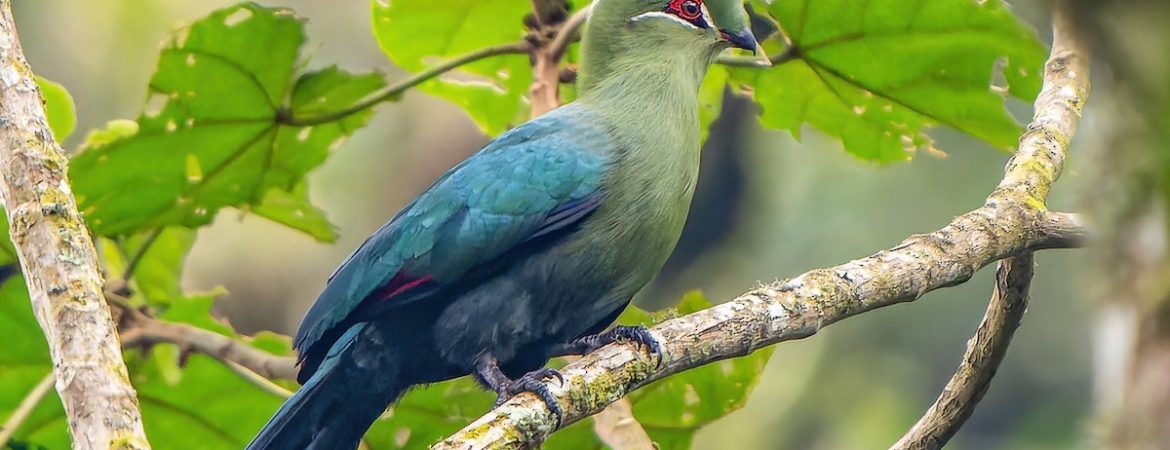
The Royal Mile in Budongo Forest, Uganda, is a premier birding spot renowned for central African specialties, including the Chocolate-backed Kingfisher, Chestnut-capped Flycatcher, and Rufous-crowned Eremomela. Key species often spotted include the White-thighed Hornbill, Sabine's Spinetail, Ituri Batis, and the rare Puvel's Illadopsis.
30-days-best-uganda-birding-safari-extravaganza-and-wildlife-safari
25-days-complete-uganda-birding-safari-extravaganza-with-wildlife-viewing
22-days-best-uganda-primate-and-birding-safari-adventure
21-days-uganda-birding-safari-extravaganza-to-best-uganda-safari-parks
20-days-uganda-birding-safari-to-uganda-national-park
20-days-uganda-birding-safari-wildlife-gorilla-and-chimpanzee-tracking
14-days-classic-uganda-birding-safari-expedition
12-days-uganda-birding-tour-looking-for-rift-valley-endemic-birds-west-circuit
10-days-best-uganda-birding-safari-and-wildlife-experience
Key Bird Species in the Royal Mile & Budongo Forest
- "Budongo 5" & Key Specials: Chocolate-backed Kingfisher, Dwarf Kingfisher, Chestnut-capped Flycatcher, Rufous-crowned Eremomela, and Sabine's Spinetail, Spinetail.
- Kingfishers & Hornbills: Chocolate-backed, African Dwarf, Blue-breasted, and Shining-blue Kingfishers; White-thighed, Piping, and African Pied Hornbills.
- Other Specialties: Puvel’s Illadopsis (common in Kaniyo Pabidi), Nahan’s Partridge (endangered), Black-eared Ground-Thrush, Ituri Batis, Yellow-footed Flycatcher, Lemon-bellied Crombec, and Fire-crested Alethe.
- Forest Species: African Crowned Eagle, Crested Guineafowl, Cassin's Spinetail, African Emerald Cuckoo, Yellow-crested Woodpecker, and Blue-shouldered Robin-Chat.
What are the top birding specials to look for in the Budongo Royal Mile?
The Budongo Royal Mile is one of Uganda’s premier lowland forest birding sites, and a core reason is its concentration of Guinea‑Congo biome and Upper Guinea–type specialists that are otherwise difficult to find in East Africa. Among the “specials” most eagerly sought by visiting birders are Chocolate‑backed Kingfisher, White‑thighed Hornbill, Yellow‑footed Flycatcher, Ituri Batis, and Chestnut‑capped Flycatcher — each representing different forest niches and offering contrasting behaviours and identification challenges.
Chocolate‑backed Kingfisher is a striking, secretive forest species associated with shaded streams and dense understory. Although often heard before seen, patients and careful riverine scanning can produce excellent views when an individual sits low on a branch above water. White‑thighed Hornbill, a canopy specialist, is one of Budongo’s charismatic large birds; it’s often encountered in the upper canopy where its calls and movement betray flocks. Seeing one well—against dappled canopy light—highlights Budongo’s intact upper‑story structure. The Yellow‑footed Flycatcher is a canopy/upper‑midstorey insectivore; its subtle plumage and distinctive behaviour (short sallies from shaded perches) make it a favourite among attentive observers and photographers who frequent the Royal Mile’s steady perches and clearings. Ituri Batis is a small, compact flycatcher‑like bird with a bold facial pattern; although shy, it announces itself with short, repetitive calls and can be coaxed into view by careful playback in permitted contexts and slow approach along shaded tracks. Chestnut‑capped Flycatcher occupies the mid‑storey and often feeds quietly in small family parties; its warm crown and behaviour make it an appealing target for birders hoping to log a suite of forest flycatchers in one morning.
Finding these specials successfully depends on visiting the Royal Mile during the peak activity windows — early morning and late afternoon — moving slowly, listening intently, and spending time at microhabitats such as streamside clearings, canopy gaps, and fruiting trees where birds concentrate. Experienced local guides familiar with territories, recent records and seasonal movements substantially increase success rates. These five species typify Budongo’s mix of dazzling but skittish canopy birds and secretive understory specialists, making the Royal Mile a must‑visit for any serious Uganda itinerant birdwatcher.
Where is the best location for viewing rare forest birds in Budongo?
The “Royal Mile” is widely regarded by birders and local guides as the premier single location for encountering Budongo Forest’s rarer and more range‑restricted forest birds. This broad, gentle track runs through mature lowland rainforest, offering a relatively open corridor where light penetrates the canopy enough for observers to detect and view birds across a variety of strata—from ground level to canopy—without the thick impediments of the interior forest. The Royal Mile’s advantage is its combination of habitat continuity, microhabitat diversity (streamside tangles, mid‑storey vine tangles, canopy gaps, and fruiting trees) and relatively easy walking, which permits concentrated observation and repeatable stakeouts at prime micro‑sites.
Rare forest species—many of them members of the Guinea‑Congo biome—use specific niches along the Royal Mile: streamside and riverine specialists like Chocolate‑backed Kingfisher favour the shaded watercourses adjacent to the trail; canopy and sub‑canopy hornbills and pigeons move through the upper storey where large fruiting figs occur; while skulking flycatchers and batises occupy the mid‑storey tangles and vine‑clothed limbs. The Mile’s linear nature also concentrates vocal activity along a predictable route so that careful listening and playback (if permitted and ethically applied) are more likely to elicit responses from shy species. Additionally, the Royal Mile has become a traditional survey route, so seasonal records and local guide knowledge are rich—meaning that visitors benefit from up‑to‑date intelligence on recent sightings and likely territories.
Practically, early mornings on the Royal Mile are especially productive: cooler temperatures and insect activity trigger peak vocal and foraging behaviour. Being prepared to stand quietly at known stakeout points—such as a known fruiting tree or a shaded stream crossing—greatly improves chances for good, prolonged views. For those focused on rarities, combining multiple visits (dawn and late afternoon) and engaging experienced Budongo guides will maximize success. In short, the Royal Mile’s accessibility, habitat mix and historical record make it the best single place in Budongo Forest Reserve to encounter its rare forest specialities.
Which kingfisher species can I see on a Uganda birding safari in Budongo?
Budongo Forest supports a delightful range of kingfishers adapted to riverine, forest edge and deep forest habitats; the Royal Mile and adjacent stream networks make several species accessible to visiting birders. Among the notable kingfishers you can encounter are Chocolate‑backed Kingfisher, African Dwarf Kingfisher and Blue‑breasted Kingfisher—each occupying distinct niches and offering differing observation experiences.
Chocolate‑backed Kingfisher is typically associated with shaded forest streams and quiet backwaters where it hunts small fish, aquatic insects and amphibians. This species is often secretive, announcing its presence with high‑pitched calls; patient stakeouts near streamside tangles or listening at dawn and dusk usually yield the best chances for a sighting. African Dwarf Kingfisher is one of Africa’s smallest kingfishers and is a true understory specialist. It prefers dense, dark tangles and low vegetation where it forages inconspicuously; locating this species often depends on hearing its soft call and then watching for brief sallies into low vegetation. Blue‑breasted Kingfisher, larger and more conspicuous than the Dwarf species, frequents forest edges, clearings and larger streams where it may sit out on low perches and sally for fish and large aquatic insects. Its vivid plumage—blue upperparts and warm underparts—makes it a prized photographic subject when seen in good light.
To optimize your kingfisher prospects in Budongo, focus on the shaded stream crossings and quiet water stretches along the Royal Mile, arrive early to catch peak activity, and move slowly, scanning low perches and overhanging branches. Using local guides’ knowledge of recent riverine sightings and habitual perches is critical. Kingfishers in Budongo are rewarding because they combine attractive plumage with interesting foraging behaviours, and seeing this trio—Dwarf, Chocolate‑backed and Blue‑breasted—gives a compact but representative sample of the forest’s aquatic and understory avifauna.
Are there unique Guinea-Congo Biome species in the Royal Mile?
Yes. The Budongo Royal Mile lies within the Guineo‑Congolian forest zone and acts as a significant eastern outpost for a number of Guinea‑Congo biome species—birds whose global distributions are centered on the vast West and Central African rainforests. The Royal Mile’s mix of mature canopy, dense mid‑storey and shaded undergrowth provides the precise habitats these species require, making the trail an important site for observing taxa such as Yellow‑browed Camaroptera and Rufous‑crowned Eremomela, among others.
Yellow‑browed Camaroptera typifies the small, often overlooked understory warblers of the Guinea‑Congo block. It favours dense tangles, secondary growth and shaded edges where it skitters through low foliage hunting insects. Its distinct eye‑arc of coloration and energetic foraging style help separate it from other Camaroptera species. Rufous‑crowned Eremomela is a tiny, warm‑capped insectivore of the mid‑storey and forest edge; its presence in Budongo highlights the forest’s affinity with the broader West/Central African avifauna. These species are biogeographical markers—finding them in Budongo underlines the forest’s conservation significance as a refugial patch of Guinea‑Congo habitat in East Africa.
Other Guinea‑Congo elements you might encounter on the Royal Mile include specific greenbuls, batises and flycatchers with principally western affinities, as well as fruit‑eating pigeons and some specialized barbets. Many of these birds are more vocal than visible and require careful listening and patient observation to locate. For birders interested in biogeography or completing regional lists, the Royal Mile offers the chance to observe species that are otherwise restricted largely to West and Central African forests—making each sighting both ornithologically and conservation‑wise significant. Local guides with long experience in Budongo are invaluable for locating these Guinea‑Congo biome representatives, often by recognizing subtle call differences and habitual microhabitat use.
How easy is it to spot the Green-breasted Pitta in Budongo?
The Green‑breasted Pitta (Pitta reichenowi) is highly prized by forest birders because of its striking plumage and elusive behaviour, and Budongo is one of the few Ugandan sites where it occurs. However, despite its presence, the pitta is difficult to spot and requires both luck and methodical effort. Pittas are ground‑foraging, secretive birds that prefer damp, leaf‑littered sections of mature forest, often near streamlines or in lower‑lying ravines where leaf litter and invertebrate prey are abundant. Their furtive habits and tendency to remain motionless and well‑camouflaged when approached make visual detection challenging.
The best chance of seeing Green‑breasted Pitta in Budongo comes during the breeding season and in wetter parts of the forest when they are more vocally active and when prey is plentiful. Early morning and late afternoon sessions are prime times; patience and very quiet approaches are essential. The most effective technique is often to locate a calling or singing bird (pitta vocalizations can be surprisingly loud and characteristic), then wait silently and still for the bird to reveal itself or move. Many successful sightings are the result of remaining motionless at a stakeout point for extended periods rather than continuous walking. Experienced local guides who know historical pitta territories and microhabitat preferences greatly increase the odds: they can place observers in locations where pittas have been recorded recently and read subtle cues—like the presence of fresh foraging traces or particular leaf‑litter microhabitats.
That said, even with good guidance, sightings are far from guaranteed. Many birders hear pittas more often than they see them. For those who obtain a visual, the experience is exceptionally rewarding: the bird’s jewel‑like colours and close, ground‑level behaviours provide a dramatic contrast to canopy watching. If a visual is a priority for your trip, plan multiple early‑morning visits to the same known pitta microhabitat, bring a comfortable, quiet mindset, and accept that success may require time and patience.
Which hornbill species dominate the Budongo Forest canopy?
Budongo’s upper canopy and emergent trees are home to a distinctive guild of large fruit‑eating hornbills that dominate visual and acoustic impressions of the forest. The White‑thighed Hornbill (Bycanistes albotibialis), Piping Hornbill (Bycanistes fistulator) and Black‑and‑white‑casqued Hornbill (Bycanistes subcylindricus) are among the most frequently observed large hornbills in Budongo, each contributing to the forest’s role as a critical stronghold for primary frugivores.
White‑thighed Hornbill is commonly seen and heard moving through the canopy in pairs or small groups, and its robust calls and large silhouette are unmistakable. It relies on large fruiting trees—particularly figs and other canopy fruit—so its occurrence is closely tied to fruiting phenology. Piping Hornbill is slightly more vocal and may travel in small flocks, often announcing its passage with long, piping calls; it too is dependent on good canopy continuity and large trees for feeding and roosting. The Black‑and‑white‑casqued Hornbill is notable for its striking casque and contrastive plumage; while less abundant than the other two in some sectors, it remains an important component of the hornbill assemblage and a key seed disperser.
These hornbills are ecologically significant beyond their spectacle: as large frugivores, they move substantial seeds across the landscape and help maintain forest regeneration processes. Their presence is therefore an indicator of habitat quality and continuity. Observationally, the best strategy to see them is to scan the canopy from clearings along the Royal Mile, stake out large fruiting fig trees, and listen for characteristic calls in the early morning when hornbills are most active. Canopy observation platforms and experienced guides with knowledge of recent fruiting patterns will boost opportunities to observe these impressive birds at relatively close range.
Is the Black-eared Ground Thrush found in the Royal Mile?
Yes—the Black‑eared Ground Thrush (Zoothera camaronensis or regional equivalent depending on taxonomy) is one of Budongo’s secretive understorey thrushes and the Royal Mile is among the few places in Uganda where it can be encountered reliably. This species is shy and terrestrial, favouring dense leaf litter and shaded, moist forest floors. It is much more often heard than seen: its thin, fluting song and soft contact calls can betray its presence, whereas visual confirmation requires careful tracking of song sites and quiet stakeouts where the bird forages.
Detecting Black‑eared Ground Thrush typically involves early morning listening and patient waiting in likely leaf‑litter patches—particularly near streamlines, damp gullies or alongside trails where the understorey is relatively undisturbed. When conditions are right and the bird becomes active, it may forage in short bursts, flicking through leaf litter and understorey debris searching for beetles, earthworms and other invertebrates, sometimes crossing small open patches where a careful observer can secure a view. Local guides play a crucial role: they can interpret recent acoustic records, know historical territories, and suggest stakeout locations where the thrush has been seen previously.
Even with skilled guidance, sightings are not guaranteed—many visitors record the species by sound only. But for those who do see it, the sight of this shy thrush moving methodically through the leaf litter is a remarkable illustration of Budongo’s healthy understorey community. Patience, quiet behaviour, and multiple visits to the same spot greatly increase the likelihood of a visual, and ethical birding etiquette (minimizing disturbance to leaf litter and microhabitat) is essential to protect these sensitive ground‑dwelling birds.
What type of flycatchers are special in the Budongo Royal Mile?
The Budongo Royal Mile hosts an appealing array of flycatchers and flycatcher‑like insectivores that specialize in different vertical layers of the forest—understorey, mid‑storey and canopy. Among the most prized are Yellow‑footed Flycatcher (Muscicapa sethsmithi), Forest Flycatcher (various Myiagra/Muscicapa taxa depending on local taxonomy), and Chestnut‑capped Flycatcher. Each occupies a specific niche and offers characteristic behaviours that reward patient observation.
Yellow‑footed Flycatcher is typically a canopy and upper mid‑storey species that sallies from shaded perches to capture flying insects. Its discreet plumage belies energetic foraging displays; focal observation of canopy perches near clearings or along the Royal Mile often reveals this species’ short, darting flights and habitual return to the same vantage. Forest Flycatcher types in Budongo tend to inhabit mid‑storey tangles and forest interior gaps, using short sallies and gleaning techniques to glean insects from leaves and branches—these birds are often less conspicuous and require attentive listening and careful scanning. Chestnut‑capped Flycatcher, with its warm head coloration, frequents the lower mid‑storey and undergrowth margins where it forages in short flights and open perches; family groups or pairs may move through the same stretch of forest, giving repeated viewing opportunities.
The Royal Mile’s combination of streamside corridors, shaded trail edges and mid‑storey vine tangles creates a mosaic of microhabitats that supports these different flycatcher species. For optimal results, birders should focus on dawn and early morning hours, watch fruiting trees and canopy gaps where sallies originate, and remain attentive to soft calls and fleeting movements. Local guides who can discriminate the subtle calls and habitual perches of these flycatchers dramatically increase success; many of these species are best located through a mix of acoustic detection and patient visual stakeouts. Observing this suite of flycatchers provides insight into Budongo’s insectivore guild structure and highlights the forest’s vertical complexity.
Booking Uganda birding safari in Budongo royal Mile with us Roads of Adventure safaris
Book a premier birding safari to the Royal Mile in Budongo Forest with Roads of Adventure Safaris. Our specialized, expert-led tours offer an immersive experience, targeting sought-after species like the Nahan’s Francolin, Chocolate-backed Kingfisher, and Yellow-footed Flycatcher. Enjoy tailored itineraries, comfortable 4x4 transport, and top-tier guiding to make the most of this prime birding destination. Combine this rare forest birding with 25 days of intensive birding across Uganda. Explore, discover, and enjoy this incredible birding experience in the Pearl of Africa. Contact Roads of Adventure Safaris today for an unforgettable birding adventure.
