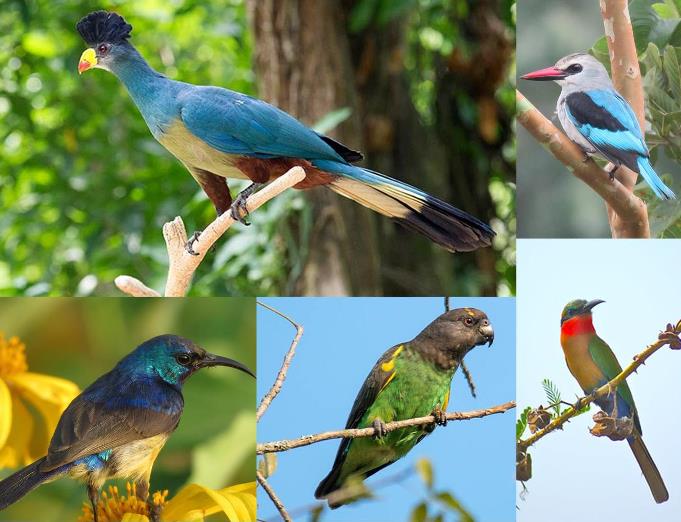
Bigodi Wetland Sanctuary is a premier Ugandan birding destination, hosting over 200 species, famously known for the Great Blue Turaco. Key sightings during guided swamp walks include the Papyrus Gonolek, White-spotted Flufftail, Yellow-billed Barbet, Kingfishers, and various hornbills. The best time to visit is during the dry seasons (March-May, Sept-Nov)
30-days-best-uganda-birding-safari-extravaganza-and-wildlife-safari
25-days-complete-uganda-birding-safari-extravaganza-with-wildlife-viewing
22-days-best-uganda-primate-and-birding-safari-adventure
21-days-uganda-birding-safari-extravaganza-to-best-uganda-safari-parks
20-days-uganda-birding-safari-to-uganda-national-park
20-days-uganda-birding-safari-wildlife-gorilla-and-chimpanzee-tracking
14-days-classic-uganda-birding-safari-expedition
12-days-uganda-birding-tour-looking-for-rift-valley-endemic-birds-west-circuit
10-days-best-uganda-birding-safari-and-wildlife-experience
Iconic / Specialty Birds
Bigodi Wetland is famed for a handful of striking and habitat-specialist birds that draw birders from across East Africa. The Great Blue Turaco and Black-billed Turaco are among the largest and most charismatic forest frugivores here: their slow, lumbering movements and frequent calls make them relatively easy to locate in the canopy where they feed mainly on figs and other fruits. The Great Blue’s deep blue-green plumage and red-tipped crest are unmistakable; the Black-billed Turaco is slightly smaller with a distinctive black bill and vivid green body. Papyrus specialists such as the Papyrus Gonolek cling to dense stands of papyrus and reedbeds around open water; their bright red and black plumage and skulking behaviour mean they are best detected by voice—listen for sharp, ringing calls at dawn and dusk. The White-spotted Flufftail is secretive and often heard rather than seen, preferring wet, reedy ground and damp undergrowth; expect brief, furtive appearances as it darts between cover. Kingfishers in Bigodi include species associated with streams and swamp margins: the Shining (or Shinning) Blue Kingfisher and the Blue-breasted Kingfisher favour perches over still or slow-moving water where they plunge for small fish and aquatic invertebrates. Visitors should scan the waterline and low perches early in the morning when kingfishers are most active. Overall, these iconic birds illustrate Bigodi’s habitat diversity—from canopy fruiting trees to papyrus swamps and open water—and underscore the importance of conserving both forest and wetland mosaics. For the best chances of seeing these species, hire a local guide, arrive at first light, move quietly along boardwalks and reed edges, and pay close attention to vocalizations.
Barbets & Tinkerbirds
Barbets and tinkerbirds are a conspicuous and colorful component of Bigodi’s avifauna, occupying a variety of feeding and nesting niches across forest edges, woodland, and gardens. Larger barbets such as the Yellow-billed Barbet and Hairy-breasted Barbet are typically canopy dwellers, often heard more than seen as they issue loud, repetitive calls from fruiting trees. These species play an important ecological role as seed dispersers—consuming figs and other soft fruits and moving seeds through the forest. The Double-toothed Barbet, with its stout bill and patchy plumage, favors forest-edge habitats and secondary growth where it gleans fruit and large insects, while the Grey-throated Barbet is more associated with denser, mature forest patches. Tinkerbirds—small, energetic members of the same broad family—include the Yellow-rumped and Yellow-throated Tinkerbirds. These tiny birds are frequently encountered hopping along branches and vine tangles, probing for insects and small fruits; their high-pitched, repetitive tink-tink songs are often the first indication of their presence. In Bigodi, look for barbets and tinkerbirds in mixed-species flocks, at fruiting fig trees, and along forest edges adjacent to gardens. Barbets excavate nest holes in termite mounds or soft wood—behaviour that can be fascinating to observe during the breeding season. From a visitor perspective, early morning and late afternoon are best for activity; bring binoculars and scan mid-to-upper canopy levels. While most barbets are relatively common locally, habitat loss and fragmentation can reduce their numbers—protecting a mosaic of mature trees, secondary regrowth, and hunting standards within the wetland buffer helps sustain healthy populations.
Sunbirds & Flycatchers
Sunbirds and small flycatchers contribute bright flashes of color and lively movement to Bigodi’s scrub, forest edge, and flower-rich clearings. Sunbirds—such as the Superb, Bronze, and Green-headed Sunbirds—are nectar specialists with curved bills adapted to probing tubular flowers, but they also take insects, especially when feeding young. The Superb Sunbird is diminutive with iridescent male plumage that flashes in sunlight; Bronze and Green-headed Sunbirds are slightly larger and frequent bushes, flowering trees, and ranks of vines near trails. Expect to see them flitting between blossoms, hovering briefly or perching to sip nectar; they are especially numerous where flowering shrubs and cultivated gardens interface with the wetland. Flycatcher-like species and other insectivores—represented here by birds such as the White-tailed Ant-thrush and the Black-and-white Shrike-flycatcher—exploit different strata: ant-thrushes forage on the forest floor, flicking through leaf litter for insects and small invertebrates, whereas the Black-and-white Shrike-flycatcher perches conspicuously in mid-levels and sallies out to catch flying insects. Mixed-species feeding flocks often include sunbirds and flycatchers, and following these groups can be a productive way to encounter multiple species at once. For observers, move slowly and watch flowering patches, canopy edges, and understorey perches. Early morning activity and warm, sunny spells when flowers are open will increase sightings. Protecting flowering plant diversity and maintaining native shrubs and edge habitats in the Bigodi landscape helps sustain nectar and insect resources vital to these species.
Others
Beyond the high-profile groups, Bigodi supports a rich mix of other birds that add to the wetland’s ecological value and visitor appeal. The African Grey Parrot—famed for its intelligence and vocal mimicry—uses gallery forest and tall trees for nesting and roosting; while locally less numerous than in past decades, they remain a highlight when flocks or calling individuals are located. Small passerines such as the Black-crowned Waxbill brighten open grassy margins and reed edges; look for their fine, conical bills and sociable feeding in small flocks on seedheads and grasses. Western Nicator is a secretive forest- and edge-dweller whose plaintive song or sharp calls often give its position away before it’s seen; it favors dense tangles and mid-storey vegetation. The Brown-crowned Tchagra is a shrike-like species frequenting scrub and secondary growth; it hunts from exposed perches, dropping onto insects and small lizards. Other likely ‘others’ in Bigodi include weavers, robins, and sunbird allies that utilize a mix of wetlands, forest edge, and anthropogenic habitats. Many of these species respond positively to a heterogeneous landscape—mosaic patches of reedbeds, marsh, swamp forest, secondary regrowth, and smallholder gardens. Conservation threats include trapping for the pet trade (notably for parrots), conversion of papyrus and wetland to agriculture, and disturbance of nesting sites. For visitors, a patient approach—listening carefully, scanning different habitat layers, and using a local guide—yields the best results. Recording observations and supporting community conservation initiatives (such as the Bigodi Wetland Sanctuary’s guide and community programs) are practical ways for birders to contribute to protection of the site and its avian diversity.
What is the most famous bird to see in Bigodi Wetland Sanctuary?
The Great Blue Turaco is widely recognized as Bigodi’s most iconic and sought-after bird. At up to 70 cm in length, this spectacular turaco stands out with deep blue-green plumage, a crimson crest tip, and striking facial features; its slow, deliberate movements through the canopy and distinctive deep, resonant calls make it a memorable sight and sound. In Bigodi the Great Blue Turaco favors mature forest patches and tall fruiting trees within and around the wetland mosaic. It is primarily frugivorous, feeding on figs and a range of soft fruits, and plays a key ecological role as a seed disperser, moving seeds across the forest and aiding regeneration. Sightings are often in the upper canopy, so clear views are easier when individuals move to exposed branches or fly between nearby trees. Turacos are social — you’re likely to see small groups or hear multiple birds calling to one another. Because of their size and vocal behavior, they are easier to locate than many secretive understorey species, and local guides regularly include turaco-watching in morning walks. Although not globally threatened at an extreme level, Great Blue Turacos depend on intact forest and fruiting trees; protecting canopy continuity and native fruit tree diversity in buffer zones around Bigodi helps to maintain healthy populations. For birders, the best tactics are to visit at first light when birds are active, move quietly beneath canopy patches, and scan treetops and ridgelines. Carry binoculars and a scope if possible; a patient, guided walk often rewards you with excellent, prolonged views of this emblematic species.
How many bird species can I watch in Bigodi Wetland Sanctuary?
Bigodi Wetland Sanctuary supports a rich avifauna, with over 200 bird species recorded within the community-run reserve and adjacent forest-wetland mosaic. This diversity reflects the site’s range of habitats—primary and secondary forest, papyrus and reedbeds, swamp margins, open water, gardens, and agricultural edges—each supporting different bird communities. Forest canopy species include turacos, barbets, and fruit doves; the understorey and floor host secretive species like the White-spotted Flufftail and various antthrushes; papyrus and reedbeds harbor specialists such as the Papyrus Gonolek, Papyrus Canary, and other reed-dependent warblers; wetland margins attract kingfishers, herons, and occasionally bitterns and egrets; and open edges and gardens provide habitat for sunbirds, waxbills, weavers, and doves. Seasonal movements add further variety: migrant passerines and swallows arrive in wetter months, increasing species counts between November and April. The recorded total of “over 200” is the result of ongoing surveys, eBird reports, and local guide observations; exact numbers can fluctuate with survey effort and seasonal presence. For visitors this means excellent value-for-time: a half-day guided walk often yields a high species count, and full-day or multi-day visits substantially increase the tally. To maximize sightings, hire a knowledgeable local guide who knows microhabitats and vocalizations, visit early in the morning, and target papyrus and swamp edges for specials. Recording your observations helps the sanctuary monitor trends and supports conservation planning for this species-rich wetland.
What papyrus-dwelling birds exist in Bigodi Wetland Sanctuary?
Bigodi’s papyrus and reedbed habitats host several specialized birds adapted to dense emergent vegetation. Chief among these papyrus specialists is the Papyrus Gonolek, a striking red-and-black bush-shrike that is closely tied to tall papyrus stands. It is often heard before seen—sharp, ringing calls at dawn and dusk betray its location deep within the reeds. The Papyrus Canary is another classic species of papyrus swamps: a small, streaked, seed-eating bird that flicks and calls within reedbeds and is a primary indicator of healthy papyrus. The White-winged Warbler (locally referred to in some sources; internationally often treated within papyrus-specialist warblers) is a more reclusive, subtle species that uses dense reed interiors and reed-sheath zones; as with many papyrus birds, vocalizations and early-morning activity increase detection chances. Beyond these signature species, the papyrus mosaic in Bigodi also supports other reed-associated birds such as certain reed warblers, Swamp Flycatcher (in adjacent wetland edges), and small herons or bitterns that use the papyrus fringe for hunting. These specialists are sensitive to papyrus clearance, drainage, and conversion to agriculture; their strong association with this habitat makes the conservation of continuous, tall papyrus stands a priority for the sanctuary. For visitors seeking papyrus species, guided walks that include boardwalks and papyrus edges at first light or in the late afternoon are most productive. Use careful listening to pick up distinctive calls, scan reed margins for movement, and remain quiet—papyrus birds are often furtive and respond poorly to disturbance. Supporting community-based protection of papyrus around Bigodi directly benefits the persistence of these unique wetland specialists.
Are there kingfishers in Bigodi Wetland Sanctuary?
Yes. Bigodi’s mix of slow-moving streams, swamp margins, ponds, and clearings provides habitat for a number of kingfisher species. Two commonly reported species are the Shining-blue (Shining) Kingfisher and the Blue-breasted Kingfisher. The Shining-blue Kingfisher (often seen around shaded streams and small pools) is small, bright, and typically perches low over water before diving for aquatic invertebrates and tiny fish. The Blue-breasted Kingfisher favors slightly more open water and perches over margins where it can spot prey; its stockier build, contrasting breast coloration, and deliberate plunge-dives make it distinctive. Kingfishers are most active in the cooler parts of the day—early morning and late afternoon—when water levels and prey activity make fishing successful. Look for single birds perched quietly on low branches or exposed sticks near the waterline; sudden darting flights and splashes betray successful hunts. In addition to these, Bigodi’s aquatic habitats may intermittently host other kingfishers (for example woodland or forest-associated species) depending on water conditions and season. For photography and observation, approach water quietly along the boardwalks, scan perches across small ponds or stream edges, and be patient: a well-placed hide or slow walk often yields excellent viewing. Maintaining riparian vegetation and minimizing water pollution are important to retain healthy kingfisher populations, so supporting local conservation efforts benefits both birds and visitors.
Can I see hornbills in Bigodi Wetland Sanctuary?
Yes, hornbills are part of Bigodi’s forest bird community. The Black-and-white Casqued Hornbill (commonly reported in the region) is one species visitors may encounter in or near taller forest patches. These hornbills are large, unmistakable birds with strong bills and often a casque on the upper bill; they feed mainly on fruits but will also take large insects and small vertebrates. In Bigodi the hornbills use mature trees for foraging and nesting, and their presence signals intact canopy and sizable fruiting trees that sustain frugivores. Sightings usually occur in the canopy where they call or move between fruiting trees; they can be heard before being seen, especially during morning activity when they vocalize and visit fig trees. Hornbills are less easily seen on narrow boardwalks than canopy species like turacos, so guided walks that include forest-edge routes, canopy viewpoints, or early-morning stakeouts near fruiting trees increase the chance of an encounter. While hornbills are not as numerous as smaller passerines, their conservation is closely linked to the availability of large trees for nesting and food. Protecting these trees within and around the wetland and preventing illegal logging or cutting of nesting sites is vital. If hornbills are a high-priority target for your trip, ask local guides about recent sightings and known fruiting trees or roosts before heading out.
What is the best time of day for birding in Bigodi Wetland Sanctuary?
The best time of day for birding in Bigodi is early morning—generally from first light until mid-morning—when temperatures are cooler and birds are actively foraging, calling, and moving. At dawn many species sing to establish territories and to communicate, and frugivores, insectivores, and nectar feeders make repeated movements that improve detection rates. Morning walks along boardwalks, forest trails, and papyrus margins typically yield the highest species counts and the best opportunities for extended views and photography. Late afternoon—roughly the two hours before dusk—can also be productive as some species become more active again, especially insectivores and raptors that hunt in the softer light. Midday is usually quieter and hotter; birds often shelter and reduce conspicuous activity, making detection harder. For papyrus specialists and secretive understorey species, audio detection and patient listening are valuable at both dawn and dusk. If you have to choose one tour, book an early-morning guided walk. For photographers, the golden light of early morning and late afternoon provides the best illumination. Also consider seasonality: in wetter months some species may be more vocal at different times, and water-level changes can shift bird distribution slightly. Finally, hiring a local guide who knows microhabitats and recent bird activity will increase the success of any timed visit.
What birds are unique to the Bigodi Wetland Sanctuary swamp area?
Bigodi’s swamp and papyrus zones host several species that are highly associated with wetland reedbeds and swamp forest—birds that are less likely to be found in surrounding upland forest. Two of the most emblematic swamp specialists are the White-spotted Flufftail and the Papyrus Gonolek. The White-spotted Flufftail is a furtive, ground-dwelling rail-like bird that favors damp undergrowth, reedy margins, and swampy ground; it is often heard as a faint series of notes and glimpsed only briefly as it slips between vegetation. The Papyrus Gonolek, with its striking red and black plumage, is tightly bound to tall papyrus stands and reedbeds and is typically detected by its loud, ringing calls emanating from deep within the reeds. Another papyrus specialist is the Papyrus Canary, a small granivorous bird that inhabits the interiors of dense papyrus. Beyond these, Bigodi’s swamp may host papyrus-associated warblers and other reed-dependent species that are locally rare or absent from nearby forest interior zones. The combination of open water, reed fringe, and swamp forest creates microhabitats that support specialized hunting, nesting, and foraging strategies. These species are sensitive to papyrus clearance, drainage, and agricultural conversion—losses that directly reduce the availability of breeding and foraging habitat. For visitors aiming to see swamp specialists, boardwalks and guided routes that specifically target papyrus margins during early morning are essential; careful listening for distinctive calls and slow scanning of reed surfaces will improve detection. Supporting conservation of papyrus stands through local initiatives helps ensure these unique swamp species remain a persistent feature of Bigodi’s birdlist.
Will I see parrots in Bigodi Wetland Sanctuary?
Yes—Bigodi’s forest patches and gallery trees support parrots, most notably the African Grey Parrot. African Grey Parrots are among the most celebrated parrot species, valued for their intelligence and vocal ability. In Bigodi they use tall trees in forest and forest-edge habitats for roosting and nesting and will range across adjoining farmland and gardens where food is available. Sightings can be memorable when small flocks fly between canopy trees or when calling birds betray their presence. However, grey parrot numbers have declined across parts of West and Central Africa due to trapping for the pet trade, and while East African populations may be more stable in protected community reserves, local pressure can still affect sightings. Observing parrots often requires listening for raucous calls and scanning canopy tops and emergent trees, especially early in the day when parrots are most active. Other small parrot species may occasionally appear depending on habitat and season, but the African Grey is the principal parrot highlight. Conservation of nesting trees and discouraging illegal trapping are essential to sustaining parrot populations; supporting community conservation and reporting sightings helps sanctuary managers track populations. If parrots are a target species for your visit, ask guides for recent local reports and consider early-morning canopy-focused walks.
What kind of birding guides are available at Bigodi Wetland Sanctuary?
Bigodi Wetland Sanctuary is managed by a local community organization that employs and trains expert local guides. These guides are typically long-time residents with intimate knowledge of the sanctuary’s habitats, seasonal bird movements, species vocalizations, and best vantage points for target birds. They know the local routes, papyrus edges, boardwalks, and canopy patches where specials are most reliably seen, and they are skilled at finding secretive understorey species such as White-spotted Flufftail and papyrus specialists. Guides also provide natural-history context—explaining relationships between species and habitats, describing conservation challenges, and pointing out other wildlife such as primates, butterflies, and plant species. Tours can range from short boardwalk walks to half-day or full-day excursions that combine wetland and forest edge birding. Because the guides are community-based, fees and tips directly support local conservation and livelihoods, which encourages habitat protection. For visitors it’s advisable to request a guide with recent track-records for the species you most want to see; Bigodi guides are usually happy to customize walks for photographers, families, or serious birders. They also help with logistics—timing visits for early morning activity, carrying scopes or bins if needed, and advising on footwear for muddy tracks. Hiring a guide not only improves bird-finding success but also fosters positive engagement with the community conservation model that sustains Bigodi.
Are there any barbets to be found in Bigodi Wetland Sanctuary?
Yes—barbets are a prominent and colorful group in Bigodi’s forests and edges. Commonly recorded species include the Yellow-billed Barbet, Double-toothed Barbet, and Hairy-breasted Barbet, among others. Larger barbets frequent the upper canopy and mid-storey of mature trees where they feed primarily on fruits, figs, and occasionally larger insects; their loud, repetitive calls are often the first clue to their presence. The Double-toothed Barbet is frequently found at forest edges and regrowth areas, while the Hairy-breasted and Yellow-billed Barbets prefer taller forest patches with abundant fruiting trees. Barbets are important seed dispersers, carrying fruits through the forest and contributing to forest regeneration. Tinkerbirds, smaller relatives sometimes grouped with barbets, such as the Yellow-throated and Yellow-rumped Tinkerbirds, are also present and are commonly heard as high-pitched, repetitive calls in understorey and edge habitats. For observers, scanning fruiting fig trees, listening for the characteristic barcode-like calls, and following mixed-species flocks often yields good barbet views. Protecting mature trees and standing deadwood is key to preserving nesting cavities and foraging resources for these species, so Bigodi’s mosaic of forest and secondary growth is important for their persistence.
What birds of prey or cranes are in Bigodi Wetland Sanctuary?
Bigodi Wetland Sanctuary and its surrounding mosaic can host a mix of raptors and wetland birds, with Grey Crowned Crane being among the most conspicuous crane-like species associated with the wetlands. Grey Crowned Cranes frequent marshy grasslands and shallow wetlands, where they forage for invertebrates and small vertebrates and display their distinctive courtship behaviors. Raptors observed in the area may include forest and wetland-associated species such as the African Harrier-Hawk, various kestrels, and occasional larger forest raptors depending on habitat and season. These birds of prey utilize both open wetland margins for hunting and taller trees for perching and nesting. Raptors are often more visible in the early morning and late afternoon when thermal flights and hunting activity increase. The presence of cranes and raptors adds to the sanctuary’s conservation value, as both groups require healthy habitat mosaics: cranes need safe, shallow wetlands and surrounding grazing marshes, while raptors depend on prey abundance and nesting sites in mature trees. For visitors, look for cranes in open marshy areas adjacent to the boardwalk and scan treetops and sky for raptors during quiet parts of the day. Supporting the protection of wetland hydrology and large trees benefits both cranes and raptors in Bigodi.
Can I see sunbirds in Bigodi Wetland Sanctuary?
Yes—sunbirds are a common and delightful component of Bigodi’s birdlife. Species such as the Bronze Sunbird are regularly seen visiting flowering shrubs, gardens, and forest-edge vegetation. Male sunbirds can be particularly showy with iridescent plumage that flashes green, blue, or metallic hues in sunlight, while females are often more subdued in color. Sunbirds feed mainly on nectar but supplement their diet with insects, especially when feeding chicks. In Bigodi you’ll find them in flower-rich patches along trails, near community gardens that border the wetland, and in shrub layers inside the forest edge. Sunbirds are active and fast-moving—watch for brief hovering or short perching bouts as they probe tubular flowers. Early morning and warm, sunny periods when flowers are open are best for sunbird activity. Because they respond positively to garden plantings and flowering shrubs, maintaining native flowering plants in buffer zones benefits both birdwatchers and the birds. For photographers and casual observers, sunbirds provide frequent, colorful encounters, and a guided walk or stationary stake-out at a flowering hedge is a reliable way to enjoy these attractive nectarivores.
What is the best time of year to visit Bigodi Wetland Sanctuary for birding?
Bigodi is a rewarding birding destination year-round, but certain times give better chances for increased species diversity and migrant presence. The months of March–May and September–November are widely recommended as particularly good periods. March–May is part of the long rainy season in the region, when many resident species are highly active and vegetative growth can produce abundant fruiting and flowering resources. September–November is a transitional period that often coincides with increased movement of regional migrants. Many Palearctic migrants and intra-African migrants arrive from November through April, so visits from late November into the wet season bring extra species on top of the resident community. Dry-season months can offer easier walking conditions and clearer skies for photography, and certain species may be easier to locate when water levels change and concentrate birds at remaining water sources. Overall, if your priority is sheer species numbers and migrant diversity, plan between November and April; for a mix of resident activity and comfortable conditions, March–May and September–November are excellent choices. Always check recent local reports or contact Bigodi guides for current conditions and recent sightings before planning.
Is the Bigodi Wetland Sanctuary boardwalk good for photography?
Yes—the boardwalk and viewing platforms at Bigodi are excellent for photography. They provide stable, relatively close vantage points over papyrus margins, reedbeds, and shallow pools where birds and other wildlife come to feed, drink, or perch. The boardwalk allows photographers to position themselves at water level or along reed edges without trampling sensitive vegetation, maximizing ethical wildlife viewing and image opportunities. Early morning light yields soft, warm tones ideal for bird portraits, while late-afternoon golden light is also flattering. Photographers benefit from a long lens (300mm or more on a full-frame equivalent) for smaller or skittish species, plus a monopod or solid stance for steadier shots on the boardwalk. Because some species are shy and easily disturbed, approach slowly, minimize noise, and use the boardwalk’s natural concealment; repositioning quietly and letting birds settle again often results in better photo opportunities. In addition to birds, the boardwalk offers chances to photograph primates, butterflies, dragonflies, and wetland plants. Respect sanctuary rules, avoid flash at close range, and coordinate with guides who can suggest ideal spots and times for target species. The combination of accessibility and habitat variety makes Bigodi’s boardwalk an asset for both casual and serious nature photographers.
What other wildlife can I see during a birding trip in Bigodi Wetland Sanctuary?
Beyond its rich birdlife, Bigodi Wetland Sanctuary supports diverse non-avian wildlife that often delights visitors. Notably, the area hosts eight species of primates including the rare Red Colobus and the striking Black-and-white Colobus; these tree-dwelling monkeys are frequently seen in canopy and edge forest patches and provide spectacular photographic and viewing opportunities. Sitatunga, a swamp-adapted antelope, can occur in deeper papyrus and swamp forest margins—sightings are rarer but highly prized because these shy, semi-aquatic antelopes are specialized to the wetland environment. Reptiles, amphibians, and a variety of invertebrates such as dragonflies and butterflies add to the sanctuary’s biodiversity; watch pond margins and sunlit clearings for colourful butterflies and damselflies. The wetland’s plant diversity—papyrus, swamp forest trees, and wetland lilies—creates critical habitat structure for wildlife and is itself of botanical interest. Mammalian species like duikers or small nocturnal mammals may also be present but are less commonly seen on daytime walks. Guided walks that combine birding with general nature interpretation will often point out primate troops, signs of sitatunga, and fresh evidence of other mammals and amphibians. Supporting the community-run sanctuary helps maintain habitat integrity for this broader wildlife community and enhances the chance of memorable multi-taxa sightings during your visit.
Booking Uganda birding safari with us Roads of Adventure safaris
Book your ultimate Uganda birding safari with Roads of Adventure Safaris to explore Africa’s premier avian destination, boasting over 1,065 species including the iconic Shoebill Stork and Albertine Rift endemics. Our tailored, small-group tours led by expert guides take you through prime locations like Bwindi Impenetrable Forest and Queen Elizabeth National Park. Experience incredible biodiversity in wetlands and forests, featuring comfortable, budget-friendly accommodation and sustainable tourism practices. From the Mabamba Swamp to the Savannah of Murchison Falls, we ensure an unforgettable, personalized birdwatching experience—contact us to start your adventure.
