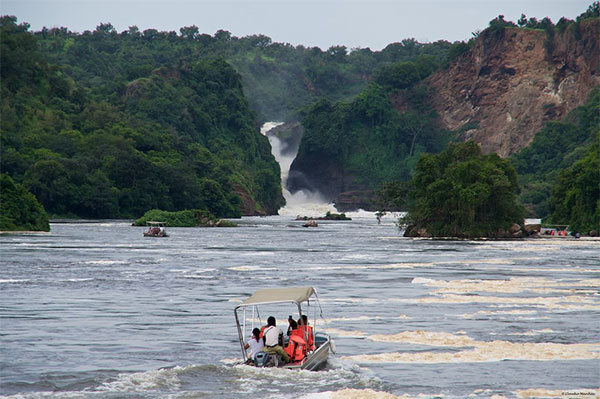
Shooting a safari in Uganda and Rwanda during the dry season (June–October) offers unmatched wildlife visibility, reliable 4x4 access, and dry trekking trails. However, the drawbacks include harsh lighting for photography, dense dust, limited permit availability, and high permit/accommodation costs
2-days-best-gorilla-trekking-safari-tour-via-kigali-to-bwindi-impenetrable-forest-park
3-days-fly-in-uganda-gorilla-habituation-africa-safari-tour-package
5-days-of-gorilla-trekking-and-chimpanzee-tracking-in-rwanda
3-days-chimpanzee-tracking-to-kibale-forest-national-park
5-days-best-gorilla-habituation-and-chimp-trekking-safari-tour-package
7-days-best-uganda-safari-tour-to-popular-safari-parks
Advantages
Premium Wildlife Sightings
When the long dry season peaks across East Africa, the landscape transforms, turning water into liquid gold. Seasonal mud holes, ephemeral streams, and shallow inland pools dry up entirely, forcing wildlife to abandon deep bush retreats and converge on permanent water sources. In Uganda’s Queen Elizabeth National Park, the famous Kazinga Channel—a natural 32-kilometer natural waterway connecting Lake George and Lake Edward—becomes a bustling, high-density wildlife corridor.
Instead of driving aimlessly for hours through vast savannahs hoping for a glance, you simply position yourself near permanent water. Herds of hundreds of buffalos and massive elephant families gather along the banks to drink, bathe, and cool off side-by-side with immense pods of hippos and basking Nile crocodiles. Predators like lions and leopards know this routine all too well, establishing ambush territory along the perimeter. This predictable gathering behavior takes the guesswork out of game drives and boat safaris, delivering high-concentration, action-packed wildlife viewing where animal interactions unfold right in front of your lens without having to scour miles of empty wilderness.
Easier Primate Trekking
Navigating dense tropical rainforests is a challenging adventure, but doing so in the dry season turns a punishing slog into an enjoyable trek. High-altitude sanctuaries like Bwindi Impenetrable National Park and Mgahinga Gorilla National Park in Uganda, along with Rwanda’s Volcanoes National Park, sit in rugged, mountainous terrain. During the rainy months, these steep forest floors transform into slick, muddy slides where every step requires intense effort and equipment risks getting drenched.
During the drier months (June–August and December–February), the forest floor firms up substantially. While rainforests can always catch a surprise light shower, dry-season conditions mean stable footing, manageable inclines, and far less risk of slipping down ravines. Rangers can track gorilla and golden monkey families at a faster, more predictable pace, saving your stamina for the actual encounter. Protecting expensive camera gear and lenses becomes infinitely easier when you aren't fighting torrential downpours or sliding through deep mud, allowing you to focus entirely on locking eyes with a mountain gorilla silverback.
Thinner Vegetation
The dense, lush foliage that gives East Africa’s parks their vibrant green beauty can be a photographer's worst enemy. High grass and thick bush easily hide big cats, while dense jungle canopies obscure primates high in the trees. As the dry season progresses, heat and reduced rainfall strip away this natural screen. Grasses burn off or get grazed down to the roots, bushes shed their leaves, and the understory clears out significantly.
This dieback creates long, unobscured sightlines across the savannahs of parks like Murchison Falls and Kidepo Valley. Predators like tree-climbing lions in Ishasha or elusive leopards resting in acacia branches can no longer hide behind thick leaf cover. In the rainforests, thinner canopy foliage means sunlight penetrates down to the forest floor, dramatically improving lighting for photography. Instead of catching a fleeting glimpse of a chimpanzee's back behind a curtain of leaves, you get clear, framed views of primates feeding, grooming, and socialising in open branches.
Dependable Transportation
Few things ruin a safari itinerary faster than a heavy 4x4 custom Land Cruiser bogged down axle-deep in thick black-cotton mud miles from camp. In the wet season, unpaved park tracks and remote transit routes across Uganda and Rwanda turn into slick, rutted channels that test even the most skilled drivers and winch setups.
Dry weather restores predictability to your journey. Firm, dry earth allows safari vehicles to navigate dirt tracks and off-road loops smoothly and safely, keeping game drives on schedule. You cover ground far more efficiently, allowing you to venture deeper into remote sections of parks like Semuliki or northern Murchison Falls without the constant risk of getting stuck. Reliable transit also means tighter control over timing—ensuring you hit sunrise light on the savannah or make your mandatory early-morning primate trekking briefings on time, free from stressful travel delays.
Optimal Birding (August to October Transition)
While hardcore birdwatchers often target the wet season for breeding plumages, the late dry season leading into October offers a sweet spot for avian enthusiasts. Starting in late August and peaking through September and October, the region witnesses the first wave of Palearctic migratory birds arriving from Europe and Central Asia. Tens of thousands of travelers—including European bee-eaters, steppe eagles, and various waders—descend on the region's lakes and savannahs to escape the northern winter.
When these early migrants join East Africa’s rich resident population (like the prehistoric Shoebill in Mabamba Swamp or the Great Blue Turaco), species diversity surges. Low water levels along the Kazinga Channel and Nile margins expose mudflats packed with foraging waders, while open, dried-out foliage makes spotting tiny warblers and brightly colored flycatchers far easier than during peak rains. Traversing drier roads during this early migration window gives documentarians and birders the ultimate combination: maximum bird diversity paired with great logistics.
Drawbacks
Harsh Lighting & Dusty Skies
While clear weather keeps you out of the mud, the harsh reality of peak dry season is a stark shift in the landscape's aesthetic. By late afternoon, relentless sunshine bleaches the grass, turning verdant green valleys into dry shades of dust, pale yellow, and brown. The absence of rain allows fine dirt kicked up by wind and vehicle tires to hang suspended in the atmosphere, creating a thick air haze across open plains like those in Kidepo Valley or Murchison Falls.
For photographers and videographers, this haze strips away contrast and washes out distant horizons. Without the dramatic, dark cloud formations and dynamic sky reflections that rainstorms bring, landscape shots can end up looking flat and monochromatic. To get vibrant photos, you're forced to restrict shooting to brief golden-hour windows at dawn and dusk, when the low sun cuts through the airborne dust rather than harsh midday glare.
Crowded Sightings
The dry season is the undisputed peak window for international travel, which inevitably brings heavy vehicle traffic to East Africa’s signature circuits. Because wildlife predictably gathers around a limited number of permanent water sources, human activity converges on those exact same spots. At high-profile locations—like the riverbanks along the Kazinga Channel or famous lion territories in Ishasha and Queen Elizabeth National Park—a single predator sighting can quickly attract a dozen custom 4x4 safari land cruisers within minutes.
This concentration of vehicles disrupts the sense of remote wilderness. For travelers and wildlife documentarians, jockeying for position around a sighting means fighting for an unobstructed line of sight. Instead of capturing a clean frame of a leopard resting on a branch, you often have to carefully crop out pop-up roofs, foreign safari trucks, and the audible chatter of nearby tour groups that can startle skittish animals away before you get your shot.
High Costs & Scarcity
Peak dry season triggers maximum pricing and fierce competition for travel logistics across both Uganda and Rwanda. Demand for gorilla trekking permits routinely outstrips supply, requiring bookings up to 6 to 12 months in advance. Standard gorilla permits run $800 USD per trek in Uganda (covering Bwindi Impenetrable and Mgahinga National Parks) and $1,500 USD in Rwanda for Volcanoes National Park. Premium options like Uganda's Gorilla Habituation Experience—which offers up to four hours with a semi-habituated family—cost $1,500 USD.
Beyond permit costs, luxury eco-lodges near trailheads raise their seasonal rates, with top-tier accommodations in Rwanda hitting $1,500 to $3,000+ per night. For commercial crews or media projects, the financial barrier is even higher: securing official filming permissions through the Uganda Wildlife Authority (UWA) or the Rwanda Development Board (RDB) involves strict vetting, additional media clearance fees, local fixers, and security deposits that must be cleared well before arrival.
Why are permanent water sources like the Kazinga Channel prime spots for wildlife photography during the dry season?
When the prolonged dry season settles across East Africa between June and October, ephemeral waterholes and seasonal streams dry up completely. This forces wildlife out of distant wilderness pockets toward permanent water bodies. In the Uganda Rwanda region, the Kazinga Channel—a 32-kilometer natural waterway linking Lake George and Lake Edward in Queen Elizabeth National Park—becomes a magnet for animal concentration.
Instead of driving across vast plains hoping for random encounters, photographers can take a boat safari along the channel to document incredible concentrations of game. Massive herds of African elephants come down to submerge and play, while buffalos, waterbucks, and giant pods of hippos line the shorelines. Predators like Nile crocodiles and leopards frequent the banks, creating action-packed, side-by-side behavioral shots right in front of your lens without needing to track animals across endless miles of dusty bush.
How does the drying of seasonal waterholes impact predator-prey dynamics on safari?
As seasonal water points disappear, animal movements become far more predictable. Herbivores are forced to travel along established corridors between dwindling grazing patches and permanent rivers or lakes. Predators quickly exploit this vulnerability by setting up ambush points around remaining water sources.
For wildlife filmmakers in the Uganda Rwanda circuit, this creates exceptional opportunities to document natural predator-prey interactions. Lions in Queen Elizabeth or Murchison Falls National Park frequently lie in wait along riverbank trails where ungulates must drink. Because animals congregate in high density, stress levels rise and interactions intensify. You are far more likely to capture territorial battles, hunting strategies, and defensive herd behaviors during these months than during the wet season when wildlife disperses across vast, lush feeding grounds.
What makes gorilla trekking in Bwindi Impenetrable Forest and Volcanoes National Park easier during the dry months?
Gorilla trekking takes place in high-altitude, mountainous rainforests where terrain is naturally steep and rugged. During the rainy season, trails turn into slick mud channels, making every incline a grueling physical test. In the dry months of June to August, the forest floor dries out and firms up substantially across Bwindi Impenetrable National Park and Mgahinga in Uganda, as well as Volcanoes National Park in Rwanda.
Although rainforests can experience light showers year-round, dry-season conditions provide stable footing and manageable inclines. Rangers can track gorilla families at a swifter, more predictable pace, which reduces overall trek times and conserves your physical stamina for the encounter itself. The firmer ground allows you to navigate steep ravines and tangled undergrowth far more safely while carrying heavy camera packs.
How do drier conditions protect photography and filming equipment during forest treks?
Moisture, humidity, and mud are constant threats to high-end digital cameras, cinema rigs, and prime lenses. Slugging through deep mud during rainy treks increases the risk of slipping, which can cause catastrophic falls with delicate gear. Torrential downpours also force shooters to constantly cover equipment in protective rain sleeves, causing lens fogging and missed moments.
Shooting in the Uganda Rwanda mountain parks during dry months drastically reduces these risks. Drier trails reduce the chance of sliding down slick muddy slopes while holding heavy telephoto lenses. Furthermore, reduced ambient humidity means less condensation inside lens barrels and gear bags. While you still need basic dust protection, you can leave bulky, cumbersome rain covers packed away, allowing for quick deployment when a silverback gorilla suddenly moves into a clear position.
Why does thinner vegetation during the dry season significantly improve big cat tracking?
During the wet season, tall savannah grasses and thick foliage offer complete cover for stealthy predators. By late dry season, relentless heat and lack of rainfall cause grasses to die back or get grazed down to the dirt, while bushes shed their leaves.
This vegetation dieback opens wide, unobstructed sightlines across key game-viewing parks in the Uganda Rwanda region, such as Murchison Falls and Kidepo Valley. Predators like tree-climbing lions resting in the acacia branches of Ishasha or leopards lounging in riverine trees can no longer hide behind dense leaf canopy. Photographers gain clean lines of sight, making it vastly easier to acquire sharp autofocus, track moving animals, and capture full-body compositions of big cats on the move.
In what ways does reduced forest canopy foliage benefit primate photography and filming?
Shooting beneath a dense tropical canopy poses major lighting challenges; thick leaves absorb ambient light, forcing photographers to use high ISO settings that introduce digital noise. In addition, monkeys and chimpanzees often hide behind thick clusters of leaves high up in the canopy.
During the dry season in the Uganda Rwanda primate sanctuaries—such as Kibale National Park or Nyungwe Forest—the foliage thins out noticeably. Sunlight penetrates deeper into the lower forest strata, providing much-needed illumination for photography without harsh spotlight effects. Thinner canopy coverage gives you clean windows through the foliage to capture detailed expressions, grooming behaviors, and feeding routines of chimpanzees, golden monkeys, and mountain gorillas in open branches.
How does dry terrain improve ground logistics and transit times between national parks?
A multi-stop safari involves covering hundreds of miles over mixed roads, ranging from paved highways to unpaved dirt tracks inside national parks. During the rainy season, remote dirt roads can turn into slick, rutted tracks where vehicles get stuck for hours.
In the dry season, ground logistics across the Uganda Rwanda border and transit routes become far more dependable. Firm, dry earth allows custom 4x4 safari vehicles to travel smoothly at consistent speeds. You waste less time dealing with road delays or waiting for winches, keeping your itinerary strictly on schedule. This reliability ensures you arrive at park gates in time for early morning game drives or mandatory pre-trek gorilla briefings without added stress.
What specific transportation risks during the wet season are avoided by shooting between June and October?
The primary transport hazard during wet months is black-cotton soil—a heavy clay dirt that turns into deep, sticky mud when saturated. Vehicles easily sink axle-deep in these ruts, causing severe mechanical strain or stranding travellers miles from camp.
Planning your media shoot during the June to October dry window in the Uganda Rwanda region eliminates these hazards. Unpaved Park tracks in areas like Semuliki or northern Murchison Falls remain solid and passable. Safari Land Cruisers can easily navigate off-road loops and river crossings without slipping into ditches or bogging down. Drivers can focus on positioning the vehicle for optimal camera angles rather than constantly worrying about getting stuck in deep mud ruts.
Why is the late dry season (August–October) considered a unique window for bird photography?
While peak rainy periods bring lush breeding plumages, the transition months at the end of the dry season—August through October—present a unique window for bird enthusiasts and wildlife documentarians. During this timeframe, the region experiences the arrival of the first wave of Palearctic migratory birds traveling from northern wintering grounds in Europe and Asia.
Across key wetland habitats in the Uganda Rwanda eco-system, thousands of migratory species mix with localized resident birds. Furthermore, low water levels expose rich mudflats along riverbanks and lake shores, concentrating shorebirds, waders, and waterbirds in small, open areas. Combined with clear weather and easy road access, photographers get a rare combination of high species diversity, clear sightlines, and smooth travel logistics.
Which migratory bird species can photographers expect during the late dry season transition?
Starting in late August and continuing through October, long-distance Palearctic migrants land across East Africa's river channels, savannahs, and wetlands. Photographers in the Uganda Rwanda region can target species such as European bee-eaters, steppe eagles, yellow-billed kites, northern wheatears, and an array of waders like sandpipers and plovers.
These seasonal visitors join iconic resident birds, including the prehistoric Shoebill in the Mabamba Swamp, the Great Blue Turaco, and African fish eagles along the Nile. Lower water levels during these dry months concentrate waders on open sandbars, making it easier to capture flight shots and feeding behaviors without thick reed beds blocking your camera's field of view.
How do atmospheric dust and haze during the dry season affect scenic and landscape photography?
While clear dry weather eliminates rain delays, it introduces a noticeable atmospheric downside: pervasive dust and haze. Without rain to wash the atmosphere, fine soil kicked up by wind and vehicle tires hangs suspended over open plains like Kidepo Valley and Murchison Falls.
For landscape photographers traveling through the Uganda Rwanda circuit, this dust layer reduces contrast and washes out distant horizons, giving wide-angle landscape shots a flat, washed-out look. The sky often lacks the deep blue tones and dramatic cloud formations typical of the wet season. To overcome this haze, photographers must plan landscape shoots around early mornings or late afternoons, when low-angle sunlight cuts through the dust layer to create warm, directional light.
What challenges does the harsh midday sun present for color contrast and exposure in open savannahs?
Between 11:00 AM and 3:00 PM during the dry season, intense equatorial sunlight beats down from directly overhead. On dry savannahs where the vegetation has turned pale yellow and brown, this direct light creates harsh highlights, dark shadows, and high-contrast scene dynamics.
When photographing wildlife on open plains across the Uganda Rwanda landscape, midday light blows out bright fur or hide details while casting dark shadows under animal bellies and eyes. Camera sensors struggle to capture both the bright, dusty background and shaded details in a single frame. Experienced shooters use this time for gear maintenance, reviewing footage, or traveling between parks, saving actual shooting for golden-hour light when shadows soften and colors enrich.
Why do wildlife sightings become more congested during peak safari months?
The dry season from June to October coincides with major holiday periods in Europe and North America, making it peak tourist season across East Africa. Because water is scarce, both animals and safari vehicles naturally gather around the same few permanent rivers, waterholes, and shaded thickets.
In high-demand parks within the Uganda Rwanda region—such as Queen Elizabeth National Park or Volcanoes National Park—a major wildlife sighting can draw numerous custom safari vehicles within minutes. For wildlife photographers, this vehicle congestion makes getting clean frames difficult. You often have to work around other trucks in your shot, contend with engine vibrations, and manage background chatter from nearby tour groups that can startle animals away.
How does heavy safari vehicle traffic at waterholes impact professional wildlife filming?
Professional wildlife filming requires quiet environments, stable vehicle positioning, and patience to capture natural behavior. When multiple safari vehicles converge on a single waterhole or predator sighting, engine noise, radio chatter, and constant vehicle maneuvers disrupt the peaceful setting.
During peak months in the Uganda Rwanda safari network, high traffic around key spots like the Kazinga Channel or Ishasha lion trees can alter animal behavior. Skittish animals like leopards or shy antelopes may retreat into dense cover prematurely due to crowding. Documentarians must work closely with experienced local guides to secure private positioning, head out at first light before game-drive loops get busy, or focus on quieter, lesser-visited park sectors.
What are the current permit costs for mountain gorilla trekking in both destinations, and why do they sell out early?
Gorilla trekking permits are strictly regulated to protect habituated mountain gorilla populations from over-tourism. As of 2026, standard gorilla permits cost $800 USD per trek in Uganda (covering Bwindi Impenetrable and Mgahinga) and $1,500 USD per trek in Rwanda for Volcanoes National Park. For an extended four-hour experience, Uganda offers a Gorilla Habituation Permit for $1,500 USD.
Because permit numbers are strictly capped per gorilla family per day, demand during the peak June–October dry season far outstrips supply. Photographers and tourists traveling through the Uganda Rwanda border region must book permits 6 to 12 months in advance to secure preferred trekking dates and sectors.
How do accommodation rates and availability shift during the June–October peak season?
The influx of international travelers during the dry season drives high demand for safari lodging, particularly high-end eco-lodges near national park gates. During these peak months, luxury lodges operate at full capacity and apply seasonal peak rates.
Across popular hubs in the Uganda Rwanda circuit, lodge rates rise significantly. Luxury properties near Volcanoes National Park in Rwanda can range from $1,500 to over $3,000 per night, while premier safari lodges in Bwindi or Queen Elizabeth in Uganda adjust rates upward accordingly. Independent photographers and production crews must book rooms months in advance or consider midrange alternatives to keep production budgets under control.
What administrative approvals and filming permits are required by wildlife authorities for media production?
Commercial media projects, documentary crews, and professional photographers cannot shoot on standard tourist permits. They must obtain formal clearance from regional conservation authorities, specifically the Uganda Wildlife Authority (UWA) or the Rwanda Development Board (RDB).
In the Uganda Rwanda sector, filming mountain gorillas requires specialized commercial permits. In Uganda, gorilla filming permits run $4,200 per hour plus individual permit fees, along with media accreditation cards ($175 USD per person) issued by the Uganda Media Council. Furthermore, bringing professional gear through Entebbe or Kigali international airports requires customs declaration letters, equipment bonding, and local fixer support cleared months before arrival.
How does dry season light compare between early morning golden hour and late afternoon shooting?
The quality of light during the dry season varies drastically throughout the day. Early morning golden hour (6:00 AM to 8:30 AM) offers low-angle sunlight, cool ambient temperatures, and crisp air, as atmospheric dust settles slightly overnight.
In contrast, late afternoon shooting (4:30 PM to 6:30 PM) across the Uganda Rwanda savannahs often features a thicker layer of airborne dust kicked up by wind and afternoon vehicle traffic. While this dust layer can wash out distant landscapes, it also scatters late-day sunlight, creating a warm, golden-red glow over subjects. Understanding this difference allows photographers to shoot crisp portraits and action shots at dawn, then leverage afternoon dust for warm, back-lit silhouette shots.
What packing strategies help photographers handle dust and heat while filming on open savannahs?
Shooting on open savannahs during the dry season exposes both photographers and camera gear to constant airborne dust, heat, and intense ultraviolet radiation. Fine dust easily penetrates zoom rings, camera buttons, and sensor chambers if gear is left unprotected.
When packing for a media shoot in the Uganda Rwanda safari regions, essential protective items include:
- A sealed, dust-proof camera bag or hard case (like a Pelican case).
- A rocket air blower, microfiber cloths, and sensor cleaning kits.
- Lightweight lens covers or cloths to wrap gear between sightings.
- A wide-brimmed hat, UV protection shirts, and polarized sunglasses.
- Lens hoods to minimize harsh lens flare caused by direct overhead sun.
Why is the Gorilla Habituation Experience in Bwindi an attractive option despite its higher cost?
Standard gorilla trekking permits grant a group of up to eight tourists exactly one hour with a fully habituated gorilla family. In contrast, the Gorilla Habituation Experience in Bwindi Impenetrable National Park costs $1,500 USD but allows a maximum of four visitors to spend up to four hours with a family undergoing habituation.
For photographers and documentarians working the Uganda Rwanda route, this extended four-hour window is invaluable. It provides ample time to study gorilla dynamics, adjust camera setups for changing light, and wait out poor positioning without feeling rushed. The smaller group size (4 people instead of 8) ensures an uncluttered shooting angle and a more immersive experience.
How do water levels along the Kazinga Channel and Nile riverbanks create specialized birding photography opportunities?
As dry weather reduces river flow and drops lake levels, exposed sandbars, mudflats, and shallow shoals emerge along major waterways like the Kazinga Channel and the Victoria Nile in Murchison Falls National Park.
These shallow water zones concentrate fish, invertebrates, and frogs, drawing feeding flocks of waterbirds. For bird photographers in the Uganda Rwanda area, lower water levels provide clean, unobstructed background isolation. Species like African skimmers, yellow-billed storks, saddle-billed storks, and kingfishers feed right at the water's edge. Boat captains can position vessels close to sandbars, giving photographers low-angle water line perspectives that would be impossible during high-water wet months.
How do high visitor numbers affect animal behavior during dry season game drives?
While habituated wildlife in popular national parks is accustomed to safari vehicles, high vehicle density during peak dry months can still influence animal movement and stress levels.
In high-traffic areas across the Uganda Rwanda safari parks, big cats surrounded by multiple vehicles may seek denser cover or shift their activity to late-night hours when vehicles are back in camp. Grazing herds may also avoid waterholes occupied by loud tour vehicles. For wildlife photographers, observing subtle stress cues—such as flattened ears, twitching tails, or nervous vocalizations—is crucial for maintaining an ethical distance and avoiding actions that disrupt natural behaviors.
Why do off-road driving conditions differ so drastically between rainy and dry periods in remote parks like Semuliki?
Remote, low-lying national parks like Semuliki or riverline areas of Murchison Falls feature heavy clay soils and floodplains. During rainy periods, these basins flood, turning dirt tracks into deep mud pits that trap heavy vehicles.
During the dry months of June to October, these basins dry out and firm up completely. Vehicles traveling through these sections of the Uganda Rwanda safari circuit can navigate remote loops safely without spinning tires or tearing up tracks. This reliable ground access lets photographers explore secluded corners of the parks that are inaccessible during wet months, discovering untouched wildlife habitats away from crowded main routes.
How can photographers manage the high dynamic range caused by intense dry-season sunlight?
The bright equatorial sun during peak dry season creates extreme contrast between bright highlights on dry grass and deep shadows cast by thick trees or large animals. This contrast can exceed a camera sensor's dynamic range, resulting in blown-out highlights or dark, noisy shadows.
Photographers shooting across the Uganda Rwanda savannahs can use several technical strategies to manage high contrast:
- Shoot strictly in RAW format to preserve maximum shadow and highlight detail.
- Use spot or highlight-weighted metering to protect bright hides from overexposure.
- Apply fill-flash or reflectors for close-up macro or portrait work when appropriate.
- Utilize camera bracketed exposures for high-dynamic-range (HDR) landscape shots.
- Position the vehicle so the sun is behind your shoulder, evenly illuminating the subject.
What role do local fixers play when securing commercial filming clearances in East Africa?
Navigating the administrative requirements for commercial filming, drone operations, and media import clearances in East Africa can be complex and time-consuming. Official permissions require coordination across multiple government bodies.
Hiring an experienced local fixer familiar with the Uganda Rwanda regulatory environment streamlines this process significantly. A local fixer handles press accreditation through the Uganda Media Council or Rwanda Development Board, manages location agreements with park authorities (UWA/RDB), and facilitates equipment clearance through airport customs. Their expertise prevents costly bureaucratic delays, ensuring your gear clears customs smoothly and your filming permits are fully approved before production begins.
How does tracking golden monkeys in Volcanoes National Park differ during dry versus wet weather?
Golden monkeys inhabit the bamboo zones along the lower slopes of the Virunga Volcanoes. During rainy weather, the bamboo forest floor becomes extremely slick, and moisture dripping from the canopy creates difficult shooting conditions.
During dry months in the Uganda Rwanda bamboo zone, tracking golden monkeys becomes a much more comfortable experience. Drier trails allow photographers to move quickly as the active primates leap through the bamboo canopy. Thinner bamboo foliage allows more ambient light to filter down, making it easier to use fast shutter speeds ( or higher) to freeze the quick, energetic movements of golden monkeys as they feed on bamboo shoots.
Why do tree-climbing lions in Ishasha become easier to spot during the dry months?
The Ishasha sector of Queen Elizabeth National Park is famous for its population of tree-climbing lions, which rest in the sprawling branches of fig and acacia trees to escape ground heat and biting insects.
During the wet season, dense leaf growth hides resting lions from view. In the dry months, reduced leaf cover opens clear sightlines through the tree canopy. Furthermore, intense ground heat during the dry season encourages lions to spend longer stretches up in the breeze-cooled branches. Photographers exploring the Uganda Rwanda safari route can easily spot lions resting on thick fig limbs and capture unobstructed shots against the sky.
How does the dry season impact the overall pacing and scheduling of a multi-week photography circuit?
Planning a multi-week photography tour during the dry season allows for tighter, more efficient scheduling. Thanks to reliable road conditions and minimal weather delays, travel times between parks are predictable, reducing the risk of missed shoot windows or late lodge arrivals.
When designing an itinerary across the Uganda Rwanda region, photographers can schedule early morning game drives, mid-day park transit, and late-afternoon shoots with confidence. However, because midday heat slows animal activity and creates harsh lighting, daily shoot schedules should focus on peak activity windows: the first three hours after sunrise and the final two hours before sunset.
What are the financial tradeoffs of booking a luxury eco-lodge during peak dry months versus the shoulder season?
Choosing to shoot during peak dry season involves clear financial tradeoffs. High seasonal demand pushes lodge rates, vehicle rental fees, and flight costs to their highest levels of the year.
For travelers comparing options in the Uganda Rwanda region, peak season means paying top-tier rates for accommodation and permits without seasonal discounts. Conversely, shoulder seasons (March or November) offer lower lodge rates, special permit promotions, and quieter parks, but come with higher risks of rain delays and muddy trails. Booking peak dry season requires a larger overall budget, but delivers reliable logistics, easier trekking conditions, and higher wildlife visibility.
How can wildlife documentarians balance high concentration opportunities against heavy crowds during the peak dry months?
To maximize wildlife visibility while avoiding tourist crowds during peak dry months, wildlife documentarians must adopt smart field strategies.
When filming in popular national parks across the Uganda Rwanda safari network, documentarians can:
- Work with expert local guides who know private trails and quiet waterhole locations away from main tourist loops.
- Enter park gates at first light (6:00 AM) to secure prime positioning before standard tour groups arrive.
- Focus on lesser-visited park sectors, such as Kidepo Valley in northern Uganda or Bugesera wetlands in Rwanda.
- Spend time at stationary waterholes waiting for animals to arrive, rather than chasing reported sightings on the radio.
- Book private boat charters on the Kazinga Channel to maintain full control over position, angle, and timing.
Booking Uganda Rwanda safari with us Roads of Adventure safaris
You can book your combined Uganda and Rwanda safari directly through the official Roads of Adventure Safaris Enquiry Page. As a registered ground tour operator specialized in East African primate and wildlife experiences, the company coordinates cross-border logistics, secures official tracking permits, and organizes private 4x4 transport
