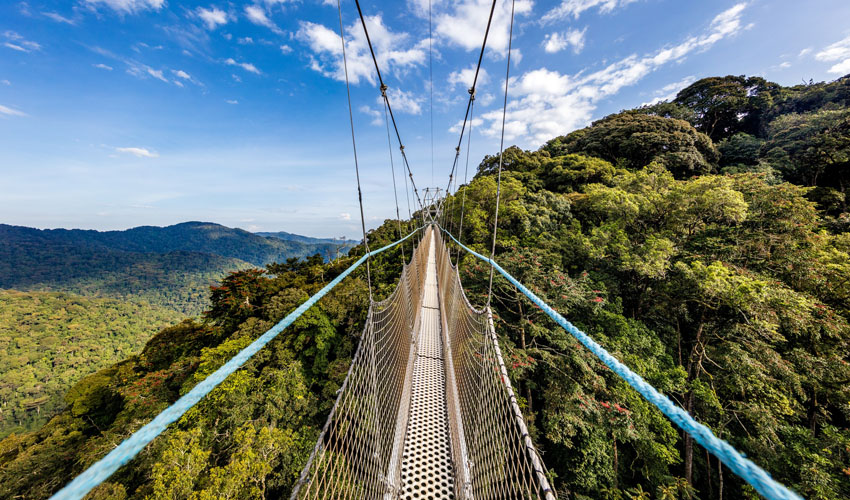
If you think Rwanda is just about mountain gorillas, think again. Tucked away in the country’s southwestern highlands, Nyungwe National Park is a massive, mist-shrouded ancient rainforest that feels like stepping into a living fairy tale. While its famous suspended canopy bridge gets plenty of attention, the real magic lies deeper in the jungle. Whether you are waking up before dawn to hear the wild calls of chimpanzees, watching a massive troop of acrobatic colobus monkeys leap through the treetops, or flying over the misty valleys on an adrenaline-pumping zipline, Nyungwe is a playground for nature lovers and thrill-seekers alike. It is wild, raw, and completely unforgettable—offering a world-class biodiversity escape that proves Africa's oldest rainforest still knows how to surprise you.
2-days-nyungwe-luxury-fly-in-to-trek-with-chimpanzee
2-days-nyungwe-chimpanzee-tracking-and-canopy-walk
3-days-luxury-honeymoon-chimpanzee-tracking-and-canopy-walk-in-nyungweb
3-days-budget-chimpanzee-tracking-in-nyungwe-forest-park
3-days-nyungwe-chimpanzee-tracking-and-lake-kivu-relaxation
3-days-best-rwanda-canopy-walk-and-nyungwe-chimpanzee-tracking-adventure
3-day-chimpanzee-trekking-tour-package-canopy-and-lake-kivu
4-days-nyungwe-chimpanzee-trekking-canopy-walk-and-lake-kivu-relaxation
Chimpanzee Trekking
The adventure begins long before the sun breaks over the tree line. By 4:30 AM, the crisp morning air at the Uwinka or Gisakura reception centers hums with anticipation as guides brief you for the trek ahead. Nyungwe is home to two main habituated communities: the larger group in the main forest and a smaller, highly energetic family in the isolated Cyamudongo forest fragment. Armed with a sturdy walking stick and layered up against the morning chill, you plunge straight into the tangled undergrowth. This isn't a casual stroll on manicured paths; you are navigating steep ridges, slick roots, and thick vines, following the precise directions of trackers who headed out at first light.
Suddenly, the quiet of the jungle is shattered by a chorus of pant-hoots, screams, and tree-drumming that shakes the valleys. Hearing the wild calls of our closest primate relatives—who share roughly 99% of our DNA—is an absolute spine-tingling moment. When you finally catch up to the community, you get one unforgettable hour to observe them. Unlike mountain gorillas, who prefer to sit and munch leaves peacefully on the ground, chimps are pure drama and movement. You might spot a mother gently grooming her infant on a low branch, young males roughhousing in the leaf litter, or the alpha male swiftly scaling a massive mahogany tree to feast on wild figs. Watching their intense facial expressions and raw, acrobatic agility makes every bit of the grueling, early-morning scramble worth it.
Isumo Waterfall Trail
The Isumo Waterfall Trail is a gorgeous distillation of Nyungwe’s changing landscapes, packed into a moderately challenging half-day hike. The journey kicks off with a gentle, sunlit stroll through the emerald-green Gisakura tea estate, where local pickers wave and flash warm smiles against a backdrop of rolling hills. But the scenery shifts the second you cross the park boundary and plunge into the cool, dark embrace of the ancient rainforest. The air grows thick with the rich scent of damp earth, and the open sky vanishes beneath a massive canopy that filters the sunlight into a soft, glowing green.
As you descend into the deep ravine, the faint, rhythmic rush of water begins to echo through the trees, growing louder with every step. The trail requires a bit of careful footwork as you navigate steps carved into the red earth and cross rustic wooden footbridges over crystal-clear mountain streams. Along the way, your guide will point out giant tree ferns, delicate wild orchids, and columns of industrious driver ants. The grand finale opens up at the base of a steep canyon, where the Isumo Waterfall plunges a dramatic 17 meters into a churning pool below. The sheer force of the water creates a permanent, refreshing mist that coats the surrounding rock faces in velvety mosses. Sitting on the viewing platform, engulfed by the thundering roar and the cool spray, you feel completely disconnected from the modern world.
Colobus Monkey Trekking
While gorilla and chimpanzee trekking get all the headlines, tracking Nyungwe’s Ruwenzori colobus monkeys offers a wildlife spectacle that is completely unmatched in its sheer scale and energy. Nyungwe is home to one of the largest collections of tree-dwelling primates on the planet. Unlike most colobus groups in Africa that travel in modest families of a dozen or so, the troops here are massive "mega-groups," often numbering well over 300 individuals moving as a single, chaotic wave through the forest canopy. The trek to find them is generally less exhausting than chasing chimps, often taking place in the softer terrain closer to the forest edges near Gisakura.
When you finally intercept the troop, the visual contrast is stunning. Covered in sleek, jet-black fur with stark, snow-white capes, long whiskers, and flowing, broom-like white tails, these primates look incredibly regal. The canopy comes alive as a living blanket of black and white ripples through the treetops. They are absolute daredevils; because they lack thumbs, they use their hands like hooks to launch themselves fearlessly across massive gaps between the trees. You will stand in awe as dozens of monkeys take leap after leap, falling gracefully through the air before catching a flexible branch meters below. The forest floor becomes a front-row seat to a theater of life: mothers cradling all-white infants, juveniles playing tag in the lower branches, and older adults sitting introspectively, watching you right back.
Bird Watching
For serious birders and casual nature lovers alike, stepping into Nyungwe is like entering a real-life avian paradise. Recognized as one of Africa’s premier birding destinations, this high-altitude rainforest hosts an astonishing diversity of more than 340 bird species. What makes it legendary, though, is its status as a vital sanctuary for Albertine Rift endemics—species found nowhere else on earth. A staggering 30 of these rare endemics reside here, making every guided walk along the park’s extensive trail system a potential once-in-a-lifetime sighting.
Binoculars ready, birders usually set out at the crack of dawn when the forest canopy awakens with a symphony of complex songs. The ultimate prize for many is the magnificent Ruwenzori Turaco. With its brilliant plumage of deep blues, greens, and a shocking flash of crimson under its wings when it takes flight, seeing one glide between the branches takes your breath away. Guides, trained to recognize the faintest chips and rustles, will help you peer through the dense foliage to spot the shimmering, metallic feathers of the Regal Sunbird or the striking, blue-eyed Handsome Francolin. The adventure takes you through varying altitudes, from mist-shrouded valleys to bamboo thickets, each hosting its own micro-habitat. Even if you aren't a hardcore birder, the sheer variety of colors and songs filling the air adds a magical, auditory dimension to the jungle.
Gisakura Tea Plantation Tours
After the physical exhaustion of trekking through the steep ridges of the rainforest, a tour of the Gisakura Tea Plantations offers a beautifully serene and culturally enriching change of pace. Located right on the western fringes of the park, these rolling fields form a dramatic, bright-green buffer zone between the wild jungle and the local communities. The stark line where the chaotic, dark-green rainforest abruptly meets the perfectly manicured, emerald waves of the tea estate is a photographer’s dream, especially in the golden light of the late afternoon when the mist rolls off the mountains.
A walking tour through the plantation is an immersive, hands-on experience. Accompanied by a local guide, you walk down the narrow paths separating the rows of waist-high tea bushes. You will learn the delicate art of harvesting, watching local pickers who move with incredible speed and precision, selecting only the youngest "two leaves and a bud" from the top of each plant and tossing them into large wicker baskets strapped to their backs. Visitors are frequently invited to try their hand at picking, quickly realizing it requires far more skill than it looks. Beyond the fields, the tour takes you inside the processing factory. Here, the air is thick with the rich, earthy aroma of drying leaves. You will follow the fascinating journey of the tea leaves through the stages of withering, rolling, fermentation, drying, and sorting. The experience culminates in a traditional tasting session, allowing you to savor a fresh, hot cup of Rwanda's finest black tea.
High-Flying Adventure Activities
For those who want to experience the majesty of Nyungwe with an added dose of pure adrenaline, the park’s high-flying adventure activities offer an entirely new perspective on the ancient forest. The crown jewel of these thrills is the spectacular Nyungwe Zipline, located at the Uwinka Reception Centre. As East Africa's longest zipline canopy experience, this heart-pounding attraction features a series of lines stretching nearly 2 kilometers in total length. Divided into three exhilarating sections, the zipline launches you off high wooden platforms directly out over deep, mist-filled valleys. As you fly through the air at thrilling speeds, you are treated to a breathtaking, bird's-eye view of the unbroken forest canopy stretching out to the horizon—a perspective previously reserved only for the park's avian residents.
If you prefer a challenge that tests your balance and agility closer to the ground, the Gisakura Visitor Centre hosts the fantastic Rope Course. This family-friendly aerial obstacle course is meticulously designed to blend into the surrounding forest environment. It features 21 dynamic segments, including suspended cargo nets, wobbling wooden bridges, tightropes, and 5 mini-ziplines. Suspended anywhere from 3 to 15 meters above the forest floor, participants are securely harnessed as they navigate from tree to tree. It is a fantastic way for both adults and adventurous children to burn off energy, face their fear of heights, and engage with the forest ecosystem in a highly active, playful way under the watchful eye of certified safety instructors.
Kamiranzovu Marsh Trail
The Kamiranzovu Marsh Trail offers a starkly beautiful contrast to the steep, ridge-dominated hikes found elsewhere in Nyungwe National Park. This roughly 3-hour round-trip trail leads adventurers down into a massive, caldera-like basin that houses the park’s largest wetland ecosystem. Kamiranzovu, which translates locally to "the elephant swallower" in reference to a legendary past when forest elephants roamed the area, is a vital watershed that feeds rivers stretching across the continent. The trail descends through dense, primary forest before opening up to a vast, primeval swamp covered in a thick carpet of specialized, water-loving vegetation, giant groundsel, and towering stands of prehistoric tree ferns.
Walking along the marsh is made accessible by a raised wooden boardwalk that snakes safely across the treacherous, waterlogged peat. The atmosphere here feels distinctly ancient and mysterious; low-lying mist frequently hangs over the swamp, creating an eerie, tranquil silence broken only by the calls of frogs and wetland birds. For botanists, Kamiranzovu is a treasure trove, famous for its incredible density of brilliant wild orchids, including rare, insect-eating sundew plants that thrive in the nutrient-poor soil. It is also an absolute sanctuary for dedicated birdwatchers. The dense reeds and muddy channels are the primary habitat for some of the park’s most secretive and endangered avian residents, most notably the elusive Grauer's Swamp Warbler. Hiking this trail gives you a profound appreciation for the complex water systems that keep Africa's oldest rainforest alive and thriving.
What time does the chimpanzee trekking adventure begin daily?
The adventure begins long before the sun breaks over the tree line. By 4:30 AM, the crisp morning air at the Uwinka or Gisakura reception centers hums with anticipation as guides brief you for the trek ahead. Nyungwe is home to two main habituated communities: the larger group in the main forest and a smaller, highly energetic family in the isolated Cyamudongo forest fragment. Armed with a sturdy walking stick and layered up against the morning chill, you plunge straight into the tangled undergrowth. This isn't a casual stroll on manicured paths; you are navigating steep ridges, slick roots, and thick vines, following the precise directions of trackers who headed out at first light.
Suddenly, the quiet of the jungle is shattered by a chorus of pant-hoots, screams, and tree-drumming that shakes the valleys. Hearing the wild calls of our closest primate relatives—who share roughly 99% of our DNA—is an absolute spine-tingling moment. When you finally catch up to the community, you get one unforgettable hour to observe them. Unlike mountain gorillas, who prefer to sit and munch leaves peacefully on the ground, chimps are pure drama and movement. Watching their intense facial expressions and raw, acrobatic agility makes every bit of the grueling scramble worth it.
How long does the Isumo Waterfall trail hike take?
The Isumo Waterfall Trail is a gorgeous distillation of Nyungwe’s changing landscapes, packed into a moderately challenging half-day hike that usually takes about four hours round-trip. The journey kicks off with a gentle, sunlit stroll through the emerald-green Gisakura tea estate, where local pickers wave and flash warm smiles against a backdrop of rolling hills. But the scenery shifts the second you cross the park boundary and plunge into the cool, dark embrace of the ancient rainforest. The air grows thick with the rich scent of damp earth, and the open sky vanishes beneath a massive canopy that filters the sunlight into a soft, glowing green.
As you descend into the deep ravine, the faint, rhythmic rush of water begins to echo through the trees, growing louder with every step. The trail requires a bit of careful footwork as you navigate steps carved into the red earth and cross rustic wooden footbridges over crystal-clear mountain streams. The grand finale opens up at the base of a steep canyon, where the waterfall plunges a dramatic 17 meters into a churning pool below. Sitting on the viewing platform, engulfed by the roar and cool spray, you feel completely disconnected from the modern world.
What makes colobus monkey trekking unique in Nyungwe park?
Tracking Nyungwe’s Ruwenzori colobus monkeys offers a wildlife spectacle that is completely unmatched in its sheer scale and energy. Nyungwe is home to one of the largest collections of tree-dwelling primates on the planet. Unlike most colobus groups in Africa that travel in modest families of a dozen or so, the troops here are massive "mega-groups," often numbering well over 300 individuals moving as a single, chaotic wave through the forest canopy. The trek to find them is generally less exhausting than chasing chimps, often taking place in the softer terrain closer to the forest edges near Gisakura.
When you finally intercept the troop, the visual contrast is stunning. Covered in sleek, jet-black fur with stark, snow-white capes and flowing, broom-like white tails, these primates look incredibly regal. They are absolute daredevils; because they lack thumbs, they use their hands like hooks to launch themselves fearlessly across massive gaps between the trees. You will stand in awe as dozens of monkeys take leap after leap, falling gracefully through the air before catching a flexible branch. The forest floor becomes a front-row seat to a theater of life, from playful juveniles to calm, curious adults.
How many bird species can birders spot in Nyungwe?
For serious birders and casual nature lovers alike, stepping into Nyungwe is like entering a real-life avian paradise. Recognized as one of Africa’s premier birding destinations, this high-altitude rainforest hosts an astonishing diversity of more than 340 bird species. What makes it legendary, though, is its status as a vital sanctuary for Albertine Rift endemics—species found nowhere else on earth. A staggering 30 of these rare endemics reside here, making every guided walk along the park’s extensive trail system a potential once-in-a-lifetime sighting.
Binoculars ready, birders usually set out at the crack of dawn when the forest canopy awakens with a symphony of complex songs. The ultimate prize for many is the magnificent Ruwenzori Turaco, with its brilliant plumage of deep blues, greens, and a shocking flash of crimson under its wings when it takes flight. Guides, trained to recognize the faintest chips and rustles, will help you peer through the dense foliage to spot the shimmering, metallic feathers of the Regal Sunbird or the striking, blue-eyed Handsome Francolin. The adventure takes you through varying altitudes, from mist-shrouded valleys to bamboo thickets, adding a magical dimension to the jungle.
What can visitors learn during a tea plantation tour?
After the physical exertion of trekking through the steep ridges of the rainforest, a tour of the Gisakura Tea Plantations offers a beautifully serene and culturally enriching change of pace. Located right on the western fringes of the park, these rolling fields form a dramatic, bright-green buffer zone between the wild jungle and the local communities. A walking tour through the plantation is an immersive, hands-on experience. Accompanied by a local guide, you walk down the narrow paths separating the rows of waist-high tea bushes.
You will learn the delicate art of harvesting, watching local pickers who move with incredible speed and precision, selecting only the youngest "two leaves and a bud" from the top of each plant. Visitors are frequently invited to try their hand at picking, quickly realizing it requires far more skill than it looks. Beyond the fields, the tour takes you inside the processing factory, where the air is thick with the rich, earthy aroma of drying leaves. You will follow the fascinating journey of the tea leaves through the stages of withering, rolling, fermentation, drying, and sorting, culminating in a traditional tasting session of Rwanda's finest black tea.
Where is East Africa's longest park zipline located precisely?
For those who want to experience the majesty of Nyungwe with an added dose of pure adrenaline, the park’s high-flying adventure activities offer an entirely new perspective on the ancient forest. The crown jewel of these thrills is the spectacular Nyungwe Zipline, which is located precisely at the Uwinka Reception Centre. As East Africa's longest zipline canopy experience, this heart-pounding attraction features a series of lines stretching nearly 2 kilometers in total length.
Divided into three exhilarating sections, the zipline launches you off high wooden platforms directly out over deep, mist-filled valleys. As you fly through the air at thrilling speeds, you are treated to a breathtaking, bird's-eye view of the unbroken forest canopy stretching out to the horizon—a perspective previously reserved only for the park's avian residents. It is a brilliant way to break up the traditional hiking itineraries and inject some pure adrenaline into your trip. Flying high above the ancient trees gives you an unmatched sense of the forest's massive scale, leaving you with a racing heart and a completely unforgettable memory of Rwanda's wilderness.
What obstacles features on the Gisakura aerial rope course?
If you prefer an adventure challenge that tests your balance and agility closer to the ground, the Gisaka Visitor Centre hosts the fantastic Rope Course. This family-friendly aerial obstacle course is meticulously designed to blend seamlessly into the surrounding forest environment. It features 21 dynamic segments specifically built to challenge your coordination, including suspended cargo nets, wobbling wooden bridges, tightropes, and 5 mini-ziplines to keep things exciting.
Suspended anywhere from 3 to 15 meters above the lush forest floor, participants are securely harnessed and attached to safety lines as they navigate from tree to tree. It is a fantastic way for both adults and adventurous children to burn off energy, face their fear of heights, and engage with the forest ecosystem in a highly active, playful way under the watchful eye of certified safety instructors. The course provides a brilliant physical workout while surrounded by the sights and sounds of the jungle, making it a perfect afternoon activity after a morning of primate trekking or hiking through the park trails.
What does the local name Kamiranzovu actually mean?
The Kamiranzovu Marsh Trail offers a starkly beautiful contrast to the steep, ridge-dominated hikes found elsewhere in Nyungwe National Park. This roughly 3-hour round-trip trail leads adventurers down into a massive, caldera-like basin that houses the park’s largest wetland ecosystem. The fascinating local name Kamiranzovu translates directly to "the elephant swallower," a vivid nod to a legendary past when massive forest elephants roamed these lands and occasionally got trapped in the deep, deceptive wetlands.
Today, it serves as a vital watershed that feeds rivers stretching across the continent. The trail descends through dense, primary forest before opening up to a vast, primeval swamp covered in a thick carpet of specialized, water-loving vegetation, giant groundsel, and towering stands of prehistoric tree ferns. Walking along the marsh is made accessible by a raised wooden boardwalk that snakes safely across the treacherous, waterlogged peat. The atmosphere here feels distinctly ancient and mysterious; low-lying mist frequently hangs over the swamp, creating an eerie, tranquil silence broken only by the wild calls of frogs and wetland birds, making it feel like a step back in time.
Which rare bird species inhabits the Kamiranzovu marsh?
The Kamiranzovu Marsh is an absolute sanctuary for dedicated birdwatchers and nature enthusiasts because its unique wetland ecosystem attracts species you simply won't find on the forest ridges. The dense reeds, thick thickets, and muddy channels of the swamp serve as the primary habitat for some of the park’s most secretive and endangered avian residents. Most notably, it is the ultimate place to spot the elusive and highly sought-after Grauer's Swamp Warbler, a rare Albertine Rift endemic that relies heavily on this specific wetland habitat to survive.
For botanists, Kamiranzovu is also a treasure trove, famous for its incredible density of brilliant wild orchids, including rare, insect-eating sundew plants that thrive in the nutrient-poor soil. The atmosphere here feels distinctly ancient and mysterious, with low-lying mist frequently hanging over the swamp. Hiking this trail gives you a profound appreciation for the complex water systems that keep Africa's oldest rainforest alive and thriving. Between the unique vegetation and the chance to check rare, endemic birds off your life list, the boardwalk trail offers a peaceful yet deeply rewarding wilderness escape.
How do visitors cross the treacherous Kamiranzovu swamp peat safely?
Navigating a massive, primeval wetland can be incredibly dangerous, but Nyungwe has engineered a brilliant solution for eco-tourists. Walking along the marsh is made perfectly accessible by a raised wooden boardwalk that snakes safely across the treacherous, waterlogged peat and mud. This allows visitors to get right into the heart of the wetland without destroying the delicate ecosystem or risking a muddy slip into the swamp waters.
The atmosphere along the boardwalk feels distinctly ancient and mysterious; low-lying mist frequently hangs over the swamp, creating an eerie, tranquil silence broken only by the calls of frogs and wetland birds. As you walk comfortably above the wet ground, you can look down at a thick carpet of specialized, water-loving vegetation, giant groundsel, and towering stands of prehistoric tree ferns. It is a treasure trove for botanists, famous for its incredible density of brilliant wild orchids, including rare, insect-eating sundew plants that thrive in the nutrient-poor soil. Hiking this trail along the secure boardwalk gives you a front-row seat to the complex water systems that keep Africa's oldest rainforest alive and thriving.
Booking activities in Nyungwe park with us Roads of Adventure safaris
Booking your Nyungwe adventure through Roads of Adventure Safaris is a total breeze. Their quick two- to three-day packages cover all the heavy hitters—like waking up early to trek chimpanzees ($90+) and walking high above the trees on the iconic canopy suspension bridge ($60+). Plus, they handle the private ride straight from Kigali or the Uganda border so you don't have to stress. Want more? You can easily customize your trip to include birding hikes to the roaring Isumo Waterfall or head into Banda Village for traditional dancing, basket weaving, and genuine local culture.
