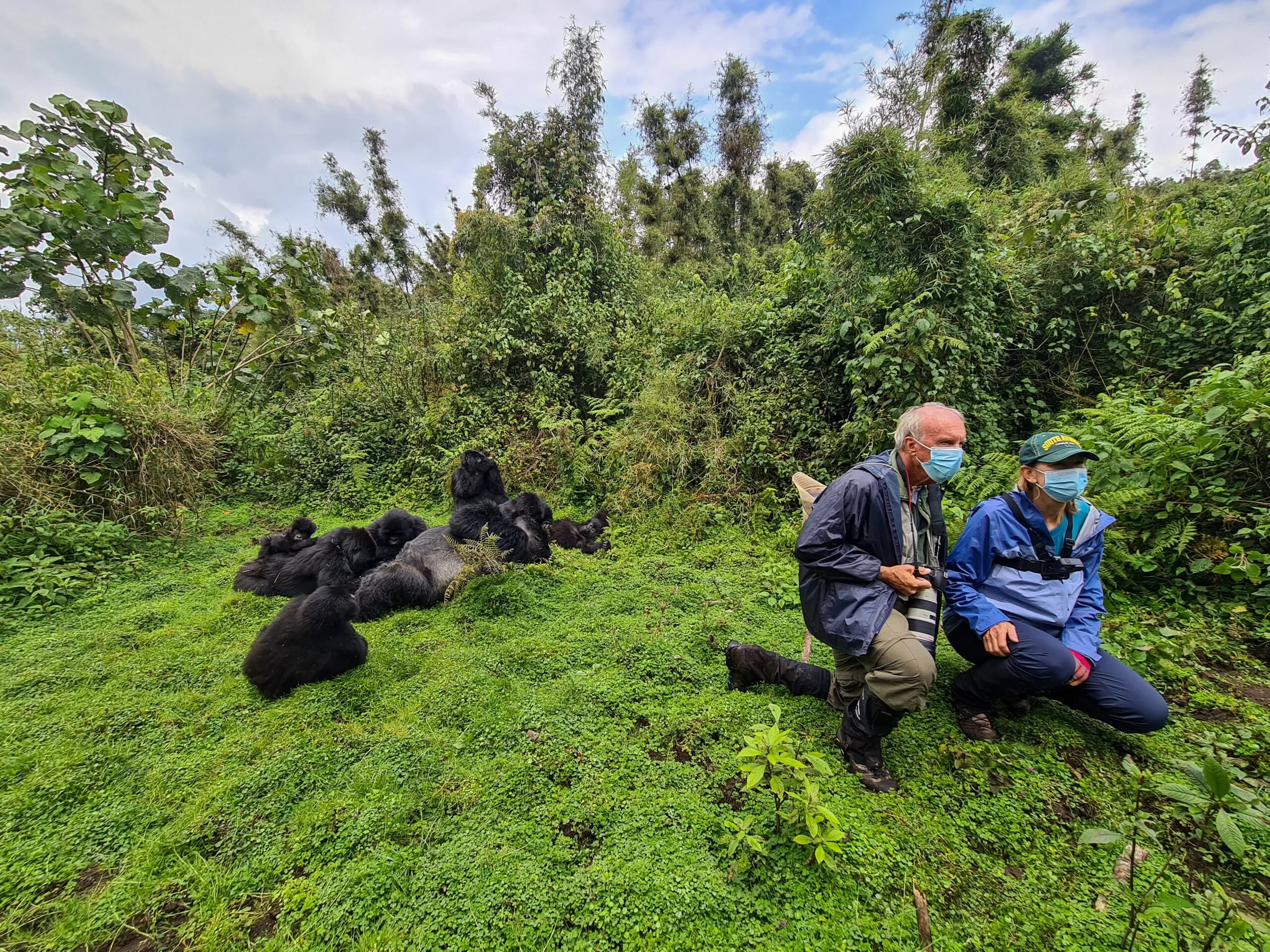
Deciding between Uganda Tourism and Visit Rwanda for a mountain gorilla trekking adventure comes down to evaluating permit budgets, regional logistics, and travel preferences. While Uganda offers an affordable, adventurous experience in Bwindi Impenetrable National Park with permits priced at $800 USD, Rwanda provides a luxury, short-transit experience in Volcanoes National Park with permits set at $1,500 USD. Combining both destinations into a single multi-country safari allows travelers to experience distinct ecosystems, optimize cross-border routes, and maximize their primate encounters across East Africa. This guide breaks down essential permit costs, regional transport logistics, and top multi-park itineraries to help you plan an unforgettable two-country safari.
3-days-rwanda-gorilla-trekking-safari-itinerary-in-volcanoes-park
4-days-volcanoes-national-park-and-akagera-rwanda-wildlife-safari
4-days-rwanda-primates-safari-gorilla-trekking-and-chimpanzee-all-inclusive-package
5-days-best-gorilla-and-uganda-safari-holiday-from-kigali
6-days-luxury-rwanda-gorilla-trekking-safari-tour-vacation
7-days-6-nights-midrange-rwanda-gorilla-trekking-holiday
How does Uganda compare to Rwanda for gorilla trekking in terms of cost and scenery?
When comparing Uganda Rwanda gorilla trekking, cost and scenery present distinct advantages. Uganda is significantly more budget-friendly, with gorilla trekking permits priced at $800 USD compared to Rwanda's $1,500 USD permit. Accommodation costs in Uganda also span a broader spectrum, from budget community eco-lodges to high-end luxury, whereas Rwanda caters heavily to the high-end, ultra-luxury market with world-class lodges like Bisate and One&Only Gorillas' Nest.
In terms of scenery, Uganda’s Bwindi Impenetrable National Park offers a dense, ancient, primary tropical rainforest characterized by steep valleys, cascading waterfalls, and thick forest canopies that create an adventurous, wild jungle ambiance. In contrast, Rwanda’s Volcanoes National Park features dramatic volcanic landscapes set against the Virunga Massif. The vegetation in Rwanda consists of open bamboo zones and giant lobelia groves at higher altitudes, providing brighter lighting and clearer lines of sight for wildlife photography. Overall, Uganda delivers an affordable, wild jungle adventure, while Rwanda offers a convenient, high-end luxury safari against a backdrop of majestic volcanic peaks.
What is the current price of a permit for gorilla trekking in Uganda versus Rwanda?
Permit pricing is one of the biggest differentiators in Uganda Rwanda gorilla trekking. In Uganda, a foreign non-resident mountain gorilla trekking permit costs $800 USD per person. Foreign residents living in East Africa pay $700 USD, while East African citizens pay 300,000 UGX. Uganda also offers a specialized Gorilla Habituation Experience permit in Bwindi for $1,500 USD, which allows travelers to spend four hours with a semi-habituated gorilla group alongside researchers.
In Rwanda, the standard mountain gorilla trekking permit costs $1,500 USD per person for foreign non-residents across all seasons. However, Rwanda offers promotional discounts during the low season (November to May) if travelers visit other Rwandan national parks like Akagera or Nyungwe for at least two nights, reducing the gorilla permit fee to $1,050 USD. African citizens and East African Community (EAC) residents pay reduced rates of $500 USD and $200 USD, respectively. Permits in both destinations cover park entry, armed ranger guide security, tracking services, and one full hour spent observing the gorilla family once located.
Which country, Uganda or Rwanda, offers an easier drive from the main international airport for gorilla trekking?
Rwanda offers a significantly easier and shorter airport transfer for Uganda Rwanda gorilla trekking. The drive from Kigali International Airport (KGL) to Volcanoes National Park in Musanze takes approximately 2.5 to 3 hours over well-paved, smooth tarmac roads winding through scenic countryside. This proximity makes Rwanda ideal for short stays, weekend trips, or travelers seeking seamless luxury transfers without long transit days.
Conversely, driving from Uganda's primary hub, Entebbe International Airport (EBB), to Bwindi Impenetrable National Park or Mgahinga Gorilla National Park takes 8 to 10 hours. The journey involves traversing diverse highways before navigating unpaved, winding mountain dirt roads in southwestern Uganda. While the drive through Uganda offers incredible scenery—passing equator monuments, rural towns, and rolling tea plantations—it is physically demanding. To bypass this long overland drive, many travelers take a 1-hour domestic scheduled flight from Entebbe to Kihihi or Kisoro airstrips, or book a cross-border route landing in Kigali and driving 4 to 5 hours across the border into southern Bwindi.
How many months in advance should I book my permit for gorilla trekking in Uganda or Rwanda?
Securing permits well in advance is essential when planning Uganda Rwanda gorilla trekking, particularly during peak dry seasons (June through September and December through February). For travel during these peak months, book gorilla permits 5 to 9 months in advance. During peak season, daily permit allocations sell out quickly due to strict daily visitor limits designed to protect gorilla health and habitat.
During the low or green seasons (March to May and October to November), booking 2 to 3 months in advance is often sufficient, with occasional last-minute openings available through authorized tour operators. Because Uganda has more habituated gorilla families, it issues roughly 190 permits per day across Bwindi and Mgahinga, compared to Rwanda’s 96 daily permits for Volcanoes National Park. Regardless of the destination, permits are issued on a strict first-come, first-served basis by government authorities—the Uganda Wildlife Authority (UWA) and the Rwanda Development Board (RDB). Permits are non-refundable, so booking early secures your preferred trekking sector and lodge availability.
What is the best time of year to plan a trip for gorilla trekking in Uganda and Rwanda?
The best time of year for Uganda Rwanda gorilla trekking is during the two primary dry seasons: June to September and December to February. During these months, rainfall is significantly lower, trails are less muddy, and forest floors are less slippery, making hiking through steep jungle terrain easier and more comfortable. Clearer skies also enhance photography conditions.
The wet seasons—spanning March to May (long rains) and October to November (short rains)—bring heavy rain showers, thick mud, and mist. However, trekking during rainy months offers unique advantages: gorillas often descend to lower altitudes to forage for tender bamboo shoots, resulting in shorter hikes. Additionally, luxury lodges frequently offer lower seasonal room rates, and popular sectors are less crowded. Even during the dry months, both Bwindi and Volcanoes National Park are tropical rainforest ecosystems, meaning rain can fall at any time. Packing waterproof gear, sturdy hiking boots, and gaiters is essential regardless of when you visit.
Which national parks in Uganda host mountain gorilla trekking?
Uganda features two world-renowned national parks that host mountain gorilla trekking: Bwindi Impenetrable National Park and Mgahinga Gorilla National Park, both located in the southwestern corner of the country.
Bwindi Impenetrable National Park is a UNESCO World Heritage Site housing roughly half of the world’s remaining mountain gorilla population. Bwindi is divided into four distinct operational trekking sectors: Buhoma in the north, Ruhija in the east, and Rushaga and Nkuringo in the south. Each sector features its own habituated gorilla families, visitor centers, and accommodation options.
Mgahinga Gorilla National Park forms part of the tri-national Virunga Massif, bordering Rwanda and the Democratic Republic of Congo. Mgahinga is home to one habituated family—the Nyakagezi family—famous for staying within a compact geographical area that features dramatic volcanic backdrops across Mount Muhabura, Mount Gahinga, and Mount Sabyinyo. Together, these two Ugandan parks provide diverse landscapes for unforgettable wildlife encounters.
Which national park in Rwanda is famous for gorilla trekking?
Volcanoes National Park (known locally as Parc National des Volcans) is Rwanda's famous national park for mountain gorilla trekking. Situated in northwestern Rwanda near the town of Musanze (Ruhengeri), the park covers 160 square kilometers of pristine cloud forest and encompasses five of the eight dormant volcanoes in the Virunga Massif: Karisimbi, Bisoke, Muhabura, Gahinga, and Sabyinyo.
Volcanoes National Park gained international fame through the pioneering research of primatologist Dian Fossey, who established the Karisoke Research Center here in 1967. Today, the park hosts 12 fully habituated gorilla families reserved for tourism, including famous groups like the Sabyinyo, Amahoro, and Susa families. Beyond gorilla trekking, the park offers golden monkey tracking, hikes to Dian Fossey's tomb, volcano climbs, and visits to the Ellen DeGeneres Campus of the Dian Fossey Gorilla Fund, making it a premier global hub for primate conservation and eco-tourism.
What is the difference between Bwindi Impenetrable National Park in Uganda and Volcanoes National Park in Rwanda for gorilla trekking?
The main differences between Bwindi Impenetrable National Park and Volcanoes National Park revolve around terrain, vegetation, accessibility, and overall experience. Bwindi is an ancient, low-to-medium altitude tropical rainforest with dense undergrowth, tangled vines, and steep, muddy ridges. Hikes in Bwindi often require park rangers to clear pathways using machetes, offering an adventurous jungle trek. Bwindi sits between 1,160 and 2,607 meters above sea level.
Volcanoes National Park features higher-altitude montane terrain (2,400 to 4,500 meters) dominated by open bamboo forests and lobelia groves. The open canopy in Rwanda often allows for clearer lighting, easier walking, and unobstructed photographic angles. In terms of logistics, Volcanoes National Park is just 2.5 hours from Kigali on smooth roads, whereas Bwindi requires an 8- to 10-hour drive from Entebbe or a domestic flight. Bwindi offers lower permit costs ($800 vs $1,500) and greater lodging variety, whereas Rwanda focuses heavily on high-end luxury hospitality.
Can I combine a wildlife safaris tour in Queen Elizabeth National Park with gorilla trekking in Uganda?
Yes, combining a big-game wildlife safari in Queen Elizabeth National Park with gorilla trekking in Bwindi Impenetrable National Park is one of Uganda’s most popular safari circuits. The two parks are geographically adjacent in southwestern Uganda, making transit between them logical and efficient.
A typical routing involves driving 3 to 4 hours from Queen Elizabeth National Park's northern sectors (Kasenyi Plains or Mweya Peninsula) south through the famous Ishasha sector—renowned for its tree-climbing lions resting in large fig trees—directly into the northern Buhoma or Ruhija sectors of Bwindi. This combined itinerary allows travelers to experience classic savannah game drives for lions, leopards, and elephants, a boat cruise on the Kazinga Channel for hippos and waterbirds, and mountain gorilla trekking in the rainforest, all within a 4- to 6-day travel window.
Can I combine a visit to Akagera National Park with gorilla trekking in Rwanda?
Yes, combining a classic Big Five safari in Akagera National Park with mountain gorilla trekking in Volcanoes National Park is an ideal way to experience Rwanda's diverse ecosystems. Located in eastern Rwanda along the Tanzanian border, Akagera features savannahs, lakes, and papyrus swamps home to lions, rhinos, leopards, elephants, buffaloes, and giraffes.
The drive from Kigali International Airport to Akagera National Park takes roughly 2.5 hours. After spending 2 to 3 days on game drives and boat safaris on Lake Ihema, travelers can drive 4 hours west through Kigali directly to Volcanoes National Park for gorilla trekking. Additionally, combining Akagera with Volcanoes National Park during the low season (November to May) can qualify travelers for Rwanda’s promotional gorilla permit discount, reducing the permit price from $1,500 USD to $1,050 USD per person.
What physical fitness level is required for gorilla trekking in Uganda and Rwanda?
A moderate-to-good level of physical fitness is required for Uganda Rwanda gorilla trekking, as mountain gorillas live in wild, unpaved terrain without clear footpaths. Hikers encounter steep mountain slopes, loose soil, thick vegetation, tangled roots, and muddy patches. Altitude also plays a factor, particularly in Rwanda where tracking occurs between 2,400 and 3,000+ meters above sea level.
Trek difficulty varies daily depending on where the assigned gorilla family nested the night before. Hikes can range from gentle 1-hour walks to strenuous 6-hour round-trip mountain treks. Prior to departing park headquarters, rangers assess guests during morning briefings and assign gorilla groups based on age, fitness levels, and physical preferences. Travelers with mobility concerns or lower fitness levels can request "shorter-hike" families, hire local porters for physical assistance, or utilize sedan-chair stretchers (carried by local porter teams for an additional fee) to ensure accessibility.
How long do hikes usually take during gorilla trekking in Uganda and Rwanda?
Hike durations during Uganda Rwanda gorilla trekking are unpredictable and range anywhere from 30 minutes to 6 hours or more round-trip. Because mountain gorillas move daily in search of foliage, bamboo shoots, and nesting sites, their exact location changes constantly.
In Rwanda's Volcanoes National Park, hikes tend to be slightly shorter on average (1.5 to 4 hours round-trip) due to lighter bamboo cover, though tracking higher-altitude families like Susa can still take a full day. In Uganda's Bwindi Impenetrable National Park, hikes average 2 to 6 hours round-trip, navigating dense jungle terrain and steep valleys. Once rangers locate the gorilla family, the clock stops: all tourists are limited to strictly one hour of contact time with the gorillas to minimize human disruption and disease transmission risks.
What is the maximum number of people allowed in a single tracking group for gorilla trekking in Uganda and Rwanda?
To protect mountain gorillas from stress, habitat destruction, and human disease transmission, both Uganda and Rwanda enforce a strict maximum limit of 8 tourists per tracking group per habituated gorilla family each day.
This standard cap applies across Bwindi Impenetrable National Park, Mgahinga Gorilla National Park, and Volcanoes National Park. Each group of eight tourists is accompanied into the forest by a team of professional park staff, including a lead ranger guide, secondary safety rangers, and armed wildlife wardens. Advance trackers enter the forest at dawn to trail the gorilla group from their previous night's nest site, communicating coordinates to your lead ranger via two-way radio. The small group size ensures an intimate viewing experience and minimizes environmental impact within the national parks.
How many habituated gorilla families are open for tourism in Uganda compared to Rwanda?
Uganda has more habituated gorilla families available for tourism than Rwanda due to its larger gorilla population and expansive park territories. Uganda hosts 25+ habituated mountain gorilla families open for tourism across Bwindi Impenetrable National Park (divided across Buhoma, Ruhija, Rushaga, and Nkuringo sectors) and Mgahinga Gorilla National Park (home to the Nyakagezi family). This allows Uganda to issue around 190 to 200 gorilla permits per day.
Rwanda has 12 habituated mountain gorilla families dedicated to tourism inside Volcanoes National Park, generating 96 available permits daily. Famous Rwandan families include the Susa, Sabyinyo, Amahoro, Agashya, and Kwitonda groups. Additional gorilla groups in both countries are reserved strictly for scientific research and genetic monitoring by veterinary teams like Gorilla Doctors.
What are the age restrictions for individuals wanting to do gorilla trekking in Uganda and Rwanda?
The minimum age limit for mountain gorilla trekking in both Uganda and Rwanda is 15 years old. Anyone under 15 at the time of the trek is legally prohibited from participating by the Uganda Wildlife Authority (UWA) and the Rwanda Development Board (RDB).
This strict age restriction is enforced for safety and health reasons: children under 15 are more susceptible to childhood communicable diseases (like measles, mumps, and flu) that can be fatal to wild primates. Additionally, young children may struggle with the physical demands of long mountain hikes or react unpredictably if a silverback gorilla performs a charge display. Park officials inspect original passports during morning briefings to verify birth dates. Rare age exceptions are granted only in Uganda if a child is turning 15 during the travel year and their parents sign indemnity waivers, subject to formal UWA approval.
Do I need a yellow fever vaccination certificate to cross borders for gorilla trekking between Uganda and Rwanda?
Yes, a valid Yellow Fever vaccination certificate is a mandatory entry requirement for international travelers crossing borders between Uganda and Rwanda. Official border posts (such as Cyanika or Katuna) require travelers to present their official international yellow booklet (Carte Jaune) before clearing immigration.
The Yellow Fever vaccine must be administered at least 10 days prior to arrival at the border to be considered valid by health authorities. While enforcement at international airports can vary slightly based on country of origin, land border officials strictly audit Yellow Fever cards for travelers conducting cross-border Uganda Rwanda gorilla trekking. If you cannot receive the vaccine due to medical conditions, you must carry an official medical exemption letter stamped by an authorized healthcare physician, though acceptance remains at the discretion of border health officers.
What visa do I need if I want to do gorilla trekking in both Uganda and Rwanda on the same trip?
If you plan to visit both destinations on a combined Uganda Rwanda gorilla trekking itinerary, the best option is the East Africa Tourist Visa (EATV). This single joint visa costs $100 USD and allows multi-entry travel between Uganda, Rwanda, and Kenya for up to 90 consecutive days.
To apply correctly, you must request the East Africa Tourist Visa through the official immigration portal of the first country you physically enter. For example, if you land at Kigali International Airport, apply online via the Rwanda Directorate General of Immigration and Emigration (DGIE) portal. If landing at Entebbe, apply through the Uganda Electronic Visa portal. Obtaining the joint EATV is significantly cheaper and more convenient than buying separate single-entry visas for Uganda ($50 USD) and Rwanda ($50 USD), which expire upon crossing borders.
What is an East Africa Tourist Visa and does it cover gorilla trekking entries?
The East Africa Tourist Visa (EATV) is a joint regional travel authorization that permits tourists to travel freely between Uganda, Rwanda, and Kenya for up to 90 days on a single visa. It costs $100 USD and eliminates the need to purchase separate national visas when crossing borders between these three participating East African Community member states.
The EATV covers all general tourist border entries, highway transit, and national park visits. However, it does not cover or include individual activity fees such as mountain gorilla trekking permits, park entry fees, or lodge bookings. Gorilla permits must still be purchased separately through the Uganda Wildlife Authority ($800 USD) or the Rwanda Development Board ($1,500 USD). The visa simply validates your legal immigration status to cross borders and participate in activities across Uganda and Rwanda seamlessly.
How much tipping is customary for guides and porters during gorilla trekking in Uganda and Rwanda?
Tipping is a customary way to support local communities during Uganda Rwanda gorilla trekking.
- Lead Ranger Guides: Tipping $15 to $20 USD per tourist (or $20–$30 USD per group) is standard. This tip is typically shared with the secondary safety rangers and trackers accompanying your group.
- Porters: Hiring a local porter at park headquarters before the trek costs a standard set fee of $15 to $20 USD, which goes directly to the porter. Tipping an additional $5 to $10 USD at the end of the hike for good service is highly appreciated.
- General Drivers/Lodge Crew: For private safari drivers, tip $10 to $20 USD per day, and contribute $5 to $10 USD per day to lodge tip boxes for hospitality staff.
Tips should be handed out in cash (clean US Dollars printed in 2013 or newer, or local currency like Ugandan Shillings or Rwandan Francs).
What is the success rate of actually finding the gorillas during gorilla trekking in Uganda and Rwanda?
The success rate of finding mountain gorillas during a trek in both Uganda and Rwanda is extraordinarily high, hovering over 99%. It is virtually unheard of for a tourist group not to locate their assigned family.
This high success rate is made possible by dedicated teams of advance park trackers. Every morning at first light—hours before tourists depart headquarters—trackers trek into the rainforest to locate the exact spot where the gorilla family built their nests the previous night. Once found, trackers trail the family as they move and radio real-time GPS coordinates directly to your lead ranger guide. This coordinated system ensures your group hikes along optimal paths directly toward the gorillas, virtually guaranteeing a successful sighting.
Logistics & Transportation Questions
How long is the drive from Kigali to Volcanoes National Park for a quick Rwanda gorilla trekking trip?
The drive from Kigali International Airport (or central Kigali) to Volcanoes National Park in Musanze takes approximately 2.5 to 3 hours over smooth, well-maintained tarmac roads. The 116-kilometer route climbs through northern Rwanda's rolling countryside, earning Rwanda its moniker as the "Land of a Thousand Hills."
Because this transit is short and reliable, Rwanda is ideal for quick weekend excursions or short 2-day itineraries. Travelers arriving in Kigali on an early morning flight can comfortably reach their lodge near Volcanoes National Park by early afternoon, complete their gorilla trek the following morning, and return to Kigali International Airport in time for an evening international departure.
How long is the drive from Entebbe International Airport to Bwindi Impenetrable National Park in Uganda?
Driving from Entebbe International Airport (or Kampala) to Bwindi Impenetrable National Park takes approximately 8 to 10 hours over a distance of roughly 460 to 500 kilometers, depending on which sector of Bwindi you visit (Buhoma, Ruhija, Rushaga, or Nkuringo).
The journey follows paved highways through Masaka, Mbarara, and Kabale before transitioning onto unpaved, winding mountain dirt roads for the final 2 to 3 hours. While long, the drive offers rich cultural sights: crossing the Equator line at Kayabwe, viewing long-horned Ankole cattle in Kiruhura, and driving through the terraced hills of Kigezi ("the Switzerland of Africa"). Most operators split this long drive across a multi-day itinerary or utilize domestic flights.
Are there domestic flights available from Entebbe to airstrips near Uganda gorilla trekking regions?
Yes, domestic scheduled and charter flights operate daily between Entebbe International Airport (EBB) and airstrips serving southwestern Uganda's gorilla regions. Local bush airlines like AeroLink Uganda and Bar Aviation run regular flights.
Flights depart Entebbe’s domestic terminal and land at Kihihi Airstrip (serving Bwindi's northern sectors like Buhoma and Ruhija) or Kisoro Airstrip (serving Bwindi's southern sectors like Rushaga and Nkuringo, as well as Mgahinga Gorilla National Park). Flight times range from 1 to 1.5 hours, replacing the 8- to 10-hour overland drive. Upon touchdown, your tour operator meets you on the tarmac in a 4x4 vehicle for a short 45- to 90-minute road transfer to your forest lodge.
Can I arrange a cross-border gorilla trekking itinerary starting in Kigali and ending in Uganda?
Yes, arranging a cross-border itinerary—flying into Kigali International Airport, driving across the border into southern Uganda for gorilla trekking, and returning to Kigali or departing via Entebbe—is a popular, budget-savvy route.
This hybrid route combines the short 4- to 5-hour drive from Kigali to Bwindi (via the Cyanika or Katuna border posts) with Uganda’s lower gorilla permit fee ($800 USD vs $1,500 USD). This setup avoids the long 9-hour drive from Entebbe while saving $700 USD on permit fees compared to trekking in Rwanda. To run this route smoothly, travelers should secure an East Africa Tourist Visa ($100 USD) and ensure their driver-guide carries cross-border commercial vehicle permits.
What kind of 4x4 vehicle is best suited for road conditions during gorilla trekking in Uganda?
A custom-built 4x4 Toyota Land Cruiser equipped with a pop-up roof and heavy-duty suspension is the ideal vehicle for Uganda Rwanda gorilla trekking. While roads in Rwanda and primary highways in Uganda are well-paved, access roads leading into Bwindi, Mgahinga, and Volcanoes National Park consist of unpaved, steep, and rocky mountain terrain.
During rainy periods, these unpaved mountain tracks become slippery and muddy, requiring true high-clearance 4WD vehicles equipped with low-range transfer cases and mud-terrain tires. Custom safari Land Cruisers also feature charging ports, mini-refrigerators for cold water, and wide sliding windows for photo opportunities, ensuring passenger safety and comfort across rugged mountain routes.
How reliable are public transport options for reaching gorilla trekking trailheads in Uganda or Rwanda?
Public transport is unreliable and generally not recommended for reaching gorilla trekking trailheads in either Uganda or Rwanda. While public buses and shared minibuses (matatus) operate between major hubs (like Kigali to Musanze, or Kampala to Kabale/Kisoro), they do not run directly to national park gates or remote forest lodges.
Reaching actual park trailheads from regional towns requires hiring private local taxis or motorcycle taxis (boda-bodas), which can be unsafe over steep mountain roads with heavy camera gear. Furthermore, gorilla tracking briefings begin strictly at 7:00 AM or 7:30 AM; public transport delays can cause you to miss your mandatory briefing and forfeit your non-refundable permit. Booking through a professional tour operator ensures private, punctual 4x4 transport.
Where do briefing sessions take place on the morning of gorilla trekking in Uganda and Rwanda?
Morning briefing sessions take place at the official national park headquarters or designated sector visitor centers:
- Rwanda: Briefings occur centrally at the Kinigi Park Headquarters at the base of Volcanoes National Park.
- Uganda: Briefings take place at the specific park sector headquarters corresponding to your permit: Buhoma, Ruhija, Rushaga, or Nkuringo in Bwindi Impenetrable National Park, or Ntebeko Visitors Center in Mgahinga Gorilla National Park.
It is critical to stay at a lodge near your assigned sector in Bwindi; driving between Bwindi sectors on mountain roads on the morning of your trek can take 2 hours, risking late arrival for the mandatory briefing.
What time does the morning briefing start for gorilla trekking in both destinations?
The morning briefing for gorilla trekking begins promptly at 7:00 AM to 7:30 AM in both Uganda and Rwanda. Travelers are expected to arrive at park headquarters, complete passport registration, check in with rangers, and enjoy hot coffee or tea while traditional cultural dance troupes perform.
During the briefing, lead ranger guides explain park rules, safety protocols, distance requirements (maintaining a 7-meter gap from gorillas), health guidelines (wearing face masks), and expectations on the trail. Rangers also review fitness levels and divide tourists into groups of eight, matching each group to a specific habituated gorilla family before driving to the respective trailhead by 8:00 AM.
Are private helicopter transfers available for luxury gorilla trekking experiences in Rwanda?
Yes, private helicopter transfers are widely available in Rwanda for luxury travelers seeking fast, seamless transfers. Companies like Akagera Aviation offer charter flights directly from Kigali International Airport to Volcanoes National Park.
A helicopter flight from Kigali to helipads near Musanze (such as those at Singita Kwitonda Lodge, One&Only Gorillas' Nest, or the Kinigi helipad) takes approximately 25 to 30 minutes, offering scenic aerial views of Rwanda's terraced hills and volcanic peaks. Helicopter transfers eliminate the 2.5-hour road drive, allowing high-end travelers to arrive in comfort and maximize their vacation time.
How do tour operators handle luggage logistics during multi-day gorilla trekking excursions?
Tour operators manage luggage logistics during multi-day Uganda Rwanda gorilla trekking excursions by utilizing private 4x4 safari vehicles. Your main travel luggage—such as duffel bags or rolling suitcases—remains safely secured inside the vehicle or is checked into your lodge room by hospitality staff while you are out on the trail.
When heading into the forest for the trek, travelers carry only a small waterproof daypack containing essentials: water bottles, a packed lunch, rain jacket, camera gear, insect repellent, and personal medications. Hiring a local porter ($15–$20 USD) at park headquarters is recommended; the porter carries your daypack during the hike, allowing you to navigate steep terrain empty-handed while supporting local community livelihoods.
How long are visitors allowed to stay with the gorillas during gorilla trekking in Uganda and Rwanda?
Once your tracking group locates the assigned mountain gorilla family, visitors are permitted to stay with the family for strictly one hour. This standard limit applies across both Bwindi Impenetrable National Park and Mgahinga Gorilla National Park in Uganda, as well as Volcanoes National Park in Rwanda. The clock begins the moment your lead ranger guide establishes visual contact with the gorillas.
Why is the viewing time strictly limited to one hour during gorilla trekking?
The one-hour viewing limit is enforced primarily to protect mountain gorillas from human disease transmission, behavioural disruption, and psychological stress. Because mountain gorillas share approximately 98% of their DNA with humans, extended contact increases the risk of airborne pathogens spreading to wild populations. Additionally, prolonged human presence can overstimulate dominant silverbacks or cause protective mothers to alter their natural feeding, grooming, and resting patterns.
What rules must be followed regarding the 7-meter distance rule during gorilla trekking?
Trekkers must maintain a minimum safe distance of 7 meters (21 feet) from the mountain gorillas at all times. If a gorilla actively approaches you, you must remain calm, avoid direct physical contact, and slowly step backward to re-establish the distance. You must never attempt to touch, pet, or feed the gorillas.
How do silverback gorillas behave if they feel threatened during gorilla trekking?
When a dominant silverback feels threatened, he displays distinct threat displays to assert dominance and protect his family. These behaviors include chest-beating, loud hooting or roaring, breaking tree branches, standing upright on hind legs, and slapping the ground. In extreme cases, a silverback may initiate a high-speed charge toward the perceived threat before stopping short in a mock charge.
What should I do if a mountain gorilla mock-charges at me during gorilla trekking?
If a silverback or younger gorilla mock-charges, do not run away, do not scream, and do not make sudden movements. Running triggers a predator-prey chase instinct. Instead, freeze in place, crouch down slowly to project submission, avert your eyes toward the ground (avoiding direct eye contact), and wait quietly for your lead ranger guide to issue low-pitched vocal calming sounds to de-escalate the situation.
Is flash photography allowed at any point during gorilla trekking in Uganda or Rwanda?
No, flash photography is strictly prohibited at all times while viewing mountain gorillas. The sudden, intense burst of light can startle or blind the animals, potentially triggering an aggressive response from protective silverbacks. Always double-check your camera or smartphone settings to ensure the auto-flash feature is disabled before approaching the family.
What type of camera equipment works best in the dim light of a forest during gorilla trekking?
Dense rainforest canopies severely cut down natural light, making high-speed camera gear essential. The ideal setup includes a mirrorless or DSLR camera body with strong high-ISO performance, paired with a fast zoom lens featuring a wide maximum aperture (f/2.8 or f/4). Lenses in the 70–200mm range are ideal. Ensure your camera gear has weather-sealing to withstand mist and rain, and bring microfiber cloths to wipe humidity off your lens.
Can I see golden monkeys in the same area where I do gorilla trekking in Uganda or Rwanda?
Yes, golden monkeys (Cercopithecus kandti) inhabit the exact same high-altitude bamboo zones of the Virunga Massif. You can track habituated golden monkeys in Mgahinga Gorilla National Park in Uganda and Volcanoes National Park in Rwanda. However, golden monkeys are not found in Uganda’s Bwindi Impenetrable National Park, which sits outside the Virunga volcanic mountain range.
What other primate species might I encounter while on a gorilla trekking expedition?
Beyond mountain gorillas, the dense forests of Uganda and Rwanda host diverse primate populations. Depending on the park and sector, you may spot L'Hoest's monkeys, black-and-white colobus monkeys, red-tailed monkeys, blue monkeys, olive baboons, and vervet monkeys. In Bwindi, wild (unhabituated) chimpanzees reside in the forest, though encounters during a gorilla trek are rare.
How many total mountain gorillas are estimated to live in the wild across Uganda and Rwanda?
The global wild population of mountain gorillas (Gorilla beringei beringei) is estimated at just over 1,060 individuals. This total is divided between two distinct island ecosystems: Bwindi Impenetrable National Park in Uganda (holding roughly half the world's population) and the tri-national Virunga Massif, which spans Mgahinga Gorilla National Park (Uganda), Volcanoes National Park (Rwanda), and Virunga National Park (Democratic Republic of Congo).
What is the Gorilla Habituation Experience and how does it differ from standard gorilla trekking in Uganda?
While standard gorilla trekking involves visiting a fully habituated family for one hour, the Gorilla Habituation Experience (GHE) involves joining researchers, trackers, and conservationists as they accustom a semi-habituated gorilla family to human presence. Offered exclusively in the southern sectors of Uganda’s Bwindi Impenetrable National Park (Rushaga and Nkuringo), the GHE allows visitors to observe wild gorilla behavior, tracking techniques, and scientific habituation methods up close.
How many hours do you get with the family during a Uganda gorilla habituation experience?
Participants in the Gorilla Habituation Experience receive four full hours of contact time with the semi-habituated gorilla family once located. A GHE permit in Uganda costs $1,500 USD per person (compared to $800 USD for a standard 1-hour permit).
What role do trackers and rangers play before tourists arrive for gorilla trekking?
At first light—hours before tourists arrive at park headquarters—teams of advance trackers trek into the rainforest to locate the exact spot where the gorilla family built their leaf nests the previous night. Trackers then follow the family's morning trail, relaying real-time GPS coordinates via two-way radios directly to the lead ranger guides leading tourist groups from headquarters.
How do researchers identify individual gorillas in families monitored during gorilla trekking?
Researchers and park wardens identify individual mountain gorillas primarily using noseprints—the unique pattern of wrinkles, creases, and nostril shapes on each gorilla's nose pad, which remains unchanged throughout their life. Researchers also track individual body scars, ear shapes, crown shapes, silver hair coverage, and distinct behavioral traits.
Are mountain gorillas friendly or aggressive toward humans during gorilla trekking?
Habituated mountain gorillas are generally gentle, peaceful, and indifferent toward human observers. Through years of daily, gradual exposure by conservation researchers, habituated families view humans as non-threatening neutral observers. However, they remain wild, powerful animals; if provoked by loud noises, sudden movements, or broken distance rules, dominant silverbacks will act defensively to protect their family.
What do mountain gorillas eat in the high-altitude forests of Uganda and Rwanda?
Mountain gorillas are predominantly herbivorous, consuming up to 18 kilograms of vegetation daily. Their diet consists of bamboo shoots, celery stems, wild nettles, thistle leaves, roots, bark, fruit, and wood pith. They obtain most of their daily water intake directly from the moisture-rich plant matter they digest, rarely needing to drink standing water.
How often do gorilla families move to a new nesting site tracked during gorilla trekking?
Gorilla families move and build a brand-new nesting site every single night. Adult gorillas construct woven beds out of branches, vines, and leaves on the ground or in low branches, while infants sleep in nests with their mothers. They never sleep in the same nest twice, preventing parasite buildup and ensuring fresh foraging grounds daily.
What sound do gorillas make to communicate contentment during gorilla trekking?
When content and relaxed, mountain gorillas emit low, vibrating deep guttural grunts or hums (often described as vocal purring). When your group approaches a family, your lead ranger guide will mimic these low-pitched contentment vocalizations to signal to the silverback that the approaching humans are friendly and non-threatening.
Can sick tourists participate in gorilla trekking?
No, visibly sick tourists are legally prohibited from participating in gorilla trekking. Because mountain gorillas lack immunity against human respiratory viruses, common illnesses like the flu or cold can devastate an entire gorilla group.
Ababa Uganda Safaris
What happens if a tourist shows signs of a cold or flu on the morning of gorilla trekking?
During the morning briefing, park officials and rangers observe visitors for signs of illness (such as coughing, sneezing, fever, or runny nose). If a trekker is deemed unwell, park wardens will bar them from entering the forest. In both Uganda and Rwanda, national wildlife authorities (UWA and RDB) issue a 50% permit refund on medical grounds upon presentation of an official medical report from an authorized park physician. Alternatively, your tour operator may help reschedule your trek to a later date if your health improves.
What kind of waterproof hiking boots are recommended for steep terrain during gorilla trekking?
Choose ankle-high, waterproof leather or synthetic hiking boots with deep rubber lug soles (such as Vibram soles) for strong traction. Ankle support is essential when stepping over slippery moss-covered rocks, hidden roots, and muddy ravines on steep mountain slopes. Break in new boots thoroughly before your trip to prevent blisters.
Why are gardening gloves useful against stinging plants during gorilla trekking?
Thick leather or rubber-coated gardening gloves protect your hands when navigating dense jungle terrain. Hikers frequently grab onto vines, branches, and stinging nettles (Urtica dioica) for balance while scaling muddy slopes. Gardening gloves prevent painful nettle stings, scratches from thorn bushes, and insect bites.
Should I wear long-sleeved shirts and thick trousers for gorilla trekking?
Yes, lightweight, moisture-wicking long-sleeved shirts and long trousers are mandatory clothing items. Wearing long layers shields your skin against stinging nettles, sharp thorn bushes, biting insects, and rough branches. Tuck your trousers into your socks or boots to prevent driver ants and biting midges from crawling up your legs.
How do gaiters protect my legs during a muddy session of gorilla trekking?
Waterproof hiking gaiters wrap around your lower legs from the ankle to below the knee. They form a protective seal over the top of your boots, preventing thick mud, rainwater, sand, small stones, and stinging nettles from entering your footwear. Gaiters also provide an extra barrier against safari ants and ticks on the trail.
Is it mandatory to hire a local porter to assist me during gorilla trekking?
Hiring a porter is not legally mandatory, but it is universally recommended by park authorities and guides. For a modest standard fee ($15–$20 USD), a local porter carries your daypack, offers a steady hand across steep, muddy sections, and assists you over fallen trees, allowing you to focus entirely on your footing and camera gear.
How does hiring a local porter directly support communities adjacent to gorilla trekking parks?
Porters are recruited directly from local communities bordering Bwindi, Mgahinga, and Volcanoes National Parks—many of them former subsistence farmers or reformed poachers. The direct cash income they earn from carrying daypacks allows them to feed their families, pay school fees, and support local businesses. Providing direct economic value from live gorillas encourages local communities to actively protect the national parks.
What size backpack is ideal to carry water and rain gear during gorilla trekking?
A 20-to-30-liter ergonomic daypack equipped with a built-in waterproof rain cover is ideal. This size comfortably accommodates 2–3 liters of drinking water, a packed lunchbox, waterproof rain jackets, spare camera batteries, gardening gloves, and personal insect repellent without adding excessive bulk.
Are rain ponchos or lightweight jackets better for sudden downpours during gorilla trekking?
A high-quality, breathable waterproof jacket (such as Gore-Tex) with pit-zips and an adjustable hood is vastly superior to a plastic poncho. Plastic ponchos snag easily on sharp jungle thorns and trap body heat, causing heavy sweating inside the garment. A durable waterproof jacket worn over moisture-wicking base layers keeps you dry from both rain and sweat.
How should I protect my electronic gear from heavy moisture during gorilla trekking?
Pack all sensitive electronics—including camera bodies, lenses, smartphones, and memory cards—inside heavy-duty waterproof dry bags or ziplock bags inside your backpack. Carry a small synthetic chamois or microfiber towel to wipe condensation off your camera gear, and consider using a rain cover over your camera lens while shooting in mist or light rain.
What insect repellents and sunscreens are recommended for gorilla trekking?
Apply a DEET-based insect repellent (20% to 30% concentration) or Picaridin-based spray to exposed skin and clothing to ward off mosquitoes, biting flies, and forest midges. Pair this with a broad-spectrum, water-resistant sunscreen (SPF 30 or higher) and lip balm with UV protection to guard against intense high-altitude tropical sun glare.
How does Uganda compare to Rwanda for gorilla trekking in terms of cost and scenery?
When comparing Uganda and Rwanda for mountain gorilla trekking, the choice comes down to budget, travel style, and landscape preferences. Uganda offers a significantly more affordable experience, with gorilla trekking permits priced at $800 USD per person compared to Rwanda's $1,500 USD permit. Uganda also features a much broader spectrum of accommodation options, ranging from budget community rest camps to high-end lodges, whereas Rwanda caters heavily to the high-end luxury market with exclusive safari properties. In terms of scenery, Uganda’s Bwindi Impenetrable National Park offers an ancient, dense, primary tropical rainforest characterized by tangled vines, cascading waterfalls, and steep jungle valleys. Rwanda’s Volcanoes National Park features dramatic volcanic peaks set against open bamboo zones and giant lobelia groves, providing brighter lighting and clearer lines of sight for wildlife photography. Overall, Uganda delivers an adventurous, wild jungle safari at a lower cost, while Rwanda provides a high-end luxury experience against a backdrop of majestic volcanic slopes.
What is the current price of a permit for gorilla trekking in Uganda versus Rwanda?
Permit pricing is one of the biggest differentiators between the two destinations. In Uganda, a foreign non-resident mountain gorilla trekking permit costs $800 USD per person. Foreign residents living in East Africa pay $700 USD, while East African citizens pay 300,000 UGX. Uganda also offers a specialized Gorilla Habituation Experience permit in Bwindi for $1,500 USD, which allows travelers to spend four full hours observing a semi-habituated gorilla group alongside researchers. In Rwanda, the standard mountain gorilla trekking permit costs $1,500 USD per person for foreign non-residents across all seasons. However, Rwanda offers promotional discounts during the low season (November to May) if travelers visit other national parks like Akagera or Nyungwe for at least two nights, reducing the gorilla permit fee to $1,050 USD. African citizens and East African Community residents pay reduced rates of $500 USD and $200 USD, respectively. Permits in both countries cover park entry, armed ranger guide security, tracking services, and one full hour spent observing the gorilla family once located.
Which country, Uganda or Rwanda, offers an easier drive from the main international airport for gorilla trekking?
Rwanda offers a significantly easier and shorter airport transfer for gorilla trekking. The drive from Kigali International Airport to Volcanoes National Park in Musanze takes approximately two and a half to three hours over smooth, well-paved tarmac roads. This proximity makes Rwanda ideal for short weekend excursions, quick stays, or travelers seeking seamless luxury transfers without long transit days. Conversely, driving from Uganda's primary international hub, Entebbe International Airport, to Bwindi Impenetrable National Park or Mgahinga Gorilla National Park takes eight to ten hours. The journey involves traversing highways before navigating unpaved, winding mountain dirt roads in southwestern Uganda. While the drive through Uganda offers scenic views of equator monuments, rural towns, and rolling tea plantations, it is physically demanding. To bypass this long overland drive, many travelers take a one-hour domestic flight from Entebbe to Kihihi or Kisoro airstrips, or arrange a cross-border itinerary landing in Kigali and driving four hours across the border into southern Bwindi.
How many months in advance should I book my permit for gorilla trekking in Uganda or Rwanda?
Securing permits well in advance is essential, particularly during peak dry seasons running from June through September and December through February. For travel during these peak months, you should book gorilla permits five to nine months in advance. Daily permit allocations are strictly capped to protect gorilla health and prevent habitat disruption, causing peak season permits to sell out quickly. During the low or green seasons spanning March to May and October to November, booking two to three months in advance is often sufficient, with occasional last-minute openings available through authorized tour operators. Because Uganda has more habituated gorilla families, it issues roughly 190 permits per day across Bwindi and Mgahinga, compared to Rwanda’s 96 daily permits for Volcanoes National Park. Regardless of the destination, permits are issued on a strict first-come, first-served basis by government authorities—the Uganda Wildlife Authority and the Rwanda Development Board. Permits are non-refundable, making early booking crucial to secure your preferred trekking sector and lodge availability.
What is the best time of year to plan a trip for gorilla trekking in Uganda and Rwanda?
The best time of year for gorilla trekking in both Uganda and Rwanda is during the two primary dry seasons: June to September and December to February. During these months, rainfall is lower, trails are less muddy, and forest floors are less slippery, making hiking through steep jungle terrain easier and more comfortable. Clearer skies also enhance photography conditions. The wet seasons—spanning March to May (long rains) and October to November (short rains)—bring heavy rain showers, thick mud, and mist. However, trekking during rainy months offers unique advantages: gorillas often descend to lower altitudes to forage for tender bamboo shoots, resulting in shorter hikes. Additionally, luxury lodges frequently offer lower seasonal room rates, and popular sectors are less crowded. Even during the dry months, both Bwindi and Volcanoes National Park are tropical rainforest ecosystems, meaning rain can fall at any time. Packing waterproof gear, sturdy hiking boots, and gaiters is essential regardless of when you visit.
Which national parks in Uganda host mountain gorilla trekking?
Uganda features two world-renowned national parks that host mountain gorilla trekking: Bwindi Impenetrable National Park and Mgahinga Gorilla National Park, both located in the southwestern corner of the country. Bwindi Impenetrable National Park is a UNESCO World Heritage Site housing roughly half of the world’s remaining mountain gorilla population. Bwindi is divided into four distinct operational trekking sectors: Buhoma in the north, Ruhija in the east, and Rushaga and Nkuringo in the south. Each sector features its own habituated gorilla families, visitor centers, and accommodation options. Mgahinga Gorilla National Park forms part of the tri-national Virunga Massif, bordering Rwanda and the Democratic Republic of Congo. Mgahinga is home to one habituated family—the Nyakagezi family—famous for staying within a compact geographical area that features dramatic volcanic backdrops across Mount Muhabura, Mount Gahinga, and Mount Sabyinyo. Together, these two Ugandan parks provide diverse landscapes for unforgettable wildlife encounters.
Which national park in Rwanda is famous for gorilla trekking?
Volcanoes National Park, known locally as Parc National des Volcans, is Rwanda's famous national park for mountain gorilla trekking. Situated in northwestern Rwanda near the town of Musanze, the park covers 160 square kilometers of pristine cloud forest and encompasses five of the eight dormant volcanoes in the Virunga Massif: Karisimbi, Bisoke, Muhabura, Gahinga, and Sabyinyo. Volcanoes National Park gained international fame through the pioneering research of primatologist Dian Fossey, who established the Karisoke Research Center here in 1967. Today, the park hosts 12 fully habituated gorilla families reserved for tourism, including famous groups like the Sabyinyo, Amahoro, and Susa families. Beyond gorilla trekking, the park offers golden monkey tracking, hikes to Dian Fossey's tomb, volcano climbs, and visits to the Ellen DeGeneres Campus of the Dian Fossey Gorilla Fund, making it a premier global hub for primate conservation and eco-tourism.
What is the difference between Bwindi Impenetrable National Park in Uganda and Volcanoes National Park in Rwanda for gorilla trekking?
The main differences between Bwindi Impenetrable National Park and Volcanoes National Park revolve around terrain, vegetation, accessibility, and overall experience. Bwindi is an ancient, low-to-medium altitude tropical rainforest with dense undergrowth, tangled vines, and steep, muddy ridges. Hikes in Bwindi often require park rangers to clear pathways using machetes, offering an adventurous jungle trek. Bwindi sits between 1,160 and 2,607 meters above sea level. Volcanoes National Park features higher-altitude montane terrain (2,400 to 4,500 meters) dominated by open bamboo forests and lobelia groves. The open canopy in Rwanda often allows for clearer lighting, easier walking, and unobstructed photographic angles. In terms of logistics, Volcanoes National Park is just two and a half hours from Kigali on smooth roads, whereas Bwindi requires an eight-to-ten-hour drive from Entebbe or a domestic flight. Bwindi offers lower permit costs ($800 vs $1,500) and greater lodging variety, whereas Rwanda focuses heavily on high-end luxury hospitality.
Can I combine a wildlife safaris tour in Queen Elizabeth National Park with gorilla trekking in Uganda?
Yes, combining a big-game wildlife safari in Queen Elizabeth National Park with gorilla trekking in Bwindi Impenetrable National Park is one of Uganda’s most popular safari circuits. The two parks are geographically adjacent in southwestern Uganda, making transit between them logical and efficient. A typical routing involves driving three to four hours from Queen Elizabeth National Park's northern sectors (Kasenyi Plains or Mweya Peninsula) south through the famous Ishasha sector—renowned for its tree-climbing lions resting in large fig trees—directly into the northern Buhoma or Ruhija sectors of Bwindi. This combined itinerary allows travelers to experience classic savannah game drives for lions, leopards, and elephants, a boat cruise on the Kazinga Channel for hippos and waterbirds, and mountain gorilla trekking in the rainforest, all within a four-to-six-day travel window.
Can I combine a visit to Akagera National Park with gorilla trekking in Rwanda?
Yes, combining a classic Big Five safari in Akagera National Park with mountain gorilla trekking in Volcanoes National Park is an ideal way to experience Rwanda's diverse ecosystems. Located in eastern Rwanda along the Tanzanian border, Akagera features savannahs, lakes, and papyrus swamps home to lions, rhinos, leopards, elephants, buffaloes, and giraffes. The drive from Kigali International Airport to Akagera National Park takes roughly two and a half hours. After spending two to three days on game drives and boat safaris on Lake Ihema, travelers can drive four hours west through Kigali directly to Volcanoes National Park for gorilla trekking. Additionally, combining Akagera with Volcanoes National Park during the low season (November to May) can qualify travelers for Rwanda’s promotional gorilla permit discount, reducing the permit price from $1,500 USD to $1,050 USD per person.
What physical fitness level is required for gorilla trekking in Uganda and Rwanda?
A moderate-to-good level of physical fitness is required for gorilla trekking, as mountain gorillas live in wild, unpaved terrain without clear footpaths. Hikers encounter steep mountain slopes, loose soil, thick vegetation, tangled roots, and muddy patches. Altitude also plays a factor, particularly in Rwanda where tracking occurs between 2,400 and 3,000+ meters above sea level. Trek difficulty varies daily depending on where the assigned gorilla family nested the night before. Hikes can range from gentle one-hour walks to strenuous six-hour round-trip mountain treks. Prior to departing park headquarters, rangers assess guests during morning briefings and assign gorilla groups based on age, fitness levels, and physical preferences. Travelers with mobility concerns or lower fitness levels can request shorter-hike families, hire local porters for physical assistance, or utilize sedan-chair stretchers carried by local porter teams for an additional fee.
How long do hikes usually take during gorilla trekking in Uganda and Rwanda?
Hike durations during gorilla trekking are unpredictable and range anywhere from 30 minutes to 6 hours or more round-trip. Because mountain gorillas move daily in search of foliage, bamboo shoots, and nesting sites, their exact location changes constantly. In Rwanda's Volcanoes National Park, hikes tend to be slightly shorter on average (one and a half to four hours round-trip) due to lighter bamboo cover, though tracking higher-altitude families like Susa can still take a full day. In Uganda's Bwindi Impenetrable National Park, hikes average two to six hours round-trip, navigating dense jungle terrain and steep valleys. Once rangers locate the gorilla family, the clock stops: all tourists are limited to strictly one hour of contact time with the gorillas to minimize human disruption and disease transmission risks.
What is the maximum number of people allowed in a single tracking group for gorilla trekking in Uganda and Rwanda?
To protect mountain gorillas from stress, habitat destruction, and human disease transmission, both Uganda and Rwanda enforce a strict maximum limit of eight tourists per tracking group per habituated gorilla family each day. This standard cap applies across Bwindi Impenetrable National Park, Mgahinga Gorilla National Park, and Volcanoes National Park. Each group of eight tourists is accompanied into the forest by a team of professional park staff, including a lead ranger guide, secondary safety rangers, and armed wildlife wardens. Advance trackers enter the forest at dawn to trail the gorilla group from their previous night's nest site, communicating coordinates to your lead ranger via two-way radio. The small group size ensures an intimate viewing experience and minimizes environmental impact within the national parks.
How many habituated gorilla families are open for tourism in Uganda compared to Rwanda?
Uganda has more habituated gorilla families available for tourism than Rwanda due to its larger gorilla population and expansive park territories. Uganda hosts 25+ habituated mountain gorilla families open for tourism across Bwindi Impenetrable National Park (divided across Buhoma, Ruhija, Rushaga, and Nkuringo sectors) and Mgahinga Gorilla National Park (home to the Nyakagezi family). This allows Uganda to issue around 190 to 200 gorilla permits per day. Rwanda has 12 habituated mountain gorilla families dedicated to tourism inside Volcanoes National Park, generating 96 available permits daily. Famous Rwandan families include the Susa, Sabyinyo, Amahoro, Agashya, and Kwitonda groups. Additional gorilla groups in both countries are reserved strictly for scientific research and genetic monitoring by veterinary teams like Gorilla Doctors.
What are the age restrictions for individuals wanting to do gorilla trekking in Uganda and Rwanda?
The minimum age limit for mountain gorilla trekking in both Uganda and Rwanda is 15 years old. Anyone under 15 at the time of the trek is legally prohibited from participating by the Uganda Wildlife Authority and the Rwanda Development Board. This strict age restriction is enforced for safety and health reasons: children under 15 are more susceptible to childhood communicable diseases that can be fatal to wild primates. Additionally, young children may struggle with the physical demands of long mountain hikes or react unpredictably if a silverback gorilla performs a charge display. Park officials inspect original passports during morning briefings to verify birth dates. Rare age exceptions are granted only in Uganda if a child is turning 15 during the travel year and their parents sign indemnity waivers, subject to formal UWA approval.
Do I need a yellow fever vaccination certificate to cross borders for gorilla trekking between Uganda and Rwanda?
Yes, a valid Yellow Fever vaccination certificate is a mandatory entry requirement for international travelers crossing borders between Uganda and Rwanda. Official border posts require travelers to present their official international yellow booklet before clearing immigration. The Yellow Fever vaccine must be administered at least 10 days prior to arrival at the border to be considered valid by health authorities. While enforcement at international airports can vary slightly based on country of origin, land border officials strictly audit Yellow Fever cards for travelers conducting cross-border gorilla trekking. If you cannot receive the vaccine due to medical conditions, you must carry an official medical exemption letter stamped by an authorized healthcare physician, though acceptance remains at the discretion of border health officers.
What visa do I need if I want to do gorilla trekking in both Uganda and Rwanda on the same trip?
If you plan to visit both destinations on a combined gorilla trekking itinerary, the best option is the East Africa Tourist Visa. This single joint visa costs $100 USD and allows multi-entry travel between Uganda, Rwanda, and Kenya for up to 90 consecutive days. To apply correctly, you must request the East Africa Tourist Visa through the official immigration portal of the first country you physically enter. For example, if you land at Kigali International Airport, apply online via the Rwanda Directorate General of Immigration and Emigration portal. If landing at Entebbe, apply through the Uganda Electronic Visa portal. Obtaining the joint East Africa Tourist Visa is significantly cheaper and more convenient than buying separate single-entry visas for Uganda ($50 USD) and Rwanda ($50 USD), which expire upon crossing borders.
What is an East Africa Tourist Visa and does it cover gorilla trekking entries?
The East Africa Tourist Visa is a joint regional travel authorization that permits tourists to travel freely between Uganda, Rwanda, and Kenya for up to 90 days on a single visa. It costs $100 USD and eliminates the need to purchase separate national visas when crossing borders between these three participating East African Community member states. The visa covers all general tourist border entries, highway transit, and national park visits. However, it does not cover or include individual activity fees such as mountain gorilla trekking permits, park entry fees, or lodge bookings. Gorilla permits must still be purchased separately through the Uganda Wildlife Authority ($800 USD) or the Rwanda Development Board ($1,500 USD). The visa simply validates your legal immigration status to cross borders and participate in activities across Uganda and Rwanda seamlessly.
How much tipping is customary for guides and porters during gorilla trekking in Uganda and Rwanda?
Tipping is a customary way to support local communities during gorilla trekking in both Uganda and Rwanda. For lead ranger guides, tipping $15 to $20 USD per tourist (or $20 to $30 USD per group) is standard. This tip is typically shared with the secondary safety rangers and trackers accompanying your group. Hiring a local porter at park headquarters before the trek costs a standard set fee of $15 to $20 USD, which goes directly to the porter. Tipping an additional $5 to $10 USD at the end of the hike for good service is highly appreciated. For private safari drivers, tip $10 to $20 USD per day, and contribute $5 to $10 USD per day to lodge tip boxes for hospitality staff. Tips should be handed out in cash using clean US Dollars printed in 2013 or newer, or local currency like Ugandan Shillings or Rwandan Francs.
What is the success rate of actually finding the gorillas during gorilla trekking in Uganda and Rwanda?
The success rate of finding mountain gorillas during a trek in both Uganda and Rwanda is extraordinarily high, hovering over 99%. It is virtually unheard of for a tourist group not to locate their assigned family. This high success rate is made possible by dedicated teams of advance park trackers. Every morning at first light—hours before tourists depart headquarters—trackers trek into the rainforest to locate the exact spot where the gorilla family built their nests the previous night. Once found, trackers trail the family as they move and radio real-time GPS coordinates directly to your lead ranger guide. This coordinated system ensures your group hikes along optimal paths directly toward the gorillas, virtually guaranteeing a successful sighting.
How long is the drive from Kigali to Volcanoes National Park for a quick Rwanda gorilla trekking trip?
The drive from Kigali International Airport (or central Kigali) to Volcanoes National Park in Musanze takes approximately two and a half to three hours over smooth, well-maintained tarmac roads. The 116-kilometer route climbs through northern Rwanda's rolling countryside, earning Rwanda its moniker as the Land of a Thousand Hills. Because this transit is short and reliable, Rwanda is ideal for quick weekend excursions or short two-day itineraries. Travelers arriving in Kigali on an early morning flight can comfortably reach their lodge near Volcanoes National Park by early afternoon, complete their gorilla trek the following morning, and return to Kigali International Airport in time for an evening international departure.
How long is the drive from Entebbe International Airport to Bwindi Impenetrable National Park in Uganda?
Driving from Entebbe International Airport (or Kampala) to Bwindi Impenetrable National Park takes approximately 8 to 10 hours over a distance of roughly 460 to 500 kilometers, depending on which sector of Bwindi you visit (Buhoma, Ruhija, Rushaga, or Nkuringo). The journey follows paved highways through Masaka, Mbarara, and Kabale before transitioning onto unpaved, winding mountain dirt roads for the final two to three hours. While long, the drive offers rich cultural sights: crossing the Equator line at Kayabwe, viewing long-horned Ankole cattle in Kiruhura, and driving through the terraced hills of Kigezi. Most operators split this long drive across a multi-day itinerary or utilize domestic flights.
Are there domestic flights available from Entebbe to airstrips near Uganda gorilla trekking regions?
Yes, domestic scheduled and charter flights operate daily between Entebbe International Airport and airstrips serving southwestern Uganda's gorilla regions. Local bush airlines like AeroLink Uganda and Bar Aviation run regular flights. Flights depart Entebbe’s domestic terminal and land at Kihihi Airstrip (serving Bwindi's northern sectors like Buhoma and Ruhija) or Kisoro Airstrip (serving Bwindi's southern sectors like Rushaga and Nkuringo, as well as Mgahinga Gorilla National Park). Flight times range from 1 to 1.5 hours, replacing the 8- to 10-hour overland drive. Upon touchdown, your tour operator meets you on the tarmac in a 4x4 vehicle for a short 45- to 90-minute road transfer to your forest lodge.
Can I arrange a cross-border gorilla trekking itinerary starting in Kigali and ending in Uganda?
Yes, arranging a cross-border itinerary—flying into Kigali International Airport, driving across the border into southern Uganda for gorilla trekking, and returning to Kigali or departing via Entebbe—is a popular, budget-savvy route. This hybrid route combines the short four-to-five-hour drive from Kigali to Bwindi (via the Cyanika or Katuna border posts) with Uganda’s lower gorilla permit fee ($800 USD vs $1,500 USD). This setup avoids the long nine-hour drive from Entebbe while saving $700 USD on permit fees compared to trekking in Rwanda. To run this route smoothly, travelers should secure an East Africa Tourist Visa ($100 USD) and ensure their driver-guide carries cross-border commercial vehicle permits.
What kind of 4x4 vehicle is best suited for road conditions during gorilla trekking in Uganda?
A custom-built 4x4 Toyota Land Cruiser equipped with a pop-up roof and heavy-duty suspension is the ideal vehicle for gorilla trekking in East Africa. While roads in Rwanda and primary highways in Uganda are well-paved, access roads leading into Bwindi, Mgahinga, and Volcanoes National Park consist of unpaved, steep, and rocky mountain terrain. During rainy periods, these unpaved mountain tracks become slippery and muddy, requiring true high-clearance 4WD vehicles equipped with low-range transfer cases and mud-terrain tires. Custom safari Land Cruisers also feature charging ports, mini-refrigerators for cold water, and wide sliding windows for photo opportunities, ensuring passenger safety and comfort across rugged mountain routes.
How reliable are public transport options for reaching gorilla trekking trailheads in Uganda or Rwanda?
Public transport is unreliable and generally not recommended for reaching gorilla trekking trailheads in either Uganda or Rwanda. While public buses and shared minibuses operate between major hubs (like Kigali to Musanze, or Kampala to Kabale/Kisoro), they do not run directly to national park gates or remote forest lodges. Reaching actual park trailheads from regional towns requires hiring private local taxis or motorcycle taxis, which can be unsafe over steep mountain roads with heavy camera gear. Furthermore, gorilla tracking briefings begin strictly at 7:00 AM or 7:30 AM; public transport delays can cause you to miss your mandatory briefing and forfeit your non-refundable permit. Booking through a professional tour operator ensures private, punctual 4x4 transport.
Where do briefing sessions take place on the morning of gorilla trekking in Uganda and Rwanda?
Morning briefing sessions take place at the official national park headquarters or designated sector visitor centers. In Rwanda, briefings occur centrally at the Kinigi Park Headquarters at the base of Volcanoes National Park. In Uganda, briefings take place at the specific park sector headquarters corresponding to your permit: Buhoma, Ruhija, Rushaga, or Nkuringo in Bwindi Impenetrable National Park, or Ntebeko Visitors Center in Mgahinga Gorilla National Park. It is critical to stay at a lodge near your assigned sector in Bwindi; driving between Bwindi sectors on mountain roads on the morning of your trek can take two hours, risking late arrival for the mandatory briefing.
What time does the morning briefing start for gorilla trekking in both destinations?
The morning briefing for gorilla trekking begins promptly at 7:00 AM to 7:30 AM in both Uganda and Rwanda. Travelers are expected to arrive at park headquarters, complete passport registration, check in with rangers, and enjoy hot coffee or tea while traditional cultural dance troupes perform. During the briefing, lead ranger guides explain park rules, safety protocols, distance requirements (maintaining a 7-meter gap from gorillas), health guidelines (wearing face masks), and expectations on the trail. Rangers also review fitness levels and divide tourists into groups of eight, matching each group to a specific habituated gorilla family before driving to the respective trailhead by 8:00 AM.
Are private helicopter transfers available for luxury gorilla trekking experiences in Rwanda?
Yes, private helicopter transfers are widely available in Rwanda for luxury travelers seeking fast, seamless transfers. Companies like Akagera Aviation offer charter flights directly from Kigali International Airport to Volcanoes National Park. A helicopter flight from Kigali to helipads near Musanze (such as those at Singita Kwitonda Lodge, One&Only Gorillas' Nest, or the Kinigi helipad) takes approximately 25 to 30 minutes, offering scenic aerial views of Rwanda's terraced hills and volcanic peaks. Helicopter transfers eliminate the two-and-a-half-hour road drive, allowing high-end travelers to arrive in comfort and maximize their vacation time.
How do tour operators handle luggage logistics during multi-day gorilla trekking excursions?
Tour operators manage luggage logistics during multi-day gorilla trekking excursions by utilizing private 4x4 safari vehicles. Your main travel luggage—such as duffel bags or rolling suitcases—remains safely secured inside the vehicle or is checked into your lodge room by hospitality staff while you are out on the trail. When heading into the forest for the trek, travelers carry only a small waterproof daypack containing essentials: water bottles, a packed lunch, rain jacket, camera gear, insect repellent, and personal medications. Hiring a local porter ($15 to $20 USD) at park headquarters is recommended; the porter carries your daypack during the hike, allowing you to navigate steep terrain empty-handed while supporting local community livelihoods.
Booking Uganda Rwanda gorilla trekking with us Roads of Adventure safaris
Booking a gorilla trekking safari in Uganda or Rwanda through Roads of Adventure Safaris involves securing permits, choosing your destination (Bwindi/Mgahinga in Uganda or Volcanoes National Park in Rwanda), and organizing transport and lodging. Permits cost $800 in Uganda and $1,500 in Rwanda per person
