A combined Uganda and Kenya birding bonanza is the ultimate twitcher’s dream, letting you cross off both East African savannah specials and Central African rainforest endemics in one grand 12-to-15-day itinerary. By connecting Kenya's Great Rift Valley lakes—such as Lake Nakuru, which hosts over 400 bird species including massive seasonal flocks of lesser flamingos—with the dense, high-altitude canopy of Uganda's Bwindi Impenetrable Forest, you can systematically target 23 Albertine Rift endemics like the rare African Green Broadbill. This seamless cross-border route allows birders to maximize their geographic checklist efficiency by combining classic savannah big-game drives in the Maasai Mara with intensive, specialized forest trail walking in Bwindi.
1-day-perfect-mabamba-swamp-shoebill-stork-uganda-birding-safari
5-days-uganda-bird-watching-safari-lake-victoria-shores-and-lake-mburo
7-days-best-uganda-birding-safari-tour
8-days-best-uganda-birding-safari-and-wildlife-watching-tour-package
9-days-best-uganda-birding-safari-tour-from-swamps-to-savannah-eastern-route
9-days-classic-uganda-birding-safari-tour
11-days-uganda-birding-safari-and-primate-experience
12-days-uganda-birding-tour-looking-for-rift-valley-endemic-birds-west-circuit
14-days-classic-uganda-birding-safari-expedition
17-days-uganda-birding-safari-itinerary
19-days-best-photography-uganda-birding-safari-and-wildlife-adventure
21-days-uganda-birding-safari-extravaganza-to-best-uganda-safari-parks
30-days-best-uganda-birding-safari-extravaganza-and-wildlife-safari
Prime Safari Hubs & Birding Destinations
Uganda (The Pearl of Africa)
Mabamba Swamp
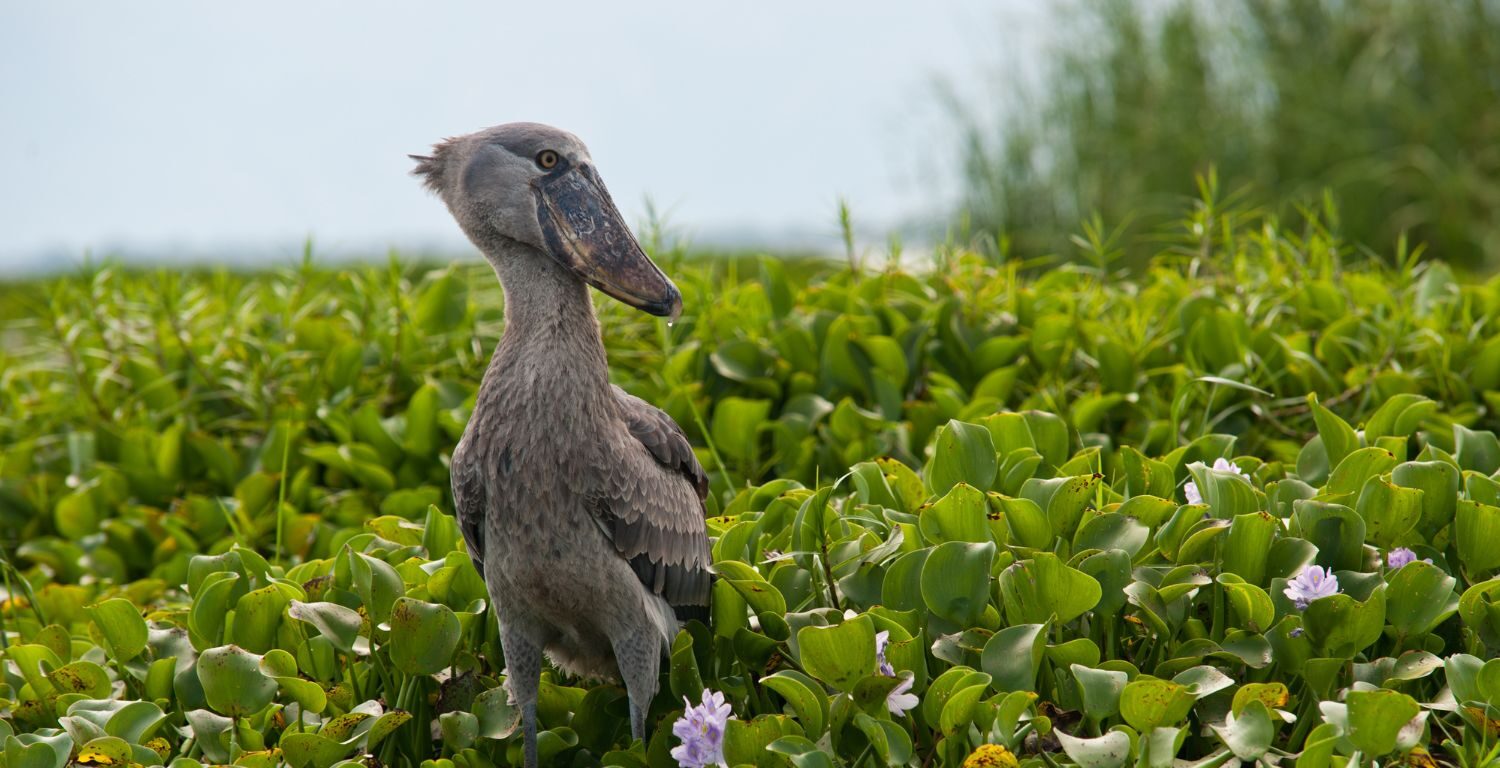
Situated just a 45-minute drive and motorized boat transfer from Entebbe, the sprawling Mabamba Swamp stands as Uganda’s most accessible and iconic wetland birding destination. This 2,424-hectare Ramsar Site is dominated by dense stands of papyrus and miscanthus grass, creating a pristine, protected sanctuary for the prehistoric Shoebill (Balaeniceps rex). Birding here is an intimate waterborne experience where visitors board small, traditional wooden canoes navigated by specialized local guides. Navigating the narrow marsh channels at dawn—ideally starting around 6:30 AM—offers an exceptional 85% success rate for finding these solitary giants as they stand entirely motionless while hunting for lungfish. Beyond the legendary Shoebill, a standard 4-hour morning excursion effortlessly yields between 40 and 60 distinct species to kickstart your checklist. Birders can regularly spot the striking, color-clashing Papyrus Gonolek, the secretive White-winged Warbler, Blue-breasted Bee-eaters, and the vibrant Malachite Kingfisher darting across the open water channels. Serving as the perfect, low-stress introduction to regional avian biodiversity, Mabamba delivers world-class, high-impact sightings within hours of arriving in the country.
Bwindi Impenetrable National Park
Voted consistently as Africa's premier birding destination, Bwindi Impenetrable National Park protects an ancient, high-altitude rainforest that serves as the ultimate global stronghold for Albertine Rift endemics. The park's steep, rugged terrain spans elevations from 1,160 to over 2,600 meters, creating distinct vertical ecological zones that harbor more than 350 resident bird species. Avian enthusiasts focus heavily on the high-altitude Ruhija sector, where a demanding 4-kilometer trek down the steep slopes to the Mubwindi Swamp trail offers the world's best chance to spot the critically endangered African Green Broadbill (Pseudocalyptomena graueri). The forest also protects 22 other Albertine Rift endemics, including the vibrant Regal Sunbird, Grauer's Broadbill, and the elusive Shelley's Crimsonwing. Transitioning to the lower-altitude Buhoma sector reveals mid-elevation specialists like Chapin's Flycatcher and Cassin's Hawk-Eagle. Because these pristine forests mirror the exact habitat of Uganda's endangered primates, serious birders can easily bundle intensive canopy searches with a rest-day mountain gorilla trek, utilizing the standard $800 USD permit to combine two of Africa's most profound wildlife experiences into one high-yielding trip.
Queen Elizabeth National Park
To experience sheer numbers and a massive concentration of African avian life, Queen Elizabeth National Park is unmatched, boasting over 600 recorded bird species within its 1,978 square kilometers. The park’s diverse ecosystems blend open savannahs, volcanic crater lakes, and rich wetlands, allowing birders to rapidly pile up sightings. The centerpiece of any itinerary here is a 3-hour double-decker boat cruise along the 32-kilometer-long Kazinga Channel, a natural waterway connecting Lake Edward and Lake George. The cruise brings travelers within mere feet of dense shorebird aggregations, allowing for clear photography of the localized African Skimmer (Rynchops flavirostris) skimming the water's surface in flocks. You will also look closely at massive colonies of Great White Pelicans, Saddle-billed Storks, Goliath Herons, and numerous migratory waders. Back on land, slow 4x4 game drives along the northern Kasenyi plains and Ishasha sector yield immediate, open-savanna rewards. Birders can easily track massive raptors like the Martial Eagle and the terrestrial Secretary Bird patrolling the short grass, making this park an essential, high-volume cornerstone of any comprehensive regional safari.
Murchison Falls & Kibale Forest
Pairing the sweeping open woodlands of Murchison Falls with the dense equatorial canopy of Kibale National Park provides an extraordinary contrast between classic savanna giants and secretive rainforest specialists. In Murchison Falls, Uganda's largest conservation area, birding along the Nile Delta tracks reveals iconic open-country species. Birders can easily view the massive Abyssinian Ground Hornbill patrolling in pairs, colonial Northern Carmine Bee-eaters hunting from low perches, and the spectacular Red-throated Bee-eater nesting in sandy river cliffs. Transitioning south to the lush 795-square-kilometer rainforest of Kibale Forest shifts the focus to elusive canopy and understory dwellers. Kibale protects 375 bird species, headlined by the notoriously difficult Green-breasted Pitta (Pitta reichenowi). Securing this lifer requires a stealthy 5:00 AM pre-dawn trek into the forest dampness to catch its brief, split-second wing-clapping display call. While scanning the upper branches for the massive Great Blue Turaco and the rare Afep Pigeon, birders are treated to the sounds of the jungle, making it seamless to pair world-class canopy birding with an afternoon chimpanzee tracking excursion.
Kenya (The Great Rift Valley)
Lake Nakuru National Park
Situated on the floor of the Great Rift Valley, Lake Nakuru National Park is a globally celebrated avian theater hosting over 450 distinct bird species. The park’s shallow, highly alkaline 45-square-kilometer lake basin creates the exact chemical conditions required for massive blooms of Spirulina platensis cyanobacteria, attracting enormous, shifting aggregations of Lesser and Greater Flamingos. While changing regional water tables have made these numbers variable, it remains a vital habitat where thousands of flamingos turn the shoreline a vibrant pink. This rich aquatic environment also supports high volumes of other waterbirds, including thousands of Great White Pelicans and Greater Cormorants. Moving away from the mudflats into the yellow-barked acacia woodlands and steep cliffs, birders can easily spot terrestrial specialists like the Ruppell's Robin-Chat, Schalow's Wheatear, and the Arrow-marked Babbler. Because the park is entirely fenced to protect its white and black rhinoceros populations, a standard 1-day game drive offers a safe, concentrated environment to observe everything from massive waterbird spectacles to predatory raptors, making it an essential, high-yield pillar of any Kenyan Rift Valley itinerary.
Kakamega Forest
Kakamega Forest stands as an invaluable ecological anomaly, representing Kenya’s only remaining patch of the ancient Guineo-Congolian rainforest that once stretched across Central Africa. Spanning roughly 240 square kilometers, this isolated fragment brings dozens of West African biome-specific species into Kenya, making it a mandatory stopover for birders aiming to maximize their national checklists. The forest harbors over 360 bird species, many of which are found nowhere else in the country. Walking the shaded interior paths alongside resident guides reveals spectacular canopy specialists like the massive Great Blue Turaco and the beautifully colored Blue-headed Bee-eater. The dense vegetation is also home to cryptic, highly sought-after insectivores, including the Turner's Eremomela and the Chapin's Flycatcher. Because the thick foliage blocks out much of the tropical sun, birding here requires moving slowly and tracking species primarily by their distinct calls. Dedicating 2 to 3 days to exploring the northern and southern sectors of this rainforest adds a completely distinct, Central African rainforest dimension to an otherwise savannah-dominated East African tour.
Maasai Mara National Reserve
While internationally famous for the million-strong wildebeest migration, the Maasai Mara National Reserve is equally elite as a world-class birding destination, protecting over 470 recorded bird species across its vast 1,510 square kilometers of open grassland and riverine forest. The Mara’s flat, boundless horizons offer unmatched visibility for tracking massive terrestrial birds and apex raptors. Driven by the seasonal influx of grazing herds, the reserve supports one of the highest densities of birds of prey on the planet; a single morning game drive can yield consecutive sightings of 5 to 7 distinct vulture species competing at a kill site, alongside the formidable Martial Eagle and Bateleur. Across the open plains, birders can spot the world's largest living bird, the Common Ostrich, sharing the short grass with the massive Kori Bustard and the prehistoric-looking Secretary Bird hunting for snakes. The dense thickets flanking the Mara and Talek Rivers add specialized riverine residents to the mix, including the Ross's Turaco and the Giant Kingfisher, proving that the reserve delivers a high-volume avian experience that fully matches its big-game reputation.
Arabuko Sokoke Forest
Located along the Kenyan coast near the beach enclave of Watamu, the 420-square-kilometer Arabuko Sokoke Forest is the largest remaining fragment of East African coastal dry forest, serving as a critical refuge for highly localized, globally threatened endemics. This unique, fragile habitat features distinct soil and vegetation zones, ranging from open Brachystegia woodlands to dense Cynometra thickets. For specialized birders, the ultimate targets are two range-restricted rarities: the Clarke’s Weaver (Ploceus golandi), which is almost entirely endemic to this forest block, and the tiny, endangered Sokoke Scops Owl (Otus ireneae). Spotting the owl requires a highly technical nocturnal or late-afternoon stakeout led by experienced site guides who know how to locate their preferred roosting holes in mature Brachylaena hardwood trees. The forest also protects other localized coastal specials, including the Amani Sunbird, Sokoke Pipit, and the beautifully patterned Fischer's Turaco. Spending 2 days navigating these humid tracks provides access to an isolated, coastal evolutionary pocket that cannot be replicated anywhere else on an East African safari.
How many days do I need to dedicate for Uganda Kenya birding safaris combined Bonanza
For a comprehensive Uganda and Kenya combined birding bonanza, you should dedicate 14 to 21 days. This timeframe lets you comfortably navigate both countries' diverse habitats and tick off hundreds of the over 1,000 recorded East African bird species without rushing.
A typical two-week to three-week itinerary generally breaks down as follows to maximize your birding checklist:
Kenya (7–10 days)
Focus on the Great Rift Valley lakes (like Lake Nakuru for flamingos and waterbirds), the open savannah of the Maasai Mara (for large raptors and grassland species), and the thick canopy of Kakamega Forest (for West African species extending east).
Uganda (7–11 days)
Cover the Mabamba Wetland near Entebbe (the prime spot to see the elusive Shoebill), Kibale Forest or Budongo Forest (for canopy and Albertine Rift endemics), and Bwindi Impenetrable Forest
When is the best time for Uganda Kenya birding safaris combined Bonanza
The window spanning from November to April is the undisputed peak for a combined Uganda and Kenya safari because it introduces millions of Palearctic and intra-African migrants into the regional baseline. The seasonal rains during this block trigger an explosion of insect life, causing resident birds to vocalize constantly and molt into their most brilliant breeding plumages. In Kenya, the Great Rift Valley lakes like Nakuru and Baringo swell with migratory waders and waterfowl, while Uganda's Mabamba Swamp and Queen Elizabeth National Park fill with incoming flyers.
If you want to balance this high avian diversity with easier ground logistics, December to February is the ultimate sweet spot. This short dry window keeps the migratory numbers high while clearing the skies and drying out the forest tracks, making it much easier to hike for gorillas in Bwindi or chimpanzees in Kibale.
Alternatively, if your goals lean heavily toward big game alongside your birding, the June to October dry season is ideal. This matches the timeline of the Great Wildebeest Migration in the Maasai Mara and keeps the trails dry, allowing you to easily pair classic savannah mammal viewing with focused regional birding.
Uganda and Kenya where should I begin birding from
If you are combining both countries, you should start your itinerary in Uganda.
Beginning at Entebbe International Airport puts you within 45 minutes of the Mabamba Swamp, allowing you to clear your most sought-after, non-negotiable target—the prehistoric Shoebill—on day one. From there, you can move systematically west into Uganda's dense, high-altitude equatorial forests like Kibale and Bwindi to pick up localized Albertine Rift endemics and primates on foot.
Once you cross eastward into Kenya, the landscape opens up into sweeping Rift Valley lakes and the Maasai Mara, making it far easier to scan open savannahs and lake margins from safari vehicles to cap off your checklist with massive waterbird spectacles, migrants, and large birds of prey.
Booking Uganda Kenya birding safaris combined Bonanza with us Roads of Adventure safaris
Ready to lock in the ultimate East African twitching experience? Partnering with Roads of Adventure Safaris streamlines your combined 5-to-28-day cross-border journey, with mid-range tailored packages ranging between $300 and $1,000 per person, per day. Their custom planning easily bridges the regional gaps, moving you from a silent wooden canoe tracking the prehistoric Shoebill in Uganda's Mabamba Swamp to scanning the flamingo-lined margins of Kenya's Great Rift Valley lakes or the raptor-heavy savannahs of the Maasai Mara.
