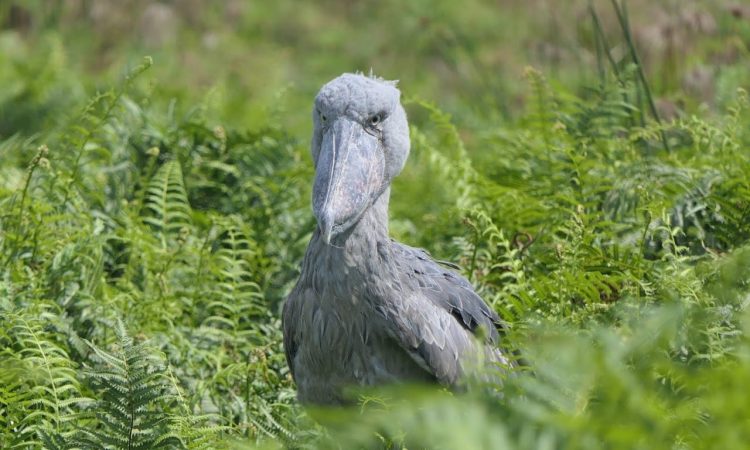
Uganda birding safari tours offer an unparalleled experience across diverse ecosystems, home to over 1,065 bird species. A typical 10-to-14-day itinerary costs between $1,500 and $3,500 per person, depending on lodging choices and added activities like gorilla trekking (which requires an $800 permit).
Key hotspots deliver remarkable sightings. At Mabamba Swamp, a 1-to-2-day excursion features motorized canoe rides to spot the elusive Shoebill. Venturing into Bwindi Impenetrable National Park for 7 to 10 days unlocks access to 24 Albertine Rift endemics, including the rare African Green Broadbill. Meanwhile, a 7-to-14-day sweep through Queen Elizabeth and Murchison Falls National Parks showcases savannah giants and waterbirds like the African Skimmer among over 600 recorded species. Finally, a 3-to-5-day trek in Kibale Forest targets the sought-after Green-breasted Pitta. For optimal trail conditions, book during the dry seasons from June to August or December to February.
1-day-perfect-mabamba-swamp-shoebill-stork-uganda-birding-safari
5-days-uganda-bird-watching-safari-lake-victoria-shores-and-lake-mburo
7-days-best-uganda-birding-safari-tour
8-days-best-uganda-birding-safari-and-wildlife-watching-tour-package
9-days-best-uganda-birding-safari-tour-from-swamps-to-savannah-eastern-route
9-days-classic-uganda-birding-safari-tour
11-days-uganda-birding-safari-and-primate-experience
12-days-uganda-birding-tour-looking-for-rift-valley-endemic-birds-west-circuit
14-days-classic-uganda-birding-safari-expedition
17-days-uganda-birding-safari-itinerary
19-days-best-photography-uganda-birding-safari-and-wildlife-adventure
21-days-uganda-birding-safari-extravaganza-to-best-uganda-safari-parks
30-days-best-uganda-birding-safari-extravaganza-and-wildlife-safari
Top Uganda safari tor destinations
1. Mabamba Swamp & Entebbe (1-2 Days)
Uganda birding safari tours frequently launch from the Entebbe area, making the nearby Mabamba Swamp an indispensable 1-to-2-day introductory fixture. Situated just 30 kilometers (~18 miles) advance of Entebbe International Airport, this sprawling 2,424-hectare Ramsar Site represents one of the most reliable and accessible locations in East Africa to encounter the prehistoric Shoebill (Balaeniceps rex). Local conservation associations manage specialized operations here, deploying a fleet of small wooden motorized canoes to navigate the labyrinth of narrow channels slicing through dense papyrus and miscanthus grass vegetation.
An ideal excursion commences at 6:30 AM to capitalize on cooler morning temperatures when target species are most active. Local expert guides, who possess an intimate baseline knowledge of the wetland’s territorial dynamics, maneuver the watercraft to locate the Shoebill as it stands motionless, hunting for lungfish in the shallow fringes. Statistics show that early morning outings yield a Shoebill sighting success rate exceeding 85%.
Beyond the iconic Shoebill, the specialized papyrus micro-habitat harbors an array of highly localized wetland specialists. Birders regularly clock 40 to 60 distinct species in a single 4-hour morning session. Key highlights include the striking, color-clashing Papyrus Gonolek flitting through the lower stalks, the secretive White-winged Warbler, and the Blue-breasted Bee-eater. Overhead, look for the African Marsh Harrier and the swift Malachite Kingfisher diving into open pockets of water. For travelers operating on a tight timeline, this short, impactful excursion serves as a highly efficient introduction to regional avian biodiversity, delivering world-class sightings within hours of arrival.
2. Bwindi Impenetrable & Mgahinga National Parks (7-10 Days)
For serious birders tracking global lifers, a 7-to-10-day segment dedicated to the afro-montane forests of Bwindi Impenetrable and Mgahinga National Parks is the absolute crown jewel of Uganda birding safari tours. This rugged, high-altitude region spans elevations from 1,160 to over 2,600 meters (3,800 to 8,500 feet), creating distinct vertical ecological zones. Bwindi alone supports more than 350 resident bird species, crucially including 23 of Uganda’s 24 Albertine Rift endemics—species found nowhere else on earth outside this specific geological fracture.
Navigating these dense, ancient forests requires multi-hour trail treks. The ultimate prize for many avian enthusiasts is the elusive, critically endangered African Green Broadbill (Pseudocalyptomena graueri), which is most reliably spotted nesting around the high-altitude Mubwindi Swamp in the Ruhija sector. Treks to this area involve an energetic 6-to-8-kilometer walk on steep forest terrain. Other primary avian targets include the dazzling Shelley’s Crimsonwing, Grauer's Broadbill, Handsome Francolin, and the Regent Sunbird.
Because this dense habitat mirrors the exact territory occupied by endangered primates, these itineraries seamlessly accommodate a diversion for Mountain Gorilla trekking. A standard gorilla permit costs $800 USD per person, and the activity can be layered into a rest day between intensive birding sessions. Combining both activities maximizes the value of your park entry fees. In Mgahinga, birders focus on the bamboo zones around the volcanic slopes to secure sightings of the Rwenzori Turaco and the Cape Robin-Chat, ensuring a highly productive, data-heavy checklist by the end of the 10-day mountain circuit.
3. Queen Elizabeth National Park & Murchison Falls (7-14 Days)
To capture the sheer volume and diversity of African avian life, comprehensive Uganda birding safari tours allocate a substantial 7 to 14 days to the sweeping savannahs, river basins, and woodlands of Queen Elizabeth and Murchison Falls National Parks. Queen Elizabeth National Park holds one of the highest avian counts on the African continent, with over 600 recorded bird species within its 1,978 square kilometers. Meanwhile, Murchison Falls adds a dramatic backdrop where the River Nile forces its way through a narrow 7-meter gorge before fanning out into a delta rich with avian life.
The experiential core of this region revolves around double-decker boat cruises and open-sided 4x4 game drives. A 3-hour boat launch along the 32-kilometer Kazinga Channel brings birders within mere feet of dense shorebird aggregations. Here, you can reliably photograph the endangered African Skimmer (Rynchops flavirostris) skimming the water's surface, alongside massive flocks of White-pelicans, Saddle-billed Storks, and Goliath Herons—the world's largest heron, standing up to 1.5 meters (5 feet) tall.
Transitioning to Murchison Falls, the focus shifts toward the Albert Nile delta cruise. This specific 4-to-5-hour boat trip is highly regarded for yielding sightings of the Shoebill alongside thousands of migratory waders. On the savannah game drives through the northern tracks of Murchison, birders can easily register 100+ species a day, including the Abyssinian Ground Hornbill, Secretary Bird, and the spectacular Red-throated Bee-eater, which nests in colonies along the sandy river cliffs. The sheer variety of habitats ensures your daily species count accumulates rapidly.
4. Kibale Forest & Budongo Forest (Royal Mile) (3-5 Days)
Concentrating on equatorial rainforest specialists, a 3-to-5-day expedition through Kibale National Park and the Budongo Forest Reserve’s famous "Royal Mile" provides access to some of West African biome species at their easternmost limits. Kibale Forest covers 795 square kilometers and hosts 375 bird species, while Budongo's Royal Mile—a historically protected, wide forestry track extending for approximately 1.6 kilometers—is widely celebrated as one of the premier field-birding walking tracks in the entirety of Africa due to its wide, open canopy view.
The primary target in Kibale is the notoriously difficult Green-breasted Pitta (Pitta reichenowi). Finding this species requires a highly coordinated 5:00 AM pre-dawn trek into the forest dampness, where guides listen for its brief, distinct 0.5-second flapping display call. This method delivers a localized success rate of roughly 60-70% during the peak breeding months of June and July.
Transitioning north to the Royal Mile in Budongo, the flat, cleared track allows birders to walk effortlessly while scanning the mid-tier and upper canopies. This specific 1.6-kilometer stretch is legendary for producing localized specials such as the Cassin's Hawk-Eagle, Afep Pigeon, Chocolate-backed Kingfisher, and the tiny African Dwarf Kingfisher. Furthermore, because Kibale is home to the highest density of primates in Africa, birders can easily pair a morning of canopy birding with an afternoon Chimpanzee tracking excursion, creating a comprehensive forest wildlife experience within a highly consolidated 3-to-5-day timeframe.
Where to see the Albertine endemic birds on Uganda birding safari tour
Bwindi Impenetrable National Park
As Africa's premier birding destination, Bwindi protects an ancient rainforest that serves as the ultimate stronghold for Albertine Rift endemics, harboring 23 of the 24 species recorded in Uganda. The park’s steep elevation gradient, spanning 1,160 to 2,607 meters, creates distinct ecological niches. Serious birders head straight to the high-altitude Ruhija sector to tackle the grueling Mubwindi Swamp trail, a 4-kilometer descent where the global prize is the critically endangered African Green Broadbill. In the lower-altitude Buhoma sector and the riverine forest strip known as the "Neck," the canopy opens up to reveal mid-altitude specials like the elusive Chapin’s Flycatcher and Cassin’s Hawk-eagle. Over 350 species live here, making a 3-to-4-day stay essential to fully work through the altitudinal layers.
Mgahinga Gorilla National Park
Sitting high on the volcanic slopes of the extreme southwest at elevations scaling up to 4,127 meters, Mgahinga offers a distinctly different, afro-alpine birding experience. The park’s primary birding artery is the Gorge Trail, a dramatic 3-to-4-hour hike that cuts through dense bamboo zones and montane forests. This specific corridor is highly reliable for tracking down the spectacular Rwenzori Turaco, a vibrant bird whose crimson wing patches flash brilliantly against the green canopy. Along the forest floor and lower bamboo stalks, sharp-eyed guides regularly spot the secretive Kivu Ground Thrush, Handsome Francolin, and the striking Rwenzori Batis. Despite being Uganda's smallest national park at just 33.7 square kilometers, its localized bamboo specialists provide an invaluable addition to any endemic-focused checklist.
Semuliki National Park
Positioned on the floor of the Albertine Rift Valley, Semuliki represents an ecological extension of the vast Congo Basin’s Ituri Rainforest. This unique geographic positioning brings over 400 bird species within Uganda’s borders, including several Central African biomes found nowhere else in the country. Birding here involves navigating the low-lying, humid ironwood forests along the Kirumia Trail, a challenging 8-kilometer route. It is the premier location to tick off enigmatic species like the Capuchin Babbler, Dwarf Honeyguide, and the massive Black-casqued Hornbill. The hot springs of Sempaya provide an excellent backdrop for observing specialized canopy dwellers, ensuring that even a brief 2-day detour adds a distinct Central African flair to your overall safari list.
Rwenzori Mountains National Park
The legendary "Mountains of the Moon" present a rugged, high-altitude wilderness where birding maps directly onto demanding alpine trekking. Rising to over 5,109 meters, this UNESCO World Heritage site features unique giant lobelia and groundsel zones wrapped in persistent mist. Avian enthusiasts generally focus on the lower loop trails between 2,000 and 3,000 meters, where specialized afro-montane residents thrive. Walking through the moss-draped heather forests offers chances to spot the Slender-billed Starling feeding in the canopy, alongside the brilliantly iridescent Blue-headed Sunbird and the active Stripe-breasted Tit. Because of the steep terrain and unpredictable mountain weather, a dedicated 3-day low-loop trek is recommended to safely target these high-altitude specialists.
Echuya Forest Reserve
Tucked away in the densely populated highlands between Kisoro and Kabale, Echuya Forest Reserve is a critical, compact conservation gem spanning roughly 34 square kilometers. Despite its small size, it is recognized globally as an Important Bird Area (IBA) due to its unique high-altitude bamboo and swamp habitats sitting at 2,500 meters. The reserve's central feature, the Muchuya Swamp, runs for about 7 kilometers through the forest and serves as a vital refuge for the endangered Grauer’s Warbler. Walking the trail that transects the forest allows birders to easily search for the Collared Apalis, Regent Sunbird, and Archer’s Robin-Chat. Because it sits directly along the main highway, it functions as a highly productive 3-to-4-hour roadside birding stopover when transferring between Bwindi and Mgahinga.
When is the best time to see migratory and seasonal birds in Uganda
The best time to see migratory and seasonal birds in Uganda is November to April, when thousands of Palearctic (Europe and Asia) and intra-African migrants join resident species. During this period, bird diversity peaks across savannahs, wetlands, and forests.
November to April (Peak Migration)
This window marks the absolute zenith of avian diversity in Uganda, driven by the arrival of millions of Palearctic migrants fleeing the northern hemisphere's winter. Traveling across Europe and Asia, these birds settle into Uganda's rich wetlands and savannahs, boosting the country's baseline species count. The timing overlaps with the region's main rainy periods, which triggers an explosion of insect life and causes the resident birds to molt into their brilliant, colorful breeding plumage. Birders can watch enormous flocks of European Bee-eaters hunting over the savannahs, alongside raptors like the Steppe Eagle and tiny passerines like the Willow Warbler feeding in the acacia woodlands.
December to February (The Sweet Spot)
This short, dry window offers the most comfortable field conditions by blending peak migratory presence with excellent weather. Because rainfall drops significantly, the forest tracks in dense hotspots like Bwindi Impenetrable and Kibale National Parks dry out, making the steep, muddy terrain far easier to navigate. The clear skies and warm temperatures keep birds highly active throughout the morning. Travelers during these three months get the best of both worlds: they can easily tick off northern hemisphere migrants while cleanly tracking down resident forest specialists, like the Green-breasted Pitta, without fighting heavy seasonal downpours.
July to September (Intra-African Migrants)
While the northern hemisphere migrants are away, this long dry season sees the arrival of intra-African migrants moving across the continent. Driven by weather shifts south of the equator, species like the endangered Blue Swallow and various specialized cuckoos move into Uganda's open spaces. The dry weather drops water levels in key basins, concentrating massive bird numbers along permanent water sources. A boat trip down Queen Elizabeth National Park's Kazinga Channel or a canoe ride through Mabamba Swamp during these months offers crowded, spectacular views of resident waterbirds and African migrants sharing the shrinking shoreline.
How long can is stay on Uganda birding safari tour
Booking a full-board itinerary through a local operator streamlines your entire experience by seamlessly bundling standard 4x4 safari transport, specialized tracking guides, all park entry fees, and daily accommodations into one smooth package. This all-inclusive approach allows you to efficiently map out a robust 5-to-15-day route connecting key ecological baselines: a quick 1-hour drive out of Kampala lands you at Mabamba Swamp for specialized canoe excursions targeting the prehistoric Shoebill, which effortlessly pivots into a comprehensive push toward the sprawling savannahs of Queen Elizabeth National Park to cross-reference 600+ species along the Kazinga Channel boat launch, before finally winding up down in the deep afro-montane canopy of Bwindi Impenetrable Forest. By relying on custom, purpose-built birding bases right at the park borders—such as the budget-friendly, community-run Buhoma Community Rest Camp in the northern sector or the mid-range Gorilla Mist Camp nestled up in the high-altitude Ruhija ridge—you gain immediate, first-light trail access to maximize your daily species checklists without losing valuable field time to long transfers.
Is patience required when spotting birds on Uganda safari
Exercising deep, focused patience is an absolute cornerstone of successful Uganda birding safari tours, particularly when tracking down secretive target species that intentionally seek out heavy, defensive cover. While the country’s checklist boasts a massive baseline of over 1,080 bird species, encountering iconic prizes requires a willingness to slow down, sit quietly, and methodically scan distinct habitats for long stretches without movement. For instance, attempting to spot the solitary, prehistoric Shoebill (Balaeniceps rex) across the sprawling 165-square-kilometer Mabamba Wetland or within the vast papyrus-lined channels of the Nile Delta at Murchison Falls necessitates a specialized approach. Birders must board small, traditional wooden motorized canoes at first light—typically around 6:30 AM—and glide silently into the dense, narrow channels of vegetation. Success hinges on waiting for hours alongside expert local guides who listen for subtle rustles or territorial cues, as these enormous birds stand entirely motionless like statues for immense blocks of time while camouflaged in the reeds waiting to strike lungfish. Whether you are floating silently in a swamp or listening intently for the rare, split-second wing-clapping display call of a Green-breasted Pitta in the pre-dawn dampness of Kibale Forest, treating the safari as a slow, deliberate stakeout rather than a rushed game drive is what ultimately allows you to cross these rare lifers off your list.
Do I need a specialist Uganda birding safari guide for Uganda birding tour
Hiring certified specialists is the single most critical factor for success on Uganda birding safari tours, as navigating complex bio-networks requires separating over 1,000 distinct species by microscopic call variations. To manage the country's diverse landscapes, itineraries rely on a multi-tiered system combining a designated Specialist Driver-Guide with local Site Guides. Your dedicated driver-guide—typically costing between $100 and $150 per day—manages the logistics of your 4x4 safari vehicle while tracking broader regional trends across savannah and forest borders. Once you arrive at highly complex, localized micro-habitats, they partner with resident Site Guides, who require a separate community conservation fee of roughly $30 to $50. At Mabamba Swamp, for example, these local experts track the exact, real-time morning nesting perches of the elusive Shoebill (Balaeniceps rex) across a vast 2,424-hectare wetland, while on the flat 1.6-kilometer stretch of the Royal Mile in Budongo Forest, they pinpoint specific mid-tier branches favored by the Chocolate-backed Kingfisher. This collaborative approach ensures that you rapidly identify cryptic forest and wetland species by sight and sound, properly calibrate high-magnification spotting scopes, and avoid missing rare lifers hidden in the dense equatorial canopy.
Is roadside birding acceptable on Uganda birding safari tours
Utilizing roadside margins is an exceptional strategy on Uganda birding safari tours, as public transit corridors cutting directly through primary reserves frequently function as open, sunlit ecotones that draw hidden species out from the dense interior. However, executing this effectively requires strict adherence to Uganda Wildlife Authority (UWA) structural rules. First, any roadside stops inside official boundaries dictate that you possess valid park entry permits—which stand at $40 per day for savannah spots like Queen Elizabeth and $80 per day for montane strongholds like Bwindi Impenetrable National Park for foreign non-residents. Furthermore, standard vehicle etiquette dictates that you cannot casually go on foot down these public transit roads unsupervised; all birding must strictly occur from inside or immediately adjacent to your 4x4 safari vehicle. If you want to systematically bird on foot along highly productive roadside corridors—such as the high-altitude bamboo zone flanking the highway in Mgahinga or the mountain ridges of Bwindi—your driver-guide must formally arrange an official armed UWA ranger escort, which carries a standard guided walk fee of $15 to $20 per session. This protocol ensures you can safely deploy high-magnification spotting scopes and log roadside lifers like the Doherty's Bushshrike or the Rwenzori Double-collared Sunbird without disrupting park conservation guidelines.
What are the popular areas for roadside birding on Uganda birding safari tour
Roadside birding in Uganda is exceptional due to the country's diverse habitats transitioning right along main transit routes. Key hotspots for convenient sightings include the Mabira Forest canopy on the Kampala-Jinja highway, the open tracks of Queen Elizabeth National Park, the Busingiro and Kaniyo Pabidi sections of Budongo Forest, and the approach roads to Murchison Falls National Park
Mabira Forest Reserve (Jinja-Kampala Highway)
The Jinja-Kampala highway slices directly through the heart of Mabira Forest Reserve, creating a 20-kilometer roadside ecotone where the dense rainforest canopy opens to the sky. This heavily trafficked paved corridor is highly effective for spot-and-stop birding without paying full forest entry fees, though stepping past the reserve line incurs a modest 20,000 UGX (~$5.50 USD) foreign tourist fee. Pulling onto the wide shoulders with a 4x4 safari vehicle allows birders to deploy scopes directly into the upper mid-tier canopy. From the roadside, you can easily log large, vocal frugivores like the spectacular Great Blue Turaco and the Black-and-white Casqued Hornbill competing for wild figs. The open edge also provides unparalleled visibility for colorful, active canopy dwellers, including the Yellow-throated Tinkerbird and the Grey-throated Barbet, which are notoriously difficult to isolate from within the dark forest interior.
Queen Elizabeth National Park (Kasese-Ishasha-Mweya Roads)
The public transit roads weaving through Queen Elizabeth National Park—specifically the paved Kasese highway and the dirt Mweya-Ishasha tracks—offer world-class savanna roadside birding. Because these routes cut across vast open plains and volcanic crater lips, visibility extends for hundreds of meters. A standard entry permit of $40 per 24 hours covers your vehicle's transit through these sectors. Driving slowly at a capped 40 km/h pace regularly yields immediate sightings of massive terrestrial raptors, such as the Secretary Bird stalking through short grass and the formidable Martial Eagle perched atop acacia branches. Furthermore, the public road crossing the Katunguru Bridge directly over the Kazinga Channel allows birders to park safely on the margins to look for specialized papyrus residents, including the striking Papyrus Gonolek and the Pied Kingfisher hunting along the shoreline reeds.
Budongo Forest Reserve (Masindi-Butiaba Road)
The Masindi-Butiaba Road is a legendary unpaved transit route that cuts directly through the mahogany stands of the Budongo Forest Reserve as it drops down toward the Albertine Rift escarpment. This public dirt track acts as a wide, sunlit clearing within a dense canopy, allowing birders to walk or slowly drive while scanning the exposed mid-story branches. This specific corridor is highly reliable for picking out localized forest kingfishers that hunt from open roadside perches, most notably the stunning Chocolate-backed Kingfisher and the Blue-breasted Kingfisher. As you follow the road further west where it leaves the forest and plunges down the sheer Butiaba Escarpment, the habitat radically transitions into dry bushland. This steep altitudinal drop creates powerful thermal updrafts, transforming the roadside cliffs into an elite viewing platform for migratory and resident raptors, including the Fox Kestrel and Lizard Buzzard.
Murchison Falls National Park (Paraa Area Roads)
The complex network of dirt transit tracks webbed across the northern sector of Murchison Falls National Park—extending out from the Paraa ferry hub—provides a phenomenal roadside theater for open-woodland and savanna specialists. Navigating these tracks requires a standard park entry fee of $45 per day for foreign non-residents. The wide, cleared clearance on either side of these dirt tracks makes it incredibly easy to spot large, charismatic species without ever leaving the vehicle. Birders frequently encounter the massive Abyssinian Ground Hornbill patrolling the tracks on foot in pairs, alongside brilliant colonial nesters like the Northern Carmine Bee-eater using low roadside shrubs as hunting perches to catch insects kicked up by passing vehicles. The open visibility along these tracks also allows for rapid, consecutive tallies of various specialized starlings, such as the iridescent Lesser Blue-eared Starling.
Entebbe Botanical Gardens & Entebbe-Kampala Road
Positioned right on the shores of Lake Victoria just 15 minutes from the international airport, the immediate roadside perimeters of the Entebbe-Kampala tracks and the historic Entebbe Botanical Gardens offer immediate avian returns. The gardens carry a brief 20,000 UGX card-only entry fee, but its mature, towering tree canopies overhang the public walkways and adjacent roads seamlessly. This urban-nature interface allows travelers to clock major lifecycle additions within hours of landing. Scanning the canopy from the paved edges quickly reveals specialized weavers, such as the Slender-billed Weaver, woven nests of the Vieillot's Black Weaver, and the vocal Yellow-throated Leaflove moving through the lower scrub. The flowering trees along these boundaries also act as major magnets for iridescent sunbirds, allowing birders to reliably log the Superb Sunbird and Red-chested Sunbird at eye level.
What kind of Vehicle is recommended to hire for Uganda birding safari tour
For a birding safari in Uganda, you need a custom 4x4 Safari Land Cruiser or an extended 4x4 Safari Van. These vehicles feature high-clearance, pop-up roofs for 360-degree viewing, and large, sliding, dust-proof windows that are ideal for scanning the canopy and using heavy camera lenses.
Prioritize vehicles and agencies that provide these specific features
Window Seats for Everyone
Securing a dedicated window seat for every passenger is a non-negotiable requirement when booking a Uganda birding safari tour, as long hours of tracking require unobstructed, instant lines of sight. In standard tourist transport, middle seats severely limit your field of view and block your ability to rapidly swing a high-magnification lens or heavy pair of binoculars toward a sudden movement. To prevent this, professional birding itineraries carefully match group sizes to custom 4x4 configurations. Custom-built safari 4x4 vehicles typically come in two main profiles: a standard 6-to-9-seater safari van or an extended 4-to-6-seater 4x4 Land Cruiser. By enforcing a strict policy where vehicles are never filled to maximum capacity, operators ensure that each birder has independent access to a large slide-window. This arrangement allows you to effortlessly track fast-moving canopy flocks or spot a roadside special like the Doherty's Bushshrike without having to scramble over fellow passengers, turning long transit drives between remote hotspots like Bwindi and Queen Elizabeth into highly productive, low-stress field observation sessions.
Pop-Up Roofs
A customized pop-up hatch or roof structure is an indispensable mechanical feature on a Uganda birding safari tour, transforming your 4x4 vehicle into an elevated, mobile observation blind. When navigating the open tracks of savanna environments like Murchison Falls or scanning the dense forest edges along the Masindi-Butiaba road, trying to look out of a standard window limits your upward vertical field of view to just a few degrees. A pop-up roof solves this constraint by allowing multiple birders to stand upright simultaneously, providing a clear 360-degree unobstructed view over the vehicle’s frame. This elevated vantage point is particularly vital for tracking high-flying raptors like the Martial Eagle or scanning deep into thick marshlands where tall papyrus stalks otherwise block your line of sight from a seated position. Furthermore, the sturdy metal edges of an open pop-up roof provide a rock-solid, stable resting surface for balancing heavy beanbags, which are essential for stabilizing high-magnification spotting scopes and telephoto lenses when tracking elusive targets at a distance.
Power Inverters
The intensive nature of modern wildlife photography means a Uganda birding safari tour will rapidly deplete your electronic gear, making built-in vehicle power inverters an absolute necessity. A full day of field birding involves constant camera auto-focus tracking, image stabilization, and electronic viewfinder usage, which easily drains standard lithium-ion camera batteries within a few hours. Vehicles outfitted with heavy-duty 12V to 240V power inverters convert the vehicle's alternator energy into stable, multi-plug AC current outlets directly inside the passenger cabin. This configuration allows you to safely charge camera batteries, portable power banks, laptop computers, and electronic field guide tablets while traveling between destinations. Instead of waiting until you reach your evening eco-lodge—where power grids can be intermittent or reliant on limited solar windows—you can continuously swap and refresh your gear on the move. Having access to continuous, on-board charging ensures you never miss a rare lifecycle sighting, such as a Shoebill striking its prey, due to an unexpected low-battery warning.
Fridge/Cooler
Spending long, intense hours in remote equatorial microclimates means an integrated electrical fridge or a heavily insulated cooler box is essential for maintaining field endurance on a Uganda birding safari tour. High-intensity birding sessions often require tracking targets through humid, low-lying environments like Semuliki National Park or the sun-baked plains of Queen Elizabeth, where afternoon temperatures routinely climb above 30°C (86°F). To maximize field time, specialized itineraries utilize packed lunches and require a reliable supply of fresh drinking water to prevent dehydration over a 10-to-12-hour day. Safari vehicles equipped with built-in 12V compressor fridges or tightly sealed ice coolers ensure that fresh food items, electrolyte refreshments, and water remain chilled throughout the journey. This onboard climate-controlled storage prevents packed meals from spoiling under the tropical heat and ensures that your guiding team can execute extended, remote stakeouts deep in the bush without needing to break away from an active birding hotspot to search for supplies at a distant trading center.
Dry season and wet season which is better for Uganda birding safari tour
Choosing between the wet and dry seasons comes down to a direct tradeoff between maximizing your raw species count or prioritizing comfortable, predictable field conditions.
If your primary goal is to build the largest possible checklist, the wet seasons spanning from March to May and October to November are unmatched. The heavy rains trigger an immediate explosion of insect life and dense vegetation growth, which prompts resident birds to vocalize constantly and molt into their most brilliant, colorful breeding plumages. More importantly, these months overlap with the arrival of millions of Palearctic migratory birds traveling from Europe and North Africa between November and April, vastly expanding the variety of species you can spot in a single day.
Conversely, if you prefer smooth logistics and easier hiking, the dry intervals from June to September and December to February are the smarter choice. Because rainfall drops significantly, the unpaved dirt roads connecting remote sectors remain stable, and steep forest trails in hotspots like Bwindi Impenetrable National Park dry out and become far safer to climb. Opting for the dry months drastically reduces the chances of a sudden tropical downpour interrupting your field sessions, making it the ideal window if you plan to combine intensive birding with a demanding trek to see the mountain gorillas.
What are the recommended lodging for Uganda birding safari tour
Top-rated birding safari lodges in Uganda are strategically located near key biodiversity hotspots. Prime choices for a birding tour include Mweya Safari Lodge (Queen Elizabeth National Park), Mahogany Springs Lodge (Bwindi), Primate Lodge (Kibale), and Rwakobo Rock (Lake Mburo)
1. Entebbe & Mabamba Swamp (The Shoebill Start)
- Luxury: Entebbe Protea Hotel – Perched right on the shores of Lake Victoria, this upscale base offers smooth, comfortable logistics for launching early morning motorized canoe expeditions to Mabamba Swamp to target the prehistoric Shoebill.
- Mid-range/Budget: Boma Guest House Entebbe – A charming hotel set within lush, mature tropical gardens that are highly active with local sunbirds and weavers, making it an exceptionally popular and relaxing landing spot for birders recovering from international flights.
2. Kibale National Park (Chimpanzees & Canopy Specialists)
- Luxury: Primate Lodge Kibale – Tucked deep inside the national park boundary right next to the official Kanyanchu tracking briefing point, this lodge offers a seamless forest immersion where you can easily spot canopy dwellers right from your private veranda.
- Mid-range: Turaco Treetops – Positioned right on the forest boundary, this lodge features elevated wooden decks and large windows that function as excellent, eye-level viewing platforms for scanning the upper canopy for specialized forest residents.
3. Queen Elizabeth National Park (Savannah & Waterbirds)
- Luxury: Mweya Safari Lodge – Set on a prominent peninsula directly overlooking the 32-kilometer Kazinga Channel, this lodge offers spectacular, panoramic views of dense waterbird aggregations and provides instant access to the boat launch docks.
- Mid-range: Kasenyi Safari Camp – Elevated on spacious wooden platforms amidst the open savannah, this camp places you right in the heart of the Kasenyi plains, where you can watch raptors and large terrestrial birds moving through the short grass.
4. Bwindi Impenetrable National Park (Albertine Rift Endemics)
- Luxury: Mahogany Springs Lodge – Flanking the pristine riverine forest edge of the Buhoma sector, its sprawling, manicured gardens and open canopy margins provide an elite setting for picking out mid-altitude Albertine Rift endemics.
- Mid-range: Gorilla Mist Camp – Nestled up on the high-altitude forest ridge of the Ruhija sector, this quiet camp offers a highly productive, chilly mountain base for early morning walks down the trail toward the Mubwindi Swamp in search of the rare African Green Broadbill.
5. Lake Mburo National Park (Acacia & Wetland Specialists)
- Mid-range: Rwakobo Rock – Characterized by private cottages set around a massive granite outcrop, this lodge offers sweeping views of the surrounding acacia woodlands, making it a hotspot for target species like the red-faced barbet.
- Luxury: Mihingo Lodge – Celebrated for its eco-luxury design, this expansive property features a central infinity pool and open-air dining area that overlook a busy valley waterhole, allowing you to easily pair a meal with sightings of visiting waterbirds and mammals.
What to pack for Uganda birding safari tours
Preparing for a specialized Uganda birding safari tour requires balancing high-performance optical gear with protective, low-impact field clothing to handle radically different microclimates. Your electronic and optical baseline should center around crisp, weather-sealed 8x42 or 10x42 binoculars coupled with a high-speed 100-400mm or 150-600mm telephoto camera lens to pull hidden canopy targets into focus. To avoid carrying heavy text volumes on the trail, download the comprehensive eGuide to Birds of East Africa app—the interactive digital companion to Stevenson and Fanshawe’s master guide covering over 1,300 regional species—along with a high-capacity 20,000mAh power bank and a Type G square-pin adapter to keep your equipment consistently charged via your vehicle's integrated 12V inverter.
For apparel, pack moisture-wicking long sleeves and trousers exclusively in neutral earth tones like khaki and olive green. It is critical to avoid black and dark blue tones, as these deep colors actively attract biting tsetse flies in areas like Murchison Falls and Queen Elizabeth National Park. Additionally, you must completely skip military camouflage pattern styles, as wearing them is strictly illegal for civilians in Uganda. Pair your clothing with a thoroughly broken-in pair of waterproof hiking boots to navigate the steep, slippery inclines of the Albertine Rift, a packable 3000mm-rated waterproof rain jacket, and durable leather gardening gloves to safely grab onto thorny undergrowth during intensive forest scrambles.
Finally, you must satisfy mandatory border crossing and field health protocols to ensure a seamless trip. This means packing your physical, official Yellow Fever Vaccination Certificate to present at immigration, alongside a high-strength 30%+ DEET repellent to shield against malaria vectors in humid wetland zones like Mabamba Swamp and Semuliki. Combining these specific medical preparations with robust travel insurance and a well-stocked wilderness first-aid kit protects your health, allowing you to focus entirely on checking off rare African lifers.
Booking Uganda birding safari tours with us Roads of Adventure safaris
Ready to lock in your next big trip? Uganda birding safari tours with Roads of Adventure Safaris are fully customizable, starting any day of the week with flexible, mid-range budgets ranging from $300 to $1,000 per person, per day. Whether you want a quick 2-day cruise through Mabamba Swamp for the Shoebill or a grand 36-day sweep targeting Albertine Rift endemics, your route can be completely tailored.
