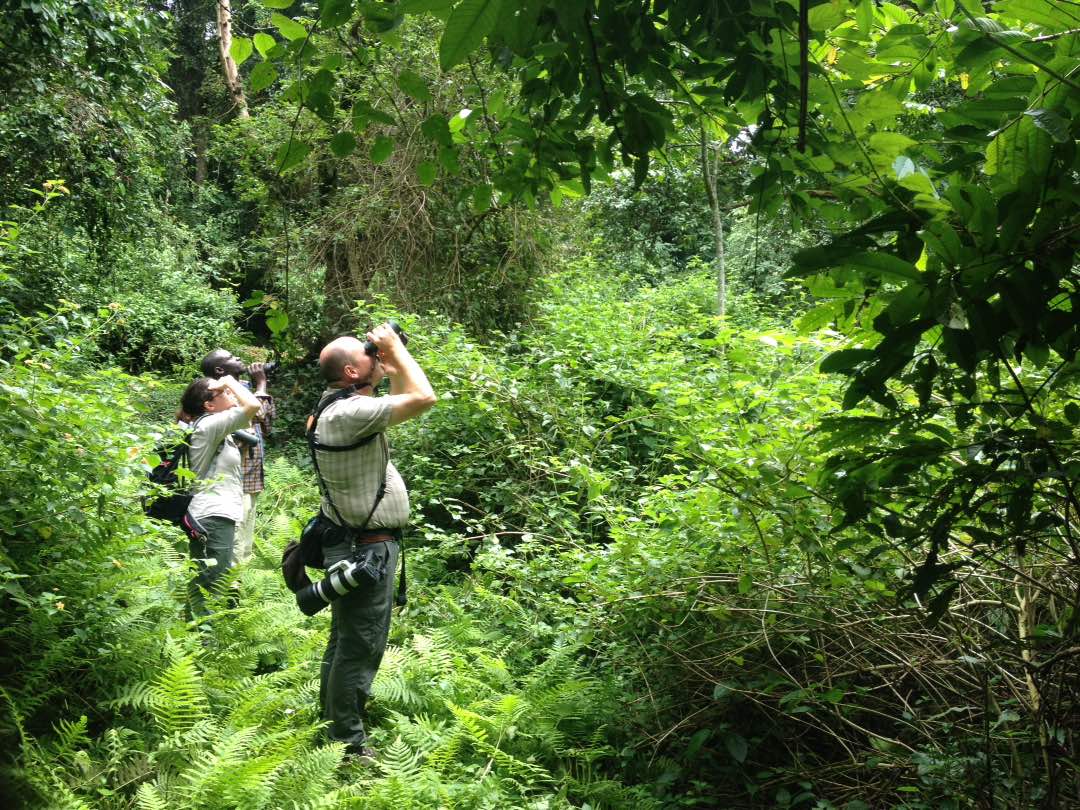
Budongo Forest, part of Murchison Falls National Park, is a premier Ugandan birding destination with over 360 species, including rare Guinea-Congo biome specialists. The top attraction is the "Royal Mile," offering excellent sightings of Chocolate-backed Kingfisher, Puvel's Illadopsis, and various canopy-dwelling birds.
30-days-best-uganda-birding-safari-extravaganza-and-wildlife-safari
25-days-complete-uganda-birding-safari-extravaganza-with-wildlife-viewing
22-days-best-uganda-primate-and-birding-safari-adventure
21-days-uganda-birding-safari-extravaganza-to-best-uganda-safari-parks
20-days-uganda-birding-safari-to-uganda-national-park
20-days-uganda-birding-safari-wildlife-gorilla-and-chimpanzee-tracking
14-days-classic-uganda-birding-safari-expedition
12-days-uganda-birding-tour-looking-for-rift-valley-endemic-birds-west-circuit
10-days-best-uganda-birding-safari-and-wildlife-experience
Key Birding Spots & Species
The Royal Mile
The Royal Mile, located in the Busingiro sector of Murchison Falls National Park, is renowned as a premier birding destination. This stretch of road is celebrated for its incredible bird density, offering birdwatchers a chance to see a variety of species within a compact area. Among the highlights are the striking Chocolate-backed Kingfisher, the diminutive African Dwarf Kingfisher, and the elegant Yellow-footed Flycatcher.
Birders can also look forward to spotting the Ituri Batis, known for its vibrant colors, and the impressive White-thighed Hornbill, which adds a distinctive character to the avian community. The Blue-breasted Kingfisher, with its vivid plumage, is another target species in this region, making for beautiful observations.
The diverse habitats along the Royal Mile—ranging from wetlands to dense forests—create the perfect environment for both common and rare bird species. Photographers will find ample opportunities as the area provides open sections along the trails, enhancing their chances of capturing stunning images.
Birding here is best done in the early morning or late afternoon when birds are most active. Engaging local guides can further enrich the experience, as their expertise and knowledge regarding bird behavior allow for more successful sightings. Whether you are a seasoned birdwatcher or a novice eager to learn, the Royal Mile offers an unforgettable birding adventure in Uganda.
Kaniyo Pabidi
Kaniyo Pabidi is another remarkable birding hotspot located within the Murchison Falls Conservation Area. Renowned for its diverse canopy, this site provides an excellent vantage point for birdwatchers hoping to glimpse a variety of species. The unique ecosystem supports numerous birds, including the elusive Black-eared Ground-thrush and the vibrant Yellow-crested Woodpecker.
Additionally, birders can look forward to spotting the Crested Guineafowl, often found foraging in the underbrush, showcasing the rich diversity of the area. Kaniyo Pabidi also boasts the rare Puvel’s Illadopsis, a species known for its mysterious presence, further establishing this location as a must-visit destination for serious birders in East Africa.
The lush rainforest surrounding Kaniyo Pabidi creates a vital habitat for avian species, and the towering trees provide ample nesting sites. Visitors can enjoy guided nature walks that take them deep into the forest, enhancing their chances of observing not just birds but also other wildlife.
Like the Royal Mile, the best times to visit Kaniyo Pabidi for birdwatching are the early morning and late afternoon when birds are most active. With careful planning and perhaps a local guide's assistance, birders will leave Kaniyo Pabidi with unforgettable memories and new additions to their bird lists.
Best Time for Birding
The best time for birding in Uganda, particularly in outstanding locations like Semuliki National Park and Murchison Falls Conservation Area, can be classified into two main seasons: the dry season and the wet season, each offering its own unique advantages.
Dry Season (December to February)
The dry season is an excellent time for birding due to lower rainfall, which leads to more manageable trail conditions. Birds can be easier to locate as they congregate around dwindling water sources. However, temperatures can rise during this time, necessitating precautions such as staying hydrated and protecting against sun exposure. The dry season is particularly favorable for spotting migratory species, which often travel through the region during this period.
Wet Season (March to November)
Despite potential challenges with trail conditions due to rainfall, the wet season provides lush, vibrant environments and can lead to increased avian activity. Many birds are nesting during this time, making them more visible and vocal, offering birders unique opportunities to observe courtship behaviors and nesting activities. Additionally, the dense vegetation that grows during the wet months can provide excellent cover for many species, enhancing the birding experience when undertaken with skilled guides.
Ultimately, the choice of when to visit should be aligned with personal preferences, whether seeking the ease of the dry season or the vibrant life of the wet season. Both times yield fruitful birdwatching experiences.
Other Highlights
In addition to exceptional birding opportunities, Murchison Falls National Park and Semuliki National Park offer captivating wildlife experiences that round out the adventure. Chimpanzee tracking is one of the top highlights, providing visitors a unique chance to combine birding with the excitement of encountering wild chimpanzees in their natural habitat. This adds an enriching layer of wildlife observation, making the experience more immersive.
Guided nature walks further amplify your visit, offering professional birding guides who provide insights into the rich ecosystems and help locate various avian species, including both common and hard-to-find birds. Walking among towering Mahogany and Ironwood trees, birdwatchers can experience the sights and sounds of the forest, adding to the overall enjoyment of their safari.
The location of Murchison Falls National Park as part of the Conservation Area allows for seamless multi-activity itineraries, offering the ideal opportunity to combine birdwatching with classic safari game drives. This balanced approach ensures that visitors can appreciate the unique flora and fauna present in Uganda, making their time more enjoyable and fulfilling.
Each activity contributes to understanding the region’s ecological significance while fostering appreciation for its beauty and biodiversity. Ultimately, combining these highlights makes for an unforgettable Ugandan safari experience, perfect for wildlife enthusiasts and birders alike.
Tips for a Successful Trip
To maximize your birding adventure in Uganda, hiring a local guide is essential. These guides are familiar with the region's avian species and can effectively help identify shy or elusive birds, particularly in dense forests. Their expertise increases the chances of spotting rare species that can easily be missed by less experienced travelers.
Photography enthusiasts will find The Royal Mile particularly inviting, as its open trails provide excellent opportunities for capturing stunning avian imagery. Bringing a good camera, along with binoculars, will enhance the experience and allow for documenting beautiful sightings.
When planning your birding trip, consider that the Murchison Falls Conservation Area is conveniently located, allowing for a combination of birding and safari game drives. This geographical advantage offers visitors the chance to experience both lush rainforests and expansive savannahs filled with diverse wildlife.
Lastly, preparing for the environment is crucial. Comfortable hiking shoes, appropriate clothing for variable weather, and insect repellent are key components for a successful outing. Being well-prepared ensures you can fully enjoy your time in the field, capturing the wonder of Uganda's rich birdlife.
1. Best Time for a Uganda Birding Safari in Budongo Forest
The ideal time for a Uganda birding safari in Budongo Forest is during the dry seasons, specifically from June to September and December to February. These months offer favorable weather conditions that enhance the birding experience. During the dry season, the trails are generally easier to navigate, allowing birdwatchers to explore the rich biodiversity of the forest with greater ease.
In contrast, the wet months, especially April and May, as well as October and November, can bring heavy rains, making trails slippery and potentially hindering birding activities. It is not impossible to birdwatch during these months; however, the conditions can be challenging, and visibility may decrease due to dense foliage and rain.
Visiting during the dry season not only provides better accessibility but also increases the chances of spotting a wide variety of bird species, as many birds are nesting, and their activity levels are generally heightened. Additionally, the clearer skies and more stable weather can create better conditions for photography, making it a fruitful time for both avid birders and nature photographers.
Ultimately, planning a birding trip to Budongo Forest during these recommended periods will significantly enhance your chances of witnessing the forest's unique avian residents and experiencing the lush beauty of this vital ecosystem.
2. Bird Species in Budongo Forest
Budongo Forest is renowned for its incredible biodiversity, particularly its impressive avian population. Birdwatchers can expect to see over 360 recorded bird species within this lush forest. Among these species are 60 of the 144 Guinea-Congo forest biome species that can be found in Uganda. This makes Budongo Forest a significant destination for ornithologists and bird enthusiasts.
Notable birds that frequent this forest include the Chocolate-backed Kingfisher, Yellow-footed Flycatcher, and White-thighed Hornbill. Additionally, Budongo is known for the elusive Puvel's Illadopsis, a bird that cannot be found elsewhere in East Africa. This unique aspect of Budongo adds a distinct appeal, drawing avid birders who wish to spot rare species.
The diverse habitats within Budongo—including riverine forest and semi-deciduous woodland—support various bird species, from the smaller woodland dwellers to the majestic raptors. Early morning and late afternoon are the best times for birdwatching, as this is when the birds are most active. The rich sounds of chirps and calls envelop the forest, creating an unforgettable auditory backdrop to the birding experience.
Budongo Forest serves not only as a refuge for bird species but also as an essential part of Uganda's ecological fabric. The birdwatching opportunities it offers are unparalleled, making it a must-visit location on any Uganda safari.
3. The "Royal Mile" in Budongo Forest
The Royal Mile is a standout location within Budongo Forest, well-regarded as a prime birding trail. This picturesque path in the Busingiro sector is named after its historical significance as a former hunting ground for the King of Bunyoro. It boasts dense and varied vegetation that creates a thriving habitat for numerous bird species.
Enthusiasts of birdwatching flock to the Royal Mile, as it is noted for being the most rewarding spot for specialized forest birding in Uganda. Here, visitors can observe a diverse array of birds, including the Chocolate-backed Kingfisher and Dwarf Kingfisher. Birders often find themselves captivated by the vibrant colors and varied calls of the avian residents.
The Royal Mile is characterized by well-defined, wide trails that facilitate birdwatching and photography. The filtered light that penetrates the canopy allows for high-quality birdwatching, making it easier for birders to spot and identify species without disturbing their habitats. Local guides are often available, helping to enhance the experience by sharing insights about the forest's ecological importance and the species that inhabit it.
In this serene setting, the sounds of nature create an immersive experience that any birdwatcher will cherish. The Royal Mile not only offers excellent birding opportunities but also serves as a tranquil escape into one of Uganda's most enchanting environments.
4. The "Budongo 5" Birds to Look For
When birding in Budongo Forest, one of the key targets for enthusiasts is the group affectionately known as the "Budongo 5." This exclusive collection of birds comprises the Chocolate-backed Kingfisher, Dwarf Kingfisher, Chestnut-capped Flycatcher, Rufous-crowned Eremomela, and Sabine's Spinetail. Each of these species represents the unique avian biodiversity that Budongo has to offer.
These birds are not only significant for their aesthetic appeal but also for their distinctive behaviors and habitats. The Chocolate-backed and Dwarf Kingfishers are particularly sought after due to their vibrant plumage, making them favorites among photographers. The Chestnut-capped Flycatcher adds to the allure with its amazing calls and agile movements.
Birdwatchers in Budongo will often locate these species by ear as much as by sight, enhancing the experience further. Visitors have a high chance of spotting the Budongo 5, especially with the assistance of knowledgeable local guides who can help identify bird calls and locate the birds in their natural settings.
Spotting these particular birds not only enriches the birding experience but also adds to the memories of a remarkable trip, bringing a sense of accomplishment to those seeking to tick them off their bird lists. Collectively, the Budongo 5 symbolize the richness of Budongo Forest's avifauna.
5. Can I See Puvel's Illadopsis on a Birding Safari in Budongo Forest?
Yes, you can absolutely see Puvel's Illadopsis during a birding safari in Budongo Forest. This species holds a special place in the hearts of avid birders, as it is considered one of the forest's most sought-after specialties. What makes Puvel's Illadopsis particularly intriguing is that it is not found anywhere else in East Africa, making Budongo Forest its exclusive home.
Located primarily in the Kaniyo Pabidi section of Budongo, sighting this elusive bird is a highlight for many visiting the forest. The habitat within Budongo provides an ideal environment for this species, characterized by dense undergrowth and rich vegetation.
Birdwatchers are recommended to engage the services of experienced local guides who specialize in locating this bird. Their familiarity with the forest's intricacies and the vocalizations of Puvel's Illadopsis increases the chances of spotting it significantly. Early morning walks are particularly fruitful, as this is when the bird is most active.
Encountering Puvel's Illadopsis can create a thrilling moment for any birder, adding a unique experience that emphasizes the significance of Budongo Forest as a biodiversity hotspot. Overall, the chances of spotting this rare species are an essential aspect of the allure of birding in this remarkable Ugandan forest.
6. Other Top Birding Areas Besides the Royal Mile
While the Royal Mile is undoubtedly a premier birding location within Budongo Forest, there are other notable birding areas that also offer unique experiences. Among these are the Kaniyo Pabidi and Sonso areas, both of which are rich in biodiversity and provide exceptional birdwatching opportunities.
Kaniyo Pabidi is particularly known for its extensive birdlife and the rarity of certain species. Managed by the Jane Goodall Institute, this area provides both specialized forest birding experiences and opportunities for chimpanzee trekking. This dual focus allows visitors to enjoy a richer experience, immersing themselves not just in avian life but also in the fascinating world of primates.
The Sonso area is another hotspot for birding. Located within Budongo Forest, it offers access to different habitats and often allows for sightings of birds that might not be available in other sections, including less common species. The diverse environments—from dense forest to open clearings—further enhance the richness of the birdwatching experience.
Both Kaniyo Pabidi and Sonso provide ample opportunities for birders to spot unique species and to enjoy the beauty of Budongo Forest beyond the Royal Mile, making them must-visit areas for anyone serious about birdwatching while in Uganda.
7. Is a Uganda Birding Safari in Budongo Forest Good for Photographers?
Absolutely! A birding safari in Budongo Forest is an excellent opportunity for photographers, especially along the Royal Mile, where the well-maintained trails allow for better light penetration. This feature significantly enhances the chances of capturing high-quality images of birds in their natural habitats.
Photographers appreciate the diverse bird species present in Budongo, such as the brilliantly colored Chocolate-backed Kingfisher and the uniquely patterned Puvel’s Illadopsis. These species provide an exciting subject matter for both amateur and professional photographers. The Royal Mile’s wide paths grant easier access for photographers to set up their equipment without disturbing the wildlife.
However, photographing forest birds may require some specialized equipment, such as high-speed lenses, to facilitate quick captures of moving subjects. The dense tree cover means that light can be a limiting factor, particularly in the morning or late afternoon, which provides the best light conditions for photography.
Engaging with local guides can also be beneficial in maximizing your photography sessions. They understand the patterns of bird movements and can point you toward the best locations to get the perfect shot.
Ultimately, mixing birding with photography in the Budongo Forest makes for an exhilarating adventure, allowing you to capture the essence of this vibrant ecosystem while immersing yourself in Uganda's avian richness.
8. Unique Birds Found in Budongo Forest
Budongo Forest presents a plethora of unique bird species, making it a coveted destination for birdwatchers and nature enthusiasts. In addition to the well-known Puvel’s Illadopsis, visitors can look for the Yellow-footed Flycatcher, White-thighed Hornbill, and Nahan's Partridge.
The Yellow-footed Flycatcher, recognized by its striking coloring and vibrant song, is often a highlight for those traversing the forest trails. It thrives in the dense foliage, making sightings both a challenge and a rewarding experience.
The White-thighed Hornbill is another remarkable species that captures attention with its distinctive appearance and behavior. Known for its unique mating calls and charismatic presence, it offers birdwatchers stunning photo opportunities.
Finally, Nahan's Partridge, an elusive and lesser-known species, adds a layer of excitement for birders seeking to expand their species lists. Its preference for dense cover makes it a unique challenge, often leading to exhilarating hunting moments for birdwatchers.
With its rich biodiversity, Budongo Forest is not just a home for these specific species; it also serves as a crucial habitat for a wide array of birds. The stunning backdrop of the forest enhances the birding experience, making sightings in this rich ecosystem all the more memorable. Together, these unique avian residents showcase the phenomenal diversity of Budongo Forest, confirming its status as a top birding destination in Uganda.
9. Combining Chimpanzee Trekking with a Birding Safari in Budongo Forest
Combining chimpanzee trekking with a birding safari in Budongo Forest is an excellent idea for nature enthusiasts. Budongo is uniquely situated to provide simultaneous encounters with both specialized forest birds and chimpanzees, especially in the Kaniyo Pabidi section.
During a birding trip, the opportunity to observe chimpanzees in their natural habitat adds an enriching dimension to the wildlife experience. As chimpanzees are often found in the same areas of the forest, birdwatchers can easily transition between observing birds and the playful primates. This unique experience not only intensifies the adventure but also adds to your understanding of the forest's complex ecosystem.
Guided tours often focus on both activities, allowing visitors to partake in a variety of experiences throughout the day. The knowledgeable guides can provide insights into the behavior and social structures of the chimps while also assisting in identifying various bird species.
The harmonious coexistence of these two attractions makes Budongo Forest a prime destination for those eager to maximize their time in nature. The juxtaposition of watching birds while listening to chimpanzee calls creates an immersive experience that captures the essence of Uganda's wildlife and is truly unforgettable.
10. Accommodation Near Budongo Forest
When planning your visit to Budongo Forest, accommodation options abound, ranging from budget-friendly lodges to more luxurious establishments. The Budongo Eco Lodge, located in the Kaniyo Pabidi section, is highly recommended for its eco-friendly approach and proximity to the forest.
This lodge combines comfort with sustainability, providing an excellent base for birdwatching and chimpanzee trekking alike. With options for self-catering, guests can enjoy the serene surroundings while disconnecting from the hustle and bustle of daily life.
In addition to Budongo Eco Lodge, various lodges in nearby Masindi town offer a wide range of accommodations suitable for different budgets. These include budget lodges for travelers seeking economical options, mid-range lodges that provide enhanced comfort, and luxury accommodations for those looking for an indulgent experience.
No matter where you choose to stay, being close to Budongo Forest enhances your birding experience, allowing for easy access to the exciting activities of birdwatching and chimpanzee tracking. Staying in these accommodations not only enhances convenience but also deepens the connection with nature that characterizes a visit to this remarkable area.
11. Birding in Budongo Forest During the Rainy Season
While birding in Budongo Forest is possible during the rainy season, it comes with its challenges. The heavy rains, particularly in April, May, October, and November, can make trails slippery and sometimes impassable, which may hinder birdwatching activities.
However, some birds are especially active during the rainy season, making it a unique time for birdwatchers. Particularly, migratory species can appear in increased numbers, and the lush foliage often brings out different feeding behaviors in resident birds.
Those who choose to visit during this time may need to exercise caution and wear appropriate footwear to navigate the muddier paths. Despite these challenges, the experience of birdwatching in a side of Budongo that few others venture into can provide a deep sense of connection to the rainforest ecosystem.
Birders are encouraged to be flexible and prepared, coordinating with local guides who have the expertise to adapt to varying conditions. This adaptability can lead to remarkable sightings, as the unique dynamics of the forest change with the seasons. A rainy season safari can be a rewarding adventure for the intrepid birdwatcher seeking to explore the full range of Budongo Forest's avian offerings.
12. Packing for a Uganda Birding Safari in Budongo Forest
When embarking on a birding safari in Budongo Forest, careful packing is essential to ensure a comfortable and enjoyable experience. Key items to include are binoculars for birdwatching, enabling close-up views of the elusive avian residents.
It's also advisable to bring long-sleeved shirts to protect against insects and sun exposure, as well as insect repellent to fend off mosquitoes and other biting insects commonly found in tropical environments. Waterproof hiking boots are a must for navigating the sometimes muddy and slippery trails, particularly during the rainy season.
A good camera is invaluable for capturing the stunning biodiversity of the forest. Additional items like a hydration system or a refillable water bottle are crucial for staying hydrated while exploring.
Don't forget essentials like sunscreen and a hat to protect against the tropical sun. Lastly, a backup bag to keep valuables safe from moisture and dirt will help ensure that your experience is enjoyable and devoid of hassles.
Being well-prepared will significantly enhance your birding adventure in Budongo Forest, allowing you to focus on the remarkable wildlife and the breathtaking beauty of the natural environment. With the right gear at your disposal, you are bound to have a memorable experience.
13. Duration of a Birding Safari in Budongo Forest
A typical birding safari in Budongo Forest often lasts between 1 to 2 days, allowing participants to immerse themselves fully in the avian wonders the forest has to offer. Most visitors to Budongo include birding as part of a larger itinerary, often paired with visits to attractions like Murchison Falls National Park.
During a dedicated birding trip, early morning excursions are common as birds are most active at this time. Guided walks along key trails, such as the Royal Mile and Kaniyo Pabidi, allow ample opportunities for birdwatching and exploration of the forest’s rich biodiversity.
Tourists generally spend time observing and documenting numerous bird species encountered along the trails, making this duration quite fulfilling. Having a structured plan, tailored by a knowledgeable guide, optimizes the experience, ensuring that visitors can make the most of their time birdwatching while also appreciating the multifaceted environment in which these birds thrive.
Overall, whether on a short visit or as part of a more extended safari, every moment spent observing the prolific birdlife of Budongo Forest is bound to be rewarding and educational.
14. Are Guides Required for Birding in Budongo Forest?
Yes, hiring a professional guide is strongly recommended for birding in Budongo Forest. The dense vegetation and complex ecosystems make it challenging for even experienced birdwatchers to navigate without a knowledgeable companion. Local guides possess a deep familiarity with the area, including the best spots for bird sightings and the specific calls of various species.
Guides can enhance the birdwatching experience by helping to identify birds and their behaviors, often by ear. Their understanding of the terrain allows them to lead birders to areas where certain species are more likely to be found, increasing the chances of meaningful sightings.
For example, trails such as the Royal Mile and Kaniyo Pabidi benefit greatly from the expertise of a guide who can assist in spotting elusive species like Puvel's Illadopsis or the Yellow-footed Flycatcher. Moreover, their knowledge of the local ecology enriches the overall understanding of the ecosystem.
In summary, having a guide minimizes the challenges of navigating Budongo Forest while maximizing the birdwatching experience, making it highly advisable to engage professional services during your visits.
15. What to Expect on a Uganda Birding Safari in Budongo Forest
Visitors on a birding safari in Budongo Forest can expect a truly immersive experience within a lush and diverse ecosystem. This tropical rainforest is characterized by towering Mahogany trees and a thick underbrush, creating an ideal habitat for a rich variety of bird species as well as unique wildlife.
Participants will enjoy the opportunity to engage in both auditory and visual birdwatching, as the forest is alive with the sounds of chirping and calling birds. Birding by ear becomes an essential skill, as many specialized forest birds can be elusive and well-camouflaged.
Beyond just birds, Budongo Forest is home to other wildlife, including red-tailed monkeys and blue monkeys, which can add to the depth of the experience. The chance to spot these primates while concentrating on birdwatching creates an enriching adventure, demonstrating the interconnectivity between species within the ecosystem.
The lush beauty of Budongo, coupled with its remarkable biodiversity, allows birdwatchers to appreciate not only the birds but also the larger environment. Guided walks further enhance this experience, providing insights into the ecology, flora, and fauna of the forest. Expect a rewarding adventure that connects both the joy of birding and the wonder of encountering nature in all its complexities.
Booking Uganda birding safari in Budongo forest
Book a premier birding safari in Uganda’s Budongo Forest, located within Murchison Falls National Park, to explore over 360 species. Known for the "Royal Mile" and Kaniyo Pabidi, this forest offers sightings of rare Puvel’s Illadopsis and yellow-footed flycatchers. Best visited between June-September for peak activity, a birding tour here is often combined with chimpanzee trekking, providing a diverse, unforgettable experience for nature lovers. Book through reputable local tour operators for guided, informative nature walks.
