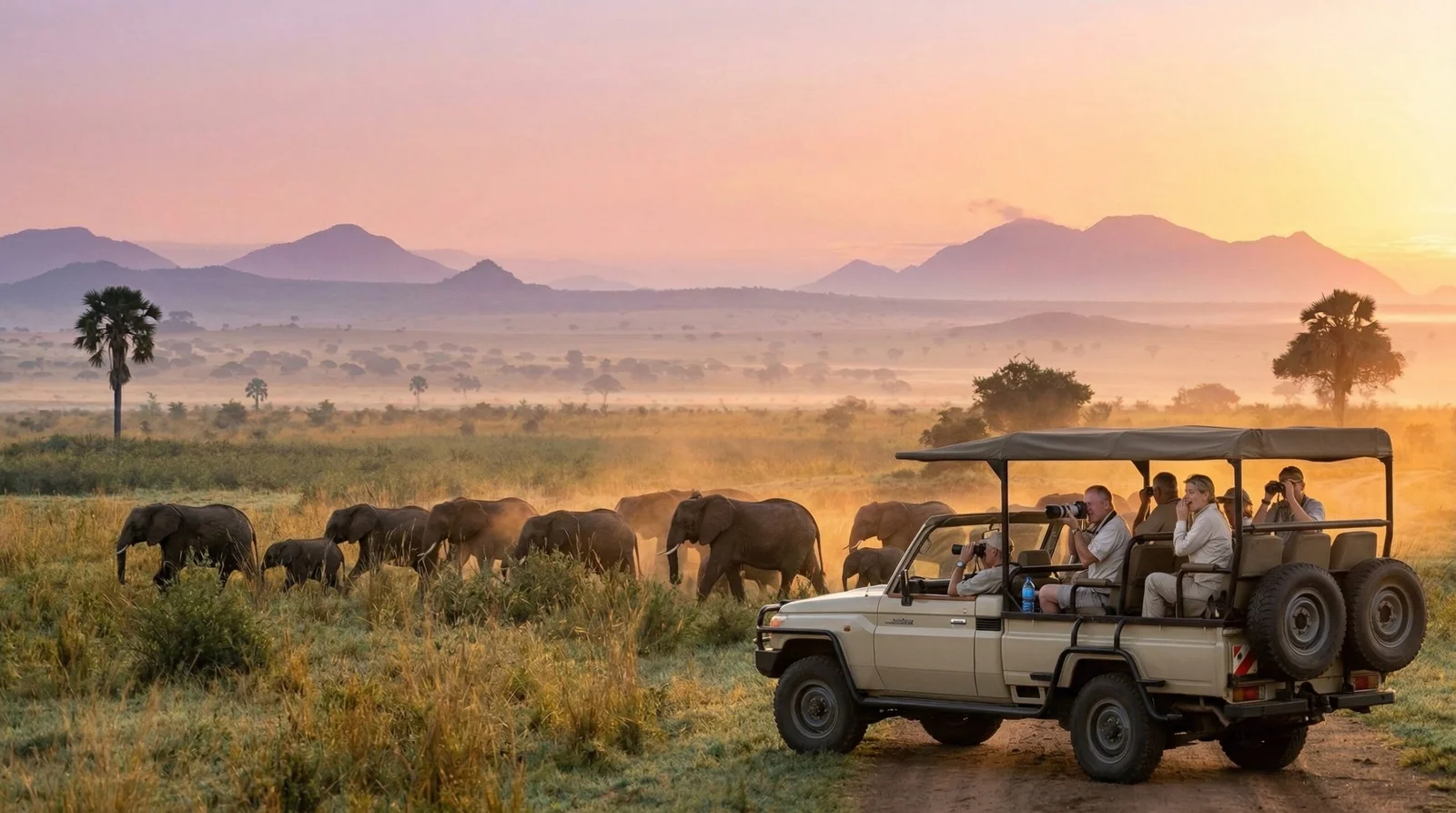
Kidepo Valley National Park is Uganda's most remote, untouched, and dramatic wilderness, located in the rugged northeastern Karamoja region bordering South Sudan and Kenya. Covering 1,442 square kilometers of semi-arid savannah and mountain landscapes, it is famous for its massive herds, exclusive species, and authentic cultural encounters
3-days-luxury-fly-in-kidepo-valley-national-park-tour-package
14-days-complete-uganda-safari-tour-and-primate-safari-experience
11-days-uganda-wildlife-safari-jinja-kidepo-valley-tour-package
11-days-uganda-wildlife-safari-to-off-beaten-path-unique-tour-including-kidepo-valley
7-days-murchison-falls-uganda-safari-trip-via-ziwa-rhinos-kidepo-valley-and-jinja
6-days-best-of-murchison-and-kidepo-uganda-safari-via-ziwa
7-days-murchison-falls-uganda-safari-trip-via-ziwa-rhinos-kidepo-valley-and-jinja
Game Drives in Narus & Kidepo Valleys
Game drives across Kidepo Valley National Park showcase Uganda’s most dramatic savanna landscapes from the comfort of a 4x4 safari vehicle equipped with a pop-up roof. Drives are split between two distinct valley systems, each offering unique topography and wildlife concentrations. The Narus Valley acts as the park's central watering hub, where permanent river basins draw immense wildlife populations year-round—especially during the dry season. By contrast, the northern Kidepo River Valley features wider, open sands flanked by borassus palm forests and dry riverbeds, providing sweeping wilderness vistas.
The park boasts impressive game viewing, highlighted by giant Cape buffalo herds ranging in the thousands along the Narus marshes. Game tracks yield frequent sightings of African elephants, prides of lions resting on granite kopjes, solitary leopards, Rothschild’s (Nubian) giraffes, plains zebras, and side-striped jackals. Kidepo is also the exclusive destination in Uganda to spot specialized arid-country predators and mammals, including cheetahs, ostriches, bat-eared foxes, caracals, striped hyenas, and rare antelopes such as the greater and lesser kudu, klipspringer, and mountain reedbuck. Morning and late-afternoon drives offer optimal light for photography and peak animal activity.
Karamojong & Ik Cultural Encounters
Cultural excursions in the Kidepo region offer authentic, meaningful interactions with indigenous communities whose ancestral heritage is deeply tied to the Karamoja landscape. Visiting a traditional Karamojong Manyatta—a fortified homestead constructed from mud, timber, and thorny brush—provides direct insight into a semi-nomadic pastoralist way of life centered on livestock. Guided by community hosts, visitors learn about age-old cattle-rearing traditions, observe intricate beadwork techniques, and witness high-energy warrior dances (Edonga) performed by villagers in traditional attire.
For travelers seeking a deeper cultural trek, an excursion to meet the Ik people on Mount Morungole offers one of East Africa's most remote cultural experiences. Reaching the Ik villages requires an early morning, full-day hike up the steep, forested slopes of Mount Morungole. The Ik are a small, isolated hunter-gatherer community that relocated to the mountain highlands when the national park was gazetted. Meeting the Ik elders provides rare insight into their unique language, agricultural traditions, and historical resilience while taking in panoramic views extending toward the South Sudan and Kenya borders.
Guided Nature Walks
Guided nature walks in Kidepo Valley National Park allow visitors to step off the vehicle tracks and explore the African savanna on foot under the protection of armed Uganda Wildlife Authority (UWA) rangers. Walking through open terrain provides an intimate perspective on the ecosystem that vehicle game drives cannot match, bringing you closer to smaller wildlife, animal tracks, insect life, and native plant species.
Popular walking trails wind through the Narus Valley circuits, around the Apoka rest camp area, and along the dry stretches of the Kidepo River. On foot, your ranger guide breaks down the tracking signs left behind by big game—interpreting fresh lion tracks, broken acacia branches from elephant feeding, and dung piles along animal pathways. Nature walks also allow closer approaches to grazing herds of zebras, impalas, warthogs, and baboons, alongside rich birdwatching opportunities in the acacia thickets. Walks typically take place in the cool early morning hours or late afternoon, ensuring a safe and comfortable wilderness trek.
Kanangorok Hot Springs Visit
A drive to the Kanangorok Hot Springs in the far northern sector of Kidepo takes visitors near the South Sudan border, offering a scenic journey through some of the park's most secluded wilderness. The route crosses the wide, sandy bed of the Kidepo River, where majestic borassus palm trees line the banks and seasonal waters submerge beneath the sand during dry months.
Upon reaching Kanangorok, visitors can walk up to the natural thermal springs, where water bubbles up from deep beneath the earth's crust at temperatures reaching over 50°C (122°F). Local legend holds that the springs possess natural healing properties, and local communities historically used the mineral-rich waters for traditional rituals. Surrounded by the towering peaks of the Mount Lotuke range in South Sudan, the site offers breathtaking photographic backdrops. The surrounding arid plains are also prime territory for spotting wild ostriches, Secretary birds, jackals, and browsing gazelles across the northern grasslands.
Bird Watching
Kidepo Valley National Park is a premier birdwatching destination in East Africa, recording between 475 and 480 species—second in Uganda only to Queen Elizabeth National Park. The park’s diverse habitats, ranging from semi-arid savanna and acacia woodlands to riverine wetlands and rocky mountain slopes, support a wide array of resident and migratory species, including many dry-country specials not found elsewhere in Uganda.
Birdwatchers can spot iconic species such as the Common Ostrich strolling the northern plains, the terrestrial Secretary Bird, the Kori Bustard, Abyssinian Ground Hornbills, and the endemic Karamoja Apalis. The park is also famous for its high concentration of birds of prey, boasting over 56 recorded raptor species, including Egyptian vultures, Pygmy falcons, and Verreaux’s eagles. Other highlights include the White-faced Scops Owl, Rose-ringed Parakeet, Clapperton’s Francolin, and vibrant Carmine and Little Bee-eaters along the watercourses. Birding tours are best conducted on foot around Apoka or during game drives through the Narus and Kidepo valleys.
How many days can I spend in Kidepo valley national park
The ideal duration to spend in Kidepo Valley National Park is 3 to 4 days. This timeframe allows sufficient opportunity to explore both the wildlife-rich Narus Valley and the remote Kidepo River Valley without rushing. A 3-day itinerary covers morning and late-afternoon game drives for Big Five tracking, a guided nature walk, and a Karamojong community cultural visit. Extending to 4 days provides room for a full-day excursion to the Kanangorok Hot Springs near the South Sudan border or a day hike up Mount Morungole to visit the Ik hunter-gatherer tribe.
What is the park entry fee for Kidepo valley national park
Park entrance fees for Kidepo Valley National Park are set by the Uganda Wildlife Authority (UWA) and charged per person for a 24-hour period. As of current tariffs, adult fees are $40 USD for Foreign Non-Residents, $30 USD for Foreign Residents (living in East Africa with valid work permits), and UGX 20,000 for East African Community (EAC) Citizens. Entry for children (ages 5 to 15) costs $20 USD for foreign non-residents and UGX 5,000 for EAC citizens. Vehicle entry fees and specialized ranger-guided activities (such as night drives or hikes) carry separate charges.
How to get to Kidepo valley national park on a Uganda safari
Kidepo can be reached either by air or overland by road. Traveling by air is the fastest option: scheduled or private domestic charter flights (operated by Aerolink or Fly Uganda) depart from Entebbe International Airport or Kajjansi Airstrip directly to Lomej Airstrip inside the park, taking approximately 1.5 to 2 hours. By road, the journey takes 10 to 12 hours (around 571 km) from Kampala via the primary route through Karuma, Gulu, and Kitgum. Overland safaris typically split the long drive with an overnight stay in Gulu, Kitgum, or Ziwa Rhino Sanctuary using a sturdy 4x4 safari vehicle.
Where to stay in Kidepo valley national park on a Uganda safari
Accommodation in and around Kidepo caters to high-end, mid-range, and budget travelers. For luxury, Apoka Safari Lodge offers high-end canvas cottages featuring outdoor stone bathtubs directly inside the park overlooking the Narus Valley. For mid-range comfort, Kidepo Savannah Lodge (located just outside Kalokudo Gate) provides comfortable safari tents and self-contained chalets with wide wilderness views, while Nga'Moru Wilderness Camp offers cozy cabanas on a hill along the park border. Budget options include the UWA-managed Apoka Rest Camp, which features self-catering bandas and basic cottages set right within prime wildlife habitat.
Booking Kidepo valley national park with us Roads of Adventure safaris
Booking your Kidepo safari with Roads of Adventure Safaris ensures a seamlessly managed expedition to Uganda’s most untouched national park. Based in Kampala, our team handles all operational logistics, including customized 4x4 Land Cruisers, domestic flight seats via Aerolink, UWA park entry permits, ranger arrangements, and lodge reservations tailored to your preferred tier. To guarantee lodge availability and flight seats, we require an advance deposit upon confirmation, with the remaining balance due before travel or payable in cash upon arrival. Contact our experts at +256 701041637, +256 744 137657, or email info@roadsofadventuresafaris.com.