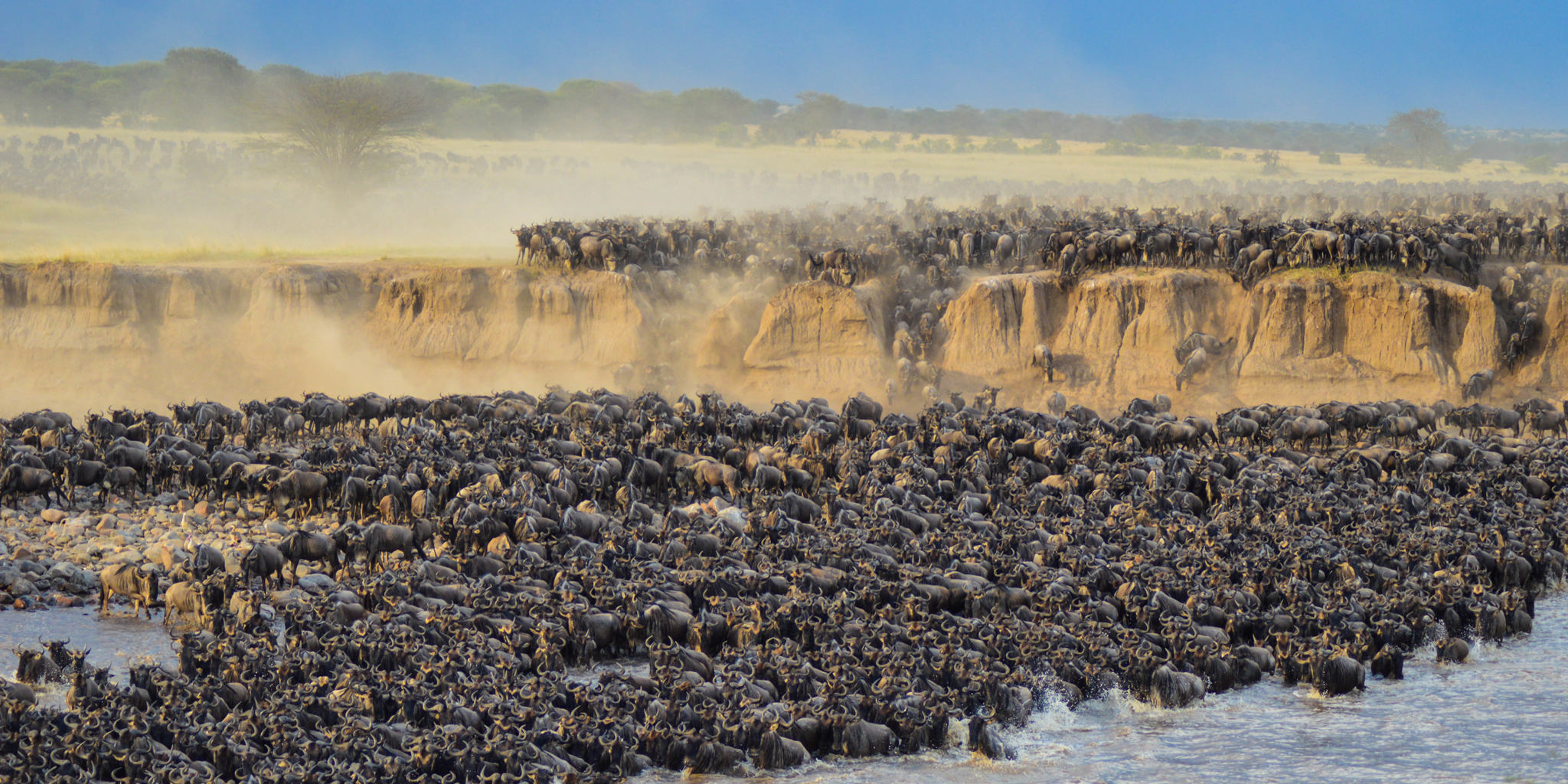
Top Tanzania safari destinations for this year include the iconic Serengeti National Park for the Great Migration, the Big Five-rich Ngorongoro Crater, and Tarangire National Park, famous for massive elephant herds and baobab trees. Other top spots include Mount Kilimanjaro for climbing, the beaches of Zanzibar, and chimpanzee trekking in Mahale Mountains National Park
20-days-perfect-uganda-rwanda-tanzania-safari-holiday
15-days-uganda-rwanda-tanzania-safari-and-zanzibar-beach-holidays
12-days-tanzania-safari-and-culture-experience
10-days-family-tanzania-safari-tour-to-lake-manyara-serengeti-ngorongoro-crater-and-tarangire
10-days-luxury-gorilla-trekking-masai-mara-serengeti-and-ngorongoro-crater
7-days-best-luxury-tanzania-safari-all-inclusive-tour-package
1. Serengeti National Park
Serengeti National Park is one of the most celebrated wildlife reserves in the world, renowned for its spectacular annual Great Migration. Each year, over two million wildebeest and zebra traverse the plains in search of fresh grazing land, creating one of nature’s most awe-inspiring spectacles. The park, spanning approximately 14,750 square kilometers, is home to diverse ecosystems, including grasslands, woodlands, and riverine forests, which support a vast array of wildlife.
The Serengeti is particularly famous for its large populations of lions, often seen lounging under acacia trees or hunting in the tall grasses. Other big cats, like leopards and cheetahs, are also abundant, making it a photographer's paradise. The park offers numerous opportunities for game drives, guided walks, and even hot air balloon excursions that showcase the dramatic landscapes from above.
Best visited during the dry season from June to September, the Serengeti remains vibrant year-round, attracting visitors keen on experiencing its wildlife. The abundance of lodges and tented camps within and around the park allows for comfortable stays, often featuring exceptional views of the surrounding wilderness. Whether witnessing the migration or tracking predators, Serengeti National Park guarantees unforgettable adventures and profound encounters with Africa’s wildlife.
2. Ngorongoro Conservation Area
The Ngorongoro Conservation Area, a UNESCO World Heritage site, is one of the most remarkable natural wonders on the planet. The centerpiece, the Ngorongoro Crater, is the world’s largest inactive volcanic caldera, encompassing around 260 square kilometers. This unique geological formation provides one of Africa’s highest concentrations of wildlife, including the Big Five: lions, elephants, buffaloes, leopards, and rhinoceroses.
Visitors to the crater are often struck by its sheer beauty, with lush grasslands, swamps, and forests, all thriving within its rim. The wildlife here is accustomed to human presence, offering exceptional opportunities for up-close encounters. The crater floor is home to large populations of zebras, wildebeest, and flamingos, especially in the crater lakes.
The best time to visit Ngorongoro is during the dry season when wildlife congregates around remaining water sources. Guided tours often include visits to Maasai villages, enhancing the cultural experience with insights into the indigenous ways of life. The combination of breathtaking landscapes, abundant wildlife, and human interactions make Ngorongoro Conservation Area a must-visit for anyone exploring Tanzania. Accommodation options are plentiful, ranging from luxurious lodges to tented facilities, allowing travelers to immerse themselves in this extraordinary setting.
3. Tarangire National Park
Tarangire National Park is a gem in Tanzania's northern circuit, renowned for its exceptional diversity of wildlife and breathtaking landscapes. Famous for its large elephant herds, which can often be seen feeding beneath the park's iconic baobab trees, Tarangire offers an intimate safari experience, distinct from other better-known parks. The park's unique topography features swamps, rolling hills, and dense woodlands, providing various habitats for over 300 bird species and numerous herbivores.
The best time to visit Tarangire is during the dry season (June to October) when wildlife converges around the Tarangire River, attracting elephants, lions, and many other species seeking hydration. This peak season makes game viewing particularly rewarding. Tarangire is also less crowded than some of its counterparts, offering a more serene African wilderness experience.
Since the park’s establishment in 1970, numerous lodges and tented camps have sprung up, providing comfortable accommodations and easy access to wildlife viewing. Guided walking safaris, night drives, and cultural experiences with local communities further enrich the visitor experience. Whether marveling at the enormous herds of elephants or witnessing the magnificent birdlife, Tarangire National Park is an essential stop for wildlife enthusiasts and adventure seekers alike.
4. Lake Manyara National Park
Lake Manyara National Park is a stunning and diverse ecosystem nestled between a dramatic escarpment and the sparkling soda lake. This compact park is especially famous for its tree-climbing lions, a unique behavior not commonly found in other regions. The park's wildlife is exceptionally rich, with over 400 bird species, including numerous flamingos drawn to the lake's shores during the wet season. In addition to lions, visitors can expect to see elephants, giraffes, and a plethora of herbivores.
The park's diverse habitats—ranging from wetlands and grasslands to forests and the lake itself—support an array of wildlife. Game drives provide opportunities to witness the park’s unique inhabitants while guided walks offer a chance to discover its flora and smaller fauna. Lake Manyara's scenic beauty makes it a favorite for many visitors, with the opportunity to take in spectacular views of the Rift Valley and the lake below from viewpoints along the escarpment.
The best time to visit Lake Manyara is during the dry months from June to September when wildlife concentrations peak. With a variety of accommodation options, including lodges and campsites, Lake Manyara National Park offers an enjoyable retreat for those exploring Tanzania's northern safari circuit.
5. Mount Kilimanjaro
Mount Kilimanjaro, Africa’s highest peak at 5,895 meters, presents an ultimate trekking challenge for adventure seekers and nature enthusiasts alike. The mountain is renowned not just for its elevation but for its stunningly diverse ecosystems, designated within Kilimanjaro National Park. Trekkers can experience several climatic zones while climbing—from lush rainforests at lower elevations to alpine deserts and finally glacial regions at the summit.
The most popular trekking routes include the Marangu, Machame, and Lemosho routes, each offering unique experiences and varying levels of difficulty. Reaching the summit of Uhuru Peak is a rewarding accomplishment, with panoramic views extending over Tanzania and beyond, particularly at sunrise.
Normally, the best time to hike Kilimanjaro is during the dry seasons (January to March and June to October). Trekking is accessible for many fitness levels, though acclimatization is crucial to combat altitude sickness. Numerous guides and tour companies offer packages to ensure a safe and enjoyable experience. Mount Kilimanjaro's allure lies in not just its towering presence, but also the diverse landscapes and unforgettable experiences found along the journey.
6. Zanzibar Island
Once the trading hub of spices and slaves, Zanzibar Island now serves as a perfect escape for post-safari relaxation. Known for its white sand beaches, turquoise waters, and vibrant culture, Zanzibar is a paradise for travelers seeking both relaxation and adventure. The island’s stunning beaches, such as Kendwa and Nungwi, offer opportunities for sunbathing, swimming, and snorkeling among intricate coral reefs teeming with marine life.
The historic Stone Town, a UNESCO World Heritage site, showcases winding alleyways, bustling bazaars, and architecturally stunning buildings that reflect a rich cultural tapestry influenced by Arab, Persian, Indian, and European traders. Visitors can explore landmarks such as the House of Wonders and the Old Fort while indulging in local cuisine blending spices and flavors.
Zanzibar’s favorable climate makes it an attractive destination year-round. The island offers a range of accommodations to suit all budgets, from luxurious beach resorts to charming guesthouses. Whether basking in the sun or exploring the island's rich history, Zanzibar serves as the ideal conclusion to an adventurous safari in Tanzania.
7. Ruaha National Park
Ruaha National Park is Tanzania’s largest national park, recognized for its untouched wilderness and remarkable wildlife diversity. Remote and lesser-known than Serengeti or Ngorongoro, Ruaha offers an authentic safari experience where visitors can escape the crowds and immerse themselves in nature. Home to one of the largest populations of elephants in Tanzania, Ruaha also boasts a high concentration of predators, making it a prime destination for wildlife enthusiasts.
The park’s scenery is breathtaking, with contouring landscapes of savannahs, baobab trees, and the Ruaha River, an essential resource attracting wildlife. Game drives permit spotting not only elephants but also lions, leopards, and cheetahs, while birdwatchers can delight in the more than 500 bird species residing within the park.
The best time to visit Ruaha is during the dry season (June to October) when wildlife concentrations peak. Accommodation options range from eco-friendly lodges to luxury tented camps, providing comfort while maintaining proximity to nature. Ruaha National Park is a jewel for those seeking a true wilderness experience away from the more tourist-heavy areas.
8. Mahale Mountains & Gombe Stream
Located on the shores of Lake Tanganyika, the Mahale Mountains and Gombe Stream National Parks offer some of the best opportunities for primate trekking in Tanzania. Renowned for their chimpanzee populations, both parks provide visitors a chance to encounter these amazing animals in their natural habitat. Gombe Stream is the site of Jane Goodall’s groundbreaking research, making it famous among conservationists and primate lovers.
Trekking through the lush forests of Mahale allows for not just encounters with chimps but also a rich diversity of wildlife, including golden monkeys, various bird species, and spectacular plant life. Both parks require a degree of physical fitness, as the treks can be challenging but rewarding.
The best time to visit is during the dry season (June to October), where wildlife activity increases, and the trails are more accessible. Accommodations vary from rustic camps to more luxurious lodges, ensuring a comfortable stay amid stunning natural beauty. Mahale Mountains and Gombe Stream provide a unique and profound safari experience, ideal for those interested in primate conservation and ecology.
Top Tanzania Safari Activities
Tanzania offers a wealth of thrilling safari activities that cater to every interest. Game drives in iconic parks like Serengeti and Ngorongoro allow wildlife enthusiasts to spot the “Big Five” in their natural habitats. For a unique perspective, hot air balloon rides offer stunning aerial views of the savannah, particularly during the Great Migration. Cultural visits to Maasai villages provide insights into traditional lifestyles and customs. Walking safaris enable a closer connection to the bush, under the guidance of expert rangers. Additionally, night drives offer sightings of nocturnal species. For birdwatchers, destinations like Tarangire boast rich avian diversity. With such a variety of activities, Tanzania promises an unforgettable safari experience filled with adventure and discovery.
When is the Best Time for a Tanzania Safari
The best time for a Tanzania safari typically falls during the dry season from June to October. This period is ideal for game viewing, as animals gather around water sources, making them easier to spot. The Great Migration occurs primarily from July to September, with wildebeest crossing the Mara River in the Serengeti, providing a spectacular sight. For birdwatching enthusiasts, the wet season from November to April is exceptional, as migratory species arrive and the landscape turns lush and green. However, heavy rains can make some areas less accessible. The shoulder months of May and early June and late October often feature fewer crowds, ideal for those seeking a quieter experience. Ultimately, the timing depends on your interests, whether wildlife concentration or vibrant landscapes.
Where to Stay on a Tanzania Safari
Tanzania offers various accommodations to suit different budgets and preferences while on safari. Luxury lodges in popular areas like Serengeti and Ngorongoro provide high-end amenities, gourmet dining, and stunning views of the wilderness. For a more immersive experience, tented camps allow visitors to connect with nature while enjoying comfortable living spaces. These camps often feature guided safari activities, adding to the adventure. For those on a budget, there are rustic lodges and guesthouses that maintain proximity to national parks. Many accommodations are committed to sustainability, supporting local communities and conservation efforts. Whether in opulent lodges or cozy tents, visitors can find the perfect base to explore Tanzania's captivating wildlife and landscapes.
Booking a Tanzania Safari with Roads of Adventure Safaris
Booking your Tanzania safari with Roads of Adventure Safaris ensures a personalized and unforgettable experience. Our experienced team crafts tailored itineraries that showcase the best of Tanzania's breathtaking landscapes and vibrant wildlife. Whether you're interested in the Great Migration or cultural encounters, we handle all logistics—transportation, accommodations, and activities—ensuring a seamless journey. We prioritize sustainable tourism, selecting eco-friendly lodging options and supporting local communities. With our local expertise, you can access hidden gems and exclusive wildlife experiences. Start planning your adventure with Roads of Adventure Safaris today, and let us create a safari journey that connects you with nature and unforgettable memories.
