Planning a 12-day family Uganda safari requires balancing wildlife adventure with downtime, focusing on child-friendly accommodation, and booking in advance, particularly for primates (15+ age restriction for gorillas). Key highlights include Kibale chimpanzees, Murchison Falls boat cruises, Queen Elizabeth's tree-climbing lions, and Bwindi gorillas.
12-days-luxury-safari-in-uganda-parks
12-days-perfect-rwanda-uganda-gorilla-trekking-safari-holiday-vacation
12-days-uganda-wildlife-primate-experience-and-lake-mutanda-vacation
12-days-all-inclusive-uganda-wildlife-and-primate-safari
12-days-uganda-birding-tour-looking-for-rift-valley-endemic-birds-west-circuit
12-days-best-uganda-rwanda-primate-safaris-and-akagera-big-five-safaris
12-days-best-uganda-safari-big-five-and-uganda-primate-safari
12-days-uganda-safari-and-tours-combined-with-zanzibar-beach-vacation
Top Planning Tips for Families
The secret to a successful family safari is found in the "Three Fs": Flexibility, Facilities, and Focus. Unlike a solo photography trip where you might spend ten hours in a vehicle, a family trip must prioritize downtime. Embracing flexibility means being willing to cut a game drive short if the kids are restless or spending an entire afternoon by the lodge pool instead of hunting for an elusive leopard. Fatigue is the quickest way to end the "safari magic," so scheduling a "no-drive" day every few days is essential.
Choosing the right base is equally critical. You should look for kid-friendly lodges that offer family suites or interconnecting rooms, providing both privacy for parents and security for children. Amenities like swimming pools are worth their weight in gold for burning off energy between game drives. Furthermore, engaging a specialized tour operator is a game-changer; they can provide child seats, suggest shorter "loop" drives, and pair you with a guide who is skilled at explaining nature in a way that captivates young minds. Finally, mental preparation—such as watching documentaries or giving each child their own set of binoculars—turns them from passive passengers into active junior rangers. By timing the trip for the dry seasons, you also ensure the easiest travel conditions, reducing the stress of muddy roads or cancelled activities.
Sample 12-Day Family Itinerary Focus
A 12-day family itinerary is designed as a "loop" that starts with high-energy savannah and ends with tranquil relaxation. Days 1–3 focus on the North, starting with Rhino tracking at Ziwa. This is a perfect "intro to safari" because it’s a controlled, on-foot experience that feels like a real-life treasure hunt. In Murchison Falls, the boat cruise to the falls is a family favorite because it’s comfortable, offers constant wildlife sightings, and allows kids to move around more than they can in a 4x4.
Days 4–8 transition into the primate and predator heartlands. While the 15+ age limit for Kibale and Bwindi might mean some family members sit out the trekking, the surrounding areas offer community nature walks and "Crater Lake" hikes that are accessible to all. In Queen Elizabeth, the Kazinga Channel cruise is the highlight, providing eye-level views of hippos and elephants. The search for tree-climbing lions in Ishasha adds a layer of mystery that keeps kids engaged. The final leg, Days 9–12, moves to the mountains. While older teens head into the forest for gorillas, the rest of the family can enjoy the stunning scenery of Lake Bunyonyi. This final stop is the "vacation within the vacation," where the family can swim, paddle traditional canoes, and reflect on the journey before heading back to Entebbe.
Age Restrictions and Alternatives
The most significant logistical hurdle for families is the strict age limit for primate trekking. The Uganda Wildlife Authority (UWA) enforces a minimum age of 15 years for both gorilla and chimpanzee tracking. This is primarily for the safety of the children and the primates; children may not have the stamina for a 6-hour mountain hike, and their immune systems are more likely to carry common childhood illnesses (like coughs or colds) that can be fatal to gorillas.
However, a "no" for the trek doesn't mean a "no" for the trip. For children under 15, the national parks offer a wealth of alternative activities. Many lodges provide "Junior Ranger" programs or guided nature walks on the park fringes where kids can track "the small five" (insects and lizards) and learn about medicinal plants. Community visits to local schools or Batwa cultural centers offer profound educational value, allowing children to meet and play with local peers. Boat trips and standard game drives have no age limit, meaning the family stays together for 80% of the safari. By choosing a lodge with excellent childcare or specialized children's activities, parents can still enjoy the gorilla trek knowing their younger children are safe, engaged, and having their own unique African adventure.
12 Days Family Uganda safari holiday
A 12-day family safari in Uganda is a masterfully balanced journey that pairs the excitement of African wildlife with the practical needs of traveling with children. This itinerary is specifically designed to keep younger travelers engaged while ensuring parents don't miss out on iconic experiences like gorilla and chimpanzee trekking. From the dramatic waterfalls of the north to the tranquil, island-dotted waters of the southwest, the trip moves at a manageable pace with plenty of "pool time" and interactive community visits. You’ll witness the Big Five, track rhinos on foot, and cruise along the Kazinga Channel, where wildlife viewing is effortless and comfortable. While age restrictions apply for certain treks (minimum age 15), this safari offers high-value alternatives for younger kids, including nature walks and cultural storytelling. It’s an immersive family holiday that transforms the "Pearl of Africa" into a giant, outdoor classroom and a playground of natural wonders.
Day 1: Arrival and Lakeside Relaxation
Your family adventure begins at Entebbe International Airport, where your private guide will meet you and transfer you to a lakeside hotel. This first day is intentionally low-key to allow everyone to recover from the flight. Depending on your energy levels, you can visit the Uganda Wildlife Conservation Education Centre (UWEC), which serves as a great introduction to the animals you'll soon see in the wild. Alternatively, a sunset boat cruise on Lake Victoria offers a peaceful way to spot birds and enjoy the breeze. The evening ends with a relaxed welcome dinner and a briefing on the exciting journey ahead.
Day 2: The Rhino Quest and Murchison Falls
Heading north, the family stops at the Ziwa Rhino Sanctuary. This is a highlight for children as it involves a "rhino trek" on foot. Guided by expert rangers, you’ll walk through the bush to find the southern white rhinos, a safe but thrilling way to see these giants up close. After lunch, the drive continues into Murchison Falls National Park. You’ll head straight to the "Top of the Falls," where the sight of the Nile squeezing through a tiny gap is a visceral experience for all ages, complete with thundering sounds and permanent rainbows.
Day 3: Savannah Game Drive and Nile Boat Safari
The morning is dedicated to a game drive across the northern plains. With a pop-up roof on your 4x4, kids have the best seats in the house to spot giraffes, elephants, and lions. In the afternoon, you’ll board a boat for a three-hour safari on the Victoria Nile. This is often the family favorite, as the boat gets incredibly close to hippos, crocodiles, and elephants cooling off by the water. The gentle movement of the boat makes for easy wildlife viewing without the bumps of the road, perfect for photography and young observers.
Day 4: Journey to Fort Portal and Tea Estates
Today is a transit day as you travel toward the "Primate Capital," Kibale. To keep the kids engaged during the 6-hour drive, the route passes through vibrant markets and rolling green tea plantations. You’ll stop at a tea estate to learn how tea is picked and processed—a fun, hands-on cultural experience. You’ll reach Fort Portal, a clean and welcoming town in the shadow of the Rwenzori Mountains, by late afternoon. Your lodge here will likely have a pool or large gardens for the children to run around in after the drive.
Day 5: Primate Walks and Bigodi Wetlands
For family members aged 15 and up, the morning is spent tracking chimpanzees in Kibale Forest. For younger children, a specialized "forest walk" with a ranger focuses on spotting colorful monkeys, butterflies, and exotic insects. In the afternoon, the whole family reunites for a walk through the Bigodi Wetland Sanctuary. This community-run project is famous for its eight species of primates and the Great Blue Turaco. The walk is flat and easy, and the local guides are excellent at sharing stories about the plants and animals that live in the swamp.
Day 6: Crater Lakes and Queen Elizabeth National Park
After breakfast, the journey moves to Queen Elizabeth National Park. The drive takes you through the "Explosion Crater" region—a series of dramatic, emerald-green lakes that look like something out of a fairy tale. You’ll enter the park and head to your lodge for lunch. In the afternoon, you’ll enjoy a boat cruise on the Kazinga Channel. This is one of the most wildlife-dense experiences in Africa; you’ll see hundreds of hippos, buffaloes, and varied birdlife. The boat’s stability and the constant action keep even the shortest attention spans fully occupied.
Day 7: Lion Tracking and Savannah Secrets
Today starts with a game drive in the Kasenyi Plains. To make it more interactive, your guide will involve the kids in "tracking" by looking for paw prints and animal signs. You may join a lion-tracking research session, which uses radio collars to find prides—a fascinating look at modern conservation. After lunch, the family can enjoy some downtime at the lodge pool or visit a local salt-mining community at Lake Katwe. These cultural stops provide a great opportunity for kids to learn about different ways of life in a friendly, engaging setting.
Day 8: Tree-Climbing Lions and the Ishasha Sector
You’ll drive south to the Ishasha sector, which feels like a different world within the same park. This area is famous for its tree-climbing lions. Searching for large cats draped over the branches of fig trees is like a high-stakes game of "I Spy." The open woodlands are also home to topis and large herds of buffalo. Since the drives here are often shorter and more focused on specific sightings, it’s a less tiring day for children. You’ll stay at a lodge near the river, where the sounds of the bush provide a nightly soundtrack.
Day 9: Into the Misty Bwindi Highlands
The landscape shifts dramatically today as you ascend into the Kigezi Highlands, often called the "Switzerland of Africa." The steep, terraced hills and cool mountain air are a refreshing change from the savannah. You’ll reach Bwindi Impenetrable Forest, home to the mountain gorillas. The afternoon is kept free for relaxation or a gentle walk to a nearby Batwa community. The Batwa share their ancient forest traditions through music and dance, an interactive cultural experience that is usually a huge hit with children of all ages.
Day 10: Gorilla Trekking and Junior Ranger Activities
For those 15 and older, today is the legendary gorilla trek—a life-changing hour spent with a silverback and his family. For younger children who cannot trek, many lodges offer "Junior Ranger" programs or guided nature walks around the park boundaries. They might learn how to identify animal tracks, make fire the traditional way, or visit a local school. This ensures that while the adults are in the forest, the kids are having their own supervised adventure. The evening is spent sharing stories from your respective days around a warm fireplace.
Day 11: Lake Bunyonyi Islands
You’ll leave the forest behind for the serene beauty of Lake Bunyonyi, the "Lake of a Thousand Islands." This is the ultimate "cooldown" spot. The lake is safe for swimming and perfect for exploring by traditional dugout canoe. You’ll take a boat trip to some of the 29 islands, learning about their history and enjoying the spectacular views. For the kids, it’s a day of water, sun, and freedom. Whether you’re zip-lining across the water or just enjoying a quiet lunch on a private island, it’s the perfect way to decompress.
Day 12: The Equator and Departure
The final leg of the journey takes you back toward Entebbe. You’ll stop at the Equator crossing for the iconic photo op and the "Coriolis effect" water experiment, which never fails to amaze children. After a farewell lunch and some last-minute souvenir shopping for handcrafted crafts, you’ll continue to the airport. As you fly out, the family leaves with a shared bond forged in the wild—a 12-day journey that combined education, adventure, and the unmistakable warmth of the Ugandan people.
What is the best time for a 12-day family safari in Uganda?
Timing is the most critical factor for family travel because it dictates the "ease" of the trip. The dry seasons—June to August/September and December to February—are the gold standard. During these months, Uganda’s notorious "murram" (dirt) roads are firm and predictable, which is vital when you have children in the vehicle for several hours. Muddy, stuck vehicles are a "safari adventure" for adults but can quickly lead to meltdowns for younger travelers.
Furthermore, the dry season makes wildlife viewing "effortless." In parks like Murchison Falls and Queen Elizabeth, the thinning vegetation and drying water holes force animals into the open. This means shorter game drives are more productive, preventing kids from getting bored during long periods of searching. The clear blue skies also provide the best light for those family photos. While the "Green Season" offers lower prices, the unpredictable downpours can wash out planned activities, making the dry season the safer bet for a smooth family holiday.
Is Uganda suitable for a family vacation?
Uganda has evolved significantly as a family destination. While it was once seen as a rugged frontier for solo backpackers, the 2026 tourism landscape is highly sophisticated. The country is "excellent for families" because it offers a variety of movement—it isn't just sitting in a car. From the boat cruises on the Nile to the walking safaris in Lake Mburo, kids are rarely stationary for long.
The hospitality sector has caught up too. Most mid-range and luxury lodges now feature family suites or interconnecting rooms, ensuring parents have privacy while keeping children close. Many lodges are fenced or have 24/7 security, providing peace of mind. Moreover, Ugandans are culturally very family-oriented; your guides and lodge staff will often go out of their way to engage with children, teaching them local games or showing them "the small five" (insects and lizards) around the lodge gardens, making the children feel like welcomed guests rather than just tag-alongs.
How do I manage children's fatigue on a 12-day trip?
Fatigue is the "safari killer." On a 12-day itinerary, the temptation is to see everything, but for a family, "less is more." The best way to manage energy is through strategic pacing. Avoid the "one-night stand" lodge approach; instead, spend at least 2–3 nights in major hubs like Queen Elizabeth National Park or Murchison Falls. This allows for a "rest day" where the only activity is a swim in the pool or a late breakfast.
Mixing the medium of exploration is also key. If the morning was a 3-hour game drive, make the afternoon a leisurely boat trip where kids can move around, stretch their legs, and enjoy a snack while watching hippos. Breaking up the long transit days (some can be 6–7 hours) with stops at fruit markets, drum-making workshops, or the Equator helps turn the travel time into part of the adventure. Always prioritize the "pool time" in the late afternoon—it’s the universal reset button for kids after a hot day in the bush.
Are there age restrictions for gorilla trekking?
The most important rule to remember is that you must be 15 years or older to track mountain gorillas. This is a strict regulation enforced by the Uganda Wildlife Authority (UWA) for two reasons: the physical rigors of the trek (which can be a 6-hour mountain climb) and the health of the gorillas. Children are more prone to common colds and coughs, which can be devastating to a gorilla population that lacks our immunities.
However, a family trip to Bwindi is still worth it. While the 15+ members head into the forest, younger children can participate in nature walks on the park fringes or the "Grown-up for a Day" programs offered by some specialized lodges. They can visit local schools, learn traditional weaving, or take part in "Batwa storytelling" sessions. These activities are tailored to be engaging and educational, ensuring the younger siblings have their own "hero stories" to tell at dinner when the trekkers return with their silverback photos.
How do I choose the right tour operator?
Choosing a tour operator for a family is different than choosing one for a group of birders. You need a licensed, specialized local operator that explicitly mentions "Family Safaris" in their portfolio. Look for recent reviews (2025–2026) that specifically mention traveling with children. A good operator will ask you about your kids' ages, interests, and dietary needs before they even send you a quote.
The most important "asset" the operator provides is the guide. For a family trip, you need a guide who is not just an expert in wildlife, but a "kid-whisperer." You want someone who can turn a "boring" dung beetle into a 20-minute lesson on the ecosystem or who knows exactly where the best clean restrooms are on a long highway stretch. A private, customizable safari is better than a group tour, as it gives you the power to say, "The kids are tired, let’s go back to the lodge now," without affecting anyone else's experience.
What are the must-visit places for a 12-day family itinerary?
A well-rounded 12-day family circuit should hit the "Highlights with Variety." Murchison Falls is a must because of the boat trip to the falls and the high concentration of giraffes and elephants. Kibale National Park is the place for chimpanzees (for those 15+), but the surrounding Bigodi Wetland is fantastic for younger kids to see monkeys and rare birds on an easy boardwalk.
Queen Elizabeth National Park is the family favorite due to the Kazinga Channel boat trips and the "lion-tracking" sessions that feel like high-stakes detective work. Finally, Bwindi or Lake Bunyonyi should be the conclusion. While Bwindi is for the gorillas, Lake Bunyonyi is the "relaxation hub." It is one of the few lakes safe for swimming (no hippos, crocs, or bilharzia) and offers canoeing and island hopping, providing a "vacation-at-the-end-of-the-safari" that helps everyone decompress before the flight home.
What should I pack for a family safari?
Packing for a family requires thinking about "layers and lures." Clothing should be lightweight khaki or beige (dark colors attract flies, and white gets dirty instantly). Long-sleeved shirts and trousers are essential for the evenings to protect against mosquitoes. Sturdy, closed-toe shoes are a must for any walk.
Beyond clothes, focus on the "lures" to keep kids engaged. Give each child their own pair of binoculars and a camera (even an old smartphone works). Having their "own" gear makes them feel like professional explorers. Pack a "wildlife checklist" so they can tick off animals as they see them. Most importantly, bring familiar snacks and entertainment. While lodges provide great food, a familiar granola bar or a tablet loaded with movies can be a lifesaver during a 6-hour drive through the countryside where "interesting" views might eventually lose their novelty for a seven-year-old.
How do I handle health and safety?
Safety in Uganda is managed through preparation. At least two months before travel, consult a travel clinic for vaccinations (Yellow Fever is mandatory) and malaria prophylaxis. Since kids can be sensitive to certain medications, getting professional advice on the best choice (like Malarone pediatrics) is vital.
On the ground, safety is about common sense. Always follow your guide's instructions—wildlife is wild, and even "tame-looking" baboons can be aggressive if they see food. Bring a comprehensive first-aid kit that includes child-specific medicines (rehydration salts, antihistamines, and antiseptic). Staying in reputable lodges ensures access to clean water and hygienic food preparation. Most high-end lodges also have "on-call" doctors. Finally, ensure your travel insurance specifically covers medical evacuation—it’s a "just in case" that provides immense peace of mind when traveling in remote areas with children.
Are safari vehicles comfortable for kids?
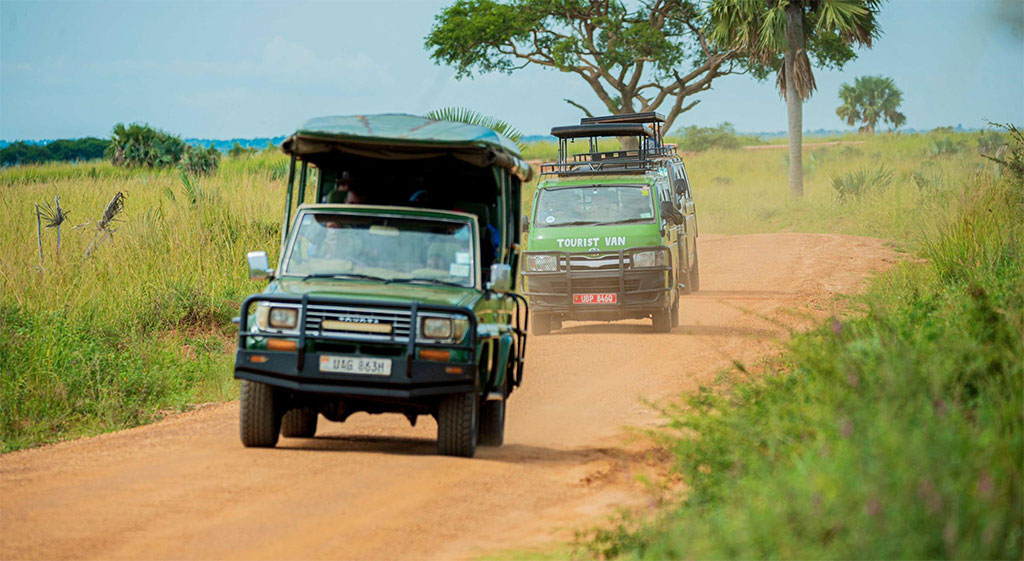
For families, a private 4x4 safari Land Cruiser is the only way to go. Unlike smaller vans, these vehicles are built for the terrain, providing better suspension on bumpy roads. They offer enough space for kids to spread out, and the "pop-up roof" is a game-changer. It allows children to stand up and see the animals clearly without being blocked by window frames or other passengers.
The "private" aspect is the real comfort factor. It gives you the flexibility to make unscheduled stops. If a child needs a bathroom break, sees a cool lizard on a rock, or just needs ten minutes to stretch their legs, you can stop without apologizing to a group of strangers. Make sure to check that the vehicle has "charging points" for electronics—essential for keeping tablets alive during the longer transit legs between the national parks.
Do I need a visa for Uganda?
Yes, and the process is strictly online. As of 2026, you must apply for your visa via the Uganda Electronic Visa/Permit System before you board your flight. You cannot get a visa on arrival. You will need to upload a copy of your passport, a recent photo, and your Yellow Fever vaccination certificate for each family member.
If your 12-day trip involves a quick hop into Rwanda (for extra trekking) or Kenya (for the coast), the East African Tourist Visa ($100) is the best option. It allows for multiple entries between the three countries for 90 days. For a family, this is much more efficient than applying for three separate visas. Always print out the "Approval Letter" you receive via email, as the airline will check this before allowing you to check in for your flight to Entebbe.
How much should I tip, and what currency is best?
The currency of "safari" is the US Dollar (USD), but it must be "new." Ensure all your bills are dated 2013 or later; older bills are often rejected by banks and businesses in Uganda due to past forgery issues. You’ll need USD for your visa (if not paid online), park fees, and lodge bills. However, having some Uganda Shillings (UGX) is useful for tipping porters, buying local crafts, or grabbing a "Rolex" (omelet wrap) at a roadside stand.
Tipping is a vital part of the tourism economy. For a 12-day trip, a general guideline is $15–$20 per day for your safari guide (given at the end of the trip) and $5–$10 per day for the lodge staff (usually placed in a communal tip box). If you hire a porter for a trek, a direct tip of $10–$15 is standard. Tipping in USD is fine for guides, but for porters and small services, local Shillings are much more practical for them to use in their daily lives.
Is it safe to drink tap water?
The short answer is no. You should never drink tap water in Uganda, nor should you use it to brush your teeth if you have a sensitive stomach. This is especially important for children, whose digestive systems are less accustomed to foreign bacteria.
Reputable lodges and tour operators provide an unlimited supply of bottled or purified water. Most lodges will have a "large dispenser" in the common area and glass carafes of filtered water in the rooms. When out on game drives, your vehicle will have a cooler box stocked with bottled water. As a family, consider bringing reusable water bottles that you can top up from the large dispensers—this reduces plastic waste, which is a growing concern in Uganda's pristine national parks. Always check that the seal on any bottled water you buy is intact.
What is the best way to keep children engaged?
Engagement turns a "long drive" into a "discovery mission." One of the best tools is participation. Give children their own bird and wildlife identification books. When they spot an animal, have them look it up and read a fun fact about it to the rest of the family. This turns them into "mini-experts."
Another great strategy is the "Safari Journal." At the end of each day, spend 15 minutes as a family writing down the "Top 3 Moments." Kids can tape in a leaf, draw a picture of a lion, or write about the funny thing a baboon did. Providing them with their own digital camera (or an old phone) is also powerful; it forces them to look closely at the environment to find the perfect shot. Finally, many guides can organize "scavenger hunts" where kids have to find things like a specific shaped rock, a feather, or a certain tree, keeping the competitive spirit alive and their eyes on the landscape.
How do I deal with Tsetse flies?
Tsetse flies are a reality in certain parts of Murchison Falls and Queen Elizabeth parks. While they are mostly just a nuisance (their bite feels like a sharp pin-prick), they are attracted to specific things. Avoid wearing dark blue or black clothing, as these colors are scientifically proven to attract them. This is the primary reason safari-wear is traditionally beige, khaki, or olive green.
In areas known for flies, keep the vehicle windows closed if they are bothering the children. Most guides will also carry "Tsetse traps" (blue and black cloth bags) away from the lodges to lure them away. Using a high-DEET insect repellent helps, though tsetses are notoriously resistant to it. The best defense is physical: long sleeves, long trousers, and light colors. If a child does get bitten, a simple anti-itch cream or antihistamine will take the sting away quickly. Fortunately, they are rarely found in the high-altitude forests of Bwindi or around Lake Bunyonyi.
What kind of accommodation is best for families?
For a 12-day trip, variety is the spice of life, but family-friendly lodges are the anchor. Look for lodges that specifically advertise "Family Cottages" or "Interconnecting Rooms." These setups usually have a shared living space but separate bedrooms, giving parents some breathing room.
Priority should be given to lodges with swimming pools. Even a small pool provides hours of entertainment and a way to cool down. Check if the lodge has a "children's menu" or is willing to prepare simple "kid-friendly" meals like pasta or grilled chicken, as traditional Ugandan sauces might be too spicy or unusual for some. Finally, consider the grounds of the lodge. A lodge with large, secure gardens or a "nature trail" within the fence allows kids to explore safely without being cooped up in a room. Lodges that offer "cultural evenings" with local dancers are also a big hit, as kids are often invited to join in the dancing.
Booking 12 Days Family Uganda safari with us Roads of Adventure safaris
Booking a 12-day family safari with Roads of Adventure Safaris involves a personalized planning process designed to accommodate travelers of all ages. This operator is highly rated on Tripadvisor (5/5 stars) and specializes in tailoring itineraries that balance high-energy wildlife tracking with family-friendly leisure.
