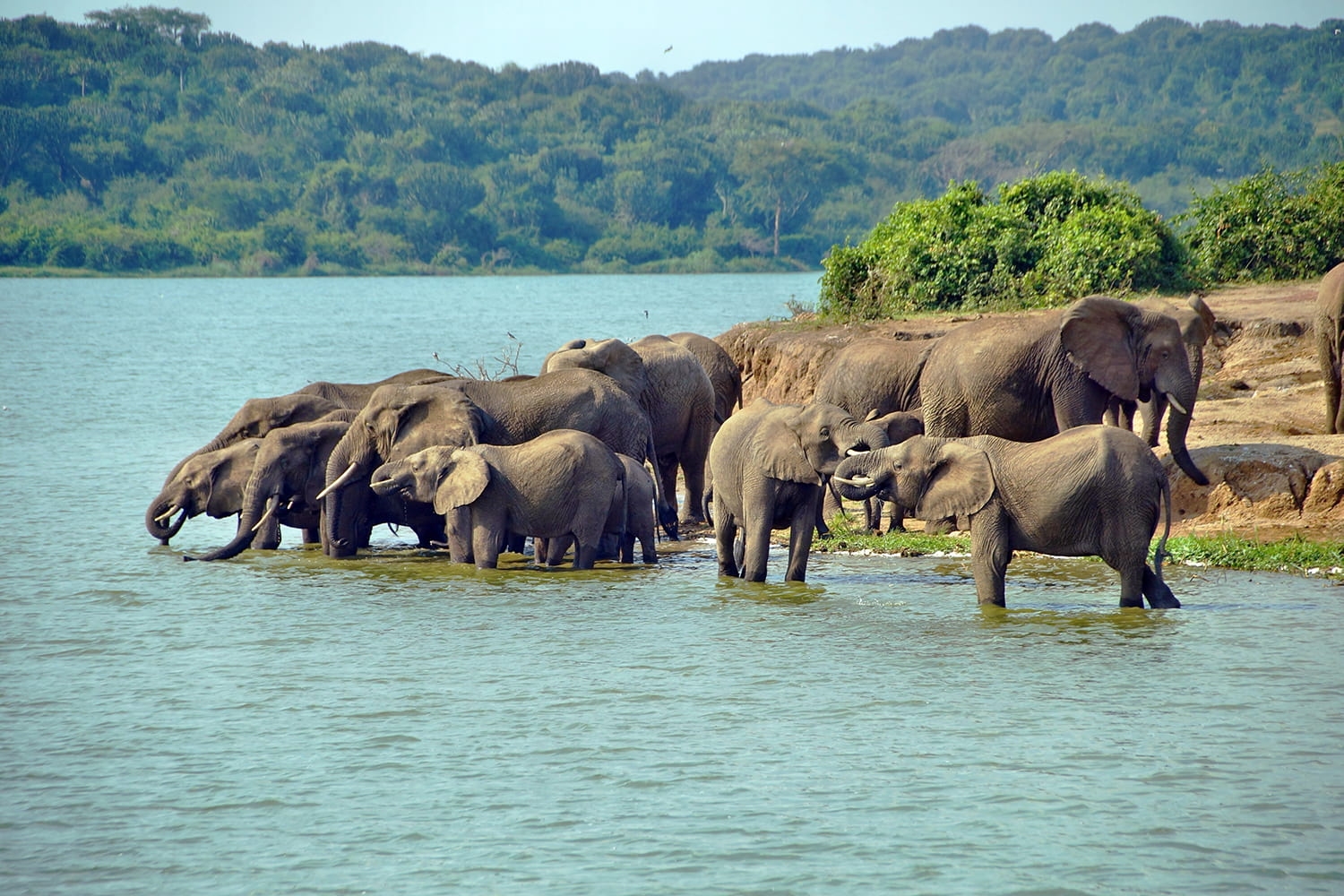
A 3-day safari to Queen Elizabeth National Park in Uganda typically includes a boat cruise on the Kazinga Channel, game drives in the Kasenyi plains for big game (lions, elephants), and a visit to the Ishasha sector for tree-climbing lions. Key tips include pre-booking accommodation and activities, hiring a guide, and visiting during dry seasons (June-August, December-February) for easier navigation.
3-days-trips-to-queen-elizabeth-national-park-for-chimpanzee-tracking-in-kyambura-gorge
3-days-uganda-safari-itinerary-to-queen-elizabeth-national-park
3-days-budget-queen-elizabeth-park-uganda-wildlife-safari-holiday
3-days-fly-luxury-uganda-safari-to-queen-elizabeth-national-park
3-Day Queen Elizabeth Park Safari
The 3-Day Queen Elizabeth Park Safari is a quintessential Ugandan adventure, offering a masterfully condensed exploration of the "Medley of Wonders." This 3 day itinerary traverses the dramatic Albertine Rift Valley, where the jagged Rwenzori Mountains provide a majestic backdrop to vast, predator-rich savannahs and shimmering volcanic crater lakes. Over three days, you will experience the park’s two most iconic highlights: a sunrise game drive across the Kasenyi Plains to track lions and elephants, and a boat safari on the Kazinga Channel, a natural waterway boasting the world's highest concentration of hippos. Whether you are navigating the prehistoric depths of the Kyambura Gorge for chimpanzee tracking or crossing the Equator, this tour provides a deep, soul-stirring connection to the rhythms of the African wild. It is the perfect high-impact journey for travelers who want to witness Uganda’s staggering biodiversity and raw, untamed beauty in a single, unforgettable long weekend.
Day 1: The Equator and the Rift Valley Descent
Your journey begins with an early morning departure from Kampala, heading west through a landscape of rolling green hills and vibrant roadside markets. You will make a mandatory stop at the Uganda Equator for a classic photo opportunity and a quick geographical experiment. After a local lunch in Mbarara, you descend the eastern escarpment of the Albertine Rift Valley, where the sheer scale of the park's plains first reveals itself. As you enter the park, enjoy an evening game drive through the Katwe Crater Drive, a route winding through ancient volcanic explosion craters and salt lakes. The sight of buffaloes and elephants against this prehistoric backdrop is a hauntingly beautiful introduction to the wilderness. You’ll check into your lodge just as the savanna night begins to hum with the calls of nocturnal life.
Day 2: Savanna Predators and the Kazinga Channel
Dawn is the most vital time for the hunt, so you’ll head to the Kasenyi Plains at 6:30 AM. These golden grasslands are the primary breeding grounds for Uganda Kob, which naturally attracts the park’s healthy prides of lions and the elusive leopard. Alongside an expert ranger, you’ll track these predators while encountering massive herds of Cape buffalo and African elephants. In the afternoon, the adventure shifts to the water for a 2-hour boat cruise on the Kazinga Channel. This natural waterway is a wildlife magnet; you will glide within meters of enormous pods of hippos, sunbathing Nile crocodiles, and thirsty elephants lining the banks. The sheer density of life and the symphony of over 600 bird species along the shore make this the most photogenic and rewarding highlight of the entire 3-day expedition.
Day 3: Primate Trekking and the Return Journey
On your final morning, you visit the stunning Kyambura Gorge, an "underground" forest hidden 100 meters below the savanna floor. You will descend into this lush, riverine canopy to track a habituated community of chimpanzees, hearing their thunderous hoots echoing off the gorge walls. Alternatively, you can explore the nearby Kalinzu Forest for a similarly intimate primate encounter. After an hour with our closest relatives, you begin the return journey toward Kampala. The drive winds back through the emerald tea estates of Bushenyi and the long-horned cattle farms of Ankole. A final stop at the Mpambire Royal Drum Makers allows you to see traditional craftsmanship before arriving back in the city by early evening. You leave with a full camera roll and a deep appreciation for the incredible biodiversity of the Pearl of Africa.
Strategic Planning for Your 3-Day Queen Elizabeth Safari
Book Ahead & Prioritize Permits
Securing your foundation early is the difference between a seamless adventure and a logistical headache. Because Queen Elizabeth is Uganda’s most popular savanna park, high-demand lodges—especially those on the Mweya Peninsula or near the Kasenyi Plains—often reach capacity months in advance during peak periods. If your heart is set on tracking chimpanzees in the Kyambura Gorge, you must treat permits as a priority. These are date-specific and strictly limited to ensure conservation; as of 2026, they are in high demand for short-stay travelers. Booking at least 3 to 4 months ahead allows your operator to sync your permit time with your lodge location, preventing long, fuel-consuming commutes across the park on the day of your trek.
Optimal Timing
While the park is a year-round destination, the dry seasons (June–August and December–February) offer the most consistent wildlife sightings. During these windows, the savanna grasses are shorter, stripping away the natural camouflage of predators like lions and leopards. More importantly, water becomes a scarce resource, forcing animals to congregate in predictable numbers around permanent sources like the Kazinga Channel. If you are a birding enthusiast, however, consider the "shoulder" months of May or September; the rains bring lush scenery and migratory species from Europe, though you’ll need a sturdy 4x4 to navigate the occasional soggy track.
Maximize Wildlife Viewing
With only 72 hours, efficiency is your best friend. Your itinerary should anchor around the Kasenyi Plains for dawn game drives (starting by 6:30 AM) when the air is cool and predators are still on the move. Pair this with a late afternoon boat cruise on the Kazinga Channel. This 2-hour voyage is statistically your best chance to see the "Big Four" in a single sitting, as elephants and buffaloes crowd the banks to bathe alongside thousands of hippos. By splitting your day between the savanna and the water, you cover two distinct ecosystems, ensuring your camera roll is packed with variety without the exhaustion of endless driving.
Locate Tree-Climbing Lions
The famous tree-climbing lions are the biological "celebrities" of the park, but they reside exclusively in the Ishasha Sector, roughly 2 to 3 hours south of the main Mweya hub. To make this work on a 3-day trip, dedicate your final morning to this region. The lions are most frequently spotted in the sprawling branches of ancient sycamore fig trees between 10:00 AM and 2:00 PM, seeking shade and escaping ground-dwelling insects. Using a local UWA ranger-guide is highly recommended here; they know the specific "home trees" of the three resident prides, significantly increasing your chances of seeing a 400-pound king of the jungle lounging like a housecat.
What to Pack
Safari success depends on your gear. High-quality binoculars (8x42 is ideal) are essential for spotting a leopard’s tail twitching in a thicket or identifying a rare kingfisher on the channel. Your clothing should be "safari-neutral"—khaki, olive, or tan—to blend into the environment and avoid attracting tsetse flies, which are drawn to bright blues and blacks. Even in the heat of the equator, mornings are surprisingly chilly due to the rift valley winds, so a fleece or warm jacket is a must for the early game drives. Don’t forget a high-capacity power bank; while lodges have improved, solar-powered charging can sometimes be limited during cloudy spells.
Transport Options
The journey from Kampala to the park takes approximately 6 to 7 hours by road. While the drive is a scenic tour of the Ugandan countryside, those on a strict 3-day budget of time should consider a domestic flight. Carriers like AeroLink operate 60-minute flights from Entebbe directly to the Mweya or Kasese airstrips. This "flight-in" option can save you nearly two days of transit, effectively turning a 3-day trip into a full 3-day wildlife experience. If you choose the road, ensure you use a 4x4 safari vehicle with a pop-up roof; the elevated vantage point is indispensable for photography when you’re deep in the tall grasses of the Kasenyi circuit.
When is the best time for a 3-day Queen Elizabeth park safari?
The dry seasons, spanning from June to August and December to February, are the gold standard for wildlife enthusiasts. During these months, the savanna grass is short, stripping away the natural camouflage of predators like lions and leopards. More importantly, as water sources inland dry up, massive herds of elephants and buffaloes are forced to congregate along the Kazinga Channel and permanent watering holes, making sightings almost guaranteed. While the "green seasons" (March–May and October–November) offer stunning emerald landscapes and lower lodge rates, the thick vegetation can make spotting smaller animals a challenge, and the unpaved tracks may require expert 4x4 navigation.
How long is the drive from Kampala to Queen Elizabeth National Park?
The journey from Kampala is a scenic odyssey taking roughly 7 to 8 hours. This timeframe accounts for the necessary stops that make the trip enjoyable, such as the mandatory photo-op at the Equator line in Kayabwe and a lunch break in Mbarara. The route typically takes you through the lush tea estates of Bushenyi or the rolling hills of the Ankole region. While the roads are mostly paved and in good condition, the final stretch into the rift valley can be winding. Starting your journey by 7:00 AM is essential to ensure you arrive at the park in time for an evening sunset game drive or a relaxing sundowner at your lodge.
What animals can I see in 3 days in Queen Elizabeth Park?
In just 72 hours, you can expect to check off four of the "Big Five." The park is home to massive populations of African elephants and Cape buffaloes, which are frequently seen in the Kasenyi Plains. The park's healthy lion prides are a major draw, alongside the more elusive leopard. The Kazinga Channel provides a front-row seat to record-breaking numbers of hippos and enormous Nile crocodiles. You will also encounter diverse antelope species, including the elegant Uganda Kob, waterbucks, and topis. For those with a keen eye, the giant forest hog—Africa’s largest pig—is a unique resident often spotted near the scrubby thickets.
Is a boat cruise included in the 3-day Queen Elizabeth safari itinerary?
Absolutely. A 2-hour boat cruise on the Kazinga Channel is a non-negotiable highlight of any 3-day trip. Usually scheduled for the afternoon of Day 2, this voyage allows you to see the park from a different perspective. While game drives involve searching for wildlife, the boat cruise brings the wildlife to you; animals must come to the water to drink and bathe. You will glide within meters of the shoreline, observing elephant families socializing and buffaloes wallowing in the mud. It is also a birdwatcher's paradise, where you can spot African fish eagles, pelicans, and kingfishers in staggering concentrations.
Which accommodation options are available in Queen Elizabeth National Park?
The park offers a spectrum of lodging to suit every budget. Luxury travelers often gravitate toward the iconic Mweya Safari Lodge, which offers panoramic views of the Kazinga Channel. Mid-range options like Kasenyi Safari Camp or Enganzi Lodge provide a perfect balance of comfort and "bush" authenticity, often featuring tented cottages with private decks. For budget-conscious adventurers, several eco-camps and community-run lodges near the Katunguru bridge offer clean, basic rooms or "lazy camping" setups. Staying near the park gates is a strategic move, as it minimizes transit time for those early morning game drives.
Are game drives done early in the morning?
Yes, and for good reason. Early morning game drives typically begin at 6:30 AM, just as the sun begins to crest over the rift valley escarpment. This is the most active time for predators; lions and leopards are often finishing their nocturnal hunts or patrolling their territories before the equatorial heat forces them into the deep shade. The morning light is also spectacular for photography, casting a golden hue over the Kasenyi Plains. Starting early also gives you the best chance to see the Uganda Kob lekking grounds in full swing, as the males compete for dominance in the cool morning air.
Is a 4x4 vehicle necessary for the safari?
A 4x4 vehicle is highly recommended, especially if you want to venture off the main transit roads. While the primary roads through the park are well-maintained, the specialized game-viewing tracks in the Kasenyi and Ishasha sectors can become slippery or muddy, even after a brief afternoon shower. A 4x4 safari vehicle—whether a Land Cruiser or a customized van—provides the necessary traction and clearance. More importantly, these vehicles are equipped with pop-up roofs, which are essential for unobstructed, 360-degree wildlife viewing and photography while keeping you safe and comfortable.
Can I see chimpanzees in 3 days?
Yes, a 3-day itinerary is perfectly timed to include a primate encounter on the final morning. The most dramatic option is the Kyambura Gorge, a 100-meter deep "underground" forest where a community of habituated chimpanzees resides. Alternatively, the nearby Kalinzu Forest offers a high success rate for chimp tracking and is often preferred by those looking for a slightly easier trek. Adding chimpanzees to your savanna safari provides a brilliant contrast, taking you from the wide-open plains into a lush, tropical canopy in a single journey, making your Ugandan experience truly comprehensive.
What should I pack for a 3-day safari in Uganda?
Packing smart is key to comfort. You need lightweight, neutral-colored clothing (khaki, tan, or olive) to blend in and avoid attracting insects. A warm jacket or fleece is essential for those chilly early morning game drives. Pack high-SPF sunscreen, a wide-brimmed hat, and a strong insect repellent. Don’t forget your binoculars and a camera with a good zoom lens. Since you’ll be in a remote area, bring a power bank and any necessary personal medications. Finally, ensure you have your passport and any required travel documents or permits in a waterproof bag.
What is the cost of a 3-day Queen Elizabeth safari?
The cost generally ranges from $600 to $900 per person, depending on your group size and the level of accommodation chosen. This price typically covers your 4x4 transport, fuel, a professional driver-guide, park entrance fees ($40 per 24 hours), and the Kazinga Channel boat cruise. Budget tours may utilize "lazy camping," while mid-range tours will include more established lodges. When booking, always verify if the price is "all-inclusive" regarding meals and bottled water, as these small costs can add up if they aren't factored into the initial package.
Do I need to carry cash for tips and souvenirs?
Yes, carrying Ugandan Shillings (UGX) is highly recommended. While major lodges and park gates may accept credit cards (often with a 3–5% surcharge), local markets, souvenir stands, and community guides work strictly in cash. Tipping is also a customary way to show appreciation for your driver-guide and park rangers; a small tip goes a long way in supporting the local economy. It is best to withdraw Shillings in Kampala or Mbarara, as ATMs are non-existent once you are deep inside the park boundaries.
Is it safe to go on a safari in Queen Elizabeth National Park?
Queen Elizabeth is very safe for international travelers. The park is managed by the Uganda Wildlife Authority (UWA), and rangers are stationed throughout the sectors. However, it is an unfenced wilderness, so safety depends on following the rules: never leave your vehicle during a game drive except in designated areas, and always follow your guide’s instructions. At night, stay within the confines of your lodge or camp. The animals are habituated to vehicles, but they are still wild; respecting their space ensures a safe and exhilarating encounter for everyone.
What is the best way to travel there?
Most travelers opt for the road trip from Kampala, as it allows for a more flexible schedule and the ability to stop at cultural landmarks along the way. However, if you are pressed for time, charter or scheduled flights from Entebbe to the Mweya or Kasese airstrips are available. These flights take only 60 to 75 minutes, effectively giving you two extra half-days of wildlife viewing. While flying is more expensive, it is the most comfortable way to maximize a short 3-day window, especially during the rainy season when road travel can be slower.
How do I book a 3-day safari?
The most reliable way is through a reputable local tour operator. They handle the complex logistics of booking lodge space, securing primate permits, and providing a certified driver-guide. Local operators have "boots on the ground" and can provide real-time updates on road conditions or wildlife movements. When choosing a company, look for those affiliated with the Association of Uganda Tour Operators (AUTO). Booking a package is usually more cost-effective than trying to coordinate transport and lodging separately, as operators often receive discounted "resident" or "contract" rates that they pass on to you.
What to expect from the Ishasha sector?
The Southern Ishasha sector is legendary for its tree-climbing lions. Unlike lions elsewhere that stay on the ground, these prides spend their afternoons lounging in the sprawling branches of ancient sycamore fig trees. This behavior is thought to be a way to escape the heat and the tsetse flies on the ground. Beyond the lions, Ishasha offers a much "wilder" feel than the northern sector, with fewer vehicles and vast vistas. It is also a great place to spot topis and herds of elephants crossing into the nearby Congo, offering a rugged, off-the-beaten-path conclusion to your 3-day adventure.
Booking 3 Days Queen Elizabth park with us Roads of Adventure safaris
Book a 3-day budget Queen Elizabeth National Park safari with Roads of Adventure Safaris. This 3-day safari covers tree-climbing lions in Ishasha, a Kazinga Channel boat cruise, game drives in the Kasenyi plains, and a stop at the Equator, offering an intimate wildlife experience with expert, professional guides.
