A 21-day Uganda Big Five and primate safari offers a comprehensive adventure, including gorilla and chimpanzee trekking, savannah game drives to spot lions, leopards, elephants, buffaloes, and rhinos, plus boat cruises, cultural tours, and scenic hiking in locations like Murchison Falls, Bwindi, Queen Elizabeth, and Kidepo Valley
21-days-magical-uganda-safari-tour
21-days-best-of-uganda-and-rwanda-safari-adventure
21-days-ultimate-east-africa-safari-holiday-tour-package
21-days-uganda-birding-safari-extravaganza-to-best-uganda-safari-parks
21-days-perfect-uganda-rwanda-safari-and-kenya-wildlife-safari-vacation
23-days-un-compare-bale-africa-safari-holiday-in-uganda-parks-and-reserves
Primate Tracking
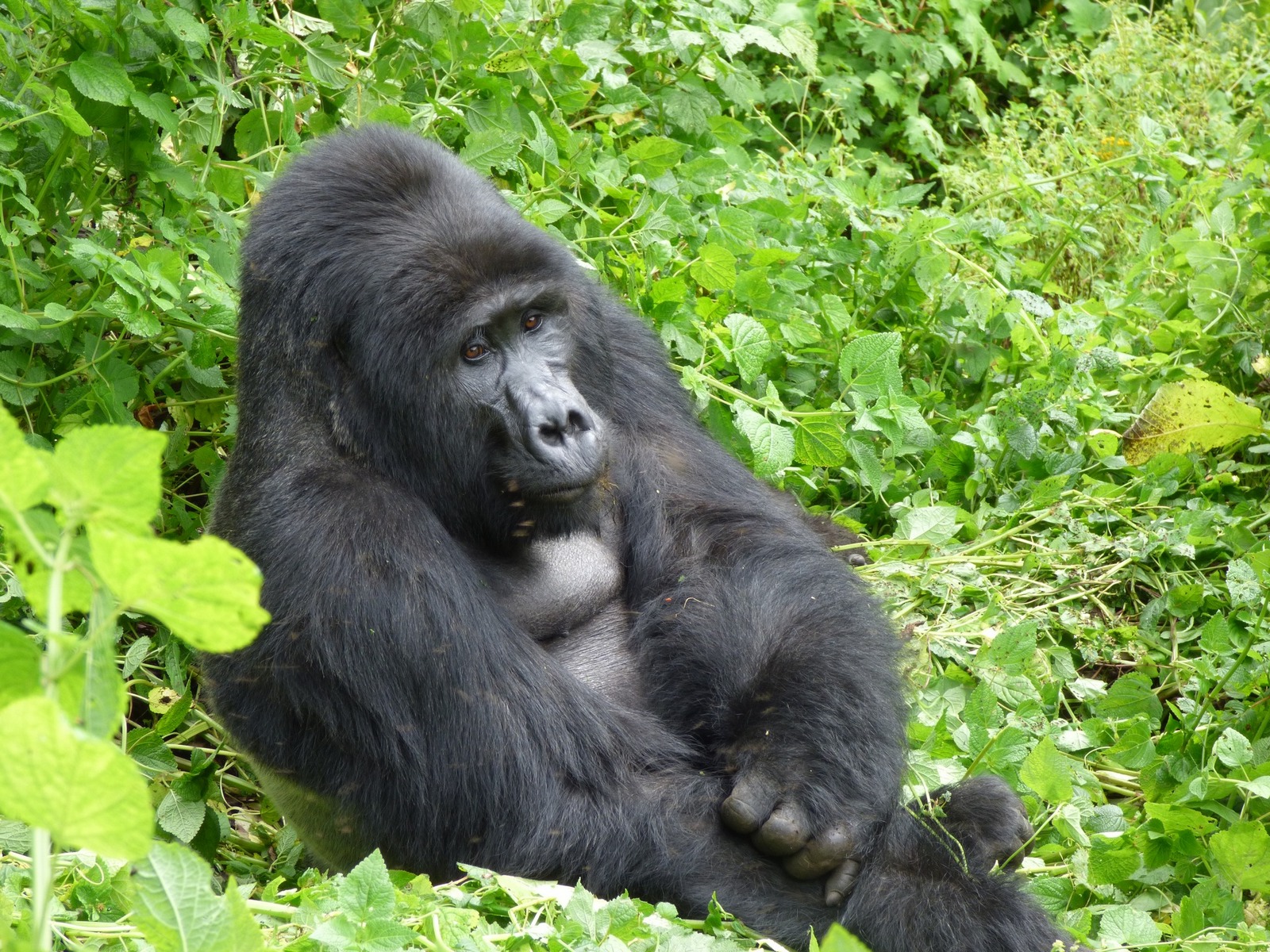
The cornerstone of a 21-Day Uganda Big Five Safari and Primates is the opportunity to stand in the presence of our closest biological relatives. Uganda is unique in that it hosts half of the world's mountain gorilla population within the ancient, mist-covered ridges of Bwindi Impenetrable National Park and the volcanic slopes of Mgahinga Gorilla National Park. These treks are life-changing; as you navigate through dense ferns and tangled vines, the anticipation builds until you finally encounter a silverback. Observing a gorilla family—their gentle social bonds, the playful antics of juveniles, and the quiet dignity of the matriarchs—offers a profound sense of connection to the natural world.
The primate journey continues in Kibale Forest National Park, celebrated as the "Primate Capital of the World." Here, you track habituated chimpanzee communities. Unlike the stationary nature of gorillas, chimpanzees are high-energy acrobats; the forest rings with their pant-hoots and the sound of them drumming on the buttress roots of giant mahogany trees. To round out the primate "triple crown," you head back to the Virunga foothills in Mgahinga for Golden Monkey tracking. these vibrant, fast-moving primates are endemic to the Albertine Rift and live in the bamboo zones of the volcanoes. Watching them leap through the stalks with their striking orange coats provides a beautiful contrast to the deep emerald of the rainforests. Together, these encounters provide a comprehensive look at Africa’s great apes and specialized monkeys, making Uganda a premier destination for primate enthusiasts.
Big Five Safari
A true "Big Five" experience in Uganda is a journey across diverse ecosystems, from the open northern savannahs to the remote valleys of the northeast. The quest begins at the Ziwa Rhino Sanctuary, the only place in Uganda where you can track southern white rhinos on foot. Walking within meters of these prehistoric-looking giants is a thrilling way to start your checklist. From there, the safari moves to Murchison Falls National Park and Queen Elizabeth National Park, where massive herds of African elephants and Cape buffaloes dominate the landscape. These parks are also prime territories for predators; lions are frequently seen on the Kasenyi Plains, and the elusive leopard is often spotted draped over a sausage tree limb in the early morning light.
A unique highlight of this 21-day itinerary is the search for the tree-climbing lions of Ishasha. Seeing these 400-pound cats lounging in the branches of sycamore fig trees is a rare behavioral phenomenon that defines the Ugandan savannah experience. To truly complete the wild adventure, the safari reaches Kidepo Valley National Park, located in the rugged northeast. Kidepo is often called the most "hidden gem" of Africa, offering a raw wilderness where you can find species not seen elsewhere in Uganda, such as the cheetah and the caracal. The sight of lions silhouetted against the jagged Morungole Mountains or elephants gathered in the sandy Kidepo River bed ensures that your "Big Five" journey is both comprehensive and geographically spectacular.
Water Activities
Water is the lifeblood of Uganda’s biodiversity, and exploring by boat offers a serene yet exciting perspective on wildlife. The Kazinga Channel boat cruise in Queen Elizabeth National Park is a world-class experience; this natural waterway connects Lake Edward and Lake George and hosts one of the world's highest concentrations of hippos. From the water, you can watch elephants, buffaloes, and monitor lizards come to drink, all while being surrounded by an incredible array of water birds like the Great White Pelican and the African Skimmer. The proximity to the animals from a boat allows for stable, intimate photography that is often impossible from a land-based vehicle.
In the north, the boat trip to the base of Murchison Falls is an encounter with raw power. As the boat chugs upstream against the Nile’s current, you pass giant Nile crocodiles and pods of hippos before reaching the point where the world’s longest river explodes through a narrow seven-meter gap. The mist from the falls creates permanent rainbows, and the sheer energy of the water is palpable. For a change of pace, the safari visits Lake Bunyonyi, a high-altitude volcanic lake dotted with 29 emerald islands. Here, the water is calm and bilharzia-free, perfect for traditional dugout canoeing or a quiet motorboat ride to explore the islands' history. Whether it is the thunder of the Nile or the silence of Bunyonyi, these water activities provide a cooling and scenic counterpoint to the heat of the savannah.
Adventure and Hiking
Uganda’s geography is a playground for those seeking an adrenaline rush or a physical challenge. The adventure begins in Jinja, the adrenaline capital of East Africa, situated at the Source of the Nile. Here, you can face the river’s power head-on with Grade 5 white water rafting through legendary rapids or take a leap of faith with a bungee jump over the historic river. These activities offer a high-octane break from traditional wildlife viewing and highlight the Nile's role as a center for global adventure tourism. The roaring sound of the rapids and the lush riverbanks provide a stunning backdrop for these heart-pounding experiences.
For those who prefer a more grounded challenge, the journey takes you to the foothills of Mount Elgon for a hike to the Sipi Falls. This series of three spectacular waterfalls offers a scenic trek through local coffee plantations and rocky escarpments, rewarding hikers with panoramic views of the Karamoja plains below. The cool mountain air and the spray from the falls make it a refreshing trek. Back in the primate regions, a nature walk in the Bigodi Wetland Sanctuary offers a different kind of adventure. Walking along the boardwalks and forest paths, you search for the Great Blue Turaco and various monkey species. This community-led walk is an exercise in "slow safari," where the focus is on the intricate details of the swamp ecosystem, from rare orchids to colorful butterflies, providing a well-rounded adventure profile for the 21-day tour.
Cultural Experiences
Uganda’s cultural tapestry is as diverse as its landscapes, and this itinerary provides deep access to the people who call this land home. In the remote northeast, you visit the IK people on Mount Morungole or the Karamojong in their traditional manyattas (villages). The Karamojong are traditional cattle herders with a proud, warrior-like culture; visiting their homesteads offers a rare look at a way of life that has remained largely unchanged by modern technology. Their vibrant dress and rhythmic dances provide a colorful contrast to the rugged wilderness of Kidepo.
In the southern forests, the Batwa Cultural Trail offers a poignant look at the "First People of the Forest." Having lived in the mountains for millennia, the Batwa share their ancestral knowledge of hunting, honey-gathering, and medicinal plants, keeping their heritage alive through storytelling and song. The cultural journey concludes in the bustling capital of Kampala, where you visit the Uganda Martyrs Shrine in Namugongo, a site of great religious and historical significance for the nation. Exploring the city's local markets, such as Nakasero or Owino, allows you to experience the organized chaos and entrepreneurial spirit of modern Ugandans. These human connections—from the remote mountains to the heart of the city—ensure that your safari is not just a wildlife tour, but a holistic exploration of the "Pearl of Africa" and its enduring spirit.
Scenic Exploration
The 21-day tour is a visual feast, designed to showcase the geological wonders created by the Great Rift Valley. A classic stop is the Equator, where you can stand in both the northern and southern hemispheres simultaneously for a mandatory photograph. This geographic landmark is more than just a photo op; it serves as a reminder of Uganda’s tropical position and the unique climate that supports its vast biodiversity. From here, the journey moves into the Crater Lakes region near Fort Portal. This landscape is pockmarked with dozens of "explosion craters"—extinct volcanic calderas that have filled with water, creating a surreal and beautiful terrain of emerald lakes surrounded by steep, green ridges and tea estates.
The scenic exploration reaches a geothermal peak at the Sempaya Hot Springs in Semliki National Park. These springs are a spectacular display of the earth’s internal heat, with water bubbling up at temperatures high enough to boil an egg. The "female" and "male" springs are set against the backdrop of the only lowland tropical forest in East Africa, giving the area a prehistoric feel. The drive through the Semliki Valley offers views of the Blue Mountains in the Congo, while the descent down the Albertine Rift escarpment provides breathtaking vistas of Lake Albert. These scenic highlights ensure that every transit day is an experience in its own right, as you witness the dramatic shifts in topography—from the snow-capped Rwenzori foothills to the geothermal wonders of the rift floor.
21 Days Uganda big five safari and primate experience
The 21 Days Uganda big five safari and primate experience is the ultimate grand tour of the "Pearl of Africa," offering a comprehensive loop through the country’s most diverse and remote landscapes. This three-week expedition is meticulously designed to balance high-octane adventure with profound wildlife encounters. From the thundering Source of the Nile and the dramatic heights of Sipi Falls to the rugged, untouched wilderness of Kidepo Valley, every stage of the journey reveals a new facet of Uganda’s natural beauty. You will track the "Big Five" across vast savannahs, stand in the presence of mountain gorillas in Bwindi’s ancient forests, and observe chimpanzees in the lush canopy of Kibale. The 21 Days Uganda big five safari and primate experience also weaves in serene moments of reflection at Lake Bunyonyi and cultural immersions with local communities. It is a transformative odyssey that captures the wild heart and vibrant spirit of one of Africa’s most biodiverse nations.
Day 1: Arrival and Entebbe Warmth
Your 21 Days Uganda big five safari and primate experience begins at Entebbe International Airport, situated on the lush shores of Lake Victoria. Upon arrival, you are greeted by the tropical breeze and transferred to your lodge. Depending on your arrival time, you may explore the Entebbe Botanical Gardens, a haven for birdwatchers where you can spot the Great Blue Turaco and black-and-white colobus monkeys. This day is about acclimatizing to the "Pearl of Africa" and recovering from your flight. You enjoy a quiet dinner overlooking the lake, perhaps tasting the local Tilapia. As the first night of your 21 Days Uganda big five safari and primate experience settles in, the sounds of the African night provide a soothing soundtrack, marking the peaceful commencement of a journey that will soon take you into the heart of the wild.
Day 2: Kampala Highlights and Transfer to Jinja
The 21 Days Uganda big five safari and primate experience moves through the bustling capital of Kampala. You visit the Uganda Martyrs Shrine at Namugongo and the vibrant craft markets to see the city's entrepreneurial spirit. In the afternoon, you drive east through the Mabira Forest and sprawling tea estates toward Jinja. As you cross the bridge over the Nile, you arrive at the historic town where the world’s longest river begins its 4,000-mile journey north. Jinja’s colonial charm and riverside setting provide a stunning backdrop for your first evening on the Nile. This transit day on the 21 Days Uganda big five safari and primate experience perfectly transitions from the urban energy of the capital to the adventure-ready atmosphere of the river’s source, where the water's roar hints at the excitement scheduled for tomorrow.
Day 3: Adventure at the Source of the Nile
Today, the 21 Days Uganda big five safari and primate experience reaches its first adrenaline peak in Jinja. You can choose to face the legendary rapids of the White Nile with world-class white-water rafting or take a leap of faith with a bungee jump over the river. For a more serene experience, a boat ride to the exact point where the Nile exits Lake Victoria offers a moment of great geographic significance. You visit the John Speke monument and explore the lush islands that dot the river. In the afternoon, you can explore Jinja’s vibrant streets by bicycle or quad bike. This day of the 21 Days Uganda big five safari and primate experience celebrates the power of water and the spirit of adventure, leaving you invigorated for the journey toward the eastern highlands tomorrow.
Day 4: Sipi Falls Hike and Mount Elgon Views
The 21 Days Uganda big five safari and primate experience heads toward the foothills of Mount Elgon to visit Sipi Falls. This area is home to a series of three spectacular waterfalls that plunge over the edge of a massive basalt cliff. You embark on a guided hike through local coffee plantations, where you learn about the "seed to cup" process of some of the world's finest Arabica beans. Standing behind the curtain of the 100-meter main fall is a refreshing and powerful experience. The trail offers panoramic views of the Karamoja plains stretching out below into the distance. As the sun sets over the escarpment, the cool mountain air provides a tranquil environment for rest. This scenic highlight of the 21 Days Uganda big five safari and primate experience showcases Uganda’s lush eastern topography.
Day 5: Drive to Kidepo Valley National Park
The 21 Days Uganda big five safari and primate experience embarks on one of its most adventurous legs, driving north into the remote Karamoja region. The landscape transforms from the green hills of Sipi into vast, semi-arid savannahs punctuated by jagged mountain ranges. This is a true journey off the beaten path, passing through traditional Karamojong villages where life follows ancient pastoral rhythms. As you enter Kidepo Valley National Park, you feel the isolation and raw beauty of what is often called the most "hidden gem" in Africa. The park's rugged mountains and golden plains provide a stark, stunning contrast to the regions visited earlier. Arriving at your lodge, the sight of a lion silhouetted against the Morungole Mountains signals your arrival in the heart of the 21 Days Uganda big five safari and primate experience.
Day 6: Exploring the Wilderness of Kidepo
Morning on the 21 Days Uganda big five safari and primate experience is dedicated to exploring the Narus Valley. Kidepo is unique because it hosts species found nowhere else in Uganda, such as the cheetah and the caracal. During your game drive, you look for massive herds of buffalo—sometimes numbering over a thousand—and the elegant Rothschild’s giraffe. In the afternoon, you visit a Karamojong manyatta (village) to learn about their proud warrior culture, traditional dances, and cattle-herding lifestyle. The interaction is a profound cultural pillar of the 21 Days Uganda big five safari and primate experience, offering insight into a people who have lived in harmony with this harsh landscape for centuries. The day ends with a sundowner overlooking the Kidepo River bed, surrounded by the wild silence of one of the world's last great wildernesses.
Day 7: Kidepo to Murchison Falls Region
The 21 Days Uganda big five safari and primate experience begins its journey south toward the Murchison Falls region. The drive takes you through the northern towns of Kitgum and Gulu, offering a look at the resilience and development of Northern Uganda. The landscape shifts again as you approach the Nile basin, with the vegetation becoming greener and more tropical. You arrive at the northern gate of Murchison Falls National Park in the late afternoon. As you settle into your lodge, the sound of hippos grunting in the distance reminds you that you are back in the land of the "Big Five." This transit day on the 21 Days Uganda big five safari and primate experience bridges the gap between the remote northern mountains and the lush banks of the Victoria Nile.
Day 8: Murchison Savannah and Boat Cruise
Today, the 21 Days Uganda big five safari and primate experience focuses on the Buligi Peninsula. An early morning game drive reveals lions, leopards, and elephants foraging in the borassus palm forests. In the afternoon, you board a boat for the famous cruise toward the base of Murchison Falls. You will see massive Nile crocodiles and hippos lining the banks, while elephants often come down to the water to bathe. The boat reaches the "Devil’s Cauldron," where the entire Nile explodes through a seven-meter gap, creating a thunderous display of natural power. You can choose to hike to the top of the falls to feel the earth shake beneath you. This day is a quintessential part of the 21 Days Uganda big five safari and primate experience, combining classic land safari with an epic river journey.
Day 9: Ziwa Rhinos and Murchison Exploration
The 21 Days Uganda big five safari and primate experience includes a vital stop at the Ziwa Rhino Sanctuary. Here, you have the rare opportunity to track southern white rhinos on foot alongside expert rangers. This successful reintroduction project is the only place in Uganda to see these prehistoric giants in the wild, completing your "Big Five" checklist. In the afternoon, you return to Murchison Falls to explore the Nile Delta, where the river enters Lake Albert. This area is a haven for water birds, including the rare and prehistoric-looking Shoebill stork. The sunset over the delta provides a golden conclusion to your time in the park. This day reinforces the conservation theme of the 21 Days Uganda big five safari and primate experience, highlighting the efforts to protect Uganda’s most endangered species.
Day 10: Transfer to Kibale Forest National Park
The 21 Days Uganda big five safari and primate experience takes a scenic route south toward Fort Portal. The drive follows the Albertine Rift escarpment, offering breathtaking views of Lake Albert and the Blue Mountains of Congo in the distance. You pass through vibrant tea estates that carpet the hills in a brilliant green. As you approach the "Primate Capital of the World," the air becomes cooler and the vegetation denser. Fort Portal, nestled in the shadow of the Rwenzori Mountains, serves as the gateway to the tropical forests. You arrive at your lodge on the edge of Kibale Forest in the late afternoon. The sound of chimpanzees hooting in the distance signals the start of the primate-focused chapter of your 21 Days Uganda big five safari and primate experience.
Day 11: Chimpanzee Tracking and Bigodi Walk
Today is a major highlight of the 21 Days Uganda big five safari and primate experience. You enter Kibale Forest to track habituated chimpanzees. Following their vocalizations through the canopy, you spend an hour observing our closest relatives as they groom, play, and forage. In the afternoon, you take a nature walk through the Bigodi Wetland Sanctuary. This community-led project is a birdwatcher's paradise and home to eight primate species, including the Red Colobus monkey. You might spot the Great Blue Turaco among the lush swamp vegetation. This day of the 21 Days Uganda big five safari and primate experience emphasizes the biodiversity of the rainforest and the success of community-based conservation, offering a deep dive into the complex social lives of primates and the vibrant life of the African wetlands.
Day 12: Exploring Semliki National Park
The 21 Days Uganda big five safari and primate experience ventures into the Semliki Valley, a region where the East African savannah meets the Central African rainforest. You visit the Sempaya Hot Springs, where boiling water bubbles from the earth at temperatures high enough to cook an egg. The "male" and "female" springs are set against a backdrop of ancient forest and the Blue Mountains. You may also visit the Batwa pygmy community to learn about their forest traditions and survival skills. The drive back toward Fort Portal offers stunning views of the Rwenzori peaks and the winding Semliki River. This day of the 21 Days Uganda big five safari and primate experience showcases the geothermal wonders and unique cross-continental ecology that makes the Albertine Rift so geographically fascinating.
Day 13: Crater Lakes and Rwenzori Foothills
Morning on the 21 Days Uganda big five safari and primate experience is spent exploring the "Top of the World" crater lakes region. This landscape is pockmarked with dozens of extinct volcanic calderas, now filled with sparkling emerald water and surrounded by steep, green ridges. You hike to various viewpoints that offer panoramic vistas of the Rwenzori Mountains and the Queen Elizabeth plains below. The afternoon is spent at leisure or visiting the Amabere Ga Nyina Mwiru caves, where stalactites are intertwined with local mythical legends. The serenity of the lakes and the dramatic mountain backdrop provide a peaceful "safari pause." This scenic day of the 21 Days Uganda big five safari and primate experience focuses on the volcanic history that has shaped the geography and beauty of Western Uganda.
Day 14: Transfer to Queen Elizabeth National Park
The 21 Days Uganda big five safari and primate experience heads south into the famed Queen Elizabeth National Park. The drive takes you across the equator line, where you stop for photographs in both hemispheres. As you enter the park, you are greeted by views of the Kazinga Channel and the vast Kasenyi Plains. You embark on an evening game drive to look for lions, hyenas, and the beautiful Uganda kob. The park’s diverse habitats, ranging from savannah to wetlands, host nearly 100 mammal species. You settle into your lodge overlooking the channel, where the sound of hippos and the sight of elephants at the water's edge are common. This transit day on the 21 Days Uganda big five safari and primate experience reintroduces you to the classic big-game savannahs.
Day 15: Kazinga Channel and Ishasha Lions
Today, the 21 Days Uganda big five safari and primate experience explores the aquatic heart of the park. You board a boat for a cruise on the Kazinga Channel, which holds one of the world's highest concentrations of hippos. You will also see Nile crocodiles and elephants cooling off at the water's edge. In the afternoon, you drive toward the remote Ishasha sector in the south. This area is world-famous for its tree-climbing lions, which can be seen lounging in the branches of sycamore fig trees. Spotting a pride of lions high above the ground is a surreal wildlife highlight of the 21 Days Uganda big five safari and primate experience. The plains of Ishasha also host large herds of Topi and buffalo, providing a raw and wild savannah atmosphere.
Day 16: Bwindi Forest and Batwa Culture
The 21 Days Uganda big five safari and primate experience transitions from the savannah to the ancient Bwindi Impenetrable National Park. The drive through the Kigezi highlands, known as the "Switzerland of Africa," offers breathtaking views of terraced hills and mist-covered valleys. Upon arrival in the Bwindi region, you participate in the Batwa cultural trail. The Batwa, the original inhabitants of the forest, share their ancestral knowledge of hunting, fire-making, and medicinal plants. Hearing their songs in the forest provides a poignant look at a culture nearly lost to time. This day of the 21 Days Uganda big five safari and primate experience prepares you emotionally and physically for the gorilla trekking adventure, as you settle into a lodge on the edge of the world's most famous primate sanctuary.
Day 17: Gorilla Trekking in Bwindi
This is the emotional peak of the 21 Days Uganda big five safari and primate experience. After a briefing, you enter the thick, "impenetrable" forest to track a habituated family of mountain gorillas. The trek can be challenging, navigating steep ridges and thick vines, but the reward is life-changing. You spend one sacred hour just meters away from a silverback and his family, watching them forage, groom, and play. Their gentle nature and human-like expressions offer a profound connection to the natural world. This encounter is a testament to the success of regional conservation efforts and is the cornerstone of the 21 Days Uganda big five safari and primate experience. Returning from the forest, you carry a new perspective on our place in nature and memories that will last a lifetime.
Day 18: Transfer to Lake Bunyonyi
After the intensity of the gorilla trek, the 21 Days Uganda big five safari and primate experience heads to Lake Bunyonyi for relaxation. Known as the "place of many little birds," this lake is dotted with 29 emerald islands and is surrounded by steep, terraced hillsides. The atmosphere is incredibly serene, making it the perfect place to reflect on your journey. You can enjoy a sunset boat ride or simply relax at your lakeside lodge. The lake is bilharzia-free, offering a rare opportunity for a refreshing swim in the African wild. This day of the 21 Days Uganda big five safari and primate experience provides a much-needed "recharge," allowing you to soak in the beauty of one of Uganda's most picturesque landscapes before heading toward the final national park.
Day 19: Islands and Lake Mburo Park
Morning on the 21 Days Uganda big five safari and primate experience is spent exploring the islands of Lake Bunyonyi by dugout canoe, learning about local legends like Punishment Island. In the afternoon, you transfer to Lake Mburo National Park, the smallest of Uganda's savannah parks but rich in biodiversity. Lake Mburo is the only place in southern Uganda where you can see Burchell’s zebra and the majestic Eland antelope. As you enter the park, you may embark on a night game drive to look for elusive leopards and nocturnal animals like bushbabies. The park’s mosaic of acacia woodland and wetlands provides a different aesthetic to the larger savannahs visited earlier. This day of the 21 Days Uganda big five safari and primate experience focuses on the unique species and intimate charm of Lake Mburo.
Day 20: Walking Safari and Return toward Entebbe
The 21 Days Uganda big five safari and primate experience offers a unique opportunity for a walking safari in Lake Mburo. Accompanied by an armed ranger, you walk among zebras, giraffes, and impalas, experiencing the wild from a grounded perspective. In the afternoon, you begin the journey back toward Entebbe. You stop at the Equator crossing for a final commemorative photograph and a chance to browse the craft markets for last-minute souvenirs. You arrive at your lodge near the airport in the late evening, enjoying a farewell dinner as you recount the highlights of your three-week expedition. This final transit day of the 21 Days Uganda big five safari and primate experience brings you full circle, transitioning from the wild plains back toward the shores of Lake Victoria.
Day 22: Final Departure
Your 21 Days Uganda big five safari and primate experience concludes today. Depending on your flight schedule, you may visit the Entebbe Zoo or take a boat trip to find the Shoebill stork at Mabamba Swamp. You are then transferred to Entebbe International Airport for your departure. As you board your flight, you carry with you the sights of the thundering Nile, the soulful eyes of a mountain gorilla, and the warmth of the Ugandan people. The 21 Days Uganda big five safari and primate experience has provided a comprehensive and transformative look at the "Pearl of Africa," leaving you with a deep appreciation for its wildlife, culture, and landscapes. Your journey ends, but the spirit of Uganda remains with you as you head home.
What are the best places for Big Five safari in Uganda?
Uganda offers a unique "Big Five" experience that spans across the Nile basin and the remote northern savannahs. Unlike some neighboring countries where these animals might be found in a single park, Uganda’s Big Five are spread across specific conservation strongholds, making the journey to find them a true cross-country expedition. The core of this experience lies in Murchison Falls National Park, the country’s largest protected area. Here, the Victoria Nile divides the park into a northern and southern sector; the northern savannah is a haven for four of the five. You will find massive herds of elephants and Cape buffaloes grazing alongside the river, while the golden grasslands provide the perfect camouflage for lions and the more elusive leopards.
The final piece of the puzzle is found at the Ziwa Rhino Sanctuary in Nakasongola. This is the only place in Uganda where you can see the Southern White Rhino in the wild. Following a tragic period of extinction in the 1980s, the sanctuary has successfully reintroduced these prehistoric giants through a dedicated breeding program. Tracking them on foot with an expert ranger is a visceral, heart-pounding experience that you simply cannot get from a safari vehicle. To truly complete a high-end Big Five circuit, many travelers also head to Queen Elizabeth National Park for its unique tree-climbing lions and Kidepo Valley National Park for the most rugged and remote predator sightings. By combining these locations, a 21-day safari ensures that you don't just "tick a box" but rather understand the diverse habitats—from rhino-filled woodlands to palm-fringed lion territories—that allow these iconic species to thrive.
Can I see Mountain Gorillas twice in 21 days?
A 21-day itinerary provides the luxury of time, allowing for a "Double Gorilla Trek" which is often cited by travelers as the most profound highlight of their journey. Tracking gorillas twice isn't just about a second look; it’s about experiencing two completely different environments and social dynamics. Most visitors start in Bwindi Impenetrable National Park, a UNESCO World Heritage site known for its ancient, multi-layered rainforest. Bwindi is "impenetrable" for a reason—the trekking is raw, steep, and deeply immersive. Seeing a family here feels like a true jungle discovery.
The second trek typically takes place in Mgahinga Gorilla National Park, which is part of the larger Virunga Conservation Area. The experience here is starkly different; you are hiking on the slopes of three extinct volcanoes (Mount Muhabura, Gahinga, and Sabinyo). The vegetation is dominated by bamboo zones and open mountain forests, which often provides better light for photography and a more panoramic backdrop compared to the dense canopy of Bwindi. Furthermore, every gorilla family has a unique personality. One day you might witness a dominant silverback asserting his authority, while the next trek might focus on the playful antics of juveniles and nurturing mothers. By tracking twice, you move past the initial "shock and awe" of the first encounter and begin to notice the subtle, human-like behaviors and complex social structures that make these great apes our most fascinating relatives.
Where is the best place to track chimpanzees?
When it comes to our closest cousins, Kibale National Park stands undisputed as the "Primate Capital of the World." Hosting the highest density and diversity of primates in Africa, Kibale is home to over 1,500 chimpanzees. What sets Kibale apart is the quality of its habituation. There are two primary ways to experience the chimps here. The Standard Chimpanzee Trek is a 2-to-4-hour excursion where you find a habituated community and spend one hour observing them as they forage, groom, and vocalize. It is a high-energy experience, as chimps are much more mobile and vocal than gorillas.
For the true enthusiast, the Chimpanzee Habituation Experience (CHEX) is a full-day immersion. You join researchers and rangers as they follow a semi-habituated group from the moment they leave their nests at dawn until they build new ones at dusk. This allows you to witness behaviors rarely seen on short treks, such as hunting, territorial patrolling, and intricate social politics. Beyond the chimps, Kibale's 795 square kilometers of lush rainforest provide sightings of 12 other primate species, including the rare L’Hoest’s monkey and the Red Colobus. The well-maintained trail systems and the expert knowledge of the Uganda Wildlife Authority guides make Kibale the premier global destination for anyone seeking a deep, meaningful connection with our primate kin in a truly wild setting.
What is the best time for a 21-day Uganda safari?
Timing a three-week journey across Uganda requires balancing the needs of the rainforests and the savannahs. The "Gold Standard" windows are the Dry Seasons: June to September and December to February. During these months, the weather is most predictable, which is crucial for a 21-day trip that involves significant driving and trekking. In the primate forests of Bwindi, Kibale, and Mgahinga, the dry season means trails are less muddy and slippery. While it can still rain (it is a rainforest, after all), the downpours are usually brief, making the strenuous 1-to-7-hour gorilla treks much more manageable and safer.
In the savannah parks like Murchison Falls, Queen Elizabeth, and Kidepo Valley, the dry season is the peak time for classic game viewing. As smaller water holes in the bush dry up, animals are forced to congregate in massive numbers around permanent water sources. You will see hundreds of elephants and buffaloes lining the banks of the Nile and the Kazinga Channel, while predators like lions and leopards loiter nearby, waiting for a meal. The grass is also shorter during these months, which significantly improves visibility for spotting well-camouflaged cats. While the "Emerald Season" (March–May and October–November) offers beautiful, lush scenery and lower lodge rates, the heavy rains can turn roads into mud traps and make trekking exceptionally difficult. For a 21-day expedition, the dry months ensure that your logistics remain smooth and your wildlife sightings remain at their absolute peak.
Do I need a special permit for gorillas and chimpanzees?
Securing permits is the most critical logistical step of a Uganda safari, as they are the "golden tickets" to the world's most exclusive wildlife encounters. For Mountain Gorillas, the Uganda Wildlife Authority (UWA) issues a limited number of permits per day—currently priced at $800 for foreign non-residents. Only eight people are allowed to visit a single gorilla family for exactly one hour. Because Bwindi has four different sectors (Buhoma, Ruhija, Rushaga, and Nkuringo) and Mgahinga has one, these permits sell out months in advance, especially during the peak dry seasons. Your permit fee goes directly toward the conservation of the forest and the protection of the gorillas from poaching and habitat loss.
Similarly, Chimpanzee Tracking permits in Kibale are required and cost approximately $250. These permits are also capped to prevent over-tourism and to minimize stress on the chimp communities. It is important to know that permits are location-specific; you cannot use a Bwindi permit in Mgahinga, or vice-versa. Most travelers work with a licensed tour operator who handles the complex booking process with UWA, ensuring that your permits align perfectly with your 21-day route. Additionally, these permits come with strict health regulations—because primates share 98% of our DNA, you will be barred from trekking if you have a cold or flu, a measure designed to prevent the transmission of human diseases to these endangered populations.
What other primates can I see during the trip?
While gorillas and chimpanzees are the "headliners," a 21-day safari reveals that Uganda is a primate-lover's paradise far beyond the great apes. In the bamboo forests of Mgahinga Gorilla National Park, you can track the Golden Monkey. These striking, orange-coated primates are endemic to the Albertine Rift and are known for their playful, fast-moving nature. Seeing them leap through the bamboo stalks is a vibrant contrast to the slower, more deliberate movements of the mountain gorillas. The experience is often "lighter" and more energetic, making it a fantastic addition to the trekking circuit.
As you move through the various national parks, the diversity continues. In Kibale Forest, you are likely to encounter the Red Colobus monkey and the Grey-cheeked mangabey. Along the Kazinga Channel in Queen Elizabeth Park, Black-and-white colobus monkeys can be seen lounging in the riverside trees, their long white tails hanging like ornaments. You will also encounter the Olive baboon, a common but fascinatingly social primate often seen along the roadsides in Murchison Falls. In the southern forests, keep an eye out for the L’Hoest’s monkey with its distinctive white "beard." For those interested in nocturnal life, night walks in Kibale or Lake Mburo offer the chance to see Pottos and Bushbabies (Galagos), whose large eyes glow in the spotlight. This staggering variety—ranging from the massive silverback to the tiny bushbaby—is why Uganda remains the ultimate destination for primate enthusiasts.
What to expect during a boat cruise on the Nile?
A boat cruise on the Victoria Nile in Murchison Falls National Park is arguably the most iconic water safari in Africa. As you depart from the Paraa jetty, the river is wide and calm, fringed by papyrus and borassus palms. The primary expectation here is "constant action." You will sail past hundreds of hippos bobbing in the water and Nile crocodiles—some of the largest on the continent—basking on the sandbanks with their mouths agape. Elephants frequently come down to the water’s edge to bathe and drink, providing a perspective you can’t get from a car. The birdlife is equally staggering, with the chance to see the Red-throated bee-eater and the iconic African Fish Eagle.
The climax of the trip is the approach to the base of the falls. The river narrows, the current strengthens, and the water turns a frothy white. You are treated to a front-row seat of the world's most powerful waterfall, where the Nile explodes through a 7-meter gap in the rocks. For the adventurous, the boat can drop you off at the "Baker's Point" for a hike to the top of the falls. This 45-minute climb takes you along the edge of the gorge, allowing you to feel the earth vibrate as 300 cubic meters of water per second plunge 43 meters down. It is a sensory-rich experience where the spray of the Nile, the roar of the water, and the sight of permanent rainbows create a powerful conclusion to your river journey.
Is it possible to visit local communities?
A 21-day Uganda safari is incomplete without acknowledging the "human" side of the landscape. Uganda is home to over 50 different tribes, and cultural immersion is a core pillar of the experience. One of the most poignant visits is the Batwa Cultural Trail in the southwest. The Batwa were the original "Keepers of the Forest" before it was gazetted as a national park. During the trail, they share their ancestral knowledge of hunting, honey gathering, and medicinal plants. Hearing their songs echo through the Garama Cave is a powerful way to understand the complex relationship between indigenous people and modern conservation.
In the remote north, you can visit the Karamojong and the IK people. The Karamojong are traditional cattle herders with a culture similar to the Maasai, living in fortified villages called manyattas. Visiting them offers a raw look at a pastoralist lifestyle that has remained largely unchanged for centuries. Near Kibale, the Bigodi Community Walk shows a different side of development; this community-run project uses tourism revenue to build schools and women's health clinics. Whether you are learning how to make traditional banana juice, visiting a local market in Kampala, or watching a vibrant "Intore" dance performance, these interactions provide the soul of the safari. They turn a wildlife trip into a holistic journey, showing that the survival of Uganda's animals is inextricably linked to the well-being and traditions of its people.
Which national park is best for tree-climbing lions?
The Ishasha sector of Queen Elizabeth National Park is the premier destination in the world to witness the unique phenomenon of tree-climbing lions. While lions are generally ground-dwelling predators, the prides in Ishasha have adapted to spending their days high up in the spreading limbs of ancient sycamore fig trees and acacia trees. Seeing a 400-pound lion draped over a branch like a giant house cat is a surreal sight that defines the Ugandan safari experience. Experts believe they climb to escape the heat of the ground and to avoid the irritating bites of tsetse flies and ground insects, while also enjoying a better vantage point for spotting prey.
Photographically, Ishasha is a goldmine. Because the lions are often stationary for hours in the shade of the canopy, you can capture detailed shots of their powerful bodies against the green foliage—a stark contrast to the typical golden-grass background of most lion photos. The best time to see them is during the heat of the day, between 11:00 AM and 3:00 PM. Aside from the lions, the Ishasha sector is much quieter and more remote than the northern part of the park, offering a peaceful savannah environment filled with Topis, buffaloes, and elephants. It is a mandatory stop for any serious wildlife enthusiast on a 21-day journey, providing a rare look at how animal behavior can evolve in specific, localized environments.
What is the Bigodi Wetland Sanctuary walk?
The Bigodi Wetland Sanctuary walk is a community-led conservation success story located on the edge of Kibale Forest. This guided nature walk takes you through a lush swamp and secondary forest that acts as an important wildlife corridor for primates and birds. The sanctuary is managed by the Kibale Association for Rural and Environmental Development (KAFRED), meaning your visit directly funds local infrastructure, such as schools and bridges. During the 3-hour walk, you are likely to spot up to eight different primate species, including the Red Colobus, Black-and-white colobus, L’Hoest’s monkey, and the Grey-cheeked mangabey.
For birdwatchers, Bigodi is often described as a paradise. It is the best place in the region to see the magnificent Great Blue Turaco, whose vibrant blue and yellow feathers are a highlight of the canopy. The swamp is home to over 200 bird species, including kingfishers, hornbills, and the elusive papyrus gonolek. Beyond the wildlife, the walk provides a window into the local way of life. You can visit a traditional healer, see how coffee is grown and roasted, and watch local women weave intricate baskets from swamp palms. It is a sensory-rich experience that bridges the gap between the wild forest and the human community, proving that wildlife protection and human development can go hand in hand.
How challenging is gorilla trekking?
Gorilla trekking is widely regarded as one of the most physically demanding yet rewarding wildlife experiences on the planet. The difficulty is categorized as "moderate to strenuous" because you are hiking through a primary rainforest with no formal trails. You may spend anywhere from 1 to 7 hours navigating steep ridges, tangled vines, and thick undergrowth at altitudes ranging from 2,000 to 3,000 meters. The ground is often wet and slippery, and the "Impenetrable" forest lives up to its name, requiring you to duck under branches and step over massive root systems.
Despite the challenge, the experience is designed to be inclusive. The park rangers set a manageable pace and take frequent breaks. For those concerned about their fitness, hiring a porter (approx. $20) is a game-changer; they carry your daypack and provide a steady hand during the steepest sections. For travelers with significant mobility issues, a "sedan chair" carried by local porters can be arranged. The physical exertion is quickly forgotten the moment you find the gorilla family. The silent, powerful presence of a silverback just meters away provides an adrenaline rush that fuels your return hike. It is a test of endurance that rewards you with a profound sense of accomplishment and a life-changing connection to one of Earth's most majestic species.
What to pack for a long 21-day safari?
Packing for a 21-day journey through Uganda requires a "multi-climate" strategy, as you will move from hot, dusty savannahs to cold, misty mountain forests. For trekking, you need sturdy, waterproof hiking boots with good ankle support. Gardening gloves are a pro-tip for protecting your hands from stinging nettles and thorns. Wear long-sleeved shirts and long trousers (tucked into your socks) to protect against insects and scratches. A lightweight, breathable rain jacket is essential even in the dry season, as downpours can happen at any time in the rainforest.
For game drives, pack lightweight, neutral-colored clothing (khaki, tan, olive). Avoid bright blue and black, as they attract tsetse flies. Even though Uganda is on the equator, the high-altitude regions like Bwindi and Lake Bunyonyi can be quite cold at night, so a warm fleece or down jacket is necessary for early mornings and evenings. Don't forget a wide-brimmed hat, high-SPF sunscreen, and high-quality binoculars. Since you will be in remote areas for three weeks, bring a basic first-aid kit, extra camera batteries, and memory cards. A waterproof dry bag is vital to protect your electronics during boat cruises and forest hikes. Most lodges offer laundry services, so you don't need to pack 21 different outfits; focus on high-quality, versatile gear.
Can I do bird watching during this safari?
Uganda is frequently ranked as the number one birding destination in Africa, boasting over 1,060 recorded species—roughly half of all bird species found on the continent. A 21-day safari is a dream for any birder, as the route passes through a staggering variety of habitats, from Albertine Rift endemics to migratory species from Europe and Asia. The "holy grail" for many is the prehistoric-looking Shoebill Stork, which is best found in the Mabamba Swamp near Entebbe or the Nile Delta in Murchison Falls. Standing nearly five feet tall with a massive, clog-shaped beak, seeing a Shoebill is a bucket-list moment for any enthusiast.
Key birding hotspots included in this itinerary are Queen Elizabeth National Park, which holds over 600 species (more than many entire countries), and Kibale Forest, famous for the Green-breasted Pitta. Lake Bunyonyi is also a haven for small, vibrant birds like the African harrier-hawk and various kingfishers. In the misty forests of Bwindi, you can look for the African broadbill and the Black-billed turaco. Even if you aren't a dedicated birder, the sheer color and variety of Uganda’s feathered residents—from the shimmering sunbirds to the majestic African Fish Eagle—will inevitably capture your attention. Your driver-guide will be an expert at identifying these species, ensuring that your 21-day journey is a constant masterclass in East African ornithology.
How are the roads for travel between parks?
Traveling between Uganda’s national parks is a classic "African road trip" experience. While the main highways connecting major towns like Kampala, Fort Portal, and Mbarara are generally well-paved and smooth, the access roads leading into the national parks are often unpaved "marram" roads. These can be rough, dusty, and bumpy, especially in the remote northern regions like Kidepo Valley or the high-altitude hills of Bwindi. During the rainy season, these dirt roads can become muddy and challenging, requiring high-level driving skills to navigate safely.
This is why a 4x4 safari vehicle (usually an extended Land Cruiser or safari van) is a mechanical necessity for a 21-day trip. These vehicles are designed for the terrain, featuring heavy-duty suspension, high ground clearance, and pop-up roofs for wildlife viewing. Your driver-guide is also a critical asset; they are trained in defensive driving on rough terrain and know the local routes intimately. While the long driving times (often 5 to 8 hours between parks) can be tiring, they serve as an "unfiltered" tour of the country. You pass through vibrant mountain villages, sprawling tea estates, and local markets, offering a window into daily Ugandan life that you would miss if you flew. The "African massage" of the bumpy roads is simply part of the adventure.
What is a safari to Sipi Falls?
A visit to Sipi Falls in Eastern Uganda is a scenic masterpiece that offers a refreshing break from the traditional savannah safari. Located on the foothills of Mount Elgon, Sipi consists of a series of three spectacular waterfalls plunging over basalt cliffs into the valley below. The highest fall drops nearly 100 meters, creating a dramatic wall of mist and permanent rainbows. A safari here involves a guided hike that takes you through local Bugisu farming communities. You will walk along the edge of the escarpment, through banana groves and rocky paths, to reach viewpoints behind the curtain of the falls.
Aside from the hiking, Sipi is world-famous for its Arabica coffee. A highlight of the visit is a "seed to cup" coffee tour, where you join a local farmer to pick, hull, roast, and grind your own coffee over an open fire. It is an incredibly aromatic and culturally rich experience. For the thrill-seekers, the sheer cliffs of Sipi offer one of the highest abseiling (rappelling) experiences in the region, right next to the thundering water. The cool, highland climate and the panoramic views of the Karamoja plains stretching out toward the horizon make Sipi Falls a tranquil and visually stunning addition to any 21-day itinerary, showcasing a lush, mountainous side of Uganda that many travelers never see.
Booking 21 Days Uganda big five safari and primate with us Roads of Adventure safaris
Book a 21-day "Big Five" and primate safari in Uganda with Roads of Adventure Safaris, featuring top destinations like Bwindi Impenetrable National Park, Queen Elizabeth National Park, and Murchison Falls. This comprehensive, customizable, and safe itinerary includes gorilla trekking, chimpanzee tracking, and wildlife viewing.
