A 17-day Uganda safari offers an immersive journey through the "Pearl of Africa". Key activities include trekking mountain gorillas in Bwindi, tracking chimpanzees in Kibale, and viewing the Big Five across savannas in parks like Murchison Falls and Queen Elizabeth
17-days-best-safari-in-uganda-ending-in-kigali-rwanda
17-days-uganda-honeymoon-safari-holiday-tour
17-days-uganda-birding-safari-itinerary
17 Days Uganda safari tour
Embark on a comprehensive 17 Days Uganda safari tour, exploring the country's most iconic wildlife and primate destinations. This immersive adventure takes you through savannah plains, deep equatorial rainforests, and lush crater lakes, offering unforgettable encounters with mountain gorillas, chimpanzees, the Big Five, and vibrant local cultures across the Pearl of Africa.
Day 1: Arrival and Entebbe Transfer
Arrive at Entebbe International Airport. Your driver-guide will warmly receive you and transfer you to a comfortable hotel in Entebbe or Kampala. Depending on your arrival time, you can relax after your long flight, unpack, and prepare for the expansive 17 Days Uganda safari tour ahead.
Day 2: Transfer to Ziwa Rhino Sanctuary and Gulu
After an early morning breakfast, depart for Gulu. En route, you will stop at the Ziwa Rhino Sanctuary to track endangered southern white rhinos on foot with an expert ranger. Enjoy lunch afterwards, and then continue your drive, breaking the journey in Gulu in preparation for Kidepo Valley National Park.
Day 3: Transfer to Kidepo Valley National Park
Wake up early and leave Gulu, driving through scenic northern landscapes to reach Kidepo Valley National Park. Arrive in the afternoon, check into your safari lodge, and unwind as you take in sweeping savannah views. You will have a brief introductory evening game drive before dinner.
Day 4: Full Day Game Viewing in Kidepo Valley
Enjoy a full day of game drives across the Narus Valley, famous for its massive buffalo herds, lions, cheetahs, and the unique Oribi and Klipspringer antelopes. The diverse terrain and sweeping views of the Morungole Mountains provide incredible photographic opportunities in one of Africa’s most isolated wildernesses.
Day 5: Hot Springs Visit and Karamojong Community Tour
Spend the morning exploring the Kanangarok Hot Springs. In the afternoon, you will visit a traditional Karamojong homestead (manyatta). Here, you will experience the rich, pastoralist culture of the indigenous people, learning about their cattle-rearing traditions, traditional dances, and unique way of life.
Day 6: Transfer to Murchison Falls National Park
Today is a long but scenic travel day as you journey south from Kidepo to Murchison Falls National Park. You will pass through rural Ugandan villages and rolling escarpments, arriving at your Murchison Falls accommodation in the evening for a well-deserved dinner and overnight stay.
Day 7: Game Drive and Nile Boat Cruise
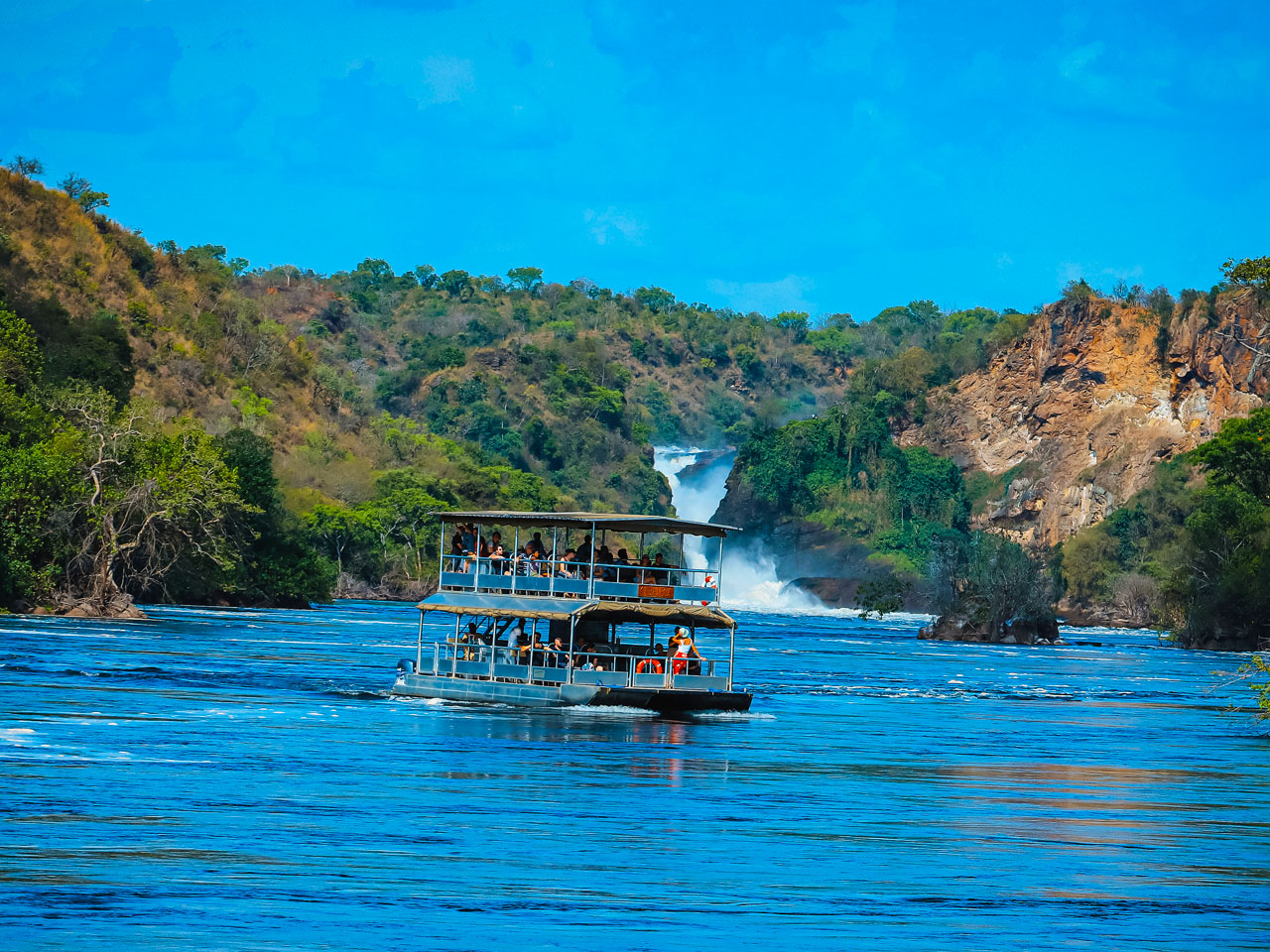
Start your morning with a game drive on the northern bank to spot elephants, lions, leopards, and giraffes. In the afternoon, embark on a relaxing boat cruise along the Victoria Nile to the base of Murchison Falls. You’ll see massive hippos, basking crocodiles, and abundant birdlife along the riverbanks.
Day 8: Hike to the Falls and Transfer to Kibale
Begin the day with an invigorating hike to the top of the thunderous Murchison Falls, where the Nile squeezes through a narrow 7-meter gorge. After the hike, you’ll meet your driver and journey south to Kibale Forest National Park, passing through tea plantations and lush green countryside.
Day 9: Chimpanzee Tracking and Bigodi Wetland Walk
Enter the dense rainforest of Kibale for a thrilling chimpanzee tracking experience. You will spend an hour with these habituated primates as they swing through the canopy. In the afternoon, take a guided nature walk through the Bigodi Wetland Sanctuary, famous for its rich birdlife, butterflies, and smaller monkey species.
Day 10: Crater Lakes Tour and Queen Elizabeth Park
Enjoy a scenic drive through the Bunyaruguru crater lake region, taking in the stunning panoramic views. You will proceed to Queen Elizabeth National Park, checking in for lunch. In the afternoon, embark on a game drive across the Kasenyi plains in search of lions, antelopes, and elephants.
Day 11: Kazinga Channel Cruise and Crater Drive
Embark on a spectacular late-morning boat cruise along the Kazinga Channel, which connects Lake George and Lake Edward. This waterway boasts one of the highest concentrations of hippos in the world. Afterward, enjoy a picturesque evening drive along the crater lakes before returning to your lodge for the night.
Day 12: Ishasha Tree-Climbing Lions and Transfer to Bwindi
Travel through the remote Ishasha sector of Queen Elizabeth National Park. Keep your binoculars ready for the famous tree-climbing lions, which often rest in the fig trees to escape the afternoon heat. In the afternoon, continue your journey to Bwindi Impenetrable National Park, the ultimate home of the mountain gorillas.
Day 13: Gorilla Trekking in Bwindi Impenetrable Forest
Embark on a once-in-a-lifetime mountain gorilla trekking expedition. Led by expert trackers, you will hike through the misty, vine-tangled jungle. Once you locate a habituated gorilla family, you will spend a magical hour watching them feed, play, and interact in their natural habitat before returning to camp.
Day 14: Transfer to Lake Bunyonyi
After a strenuous hike, travel to the tranquil shores of Lake Bunyonyi, known as the "Place of Little Birds." This deep, picturesque crater lake is free of bilharzia, making it perfect for swimming, canoeing, and unwinding against a backdrop of steep, terraced hills.
Day 15: Lake Bunyonyi Activities
Spend the entire day at Lake Bunyonyi at your own pace. You can take a dugout canoe to explore the various historical islands (such as Punishment Island), go zip-lining over the water, hike along the scenic surrounding hills, or simply read a book on your lodge veranda.
Day 16: Transfer to Lake Mburo National Park
Leave the misty hills of Bunyonyi and travel to Lake Mburo National Park. Enjoy an afternoon boat ride on the lake to spot crocodiles, hippos, and water birds. Follow this with a late afternoon game drive to see zebras, impalas, and elands roaming the acacia-dotted savannah.
Day 17: Walking Safari and Departure
Conclude your 17 Days Uganda safari tour with an early morning walking safari, bringing you close to wildlife on foot. Afterward, start the drive back to Kampala or Entebbe. Stop at the Equator for photography and lunch before being dropped off at the airport for your onward flight home.
List of things to do on 17 Days Uganda safari tour
Gorilla Trekking
Gorilla trekking offers an intimate, face-to-face meeting with one of the world's most endangered primates. This profound encounter takes place across two isolated locations in southwestern Uganda: Bwindi Impenetrable National Park and Mgahinga Gorilla National Park. Bwindi holds roughly half of the global wild mountain gorilla population, scattered across four distinct sectors of ancient, continuous rainforest. Mgahinga, part of the larger transboundary Virunga Conservation Area, offers a single habituated family that roams the slopes of three dramatic, extinct volcanoes.
The trek demands stamina. Hikers must navigate thick undergrowth, slippery ridges, stinging nettles, and unpredictable mountain weather, walking anywhere from one to eight hours at altitudes reaching up to 2,600 meters. Park rangers and trackers lead the groups, clearing paths with machetes and utilizing communication networks to track the primates' nesting locations from the previous night.
When you encounter the family, you are granted exactly one hour of observation. This strict time limit protects the gorillas from human stress and potential pathogen transmission. Watching a 400-pound silverback monitor his family while juveniles wrestle nearby is an unforgettable, raw window into nature.
The permit fee costs $800 for foreign non-residents. This revenue directly funds park security, specialized veterinary care via organizations like Gorilla Doctors, and local community infrastructure. Schools and clinics near the park boundaries receive a 20% share of park entry revenue, giving local residents a clear financial incentive to prevent poaching and safeguard these gentle giants.
Chimpanzee Tracking
While gorilla trekking is a quiet, deliberate journey, tracking chimpanzees is a fast-paced, high-energy adventure filled with vocalizations echoing through the canopy. Kibale National Park is the primate capital of East Africa, protecting over 1,500 chimpanzees alongside 12 other distinct primate species, including the rare red colobus and L'Hoest's monkeys.
Trekking groups depart from the Kanyanchu visitors center twice a day, led by expert guides who track the community by listening for their distinctive pant-hoots. These vocalizations pierce the forest air to signal food sources or territory boundaries. The terrain in Kibale is relatively flat compared to Bwindi's volcanic slopes, but tracking our closest living relatives still requires brisk walking to keep pace as they move across the forest floor or swing through the upper canopy.
Once located, you spend an hour watching them groom, fight for status, build nests, and hunt smaller mammals. For a deeper experience, you can book the Chimpanzee Habituation Experience (CHEX). This full-day pass allows you to accompany researchers from dawn, when the chimps leave their nests, until dusk, when they build new ones.
The standard tracking permit is $250 for foreign non-residents. It requires a minimum age of 12 to participate, protecting the animals from childhood illnesses. This structural framework turns wild primate viewing into a highly predictable, educational encounter that directly funds the preservation of Africa's most important rain forest corridor.
Classic Game Drives
Uganda’s savanna reserves offer a stark, dramatic contrast to its misty rainforests. Sweeping game drives across Kidepo Valley, Murchison Falls, and Queen Elizabeth national parks showcase big-game African safaris without the intense vehicle crowding seen in neighboring countries.
Murchison Falls National Park, sliced in two by the Victoria Nile, features rolling Borassus palm savannas populated by massive herds of Rothschild’s giraffes, elephants, Cape buffaloes, and elegant Uganda kob. Tracking predators here requires an early morning start, heading out in a 4x4 vehicle with a pop-up roof to find lions and leopards returning from night hunts.
Further south, Queen Elizabeth National Park features a unique volcanic landscape shaped by open savanna and ancient crater lakes. The Kasenyi plains provide an ideal hunting ground for prides of lions, supported by a large population of breeding antelopes.
For a true frontier experience, Kidepo Valley National Park sits isolated in the rugged, far northeastern corner of Uganda along the South Sudan border. Because it receives far fewer visitors due to its remote location, Kidepo offers an untouched, wild atmosphere. The park features dramatic mountain backdrops and a high concentration of specialized wildlife, including cheetahs, ostriches, bat-eared foxes, and massive single herds of up to 1,000 buffaloes.
Standard park entry fees sit around $45 per 24 hours for foreign non-residents. Utilizing an experienced driver-guide is highly recommended to safely navigate the tracks, interpret animal tracks, and spot well-camouflaged wildlife.
Tree-Climbing Lions
In the remote, southern expanse of Queen Elizabeth National Park lies the Ishasha Sector, a region globally famous for its unique population of tree-climbing lions. While lions across Africa occasionally climb rocks or low trunks when forced, the lions of Ishasha intentionally scale large, ancient sycamore fig and albizia trees every single day. They spend the hot afternoon hours draped lazily over thick, horizontal branches, high above the savanna floor.
Wildlife biologists point to several practical reasons for this specialized behavior. First, ascending into the canopy provides a cool, consistent breeze that offers relief from the intense midday heat of the equator. Second, it lifts the lions well above the tall grass layers where biting insects, particularly tsetse flies, swarm in dense numbers during the rainy seasons. Finally, the elevated vantage point serves as an excellent hunting lookout, allowing the pride to survey the surrounding plains for passing herds of Uganda kob and topi.
Safaris through Ishasha require slow, observant driving along dedicated tracks, scanning the branches of massive trees rather than focusing on the ground. Spotting a 400-pound predator balanced on a limb is a striking sight that requires a versatile zoom lens for high-quality photography.
The area is remote, meaning visitor traffic is minimal. This low density offers a quiet wildlife viewing experience far removed from standard tourist routes. Preserving this unique behavioral population requires strict adherence to off-road driving bans, ensuring the lions' hunting grounds and resting trees remain undisturbed.
Nile Delta & Murchison Falls Cruise
The river safaris along the historic Nile in Murchison Falls National Park stand out as a top highlight of Ugandan tourism. The classic boat launch heads upstream from the Paraa jetty, taking you on a three-hour round trip to the base of Murchison Falls. Along the river banks, you will float past massive pods of hippos, giant Nile crocodiles basking with open jaws, and drinking herds of elephants.
The journey culminates at the base of the falls, where the entire Victoria Nile forces its massive volume through a narrow, 7-meter stone gorge. The water drops 43 meters into the "Devil's Cauldron" below, creating a powerful display of natural energy, loud roaring sounds, and a permanent cloud of mist.
Alternatively, you can book a downstream boat cruise heading toward the tranquil Nile Delta, where the river empties its waters into Lake Albert. This marshy ecosystem features an extensive network of floating papyrus reeds, making it a world-class destination for birdwatchers.
The delta is one of the most reliable places in Africa to spot the prehistoric-looking shoebill stork. This rare, giant bird is known for its massive, shoe-shaped bill used to hunt lungfish. Boat cruises are scheduled for both morning and afternoon departures, costing roughly $30 per person. They offer a stable, comfortable platform for photography, providing a refreshing break from bumpy overland game drives.
Kazinga Channel Safari
The Kazinga Channel is a 32-kilometer-long natural waterway that links Lake Edward and Lake George within Queen Elizabeth National Park. It acts as a primary oasis, drawing thousands of wild animals from the surrounding savannas to its banks for water, food, and mud baths.
The standard two-hour double-decker boat cruise is operated by the Uganda Wildlife Authority or private luxury lodges, departing from the Mweya Peninsula. As the boat glides safely along the shoreline, you will get incredibly close to one of the highest concentrations of hippos found anywhere in Africa. You can watch them vocalize, submerge, and defend their territories.
The channel is also home to giant Nile crocodiles, monitor lizards, and waterbucks. During the dry season, large elephant herds migrate down to the water's edge to drink, bathe, and play in the shallows, providing excellent opportunities for close-up wildlife photography.
For birdwatchers, the channel is an spectacular destination. It supports over 60 distinct species of water birds, including elegant African skimmers, pink-backed pelicans, saddle-billed storks, and kingfishers hunting for small fish.
The boat's slow, smooth pace creates a comfortable environment for all ages. It offers a relaxed perspective on big-game viewing without the dust and bumps of traditional savanna game tracks.
Lake Bunyonyi
Tucked away in the terraced highlands of southwestern Uganda, Lake Bunyonyi is one of the country's most beautiful natural treasures. Framed by steep, green hillsides shaped by local agricultural terraces, this scenic body of water features 29 distinct islands scattered across its surface, each carrying its own local history and folklore.
Its name translates directly to "the place of little birds," referencing the high density of weavers, herons, and egrets that nest along its reedy shores. Unlike the vast majority of waterways in East Africa, Lake Bunyonyi is completely free from hippos and crocodiles. It is also free from bilharzia, a common snail-borne parasite, making its calm waters safe for swimming, canoeing, and paddleboarding.
Logistically, the lake serves as an ideal place to unwind for a day or two after a grueling gorilla trek in nearby Bwindi or Mgahinga. Visitors can hire traditional wooden dugout canoes or motorized speedboats to island-hop across the lake.
A popular stop is Akampene, or "Punishment Island." Local guides recount historical traditions where unmarried pregnant women were abandoned on this tiny, isolated patch of land as a public warning, though today it stands as a quiet historical marker. Accommodation options here range from basic budget campsites to luxury eco-resorts built on private islands. The lake offers a peaceful environment to relax, interact with the local Bakiga communities, and enjoy stunning misty sunrises over the water.
White-Water Rafting
For adrenaline seekers, the city of Jinja—located roughly 80 kilometers east of Kampala—presents world-class white-water rafting adventures on the historic Victoria Nile. Jinja is celebrated as the historic Source of the Nile, where water flows out from Lake Victoria to begin its long journey north toward the Mediterranean Sea.
While the construction of modern hydro-electric dams downstream has altered some of the historic rapids, international adventure outfits still operate world-class, multi-stage rafting trips through a series of massive, grade-five rapids further down the river corridor.
The rafting experiences cater to various adventure comfort levels. You can choose a high-intensity "flip raft" designed to intentionally tackle the rough center of waves, or a more conservative "safety boat" route suited for families and beginners.
The rapids bear descriptive names like "The Bad Place" and "Big Brother," delivering fast currents, big drops, and warm equatorial waters. Professional guides lead every trip, using specialized white-water gear, carrying out comprehensive safety briefings, and utilizing professional rescue kayakers who flank the rafts to pull swimmers out of the current.
Between the intense rapids, the river transitions into calm pools. This allows rafters to swim alongside the boat, admire the green riverbanks, and spot fish eagles and otters. A full-day excursion costs around $120 to $140 per person, including lunch and transport, making it an iconic adventure stop in East Africa.
Hiking & Nature Walks
Uganda’s diverse topography provides exceptional opportunities for hiking and community-led nature walks that get you out of the safari vehicle. In eastern Uganda, Sipi Falls is a collection of three beautiful waterfalls that tumble over the basalt cliffs of Mount Elgon, an extinct shield volcano along the Kenyan border.
Guided hikes trail through local Sabiny community farmlands, Arabica coffee plantations, and steep mud tracks, leading you behind the thundering water wall of the main 100-meter fall. These walks offer sweeping views across the flat Karamoja plains below.
Further west, on the fringes of Kibale National Park, the Bigodi Wetlands Sanctuary stands as a model for community-driven eco-tourism. Managed by the Kibale Association for Rural and Environmental Development (KAFRED), this swamp network features an extensive system of raised wooden boardwalks designed to protect the fragile wetland soil.
Guided walks through the papyrus forest offer regular sightings of eight distinct primate species, including grey-cheeked mangabeys and black-and-white colobus monkeys. Bigodi is also a haven for birdwatchers, famous for sightings of the giant great blue turaco.
The entry fees go directly into funding local community needs, such as building secondary schools, paying teacher salaries, and supporting women’s artisan basket-weaving cooperatives. This transparent economic link ensures that protecting the natural habitat directly improves local human lives.
Cultural Experiences
Exploring Uganda’s rich human heritage adds a meaningful layer of cultural context to any wildlife safari. In the far north, visiting traditional Karamojong homesteads, known locally as manyattas, introduces you to a proud, historically nomadic pastoralist group.
These homesteads are constructed out of thorny brushwood barriers, mud-walled huts, and central livestock corrals designed to shield their cattle from predators. Walking through a manyatta, you can learn about their traditional body scarification practices, colorful layered beadwork, and cattle-centric lifestyle, providing an authentic look into life in East Africa's arid regions.
In southwestern Uganda, the Igongo Cultural Centre near Mbarara city serves as an educational bridge for travelers driving back to Kampala from Bwindi. Built on the historic grounds of the former Ankole Kingdom, the center features a clean, well-curated museum displaying historical artifacts, traditional weapons, clothing, and agricultural tools.
The exhibits trace the history of the south-western Bantu groups, exploring the complex social systems of the cattle-keeping Bahima and the agricultural Bairu people. Visitors can tour a reconstructed traditional homestead, sample local dishes like matooke (steamed green bananas) and ghee-based sauces, and browse an extensive crafts shop.
Stopping here provides an insightful look into how modern Uganda balances its ancient ethnic kingdoms with contemporary national development.
Walking Safaris
While traditional safaris keep you inside a 4x4 vehicle, Lake Mburo National Park allows you to step onto the savanna for an exciting walking safari. Lake Mburo is a small, unique reserve characterized by rolling acacia woodlands, open valleys, and a network of freshwater lakes.
Because the park lacks protected populations of elephants and lions, it is one of the safest places in East Africa to track savanna wildlife on foot. This creates a quiet, immersive experience where you can hear the sounds of the wild without engine noise.
Accompanied by an armed ranger guide from the Uganda Wildlife Authority, walking safaris follow game trails through the bush. This slow pace allows you to learn how to identify animal tracks, read alarm calls, and examine dung types.
You can walk exceptionally close to herds of impalas, topis, zebras, and elands—Africa’s largest antelope. The park is also one of the best locations in western Uganda to see Rothschild's giraffes, which were successfully reintroduced to the habitat from Murchison Falls.
Walking alongside these tall mammals offers a unique perspective on their scale and natural beauty. The excursions typically depart in the cool hours of the early morning or late afternoon, costing roughly $30 per person. They offer an engaging, healthy adventure that brings you closer to the African bush.
Here is an in-depth, comprehensive guide addressing 15 crucial questions about planning and experiencing a 17-day comprehensive Uganda safari tour. A 17-day itinerary allows you to circle the entire country, seamlessly combining primates, savannas, mountaineering, and cultural encounters without rushing.
1. What is the ideal route and flow for a 17-day grand Uganda itinerary?
A 17-day safari requires a well-thought-out circuit to minimize repetitive backtracking while gradually building up to the grand highlight of gorilla trekking. The most logical and rewarding route follows a clockwise or counter-clockwise loop across the country. Departing from Entebbe or Kampala, the journey should first head east toward Jinja to explore the historic source of the Nile River and experience white-water rafting. From Jinja, you head north through the eastern plains, bypassing Mount Elgon to reach Sipi Falls for scenic waterfall hikes, before driving further north into the remote, wild frontier of Kidepo Valley National Park along the South Sudan border.
From the rugged wilderness of Kidepo, the loop turns southwest toward Murchison Falls National Park, Uganda’s largest protected savanna reserve, where you can enjoy classic game drives and a Nile river cruise. Continuing southward along the Albertine Rift Valley, you arrive in Kibale National Park for chimpanzee tracking, followed by an overland transfer to Queen Elizabeth National Park to see the volcanic crater lakes and the famous tree-climbing lions of the Ishasha sector.
The final leg of the circuit takes you deep into the ancient, high-altitude rainforests of Bwindi Impenetrable National Park or Mgahinga Gorilla National Park for mountain gorilla trekking. To wind down after these physically demanding jungle hikes, the itinerary leads to the tranquil, island-dotted waters of Lake Bunyonyi for canoeing and relaxation, before completing the loop with a stop at Lake Mburo National Park for a walking safari and a final drive across the Equator back to Entebbe. This extensive 17-day loop ensures you experience every major ecosystem in the country.
2. How do I balance intense trekking days with relaxation over a 17-day trip?
Spending nearly three weeks on an African safari can become exhausting due to long driving hours, early morning wake-up calls, and strenuous physical activities. To prevent "safari burnout," a 17-day itinerary must be deliberately paced, alternating high-intensity adventure days with built-in periods of rest and leisurely exploration. For instance, the physically demanding hikes like the 100-meter descent at Sipi Falls on Day 4 should be followed by a relaxed, scenic drive to Kidepo Valley rather than another immediate, heavy trek.
The middle section of the safari naturally offers a more relaxed pace. While game drives in Murchison Falls and Queen Elizabeth national parks require early morning departures to catch predators active in the cool dawn, you spend those hours seated comfortably inside a 4x4 vehicle. The afternoon boat cruises along the Nile and the Kazinga Channel serve as excellent, low-energy ways to view wildlife while sitting down and enjoying the breeze, allowing your body to recover before the next big primate excursion.
The most critical balancing act occurs during the final third of the tour. Chimpanzee tracking in Kibale and gorilla trekking in Bwindi are highly strenuous activities that involve hours of navigating thick mud, steep slopes, and tangled vines on foot. To counteract this physical toll, a well-designed 17-day itinerary places a full 48-hour stay at Lake Bunyonyi immediately following the gorilla trek. This allows you to sleep in, enjoy massages at your eco-lodge, read a book overlooking the terraced hills, and partake in gentle dugout canoe rides, ensuring you return home feeling rejuvenated rather than drained.
3. What vehicle type is mandatory for navigating this full 17-day circuit?
Navigating a comprehensive 17-day circuit across Uganda places immense strain on transport infrastructure, making the choice of vehicle a critical factor in the success and safety of your trip. While short itineraries to easily accessible parks can sometimes get by with standard safari minivans, a full country-wide loop absolutely mandates a heavy-duty, customized 4x4 Land Cruiser or a robust 4x4 Safari Truck. This requirement is driven by the extreme variation in road conditions you will encounter across different regions.
While Uganda's major national highways connecting primary towns are well-paved, the access roads leading into and inside the national parks are entirely unpaved dirt tracks. In northern regions like Kidepo Valley, roads can be intensely dusty during the dry season and turn into deep, treacherous mud wallows during sudden downpours. In the mountainous southwestern sectors of Bwindi and Mgahinga, the roads consist of narrow, steep, winding gravel passes carved into the edges of hillsides. A vehicle with exceptional ground clearance, advanced four-wheel-drive capabilities, and heavy-duty suspension is non-negotiable to prevent getting stuck or experiencing mechanical failures in remote areas.
Furthermore, a customized safari Land Cruiser is built specifically for passenger comfort over long hauls. These vehicles feature reinforced internal frames, large windows, charging ports for your camera batteries, a built-in fridge or cooler to keep drinking water cold under the equatorial sun, and a pop-up roof mechanism. The pop-up roof allows you to stand up safely during game drives in Murchison, Queen Elizabeth, and Kidepo, giving you clear, unobstructed 360-degree views for wildlife photography without requiring you to step out of the protective safety of the vehicle cabin.
4. Why is Kidepo Valley National Park a must-include on a 17-day tour?
On shorter 3-day or 5-day Ugandan safaris, Kidepo Valley National Park is almost always excluded because it sits in the far northeastern corner of the country, requiring a minimum of two full days of driving just to reach it from Kampala. However, a 17-day itinerary provides the luxury of time, making Kidepo an absolute must-include highlight. Because its extreme geographic isolation deters the vast majority of standard tourists, Kidepo offers an untouched, wild, and incredibly exclusive safari atmosphere that is increasingly rare in modern East Africa.
The landscape of Kidepo is visually spectacular, featuring vast, golden savanna plains flanked by the rugged, dark mountain ranges of the Sudanese border. The park is split into two primary valleys: the Narus Valley, which contains the area's only permanent water sources during the dry season, and the Kidepo Valley, famous for its dry sand riverbed lined with Borassus palm trees. Because water is scarce, wildlife concentrates heavily around the wetlands of the Narus Valley, creating some of the highest densities of game viewing on the continent.
Moreover, Kidepo protects a unique collection of specialized wildlife species that simply cannot be found anywhere else in Uganda. It is the only national park in the country where you can see cheetahs, ostriches, bat-eared foxes, caracals, and lesser kudus. It is also home to thriving populations of lions that frequently lounge on top of massive granite kopjes, leopards, and massive single herds of Cape buffalo that can number over 1,000 individuals. Including Kidepo on a 17-day journey transforms your trip from a standard holiday into a true, deep-frontier expedition.
5. What are the permit logistics for tracking two different primate species?
A 17-day tour allows you to track both chimpanzees in Kibale National Park and mountain gorillas in Bwindi Impenetrable National Park. Because both species are highly protected and vulnerable to human impacts, managing the permit logistics is a complex process that requires advanced planning and a clear understanding of the regulations enforced by the Uganda Wildlife Authority (UWA). You cannot simply show up at the park gates and expect to track; permits must be secured months in advance.
Gorilla trekking permits cost $800 for foreign non-residents, while standard chimpanzee tracking permits in Kibale cost $250. These fees grant you access to the park, the protection of armed rangers, the expertise of trackers, and exactly one hour of face-to-face time with the animals once located. UWA enforces strict daily caps: only eight people can visit a single habituated gorilla family per day, and chimpanzee groups are similarly limited to minimize stress. Because a 17-day itinerary has a fixed chronological flow, your tour operator must secure these permits for the exact dates you are scheduled to be in those specific geographic regions.
Logistically, your primate permits dictate your accommodation choices. Bwindi is divided into four distinct trekking sectors—Buhoma, Ruhija, Rushaga, and Nkuringo—separated by hours of rugged mountain driving. Your gorilla permit will be issued for one specific sector, and you must ensure your lodge is booked within that same sector. For chimpanzees in Kibale, you must choose between the standard morning or afternoon tracking shifts, or opt for the full-day Chimpanzee Habituation Experience ($300), which allows you to spend four hours with a community undergoing the process of becoming accustomed to human presence.
6. How does the packing strategy change for a 17-day multi-ecosystem trip?
Packing for a 17-day tour of Uganda presents a unique challenge because your itinerary spans vastly different ecosystems, ranging from hot, semi-arid northern savannas to cold, wet, high-altitude southern rainforests. You cannot pack for just one climate; you must prepare a versatile wardrobe that utilizes layering to adapt to rapidly changing environmental conditions over the course of nearly three weeks.
For the first half of the trip through Jinja, Sipi Falls, and Kidepo Valley, the weather is generally hot and dry. You will need lightweight, breathable clothing in neutral earth tones like khaki, olive green, and tan; avoid bright white clothing which gets ruined by red safari dust, and avoid dark blue or black clothing, which actively attracts biting tsetse flies. However, even in the hot savannas, early morning game drives are surprisingly chilly due to open vehicle crosswinds, requiring a fleece jacket or windbreaker that you can discard as the sun rises.
As the 17-day loop moves into the mountainous southwest for primate trekking, your packing strategy must pivot entirely toward heavy-duty protection. Bwindi and Kibale are wet rainforests where downpours happen without warning. You mandatory gear list must include sturdy, waterproof hiking boots with deep ankle support, thick moisture-wicking socks, durable long trousers, and long-sleeved shirts to protect against stinging nettles and thorns. You must pack a high-quality rain poncho, heavy-duty gardening gloves to grip wet branches, and waterproof dry-bags to protect your expensive camera gear and lenses from moisture. Lastly, because most mid-range and luxury lodges offer complimentary or cheap daily laundry services, you do not need 17 different outfits—six to seven pairs of versatile, quick-drying clothing layers are more than enough.
7. What unique birdwatching highlights are unlocked over a 17-day tour?
Uganda is widely celebrated as Africa’s premier birdwatching destination, boasting an astonishing checklist of over 1,090 confirmed bird species packed into a country roughly the size of Great Britain. While a short safari only allows for incidental bird sightings, a comprehensive 17-day itinerary unlocks specialized avifauna habitats across the entire country, making it a dream come true for dedicated birders and nature enthusiasts alike.
The journey starts with unique water birds along the Nile in Jinja and the forest edges of Sipi Falls, but the first major avian highlight occurs in Kidepo Valley National Park. Kidepo boasts over 475 species, including many raptors and dry-country specialists like the Abyssinian roller, Karamoja apalis, and the giant Somali ostrich. Moving south to Murchison Falls, the marshy papyrus reed beds of the Nile Delta present the ultimate avian prize: the legendary Shoebill Stork. This massive, prehistoric-looking bird is globally threatened, and tracking it by boat in the early morning offers an unparalleled wildlife highlight.
Further down the loop, Kibale National Park and the adjacent Bigodi Wetlands Sanctuary introduce you to forest-dwelling species, most notably the spectacular Great Blue Turaco, the joyful greenbul, and the rare African Green Broadbill found in high elevations. Finally, the Kazinga Channel in Queen Elizabeth National Park serves as a natural magnet for waterbirds, where you can easily photograph thousands of pink-backed pelicans, African skimmers, and pied kingfishers from the comfort of a boat. A 17-day itinerary provides the necessary time to slow down, utilize binoculars, and cross off highly sought-after endemic species with the assistance of specialized local birding guides.
8. What cultural immersion opportunities exist beyond wildlife viewing?
While Uganda’s wildlife is a massive draw, its immense cultural diversity is equally fascinating. The country is home to over 50 distinct ethnic groups, broadly split between the Bantu-speaking peoples of the south and west and the Nilotic and Central Sudanic peoples of the north and east. A 17-day tour provides the perfect geographic scope to step outside the national parks and meaningfully interact with these diverse communities.
In the northeastern region near Kidepo Valley, you can visit the traditional homesteads, or manyattas, of the Karamojong people. Historically nomadic pastoralists, the Karamojong maintain a deeply traditional lifestyle centered entirely around cattle. Visiting a manyatta allows you to witness their unique defensive architecture, elaborate layered beadwork, traditional high-jumping dances, and body scarification practices, offering an authentic look into life in East Africa's arid frontiers. Further south near Mount Elgon, you can engage with the Sabiny people, touring their highland Arabica coffee plantations to learn how coffee is grown, harvested, roasted, and ground manually by hand.
In the southwestern corner of the country, the cultural focus shifts toward the ancient forests. On the fringes of Bwindi, you can participate in the Batwa Cultural Experience. The Batwa are an indigenous hunter-gatherer Pygmy tribe who lived in harmony inside the rainforest for millennia before being evicted when it became a protected national park. Led by Batwa elders, this experience demonstrates their ancestral hunting techniques, traditional medicine harvesting, and fire-making rituals, providing vital economic support to a marginalized community while preserving a rich human heritage.
9. How do water safaris compare across the different national parks?
A common misconception is that all boat safaris are identical, but a 17-day itinerary showcases how water-based wildlife viewing varies dramatically depending on the specific river system, lake, or channel you are exploring. Uganda’s unique hydrology allows for multiple, completely distinct water safaris that complement traditional overland game drives.
In Murchison Falls National Park, the boat cruise is defined by power and historic scale. Heading upstream on the Victoria Nile, the double-decker launch forces its way against strong currents, passing giant Nile crocodiles and massive pods of hippos, before culminating at the base of the falls where the river violently explodes through a 7-meter gorge. Conversely, the Murchison Nile Delta cruise heading downstream toward Lake Albert is a quiet, slow-paced safari focused on tranquil wetlands, floating papyrus islands, and rare waterbirds like the shoebill stork.
Further south, the Kazinga Channel safari in Queen Elizabeth National Park offers arguably the highest concentration of large mammal viewing from a boat in Africa. Because this 32-kilometer natural channel connects two freshwater lakes, it acts as a primary drinking trough for the park's wildlife. During the hot afternoon hours, you can float mere meters from the shoreline to photograph massive herds of elephants bathing, buffalos wallowing in mud, and waterbucks feeding, completely undisturbed by the boat's quiet motor. Finally, Lake Bunyonyi presents a purely recreational and cultural water experience; free from dangerous hippos and crocodiles, it is a peaceful alpine lake meant for self-guided kayaking, traditional dugout canoeing, and scenic island-hopping.
10. What are the medical and health preparations for a 17-day trip?
Spending nearly three weeks traveling through diverse, remote environments in equatorial Africa requires thorough medical preparation to ensure you stay healthy throughout the duration of your 17-day safari. Because you will be moving far away from major urban hospitals, taking proactive health measures before departing your home country is highly critical.
First and foremost, a valid international certificate of vaccination against Yellow Fever is a mandatory entry requirement for Uganda. Border officials regularly check for this yellow card upon arrival at Entebbe International Airport, and failure to produce it can result in immediate quarantine or entry denial. Additionally, because Uganda is a high-risk malaria-endemic country, you must consult a travel clinic to obtain a prescription for preventative malaria prophylactics, such as Malarone (Atovaquone/Proguanil) or Doxycycline, which must be taken daily throughout the trip and for a specified period after returning home.
Your packing list must include a comprehensive personal first-aid kit. This kit should contain broad-spectrum antibiotics, anti-diarrhea medication (like Imodium), rehydration salts, motion sickness pills for long bumpy drives, antihistamines, sterile bandages, and high-concentration insect repellent containing at least 30% DEET to repel mosquitoes and tsetse flies. It is equally important to practice strict dietary hygiene: never drink tap water anywhere in Uganda; rely exclusively on sealed bottled water or purified water provided by your safari vehicle and lodges. Ensure your travel insurance policy explicitly includes emergency medical evacuation coverage, which guarantees that a medical helicopter can safely transport you from a remote park like Kidepo to an international-standard hospital in Kampala if a serious emergency arises.
11. Is it better to choose budget, mid-range, or luxury lodging for a long tour?
Over a 17-day safari, your choice of accommodation tier fundamentally shapes not just your financial budget, but also your overall physical comfort, dining experiences, and daily logistics. Because Uganda's tourism infrastructure is highly developed, travelers can choose between budget eco-camps, comfortable mid-range lodges, and ultra-luxury boutique properties, with many people opting for a "mixed-tier" approach on long trips.
Budget accommodations typically consist of basic community-run campsites, permanent safari tents with shared bathroom facilities, or simple local guesthouses. While highly economical, budget properties on a 17-day trip can become physically taxing over time, as they may lack reliable 24-hour electricity for charging camera gear, consistent hot water for showers after muddy treks, or varied international menus. On the opposite end, luxury lodges offer spectacular, high-end comfort, featuring private stone cottages with sweeping views of forest canopies or savanna plains, personal butler services, plunge pools, complimentary massages after long treks, and fine-dining multi-course meals. However, booking 16 nights of ultra-luxury accommodation significantly inflates the tour price.
For most travelers embarking on a 17-day circuit, a mid-range itinerary offers the perfect sweet spot between cost and comfort. Mid-range properties feature self-contained chalets or raised safari tents with private en-suite bathrooms, comfortable beds with mosquito nets, solar-powered hot showers, and delicious, hearty buffet meals. A highly popular strategy for a long tour is to utilize mid-range lodges for the standard savanna segments, but deliberately "upgrade" to a luxury property for the nights spent in Bwindi or Mgahinga. This ensures maximum comfort, relaxation, and pampering during the most physically grueling gorilla-trekking portion of your grand Ugandan adventure.
12. What is the significance of the tree-climbing lions in Ishasha?
When driving south from the main northern plains of Queen Elizabeth National Park toward the rainforests of Bwindi, a 17-day itinerary naturally schedules a stop in the remote Ishasha sector. This southern region is internationally famous for a highly unusual wildlife phenomenon: its resident population of tree-climbing lions. While lions across the rest of the African continent are strictly terrestrial animals, the lions of Ishasha deliberately scale massive, ancient sycamore fig trees every single afternoon.
Wildlife biologists have identified several unique behavioral reasons for this specialized adaptation. The primary catalyst is temperature control and comfort; ascending high into the canopy lifts the lions into a cool, continuous breeze that provides relief from the intense equatorial heat radiating off the savanna floor. Secondly, the elevated branches offer a safe haven far above the tall grass layers where biting insects, particularly swarms of tsetse flies and mosquitoes, thrive during the rainy seasons. Finally, the high branches serve as an excellent tactical lookout, allowing the pride to monitor the surrounding plains for approaching herds of Uganda kob and topi.
Safaris through Ishasha require slow, meticulous driving along dedicated game tracks, with your eyes trained upward into the branches of massive trees rather than scanning the ground. Spotting a 400-pound apex predator draped lazily over a horizontal limb is a striking and surreal sight that makes for exceptional wildlife photography. Because Ishasha is geographically removed from the main tourist hubs, it receives far fewer safari vehicles, providing a quiet, exclusive viewing experience that perfectly enhances a comprehensive 17-day national circuit.
13. How do seasonality and weather patterns affect a 17-day itinerary?
Uganda’s equatorial climate means temperatures remain relatively consistent year-round, but rainfall patterns create distinct wet and dry seasons that fundamentally alter road conditions, wildlife visibility, and trekking difficulty across a 17-day tour. Understanding these seasonal shifts is crucial when deciding what time of year to book your long-duration holiday.
The peak dry seasons occur from June to August and December to February. These months are widely considered the ideal time for a comprehensive 17-day loop. Because rainfall is minimal, the unpaved dirt roads leading to remote parks like Kidepo Valley and Bwindi remain firm and easily passable. In the savannas, vegetation thins out and waterholes dry up, forcing animals to congregate predictably around permanent water sources, which dramatically improves wildlife viewing. However, these peak months see the highest volume of tourists, meaning gorilla permits must be secured up to a year in advance, and lodges operate at maximum peak-season pricing.
Conversely, the heavy rainy seasons run from March to May and September to November. Embarking on a 17-day tour during these months introduces significant logistical challenges; heavy downpours can turn dirt roads into slick, impassable mud, occasionally causing delays, and trekking trails in Bwindi become incredibly slippery and physically demanding. However, the low season has brilliant advantages for adventurous travelers. The landscape is breathtakingly lush and green, dust is non-existent, and the parks are completely empty of crowds. Furthermore, because primates often descend to lower altitudes when food is abundant, trekking times can actually be shorter, and luxury lodges offer massive low-season discounts.
14. What are the tipping and tipping-currency customs on a long tour?
Tipping is a deeply entrenched custom within Uganda’s tourism industry, serving as a vital way to reward exceptional service, expertise, and hospitality. On a long 17-day tour, you will interact with an extensive network of field staff, including your primary driver-guide, park rangers, wildlife trackers, local porters, and lodge employees, making it essential to understand the structural etiquette of tipping.
Your safari driver-guide is the most important factor in your day-to-day experience over nearly three weeks. They handle all the long-distance navigation, vehicle maintenance, spot wildlife, and act as your cultural translator. The standard custom for a professional driver-guide is $10 to $20 per day per vehicle, typically presented in a lump sum envelope at the very end of your 17-day tour. For accommodations, most mid-range and luxury lodges feature a central "Staff Tip Box" at the reception desk. Tipping $10 to $15 per night into this box ensures that all back-of-house staff—such as kitchen hands, room cleaners, and night watchmen—receive a fair, equitable share of the gratuities.
For active adventure days, the tipping structure pivots to specific field teams. After a gorilla or chimpanzee trek, it is standard practice to tip the head armed ranger guide and assistant rangers a collective pool of $10 to $20 from your group, while local trackers receive $5 to $10. If you hire a local porter to assist you on the steep trails of Bwindi, they are paid a mandatory baseline fee of $20, but adding a $5 to $10 tip for excellent service is highly encouraged. Regarding currency, tips can be given in Ugandan Shillings (UGX) or US Dollars (USD). If tipping in USD, the bills must be crisp, clean, un-torn, and printed after the year 2013, as local banks completely refuse to accept older or damaged foreign currency notes.
15. How does a walking safari in Lake Mburo differ from traditional game drives?
The final wildlife destination on a comprehensive 17-day country-wide circuit is typically Lake Mburo National Park. While you will have spent the previous two weeks viewing large game from the safety of a 4x4 vehicle in parks like Kidepo, Murchison, and Queen Elizabeth, Lake Mburo breaks the traditional safari mold by allowing you to step out of the vehicle and experience the African bush entirely on foot.
This fundamental shift is made possible by the unique ecological makeup of the park. Lake Mburo is a compact, peaceful reserve characterized by rolling acacia woodlands and a network of wetlands. Crucially, the park lacks protected breeding populations of large, dangerous predators like elephants and lions, making it one of the safest environments in East Africa to conduct guided walking safaris. Walking through the savanna eliminates the ambient noise of a vehicle engine, allowing you to hear the subtle sounds of the wilderness, from the calls of birds to the rustle of wind through the whistling-thorn acacia trees.
Accompanied by an armed ranger guide from the Uganda Wildlife Authority, a walking safari allows you to approach wildlife with a deep sense of vulnerability and scale. You can walk exceptionally close to large herds of plains zebras, impalas, topis, and elands—Africa's largest and most majestic antelope. The park is also an excellent habitat for Rothschild's giraffes, and tracking these towering mammals on foot provides an unforgettable perspective on their immense height and grace. Walking safaris typically take place during the cool hours of the early morning or late afternoon, offering an engaging, physically active, and intimate finale to your 17-day grand Ugandan journey.
Booking 17 Days Uganda safari tour with us Roads of Adventure safaris
To book your 17-day Uganda safari with Roads of Adventure Safaris, you will typically be required to pay a 30% deposit to secure your accommodation, 4x4 transport, and coveted gorilla permits
