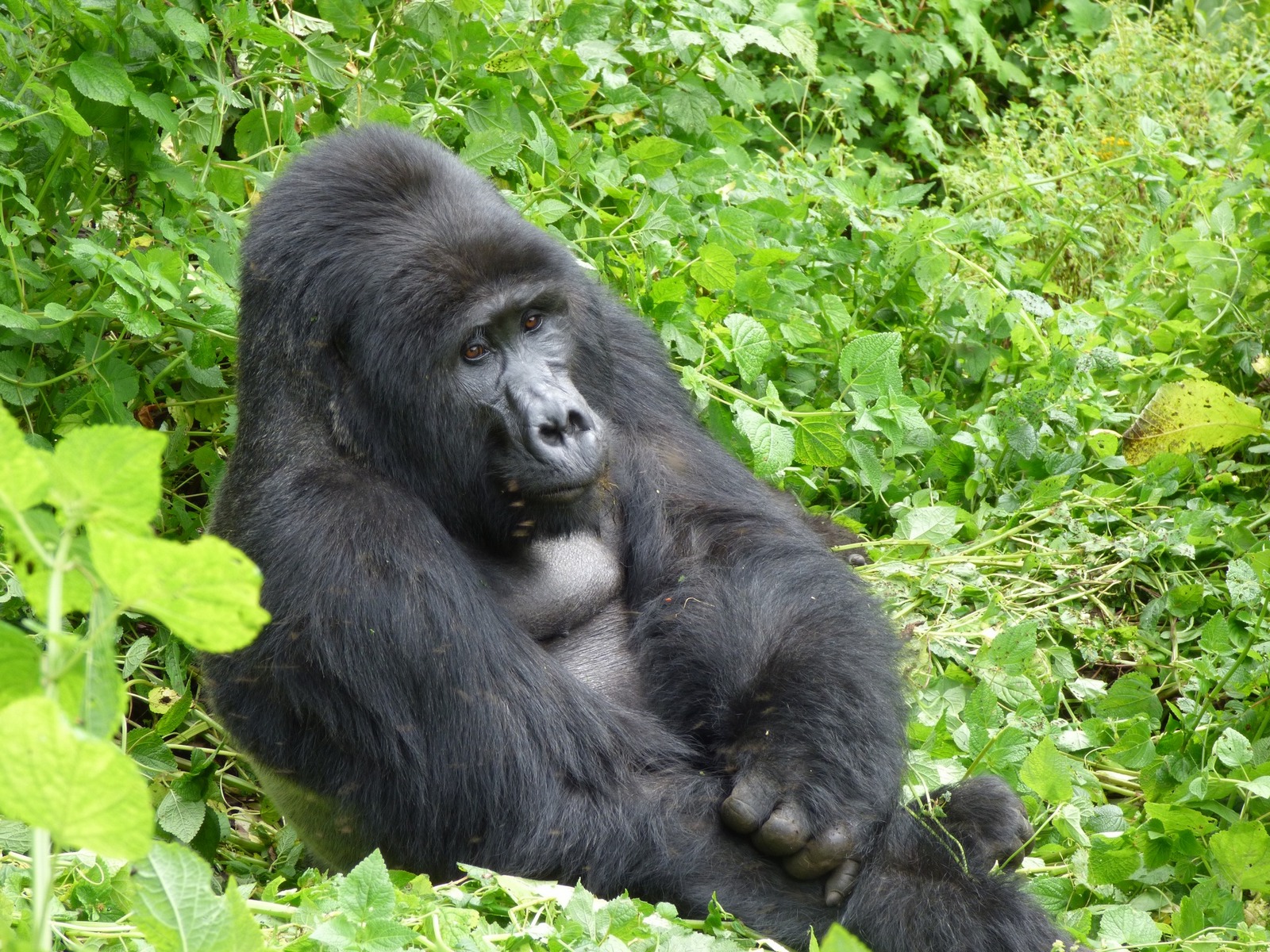
A 3-day Bwindi impenetrable gorilla trekking adventure primarily focuses on encountering endangered mountain gorillas, featuring a scenic 8–10-hour drive from Kampala with an Equator stop, a 2–8-hour trekking experience, and cultural interactions. Key activities include trekking habituated families in sectors like Buhoma or Rushaga, spending one hour with gorillas, and optional Batwa community tours
3-days-affordable-uganda-budget-gorilla-trekking-via-kigali
3-day-budget-gorilla-trekking-safari-in-uganda
3-days-gorilla-trekking-safari-and-lake-bunyonyi-relaxation-itinerary
3-days-gorilla-habituation-in-bwindi-impenetrable-forest-park
3-days-fly-in-uganda-gorilla-habituation-africa-safari-tour-package
Key Activities and Experiences on 3 Days Bwindi impenetrable gorilla trekking adventure
1. Mountain Gorilla Trekking in Bwindi Impenetrable Forest
The encounter with mountain gorillas is widely regarded as one of the most profound wildlife experiences on the planet. Your day begins at 7:30 AM at the park headquarters, where the crisp morning air is filled with anticipation. Here, you are assigned to a habituated gorilla family and introduced to your lead ranger. The briefing is essential, covering the "gorilla etiquette"—such as maintaining a seven-meter distance and avoiding direct eye contact—to ensure the safety and comfort of these gentle giants. Bwindi is home to roughly half of the world's remaining mountain gorilla population, and the "Impenetrable" name is well-earned; the forest is a dense, multi-layered canopy of ancient trees, ferns, and hanging vines.
The trek itself is an unpredictable adventure through rugged terrain. Depending on where the gorillas nested the previous night, the hike can last anywhere from two to six hours. You will navigate steep, muddy slopes and thick undergrowth, often following rangers who use machetes to clear a path. The physical exertion vanishes the moment you catch sight of a silverback. You are granted exactly one hour of observation, a strict limit designed to minimize human impact on the animals. During this hour, you might watch a mother grooming her infant, juveniles playing in the branches, or the dominant silverback overseeing his troop with quiet authority. It is a raw, emotional connection to a species that shares over 98% of our DNA, set within a prehistoric landscape that has remained unchanged for over 25,000 years.
2. The Batwa Cultural Experience
Before Bwindi was gazetted as a National Park in 1991, it was the ancestral home of the Batwa pygmy people. The Batwa Cultural Experience is a guided, immersive journey that allows these "keepers of the forest" to share their heritage. For thousands of years, the Batwa lived in perfect harmony with the forest, acting as hunter-gatherers who relied on the land for everything from food to shelter. During this experience, you are led into the forest by Batwa guides who demonstrate ancient survival skills. You will see how they once lived in caves or high in the trees to avoid predators, and how they crafted bows and arrows from forest bamboo.
The experience is deeply educational, focusing on traditional knowledge that is at risk of being lost. Your guides will point out various plants used for traditional herbal medicines—treating everything from stomach ailments to skin infections—and demonstrate the friction method of starting a fire using only sticks. The visit usually concludes with a series of rhythmic cultural performances. Through song and dance, the Batwa recount legends of the forest and express the spiritual connection they maintain with the land. It is a powerful narrative of resilience and cultural preservation, providing visitors with a holistic understanding of the human history that is inextricably linked to the conservation of the Bwindi ecosystem.
3. Scenic Drive and the Uganda Equator Stop
The journey from Kampala or Entebbe to Bwindi is as much a part of the safari as the trekking itself. The drive spans approximately eight to nine hours, transitioning from the bustling urban center to the rolling, terraced hills of the Kigezi Highlands, often referred to as the "Switzerland of Africa." The landscape is a masterpiece of traditional agriculture, with hillsides carved into intricate green terraces that seem to touch the clouds. Along the way, the road winds through local markets where vendors sell roasted plantains (gonja) and fresh roasted maize, offering a sensory window into the Ugandan countryside.
A mandatory highlight of the transit is the stop at the Uganda Equator in Mpambire. Standing with one foot in the Northern Hemisphere and the other in the Southern Hemisphere is a classic photo opportunity. Here, you can witness the Coriolis effect demonstration, where water drains in different directions depending on which side of the line you stand. The area is also a hub for local artisans; the craft shops surrounding the Equator are filled with hand-carved drums, bark cloth paintings, and colorful textiles. It serves as a perfect midpoint break where you can stretch your legs, enjoy a cup of Ugandan coffee, and appreciate the geographical significance of crossing the Earth's midline before disappearing into the mist of the southwestern highlands.
4. Nature Walks and High-Altitude Hiking
While the gorillas are the primary draw, Bwindi Impenetrable Forest offers a wealth of biodiversity that can be explored through guided nature walks. In sectors like Buhoma, several well-maintained trails—such as the Munyaga Waterfall Trail or the Muzabajiro Loop—allow travelers to explore the lush forest surroundings at a more contemplative pace. These walks are a paradise for birdwatchers, as Bwindi hosts over 350 bird species, including 23 endemics to the Albertine Rift. Your guide will help you spot the vibrant Great Blue Turaco or the elusive African Green Broadbill hiding in the canopy.
As you walk, the forest reveals its smaller wonders: thousands of species of colorful butterflies and a variety of smaller primates. It is common to see Black-and-White Colobus monkeys leaping through the trees or Red-tailed monkeys peering curiously from the foliage. The flora is equally impressive, featuring giant tree ferns and ancient hardwoods that have stood for centuries. For those seeking more physical challenge, the "Ivy River" or "Kashasha" trails offer full-day hikes that cross the park from one sector to another, providing deep immersion into the heart of the forest. These walks provide the necessary context for the gorilla trekking, illustrating the complexity of the ecosystem that supports the world's most famous primates.
5. Community Village Walks
To truly understand the impact of tourism on the region, a 3-hour guided village walk is essential. These walks, often based in the Buhoma or Nkuringo sectors, take you through the heart of rural Ugandan life. You will visit local homesteads to see how residents grow their staple crops, such as bananas (matooke), sweet potatoes, and coffee. Seeing the process of hand-grinding coffee beans or brewing local banana beer offers a tactile connection to the daily rhythms of the community. These walks are designed to be interactive, encouraging conversations with residents about their challenges and successes living on the edge of a protected forest.
The walk typically includes stops at local schools and healthcare projects, many of which are funded directly by gorilla permit revenue. You might visit a traditional healer to learn about the continued use of forest plants in modern village life or watch a group of local women practicing traditional weaving. These community-led initiatives ensure that the benefits of conservation are shared with those who live closest to the wildlife. By the end of the walk, the forest is no longer just a biological reserve; it becomes part of a larger human landscape. This experience fosters a sense of mutual respect and provides travelers with a deeper, more empathetic perspective on the intersection of wildlife conservation and rural development.
6. Souvenir Shopping and Local Crafts
Souvenir shopping in the Bwindi region and along the transit routes is an opportunity to take a piece of Uganda’s vibrant culture home while supporting the local economy. Major stops like Mbarara or the Equator are famous for their extensive craft markets. You will find a diverse array of items, from hand-woven "peace baskets"—symbols of friendship and reconciliation—to intricate wood carvings of gorillas and other African wildlife. Ugandan batik paintings, created using wax and dyes on cloth, depict scenes of village life and the savannah, offering a uniquely African aesthetic for home decor.
Beyond the major stops, many lodges and community centers near the park headquarters have their own small gift shops. Purchasing items here—such as hand-knitted gorilla toys or local honey—directly supports the families living adjacent to the park. These crafts are often made by women’s cooperatives or reformed poachers who have turned to artisanal work as a sustainable alternative to forest exploitation. Every basket, mask, or piece of jewelry tells a story of the person who made it and the landscape that inspired them. Shopping becomes an act of conservation, as your purchases provide the financial incentive for local communities to continue protecting the forest and its inhabitants for future generations.
3 Days Bwindi impenetrable gorilla trekking adventure
Embark on a thrilling 3-day adventure into the heart of Uganda's Bwindi Impenetrable National Park, a UNESCO World Heritage site and sanctuary for over half the world's endangered mountain gorillas. This compact safari is designed for, but not limited to, those with limited time, providing an intimate, life-changing encounter with gentle giants in their natural, misty habitat. Your journey begins with a scenic drive from Kampala or Entebbe, passing through lush green hills, banana plantations, and crossing the Equator line. The adventure culminates in a guided trek through the dense, ancient forest, culminating in an unforgettable hour observing a habituated gorilla family up close. Beyond trekking, immerse yourself in local culture with a optional Batwa Pygmy community visit before returning with memories that last a lifetime. This experience offers a perfect blend of adventure, biodiversity, and conservation, all while supporting local communities.
Day 1: Kampala/Entebbe to Bwindi Impenetrable Forest
Your adventure starts early with a 7:00 AM pickup from your hotel in Kampala or Entebbe by a professional driver guide. You will journey southwest toward Bwindi Impenetrable National Park, enjoying the changing scenery of Uganda’s countryside. A major highlight is the stop at the Equator crossing in Kayabwe for incredible photo opportunities and informative, fun tests. Following this, you will proceed to Mbarara town for a delicious lunch, usually at the Igongo Cultural Centre. The drive continues through the scenic Kigezi Highlands, often referred to as the "Switzerland of Africa" due to its lush terraced hills and dramatic landscapes. You will arrive at your chosen lodge near the park in the late afternoon, surrounded by the mist-covered forest. The evening is free for relaxation, dining, and prepping your gear for the next day's trek, getting a good night's sleep for the thrilling experience ahead.
Day 2: Gorilla Trekking in Bwindi Forest
Wake up early for breakfast and transfer to the park headquarters by 7:30 AM for a crucial briefing by Uganda Wildlife Authority rangers regarding safety protocols and gorilla trekking etiquette. Led by experienced ranger guides, you will enter the dense "impenetrable" forest, searching for a habituated gorilla family, a process that can take 2-8 hours depending on their movement. The trek can be challenging but incredibly rewarding, passing through lush vegetation and rugged terrain. Once you locate the gorillas, you will have one full, breathtaking hour to observe them playing, feeding, and caring for their young, often only meters away. Afterward, you will return to the headquarters to receive a certificate of completion. In the afternoon, you may choose to visit the local Batwa Pygmy community to learn about their traditional forest life and culture through dance and storytelling.
Day 3: Return to Kampala/Entebbe
After an early breakfast and enjoying the serene morning view of the forest, you will check out of your lodge and start the scenic return journey to Kampala or Entebbe. The journey back offers a chance to reflect on the magical, life-changing, and emotional encounter you had with the gorillas the previous day. You will have a lunch stopover in Mbarara town and another quick stop at the Mpambire drum makers or the Equator souvenir shops for last-minute gifts. The drive passes through the beautiful, changing landscapes of rural Uganda, allowing you to witness local daily life. You will arrive back in Kampala or Entebbe in the late afternoon, with your driver dropping you off at your hotel or the airport for your flight home. This marks the end of an unforgettable 3-day Gorilla Trekking Adventure in Uganda.
1. What is the best way to plan a 3 days gorilla trekking safari to Bwindi?
Planning a 3-day gorilla trekking safari is a logistically intensive process that is most effectively managed by booking through a professional tour operator. Because Bwindi Impenetrable National Park is located in the remote southwestern corner of Uganda—roughly 500 kilometers from the capital—coordinating transport, high-clearance 4x4 vehicles, and fuel is a significant undertaking. Most importantly, a tour operator handles the procurement of gorilla permits from the Uganda Wildlife Authority (UWA). These permits are in extremely high demand and often sell out months in advance; having an expert manage the booking ensures your permit is secured for the correct sector relative to your accommodation.
A reputable operator also provides a professional driver-guide who is fluent in the local landscape and culture. This guide is invaluable for navigating the winding, often muddy roads of the Kigezi Highlands and managing the timing of your arrival at the park headquarters for the mandatory 7:30 AM briefing. Furthermore, operators have established relationships with lodges ranging from budget campsites to ultra-luxury forest retreats, ensuring you have a confirmed place to stay in the specific sector where your trekking permit is valid. While self-driving is possible, the complexity of Ugandan road conditions and the strict permit system make an organized tour the most reliable way to ensure a seamless and stress-free experience.
2. Where does 3 days gorilla trekking take place?
The 3-day safari takes place in Bwindi Impenetrable National Park, a UNESCO World Heritage site and one of Africa's most ancient and biologically diverse rainforests. The park is uniquely managed through four distinct trekking sectors, each offering a different experience and housing various habituated gorilla families. Buhoma, located in the northwest, is the park's oldest sector and is known for its relatively lower altitude and well-developed infrastructure. Ruhija, in the east, sits at a higher elevation (around 2,350 meters) and is a favorite for birdwatchers and those seeking a cooler, mistier forest atmosphere.
The southern sectors of Rushaga and Nkuringo are famous for their rugged, steep terrain and breathtaking views of the Virunga Volcanoes. Rushaga currently has the highest number of habituated families, while Nkuringo is widely considered the most physically demanding but rewarding trek due to its dramatic ridges. Because these sectors are separated by the dense forest, they are not easily accessible from one another by road. Therefore, the "location" of your safari is determined by which sector your permit is assigned to. Understanding these geographical distinctions is crucial for selecting the right lodge and preparing for the specific physical challenges of the terrain in your chosen sector.
3. What is included in a 3 days gorilla trekking permit?
The gorilla trekking permit is the most valuable document of your safari, serving as your official entry into the protected habitat of the mountain gorillas. The permit fee covers the National Park entry fee for the day of the trek, but its value goes far beyond simple access. It includes the services of a specialized UWA guide and a team of armed park rangers. These professionals are not only there for your safety but also possess an encyclopedic knowledge of the forest’s flora and fauna, providing deep insights into the behavior and conservation of the primates you are tracking.
Additionally, the permit covers the "behind-the-scenes" work of the advance trackers. These rangers head into the forest at dawn to locate the gorilla families based on where they nested the previous night, significantly increasing the likelihood of a successful encounter. Most importantly, the permit grants you one full hour of observation once the gorillas are located. This time limit is strictly enforced to minimize stress on the animals and reduce the risk of cross-species disease transmission. The revenue generated from these permits is vital for conservation; a portion of the fee is shared with the local communities living adjacent to the park to fund schools, clinics, and infrastructure, ensuring that the people of Bwindi benefit directly from the protection of the forest.
4. How long does the 3 days gorilla trekking walk last?
The duration of a gorilla trek is one of its most unpredictable and exciting elements. On a 3-day safari, you should prepare for a hike that can last anywhere from 30 minutes to 8 hours or more. The length of the walk is entirely dependent on the movement of the gorillas, who are wild animals and do not stay in fixed locations. They move daily in search of fresh bamboo shoots, wild celery, and seasonal fruits. Factors such as the weather, the availability of food, and the presence of competing wild groups can influence how far a family travels from their previous night’s nesting site.
The terrain in Bwindi is characterized by steep, slippery ridges and thick, tangled undergrowth, which earned the park its "Impenetrable" name. Even a "short" trek can be physically demanding due to the high altitude and the lack of traditional trails; you will often be following rangers as they clear a path through the ferns and vines with machetes. Because of this variability, it is essential to carry enough water and a packed lunch, as you may find yourself deep in the forest well past midday. Regardless of how long the hike takes, the experience of navigating through an ancient rainforest only adds to the sense of accomplishment when you finally come face-to-face with the silverback and his troop.
5. What is the success rate of seeing gorillas in 3 days?
The success rate for spotting mountain gorillas in Bwindi is exceptionally high, consistently exceeding 98%. This remarkable reliability is due to the sophisticated tracking system employed by the Uganda Wildlife Authority. Every morning, long before visitors leave their lodges, a dedicated team of "advance trackers" enters the forest to locate the specific gorilla families assigned for that day. They begin at the location where the group was last seen the evening before and follow their "trail" of bent vegetation and discarded food remnants until they find the family’s current position.
Once the trackers have located the gorillas, they communicate the GPS coordinates via radio to the lead rangers who are guiding the tourist groups. This ensures that you aren't wandering aimlessly through the forest; instead, you are walking toward a confirmed location. While the trek can still be long if the family has moved deep into the valley, the presence of the trackers means that as long as you are physically capable of reaching the spot, you are virtually guaranteed to see them. In the extremely rare event that a family cannot be located—perhaps due to a sudden movement across a distant ridge or heavy weather—the park authorities typically offer guests a second chance the following day or a partial refund, though such occurrences are nearly unheard of.
6. Can I do 3 days gorilla trekking by air?
For travelers who wish to maximize their time or avoid the 8-to-10-hour drive from Entebbe, flying to Bwindi is a highly efficient option. Daily domestic flights operate from Entebbe International Airport to two main gateways: Kihihi Airstrip (for the Buhoma and Ruhija sectors) and Kisoro Airstrip (for the Rushaga and Nkuringo sectors). These flights take approximately 1 hour and 15 minutes, offering a stunning aerial perspective of the Victoria Nile, the lush agricultural landscapes of central Uganda, and the dramatic, terraced hills of the southwest.
Choosing the air option turns a grueling travel day into a scenic journey, allowing you to arrive at your lodge in time for a relaxed lunch and an afternoon community walk or forest birding session. While flying significantly increases the cost of the safari, it is particularly beneficial for those with limited time or those who find long-distance road travel physically taxing. Upon landing at the airstrip, your tour operator’s vehicle will be waiting to transfer you the remaining 60 to 90 minutes to your lodge. This "fly-in" strategy is the most comfortable way to experience the gorillas, ensuring you are well-rested and energized for the physical demands of the trek the following morning.
7. When is the best time for 3 days gorilla trekking?
Gorilla trekking in Bwindi is a year-round activity, but the dry seasons are generally considered the most favorable times to visit. These periods run from June to August and from December to February. During these months, the forest trails are less muddy and slippery, making the steep climbs and descents much more manageable. The vegetation is also slightly less dense, which can improve visibility for photography and make it easier to track the gorillas as they move through the undergrowth.
However, the "wet seasons" (March to May and September to November) have their own unique advantages. Because these are considered low-season months, the park is less crowded, and many luxury lodges offer discounted rates. The forest is also at its most vibrant and green, providing a stunning backdrop for the silverbacks. Furthermore, the gorillas often descend to lower altitudes during the rains to feast on fresh bamboo shoots, which can occasionally lead to shorter trekking times. Regardless of when you visit, it is important to remember that Bwindi is a tropical rainforest; rain can occur at any time of day, even in the "dry" months. As long as you are equipped with the correct waterproof gear, the experience is spectacular in any season.
8. What should I pack for 3 days gorilla trekking?
Packing the right gear is essential for a successful and comfortable trek through the "Impenetrable" forest. The most important item is a pair of sturdy, waterproof hiking boots with good ankle support and "lug" soles for grip on slippery mud. You should pack long-sleeved shirts and long trousers (preferably made of quick-dry, lightweight material) to protect your skin from stinging nettles, thorny branches, and biting insects. Many trekkers find it helpful to tuck their trousers into their socks to prevent ants from crawling up their legs.
Gardening gloves are a secret weapon for gorilla tracking; they allow you to grab onto vines and branches for support on steep slopes without worrying about thorns or insects. A lightweight rain jacket or poncho is mandatory, as tropical downpours can happen without warning. You will also need a waterproof daypack to carry your camera, packed lunch, and at least two liters of water. Other essentials include a wide-brimmed hat, high-SPF sunscreen, insect repellent, and a pair of binoculars if you are interested in the forest’s incredible birdlife. Most lodges provide walking sticks, which are highly recommended for stability on the uneven forest floor. By packing functionally and in layers, you can adapt to the shifting temperatures between the cool mornings and the humid forest interior.
9. Are there age restrictions for 3 days gorilla trekking?
Yes, the Uganda Wildlife Authority enforces a strict minimum age limit of 15 years old for mountain gorilla trekking. This regulation is in place for several critical reasons related to both conservation and safety. Younger children are more likely to carry common childhood diseases, such as coughs, colds, or mumps, which can be transmitted to the gorillas. Because mountain gorillas share so much of our DNA, they are highly susceptible to human respiratory infections, and an outbreak could be catastrophic for an entire family.
Furthermore, the physical and psychological demands of the trek can be overwhelming for younger children. The hike involves navigating steep, unfamiliar terrain in a dense jungle environment for several hours, and it requires a level of discipline and silence when in the presence of the gorillas. A child’s unpredictable reaction—such as running or shouting if a gorilla makes a sudden movement—could trigger a defensive response from the silverback. In certain rare cases, such as when a child is nearly 15 and is physically fit, the park authorities may grant an exemption if the parents sign an indemnity form, but generally, the 15-year rule is firmly upheld to ensure the long-term protection of this endangered species.
10. What is the maximum group size for 3 days gorilla trekking?
To ensure the well-being of the gorillas and provide an intimate experience for visitors, the group size is strictly limited to a maximum of 8 people per gorilla family per day. This regulation is a cornerstone of responsible primate tourism. By keeping the groups small, the park authorities minimize the amount of human noise and movement, which helps keep the gorillas calm and allows them to maintain their natural behaviors, such as grooming, foraging, and playing, without feeling threatened or crowded.
From a visitor’s perspective, a small group ensures that everyone has an unobstructed view of the gorillas during the one-hour encounter. It allows the rangers to provide personalized attention and answer questions without the chaos of a large crowd. Because there are only about 20 habituated families available for tourism in Bwindi across the four sectors, this means that only about 160 permits are available for the entire park each day. This scarcity is what makes the permits so sought after and why early booking is essential. The small group size is a testament to Uganda's commitment to high-value, low-impact tourism, prioritizing the health of the ecosystem and the quality of the encounter over mass-market tourism.
11. How much is the gorilla permit during 3 days gorilla trekking?
As of 2026, the cost of a gorilla trekking permit in Uganda is $800 for foreign non-residents. For foreign residents (those with a valid work permit or residency in an East African country), the rate is $700, while East African Community (EAC) citizens pay 300,000 Ugandan Shillings. These prices are inclusive of the park entry fees for the day of the trek, the specialized guide, and the armed ranger escort. While the cost may seem high, it is important to view the permit fee as a direct contribution to one of the world's most successful conservation stories.
The revenue from these permits is used to fund the intensive, 24-hour protection of the gorillas, including the salaries of the rangers who patrol the forest to remove snares and prevent poaching. A significant portion (20%) of the park entry fees is also channeled back into the local communities surrounding Bwindi. This funding supports community-led projects like the construction of schools, clean water systems, and health centers, which helps ensure that local people see the gorillas as a valuable asset rather than a threat to their farmland. By purchasing a permit, you are not just buying an experience; you are becoming a critical stakeholder in the continued survival of a species that was once on the brink of extinction.
12. What should I do if I am not fit enough for 3 days gorilla trekking?
If you are concerned about your physical fitness or have a disability, you do not have to miss out on the gorilla experience. The Uganda Wildlife Authority and local communities have developed a system to make trekking accessible to everyone. At the park headquarters, you can hire a sedan chair or a specialized stretcher (often nicknamed the "Gorilla Helicopter"). For a fee of approximately $300, a team of 8 to 12 strong local porters will carry you through the forest to the gorillas and back. This service is incredibly well-organized and allows elderly travelers or those with mobility challenges to reach even the most remote families.
Additionally, you can hire a private porter for about $20. A porter is highly recommended for everyone, regardless of fitness. They will carry your daypack, provide a steady hand on slippery slopes, and offer a push or pull when the terrain gets particularly steep. Hiring a porter is also a great way to support the local economy directly, as many porters are former poachers or young men from the surrounding villages who rely on this income to support their families. If you have moderate fitness but are worried about the duration, you can request the rangers to assign you to a "close" gorilla family during the morning briefing. While sightings are never guaranteed to be short, the rangers do their best to accommodate different fitness levels.
13. What is the maximum viewing distance for 3 days gorilla trekking?
To protect the health and safety of both the primates and the visitors, you are required to maintain a minimum distance of 7 to 10 meters (22 to 30 feet) from the gorillas at all times. This rule is primarily a health protocol; because gorillas are so genetically similar to humans, they are highly susceptible to our respiratory illnesses. Maintaining this distance significantly reduces the risk of an airborne virus—like the common cold or flu—spreading to the troop. Even if you feel perfectly healthy, you may be carrying germs that the gorillas have no natural immunity against.
Furthermore, the 7-meter rule respects the gorillas' "personal space." While habituated gorillas are accustomed to human presence, they are still wild animals. Getting too close can be interpreted as a threat or a challenge by the dominant silverback, potentially causing him to charge to protect his family. If the gorillas move toward you during the encounter, your ranger will instruct you to slowly back away to maintain the buffer. Despite this distance, the experience remains incredibly intimate; being just 20 feet away from a 400-pound silverback in his natural habitat is more than close enough to hear his deep breathing and see the incredible detail of his silver fur and expressive eyes.
14. What other activities can I do during my 3 days gorilla trekking?
While the gorillas are the undeniable highlight, a 3-day safari offers several opportunities to explore the surrounding landscape and culture. In the afternoons or evenings, you can participate in a Batwa Cultural Experience. The Batwa were the original inhabitants of the Bwindi forest before it became a national park; a guided visit to their community allows you to learn about their ancient hunter-gatherer lifestyle, traditional herbal medicines, and vibrant dance performances. This is a powerful way to understand the human history of the forest.
For those with a passion for nature, guided bird watching and forest walks are excellent options. Bwindi is home to over 350 bird species, many of which are endemic to the Albertine Rift. Trails like the Munyaga Waterfall Trail in Buhoma offer a chance to see beautiful cascades, giant ferns, and smaller primates like Black-and-White Colobus monkeys. You can also take a community village walk to visit local schools, see how traditional banana beer is brewed, or meet a traditional healer. These activities provide a well-rounded perspective of life in southwestern Uganda and ensure that your 3-day journey is a holistic experience that connects you to both the wildlife and the people of the region.
15. What are the rules for a 3 days gorilla trekking experience?
The rules for gorilla trekking are strictly enforced to ensure the sustainability of the experience and the safety of the animals. First and foremost, no flash photography is allowed; the bright bursts of light can frighten the gorillas and trigger a defensive or aggressive reaction. Secondly, you must not eat or drink in the presence of the gorillas, and all trash must be carried out of the forest. This prevents the animals from associating humans with food and keeps their habitat pristine.
Health rules are paramount: if you are feeling ill (even with a minor cough or cold) on the day of the trek, you are required to stay behind to protect the gorillas' fragile immune systems. While in the presence of the troop, you must keep your voice low and avoid making sudden movements. If a gorilla approaches you or "charges" (which is usually just a bluff), you must follow your ranger’s instruction to stay still and lower your head in a submissive posture—never run. Finally, you must never touch a gorilla, even if they come close enough to reach. By following these guidelines, you contribute to a respectful and safe environment that allows these magnificent creatures to thrive while continuing to share their world with us.
Booking 3 Days gorilla trekking with us Roads of Adventure safaris
Booking a 3-day gorilla trekking safari with Roads of Adventure Safaris takes you into Uganda's Bwindi Impenetrable or Mgahinga National Parks. Packages typically include permits, transport from Kampala/Entebbe, guide services, and accommodation, focusing on tailored, memorable primate experiences.
