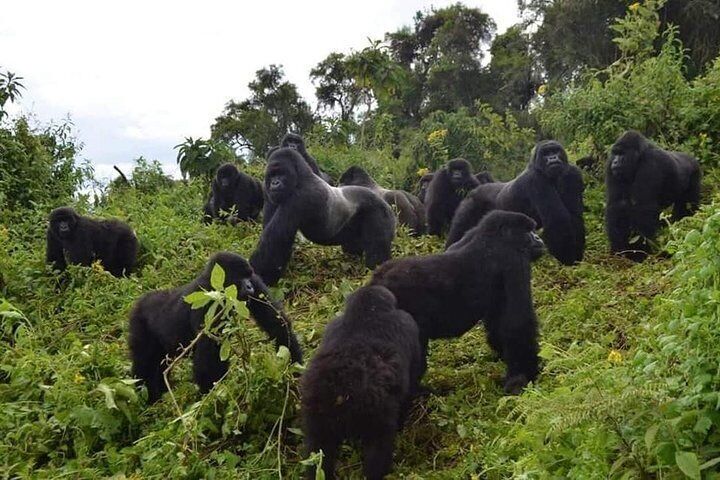
A 14-day Rwanda gorilla trekking and wildlife safari offers a comprehensive adventure, featuring mountain gorilla tracking in Volcanoes National Park, chimpanzee tracking in Nyungwe Forest, and savannah game drives in Akagera National Park. Other highlights include Kigali city tours, golden monkey trekking, boat cruises on Lake Kivu, and cultural experiences.
14-days-luxury-rwanda-primate-safari-and-uganda-safari-tour-combo
14-days-magical-rwanda-photography-safari
14-days-uganda-and-rwanda-safari-tour-itinerary
14-days-of-rwanda-uganda-gorilla-safari-and-zanzibar-beach-holidays
Gorilla Trekking (Volcanoes National Park)
Mountain gorilla trekking is the definitive Rwandan experience. In 2026, the conservation model remains centered on "low-volume, high-value" tourism, where the $1,500 permit fee directly funds habitat protection and community incentives. The trek begins at the Kinigi headquarters, where you are assigned to one of the habituated gorilla families. The hike through the rainforest can range from 30 minutes to several hours, depending on where the family nested the previous night.
The moment of encounter is often described as spiritual; spending one hour just meters away from a massive silverback and his troop—watching them groom, play, and forage—is a rare window into our own evolutionary past. The park rangers and trackers are world-class, providing a wealth of knowledge about individual gorilla personalities and the sophisticated social structures of the groups.
Golden Monkey Tracking
Often overshadowed by the gorillas, golden monkey tracking is a vibrant and energetic alternative. These endangered primates are endemic to the Virunga Massif and are easily distinguished by their bright orange-gold fur and playful antics. Unlike the stoic gorillas, golden monkeys are constantly in motion, leaping through the bamboo branches and foraging on the forest floor.
The trek is generally less strenuous than gorilla tracking, as the monkeys tend to inhabit the lower elevations of the park. It is a photographer's dream, as the monkeys are highly habituated and frequently peer through the foliage with curiosity. This activity is an excellent way to acclimatize to the altitude of Volcanoes National Park while enjoying the lush, prehistoric atmosphere of the bamboo forests.
Chimpanzee Tracking (Nyungwe Forest)
Nyungwe Forest is one of the oldest and best-preserved montane rainforests in Africa, and its resident chimpanzee populations are the stars of the south. Tracking starts at dawn, as you follow the trackers' leads to find the nests where the chimps slept. Hearing their "pant-hoot" calls echoing through the ancient canopy long before you see them creates a sense of primal anticipation.
Once located, you may observe them feeding on wild figs or moving rapidly through the trees. Because Nyungwe’s chimps are truly wild and highly mobile, the trek can be physically demanding, requiring navigation through thick undergrowth and steep terrain. However, witnessing the complex social dynamics and raw intelligence of our closest living relatives in a forest that predates the last Ice Age is an unparalleled reward.
Wildlife Game Drives (Akagera National Park)
Akagera has undergone a spectacular transformation into a "Big Five" destination. Spanning the border with Tanzania, the park features a diverse tapestry of acacia woodland, open savanna, and a vast network of lakes and papyrus swamps. Game drives here offer the chance to see lions and black rhinos—both successfully reintroduced to the ecosystem—alongside large herds of elephants, buffaloes, and leopards.
In 2026, the park is celebrated for its exclusivity; you can often enjoy a sighting of a pride of lions or a rare Sitatunga antelope without another vehicle in sight. The drives are particularly productive in the northern Mutumba plains, while the southern sector offers beautiful views over the Kagera River. Akagera represents the "savanna soul" of Rwanda, providing a vital contrast to the country’s high-altitude forests.
Canopy Walkway (Nyungwe)
For those seeking a perspective shift, the Nyungwe Canopy Walkway is a 160-meter-long suspended bridge swaying 70 meters above the forest floor. It is the only one of its kind in East Africa. The experience begins with a guided hike through the Igishigishigi trail, where you learn about the forest’s 1,000+ plant species and 300+ bird species.
Walking across the bridge provides a dizzying but beautiful view of the rainforest’s upper layers, where many of the park's 13 primate species and rare endemic birds reside. From this height, the scale of Nyungwe becomes apparent—a sea of emerald green stretching toward the mountains of the Congo. It is a thrilling way to appreciate the biodiversity of the Albertine Rift from a vantage point that was once reserved only for the birds.
Boat Cruises (Lake Kivu and Lake Ihema)
Water-based safaris offer a tranquil reprieve from the physical demands of trekking. On Lake Ihema in Akagera, boat cruises bring you face-to-face with massive pods of hippos and some of the largest Nile crocodiles in Africa. The lake is also a birder’s paradise, with frequent sightings of the African fish eagle and the rare shoebill stork.
To the west, Lake Kivu offers a more relaxed, "resort" style experience. Cruises here often head to Napoleon Island to see the fruit bat colonies or to explore the "singing fishermen" of the Kivu belt. In 2026, private luxury sunset cruises on Lake Kivu have become a staple for honeymooners and luxury travelers, offering a serene environment to watch the sun dip behind the distant Congolese mountains while enjoying local Rwandan coffee or tea.
Dian Fossey Hike
This activity is a pilgrimage for conservationists and history buffs. The hike leads to the ruins of the Karisoke Research Center, situated in the saddle between Mount Bisoke and Mount Karisimbi. You will visit the grave of Dian Fossey, the legendary primatologist who dedicated her life to protecting mountain gorillas, and the nearby "Gorilla Cemetery" where her favorite silverback, Digit, is buried.
The hike is physically challenging, ascending through different vegetation zones, from bamboo to hagenia-hypericum forests. Along the way, you may spot forest elephants or various bird species. Reaching the site provides a deep sense of the isolation and beauty in which Fossey worked, offering a poignant look at the origins of the modern conservation movement that saved the mountain gorilla from extinction.
Cultural Tours (Iby’iwacu Cultural Village)
To understand Rwanda is to understand its people. The Iby’iwacu Cultural Village, now known as the Gorilla Guardians Village, is a community-led initiative where former poachers have transitioned into conservation ambassadors. Visitors can witness traditional Intore dancing, learn about ancient herbal medicine, and even try their hand at archery or grinding grain.
Beyond Iby’iwacu, community visits in 2026 often include stops at coffee or tea cooperatives, where you can follow the "seed-to-cup" process. These interactions are vital, as they demonstrate how tourism revenue is integrated into the local economy. It is a chance to see the famous "Inyambo" (long-horned cattle) and hear stories of Rwanda’s traditions of unity and resilience, providing a human heart to your wildlife-focused itinerary.
Kigali City Tour
Kigali is often cited as the cleanest and safest capital city in Africa, and a guided tour is essential for context. The Kigali Genocide Memorial is a mandatory stop; its well-curated exhibits provide a somber but necessary look at the 1994 tragedy and the country’s subsequent path of "Ubumuntu" (humanity).
In contrast, the Kandt House Museum explores Rwanda’s colonial history, while the Nyamirambo Women’s Center offers walking tours of the city's most vibrant neighborhood, including visits to local hair salons and markets. You will see a city of rapid innovation, filled with high-end art galleries and coffee shops. A Kigali tour showcases the sophisticated, forward-looking spirit of a nation that has moved from a dark past to a bright, visionary future.
14-day Rwanda Gorilla Trekking and Wildlife Safari
This 14-day Rwanda Gorilla Trekking and Wildlife Safari is a definitive exploration of the "Land of a Thousand Hills," offering a profound connection to Africa’s most iconic primates and savanna legends. In 2026, Rwanda stands as a global leader in sustainable tourism, and this itinerary captures every facet of its natural and cultural rebirth. You will journey from the vibrant, clean streets of Kigali to the expansive, lake-dotted savannas of Akagera National Park for "Big Five" encounters. The narrative then shifts to the ancient, misty canopy of Nyungwe Forest for chimpanzee trekking and the breathtaking canopy walk. The climax of your adventure takes place in the volcanic heights of Volcanoes National Park, where the life-altering experience of mountain gorilla trekking awaits. This two-week odyssey is a masterclass in conservation and resilience, blending high-adrenaline wildlife tracking with serene moments on the shores of Lake Kivu, ensuring a comprehensive and soul-stirring East African experience.
Day 1: Arrival and Kigali Immersion
Your journey begins in Kigali, widely recognized as Africa's cleanest and most organized capital. Upon arrival, you will be transferred to your boutique hotel for a briefing. The afternoon is dedicated to a guided city tour, including a visit to the Kigali Genocide Memorial. This is a somber but essential experience for understanding Rwanda’s journey toward unity and progress. Afterward, explore the vibrant Nyamirambo neighborhood, visiting local markets and artisan cooperatives that showcase the city’s creative spirit. Dinner features a fusion of traditional Rwandan flavors and international cuisine, overlooking the city’s rolling hills. This first day provides the vital historical and cultural context needed to appreciate the nation’s remarkable conservation successes.
Day 2: Transfer to Akagera National Park
Leaving the city behind, you head east toward the border with Tanzania to Akagera National Park. The landscape transforms from terraced highlands to open savannas and acacia woodlands. Akagera is Rwanda’s only "Big Five" destination and has undergone a spectacular transformation over the last decade. You will arrive at your lodge in time for a late lunch followed by an afternoon game drive. As the sun begins to set, the park’s lions and leopards become more active. You will also spot giraffes, zebras, and various antelope species against the backdrop of the park’s beautiful lakes. The evening concludes with dinner at a lodge overlooking the water, surrounded by the sounds of the African night.
Day 3: Full Day "Big Five" Safari
A full day in Akagera allows for a deep dive into its diverse ecosystems. The northern Mutumba plains are famous for high concentrations of herbivores and the predators that follow them. You will search for the reintroduced black and white rhinos, which are now thriving in this protected wilderness. In the afternoon, shift to the water for a boat safari on Lake Ihema. This provides a different perspective on the park, bringing you close to massive pods of hippos and some of the largest Nile crocodiles in East Africa. Bird enthusiasts will be thrilled by the sightings of African fish eagles and the rare shoebill stork. This day highlights Rwanda’s "savanna soul," proving its wildlife diversity extends far beyond its famous primates.
Day 4: Akagera to Nyungwe Forest
Today is a long but scenic transit day as you travel across the country toward the southwestern highlands. You will pass through vibrant villages and see the "thousand hills" that give Rwanda its name. A stop at the King’s Palace Museum in Nyanza offers a look at Rwanda’s pre-colonial history and the chance to see the royal long-horned Inyambo cattle. By late afternoon, the air turns cooler and the vegetation more lush as you reach the fringes of Nyungwe Forest National Park. This ancient montane rainforest is one of the oldest in Africa and serves as a vital watershed. You will check into your forest-edge lodge, enjoying the prehistoric atmosphere of the emerald-green canopy.
Day 5: Chimpanzee Trekking and Canopy Walk
The morning begins before dawn as you head into the forest to track habituated chimpanzees. Hearing their thunderous "pant-hoot" calls echoing through the trees is a primal experience. Once located, you will spend an hour observing their complex social interactions and incredible intelligence. After a forest lunch, you will head to the Uwinka Visitor Centre for the famous Canopy Walkway. Suspended 70 meters above the forest floor, this 160-meter-long bridge provides a bird’s-eye view of the ancient trees and the primates and endemic birds that inhabit the upper layers. The scale of the forest from this height is breathtaking, offering a dizzying and beautiful perspective on Rwanda’s incredible biodiversity.
Day 6: Colobus Monkeys and Waterfalls
Nyungwe is home to 13 primate species, and today you focus on the striking black-and-white Angolan Colobus monkeys. These primates are unique for their massive troops—sometimes numbering over 300 individuals—making them a spectacular sight as they move through the trees. The trek is generally less strenuous than the chimpanzee hunt, allowing more time to appreciate the forest’s orchids and giant ferns. In the afternoon, take a guided hike on the Isumo Waterfall trail. This route winds through tea plantations and deep forest ravines, culminating at a powerful 17-meter waterfall. The combination of mist, ancient greenery, and primate encounters makes this a tranquil and deeply restorative day in the heart of the Albertine Rift.
Day 7: Nyungwe to Lake Kivu (Karongi)
After breakfast, you travel north along the "Kivu Belt," a scenic road that follows the jagged coastline of Lake Kivu. You will arrive at the lakeside town of Karongi, often cited as the most beautiful point on the lake. After checking into your resort, enjoy an afternoon boat trip to Napoleon Island, named for its shape. The island is home to a massive colony of fruit bats, and a short hike to the summit offers a panoramic view of the lake’s emerald islands and the distant mountains of the Congo. As evening falls, you can watch the "singing fishermen" head out in their traditional three-hulled canoes, their rhythmic songs drifting across the water—a peaceful and quintessentially Rwandan coastal experience.
Day 8: Lake Kivu Relaxation and Rubavu
Continue your journey north along the lake toward Rubavu (Gisenyi). This area has a Mediterranean feel, with palm-fringed sandy beaches and a relaxed atmosphere. The day is designed for decompression. You can explore the local markets, visit a coffee washing station to see the "bean-to-cup" process, or simply enjoy the lake’s clear, swimmable waters. For those seeking a bit more activity, kayaking or paddleboarding along the shore offers a quiet way to see the lakeside villages. Rubavu is also a hub for the Congo Nile Trail, and you can hike a small section for spectacular views. The evening is spent enjoying fresh tilapia from the lake, preparing your mind and body for the high-altitude adventures in the volcanoes tomorrow.
Day 9: Journey to Volcanoes National Park
Leaving the lake behind, the landscape becomes more dramatic as the five massive peaks of the Virunga Massif come into view. You are entering the realm of the mountain gorilla. Upon arrival in Musanze, you will check into your lodge and visit the Ellen DeGeneres Campus of the Dian Fossey Gorilla Fund. This world-class facility provides a deep dive into the history of gorilla conservation and the legendary work of Dian Fossey. Understanding the science and the struggle behind the survival of these great apes adds immense emotional weight to the encounter you will have tomorrow. The evening is spent by the fireplace, listening to the mountain mists settle over the bamboo forests of Volcanoes National Park.
Day 10: Mountain Gorilla Trekking
This is the pinnacle of your Rwandan adventure. After an early briefing at the park headquarters, you will be assigned to a gorilla family and head into the forest with expert rangers. The trek through the bamboo thickets can be challenging, but the moment you find them, all effort is forgotten. Spending one hour in the presence of a silverback and his family is a silent, spiritual experience. Watching them groom, play, and forage just meters away is a rare privilege that few human beings will ever know. You will return to the lodge for a celebratory lunch and a "post-trek" massage. The afternoon is for reflection, absorbing the magnitude of the connection you’ve just made with our closest wild relatives.
Day 11: Golden Monkey Tracking
Return to the forest today to track the endangered Golden Monkeys. These primates are endemic to the Virunga woods and are known for their vibrant orange fur and playful, energetic nature. Unlike the stoic gorillas, golden monkeys are constantly in motion, leaping through the bamboo and foraging on the forest floor. The trek is generally shorter and less strenuous, providing a lighter but equally charming wildlife experience. In the afternoon, visit the Iby’Iwacu Cultural Village (Gorilla Guardians). Here, former poachers have been transformed into conservationists. You will witness traditional dancing, learn about ancient medicine, and see how tourism revenue has revitalized the local community. It is a powerful demonstration of how people and wildlife can thrive together in modern Rwanda.
Day 12: Dian Fossey Tomb Hike or Mount Bisoke
For your final day of mountain activity, you have a choice of legendary hikes. The Dian Fossey hike leads to the ruins of her Karisoke Research Center and her grave, situated in the saddle between Mount Bisoke and Mount Karisimbi. It is a pilgrimage for any conservationist. Alternatively, for those seeking a physical challenge, the hike up Mount Bisoke leads to a stunning crater lake at the summit. Both treks offer incredible views and a chance to see forest elephants or rare birds. The high-altitude environment is exhilarating, providing a rugged conclusion to your time in the Virungas. The evening is spent back at the lodge for a farewell "mountain dinner," celebrating the endurance and beauty of the Rwandan wilderness.
Day 13: Twin Lakes and Return to Kigali
Before heading back to the capital, take a scenic drive to the Twin Lakes, Burera and Ruhondo. These deep blue lakes are separated by a narrow strip of land and offer some of the most dramatic vistas in the country, with the volcanoes as a constant backdrop. A boat trip on the lakes reveals a quiet, pastoral side of Rwanda. After lunch overlooking the water, you begin the three-hour drive back to Kigali. The terraced hillsides provide a final, lasting image of why this is called the "Land of a Thousand Hills." Upon arrival in Kigali, you can enjoy some last-minute souvenir shopping at the Caplaki Craft Village or high-end boutiques before a final celebratory dinner.
Day 14: Final Souvenirs and Departure
On your final day, enjoy a leisurely breakfast before a final exploration of Kigali’s thriving art scene. Visit the Inema Arts Center or Ivuka Arts to see how contemporary Rwandan artists are interpreting their country's journey. This is also a great time to pick up world-class Rwandan coffee or tea to take home. Your guide will provide a transfer to Kigali International Airport for your departure flight. You leave Rwanda not just with a collection of wildlife sightings, but with a deep respect for a nation that has mastered the art of resilience, conservation, and hospitality. The memories of the mist-covered volcanoes and the eyes of a silverback will stay with you long after you’ve left the hills behind.
1. What does the 14-day safari include?
A 14-day Rwandan odyssey is designed as a "Primate and Savanna" circuit. It typically begins with Big Five game drives in Akagera National Park, providing a traditional safari experience. The journey then moves to Nyungwe Forest for chimpanzee tracking and the famous canopy walk. The grand finale takes place in Volcanoes National Park, featuring the iconic mountain gorilla trekking and golden monkey tracking. This duration also allows for "buffer days" on the shores of Lake Kivu, ensuring you aren't physically exhausted by the demanding treks in the high-altitude rainforests.
2. How much is a gorilla trekking permit?
In 2026, the price for a mountain gorilla trekking permit in Rwanda remains $1,500 USD per person. While this is the highest price in East Africa, it serves a critical purpose: a significant portion of this fee is reinvested into the communities surrounding the park to discourage poaching and into the protection of the Virunga habitat. Permits are strictly limited to eight people per gorilla family per day, and it is highly recommended to book through the Rwanda Development Board (RDB) or a certified operator at least six months in advance.
3. What is the best time for a 14-day safari?
The optimal windows are the long dry season (June to September) and the short dry season (December to February). During these months, the trails for gorilla and chimpanzee tracking are less slippery, and the savanna grass in Akagera is shorter, making wildlife spotting easier. However, the "shoulder seasons" (October and March) are becoming popular for photographers who prefer the lush, dust-free green backgrounds and the dramatic lighting that follows afternoon tropical showers.
4. How difficult is the gorilla trekking?
The difficulty of a trek in Volcanoes National Park is highly variable, ranging from a 30-minute stroll to an 8-hour mountain hike. Families are assigned based on the trekker's fitness level during the morning briefing. Professional porters are available for hire (approx. $20) and are highly recommended; they not only carry your gear but provide a steadying hand on steep, muddy slopes. While the altitude (2,500m to 3,000m) can be challenging, the trackers move at the pace of the slowest person in the group.
5. Can I see golden monkeys?
Yes, golden monkey tracking is a vibrant staple of a 14-day itinerary. Endemic to the Albertine Rift, these monkeys are distinguished by their bright orange-gold fur and high-energy behavior. Unlike the stoic gorillas, golden monkeys are constantly in motion, leaping through the bamboo canopy. This trek is generally shorter and stays at lower elevations, making it an excellent "warm-up" activity for your first few days in the Musanze region.
6. What wildlife can be seen in Akagera?
Akagera National Park is Rwanda’s "Big Five" success story. Following the successful reintroduction of lions in 2015 and black rhinos in 2017, the park offers a complete savanna experience. You will see elephants, buffaloes, leopards, and rhinos, alongside giraffes, zebras, and the rare Sitatunga antelope in the papyrus swamps. In 2026, Akagera is also recognized as a top-tier birding destination, with over 480 species, including the prehistoric-looking shoebill stork.
7. What is included in the package?
A comprehensive 14-day package covers the "Heavy Logistics": all primate permits (gorilla, chimp, monkey), park entry fees, professional 4x4 transport with a driver-guide, and full-board accommodation. It also typically includes boat cruises on Lake Ihema and Lake Kivu. However, it is important to note that international flights, visa fees, and gratuities for guides and porters are almost always excluded and should be factored into your secondary budget.
8. Do I need a vaccination?
A Yellow Fever vaccination certificate is a mandatory entry requirement for Rwanda. Additionally, as you will be spending time in both savanna and forest environments, Malaria prophylaxis is strongly advised. In 2026, most travelers also ensure they are up-to-date on Hepatitis A and Typhoid. Because you will be in close proximity to primates, who share 98% of our DNA, you must be in good health; even a common cold can be fatal to a mountain gorilla.
9. Are there age restrictions?
The minimum age for gorilla trekking in Rwanda is 15 years old. This rule is strictly enforced by the RDB to protect both the children (the treks can be arduous) and the gorillas (children are more likely to carry childhood diseases like measles or mumps). For families traveling with younger children, many luxury lodges offer specialized "Junior Ranger" programs or childcare services while the adults are on the trek.
10. What should I pack?
Trekking gear is technical: you need sturdy, waterproof hiking boots with good ankle support and "gaiters" to keep ants and mud out. Wear long-sleeved shirts and trousers to protect against stinging nettles and thorns. Gardening gloves are a secret weapon for safari veterans, allowing you to grab onto vegetation for balance. Don't forget a waterproof jacket (even in the dry season) and a high-quality camera with a versatile zoom lens (24-70mm or 70-200mm).
11. Where can I stay?
Rwanda’s luxury lodge circuit is world-class. Near Volcanoes NP, Bisate Lodge offers an architectural masterpiece resembling a traditional palace, while Virunga Lodge provides 360-degree views of the lakes and volcanoes. For those seeking a mid-range but high-quality experience, Five Volcanoes Lodge is an excellent choice. In Nyungwe, the One&Only Nyungwe House is the gold standard, set within a lush tea plantation.
12. Can I combine Rwanda and Uganda?
Combining both countries in 14 days is a very popular "East African Primate Circuit." You can trek gorillas in Volcanoes NP (Rwanda) and then cross the Cyanika border to trek in Bwindi Impenetrable Forest (Uganda). This allows you to compare the two experiences: Rwanda’s open bamboo forests vs. Uganda’s dense, ancient jungle. This combination also qualifies you for the East African Tourist Visa, which allows multiple entries between Rwanda, Uganda, and Kenya.
13. What if I don't see the gorillas?
The success rate for seeing gorillas in Rwanda is over 98%, thanks to the advanced trackers who head out at dawn to locate the families before the tourists arrive. In the extremely rare event that a family cannot be found (usually due to unexpected movement or weather), the RDB policy generally offers a 50% refund or the opportunity to track again the following day if permits are available.
14. What are the rules during a visit?
To protect the gorillas, you must maintain a 10-meter (33-foot) distance at all times. If a gorilla approaches you, you are instructed to slowly back away. Voices must be kept low, and flash photography is strictly prohibited as it can agitate the silverback. You are allowed exactly one hour of contact time; a rule designed to minimize the stress on the animals and reduce the risk of cross-species disease transmission.
15. Chimpanzee trekking experience?
Chimpanzee trekking in Nyungwe Forest is “wilder” and more unpredictable than gorilla trekking. Chimps are highly mobile and vocal; you will often hear their thunderous "pant-hoots" echoing through the canopy long before you see them. The permit is significantly cheaper than the gorilla permit (approx. $90–$150) but requires the same level of physical fitness. The experience is a thrilling, fast-paced hike through one of Africa’s oldest rainforests.
Booking 14 Days Rwanda gorilla trekking and wildlife safari with us Roads of Adventure safaris
Book a 14-day Rwanda and Uganda gorilla trekking safari with Roads of Adventure Safaris to experience premier wildlife encounters, including Bwindi Impenetrable Forest and Volcanoes National Park. They offer mid-range to luxury, tailor-made itineraries featuring chimpanzee tracking, Big Five game drives, and 4x4 transport.
