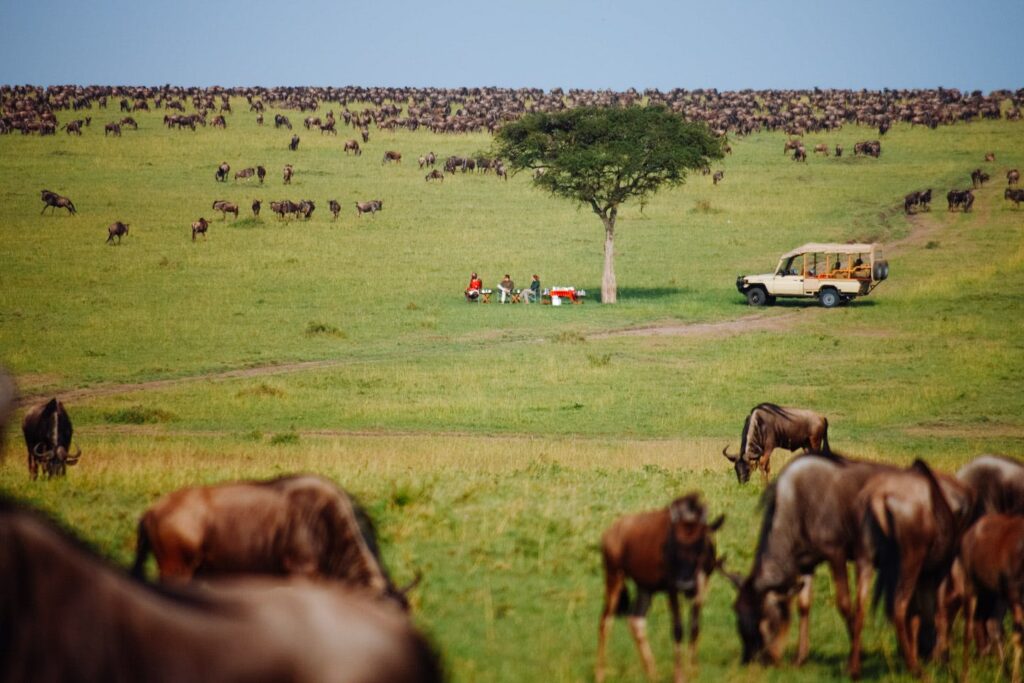
A 12-day Tanzania safari typically combines northern circuit game drives—Serengeti, Ngorongoro, Tarangire, and Lake Manyara—with cultural visits to Maasai villages and a relaxing Zanzibar beach extension. Key activities include the Great Migration, Big Five spotting, hiking in the Serengeti, bushman visits at Lake Eyasi, and diving
12-days-best-tanzania-and-kenya-safari-combo-itinerary
12-days-perfect-tanzania-zanzibar-beach-holiday-tour-package
12-days-budget-tanzania-safari-itinerary-visiting-tanzania-on-budget
12-days-kilimanjaro-and-safari-in-northern-tanzania-safari-parks
12-days-tanzania-safari-and-culture-experience
12-days-tanzania-photography-safari-capturing-the-wild-with-lenses
Top Activities on a 12-Day Tanzania Safari
1. Wildlife Safaris in the Northern Circuit
The "Northern Circuit" is the crown jewel of African wildlife. In the Serengeti, the landscape is a theater of predator-prey dynamics; you’ll find the world’s highest concentration of large mammals, including prides of lions and elusive leopards. Tarangire National Park offers a rugged contrast, famous for its ancient baobab trees and massive elephant herds that congregate around the Tarangire River. Meanwhile, Lake Manyara provides a lush, groundwater forest setting where you can spot unique tree-climbing lions and thousands of flamingos painting the lakeshore pink.
2. Ngorongoro Crater Game Drive
Descending 600 meters into the Ngorongoro Crater is like entering a prehistoric world. This collapsed caldera acts as a self-contained ecosystem, housing over 25,000 large animals. It is one of the best places in Africa to spot the endangered Black Rhino. Because the walls of the crater limit migration, the resident lions here are some of the largest and most well-fed in the world. A full-day drive offers a diverse range of habitats, from soda lakes to fever tree forests, all packed into a 260-square-kilometer space.
3. Serengeti Hot Air Balloon Safari
There is no perspective quite like the one from a wicker basket at 1,000 feet. A sunrise balloon safari allows you to witness the Serengeti waking up in absolute silence, interrupted only by the occasional roar of the burner. You’ll drift over massive granite kopjes (rock outcroppings) where lions often sun themselves, and get a bird's-eye view of the Great Migration trails. The experience typically concludes with a "Bush Breakfast," complete with champagne, served under the shade of an acacia tree in the middle of the wilderness.
4. Cultural Experiences in Mto Wa Mbu or Karatu
Tanzania is as much about its people as its animals. In Mto wa Mbu, a vibrant village where over 120 tribes coexist, you can take a guided bike or walking tour. This is an opportunity to visit local banana plantations (sampling some of the 30+ varieties grown here), watch Makonde woodcarvers at work, and eat a traditional Tanzanian lunch prepared by a local women’s cooperative. It provides a grounded, authentic look at the agricultural heartbeat of the country.
5. Maasai Boma Visit
The Maasai are the iconic pastoralists of East Africa. A visit to a Boma (homestead) allows for a respectful exchange of culture. You will see their circular homes made of mud and thatch, watch the famous Adumu (jumping dance), and learn about their deep connection to the land and livestock. While often structured for visitors, these encounters offer insight into how the Maasai have managed to maintain their traditional lifestyle in a rapidly modernizing world.
6. Walking Safaris & Night Game Drives
While standard safaris keep you in a vehicle, a walking safari in the Serengeti or Tarangire puts you on the ground. Accompanied by an armed ranger, you learn the "small print" of the bush: tracking paw prints, identifying dung, and understanding medicinal plants. Conversely, night game drives (offered in select areas or private concessions) reveal the "second shift." This is the best time to spot nocturnal hunters like genets, civets, and porcupines, or witness a pride of lions beginning their nightly hunt.
7. Bushmen Experience at Lake Eyasi
At Lake Eyasi, you step back in time with the Hadzabe tribe. They are one of the world’s last remaining hunter-gatherer societies, speaking a unique "click" language. Unlike a standard tour, this is a raw experience where you can join the men on a morning hunt or forage with the women for tubers and berries. You’ll also visit the Datoga, skilled blacksmiths who trade handmade arrowheads with the Hadzabe. It is a powerful reminder of humanity’s ancestral roots.
8. Zanzibar Beach Relaxation & Water Activities
After a dusty safari, the "Spice Island" is the ultimate sanctuary. The white sands of Nungwi or Paje offer world-class snorkeling and diving in the Indian Ocean’s coral reefs. You can swim with wild dolphins in Menai Bay or simply enjoy the "Pole Pole" (slowly, slowly) lifestyle. The water temperature remains warm year-round, making it perfect for kayaking, kiteboarding, or just enjoying the sunset with a cocktail in hand.
9. Stone Town Tour
Stone Town is a UNESCO World Heritage site and a labyrinth of history. Walking through its narrow alleys, you’ll see the famous intricately carved Zanzibar doors and smell the aroma of cloves and cinnamon. A tour covers the somber history of the Old Slave Market, the House of Wonders, and the bustling Darajani Market. A visit to a nearby Spice Farm is also essential to see how vanilla, nutmeg, and black pepper are grown—proving why this archipelago earned its fragrant nickname.
10. Sunset Dhow Cruise
The perfect finale to a 12-day journey is a cruise on a Dhow, a traditional Arabic sailing vessel. As the sun dips below the horizon, casting a golden glow over the Indian Ocean, you’ll sail along the coastline of Zanzibar. Most cruises feature live Taraab music and local snacks. It is a serene, rhythmic end to an adventurous trip, allowing you to reflect on the vast landscapes and vibrant cultures you've encountered across Tanzania.
12 Days Tanzania safari holiday
12-day Tanzania safari is the ultimate immersion into the soul of East Africa, blending raw wilderness with the serene beauty of the Indian Ocean. This journey is meticulously designed to showcase the "Northern Circuit," a region world-renowned for its high density of wildlife and dramatic landscapes. You will traverse the iconic plains of the Serengeti, witness the concentrated biodiversity within the Ngorongoro Crater, and explore the baobab-studded terrain of Tarangire. Beyond the animals, the itinerary bridges the gap between nature and humanity, offering intimate encounters with the Maasai and Hadzabe tribes. The adventure transitions from the dusty thrill of the bush to the fragrant, cobblestone streets of Stone Town and the palm-fringed beaches of Zanzibar. Whether you are watching the Great Migration under a golden sun or snorkeling in crystal-clear turquoise waters, this 12-day odyssey provides a perfect balance of adrenaline, cultural education, and profound relaxation in one of the world's most beautiful destinations.
Day 1: Arrival and Tarangire National Park
Upon arrival at Kilimanjaro International Airport, your adventure begins with a drive to Tarangire National Park. Known as the "Home of the Giants," this park is famous for its massive herds of elephants and ancient, towering baobab trees that dot the landscape. The Tarangire River serves as a permanent water source, drawing a parade of thirsty wildlife including wildebeest, zebras, and buffaloes. During your afternoon game drive, keep a sharp eye out for leopards draped over tree branches and lions lounging in the shade. The park’s birdlife is equally impressive, with over 500 species recorded. As the sun sets, you will head to your lodge for a briefing on the days ahead, falling asleep to the distant calls of hyenas. It is the perfect introduction to the rugged beauty of the Tanzanian bush and its diverse ecosystems.
Day 2: Lake Manyara National Park
After breakfast, you head to Lake Manyara National Park, a scenic gem nestled at the base of the Great Rift Valley escarpment. This park offers a lush contrast to Tarangire, featuring a groundwater forest inhabited by noisy troops of baboons and blue monkeys. Manyara is legendary for its unique tree-climbing lions, which can often be spotted lounging high in the limbs of acacia trees. The alkaline lake itself is a haven for water birds; thousands of flamingos create a shimmering pink ribbon along the shore, while pods of hippos wallow in the Simba River. You will spend the day exploring the diverse habitats, from the dense forest to the grassy floodplains. The compact size of the park allows for a high-quality, intimate viewing experience, ensuring you see a vast array of wildlife before retiring to your accommodation in the nearby town of Karatu.
Day 3: Cultural Immersion in Mto Wa Mbu & Karatu
Today is dedicated to the vibrant cultures that define Tanzania. You will start in Mto Wa Mbu, a bustling village where over 120 different tribes live in harmony. A guided tour takes you through local farms, where you can learn about the irrigation systems that support the growth of over 30 varieties of bananas. You’ll visit a local youth art project to see traditional Makonde carvings and Tingatinga paintings. The highlight is a traditional lunch, featuring a spread of local dishes like ugali and pilau prepared by a women's community group. In the afternoon, you move to Karatu to visit a brick-making factory or a local school, gaining insight into the daily lives and challenges of rural Tanzanians. This day provides a soulful connection to the people of the region, reminding you that the safari experience is about more than just the wildlife.
Day 4: Lake Eyasi and the Hadzabe Tribe
Wake up early for a journey to the shores of Lake Eyasi to meet the Hadzabe, one of the last true hunter-gatherer tribes in the world. This is not a staged performance but a raw look at an ancient way of life. You may join the men on a fast-paced morning hunt, learning how they use handmade bows to track small game, or forage for tubers and honey with the women. Their "click" language is a fascinating phonetic experience. Later, you will visit the Datoga tribe, skilled pastoralists and blacksmiths who melt scrap metal to create jewelry and arrowheads. These interactions offer a profound perspective on human history and resilience. The dry, rugged landscape of Lake Eyasi provides a stark, beautiful backdrop for these encounters, making it one of the most memorable and humbling days of your 12-day journey through Tanzania.
Day 5: Ngorongoro Crater Game Drive
Today you descend 600 meters into the Ngorongoro Crater, a UNESCO World Heritage site and the world’s largest intact volcanic caldera. Often called a "natural zoo," the crater floor supports a dense population of over 25,000 large animals. This is your best chance to spot the rare and endangered Black Rhino, which finds sanctuary within the crater’s walls. You will also encounter massive "tusker" elephants, prides of well-fed lions, and enormous pods of hippos in the Lerai Forest and Magadi Lake. The scenery is breathtaking, with the steep walls of the caldera framing every view. After a picnic lunch on the crater floor, you’ll continue your game drive, observing the fascinating interactions between predators and prey in this confined but thriving ecosystem. The sheer concentration of wildlife in such a concentrated area is an experience unmatched anywhere else on the African continent.
Day 6: Serengeti – The Endless Plains
Leaving the highlands behind, you travel toward the legendary Serengeti National Park. The name comes from the Maasai word Siringet, meaning "endless plains," and as you enter the park, you’ll see why. The horizon seems to stretch forever, broken only by the occasional acacia tree or a "kopje"—a massive granite rock outcropping that serves as a lookout for predators. Today’s drive is a continuous safari; as you move into the heart of the Serengeti, you are likely to see herds of wildebeest and zebras by the thousands. The Central Serengeti (Seronera) is famous for its high concentration of big cats, particularly leopards and lions that rule the riverbanks. Your guide will track the movement of the Great Migration, ensuring you are in the best possible position to witness the spectacle of hundreds of thousands of hooves thundering across the golden savannah.
Day 7: Serengeti Hot Air Balloon & Walking Safari
Start your day with a magical sunrise Hot Air Balloon Safari. Floating silently over the Serengeti, you’ll watch the shadows of giraffes stretch across the plains and view the ecosystem from a perspective few ever see. Upon landing, enjoy a luxurious champagne breakfast in the bush. In the afternoon, trade the vehicle for your own two feet on a guided walking safari. Accompanied by an armed ranger and a naturalist, you will focus on the intricacies of the bush that are missed from a car. You’ll learn to identify animal tracks, understand the medicinal uses of various plants, and observe the "Little Five" (like the elephant shrew and ant lion). This intimate connection with nature allows you to feel the pulse of the Serengeti, hearing the wind through the grass and the distant calls of birds without the hum of an engine.
Day 8: Serengeti to Zanzibar
Enjoy one final morning game drive in the Serengeti, perhaps catching a lion pride on a morning hunt or a cheetah scanning the plains from a termite mound. Afterward, you will be transferred to a local airstrip for a domestic flight to the exotic island of Zanzibar. The contrast is immediate: the golden hues of the savannah are replaced by the vibrant blues of the Indian Ocean. Upon arrival, you will be whisked away to your beach resort on the northern or eastern coast. The transition from the rugged wilderness of the safari to the humid, spice-scented air of the coast marks the beginning of the relaxation phase of your trip. Spend your evening walking along the white sand beaches, feeling the warm tide against your feet, and enjoying a fresh seafood dinner as the stars begin to reflect off the calm sea.
Day 9: Zanzibar Beach and Water Activities
After a week of early safari starts, today is about "Pole Pole" (slowly, slowly). You can spend your morning lounging under a palm tree with a book or take advantage of the world-class water activities Zanzibar is famous for. Head to Mnemba Atoll for an unforgettable snorkeling or diving excursion, where the coral reefs are teeming with tropical fish, sea turtles, and occasional dolphins. For the more adventurous, the steady winds of Paje make it a global hotspot for kiteboarding. If you prefer a quieter experience, you can take a traditional Ngalawa (outrigger canoe) out into the reef to watch the local fishermen at work. The turquoise waters are crystal clear and invitingly warm, providing the perfect environment to wash off the dust of the Serengeti. Whether active or relaxed, the day is yours to enjoy the pristine coastal beauty.
Day 10: Stone Town Tour and Spice Farm
Today you delve into the rich, complex history of Zanzibar with a trip to Stone Town, a UNESCO World Heritage site. You will wander through a labyrinth of narrow alleys, admiring the famous carved wooden doors and vibrant bazaars. Your guide will take you to the former Slave Market, the Anglican Cathedral, and the House of Wonders, explaining the island's role as a major hub for the spice and ivory trades. In the afternoon, you’ll visit a rural spice farm. This sensory experience allows you to see, smell, and taste the plants that gave the island its name—cloves, nutmeg, cinnamon, and vanilla. You’ll learn how these spices are harvested and their various uses in traditional medicine and Swahili cuisine. The day ends back in Stone Town, where you can watch the sunset from a rooftop bar overlooking the minarets and the sea.
Day 11: Jozani Forest and Sunset Dhow Cruise
In the morning, visit the Jozani Chwaka Bay National Park, the last indigenous forest on Zanzibar. This sanctuary is home to the rare and endemic Red Colobus monkey, which can be easily spotted playing in the mahogany trees. You will also walk through the ethereal mangrove boardwalks, learning about the vital role these trees play in the coastal ecosystem. In the late afternoon, head to the shoreline for a quintessential Zanzibar experience: a Sunset Dhow Cruise. Board a traditional wooden sailing vessel and head out into the Indian Ocean as the sky turns shades of pink and orange. With the wind in the sails and the sound of live traditional Taraab music playing in the background, you’ll enjoy appetizers and drinks. It is a peaceful, rhythmic way to celebrate your final full day in Tanzania, reflecting on the incredible diversity of your 12-day journey.
Day 12: Farewell Tanzania
On your final day, enjoy a leisurely breakfast at your hotel and perhaps a final dip in the ocean. Depending on your flight schedule, you might have time for some last-minute souvenir shopping in Stone Town, picking up local textiles (kangas), intricate beadwork, or freshly packaged spices to take home. Your driver will then transfer you to Zanzibar International Airport for your flight back home or to your next destination. As you fly over the turquoise waters and the vast African continent, you carry with you the memories of thundering hooves in the Serengeti, the prehistoric silence of the Ngorongoro Crater, the warmth of the Maasai people, and the gentle lapping of the Indian Ocean. You leave with a deeper understanding of the wild and a promise to one day return to the magic of Tanzania.
What are the top highlights of a 12-day Tanzania safari holiday?
The true highlights of a 12-day journey lie in its sheer variety. You begin in Tarangire, where the concentration of elephants per square kilometer is among the highest in the world. From there, the lush groundwater forests of Lake Manyara offer a stark contrast with their tree-climbing lions and soda lakes shimmering with flamingos. The journey then reaches a crescendo in the Serengeti, where the "endless plains" host the world’s most spectacular wildlife migration.
Beyond the plains, the Ngorongoro Crater provides a geological and biological marvel, acting as a natural sanctuary for the "Big Five." However, a 12-day trip is more than just a list of animals. The highlight for many is the balance: transitioning from the early-morning excitement of the bush to the cultural depth of a Maasai village, and finally to the historical weight of Stone Town in Zanzibar. Ending the trip on the powder-white sands of the Indian Ocean allows travelers to process the magnitude of the safari experience while enjoying world-class snorkeling and relaxation.
Which parks should I include in a Northern Circuit 12-day Tanzania safari holiday?
For a comprehensive Northern Circuit experience, the "Big Four" are essential: Tarangire, Lake Manyara, Ngorongoro Crater, and the Serengeti. Tarangire is the best starting point, especially between June and October, as the Tarangire River becomes a magnet for wildlife. Lake Manyara is often a shorter stop but is vital for seeing distinct ecosystems, from dense jungle to open marshland.
The Serengeti should ideally take up 3 to 4 days of your 12-day itinerary to allow for exploration of different sectors (Central, North, or South depending on the season). Finally, the Ngorongoro Crater is a non-negotiable inclusion. It is the best place to see the rare black rhino and provides a unique "bowl" perspective of wildlife that is geographically distinct from the open savannahs. Including all four ensures you witness the full spectrum of Tanzania’s biodiversity, from the giant baobabs of the east to the volcanic highlands and the short-grass plains of the west.
How can I see the Great Migration during a 12-day Tanzania safari holiday?
Seeing the Great Migration requires strategic timing and location, as the 1.5 million wildebeest and zebras are constantly moving in a clockwise cycle. On a 12-day trip, your Serengeti location is key. From January to March, you should focus on the Southern Serengeti (Ndutu). This is calving season, where half a million calves are born in a few weeks, attracting massive numbers of predators like lions and cheetahs.
From July to October, the action moves to the Northern Serengeti (Kogatende). This is when you can witness the iconic and treacherous Mara River crossings. The herds must brave crocodile-infested waters and steep banks to reach the greener pastures of the Maasai Mara. During the "shoulder" months of May and June, the migration moves through the Western Corridor. Because a 12-day itinerary is flexible, you can work with a guide to position your camps directly in the path of the herds, ensuring you are at the heart of the movement rather than just on the periphery.
Can I do a hot air balloon safari on a 12-day Tanzania safari holiday?
Absolutely, and it is often cited as the "bucket list" moment of the entire trip. Hot air balloon safaris are primarily operated in the Serengeti (Central, North, and South) and sometimes in Tarangire. The experience begins before dawn with a drive to the launch site. As the sun peeks over the horizon, you lift off silently, drifting wherever the wind takes you.
From the air, the scale of the Serengeti becomes clear. You can track the winding paths of the Seronera River, see hippos splashing in pools below, and watch the shadows of giraffes stretch across the plains. The height allows you to spot wildlife that might be hidden by tall grass from a vehicle’s perspective. After about an hour in the air, you land in a remote clearing for a "Bush Breakfast," a traditional champagne toast followed by a full English breakfast served under a sprawling acacia tree. It is a serene, high-end experience that provides a peaceful counterpoint to the ruggedness of daily game drives.
Is it possible to visit Maasai communities during a 12-day Tanzania safari holiday?
Yes, cultural engagement is a pillar of the Tanzanian experience. Most 12-day itineraries include a visit to a Maasai Boma (village) in the Ngorongoro Conservation Area or near the Serengeti borders. These visits are designed to be an exchange of cultures. You will be greeted by the rhythmic chanting and high-jumping dance (Adumu) of the warriors and invited into their homes made of mud, sticks, and cow dung.
During the visit, you can learn about the Maasai’s complex social structure, their rites of passage, and their traditional medicine. You will see how they manage their livestock—which is their primary source of wealth—in harmony with the surrounding wildlife. While some villages are more tourist-oriented than others, your guide can often arrange for more authentic interactions. It is an opportunity to buy handmade beadwork directly from the women’s cooperatives, supporting the local economy while gaining a deeper appreciation for the people who have coexisted with lions and elephants for centuries.
Are walking safaris allowed on a 12-day Tanzania safari holiday?
Walking safaris are a specialized activity allowed in specific "walking zones" within the national parks or in private concessions. In the Serengeti, these are typically conducted in the wilderness areas away from the main tourist tracks. You are accompanied by a highly trained armed ranger and a professional naturalist guide. Unlike a vehicle safari, the goal isn't to get close to big predators—though it can happen—but to focus on the "micro-wilderness."
On foot, you learn the art of tracking; you’ll examine paw prints in the dust, identify bird calls, and learn which plants are used by the locals for toothbrushes or antiseptic. It engages all five senses: the smell of crushed wild sage, the crunch of dry grass, and the thrill of being on the same level as the wildlife. Walking safaris are also available on the rim of the Ngorongoro Crater or in Tarangire. It is a heart-pounding way to break up the long hours spent sitting in a 4x4 and offers a more intimate connection with the African soil.
What wildlife can I expect to see on a 12-day Tanzania safari holiday?
A 12-day trip through the Northern Circuit offers a high probability of seeing the "Big Five": lion, leopard, African elephant, Cape buffalo, and rhinoceros. Lions are abundant throughout the Serengeti and Ngorongoro, while leopards are frequently spotted in the riverine trees of Seronera. The black rhino is the rarest, but the Ngorongoro Crater is one of the few places where they are regularly sighted.
Beyond the Big Five, you will see a staggering variety of "plains game," including zebras, giraffes (Tanzania's national animal), wildebeest, and various antelopes like impala, eland, and the tiny dik-dik. The predators are equally diverse, with cheetahs favoring the open plains, spotted hyenas acting as the bush's cleanup crew, and rare sightings of African wild dogs if you are lucky. For birders, the trip is a dream; from the massive martial eagle to the tiny, colorful lilac-breasted roller and the pink clouds of flamingos on Lake Manyara, the avian diversity is endless.
Can I include a beach vacation on a 12-day Tanzania safari holiday?
A "Bush to Beach" itinerary is the most popular way to structure a 12-day trip. A typical split involves 7 or 8 days of wildlife viewing in the northern parks followed by 4 or 5 days on the Zanzibar archipelago. This transition is usually made via a short domestic flight from an airstrip in the Serengeti or Arusha directly to Zanzibar.
The beach portion serves as a "decompression" period. After days of early 5:00 AM wake-up calls and dusty roads, the palm-fringed beaches of Nungwi, Kendwa, or Paje offer a different kind of magic. You can spend your days doing absolutely nothing but staring at the turquoise Indian Ocean, or you can engage in water-based adventures like kiteboarding, scuba diving, or swimming with dolphins. The combination ensures that you return home both exhilarated by the wild and physically refreshed by the coast. It is the ultimate "best of both worlds" vacation.
What is a "bush dinner" on a 12-day Tanzania safari holiday?
A "bush dinner" is a signature safari experience that turns a meal into a theatrical event. Instead of dining in the lodge's main area, staff set up a private table in a remote, scenic location within the park or lodge grounds. As the sun sets, the area is illuminated by lanterns, a roaring campfire, and the vast, unpolluted canopy of the African stars.
The menu is usually high-end, featuring multi-course meals prepared by local chefs, often paired with South African wines. The atmosphere is quiet and profound; you eat to the soundtrack of the African night—the distant "whoop" of a hyena or the chirping of crickets. For safety, armed guards or Maasai warriors usually stand watch at a discreet distance. It is a deeply romantic and immersive experience, often reserved for the final night of the safari portion of the trip to celebrate the journey’s end before heading to the beach.
Can I see tree-climbing lions on a 12-day Tanzania safari holiday?
Yes, but you have to go to the right place. Lake Manyara National Park is the most famous location for this unusual behavior. While lions are usually ground-dwellers, the prides in Manyara have developed a habit of lounging high in the branches of ancient mahogany and acacia trees. Theories suggest they do this to escape the heat of the ground, avoid irritating biting flies, or get a better vantage point for spotting prey.
While Lake Manyara is the primary spot, tree-climbing lions are also occasionally seen in the Central Serengeti. Spotting them requires a keen eye and a good guide, as they can blend perfectly into the dappled shade of the foliage. Seeing a 400-pound predator balanced gracefully on a limb is a highlight of the Northern Circuit and provides a fantastic photographic opportunity. Even if the lions aren't in the trees during your visit, the parks offer so much other feline activity that you are unlikely to leave disappointed.
Are night game drives possible on a 12-day Tanzania safari holiday?
Night game drives are generally prohibited inside the main national parks (like Serengeti and Ngorongoro) to protect the wildlife and prevent poaching. However, they are a highlight in Lake Manyara and in various private concessions or "buffer zones" that border the national parks. These drives usually begin after dinner and last for two to three hours.
Equipped with a powerful spotlight, you set out to find the "nocturnal shift." This is the only time you are likely to see animals that hide during the day, such as the aardvark, honey badger, zorilla, and various species of mongoose. It is also the best time to see predators on the move; leopards are particularly active at night, and you might witness a pride of lions coordinating a hunt. The bush feels entirely different in the dark—senses are heightened, and the glowing eyes of predators reflecting in the spotlight create a thrilling, slightly eerie atmosphere that adds a new dimension to your 12-day adventure.
Is a 12-day Tanzania safari holiday good for families?
Tanzania is an excellent destination for families, though it requires thoughtful planning. A 12-day duration is ideal because it allows for a slower pace with "rest days" so children don't get "safari fatigue" from long hours in a car. Many lodges have family suites and swimming pools, and some offer "Junior Ranger" programs where kids can learn to track animals or make traditional crafts.
For families, the Serval Wildlife Sanctuary near Arusha is a popular addition, allowing children to see rescued animals up close. Activities like the Mto wa Mbu village bike tour or a visit to a Maasai school provide educational value beyond just animal sightings. The beach finale in Zanzibar is the perfect reward for kids, offering sand, sea, and swimming. It’s important to note that most lodges have a minimum age (often 6 or 12), and malaria precautions are necessary, but for a family looking for a life-changing educational adventure, a Tanzania safari is hard to beat.
What is a "bush to beach" 12-day Tanzania safari holiday?
"Bush to Beach" refers to the classic Tanzanian itinerary structure that combines a rugged inland safari with a tropical island getaway. The "Bush" part (Days 1–8) is high-energy and focused on wildlife. It involves early mornings, moving between different national parks, and stays in tented camps or lodges. This is where you see the Migration, the Big Five, and the vast landscapes of the Rift Valley.
The "Beach" part (Days 9–12) is the wind-down. You fly from the dusty savannah to the turquoise waters of Zanzibar or Mafia Island. The pace slows down significantly. You swap the safari vehicle for a boat or a sun lounger. This structure is highly recommended because it prevents burnout. Safari can be physically demanding due to the "African massage" (bumpy roads) and early starts. Finishing on the beach ensures you return from your holiday feeling relaxed rather than needing another vacation to recover from the first one.
How do I visit the Olduvai Gorge on a 12-day Tanzania safari holiday?
Olduvai Gorge is conveniently located right between the Ngorongoro Crater and the Serengeti, making it an easy stop during the transition between these two major parks. It is often called the "Cradle of Mankind" because it is one of the most important paleoanthropological sites in the world. This is where Louis and Mary Leakey discovered the remains of Zinjanthropus and other early hominids.
During your visit, you can stop at the Olduvai Gorge Museum, which sits on the edge of the steep-sided ravine. The museum houses remarkably preserved fossils and stone tools that date back millions of years. You can also see the famous Laetoli footprints (replicas) which proved that our ancestors were bipedal (walked on two legs) much earlier than previously thought. It only takes about an hour or two to visit, but it provides a profound sense of perspective—reminding you that as you watch the wildlife, you are standing in the very place where human history began.
What is the best way to spend the last days of a 12-day Tanzania safari holiday?
The final days in Zanzibar should be a mix of culture and relaxation. Start in Stone Town, the historical soul of the island. Spend a day getting lost in its winding alleys, visiting the Palace Museum, and the Sultans' Baths. The Old Slave Market and the Anglican Cathedral built on its site are essential for understanding the island's darker history. In the evening, the Forodhani Gardens night market is the place to be, where you can eat "Zanzibar Pizza" and fresh seafood skewers with the locals.
Then, head to the coast for the final 48 hours. A Spice Tour is a must; you’ll see how cloves, cinnamon, and vanilla grow and why the island was so coveted by empires. For your final afternoon, take a Sunset Dhow Cruise. Sailing on a traditional wooden boat as the sky turns orange, with the silhouette of the island in the distance, is the perfect way to toast to your 12-day journey. Whether you choose to snorkel at Mnemba Atoll or simply lie on the sand, these final moments provide a serene conclusion to an epic African adventure.
Booking 12 Days Tanzania safari with us Roads of Adventure safaris
For your 12-Day Tanzania Safari, Roads of Adventure Safaris offers a comprehensive tour that often combines Tanzania's legendary wildlife parks with highlights in Kenya or other East African destinations.
