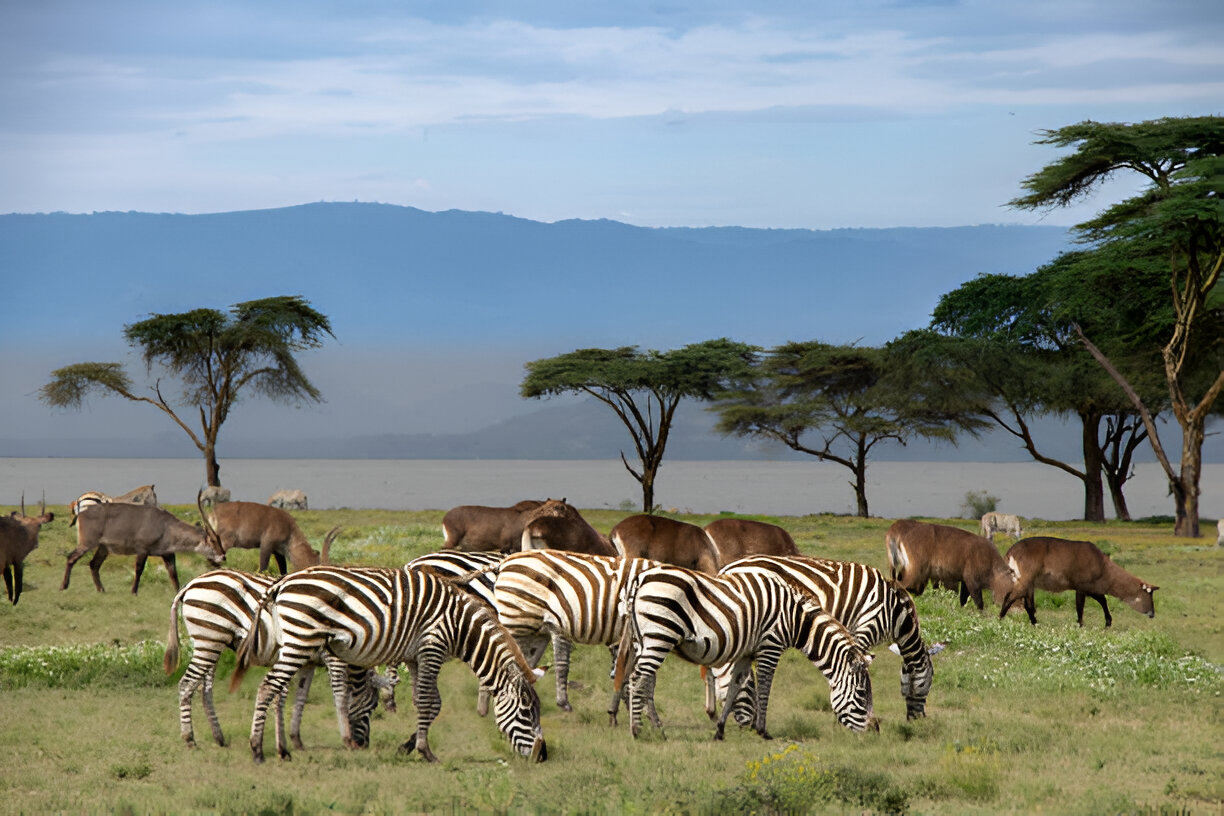
A 12-day Kenya wildlife safari offers a comprehensive experience, covering premier parks like Maasai Mara, Amboseli, and Samburu, plus cultural visits and coastal relaxation. Key activities include Big Five game drives, witnessing the Great Migration, spotting unique Northern species (Grevy’s zebra, reticulated giraffe), rhino tracking, and enjoying white sandy beaches in Mombasa
12-days-lake-nakuru-masai-mara-central-serengeti-ngorongoro-crater-amboseli-kenya-tanzania-safari
12-days-kenya-tanzania-safari-and-zanzibar-beach-holiday-vacation
12-days-comprehensive-kenya-safari-circuit
12-days-northern-wilderness-and-conservation-focus-kenya-wildlife-safari
12-days-kenya-and-uganda-primate-and-savanna-circuit
Top 12-Day Kenya Safari Activities
1. Maasai Mara National Reserve
The Maasai Mara is the undisputed jewel of Kenya’s wildlife crown, and in a 12-day itinerary, it serves as the grand climax. Spanning over 1,500 square kilometres, this savannah wilderness is famous for its high concentration of apex predators—lions, leopards, and cheetahs are seen here with remarkable frequency. However, the reserve’s global fame stems from the Great Wildebeest Migration. Between July and October, over two million herbivores move from the Serengeti into the Mara, braving crocodile-infested rivers in a dramatic display of survival.
Even outside migration months, the "Mara" offers exceptional year-round game viewing. The wide-open plains and rolling hills make it easy to spot the Big Five. For a first-timer, the scale of the landscape is often the most surprising element; it is the quintessential "Out of Africa" setting. Whether you are watching a pride of lions stalking through the golden grass or observing an elephant herd silhouetted against a crimson sunset, the Maasai Mara provides an emotional connection to the wild that few places on earth can replicate.
2. Amboseli National Park
Amboseli is world-renowned for two things: its massive "tuskers" and its cinematic views of Mount Kilimanjaro. Although the mountain is located across the border in Tanzania, Amboseli offers the most iconic vantage point of its snow-capped peak. For photographers, capturing a herd of elephants crossing the dusty plains with the highest freestanding mountain in the world in the background is the ultimate Kenyan shot.
The park’s ecosystem is centered around a series of swamps fed by underground springs from Kilimanjaro’s melting snow. These emerald-green marshes are a magnet for wildlife, providing a stark contrast to the surrounding arid plains. Here, you can watch hippos submerged in the water while elephants graze on the lush vegetation nearby. Because the park is relatively compact and flat, game viewing is straightforward and highly rewarding. The elephants of Amboseli are among the most studied in the world, meaning they are remarkably relaxed around vehicles, allowing for intimate, high-quality encounters with these gentle giants.
3. Samburu National Reserve
Located in the rugged, semi-arid northern frontier of Kenya, Samburu offers a completely different aesthetic and biological experience than the southern parks. The landscape is characterized by red earth, doum palms, and the Ewaso Nyiro River, which acts as the lifeblood of the region. Samburu is famous for its "Special Five"—species found only north of the equator: the Grevy’s zebra, Somali ostrich, reticulated giraffe, gerenuk (the "giraffe-necked" antelope), and Beisa oryx.
The gerenuk is a particular highlight; these unique antelopes stand on their hind legs to reach the high branches of acacia trees. The reserve is also one of the best places in Kenya to spot leopards, who often lounge in the trees lining the riverbanks. The culture of the local Samburu people, cousins to the Maasai, adds a rich layer to the experience. Their vibrant red clothing and intricate beadwork are a striking match for the dramatic, sun-scorched landscape. Including Samburu in a 12-day safari ensures your wildlife portfolio is diverse, covering species you simply won't see in the Mara or Amboseli.
4. Lake Nakuru National Park
Lake Nakuru is a stunning alkaline lake nestled in the Great Rift Valley, famous for its incredible birdlife and its role as a premier rhino sanctuary. For years, the lake was synonymous with a "pink fringe" created by millions of flamingos. While rising water levels have changed the bird distributions, it remains a world-class destination for ornithologists and photographers alike. The park’s yellow-fever acacia forests and rocky cliffs provide a dramatic backdrop for viewing both white and black rhinoceros.
As a highly protected sanctuary, Lake Nakuru offers one of the highest probabilities of seeing rhinos in the wild. The white rhinos are often found grazing in the open grasslands near the lake shore, while the more elusive black rhinos prefer the dense thickets. The park is also home to a healthy population of the rare Rothschild’s giraffe and numerous leopards. Because the park is fully fenced for conservation purposes, the animal density is high, making it an excellent stop for those looking to "check off" the Big Five in a relatively short amount of time while enjoying the scenic beauty of the Rift Valley.
5. Ol Pejeta Conservancy
Ol Pejeta is a trailblazer in African conservation, situated on the Laikipia Plateau with views of Mount Kenya. It is the largest black rhino sanctuary in East Africa and is famously home to the world’s last two northern white rhinos, who live under 24-hour armed guard. A visit here is a poignant reminder of the importance of wildlife protection. The conservancy also hosts a Sweetwaters Chimpanzee Sanctuary, providing a lifelong home for orphaned and rescued chimps from across West and Central Africa.
Beyond its rhino and chimp conservation, Ol Pejeta offers a fantastic Big Five safari experience. Its high predator density includes lions, cheetahs, and African wild dogs. The conservancy is unique because it allows for activities often restricted in national parks, such as night game drives and guided bush walks. This flexibility, combined with its high-altitude, crisp air and diverse habitats, makes it a critical stop for travelers who want to see conservation in action while enjoying an intimate, high-end safari environment that feels distinct from the more crowded public reserves.
6. Hot Air Balloon Safari
There is perhaps no more iconic African experience than floating silently over the Maasai Mara at sunrise. A hot air balloon safari begins in the pre-dawn chill, where you can watch the massive balloons being inflated by rhythmic bursts of flame. As you lift off, the vastness of the Mara unfolds beneath you. From several hundred feet up, you can see the intricate patterns of animal trails and the massive scale of the wildebeest herds during the migration.
The silence of the flight is broken only by the occasional roar of the burner, allowing you to drift over elephant families and prides of lions without disturbing them. The perspective is entirely different from a vehicle; you see the geography of the savannah—the winding rivers, the hidden valleys, and the sheer emptiness of the plains. The flight typically ends with a "Bush Breakfast," a white-linen affair in the middle of the wilderness complete with champagne and a full English breakfast. It is a moment of pure luxury and serenity that provides a breathtaking bird’s-eye view of one of the world’s most famous ecosystems.
7. Walking Safaris in Hell’s Gate
Hell’s Gate National Park offers a rare opportunity to step out of the safari vehicle and explore the African wilderness on foot or by bicycle. Named for the intense geothermal activity within its boundaries, the park is characterized by towering basalt cliffs, deep gorges, and plumes of steam rising from the earth. Because the park lacks large predators like lions or leopards, it is perfectly safe to walk among herds of zebras, giraffes, and buffaloes.
A highlight of the park is the hike through the Lower Gorge, a narrow, water-sculpted canyon that was the inspiration for scenes in The Lion King. Walking through these slot canyons provides a physical connection to the geology of the Rift Valley that you can’t get from a window. For those seeking a bit of adrenaline, the park is also one of the few places in Kenya where you can go rock climbing on the Fischer’s Tower volcanic plug. This active, hands-on approach to nature is a refreshing break from the sedentary nature of game drives, making it a favorite for families and adventurous travelers.
8. Night Game Drives
While most national parks in Kenya close their gates at sunset, select private conservancies and reserves allow for the thrill of night game drives. This is the time when the "second shift" of the savannah wakes up. Using powerful spotlights, your guide will search for the reflective eyes of nocturnal hunters. This is often the best time to see leopards, who are primarily nocturnal, or to watch a pride of lions as they begin their evening hunt.
Beyond the big cats, night drives reveal a cast of characters you would never see by day: the elusive aardvark, the bushy-tailed honey badger, and the tiny bushbaby leaping through the trees. You might spot a serval cat stalking through the grass or a family of bat-eared foxes emerging from their den. The atmosphere of the bush at night is entirely different; the sounds of the cicadas and the distant whoop of a hyena create a sense of mystery and excitement. It is a vital addition to a 12-day safari, as it completes the picture of the African ecosystem by showcasing the behaviors that happen under the cover of darkness.
9. Boat Safari on Lake Naivasha
Lake Naivasha is a freshwater lake in the Great Rift Valley, surrounded by yellow-fever acacia trees and papyrus swamps. A boat safari here offers a tranquil contrast to the dusty roads of the plains. As you drift across the water, you will be surrounded by hundreds of hippos, their ears twitching and snouts huffing as they watch you pass. The lake is also an avian paradise, with over 400 species of birds, including the regal African Fish Eagle, which can often be seen diving for a catch.
Most boat trips include a stop at Crescent Island Game Sanctuary, a private island where you can walk among giraffes, waterbucks, and wildebeests. Because there are no predators on the island, the animals are incredibly calm, allowing for some of the closest walking encounters in Kenya. The sight of a giraffe silhouetted against the blue waters of the lake is one of the most serene images of the Rift Valley. It is a perfect afternoon activity that combines wildlife viewing with a relaxing, breeze-filled break from the heat of the African sun.
10. Maasai Village Visit
A visit to a traditional Maasai boma (village) is an essential cultural pillar of any Kenyan safari. The Maasai are one of the few tribes that have maintained their traditional way of life despite the encroachment of modern civilization. Upon arrival, you are often greeted by the "Adumu"—the iconic jumping dance—where the warriors compete to see who can leap the highest. This rhythmic, vocal performance is a powerful introduction to their warrior culture.
Inside the village, you will learn about the construction of their homes, which are made from mud, sticks, and cow dung, and the intricate social structure that governs their lives. You’ll see how they start fires using only sticks and dry grass and learn about the significance of their vibrant beadwork and red shukas. While these visits are designed for tourists, the interactions are meaningful; the fees often go directly to village schools or water projects. It is a chance to move beyond the wildlife and understand the deep, ancestral connection between the Maasai people and the land they have inhabited for centuries.
11. Nairobi: Giraffe Centre & Elephant Orphanage
Many travelers fly in and out of Nairobi without exploring it, but a 12-day safari should include at least one day in the capital to visit these two world-class conservation sites. The Sheldrick Wildlife Trust is the world’s most successful orphan-elephant rescue and rehabilitation program. During the public visiting hour, you can watch the baby elephants arrive for their midday milk bottles and mud baths. Each elephant has a story of rescue, often from poaching or human-wildlife conflict, and seeing them thrive under the care of their "keepers" is a deeply moving experience.
Nearby, the Giraffe Centre focuses on the conservation of the endangered Rothschild’s giraffe. Here, you can stand on a raised platform and hand-feed these gentle giants, getting close enough to see their long, purple tongues and thick eyelashes. These experiences are particularly valuable for first-timers and families, as they provide an up-close look at individual animals and the Herculean efforts required to protect them. It sets the stage for your safari by humanizing the conservation struggle and highlighting the passion of the Kenyans working to save their natural heritage.
12. Tana River & Elsamere
For those interested in the history of African conservation, a trip to Elsamere on the shores of Lake Naivasha is a nostalgic journey. This was the former home of Joy and George Adamson, the couple made famous by the book and film Born Free, which chronicled their life raising Elsa the lioness. Today, Elsamere is a conservation center and museum that preserves the Adamsons' legacy. Taking "High Tea" on the lawn under the shade of ancient trees, while colobus monkeys play in the canopy above, is a quintessentially colonial-safari experience.
A Tana River trip offers a different type of adventure. The Tana is Kenya's longest river, and its lower reaches are home to unique riverine forests and the endangered Tana River Red Colobus and Crested Mangabey. Exploring the river by boat or on foot allows you to see a side of Kenya that is lush, tropical, and vastly different from the dry savannahs. These activities provide a bit of "safari soul"—connecting the wildlife you see today with the pioneers of the past and the hidden, water-bound ecosystems that are often overlooked by the standard tourist circuit.
13. Mombasa & Diani Beach
After 10 days of early morning game drives and dusty roads, ending your safari on the Kenyan coast is a tradition for a reason. Diani Beach, south of Mombasa, is consistently ranked as one of the best beaches in the world. Its powdery white sand and turquoise Indian Ocean waters offer a literal and metaphorical "cool down." You can spend your days snorkeling or diving on the vibrant coral reefs, or taking a traditional dhow sailing trip at sunset.
The coast is also a cultural melting pot, where the Swahili culture—a blend of African, Arab, and Indian influences—dominates. You can explore the narrow alleys of Old Town Mombasa and the historic Fort Jesus, a UNESCO World Heritage site. For the active traveler, the Kisite-Mpunguti Marine National Park offers some of the best dolphin-spotting and snorkeling in East Africa. This "Beach and Bush" combination is the hallmark of a premier 12-day Kenya safari, ensuring you return home not only with a camera full of wildlife photos but also with a sense of total relaxation and a sun-kissed glow.
14. Mount Kenya Hiking
Mount Kenya is Africa's second-highest peak and, for many, its most beautiful. Unlike Kilimanjaro, which is a singular volcanic cone, Mount Kenya is an ancient, eroded volcano with jagged glacial peaks and deep valleys. A hiking trip here can range from a gentle day-hike through the montane forest to a multi-day trek to Point Lenana (4,985m), the highest point accessible to non-technical climbers.
The hike takes you through distinct vegetation zones: from lush rainforests and bamboo thickets to the surreal "Afro-alpine" moorlands filled with giant lobelias and groundsels. The mountain is also a UNESCO World Heritage site and a national park, home to elephants, buffaloes, and even the rare bongo antelope in the lower forests. For a 12-day itinerary, even a one-day hike on the lower slopes provides a physical challenge and a spectacular change of scenery. The crisp mountain air, the crystal-clear glacial tarns, and the silence of the high-altitude wilderness offer a profound sense of solitude that is a world away from the busy game trails of the Maasai Mara.
12 Days Kenya wildlife safari holiday
This 12 Days Kenya wildlife safari holiday is a meticulously crafted odyssey through the heart of East Africa’s most iconic landscapes. Designed for those who seek the quintessential "Out of Africa" experience, this journey traverses a diverse tapestry of ecosystems, from the snow-capped backdrop of Amboseli to the rugged, red-earthed plains of Samburu. You will witness the unparalleled drama of the Maasai Mara, explore the rhino sanctuaries of the Laikipia Plateau, and discover the avian wonders of the Great Rift Valley lakes. This 12 Days Kenya safari itinerary balances high-octane predator sightings with serene moments of cultural immersion and refined luxury in premier tented camps. Whether you are witnessing the thundering herds of the Great Migration or standing in the shadow of Mount Kenya, this safari offers a profound connection to the natural world. It is an invitation to explore the cradle of humanity, where every sunrise brings a new adventure and every evening concludes with a starlit African sky.
Day 1: Arrival in Nairobi
Your 12 Days Kenya wildlife safari holiday begins in the vibrant "Green City in the Sun." Upon arrival at Jomo Kenyatta International Airport, you will be met by a private chauffeur and transferred to your luxury boutique hotel. After settling in, spend the afternoon visiting the Giraffe Centre, where you can hand-feed the endangered Rothschild’s giraffes from a raised platform. Afterward, visit the Sheldrick Wildlife Trust to see orphaned baby elephants during their midday milk feeding. This heart-warming experience provides an immediate connection to Kenya’s conservation efforts. The evening concludes with a welcome dinner at a renowned local restaurant, allowing you to rest and prepare for the journey ahead.
Day 2: Nairobi to Amboseli National Park
Leave the city behind as you drive south toward the border of Tanzania. Your destination is Amboseli National Park, famous for being the best place in the world to get close to free-ranging elephants. Upon arrival at your luxury lodge, you will be greeted by the breathtaking sight of Mount Kilimanjaro, the highest freestanding mountain in the world, towering over the plains. After lunch, embark on an afternoon game drive. The park’s swamps, fed by the mountain’s melting snow, are a magnet for hippos, buffalos, and massive "tuskers." As the sun sets, the clouds often clear from Kilimanjaro’s peak, providing the perfect silhouette for your first iconic safari photographs.
Day 3: Full Day in Amboseli
Dedicate this day to exploring the diverse habitats of Amboseli. Start with a sunrise game drive when the air is crisp and predators like lions and cheetahs are most active. Visit the Observation Hill, which offers a panoramic view of the entire park, including the vast Enkongo Narok swamp and the dried-up bed of Lake Amboseli. In the afternoon, you may choose to visit a local Maasai village to learn about their ancestral customs and traditional architecture. Spending a full day here ensures you capture the rhythmic life of the savannah, where the gentle giants of Africa roam beneath the eternal snows of the equator.
Day 4: Amboseli to Ol Pejeta Conservancy
Today, you head north, crossing the equator to reach the Laikipia Plateau. Your destination is the Ol Pejeta Conservancy, a trailblazer in private land conservation. This sanctuary is home to the world’s last two northern white rhinos, living under 24-hour armed guard. After checking into your tented camp, enjoy a late afternoon game drive. Ol Pejeta boasts a higher wildlife-to-acre ratio than many national parks and is the only place in Kenya to see chimpanzees at the Sweetwaters Sanctuary. The day ends with a sundowner overlooking a floodlit waterhole, where rhinos and elephants often gather under the starlight.
Day 5: Ol Pejeta to Samburu National Reserve
Continue your 12 Days Kenya wildlife safari holiday into the rugged northern frontier. Samburu National Reserve offers a dramatic change in scenery, characterized by red volcanic soil, doum palms, and the Ewaso Ng'iro River. This arid region is home to the "Samburu Special Five"—the Grevy’s zebra, Somali ostrich, reticulated giraffe, gerenuk, and beisa oryx—species you won't find in the southern parks. Your afternoon game drive will focus on the riverbanks, where leopards are frequently spotted lounging in the trees and large herds of elephants come to bathe and drink, creating a spectacular display of social behavior.
Day 6: Exploring Samburu’s Wilderness
Spend a full day immersed in the unique ecology of Samburu. The morning is perfect for tracking predators; the lions of Samburu are known for their resilience in this harsh environment. Between drives, relax at your lodge and observe the birdlife, including the vibrant vulturine guineafowl. In the afternoon, explore the nearby Buffalo Springs National Reserve, separated only by the river. The contrasts of the desert-like landscape against the life-giving water of the springs make for incredible photography. This region’s raw, untamed beauty provides a sense of solitude and discovery that is a highlight of any northern Kenyan expedition.
Day 7: Samburu to Ol Jogi or Solio Ranch
Heading back toward the foothills of Mount Kenya, you will visit the Solio Game Reserve, a private ranch internationally recognized as the most successful private rhino breeding sanctuary in the world. This is arguably the best place in East Africa to see both black and white rhinos in significant numbers. A morning game drive here often reveals dozens of rhinos grazing together in the open plains, a sight rarely seen elsewhere. After lunch, enjoy the lush surroundings of your lodge, which offers a cooler climate and views of the jagged glacial peaks of Africa's second-highest mountain.
Day 8: Solio to Lake Nakuru National Park
Descend into the Great Rift Valley to reach Lake Nakuru National Park. Once world-famous for its "pink fringe" of millions of flamingos, the park remains a premier destination for birdwatchers and rhino enthusiasts. The park’s yellow-fever acacia forests provide an enchanting backdrop for viewing the rare Rothschild’s giraffe and numerous leopards. During your afternoon game drive, visit "Baboon Cliff" for a spectacular view of the lake's alkaline waters. The enclosed nature of this park ensures high-density wildlife viewing, making it easy to spot waterbucks, buffalos, and the elusive black rhino within a single afternoon.
Day 9: Lake Nakuru to Maasai Mara
The journey now reaches its grandest stage as you drive to the Maasai Mara National Reserve. This is the northern extension of the Serengeti and the stage for the Great Migration. Arriving in time for lunch at your luxury tented camp, you will immediately feel the energy of this legendary wilderness. The afternoon game drive introduces you to the Mara’s vast, rolling grasslands. Keep your eyes peeled for the "Big Five" and the massive prides of lions that have made this reserve famous. As the sun dips below the horizon, the golden light transforms the savannah into a scene of unparalleled beauty.
Day 10: The Great Migration Experience
Dedicate this entire day to the wonders of the Maasai Mara. If visiting between July and October, your guide will head toward the Mara River to wait for the dramatic river crossings of the wildebeest and zebras. Outside of migration season, the Mara remains the most productive wildlife theater in Africa. You might witness a cheetah chase on the open plains or a leopard guarding its kill in a secluded thicket. Enjoy a picnic lunch under a lone acacia tree, surrounded by the sights and sounds of the wild. This is the essence of a 12 Days Kenya wildlife safari holiday, where nature’s cycle plays out in its most raw form.
Day 11: Balloon Safari & Cultural Immersion
Start the day with an optional but highly recommended hot air balloon safari at dawn. Floating silently over the Mara as the sun rises provides a bird’s-eye view of the animal trails and winding rivers. After a champagne bush breakfast, spend the afternoon visiting a traditional Maasai Boma. This cultural exchange allows you to learn about their warrior traditions, vibrant beadwork, and the harmonious relationship they maintain with the wildlife. It is a day that balances the serenity of the skies with the deep-rooted traditions of the people who have called this land home for centuries.
Day 12: Final Game Drive & Departure
On the final morning of your 12 Days Kenya wildlife safari holiday, enjoy a sunrise game drive to capture your last memories of the African bush. After a leisurely breakfast, you will be transferred to the local airstrip for a domestic flight back to Nairobi. This "fly-out" option saves hours of driving and offers a final scenic view of the Rift Valley. Upon arrival in Nairobi, you will have access to a day room to freshen up before a farewell dinner at the Carnivore Restaurant or a similar venue. Finally, your driver will transfer you to the airport for your international flight home, marking the end of an unforgettable Kenyan odyssey.
1. What are the must-see destinations on a 12-day Kenya wildlife safari holiday?
A 12-day journey allows you to explore the diverse "circuit" of Kenya’s most iconic landscapes. The Maasai Mara National Reserve is the undisputed crown jewel, essential for its high predator density and the spectacle of the Great Migration. However, a comprehensive 12-day trip must also include Amboseli National Park, situated at the foot of Mount Kilimanjaro. Here, you get the quintessential African image: massive herds of elephants silhouetted against the snow-capped peaks of Africa's highest mountain.
Further north, the Samburu National Reserve offers a stark, beautiful contrast with its arid, red-earthed plains and unique wildlife species like the reticulated giraffe and Grevy’s zebra. For rhino conservation and stunning Rift Valley scenery, Lake Nakuru National Park is a vital stop, providing a sanctuary for both black and white rhinoceros amidst fever-tree forests. Finally, a visit to the Ol Pejeta Conservancy on the Laikipia Plateau adds a layer of conservation depth, as it is the last refuge for the northern white rhino and home to a chimpanzee sanctuary. By combining these destinations, you traverse savannahs, wetlands, and semi-deserts, ensuring you witness the full ecological spectrum of Kenya.
2. Is July-October the best time for a 12-day Kenya wildlife safari holiday?
Yes, the window from July to October is widely considered the "Golden Age" for a Kenyan safari. This period coincides with the Great Wildebeest Migration in the Maasai Mara, where over two million herbivores move from the Serengeti in search of greener pastures. Witnessing a river crossing—where wildebeest brave crocodile-infested waters—is a high-octane experience that defines many travelers' trips.
Beyond the migration, this is the peak of the long dry season. Because water becomes scarce, animals are forced to congregate around predictable water holes and rivers, making them much easier to spot. The vegetation is also thinner, which improves visibility for tracking elusive predators like leopards. While this is the busiest time for tourism, the weather is cooling and pleasant, with clear blue skies perfect for photography. If you are looking for the most dramatic wildlife displays and the most comfortable trekking and driving conditions, this four-month window is unbeatable.
3. What is the best way to see the Masai Mara during a Kenya wildlife safari holiday?
The most effective way to explore the vast plains of the Maasai Mara is through classic game drives in a 4x4 safari vehicle. These vehicles are designed with pop-up roofs or open sides, providing 360-degree views and a steady platform for photography. A professional guide is essential here; their ability to read animal tracks and communicate via radio with other rangers ensures you are in the right place for major sightings, such as a lion hunt or a cheetah mother with cubs.
For a truly transformative perspective, a hot air balloon safari at dawn is highly recommended. Floating silently over the Mara as the sun rises allows you to see the "lay of the land"—the winding Mara River, the intricate patterns of animal trails, and the sheer scale of the herds from above. Many luxury 12-day itineraries also incorporate walking safaris in private conservancies adjacent to the reserve. Walking allows you to focus on the "Little Five" and learn about the flora and tracking techniques that you might miss while moving in a vehicle. Combining these three methods—ground, air, and foot—provides the most holistic understanding of this legendary wilderness.
4. How can I see the Big Five on a 12-day Kenya wildlife safari holiday?
The "Big Five"—lion, leopard, elephant, buffalo, and rhino—were originally named by hunters as the most dangerous animals to track on foot, but today they are the ultimate "sightseeing" goal. On a 12-day trip, your chances of seeing all five are exceptionally high if you visit the right combination of parks. The Maasai Mara is the best place for lions, leopards, and elephants. The lions here are famous for their large prides, and the riverine forests are prime leopard territory.
To "complete" the list with the rhinoceros, Lake Nakuru National Park or the Ol Pejeta Conservancy are essential. These are highly protected sanctuaries where both black and white rhinos are carefully monitored. Amboseli remains the champion for elephants, with some of the largest "tuskers" in Africa. Buffalos are ubiquitous across almost all Kenyan reserves. By structuring your 12-day holiday to include these specific conservation areas, you aren't just relying on luck; you are visiting the specific habitats where these species are managed and thriving.
5. Can I experience culture on a 12-day Kenya wildlife safari holiday?
Absolutely. A 12-day itinerary provides ample time to move beyond the wildlife and connect with the Maasai and Samburu people. Cultural immersion is usually facilitated through a visit to a Maasai Manyatta (village). Here, you can witness the famous "Adumu" jumping dance, learn how to start a fire using traditional sticks, and explore the mud-and-thatch homes. These interactions offer a profound look at how these communities have maintained their ancestral traditions in harmony with the surrounding wildlife.
Many travelers also appreciate visiting local schools or women's beadwork cooperatives, which are often supported by the safari lodges. In Samburu, the cultural experience is equally vibrant, showcasing the unique traditions of the northern tribes. It is important to approach these visits as a guest; many lodges now offer more "authentic" experiences where you can walk with a Maasai warrior to learn about medicinal plants and tracking. This human element adds soul to your safari, helping you understand that conservation in Kenya is as much about the people as it is about the animals.
6. What are the best birdwatching spots on a 12-day Kenya wildlife safari holiday?
Kenya is a world-class birding destination with over 1,100 recorded species. For a birdwatcher, Lake Nakuru and Lake Naivasha are the primary highlights. Lake Nakuru was historically famous for millions of flamingos, and while their numbers fluctuate with water levels, it remains a haven for pelicans, cormorants, and African fish eagles. Lake Naivasha, a freshwater lake, offers excellent boat-based birding where you can get close to kingfishers, herons, and jacanas.
Beyond the lakes, the Samburu National Reserve is home to dry-country specials like the Somali ostrich and the stunning vulturine guineafowl. The Maasai Mara provides a different array of raptors and grassland birds, including the secretary bird and various vultures. For those with a specific interest in ornithology, a 12-day trip allows for a detour to the Arabuko Sokoke Forest near the coast or the montane forests of Mount Kenya. Even if you aren't a dedicated "birder," the sheer variety of colors and calls—from the lilac-breasted roller to the grey crowned crane—is a constant and delightful backdrop to your safari.
7. Are night game drives allowed on a 12-day Kenya wildlife safari holiday?
Night game drives are generally prohibited inside the national parks (like the Maasai Mara Reserve or Amboseli) to protect the animals and ensure safety. However, they are a highlight of staying in private conservancies such as Ol Pejeta, Lewa, or the Mara North Conservancy. These private areas have more flexible regulations, allowing you to head out after dinner with a powerful spotlight to find the "night shift" of the savannah.
A night drive is the best way to spot nocturnal predators like leopards, who do most of their hunting under the cover of darkness. You might also see smaller, elusive creatures that are never seen by day, such as the aardvark, zorilla, honey badger, or the tiny bushbaby leaping through the trees. Witnessing a pride of lions as they wake up and begin their evening hunt is a thrilling experience that adds a layer of mystery to your 12-day holiday. It completes the ecological picture by showing you the behaviors and species that define the African bush after the sun goes down.
8. Can I add a beach holiday to a 12-day Kenya wildlife safari holiday?
Yes, the "Bush and Beach" combination is one of Kenya’s most popular travel styles. A 12-day itinerary is perfectly suited for this; you can spend 8 or 9 days on an intensive safari and finish with 3 or 4 days of relaxation on the coast. Most travelers choose to fly directly from the Maasai Mara or Nairobi to Diani Beach or Watamu.
The Kenyan coast offers white sands, turquoise waters, and a rich Swahili culture. You can spend your days snorkeling on coral reefs, diving, or taking a traditional dhow sailing trip at sunset. Diani is particularly famous for its luxury resorts and vibrant kite-surfing scene, while Watamu offers a more laid-back vibe near the Gede Ruins. This finish provides a much-needed "reset" after the early wake-up calls and dusty roads of the safari. It allows you to process your wildlife encounters in a tropical paradise, ensuring you return home feeling both exhilarated and refreshed.
9. What should I pack for a 12-day Kenya wildlife safari holiday?
Packing for a 12-day safari requires a focus on functionality and "neutral" aesthetics. You should prioritize breathable, lightweight clothing in neutral colors—khaki, tan, or olive green. Avoid bright colors that can distract animals, and stay away from blue or black in areas like Samburu, as these colors attract tsetse flies. Because mornings and evenings can be surprisingly chilly, especially in the highlands or the Mara, layering is essential; a fleece or a light down jacket is a must.
Your gear list should include a high-quality camera with a zoom lens (at least 300mm) and a pair of binoculars (8x42 is the standard). Do not rely solely on your smartphone for wildlife photos, as most sightings happen at a distance. Don't forget high-SPF sunscreen, a wide-brimmed hat, and insect repellent. For footwear, a pair of comfortable walking shoes or light hiking boots is sufficient for game drives and short bush walks. Finally, bring a reusable water bottle and a small first-aid kit. Most luxury lodges offer daily laundry services, so you can pack lighter than you might expect for a 12-day journey.
10. How do I get between parks on a 12-day Kenya wildlife safari holiday?
There are two primary ways to navigate a 12-day safari: by road or by air. The classic "road safari" uses a specialized 4x4 Safari Land Cruiser with a professional driver-guide. While this involves longer travel times between parks, it is a fantastic way to see the "real" Kenya—passing through local towns, over the Rift Valley escarpment, and through changing agricultural landscapes. The vehicle becomes your mobile home, and your guide becomes an invaluable source of information.
For those looking to maximize their time in the parks, domestic flights (fly-in safaris) are the luxury standard. Kenya has a well-developed network of bush airstrips served by companies like Safarilink or Airkenya. A flight from Nairobi to the Maasai Mara takes only 45 minutes, compared to a 5–6-hour drive. Many 12-day itineraries use a hybrid approach: driving between the closer parks like Nakuru and Naivasha, but flying to distant regions like Samburu or the Mara. This saves energy and ensures you spend your time watching wildlife rather than sitting in transit.
11. Are 12 days enough for a high-quality Kenya wildlife safari holiday?
Yes, 12 days is considered the "sweet spot" for a high-quality Kenyan experience. It is long enough to visit three or four distinct geographical regions without the feeling of being rushed. For example, you can spend 3 days in Amboseli, 2 days in the Rift Valley (Nakuru/Naivasha), 3 days in the Maasai Mara, and still have time for a stay in Samburu or a few days at the beach.
This duration allows for a slower pace, which is essential for a high-quality experience. Instead of just "ticking boxes," you have the luxury of spending an extra hour at a leopard sighting or having a leisurely lunch at your lodge. It also accounts for the travel time between parks, ensuring you aren't spending more time in the car than in the bush. 12 days provides the depth of immersion needed to truly appreciate the different cultures, landscapes, and animal behaviors that make Kenya a world-class destination.
12. What wildlife will I see besides the Big Five on a 12-day Kenya wildlife safari holiday?
While the Big Five get the most attention, the "supporting cast" of the Kenyan savannah is equally fascinating. You will see incredible numbers of giraffes (including the reticulated and Rothschild’s subspecies), zebras, and various antelopes like the impala, gazelle, and eland. The predators extend far beyond lions; cheetahs are a common sight on the open plains, and spotted hyenas are ubiquitous, often seen interacting around kills.
In the water, you will encounter massive pods of hippos and enormous Nile crocodiles lurking on the banks. The primate world is represented by cheeky baboons, vervet monkeys, and the beautiful black-and-white colobus in the forested areas. If you are lucky, you might spot more elusive species like the serval cat, the bat-eared fox, or the peculiar-looking gerenuk in the north. The biodiversity of a 12-day trip is staggering, ensuring that even after a week of game drives, you will still be seeing species you haven't encountered before.
13. What is a walking safari on a 12-day Kenya wildlife safari holiday?
A walking safari is an intimate, "ground-level" exploration of the African bush. Instead of viewing animals from the safety of a vehicle, you explore on foot accompanied by an armed ranger and a professional naturalist guide. These are typically offered in private conservancies or specific parks like Hell’s Gate and Ol Pejeta. The goal isn't necessarily to find large predators (though it does happen), but to focus on the smaller details of the ecosystem.
During a walking safari, you learn how to identify animal tracks, recognize dung, and understand the medicinal uses of various plants. You become more attuned to the sounds and smells of the wilderness. It is a sensory experience that makes the environment feel much larger and more immediate. For many, the thrill of walking near a herd of zebras or giraffes without the barrier of a car is the most memorable part of their 12-day holiday. It provides a sense of connection to the land that is simply impossible to achieve from behind a window.
14. What safety tips are important for a 12-day Kenya wildlife safari holiday?
Safety on safari is built on respect for the wildlife and the environment. The most important rule is to always stay in the vehicle unless your guide explicitly tells you it is safe to exit at a designated spot. Animals in the parks are habituated to the shape of a car, but a human silhouette can trigger either a "flight" or "fight" response. Never hang out of the windows or stand on the seats in a way that disrupts the animal’s behavior.
From a health perspective, follow your doctor's advice regarding malaria prophylaxis and ensure your Yellow Fever vaccination is up to date (this is often required for entry). Drink only bottled or filtered water provided by your lodge, and use insect repellent in the evenings. It is also wise to follow the "leave no trace" principle: don't litter, and don't feed the animals, especially baboons at picnic sites. By following your guide's instructions and respecting the park rules, you ensure a safe and harmonious experience for both yourself and the wildlife you've come to see.
15. Is a 12-day Kenya wildlife safari holiday suitable for families?
Yes, Kenya is one of the most family-friendly safari destinations in Africa. A 12-day trip is ideal because it allows for a pace that doesn't exhaust children. Many lodges have specialized "kids' clubs" or "junior ranger" programs where children can learn about tracking, beadwork, and traditional stories. High-quality family suites and swimming pools are common, providing a place for kids to burn off energy between game drives.
When planning for a family, it is best to select lodges in private conservancies, which often offer more flexible activities like guided walks or shorter, more engaging game drives. Parks like Ol Pejeta are particularly great for kids because of the chimpanzee sanctuary and the chance to meet "Baraka" the blind black rhino. It is important to check the age limits for certain activities (like walking safaris), but generally, a 12-day Kenyan odyssey is a transformative educational experience that creates lifelong memories for children and adults.
Booking 12-day Kenya wildlife safari holiday with us Roads of Adventure safaris
Book a 12-day Kenya wildlife safari with Roads of Adventure Safaris to explore Masai Mara, Amboseli, and Tsavo, featuring 4x4 land cruiser transport, professional guides, and accommodation. This private tour includes park fees, meals, and game drives, concluding with a coastal trip to Mombasa
