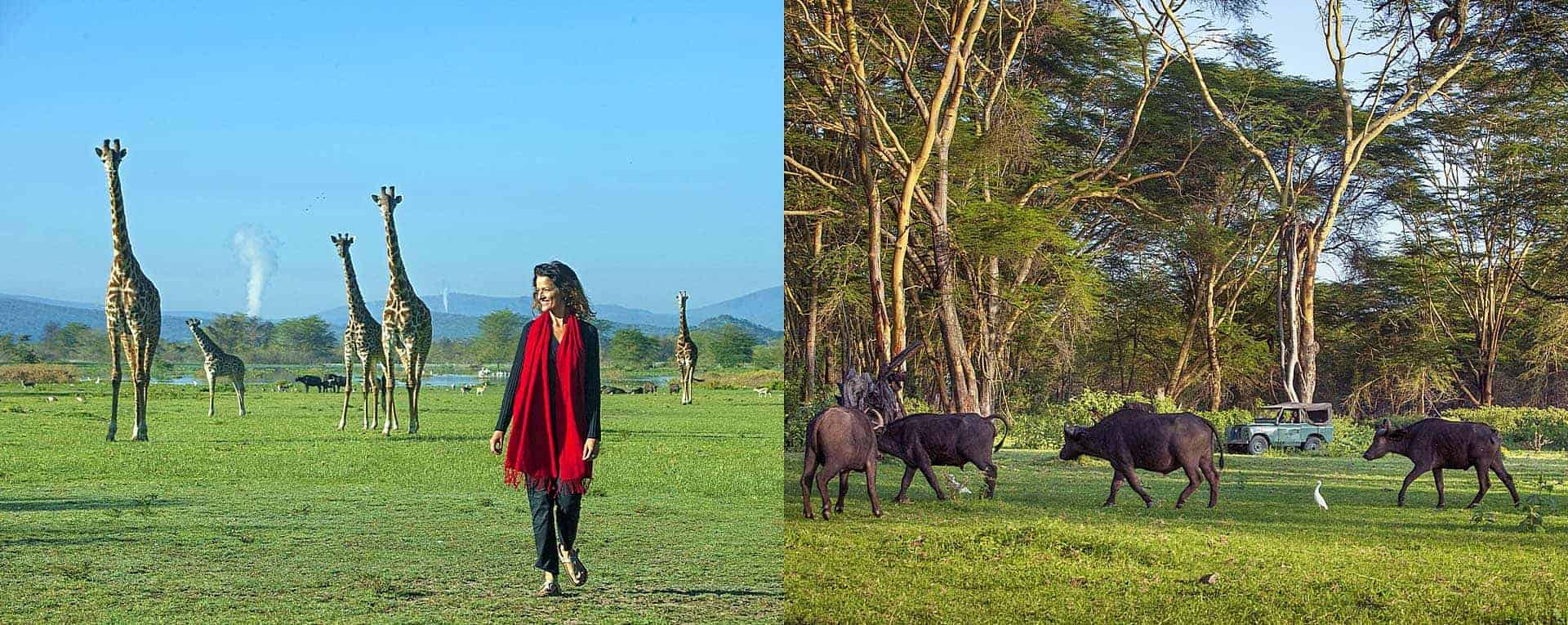
Lake Naivasha, a stunning freshwater lake in the Great Rift Valley, offers an active, hands-on contrast to traditional vehicle-based safaris. Top highlights include cycling among zebras in Hell's Gate National Park, taking a boat safari to spot hippos, and doing a walking safari on Crescent Island. Lake Naivasha is incredibly versatile for safari-goers, allowing you to get out of the vehicle and experience nature up close
2-days-lake-nakuru-national-park-and-lake-naivasha-combined-kenya-safari-tour
3-days-lake-nakuru-and-lake-naivasha-africa-safari-tour-package
4-days-best-luxury-kenya-safari-to-lake-nakuru-and-masai-mara-safari-tour
4-days-budget-masai-mara-safari-and-lake-nakuru-holiday-vacation
5-day-best-luxury-kenya-safari-to-amboseli-lake-nakuru-and-maasai-mara-safari-tour
6-days-best-masai-mara-and-lake-naivasha-kenya-wildlife-safari-holiday
7-days-6-nights-midrange-safari-to-kenya
Crescent Island Walking Safari
There is a profound shift in perspective that happens when your feet touch the ground on Crescent Island. On a traditional safari, you are a spectator behind glass and steel; here, you are a participant in the landscape. Because this private sanctuary has no large predators, the resident wildlife exists in a state of relative tranquility.
As you walk along the dirt paths, you might find yourself just a few yards away from a tower of giraffes casually stripping leaves from the acacia branches. Without the rumble of an engine, you can hear the crunch of their chewing and the soft thud of their hooves. Zebras, waterbucks, and wildebeest graze in the open meadows, casting curious but calm glances your way. It feels less like an organized tour and more like stepping into a living, breathing ecosystem where humans are merely quiet guests, stripped of the usual barriers that separate us from the wild.
Hell's Gate National Park
Hell's Gate defies the standard rules of African wildlife reserves by letting you explore its dramatic scenery on two wheels. Renting a sturdy mountain bike near Elsa Gate introduces an entirely different rhythm to your journey. Pedaling past towering red rock cliffs while a herd of zebras runs parallel to you is an absolute rush.
The park is a sensory overload of geothermal energy—hissing steam vents rise from the earth, and the smell of sulfur occasionally drifts on the breeze. Leaving the bikes behind to hike through the deep, winding gorges feels like entering a hidden world. Touching the smooth, water-carved stone walls and navigating the narrow passageways reminds you of the raw, creative power of the Great Rift Valley. It is an active, dusty, and deeply rewarding adventure.
Boat Safaris
A boat safari on Lake Naivasha is a masterclass in patience and observation. As the small vessel glides away from the shore, the vastness of the freshwater lake opens up before you. The true stars here are the hippos. Watching a massive pod submerge and reappear, grunting and spraying water just a safe distance away, gives you a healthy respect for these heavyweights.
Looking up, the skeletal branches of submerged yellow fever trees serve as perches for an astonishing array of birdlife. A quiet guide will point out things you might miss: a African fish eagle preparing to dive, a goliath heron standing frozen in the shallows, or a bright flash of a malachite kingfisher. The gentle rock of the boat combined with the soundtrack of wildlife creates a serene, almost hypnotic connection to the water.
Mount Longonot Hiking
For those who want to push their limits, the hike up Mount Longonot is a rite of passage. This dormant stratovolcano rises sharply from the Rift Valley floor, challenging you with a steep, dusty trail that demands a steady pace and plenty of water. The climb is a physical conversation with the landscape, testing your legs and lungs as the air thins.
Reaching the crater rim makes every drop of sweat worth it. Standing on the edge, looking down into a massive, pristine forest trapped inside the caldera, feels like discovering a lost world. The panoramic views stretching across the Great Rift Valley and toward Lake Naivasha are staggering, offering a humbling sense of scale that only a mountain summit can provide.
Elsamere Conservation Centre
After days of hiking, cycling, and exploring, Elsamere offers a gentle, nostalgic landing pad. This was the home of Joy and George Adamson, the pioneering conservationists whose lives with Elsa the lioness captured the world's imagination. Walking through the house, which now serves as a museum, feels like stepping back in time through their personal photos, letters, and artwork.
The real magic, however, happens during afternoon tea on the expansive lawns. As you sip tea and enjoy homemade cakes under the shade of ancient trees, black-and-white colobus monkeys often peer down from the canopy. It is a peaceful place that invites reflection, letting you absorb the rich history of Kenyan conservation while watching the afternoon light dance across the lake.
Can you safely walk among zebras on Crescent Island?
Yes, you can safely walk among the zebras on Crescent Island, and it is easily one of the most magical experiences in the Lake Naivasha region. The island operates as a private game sanctuary, and because it is entirely free of large predators like lions, leopards, or hyenas, the resident wildlife lives in a state of remarkable calm.
When you step off the boat onto the island, you are entering their territory on foot, without the barrier of a safari vehicle. The zebras are habituated to human presence and will generally continue grazing peacefully as you pass by. However, "safe" does not mean "domesticated." These are still wild animals. Local guides accompany walkers to ensure everyone maintains a respectful, comfortable distance. As long as you don't make sudden movements, run toward them, or try to touch them, the zebras will simply treat you as a harmless, passing neighbor in their peaceful lakeside pasture.
How close can boat cruises get to resting hippos?
Boat cruises on Lake Naivasha can get surprisingly close to resting hippos, but safety and respect always dictate the exact distance. Experienced local boat captains understand the behavior of these massive mammals intimately and will typically position the boat around 25 to 30 meters (about 80 to 100 feet) away from a pod.
This distance is close enough for you to hear them grunt, watch them yawn, and look directly into their eyes, yet far enough to keep the boat well out of their strike zone. Hippos are intensely territorial and deceptively fast in the water. A good guide watches for warning signs—like a hippo staring directly at the boat, bobbing its head, or opening its mouth wide in a dramatic yawn—which are signals to back off. By keeping a respectful buffer, you get an incredible, unobstructed view of these heavyweights without making them feel threatened or provoked.
Where can you cycle past giraffes in Hell's Gate?
In Hell's Gate National Park, the best place to cycle past giraffes is along the main gorge road, which stretches from the main Elsa Gate down toward the Ranger's Station and the spectacular Fischer's Tower. This wide, dirt track cuts right through the heart of the park's open savannah plains, which are flanked by towering, dramatic red volcanic cliffs.
As you pedal along this valley floor, you will frequently spot Maasai giraffes gracefully stripping leaves from the whistling thorn acacias that line the road. Because vehicles are relatively sparse and the wildlife is accustomed to non-motorized visitors, the giraffes often stand just a few meters off the path, watching cyclists roll by with quiet curiosity. It is a surreal feeling to look up from your bike handlebars and find yourself eye-to-eye with a towering giraffe against the backdrop of the Great Rift Valley.
What are the best months for Lake Naivasha birdwatching?
While Lake Naivasha offers spectacular birdwatching year-round, the absolute best months to visit are from October to March. During this window, the resident bird population is joined by hundreds of thousands of migratory birds fleeing the harsh winters of Europe and Asia.
During these months, the lake's shores, reeds, and yellow fever trees come alive with incredible diversity. You can expect to see everything from the iconic African fish eagles swooping down for a catch to bright flashes of malachite kingfishers, elegant grey crowned cranes, and various species of herons and storks. The weather during this period is also generally pleasant and dry, making long hours on a boat or trekking along the shoreline comfortable. If you want to see the lake's avian diversity at its absolute peak, planning your trip for November or January will yield the most rewarding sightings.
Which local ranches offer horseback riding near the lake?
If you want to experience the Naivasha landscape from the saddle, several exceptional local ranches and private conservancies offer horseback riding safaris right along the lake's edge. Sanctuary Farm is one of the most popular spots, featuring a 450-acre private wildlife sanctuary where you can ride right alongside giraffes, zebras, and wildebeests down to the water’s edge.
African Spice Safaris+ 1
Another phenomenal option is the sprawling, 82,000-acre Kedong Ranch, located on the volcanic foothills between Lake Naivasha and Mount Longonot, offering dramatic trail rides through open plains and rocky lava flows. Additionally, the exclusive Oserengoni Wildlife Sanctuary, Mundui Estate, and Hippo Point Conservancy provide private, guided horseback excursions. Because these ranches are free of large predators, they offer a peaceful, elevated vantage point to bond with the horses while moving naturally among the herds.
African Spice Safaris
How long does hiking the Mount Longonot crater take?
A complete hike of Mount Longonot typically takes between 4 and 5 hours, depending heavily on your fitness level and how often you pause to take in the views. The journey is broken into two distinct phases: the climb to the rim and the loop around it.
The initial ascent from the park gate up to the crater rim is steep, dusty, and physically demanding, usually taking about 1 to 1.5 hours of steady climbing. Once you reach the rim, you are faced with a choice. You can rest and head back down, or you can tackle the full rim circumference loop. Walking the entire edge of the crater takes an additional 2 to 3 hours. This section features dramatic ups and downs over rugged volcanic terrain, but it rewards you with unparalleled, 360-degree views of the forested caldera floor below and the Great Rift Valley stretching into the distance.
Where is the best spot to photograph floating pelicans?
The best spots to photograph floating pelicans on Lake Naivasha are along the calmer, shallower northern and eastern shores, particularly near Crescent Island and the sheltered bays around Sanctuary Farm. Pelicans are highly social birds that gather in large, cooperative pods to fish, and these protected waters offer them the perfect environment.
To get the best shots, hop on an early morning boat safari. The morning light on Lake Naivasha is soft and golden, and the water is usually as still as glass, creating stunning reflections of the birds. Great white pelicans often glide together in tight formations, acting like a net to scoop up fish. A low-angle shot from a drifting boat, capturing a pod of pelicans moving in unison with the misty silhouette of the Rift Valley cliffs in the background, makes for an unforgettable photograph.
Are guided fishing trips available on the fresh water?
Yes, guided fishing trips are readily available on Lake Naivasha, offering a relaxed and rewarding way to experience the lake's freshwater ecosystem. Unlike many of the alkaline lakes in the Great Rift Valley, Naivasha's fresh water supports a thriving fish population, making it a popular spot for local anglers and visitors alike.
Local guides and boat captains can be hired directly from various lakeside lodges, camps, and marinas. They will take you out on motorized boats equipped with rods, reels, and bait. The primary targets here are Nile tilapia, common carp, and largemouth bass. As you cast your line into the shadows of the submerged yellow fever trees, your guide will share stories of the lake's history. It is a peaceful, patient way to spend a morning, often punctuated by the cry of a fish eagle overhead competing for the very same catch.
Can you take day trips to nearby Lake Nakuru?
Yes, taking a day trip from Lake Naivasha to Lake Nakuru National Park is highly feasible and a fantastic way to diversify your safari experience. The drive between the two lakes takes roughly 1.5 to 2 hours each way along a well-paved highway, making it easy to depart after an early breakfast and return by evening.
While Lake Naivasha is all about hands-on, vehicle-free exploration, Lake Nakuru offers a classic, traditional game-drive experience. Nakuru is a fenced sanctuary famous for its robust populations of both black and white rhinos, which are rare to spot elsewhere. The park is also home to lions, leopards, Rothschild's giraffes, and thousands of flamingos painting the alkaline shores pink. Combining the active, watery charm of Naivasha with a rugged, high-density wildlife game drive in Nakuru gives you the best of both worlds in a single weekend.
What local conservation projects protect the area's raptors?
The primary force protecting the region's birds of prey is the Kenya Bird of Prey Trust, which operates the specialized Naivasha Raptor Centre located at the Kilimandege Sanctuary along South Lake Road. This vital project is dedicated to the rescue, rehabilitation, and conservation of injured, poisoned, or orphaned raptors, including eagles, owls, falcons, and vultures.
The centre plays a critical role in raptor conservation by treating birds that have suffered from human-wildlife conflict, powerline electrocutions, or secondary poisoning. Whenever possible, these majestic birds are rehabilitated and released back into the wild. For those with permanent injuries, the centre provides a lifelong sanctuary where they serve as conservation ambassadors. The project also conducts cutting-edge research, monitors wild populations—such as the critically endangered Rüppell's vulture—and runs community education programs to foster coexistence between local farmers and these essential aerial predators.
Booking Kenya safari holiday with us Roads of Adventure safaris
Booking a Kenya safari with Roads of Adventure Safaris is a highly customizable experience. From their headquarters at Seguku on the Kampala-Entebbe Road in Uganda, their team crafts bespoke journeys that adjust to your style, ranging from $300 to $1,000 per person, per day.
Whether you want a budget-friendly trip or a luxury bush-to-beach getaway, their curated itineraries offer a seamless blend of East African highlights. You can choose a classic 1-week tour focusing on the Maasai Mara, Amboseli, and Lake Nakuru, or opt for a deeper 10-day holiday complete with private 4x4 transport and expert driver-guides. For those who want it all, the 11-day wildlife and beach combo merges raw savannah game viewing with a coastal escape. They also specialize in high-end honeymoon packages featuring private dinners, hot-air balloon flights, and pristine relaxation on the white sands of Diani Beach.
