Lake Naivasha is often considered an underrated gem on a Kenya safari. While it lacks the massive predator populations of the Maasai Mara, it provides a crucial, relaxing contrast to dusty game drives by offering unique, up-close walking safaris, boat cruises, and world-class birdwatching. Lake Naivasha serves as a fantastic, active addition to a traditional safari itinerary rather than a replacement.
2-days-lake-nakuru-national-park-and-lake-naivasha-combined-kenya-safari-tour
3-days-lake-nakuru-and-lake-naivasha-africa-safari-tour-package
4-days-best-luxury-kenya-safari-to-lake-nakuru-and-masai-mara-safari-tour
4-days-budget-masai-mara-safari-and-lake-nakuru-holiday-vacation
5-day-best-luxury-kenya-safari-to-amboseli-lake-nakuru-and-maasai-mara-safari-tour
6-days-best-masai-mara-and-lake-naivasha-kenya-wildlife-safari-holiday
7-days-6-nights-midrange-safari-to-kenya
Crescent Island Game Sanctuary
There is a profound, almost surreal magic to walking on Crescent Island. Because it is a private, totally predator-free sanctuary, the usual barriers between humans and the wild completely dissolve. You aren't confined to a metal safari vehicle, peering through a dusty window; instead, your boots are on the same earth as some of Africa’s most iconic gentle giants.
As you wander the open, grassy paths, you might find yourself just a few yards from a family of giraffes gracefully browsing the acacia tops. Nearby, zebras and wildebeests graze peacefully, occasionally looking up with curious but calm eyes. Because there are no lions or leopards to keep them on edge, the animals have a striking sense of serenity that quickly rubs off on you. It feels less like a traditional safari and more like stepping back into a prehistoric, untouched world where humans and animals share the landscape in perfect harmony. It’s an intimate, unhurried encounter that reminds you just how beautiful it is to simply slow down and walk alongside nature.
Boat Safaris on Lake Naivasha
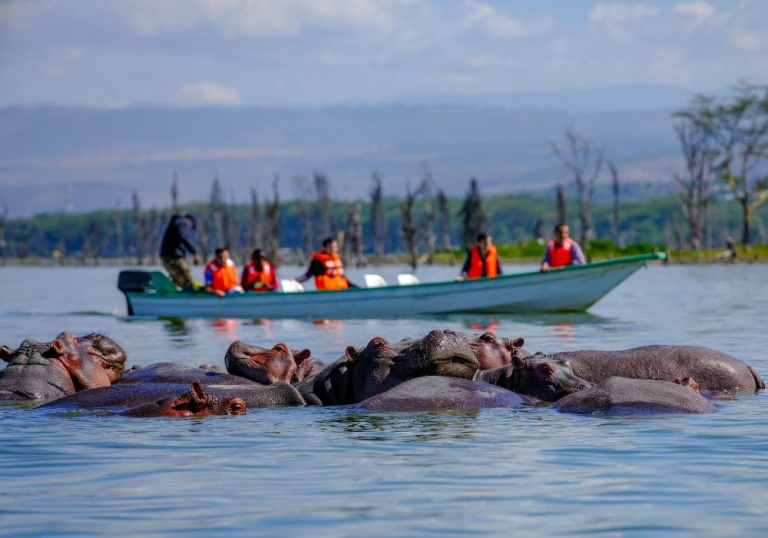
Stepping onto a motorboat at Lake Naivasha is the moment the true rhythm of the water takes over. The engine hums low as you glide across the glassy surface, cutting through patches of floating lilies. Before long, you’ll spot them: the massive, unmistakable shapes of hippo pods lounging in the shallows. From the safety of the boat, you get to watch them yawn—revealing impossibly large jaws—or huff and splash in the cool water just inches away.
But the real drama happens in the sky. Look up toward the yellow-barked acacia trees lining the shore, and you’ll likely spot an African fish eagle perched like royalty. The boat captains often throw a small fish into the water, and what happens next is pure theater. With a piercing, haunting cry that defines the sound of the African wilderness, the eagle launches into the air. It locks its eyes on the target, swoops down with breathtaking speed, and skims the water’s surface to snatch the prey in its razor-sharp talons. It’s a exhilarating display of raw wildlife power that leaves you breathless.
Birdwatching Paradise
For anyone with an eye for feathers and a love for quiet observation, Lake Naivasha's wetlands are nothing short of a sanctuary for the soul. Hosting over 400 distinct species of birds, the lake is a living, breathing watercolor painting. The shoreline fringes and papyrus swamps are bursting with life, making it impossible to look in any direction without spotting a flash of brilliant color or hearing a chorus of unique calls.
You might see giant squadrons of great white pelicans floating effortlessly together like a fleet of elegant ships, suddenly synchronized in their fishing efforts. Nearby, the brilliant, metallic blues and oranges of malachite kingfishers dart like tiny jewels above the water, freezing on a reed before diving with pinpoint accuracy. From the bizarre, prehistoric-looking marabou storks to the delicate jacanas that look like they are walking on water, the sheer diversity is staggering. It’s the kind of place where even if you aren't a dedicated birder when you arrive, the pure variety and vibrant beauty of the avian life will make you one by the time you leave.
Hell's Gate National Park
Just a short drive from the lake lies Hell’s Gate National Park, a place that trades the serene waters for a landscape of raw, dramatic energy. True to its intense name, the park is defined by towering basalt cliffs, deep gorges, and columns of steam rising from geothermal vents in the earth. It feels wonderfully wild and untamed, yet it holds a unique secret: it is one of the very few national parks where you can safely ditch the car and explore entirely on foot or by bicycle.
Pedaling down the dusty red trails with the wind in your face while herds of eland, gazelles, and zebras graze right beside you is an unmatched rush. There is a liberating thrill to sharing the road with free-roaming wildlife against a backdrop of dramatic rock formations like Fischer’s Tower. For the adventurous, hiking down into the winding depths of the lower gorges reveals a labyrinth of sculpted rock walls and natural hot springs. It’s a sensory explosion of heat, stone, and wildlife—a place that invites you to challenge yourself, sweat a little, and connect with the earth’s ancient volcanic power.
What wildlife can you spot on a boat safari?
A boat safari on Lake Naivasha feels like stepping into a vibrant, living ecosystem where water and land life blur. The undisputed stars of the show are the resident hippos; hundreds of these massive mammals lounge in the shallows, grunting, yawning, and submerging as you pass by.
Along the muddy banks and papyrus fringes, you will often spot large monitor lizards sunning themselves, while pairs of waterbucks and zebras wander down to the water’s edge to drink. If you look closely into the marshy areas, you might glimpse shy marsh mongooses or Cape buffaloes cooling off in the mud. Overhead and along the shoreline, the wildlife display turns into an aerial masterpiece. You will see giant pelicans gliding in synchronized lines, colorful kingfishers hovering over the water, and striking African fish eagles keeping watch from the branches of submerged yellow fever trees. It is a dynamic mix of large mammals and dense birdlife that makes every bend in the lake unpredictable and thrilling.
Are hippos dangerous when viewed from a boat tour?
Yes, hippos are notoriously unpredictable and rank among Africa’s most dangerous animals, but they can be viewed safely if you are with an experienced guide. Their danger stems from their extreme territoriality, especially when they are in the water. A hippo that feels cornered, threatened, or cut off from deeper water can charge, and their massive size and powerful jaws can easily capsize small watercraft.
However, on a structured boat tour, the risk is managed by professional captains who understand hippo behavior and language. These guides look for warning signs like aggressive yawning, loud blowing, or water splashing, which indicate a pod is agitated. By respecting these boundaries, maintaining a safe distance, and never cutting across a pod's path, boat tours keep travelers safe. The danger is very real in the wild, but a disciplined, respectful approach transforms what could be a risky encounter into a thrilling, peaceful window into their natural habitat.
How many bird species live around Lake Naivasha?
Lake Naivasha is an absolute paradise for bird lovers, hosting a remarkable population of over 400 distinct bird species. This incredible diversity is fueled by the lake’s unique environment—a fresh-water oasis surrounded by dense papyrus swamps, acacia woodlands, and nearby volcanic landscapes. The mix of habitats creates a perfect haven for both resident species and palearctic migratory birds that arrive en masse during the winter months.
On any given day, you can look out across the water and see a stunning array of avian life. The lake is famous for its vast squadrons of great white pelicans and lesser flamingos that occasionally tint the shallows pink. Swamps shelter delicate African jacanas, purple swamphens, and multiple species of brilliantly colored kingfishers, including the malachite and pied varieties. Looming over them all are the majestic African fish eagles, whose iconic cries pierce the air. Whether you are a seasoned ornithologist or a casual admirer of nature, the sheer volume and variety of birdlife here make it impossible not to be captivated.
Can you see fish eagles catching prey on camera?
Yes, capturing an African fish eagle catching its prey on camera is one of the most exhilarating highlights of a Lake Naivasha boat safari, and it is highly achievable. Local boat captains have developed a remarkable rapport with these apex avian predators. To showcase the birds' hunting prowess, guides will often whistle to get an eagle's attention and toss a small, dead fish onto the open water near the boat.
For a photographer, this is the ultimate cue. The eagle will launch from its high perch in a yellow-barked acacia tree, lock its eyes on the target, and swoop down in a dramatic, powerful arc. As it nears the water, it swings its massive, razor-sharp talons forward, skims the surface with perfect precision, and lifts off with the fish in hand. To freeze this split-second moment—the spray of water, the intense focus in the eagle's eye, and the massive wingspan—requires a fast shutter speed and a steady hand, but it offers an unforgettable, action-packed portfolio shot.
Why are boat safaris unique compared to jeep drives?
While a traditional jeep safari offers the thrill of covering vast savannahs, a boat safari provides an entirely different, incredibly intimate perspective on the wild. The most immediate difference is the quiet. Instead of the loud rumble of a diesel engine and the bumping of a dusty track, a boat glides smoothly and quietly over the water, allowing you to blend into the environment without startling the wildlife.
Furthermore, a boat safari grants you access to an aquatic world that is completely unreachable by car. You are eye-level with hippos and water birds, observing them from a vantage point that feels non-intrusive. The animals behave more naturally because they don't view a floating boat as a threat in the same way they might view a large vehicle. There are no dusty trails or bumpy rides; it is a serene, cooling experience where the scenery shifts elegantly from floating lily pads to dense papyrus walls, offering a peaceful rhythm that rejuvenates the soul while still delivering raw wildlife action.
Do boat operators offer specialized tours for birdwatchers?
Yes, many boat operators at Lake Naivasha offer specialized tours tailored specifically for birdwatchers and wildlife photographers. Unlike standard recreational boat rides that focus on a quick loop to see the hippos, these specialized birding safaris are deeply intentional, slow-paced, and led by expert local guides who possess an encyclopedic knowledge of the lake's 400-plus avian species.
During a birdwatching charter, the captain will cut the engine frequently, allowing the boat to drift silently into hidden channels, dense papyrus reed beds, and quiet inlets where shy waders and rare species hide. The guides understand bird behavior, nesting habits, and lighting conditions, helping you position the boat for the perfect camera angle without disturbing the wildlife. They can help you spot elusive birds like the lesser jacana, the goliath heron, or specific kingfishers that casual tourists easily miss. These custom itineraries ensure you have the time, silence, and expertise needed to check off your target species checklist.
Are crocodiles found in the waters of Lake Naivasha?
Remarkably, Lake Naivasha is free of Nile crocodiles, which makes it quite unique compared to many other major lakes and rivers across East Africa. The primary reason for their absence is the lake's high altitude and cooler water temperatures. Nile crocodiles are cold-blooded reptiles that rely heavily on warm ambient temperatures and warm water to regulate their body heat and maintain their metabolism. The crisp evenings and cool waters of Naivasha simply do not provide the ideal environment for them to thrive.
Because there are no crocodiles, the lake's ecosystem operates with a different dynamic. Hippos rule the shallows unchallenged, and waterbirds can forage along the shoreline without the constant threat of a crocodilian ambush from the deep. This lack of apex reptilian predators also provides a slight sense of comfort for travelers enjoying boat safaris, though it is important to remember that the resident hippos and buffaloes still require absolute respect and distance.
How close can boats get to hippos safely?
When approaching a pod of hippos, safety and respect dictate the distance, and professional boat captains typically maintain a buffer zone of at least 25 to 30 meters (about 80 to 100 feet). This distance allows visitors to get incredible photos and hear the animals' deep snorts and grunts clearly, without crossing into their defensive zone.
However, this boundary is flexible and depends entirely on the hippos' behavior and the layout of the water. If a pod includes protective mothers with young calves, or if the water is shallow and a boat risks blocking their path to deeper water, an experienced guide will give them an even wider berth. The golden rule of lake safety is to never position a boat between a hippo and the deep open water. By watching for warning signs like agitated splashing, staring, or aggressive yawning, guides ensure that the boat remains a neutral, unthreatening presence, keeping the encounter entirely safe and peaceful for both humans and wildlife.
Are boat rides available during the rainy season?
Yes, boat rides on Lake Naivasha are available year-round, including during the rainy seasons, which typically fall between March and May (the long rains) and October to November (the short rains). Downpours in East Africa rarely mean constant, non-stop rain all day; instead, the weather usually features bright, clear mornings followed by dramatic, heavy afternoon thunderstorms.
Operating during the rainy season brings its own unique beauty. The landscape becomes incredibly lush and vibrant green, the dust is washed away, and the air is crisp and clear—which can make for spectacular photography. Birdwatching is also exceptional during these months, as the rains coincide with the arrival of migratory birds from Europe and northern Africa. Boat captains keep a close eye on the weather and will adjust departure times to ensure you are off the water before any heavy afternoon storms or strong winds roll in, making it a perfectly viable and rewarding time to explore.
What is the best time of day for boat trips?
The absolute best times of day for a boat trip on Lake Naivasha are the early morning, right around sunrise, and the late afternoon leading into sunset. The early morning hours, between 6:30 AM and 8:30 AM, offer magic that is hard to match. The water is usually completely calm and glassy, casting perfect reflections of the sky and trees. The temperature is cool, and the birdlife is incredibly active, filling the air with morning calls as they begin their daily fishing.
Alternatively, a late afternoon trip around 4:00 PM to 6:00 PM provides a completely different, romantic atmosphere. As the sun begins to dip, the golden hour light bathes the yellow fever trees and the surrounding hills in a warm, amber glow. This is also the time when hippos begin to stir and prepare to leave the water for their nightly grazing on land, making them more active and expressive. Both windows offer stunning lighting for photography and a peaceful, tranquil environment away from the midday heat.
Booking Kenya wildlife safari with us Roads of Adventure safaris
Ready for an unforgettable East African journey? At Roads of Adventure Safaris, we specialize in tailor-made, mid-range to budget-friendly expeditions designed around your dreams. Guided by our expert local team in robust 4x4 Land Cruisers, your private safari can depart directly from Nairobi—or even Entebbe if you're combining Kenya’s iconic savannas with a Ugandan gorilla trek.
With daily costs ranging between $300 and $1,000 per person, our flexible packages—like the popular 5-day Masai Mara and Lake Nakuru tour or a 16-day combined regional adventure—include your professional driver-guide, transport, hand-picked lodges, and park fees. Let's hit the road!
