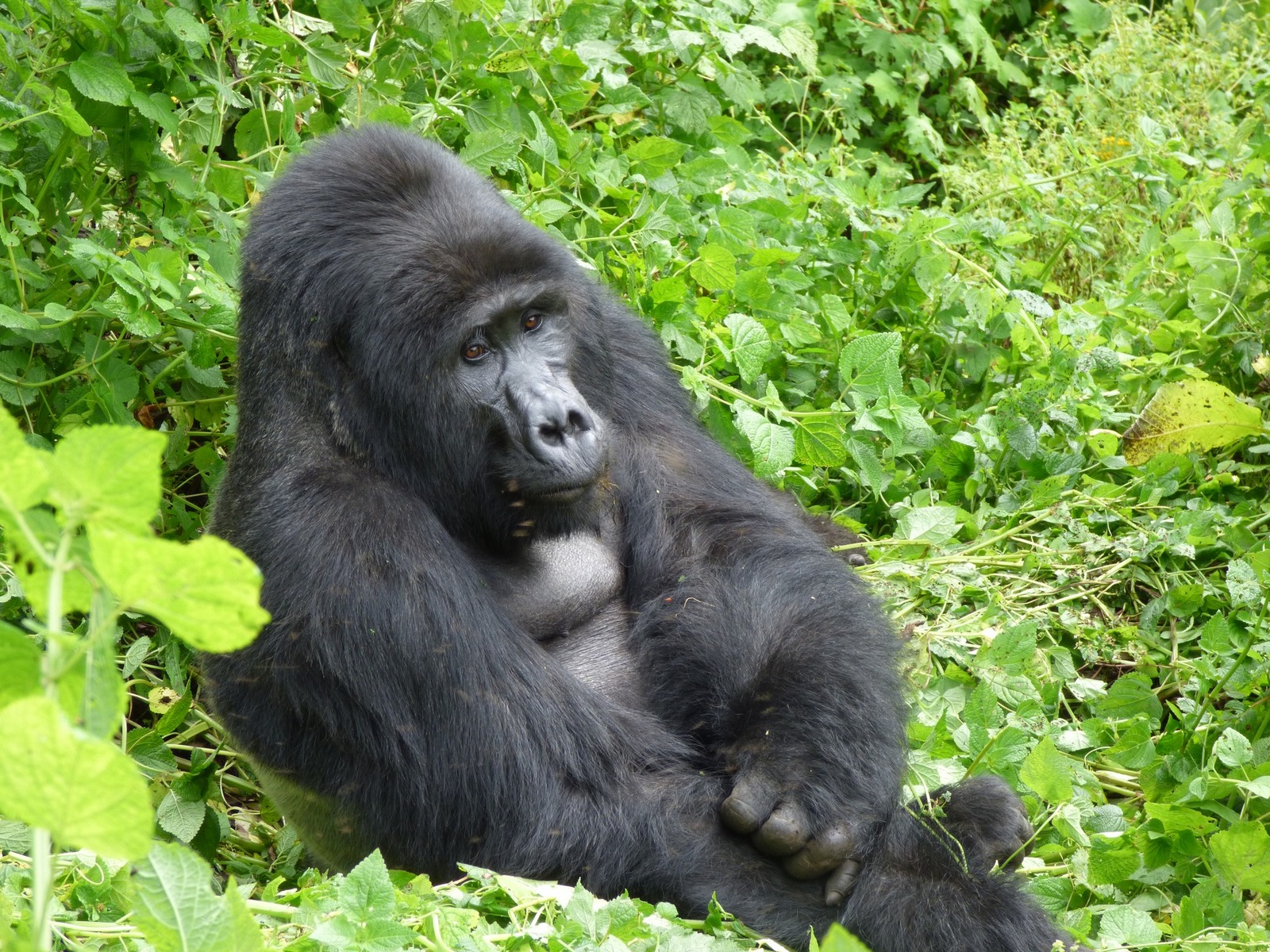
A 14-day Uganda safari offers a comprehensive "Big Five" experience combined with premier primate tracking, including mountain gorillas in Bwindi Impenetrable National Park. Top activities include trekking gorillas and chimpanzees, game drives for lions and rhinos, boat cruises on the Nile and Kazinga Channel, and relaxing at scenic Lake Bunyonyi.
14-days-complete-uganda-safari-tour-and-primate-safari-experience
14-days-uganda-and-rwanda-safari-tour-itinerary
14-days-luxury-uganda-primate-safari-holiday
14-days-uganda-primate-safari-and-jinja-white-water-rafting
14-days-classic-uganda-birding-safari-expedition
14-days-best-africa-big-five-safari-in-uganda-and-best-gorilla-trekking-adventure
Gorilla & Primate Trekking
The centerpiece of any Ugandan expedition is the opportunity to come face-to-face with the endangered mountain gorillas. In Bwindi Impenetrable National Park, an ancient rainforest that survived the last ice age, you embark on a trek that is as much about the journey as the destination. Navigating through thick ferns and tangled vines, you follow expert trackers until you find a habituated family. Standing just meters away from a 400-pound silverback is a profoundly humbling experience. His soulful eyes and gentle social interactions with the inquisitive juveniles and nurturing mothers offer a rare glimpse into the life of our closest wild relatives. For those seeking a different backdrop, Mgahinga offers trekking on the slopes of the Virunga Volcanoes, where the open bamboo forests provide a starkly different aesthetic and potentially clearer sightlines.
The primate adventure extends to Kibale Forest National Park, the "Primate Capital of the World." This lush canopy is home to over 1,500 chimpanzees. Unlike the quiet, deliberate movements of gorillas, chimpanzee tracking is high-energy and vocal. You are often alerted to their presence by a chorus of pant-hoots echoing through the trees. Watching them swing through the mahogany branches, groom one another, or even hunt is a masterclass in complex primate social dynamics. For a truly immersive experience, the full-day habituation allows you to stay with a community from dawn till dusk. Together with the golden monkeys of the volcanic highlands, these encounters form a "primate triple crown" that makes Uganda the premier destination for great ape enthusiasts globally.
Big Five Game Drives
A 14-day safari offers enough time to complete the "Big Five" checklist across Uganda's diverse savannah landscapes. The quest begins at the Ziwa Rhino Sanctuary, the only place in the country to see the southern white rhino. Tracking these prehistoric giants on foot with an armed ranger is a visceral experience that connects you to the ground they walk on. From there, the safari moves to the vast northern plains of Murchison Falls National Park. Here, the golden grasslands are home to massive herds of elephants and Cape buffaloes. In the early morning light, your guide scans the borassus palms for the flick of a leopard’s tail or a pride of lions surveying their kingdom.
The journey continues to Kidepo Valley National Park, located in the rugged northeast. Often cited as Africa’s most beautiful wilderness, Kidepo offers a raw, frontier-style safari where you can spot cheetahs and caracals—species rarely seen elsewhere in Uganda. Finally, Queen Elizabeth National Park provides a rich mosaic of habitats, from open savannah to crater lakes, supporting a high density of predators and prey. Game drives here are a sensory feast, where the smell of wild sage mixes with the sight of the snow-capped Rwenzori Mountains on the horizon. By visiting these three distinct parks, you witness the full spectrum of East African wildlife, from the "Big Five" to the unique northern endemics, all while traversing some of the most dramatic terrain on the continent.
Boat Safaris
Water-based safaris offer a cooling and tranquil perspective on the African wild, often allowing for closer proximity to animals than a traditional vehicle. In Murchison Falls National Park, a boat cruise upstream to the base of the falls is an essential experience. As you navigate the Victoria Nile, you sail past hundreds of grunting hippos and massive Nile crocodiles basking on the banks. The river is a magnet for wildlife; you will often see elephants submerged to their trunks as they cross to islands, and buffaloes cooling off in the shallows. The trip culminates at the "Devil's Cauldron," where the entire Nile explodes through a seven-meter gap, creating a thunderous display of raw power and permanent rainbows.
Equally spectacular is the boat trip along the Kazinga Channel in Queen Elizabeth National Park. This 40-kilometer natural waterway connects Lake Edward and Lake George and boasts one of the world's highest concentrations of hippos. The channel is a birdwatcher's paradise, with the chance to see the African Fish Eagle, the vibrant Malachite Kingfisher, and the rare African Skimmer. From the safety of the boat, you can observe the intricate social hierarchies of hippo pods and watch monitor lizards hunting along the shore. The slow pace of the water allows for stable, high-quality photography and a sense of immersion in the ecosystem that is both relaxing and exhilarating, providing a vital counterpoint to the dusty trails of the savannah.
Tree-Climbing Lions
In the remote Ishasha sector of Queen Elizabeth National Park, a rare behavioral phenomenon awaits: the famous tree-climbing lions. While lions are generally ground-dwelling predators, the prides here have adapted to spending their days high in the spreading limbs of ancient sycamore fig trees and acacias. Seeing a 400-pound cat draped over a branch like an oversized house cat is one of the most surreal and sought-after sights in East Africa. This behavior is thought to be a clever adaptation to escape the heat of the ground and to avoid the irritating bites of tsetse flies, while also providing a superior vantage point for spotting prey across the plains.
Searching for these lions requires patience and a keen-eyed guide, as they blend perfectly into the dappled shade of the canopy. The Ishasha sector itself feels more wild and secluded than the northern parts of the park, characterized by open grasslands and riverine forests. Aside from the lions, you are likely to encounter large herds of Topi, buffaloes, and the occasional leopard. The sight of a lion silhouetted against the green foliage, with its paws dangling over a branch, is a photographic goldmine. It serves as a striking reminder of the intelligence and adaptability of Africa’s apex predators, making Ishasha a mandatory stop for any traveler looking to experience the more unusual side of animal behavior.
Cultural & Scenic Experiences
A 14-day safari is about more than just wildlife; it is a journey through the heart of Ugandan culture and geography. The Igongo Cultural Centre near Mbarara offers a deep dive into the heritage of the Ankole people, showcasing traditional artifacts and the history of the long-horned cattle. In the capital, Kampala, you can experience the organized chaos of local markets, visit the historic Kasubi Tombs, or stand at the Uganda Martyrs Shrine. No trip is complete without a stop at the Equator monument, where you can stand in both hemispheres at once—a classic geographic milestone that highlights Uganda’s tropical position.
For scenic relaxation, Lake Bunyonyi is unparalleled. Known as the "Place of Many Little Birds," this high-altitude lake is dotted with 29 emerald islands and surrounded by steep, terraced hillsides. It is one of the few lakes in the region safe for swimming, offering a tranquil retreat to reflect on your journey. Whether you are exploring the crater lakes of Fort Portal, which look like emerald jewels dropped into the landscape, or watching the sunrise over the mist-covered valleys of the southwest, these moments provide the "soul" of the safari. They connect the wildlife encounters to the land and the people, ensuring that your 14-day experience is a holistic exploration of the "Pearl of Africa" rather than just a checklist of animals.
Optional Adventures
For those who want to inject extra adrenaline or a different pace into their itinerary, Uganda offers world-class optional adventures. In Jinja, the "Adrenaline Capital of East Africa," you can face the mighty Nile head-on with white-water rafting. Navigating the Grade 4 and 5 rapids at the Source of the Nile is a heart-pounding experience that showcases the river's raw power. If you prefer to stay dry, bungee jumping over the historic river or quad biking along its banks provides a similar rush. These activities offer a high-energy break from the traditional safari routine and highlight the significance of the Nile as a center for global adventure tourism.
Alternatively, Lake Mburo National Park offers a more tranquil but equally unique adventure: horseback riding. This is one of the few places in East Africa where you can go on a horse-mounted safari. Riding through the acacia woodlands allows you to get incredibly close to zebras, giraffes, and elands, as the animals view the horse as a fellow herbivore rather than a threat. The silence of the ride, broken only by the sound of hooves and birdsong, creates an intimate connection with the environment. Whether it is the thunder of the Nile rapids or the quiet trot through the savannah, these optional add-ons allow you to customize your 14-day safari to match your personal sense of adventure, ensuring the trip is as active or as relaxed as you desire.
2 weeks 14 days Uganda big five safari and gorilla trekking
The 14-day Uganda Big Five safari and gorilla trekking expedition is a definitive odyssey through the "Pearl of Africa," meticulously crafted to showcase the country’s most iconic wildlife and dramatic landscapes. Over two weeks, this journey transitions from the thundering Victoria Nile and the semi-arid plains of the north to the mist-shrouded ancient rainforests of the southwest. You will track the rare southern white rhino on foot, witness the world's most powerful waterfall, and search for the legendary tree-climbing lions of Ishasha. The adventure reaches its emotional peak in the deep jungles of Bwindi and Kibale, where intimate encounters with mountain gorillas and chimpanzees offer a profound connection to our primate kin. Blending classic savannah game drives with serene boat cruises and rich cultural immersions, this safari provides a comprehensive and transformative East African experience.
Day 1: Arrival and Entebbe Shores
Your journey begins at Entebbe International Airport, where the fresh breeze from Lake Victoria welcomes you. After a warm reception by your guide, you are transferred to your lodge for a briefing on the adventure ahead. Depending on your arrival time, you may explore the Entebbe Botanical Gardens to spot endemic birds and monkeys or simply relax by the lake. This first day is about acclimatizing to the tropical climate and soaking in the tranquil atmosphere of the peninsula. As evening falls, enjoy a quiet dinner overlooking the water, resting well before the expedition into the wild heart of Uganda commences the following morning.
Day 2: Rhino Tracking and Murchison Falls
Heading north from the capital, you make a significant stop at the Ziwa Rhino Sanctuary. This conservation stronghold is the only place in Uganda to see southern white rhinos in the wild; tracking them on foot alongside expert rangers is a heart-pounding and visceral experience. After the trek, you continue through the Luwero Triangle toward Murchison Falls National Park. As you enter the park, the landscape shifts into lush savannah and Borassus palm forests. You arrive at your lodge in the late afternoon, just as the sun begins to set over the Nile, signaling your arrival in the land of the "Big Five."
Day 3: Murchison Savannah and Boat Cruise
Day three is a showcase of Murchison's raw power. An early morning game drive on the northern bank reveals lions, leopards, and massive herds of elephants and buffaloes. In the afternoon, you board a boat for the famous cruise toward the base of the falls. You will see enormous Nile crocodiles and pods of hippos lining the banks. The boat reaches the "Devil’s Cauldron," where the entire Nile explodes through a narrow seven-meter gap. For the adventurous, a hike to the top of the falls offers a sensory experience where you can feel the earth vibrate beneath the weight of the world's most powerful waterfall.
Day 4: Transfer to the Primate Capital
The safari takes a scenic turn as you drive south toward Kibale Forest National Park. This journey follows the Albertine Rift escarpment, offering breathtaking views of Lake Albert and the blue mountains of the Congo in the distance. You pass through vibrant tea estates that carpet the rolling hills of Fort Portal in a brilliant, endless green. Arriving at the edge of the Kibale rainforest, the air becomes cooler and more fragrant. This evening is spent in the shadow of the Rwenzori Mountains, listening to the distant hoots of chimpanzees as you prepare for the primate encounters that define the next stage of your journey.
Day 5: Chimpanzee Tracking and Bigodi Walk
Today is dedicated to our closest biological relatives. You enter the Kibale rainforest to track habituated chimpanzees; spending an hour watching them play, groom, and socialise in the canopy is an exhilarating experience. In the afternoon, you join a community-led nature walk through the Bigodi Wetland Sanctuary. This lush swamp is a birdwatcher's paradise and home to eight primate species, including the striking Red Colobus and the Great Blue Turaco. The walk provides a window into local conservation efforts and the intricate social lives of the forest’s residents, offering a deep dive into the biodiversity of the Albertine Rift before heading further south tomorrow.
Day 6: Transfer to Queen Elizabeth Park
The expedition continues to Queen Elizabeth National Park, crossing the Equator for a mandatory photograph in both hemispheres. As you descend into the rift valley, the landscape opens into vast savannahs punctuated by ancient crater lakes. You embark on an evening game drive on the Kasenyi Plains, a prime territory for lions and the elusive leopard. The park’s diverse ecosystems support nearly 100 mammal species, and you will likely see large herds of Uganda Kob and elephants moving across the plains. You settle into your lodge overlooking the Kazinga Channel, where the sights and sounds of the African bush provide a vivid backdrop for the evening.
Day 7: Kazinga Channel and Savannah Search
Morning begins with a game drive to find predators returning from their night hunts. In the afternoon, you board a boat for a cruise on the Kazinga Channel, which holds one of the highest concentrations of hippos in the world. From the water, you get an intimate view of buffaloes and elephants coming down to drink, alongside a staggering array of water birds like the African Fish Eagle and Kingfishers. This aquatic safari offers stable, close-range photography opportunities that are impossible from a land vehicle. The day ends with a sundowner overlooking the channel, reflecting on the incredible density of life found at this unique crossroads of nature.
Day 8: Ishasha’s Tree-Climbing Lions
You head into the remote Ishasha sector in the southern part of the park, famous for its unique tree-climbing lions. Seeing a pride of lions lounging in the branches of ancient sycamore fig trees is a surreal wildlife highlight that defies traditional lion behavior. This sector is raw and secluded, offering a frontier-style safari experience. Aside from the lions, you look for the resident Topis and buffalo herds that roam the golden plains. After the game drive, you continue the journey toward Bwindi Impenetrable National Park. As the savannah gives way to the mist-covered mountains of the southwest, the anticipation for your encounter with the mountain gorillas begins to build.
Day 9: Gorilla Trekking in Bwindi
This is the emotional peak of your 14-day safari. After a briefing, you enter the ancient, thick forest of Bwindi to track a habituated family of mountain gorillas. The trek through steep ridges and tangled vines can be demanding, but the reward is life-changing. You spend one sacred hour observing a silverback and his family as they forage and play just meters away. Their gentle nature and human-like expressions offer a profound connection to the natural world that few other experiences can match. Returning from the forest with a certificate of completion, you spend the evening in quiet reflection, forever changed by your encounter with these gentle giants.
Day 10: Batwa Culture and Scenic Transfer
In the morning, you participate in the Batwa Cultural Trail, learning about the "First People of the Forest" and their ancestral traditions of hunting and honey-gathering. This cultural immersion provides a poignant look at the human history of the mountains. Afterward, you drive through the Kigezi highlands, often called the "Switzerland of Africa," toward Lake Bunyonyi. The winding roads offer breathtaking vistas of terraced hillsides and deep valleys. You arrive at the shores of the lake, which is dotted with 29 emerald islands, in time for a sunset boat ride. The serenity of the lake provides the perfect environment to unwind after the physical exertion of the previous days.
Day 11: Relaxation at Lake Bunyonyi
Day eleven is dedicated to rest and scenic exploration at Lake Bunyonyi. You can spend the morning canoeing in a traditional dugout, visiting the historic Punishment Island, or hiking to various viewpoints for panoramic shots of the volcanic landscape. The lake is bilharzia-free and safe for swimming, offering a rare chance for a refreshing dip in the African wild. For bird enthusiasts, the lake lives up to its name ("place of many little birds") with constant sightings of vibrant weavers and kingfishers. This day of leisure allows you to process the incredible experiences of the past ten days while surrounded by one of Uganda's most beautiful and peaceful natural wonders.
Day 12: Lake Mburo and Zebra Plains
Leaving the highlands, you head toward Lake Mburo National Park, the smallest of the savannah parks but rich in unique biodiversity. This is the only place in southern Uganda where you can see Burchell’s zebra and the majestic Eland antelope. As you enter the park, you enjoy a game drive through the acacia woodlands, spotting giraffes and impalas. In the evening, you may opt for a night game drive to look for leopards and nocturnal species like bushbabies. The park’s mosaic of wetlands and hills provides a different aesthetic to the larger parks, offering an intimate and quiet conclusion to your "Big Five" and primate circuit.
Day 13: Walking Safari and Return toward Kampala
Experience the wild from a different perspective with a guided walking safari in Lake Mburo. Accompanied by an armed ranger, you walk among zebras and antelopes, feeling the pulse of the savannah beneath your feet. It is a rare opportunity to appreciate the smaller details of the ecosystem, from tracks to plants. Afterward, you begin the journey back toward Kampala, stopping at the Equator for a final commemorative photograph and a chance to browse local craft markets. You arrive in the capital in the late afternoon, enjoying a farewell dinner as you recount the many highlights of your two-week odyssey across the Pearl of Africa.
Day 14: Kampala City and Departure
On your final day, you explore the vibrant culture of Kampala or Entebbe. You may visit the Uganda Martyrs Shrine, the historic Kasubi Tombs, or the craft markets to pick up last-minute souvenirs. Depending on your flight schedule, a visit to the Entebbe Zoo or the Botanical Gardens offers a final look at Uganda’s diverse flora and fauna. Your guide transfers you to Entebbe International Airport, marking the end of your 14-day safari. As you board your flight, you carry with you the sounds of the Nile, the gaze of the mountain gorillas, and the warmth of the Ugandan people—memories that will last a lifetime.
What are the primary national parks visited during a 14-day Big Five and Gorilla safari in Uganda?
A 14-day expedition through Uganda is strategically designed to cover the most ecologically diverse protected areas in the country. The journey typically begins with Murchison Falls National Park in the northwest, Uganda's largest park. Here, the Victoria Nile bisects the savannah, creating a haven for elephants, giraffes, and predators. Moving south along the Albertine Rift, the itinerary enters Kibale Forest National Park, renowned as the "Primate Capital of the World" due to its 13 primate species and high density of chimpanzees.
The circuit continues to Queen Elizabeth National Park, a mosaic of savannah, wetlands, and crater lakes. This park is vital for viewing diverse big game and the famous tree-climbing lions. Further south lies the crown jewel: Bwindi Impenetrable National Park. This UNESCO World Heritage site is home to nearly half of the world's mountain gorillas and offers a raw, ancient rainforest experience. Finally, the safari often concludes at Lake Mburo National Park, the smallest of the savannah parks but the only place in southern Uganda to see zebras and elands. Together, these parks provide a comprehensive loop that transitions from the dry northern plains to the lush southern mountains, ensuring a complete overview of Uganda's "Big Five" and primate heritage.
Is it possible to see all of the "Big Five" animals within a two-week Ugandan safari itinerary?
Yes, achieving a "Big Five" sighting is a realistic and common goal for a 14-day Ugandan itinerary, though it requires visiting specific locations. In Uganda, the Big Five—lion, leopard, elephant, buffalo, and rhino—are not all found in a single park due to the historical extinction of wild rhinos in the 1980s. To see the Southern White Rhino, a stop at the Ziwa Rhino Sanctuary is mandatory. Here, you track these prehistoric giants on foot, which is often considered one of the most intimate wildlife encounters on the continent.
The remaining four members of the Big Five are widely distributed across the northern and western savannahs. Murchison Falls and Queen Elizabeth National Parks are the primary strongholds for elephants and Cape buffaloes, which are seen in massive herds. Lions are frequently spotted on the Kasenyi Plains and the Ishasha sector. The leopard, being the most elusive, requires a bit more luck and the expertise of a seasoned guide, often found lounging in the thickets of Murchison or the acacia trees of Lake Mburo. By the end of the 14-day circuit, most travelers have successfully checked off all five, with the added bonus of seeing mountain gorillas and chimpanzees, making it a "Big Seven" experience.
How long does the actual mountain gorilla trekking experience take in Bwindi Impenetrable National Park?
Gorilla trekking is a dynamic and unpredictable activity that can last anywhere from one to eight hours. The duration is entirely dependent on the movement of the gorilla family you are assigned to track. Each morning, advanced trackers head into the forest at dawn to find the location where the gorillas nested the previous night. Once they find the group, they radio your lead guide. The trek involves hiking through steep, densely vegetated terrain, often with no formal trails, which can be physically demanding.
Once your group makes contact with the gorillas, the "official" experience begins. For conservation and health reasons, visitors are strictly limited to one hour of observation. During this hour, you watch the gorillas eat, groom, play, and interact. This time limit is crucial to minimize the impact of human presence and to reduce the risk of disease transmission. After the hour is up, you hike back out of the forest to the park headquarters to receive your trekking certificate. While the hike can be long and strenuous, the profound emotional impact of sitting just meters away from a silverback makes every minute of the journey feel justified.
Can I track chimpanzees and golden monkeys during the same 14-day safari in Uganda's forests?
Absolutely. A 14-day itinerary is perfectly timed to include the "Primate Triple Crown": gorillas, chimpanzees, and golden monkeys. Chimpanzee tracking is the primary highlight in Kibale Forest National Park. Here, you follow our closest biological relatives through the tropical canopy. The experience is fast-paced and vocal, as chimps are much more active and mobile than gorillas. You’ll witness complex social structures, grooming rituals, and occasionally even hunting behavior among the communities.
Golden monkey tracking takes place in Mgahinga Gorilla National Park, located in the far southwestern corner of the country. These vibrant, orange-coated primates are endemic to the Albertine Rift and live in the bamboo forests on the slopes of the Virunga Volcanoes. The trek to find them is generally less strenuous than gorilla trekking but equally rewarding. Golden monkeys are highly energetic and "flighty," often jumping through the bamboo stalks in large, social groups. Including both species in your itinerary provides a fascinating comparison between the intelligence of the great apes and the specialized adaptations of the Old World monkeys, all set within some of Africa’s most beautiful montane forests.
What makes the boat cruise on the Kazinga Channel in Queen Elizabeth National Park a special experience?
The Kazinga Channel is a 40-kilometer natural waterway that connects Lake Edward and Lake George, and its boat cruise is often cited as a top highlight of the safari. What makes it extraordinary is the sheer density of wildlife concentrated along the banks. The channel is home to one of the world's highest concentrations of hippos. From the safety of the boat, you can observe these massive mammals grunting, yawning, and interacting just a few meters away.
The banks also serve as a vital water source for the park's land animals. It is common to see large herds of elephants and buffaloes cooling off in the shallows or crossing the channel. For bird enthusiasts, the area is unparalleled; you can spot hundreds of species, including the African Fish Eagle, Pelicans, and the rare African Skimmer. Unlike a game drive where animals might be hidden by tall grass, the boat cruise provides an unobstructed, "water-level" view of nature's daily rituals. The slow, rhythmic pace of the boat allows for stable photography and a serene atmosphere, offering a refreshing break from the dust of the savannah trails.
Are tree-climbing lions guaranteed to be seen during a game drive in the Ishasha sector?
While the Ishasha sector of Queen Elizabeth National Park is the most famous place in the world to see tree-climbing lions, a sighting is never 100% guaranteed. These lions climb trees primarily to escape the heat of the ground and to avoid the irritating bites of tsetse flies. Therefore, their presence in the branches depends heavily on the weather and the time of day. On a hot, sunny afternoon, your chances are very high, as the lions seek the shade of the spreading sycamore fig trees.
Guides are exceptionally skilled at scanning the specific trees where prides are known to congregate. However, if it has been raining or if the lions are currently on a hunt, they may remain on the ground or in thickets where they are harder to spot. Most 14-day itineraries include at least two game drives or a transit through Ishasha specifically to maximize the window for a sighting. Even if the lions aren't in the trees, Ishasha is a beautiful, remote wilderness filled with Topis, buffaloes, and elephants, ensuring that the drive is never a wasted effort. Seeing a 400-pound cat lounging on a branch remains one of the most iconic and sought-after images in East African travel.
What other activities besides game drives can I participate in during my time at Murchison Falls National Park?
Murchison Falls offers a variety of experiences that go beyond the traditional vehicle-based safari. The most iconic activity is the boat cruise to the base of the falls. This three-hour journey upstream provides a close-up view of hippos and crocodiles before reaching the "Devil's Cauldron," where the Nile explodes through a narrow gorge. From the boat landing, you can take a guided hike to the top of the falls. This 45-minute trek allows you to feel the earth vibrate and see the water surge through the gap from a spectacular overhead perspective.
For birdwatchers and photography enthusiasts, a boat trip to the Nile Delta is highly recommended. This area, where the river enters Lake Albert, is the best place in Uganda to find the prehistoric-looking Shoebill Stork. Additionally, the park offers hot air balloon safaris at sunrise, providing a bird's-eye view of the herds and the winding Nile. You can also participate in guided nature walks or visit the nearby Boemu Women’s Group for a cultural immersion. These diverse activities ensure that your time at Murchison is multi-dimensional, combining adrenaline, conservation education, and serene water exploration.
Is it necessary to be physically fit for the chimpanzee trekking experience in Kibale National Park?
A reasonable level of fitness is required for chimpanzee trekking, but it is generally considered less demanding than gorilla trekking. The terrain in Kibale Forest is relatively flat compared to the steep ridges of Bwindi. However, the trek involves walking through the forest for two to four hours. The primary challenge is the pace; chimpanzees move much faster than gorillas and spend a significant amount of time in the high canopy. If the community decides to move to a new feeding ground, you may need to maintain a brisk walking pace through the undergrowth to keep up with them.
The forest floor can be uneven, with tangled roots and muddy patches, so good balance and comfortable hiking boots are essential. If you are comfortable walking for a few miles on a woodland trail, you will likely find chimpanzee tracking manageable. The park rangers are excellent at pacing the group and making frequent stops to explain the forest's ecology. For those with mobility concerns, the rangers can often assign groups to chimpanzee communities that are known to be closer to the park boundaries, making the experience accessible to most travelers in average health.
What kind of cultural experiences can I expect when visiting communities near Bwindi Impenetrable National Park?
Cultural immersion near Bwindi focuses heavily on the Batwa Pygmy community, the original inhabitants of the ancient forest. Before Bwindi was gazetted as a national park, the Batwa lived as hunter-gatherers within its borders. Today, they share their heritage through the Batwa Cultural Experience. This involves a guided walk where Batwa elders demonstrate how they used to hunt with bows and arrows, gather medicinal plants, and start fires using sticks.
Beyond the Batwa, visitors can engage with the Bakiga people, the local farmers of the region. You might visit a local homestead to learn how to grind millet, brew traditional banana beer ( Urwagwa ), or visit a community school. Many lodges support local craft cooperatives where you can watch women weave intricate baskets. These interactions are designed to be mutually beneficial, providing income to the community while giving travelers a profound understanding of the human history and traditional lifestyles that coexist with the mountain gorillas. These experiences add a layer of "soul" to the safari, reminding us that conservation is a joint effort between wildlife and the people who live alongside them.
How many bird species might a visitor hope to spot during a 14-day safari in Uganda?
Uganda is arguably the premier birding destination in Africa, boasting over 1,060 recorded species—roughly 50% of Africa’s total bird population. During a standard 14-day safari, an attentive visitor can expect to spot between 300 and 500 species. The itinerary covers a vast range of habitats, including tropical rainforests, papyrus swamps, and open savannahs, each hosting its own unique avian residents.
Top spots for birding include Murchison Falls for the Shoebill Stork and various kingfishers, and Kibale Forest for the Green-breasted Pitta. The Kazinga Channel is a magnet for water birds like the Great White Pelican and the African Skimmer. In the southwestern highlands, Lake Bunyonyi and the Mubwindi Swamp in Bwindi are essential for spotting Albertine Rift endemics such as the African Broadbill. Whether you are a dedicated "twitcher" or a casual observer, the sheer color and variety of Uganda’s birds—from the shimmering Sunbirds to the majestic African Fish Eagle—will be a constant and spectacular feature of your 14-day journey.
What is the best activity for relaxation after days of intense primate trekking and game drives?
After the physical exertion of hiking through Bwindi and the dusty game drives of Queen Elizabeth, Lake Bunyonyi is the ultimate destination for relaxation. Known as the "Place of Many Little Birds," this high-altitude lake is one of the most beautiful and peaceful spots in Africa. It is one of the few lakes in the region that is bilharzia-free, croc-free, and hippo-free, making it perfectly safe for swimming.
The most popular way to unwind is a scenic boat ride or a dugout canoe excursion at sunset. You can explore some of the lake's 29 emerald islands, each with its own unique history, such as the infamous "Punishment Island." For those who prefer to stay on land, the lakeside lodges offer breathtaking views where you can simply sit with a book and watch the mist roll over the terraced hills. The cool mountain air and the quiet, rhythmic pace of life at the lake provide the perfect "safari pause," allowing you to process the incredible sights you've seen before heading back toward the bustle of Entebbe or Kampala.
Is a boat trip to the source of the Nile in Jinja part of a 14-day safari?
While the core "Big Five and Gorilla" circuit focuses on Western Uganda, an extended 14-day trip can certainly include Jinja at the beginning or end. Located about 80 kilometers east of Kampala, Jinja is the historic "Adrenaline Capital of East Africa" and the site where the Nile River exits Lake Victoria. A boat trip to the Source of the Nile is a moment of great geographic significance, allowing you to stand at the very start of the world’s longest river.
Including Jinja adds a layer of adventure to the itinerary. You can participate in world-class white-water rafting, bungee jumping, or quad biking along the riverbanks. For those seeking a slower pace, sunset cruises on the Nile offer a beautiful way to see the river's birdlife and lush islands. If your 14-day tour starts in Entebbe and moves directly west, Jinja might be omitted to save driving time, but for those who value the historical and adventure aspects of the Nile, adding two days in Jinja is a fantastic way to round out the "Pearl of Africa" experience.
Are game drives in Lake Mburo National Park different from those in Murchison Falls National Park?
Yes, the experience in Lake Mburo is quite distinct from the larger northern parks. While Murchison Falls is defined by vast, open savannahs and the massive Victoria Nile, Lake Mburo is characterized by acacia woodlands and wetlands. Because the park lacks the large predators found in Murchison (there are very few lions), the animals are generally more relaxed. This allows for activities that are prohibited elsewhere, such as walking safaris and horseback safaris.
Being on foot or on a horse allows you to get incredibly close to the animals, as they view you as another herbivore rather than a threat. Lake Mburo is also the only place in southern Uganda where you can see Burchell’s Zebra and the Impala (from which Kampala takes its name). It also has a high concentration of the Eland, the world's largest antelope. While you won't see the massive herds of elephants found in Murchison, the intimacy and unique species of Lake Mburo make it a perfect "final chapter" to a 14-day safari, offering a quieter, more tactile connection to the African bush.
What should I wear and pack specifically for a gorilla trekking safari in Bwindi?
Packing for Bwindi requires a focus on protection and utility rather than fashion. The forest is thick, damp, and often cold. The most essential item is a pair of sturdy, waterproof hiking boots with a good grip; do not attempt the trek in sneakers. You must wear long trousers and a long-sleeved shirt (even if it's hot) to protect your skin from stinging nettles, thorns, and biting insects. Tucking your trousers into your socks is a standard "pro-tip" to prevent safari ants from crawling up your legs.
Other must-haves include:
- A lightweight rain jacket: Downpours can happen at any second in the rainforest.
- Gardening gloves: These are vital for when you need to grab vines or branches for balance; they protect against thorns.
- A wide-brimmed hat and sunscreen: The equatorial sun is strong even under the canopy.
- A waterproof dry bag: To protect your camera and phone from humidity and sudden rain.
- Refillable water bottle: Staying hydrated at altitude is critical. Most lodges provide walking sticks, but bringing your own collapsible pole is helpful if you have one.
Is it better to take a 14-day safari during the dry season or the rainy season?
The dry seasons (June to September and December to February) are widely considered the best times for a 14-day safari. During these months, the trails in Bwindi and Kibale are less muddy and slippery, making the strenuous primate trekking safer and more comfortable. In the savannah parks, wildlife viewing is at its peak because animals congregate around permanent water sources, and the shorter grass makes spotting predators like leopards significantly easier. Additionally, the dirt roads between parks are much more reliable when dry.
However, the rainy seasons (March to May and October to November) have their own unique charm. This is known as the "Emerald Season," when the landscape is vibrably green and the air is clear of dust, making for stunning photography. Many luxury lodges offer significantly lower rates during these months, and the parks are much less crowded. Birdwatching is also excellent as migratory species are present. If you are a fit hiker who doesn't mind a bit of mud and wants to save on costs, the rainy season can be rewarding, but for the most seamless logistics and easiest trekking, the dry season remains the top recommendation.
Booking Uganda big five and gorilla with us Roads of Adventure safaris
Book your unforgettable Uganda Big Five and Gorilla trekking adventure with Roads of Adventure Safaris, a premier local operator. Experience the thrill of walking with rhinos at Ziwa Sanctuary, boat cruising the Nile, and game driving in Murchison Falls for lions, leopards, buffaloes, and elephants. Their expertly planned itineraries, ranging from 6 to 15 days, seamlessly combine savanna wildlife with mountain gorilla trekking in Bwindi Impenetrable National Park. Enjoy top-tier comfort, private 4x4 vehicles, and professional guides dedicated to ensuring a personalized African wildlife experience. Secure your gorilla permits early with this trusted team.
