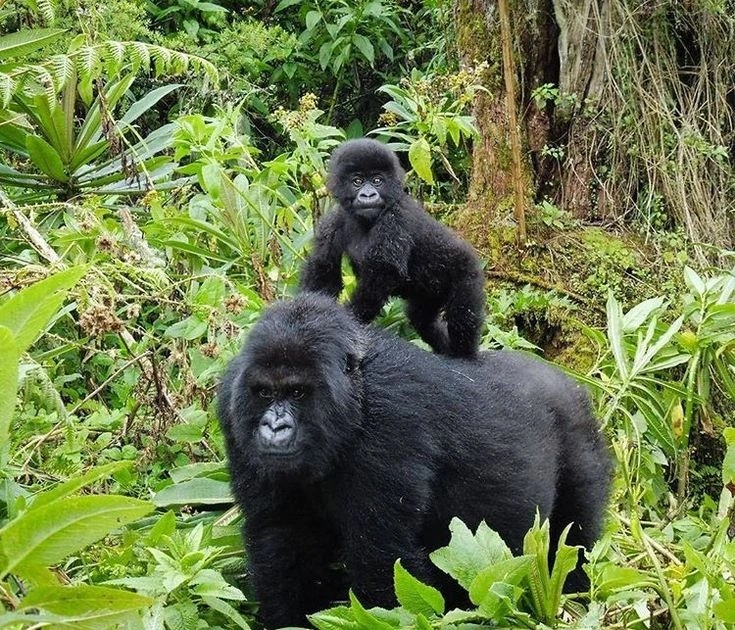
A 7-day Uganda safari typically combines top primate tracking—mountain gorillas in Bwindi Impenetrable National Park or Mgahinga and chimpanzees in Kibale—with savanna game drives in Queen Elizabeth National Park to see big game like lions, elephants, and leopards. Key activities include trekking gorillas, chimpanzee tracking, boat cruises, game drives, and community tours.
Popular one week 7 days tour packages
7-days-safari-to-uganda-queen-elizabeth-park-gorillas-trekking-and-lake-mburo
7-days-perfect-uganda-primate-safari-itinerary
7-days-uganda-tour-to-murchison-falls-via-ziwa-kibale-and-queen-elizabeth-national-park
7-day-ultimate-uganda-primate-safari-chimpanzees-and-game-drives
7-days-best-uganda-safari-tour-to-popular-safari-parks
7-days-perfect-road-trip-uganda-safari-tour
7-days-best-uganda-birding-safari-tour
7-day-uganda-safari-to-kidepo-valley-via-jinja-and-sipi-falls
7-days-murchison-falls-uganda-safari-trip-via-ziwa-rhinos-kidepo-valley-and-jinja
Gorilla Trekking (Bwindi/Mgahinga)
Gorilla trekking is widely regarded as the most profound wildlife encounter on the planet and the undisputed crown jewel of a Uganda wildlife safari. This activity takes place in either Bwindi Impenetrable National Park or Mgahinga Gorilla National Park, which together harbor more than half of the world's remaining mountain gorilla population. The experience begins at dawn with a briefing by park rangers who explain the strict rules—such as maintaining a 10-meter distance—designed to protect these gentle giants from human diseases.
The trek itself is an adventure through ancient, mist-covered rainforests, navigating steep ridges and tangled vines. Once a habituated gorilla family is located, time seems to stand still. You are granted exactly one hour to observe them as they forage, play, and groom one another. Watching a 400-pound silverback calmly oversee his family while infants somersault nearby is a deeply moving experience that challenges your perception of the natural world. Because permits are limited and highly sought after, this activity requires advanced planning, but the physical effort of the hike is instantly forgotten the moment you lock eyes with a mountain gorilla in its wild, emerald home.
Chimpanzee Tracking (Kibale National Park)
Kibale National Park, often referred to as the "Primate Capital of the World," offers the most reliable and exhilarating chimpanzee tracking experience in East Africa. This lush tropical rainforest is home to over 1,500 chimpanzees, along with twelve other primate species. Unlike the relatively stationary gorillas, chimpanzees are high-energy primates that spend much of their time swinging through the high canopy or moving swiftly along the forest floor.
Tracking begins with the sound of "pant-hoots"—deafening vocalizations that echo through the mahogany trees—as the community communicates across the forest. Following an expert guide, you will push through the undergrowth to catch up with these intelligent cousins of ours. Observing their social dynamics is fascinating; you might witness a complex hunt, a territorial dispute, or the tender grooming sessions that reinforce their social bonds. The encounter is fast-paced and vocal, providing a stark contrast to the quiet majesty of a gorilla trek. For those seeking a deeper dive, the Chimpanzee Habituation Experience (CHEX) allows you to spend a full day with the researchers and chimps, witnessing them from the moment they leave their nests at dawn until they build new ones at dusk.
Game Drives (Queen Elizabeth/Murchison Falls)
No Uganda wildlife safari is complete without exploring the vast savannah plains of Murchison Falls and Queen Elizabeth National Parks. These game drives offer a classic African safari experience, where the landscape is dotted with iconic Borassus palms and Euphorbia trees. In Murchison Falls, the Buligi Peninsula is a hotspot for spotting the "Big Four," including massive herds of Rothschild’s giraffes, elephants, and Cape buffaloes. The early morning light provides the perfect opportunity to see lions returning from a hunt or a leopard draped over an acacia branch.
In Queen Elizabeth National Park, the Kasenyi Plains serve as a massive lekking ground for the Uganda kob, which in turn attracts high concentrations of predators. However, the most unique highlight here is the Ishasha Sector in the south. This area is world-famous for its tree-climbing lions, which have developed the unusual habit of spending their afternoons lounging in the sturdy branches of sycamore fig trees. Watching a pride of lions resting high above the ground against the backdrop of the Rwenzori Mountains is a surreal sight that remains one of the most photographed and celebrated wildlife phenomena in East Africa.
Boat Cruises
Boat cruises in Uganda offer a "river safari" perspective that often yields more intimate wildlife sightings than traditional game drives. In Murchison Falls, the launch trip to the base of the falls is a powerful experience, taking you upstream against the Nile's current to witness the world's most powerful waterfall from below. Along the way, you will pass "schools" of hundreds of hippos and some of the largest Nile crocodiles on the continent basking on the banks.
In Queen Elizabeth National Park, the boat cruise along the Kazinga Channel is equally spectacular. This 40km natural waterway connects Lake Edward and Lake George and acts as a massive "watering hole" for the park’s inhabitants. During the afternoon heat, family herds of elephants and buffaloes descend to the water to bathe and drink, often coming within meters of the boat. The channel is also a birder’s paradise, where you can see African Skimmers, Great White Pelicans, and numerous kingfishers. The slow, steady pace of the boat allows for exceptional photography and a tranquil way to observe the complex interactions of a thriving wetland ecosystem.
Rhino Tracking (Ziwa Rhino Sanctuary)
The Ziwa Rhino Sanctuary is a vital conservation success story and a staple stopover on the way to Murchison Falls. This 7,000-hectare sanctuary is the only place in Uganda where you can see southern white rhinos in the wild, following their extinction in the park system in the 1980s. What makes Ziwa unique is the opportunity for a walking safari. Accompanied by expert armed rangers, you will set out on foot to track these two-ton giants through the savannah and thickets.
Walking just 30 meters from a mother rhino and her calf is an adrenaline-pumping experience that provides a sense of scale and vulnerability that a vehicle-based safari cannot match. The rangers provide in-depth information about the rhinos' behavior, the challenges of anti-poaching, and the long-term plan to reintroduce them into Uganda’s national parks. Tracking rhinos on foot is not just a "Big Five" box-ticking exercise; it is an educational journey that connects you directly to the frontline of African conservation, ensuring that these prehistoric-looking creatures have a future in the "Pearl of Africa."
Bird Watching
Uganda is arguably the best birding destination in Africa, boasting over 1,000 species—nearly half of all birds found on the continent—within a country the size of Great Britain. A Uganda wildlife safari for birders often centers on specialized habitats like the Bigodi Wetland Sanctuary near Kibale. This community-run reserve is a premier spot for seeing the Great Blue Turaco, along with several species of hornbills, kingfishers, and the elusive papyrus gonolek.
The diversity of avian life is staggering, ranging from the prehistoric Shoebill stork found in the marshy deltas of the Nile to the vibrant Albertine Rift endemics in Bwindi. In the savannah parks, you can spot the Abyssinian Ground Hornbill and the majestic Martial Eagle, while the riverbanks are alive with the calls of the African Fish Eagle. Whether you are a dedicated "twitcher" looking for the 24 Albertine Rift endemics or a casual admirer of nature, the kaleidoscope of colors and songs throughout Uganda’s forests and wetlands ensures that your binoculars are never down for long.
Cultural Experience
To truly understand the "Pearl of Africa," one must engage with its people. Cultural experiences add a layer of human depth to a Uganda wildlife safari. One of the most poignant encounters is visiting the Batwa community near Bwindi or Mgahinga. Known as the "Keepers of the Forest," the Batwa were the original inhabitants of the ancient rainforests. Through demonstrations of traditional hunting, honey gathering, and fire-making, they share the story of their ancestral life before the forests became protected national parks.
Another cultural landmark is the Igongo Cultural Centre in Mbarara. This museum provides a comprehensive look at the history and traditions of the tribes of Western Uganda, particularly the Ankole people and their famous long-horned cattle. Visitors can explore traditional homesteads, learn about local herbal medicine, and taste authentic regional cuisine. These interactions are more than just tours; they are opportunities for cross-cultural exchange that support local livelihoods and ensure that the benefits of tourism reach the communities living alongside the wildlife.
Scenery and Relaxation (Lake Bunyonyi)
After the physical exertion of gorilla trekking and the high-energy game drives, Lake Bunyonyi provides the perfect sanctuary for relaxation. Located in southwestern Uganda, Bunyonyi is often cited as the most beautiful lake in the country. Its name means "Place of many little birds," and it is characterized by 29 emerald-green islands scattered across a vast body of water, surrounded by steep, terraced hillsides that resemble the landscapes of Switzerland.
Unlike many African lakes, Bunyonyi is free from bilharzia, hippos, and crocodiles, making it safe for swimming and canoeing. A boat ride in a traditional dugout canoe is the best way to explore the islands, including the infamous "Punishment Island" with its dark history. You can also visit local schools and markets on the islands or simply enjoy the sunset from a lakeside terrace. The mist rising over the hills at dawn and the mirror-like reflections on the water provide a serene atmosphere that allows you to process the incredible sights of your safari before heading home.
Equator Stopover
The Equator crossing at Kayabwe is one of the most iconic landmarks in Uganda and a mandatory stop for every traveler. Marked by large white circular monuments, this is the point where the Earth is split into the Northern and Southern Hemispheres. It is a place of geographic wonder where you can literally stand with one foot in each hemisphere, providing a classic "bucket list" photo opportunity.
Beyond the photos, the stopover offers fascinating demonstrations of the Coriolis effect. Local guides use water and funnels to show how water drains in different directions—clockwise, counter-clockwise, or straight down—depending on which side of the line you are standing on. The area is also a hub for local artisans, featuring numerous craft shops where you can buy handmade Ugandan souvenirs, from wood carvings to colorful textiles. Enjoying a cup of locally grown coffee at a nearby café while contemplating your position on the center of the world is a quintessential Ugandan experience that marks the transition between the bustling capital of Kampala and the wild adventures of the western safari circuit.
7-day Uganda safari
A 7-day Uganda safari is a profound journey through the "Pearl of Africa," offering a concentrated blend of the continent’s most iconic wildlife and diverse landscapes. This itinerary spans from the source of the Nile to the ancient, misty heights of the gorilla highlands. You will traverse vast savannahs to spot lions and elephants, navigate lush wetlands for rare birds, and trek through tropical rainforests to meet our closest primate relatives. Highlights include the thunderous Murchison Falls, the primate-rich canopy of Kibale, and the life-changing experience of mountain gorilla trekking in Bwindi. Beyond the wildlife, the journey is enriched by the stunning scenery of the Albertine Rift and the warm hospitality of the Ugandan people. It is a comprehensive circuit designed for those seeking both high-adrenaline adventure and deep immersion into one of the most biodiverse regions on Earth, leaving you with a lifetime of memories.
Day 1: Arrival and Ziwa Rhino Sanctuary Your adventure begins with a drive north from Entebbe or Kampala toward Murchison Falls National Park. The first major highlight is a stop at the Ziwa Rhino Sanctuary, the only place in Uganda where you can see white rhinos in the wild. Accompanied by expert rangers, you will track these majestic, prehistoric-looking giants on foot, an intimate encounter that provides incredible photography opportunities. This sanctuary is vital for the reintroduction of rhinos into Uganda’s national parks. After the trek, you continue your journey through local villages and lush landscapes, arriving at the gateway of Murchison Falls in the late afternoon. The day concludes with a relaxing evening at your lodge, surrounded by the sounds of the African bush, as you prepare for the vast savannah landscapes and the powerful waterfalls that await you tomorrow.
Day 2: Murchison Falls Game Drive and Nile Boat Cruise The morning begins with an exhilarating game drive across the Buligi Peninsula. In this golden savannah, you will search for lions, leopards, Rothschild’s giraffes, and massive herds of elephants and buffaloes. The open plains, dotted with Borassus palms, offer a quintessential safari backdrop. In the afternoon, you embark on a boat cruise upstream to the base of Murchison Falls. From the water, you will witness hundreds of hippos, enormous Nile crocodiles, and a variety of water birds like the African Fish Eagle. The climax is the sight of the Nile River exploding through a narrow seven-meter gorge, creating a thunderous roar and a permanent mist. For those feeling energetic, a hike to the "Top of the Falls" provides a breathtaking panoramic view of the river’s power before you return to your lodge for dinner.
Day 3: Transfer to Kibale Forest National Park Today involves a scenic full-day drive as you travel south from Murchison Falls to the town of Fort Portal, the gateway to Kibale Forest. The route takes you along the Albertine Rift, offering stunning views of the escarpment and traditional homesteads. You will pass through vibrant tea plantations that carpet the rolling hills in brilliant shades of green. This journey is a great way to see the Ugandan countryside and observe the daily lives of local communities. Upon reaching Fort Portal, nestled in the shadow of the Rwenzori "Mountains of the Moon," you will settle into your lodge near the forest. Kibale is known as the "Primate Capital of the World," and as you fall asleep, the distant calls of chimpanzees and nightjars set the stage for your primate trekking adventure the following morning.
Day 4: Chimpanzee Tracking and Bigodi Wetland Walk Morning brings the thrill of chimpanzee tracking in Kibale National Park. Following an expert guide, you will head into the tropical rainforest to locate a habituated community of our closest living relatives. Watching them groom, play, and swing through the high canopy is a fascinating look into primate social dynamics. In the afternoon, you visit the Bigodi Wetland Sanctuary for a guided nature walk. This community-run project is a haven for birdwatchers and primate enthusiasts alike; you may spot the Great Blue Turaco and several monkey species, such as the Red Colobus and Grey-cheeked Mangabey. The walk also offers a cultural component, as you learn about the local community’s conservation efforts. It is a day dedicated to the intricate beauty of the jungle and the vibrant life that thrives beneath the forest canopy.
Day 5: Queen Elizabeth Park and Kazinga Channel Cruise You head further south to Queen Elizabeth National Park, a land of volcanic craters and sprawling savannahs. After a midday arrival and lunch, you embark on a world-famous boat cruise along the Kazinga Channel. This natural waterway connecting Lake Edward and Lake George boasts one of the world's highest concentrations of hippos. From the boat, you will see elephants, buffaloes, and monitor lizards lining the banks, alongside a staggering array of birdlife, including pelicans and kingfishers. The cruise offers a relaxed way to view wildlife at "eye level" and provides some of the best photography opportunities in the park. Afterward, a short evening game drive through the crater highlands or the Kasenyi plains may reveal lions or leopards starting their evening hunt before you retire to your lodge for a sunset dinner.
Day 6: Ishasha Tree-Climbing Lions and Bwindi Forest Leaving the northern sector, you drive toward the southern Ishasha region of the park. This area is world-renowned for its unique population of tree-climbing lions. Seeing these apex predators lounging in the branches of ancient fig trees is a rare and spectacular sight. After searching the canopy for the lions and observing the herds of Topi antelopes, you continue your journey toward Bwindi Impenetrable National Park. The landscape shifts dramatically as you ascend into the steep, terraced Kigezi highlands, often called the "Switzerland of Africa." The air becomes cooler and the vegetation denser as you reach the edge of the ancient rainforest. This evening is spent in anticipation of the trek ahead, resting at a lodge perched on the forest’s edge, listening to the mysterious echoes of one of the oldest ecosystems on Earth.
Day 7: Gorilla Trekking and Return to Entebbe The final day is the ultimate highlight: mountain gorilla trekking. After a briefing, you enter the "impenetrable" forest to track one of the world’s most endangered primates. The trek can be challenging, but the reward is a magical hour spent just meters away from a silverback and his family. Watching their human-like expressions and gentle interactions is a life-changing experience. After the trek, you receive your certificate and begin the journey back toward Entebbe or Kampala. You will stop at the Equator for photos and a final souvenir search, standing in both hemispheres at once. As the sun sets on your 7-day adventure, you reflect on the incredible diversity of Uganda—from the powerful Nile to the gentle giants of the forest—before arriving at the airport for your late-night departure flight home.
Can I track mountain gorillas and chimpanzees within the same seven-day Ugandan itinerary?
Combining mountain gorilla trekking with chimpanzee tracking is not only possible but is the foundational structure of most high-end Uganda wildlife safaris. A seven-day window is the "sweet spot" that allows for a logical loop through the country's primate corridor. Typically, the journey begins with chimpanzee tracking in Kibale National Park, known as the "Primate Capital of the World." This provides an energetic introduction to the forest, as chimps are often vocal and mobile, swinging through the high canopy of the tropical rainforest.
After experiencing the fast-paced social dynamics of the chimpanzees, the itinerary moves southward toward Bwindi Impenetrable National Park or Mgahinga for gorilla trekking. The transition between these two experiences highlights the incredible diversity of Uganda’s ecosystems—moving from the humid, medium-altitude forests of Kibale to the ancient, mist-covered montane forests where the gorillas reside. While chimpanzees share about 98.7% of human DNA and offer a chaotic, familiar energy, the mountain gorillas provide a more serene and majestic encounter. Having both in a single week ensures a comprehensive understanding of great ape conservation and allows travelers to witness the two most significant wildlife highlights of the "Pearl of Africa" without feeling rushed.
Is it possible to see the Big Five animals on a one-week Uganda safari?
While Uganda is famous for primates, it is also a premier destination for traditional big-game viewing. You can indeed see the "Big Five" during a seven-day Uganda wildlife safari, though it requires a strategic route. The journey usually begins with a stop at the Ziwa Rhino Sanctuary on the way to the north. Since rhinos were reintroduced here, this is the only place in the country to see the southern white rhino, and doing so on a guided foot safari completes the first member of the list.
As you continue to Murchison Falls or Queen Elizabeth National Park, the remaining four members come into play. Huge herds of African elephants and Cape buffaloes are ubiquitous across the savannah plains and along the riverbanks. Lions are frequently spotted during early morning game drives, particularly in the Kasenyi Plains or the Buligi Peninsula. The leopard remains the most elusive member, but with the help of an expert guide, they are often found draped over acacia branches or camouflaged in the thickets. By combining a visit to Ziwa with the northern or western savannah parks, a seven-day itinerary successfully delivers the full Big Five experience alongside the country’s unique primate and birdlife.
What is the best way to experience savanna wildlife during my seven-day safari trip?
The most effective way to experience the vast savannah wildlife of Uganda is through traditional game drives conducted in a 4x4 safari vehicle with a pop-up roof. In a seven-day itinerary, these drives are usually concentrated in Murchison Falls National Park or Queen Elizabeth National Park. The "golden hours"—shortly after sunrise and just before sunset—are the most critical times for these excursions. This is when the temperature is cool, and predators like lions, leopards, and hyenas are most active before the equatorial sun forces them into the shade.
During these drives, your professional guide uses their tracking skills to locate high concentrations of game. In Murchison Falls, the Buligi Peninsula offers wide-open vistas perfect for spotting the endangered Rothschild’s giraffe and massive herds of Jackson’s hartebeest. In Queen Elizabeth, the game drives focus on the breeding grounds of the Uganda kob, which attracts prides of lions. The vehicle acts as a mobile blind, allowing you to get remarkably close to the animals without disturbing their natural behavior. For those seeking something even more specialized, night game drives are also an option in certain sectors, using spotlights to find nocturnal species like serval cats and bushbabies, adding a mysterious layer to the savannah experience.
Are boat safaris available to view aquatic animals during my 7-day safari?
Boat safaris are a signature component of a Uganda wildlife safari, offering a "river-level" perspective that complements land-based game drives. A seven-day trip typically includes at least one of two world-famous boat cruises. The first is the Kazinga Channel cruise in Queen Elizabeth National Park. This 40km waterway is a magnet for wildlife; it hosts one of the world's highest densities of hippos, and during the heat of the day, you will see elephants and buffaloes coming down to the water’s edge to drink, bathe, and socialize.
The second option is the Nile River cruise in Murchison Falls National Park. This journey takes you upstream to the base of the world's most powerful waterfall. Along the way, you can observe massive Nile crocodiles basking on the banks and an incredible variety of water birds, such as the African Fish Eagle and the Goliath Heron. Boat safaris are particularly popular because they allow for steady, close-up photography of animals that are often more relaxed near the water than they are on land. The tranquility of gliding past a herd of elephants while enjoying the breeze off the Nile is often cited by travelers as the most relaxing and scenic portion of their entire week in Uganda.
How long does gorilla trekking usually take during a seven-day Uganda tour package?
The duration of a gorilla trek is one of the few things that cannot be precisely scheduled, as it depends entirely on the movement of the wild gorilla families. On your trekking day, the experience usually begins at 8:00 AM with a briefing. The actual hike through the "impenetrable" forest can take anywhere from 2 to 8 hours. Rangers and advance trackers head into the forest at dawn to find where the gorillas nested the night before, and they guide your group toward their current location.
Some families are found within a forty-minute walk from the park boundary, while others may require a strenuous four-hour climb to a distant ridge. The terrain is often steep, muddy, and covered in thick vegetation, requiring a steady pace. Regardless of how long it takes to find them, once you locate the family, you are granted exactly one hour of face-to-face observation. This hour is strictly timed to minimize the impact on the gorillas' natural routine and to limit their exposure to human presence. When you factor in the hike back to the headquarters and the certificate ceremony, the activity usually occupies most of the day, making it the central focus of your sixth or seventh day on safari.
Can I visit the Batwa Pygmy community during a 7-day gorilla trekking safari?
Yes, a visit to the Batwa community is a highly recommended cultural addition to a seven-day itinerary, usually scheduled for the afternoon following your gorilla trek or as a separate activity in the southern parks. The Batwa, often called the "Keepers of the Forest," were the original inhabitants of the ancient Bwindi and Mgahinga forests before they were gazetted as national parks. This cultural experience is not just a tour; it is a powerful storytelling session that preserves the heritage of one of the world's oldest indigenous groups.
During the "Batwa Trail" or a community visit, members of the tribe demonstrate their traditional way of life. They show you how they once hunted with bows and arrows, gathered wild honey, identified medicinal plants, and built shelters from forest materials. The experience often culminates in traditional songs and dances that reflect their deep spiritual connection to the forest. For travelers, this provides essential context to the conservation story of the gorillas. It highlights the human element of the Albertine Rift and allows you to support a community that has sacrificed its ancestral lands for the protection of the primates you came to see.
What other primates can I see besides the mountain gorillas and chimpanzees in Uganda?
While gorillas and chimps are the "headline" acts, a Uganda wildlife safari is an absolute paradise for primate enthusiasts, as the country hosts 13 different species. In a seven-day circuit, you are likely to encounter several others. In Kibale Forest, while looking for chimps, you will almost certainly see the Red Colobus monkey and the Grey-cheeked Mangabey, both of which are specialized forest dwellers. The Black-and-White Colobus, with its striking long tail and "bearded" face, is common across almost all forested areas and even some savannah thickets.
In Mgahinga Gorilla National Park, you can track the beautiful and endangered Golden Monkeys, which are endemic to the Virunga volcanic mountains. These playful primates live in the bamboo forests and are known for their vibrant orange-gold fur. Other common sightings include the L’Hoest’s monkey, which is easily identified by its white "collar" and terrestrial habits, and the ubiquitous Olive baboon, often seen in large troops along the roadsides and in the savannah parks. For those who stay in forest lodges, nocturnal primates like bushbabies (Galagos) and Pottos can often be spotted during night walks, their large eyes reflecting your spotlight in the dark canopy.
Is tree-climbing lion spotting in Ishasha possible within a 7-day trip itinerary?
Spotting the world-famous tree-climbing lions is a standard highlight for most seven-day safari routes. These unique predators are located in the Ishasha Sector, which forms the southern portion of Queen Elizabeth National Park. Most itineraries include a transit through Ishasha as you move from the northern savannahs (near the Kazinga Channel) toward the gorilla forests of Bwindi. This makes it a perfect "mid-way" wildlife stop.
The lions in Ishasha have developed the rare habit of climbing large sycamore fig and acacia trees to rest during the heat of the day. While they can be elusive, a game drive through the Ishasha plains—characterized by vast open grasslands and towering trees—provides a high probability of seeing them. They are typically found lounging on horizontal branches between 11:00 AM and 3:00 PM. Seeing a 400-pound cat draped over a limb like a leopard is a surreal sight and one of the most iconic images of a Uganda wildlife safari. In addition to the lions, Ishasha is home to huge herds of Topi antelopes and elephants, making the drive through this sector a rewarding wildlife experience in its own right.
Can I go bird watching to see the rare Shoebill Stork during this trip?
Uganda is one of the most bird-rich countries in the world, and a seven-day safari provides ample opportunity for bird watching. The "holy grail" for most birders is the Shoebill Stork, a prehistoric-looking bird that stands nearly five feet tall. While they are rare, they can be found in a few specific locations that fit well into a standard itinerary. The most popular spot is the Mabamba Swamp near Entebbe, which is often visited on the first or last day of the trip via a traditional canoe.
Another excellent location for the Shoebill is the Nile Delta in Murchison Falls National Park. As you take a boat toward Lake Albert, you can scan the papyrus fringes for this elusive "living fossil." Beyond the Shoebill, Uganda hosts over 1,000 species. In the forests, you can search for the Great Blue Turaco and the African Green Broadbill, while the wetlands are home to various kingfishers, herons, and the African Fish Eagle. Even for those who aren't dedicated birders, the sheer volume and vibrant colors of the avian life—from the sunbirds in the lodge gardens to the cranes on the savannah—add a constant and beautiful soundtrack to the entire safari experience.
What activities are recommended at Lake Bunyonyi after tracking the gorillas for 7 days?
Lake Bunyonyi is the ultimate destination for "scenery and relaxation" and is often the final stop on a seven-day Uganda wildlife safari. After the physical challenge of trekking through the steep Bwindi forest, the calm waters and terraced hills of Bunyonyi offer a peaceful retreat. The lake is famous for its 29 islands, each with its own history and character. One of the most popular activities is a dugout canoe ride or a motorized boat tour to explore these islands, including "Punishment Island," where local legends are shared by guides.
For those who still have energy, the lake is one of the few in Africa that is safe for swimming, as it is free from bilharzia, hippos, and crocodiles. You can also participate in community walks to visit local schools and markets on the islands or hike to "Arcadia Cottages" for a breathtaking panoramic view of the entire lake system. Bird watching is also excellent here—Bunyonyi translates to "place of many little birds." However, most travelers simply enjoy the "do nothing" approach—sitting on a balcony with a book, watching the mist rise over the hills, and reflecting on the incredible wildlife encounters of the previous six days.
Do I need to be extremely physically fit for the activities in a 7-day safari?
A seven-day safari is designed to be accessible to most people, but the physical requirements vary depending on the activity. Game drives and boat cruises require almost no physical exertion; you are seated in a comfortable vehicle or boat, making these activities suitable for all ages and fitness levels. The primary challenge during these portions is the "African massage"—the bumping and shaking of the vehicle on unpaved roads—and the long hours of travel between parks.
The only activities that require a moderate level of fitness are gorilla and chimpanzee tracking. Gorilla trekking, in particular, can be strenuous. You will be hiking off-trail in a tropical rainforest, which involves navigating steep slopes, tangled vines, and potentially muddy ground at altitudes of up to 2,500 meters. However, you do not need to be an athlete. Park rangers are excellent at pacing the group, and you can hire a porter to carry your gear and provide a helping hand on difficult sections. As long as you can walk for a few hours at a steady pace and have no major joint or heart issues, you will find the experience manageable. Preparing with some light hiking or walking in the weeks leading up to your trip is always a good idea.
Are there any educational activities for children regarding wildlife during a 7-day safari?
Uganda is an increasingly family-friendly destination, and a seven-day safari offers numerous educational opportunities for children. While there are strict age limits for primate tracking (usually 15 for gorillas and 12-15 for chimps), children can still engage deeply with nature. Many national parks have Visitor Centers with educational displays about the ecosystem, animal bones, and conservation history. Ranger-led nature walks on the outskirts of the parks are a great way for kids to learn about "smaller" wildlife, such as butterflies, chameleons, and medicinal plants.
Educational boat rides on the Kazinga Channel or the Nile are perfect for children, as they can see large animals like elephants and hippos from a safe distance while the guide explains their biology and behavior. Some lodges even offer "Junior Ranger" programs or guided walks around the lodge grounds to identify bird calls and animal tracks. Visiting the Ziwa Rhino Sanctuary is another highlight; tracking rhinos on foot is a powerful lesson in conservation and the impact of poaching. These experiences foster a sense of environmental stewardship in younger travelers, making a Uganda wildlife safari a transformative educational journey for the whole family.
Can I visit the scenic crater lakes in Fort Portal during my 7-day, 6-night tour?
Yes, the Fort Portal crater lakes are a stunning geographic highlight that fits perfectly into the middle of a seven-day itinerary. Located just outside Kibale National Park, this area is part of the "Explosion Crater" landscape of the Albertine Rift. There are over 50 clear-water lakes nestled in the cones of extinct volcanoes, surrounded by lush green hills and tea plantations. Visiting these lakes provides some of the most beautiful "postcard" views in Uganda.
Most travelers spend an afternoon taking a "Top of the World" hike, which leads to a viewpoint where you can see several crater lakes at once, with the towering Rwenzori Mountains as a backdrop. Many of these lakes, such as Lake Nyinambuga (which is featured on the Ugandan 20,000-shilling note), are safe for swimming or canoeing. The area is also famous for its vibrant tea estates; a walk through the manicured green rows of tea is a peaceful experience and offers a chance to see the local industry in action. The crater lakes provide a scenic and tranquil interlude between the high-energy primate tracking in Kibale and the savannah adventures in Queen Elizabeth Park.
Is it possible to track gorillas in Bwindi Impenetrable Forest and relax on a lake?
Pairing the intensity of the Bwindi Impenetrable Forest with the tranquility of a lake is the most popular way to conclude a seven-day Uganda wildlife safari. This "Trek and Relax" combination is highly recommended to allow your body to recover from the physical demands of the rainforest. After your gorilla trek, a short 2-to-3-hour drive takes you to Lake Bunyonyi or Lake Mutanda. Both lakes offer stunning views and a calm atmosphere far removed from the bustling safari tracks.
Staying at a lakeside lodge allows you to spend your final day in Uganda at your own pace. You can wake up to the sound of birds, enjoy breakfast overlooking the mist-covered water, and spend the afternoon in a dugout canoe or simply reading on a dock. This transition is essential for processing the emotional impact of the gorilla encounter. Many travelers find that the silence of the lake is the perfect environment to reflect on their journey. It ensures that you return home feeling refreshed rather than exhausted, having experienced both the rugged adventure of the Ugandan jungle and the serene beauty of its highland lakes.
What is the most popular 7-day route to see both gorillas and diverse wildlife?
The most popular and comprehensive seven-day route is known as the "Western Circuit." This loop is designed to minimize driving time while maximizing wildlife diversity. It typically starts in Entebbe/Kampala and moves north to Murchison Falls National Park (via Ziwa Rhino Sanctuary) for big game and the Nile cruise. From there, you travel south to Kibale National Park for chimpanzee tracking and a visit to the crater lakes.
The journey then continues to Queen Elizabeth National Park for savannah game drives and the Kazinga Channel boat cruise, followed by a drive through the Ishasha Sector to see the tree-climbing lions. The climax of the trip is Bwindi Impenetrable National Park for mountain gorilla trekking. To finish, many travelers head to Lake Bunyonyi for a night of relaxation before driving back to Entebbe, often with a final stop at the Equator for photos. This route is favored because it touches on every major habitat—savannah, wetland, and rainforest—and includes all the "headline" wildlife encounters, making it the definitive one-week introduction to the "Pearl of Africa."
Booking Uganda safari with us Roads of Adventure safaris
Booking a Uganda safari with Roads of Adventure Safaris offers tailored, expert-led experiences, specializing in gorilla trekking, chimpanzee tracking, and wildlife game drives. As a local Ugandan operator, they provide customized itineraries for budget, mid-range, and luxury travellers.
