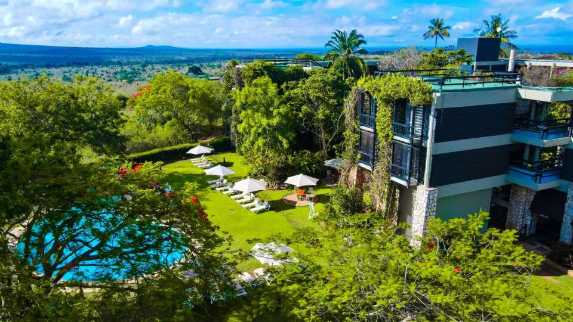
Tucked within the majestic 28,000-acre Taita Hills Wildlife Sanctuary bordering Tsavo West National Park, this 4-star oasis effortlessly blends deep history with untamed nature. From exploring World War I artifacts in the resort's museum to watching elephants and lions gather directly at the waterholes, your unforgettable African safari awaits.
4-days-amboseli-and-tsavo-salt-lick-lodge-keny-safari-from-the-coast
3-days-tsavo-east-and-west-kenya-safari-from-diani-beach
3-days-luxury-kenya-safari-itinerary-from-mombasa-to-tsavo-east-and-tsavo-west
3-days-tsavo-east-and-taita-hills-kenya-wildlife-safari-itinerary
✈️ Air Travel
Imagine soaring high above the dramatic, sun-drenched landscapes of East Africa, watching the modern world fade away into untamed wilderness. Taking a flight to your safari destination turns a routine transit day into a thrilling aerial tour of Kenya’s natural wonders. Choosing to travel by air maximizes every single hour of your vacation, completely bypassing the unpredictable traffic delays and physical fatigue of standard highway travel.
If you are starting your journey from Nairobi, you will board a flight at the historic Wilson Airport. This scenic route takes roughly one hour. As the plane climbs into the sky, the metropolitan skyline transitions seamlessly into golden acacia savannas, rugged volcanic ridges, and deep river valleys. You will glide smoothly over the edge of Tsavo before descending onto the resort’s private airstrip, where cool towels and a warm welcome await.
For travelers coming from the vibrant coastal city of Mombasa, the journey is even quicker. A brief 30-minute private charter flight connects the breezy shores of the Indian Ocean to the heart of the bush. Flying low over the shifting colors of the coastal lowlands, you will quickly spot the rising silhouettes of the Taita Hills. Air travel lands you directly at the gateway of adventure, energized and completely ready for your first game drive.
🚗 Road Trips
There is something deeply nostalgic and liberating about packing up a 4x4 vehicle and taking to the asphalt for a classic African road trip. Traveling by road forces you to slow down, disconnect from your daily stress, and authentically experience the transition from city life to the quiet rhythm of nature. It offers the unique freedom to watch local towns zip past your window, observe rural life along the highway, and stop for spontaneous photo opportunities.
Setting out from Nairobi requires an early morning start to beat the initial city rush. The 370-kilometer route takes between 5.5 to 6 hours along the prominent Mombasa Highway. As the miles stack up, the air grows warmer and the scenery shifts into expansive plains dotted with distant baobab trees. The highway is entirely paved and well-maintained, providing a smooth ride through legendary landscapes where you might even spot giraffes feeding near the roadside.
If your journey begins in Mombasa, the drive is a shorter 200 kilometers, typically clocking in between 3 to 3.5 hours. You will navigate away from the humid, palm-fringed coast and climb gently toward the cooler, crisp air of the inland hills. This route cuts through iconic bush country, offering a beautiful look at the reddish soils characteristic of the Tsavo ecosystem. Arriving by road lets you feel the geographic scale of Kenya, making the sanctuary feel like a true hidden reward.
🚆 Scenic Train Routes
For an eco-friendly and deeply relaxing travel experience, the Standard Gauge Railway (SGR) is an absolute masterpiece of modern Kenyan infrastructure. Boarding the sleek, comfortable train allows you to kick back, stretch your legs, and enjoy an entirely uninterrupted view of the wilderness. The tracks are elevated in critical conservation zones, meaning the train acts as a moving viewing platform where passengers frequently catch glimpses of elephants and zebras grazing safely below.
Departing from the ultra-modern stations in Nairobi, the train takes a relaxing 3.5 to 4 hours to reach the bustling transit hub of Voi. Traveling at a steady, smooth pace, you will skip past highway traffic entirely while sipping coffee and chatting with fellow travelers. If you are coming from the coast, the journey from Mombasa to Voi is incredibly fast, taking just 1 hour and 25 minutes to slice through the dense coastal scrub.
Once your train glides into the Voi station, your wilderness immersion is only a short distance away. The final leg from Voi to the resort takes about 45 minutes by taxi or a pre-arranged shuttle. This short drive winds through local communities and beautiful mountain backdrops, serving as the perfect transitional bridge between the modern railway station and the peaceful luxury of your safari lodge.
🦁 Examples of Local Experiences
Once you step onto the grounds of the sanctuary, history and wildlife combine to create a deeply moving daily itinerary. The unique geographic location ensures that your days are packed with active exploration, educational discovery, and quiet moments spent observing nature's raw beauty. Every activity is designed to connect you deeply to the land, the people, and the wildlife that have coexisted here for centuries.
Your days will likely revolve around the classic sanctuary game drives, which typically run for 3 hours in the early morning and late afternoon. Riding in open-roof 4x4 vehicles with an expert local tracker, you will follow the movements of lions, elephants, and some of the area's 350 bird species. The cooler hours of the day spark incredible wildlife activity, giving you front-row seats to nature's daily hunt and migration patterns across the savanna.
Beyond the wildlife, you can step back in time with a World War I battlefield tour. The resort grounds house a specialized museum filled with artifacts, military plans, and personal diaries from the 1914–1918 East African campaign. A guide will take you out to historical sites like Mwashoti Fort or the Mile 27 Bridge, where the first land shots of the war were fired. Afterward, enjoy a unique "lodge hopping" lunch or dinner at the nearby Salt Lick Safari Lodge, where you can watch elephants drink from an underground bunker.
What makes the location of Taita Hills Wildlife Sanctuary so special for a safari?
Nestled tightly against the western borders of Tsavo West National Park, the Taita Hills Wildlife Sanctuary occupies a truly magical ecological sweet spot. It spans 28,000 acres of private, protected land that serves as a vital wildlife corridor for animals migrating between the coastal lowlands and the inner Kenyan highlands. Because it is a private sanctuary rather than a public national park, it offers exclusive benefits you won't find in larger state-run reserves. For instance, expert guides are permitted to conduct thrilling night game drives, allowing you to witness nocturnal predators like leopards and hyenas on the hunt. The landscape itself is a breathtaking tapestry of golden acacia savannas, rugged volcanic hills, and lush riverine forests, all framed by the dramatic, misty silhouettes of the ancient Taita Hills. This unique topography creates distinct microclimates, meaning you can experience a rich variety of habitats and diverse wildlife populations all within a relatively compact area. It provides a peaceful, intimate safari experience away from the heavy tourist crowds, giving you the rare opportunity to sit in absolute silence and listen to the raw, unfiltered sounds of the African bush.
Can you explain the unique history behind the resort’s World War I museum?
Many travelers are surprised to learn that the serene plains of Taita Hills were once the front lines of a fierce global conflict. During World War I, the region became a strategic battleground between British forces in Kenya and German forces in neighboring Tanganyika (now Tanzania). The Taita Hills Safari Resort actively honors this forgotten chapter of history through its incredible, carefully curated on-site museum. Inside, you will find a fascinating collection of genuine artifacts recovered directly from the surrounding hills, including rusted bullet casings, military buttons, old maps, and deeply personal diary entries from soldiers who fought here between 1914 and 1918. The museum tells the human stories of both the European soldiers and the vital local African porters, known as the Carrier Corps, who endured immense hardships. Stepping into this space feels like walking through a time capsule, bridging the gap between natural conservation and historic preservation. It adds an entirely new, intellectual layer to your standard safari vacation, prompting you to look out over the peaceful savanna with a profound appreciation for the dramatic human events that shaped the land beneath your feet.
What is the relation between Taita Hills Safari Resort and Salt Lick Safari Lodge?
Taita Hills Safari Resort and Salt Lick Safari Lodge operate as sister properties within the same private sanctuary, offering two beautifully distinct ways to experience the Kenyan wilderness. Taita Hills serves as the grand, historic main base, featuring a classic stone structure, expansive green gardens, a swimming pool, and the sanctuary’s historical museum. It exudes a sense of traditional, grounded luxury and serves as the primary check-in hub for arriving guests. In contrast, Salt Lick is an architectural marvel built entirely on elevated stilts directly over a bustling natural waterhole and salt lick. The two properties complement each other perfectly, and guests staying at either resort enjoy a concept known as "lodge hopping." This means that while you might sleep in the spacious, stationary rooms at Taita Hills, you can easily head over to Salt Lick to enjoy a casual lunch, sip a sundowner cocktail, or sit in their famous underground concrete bunker to watch elephants drink just inches from your face. Together, they provide a seamless, multi-dimensional safari experience that perfectly balances luxurious relaxation with high-adrenaline, close-up wildlife viewing.
What kind of room options are available at Taita Hills Safari Resort?
The resort features 60 standard rooms and two ultra-luxurious suites, all meticulously designed to blend modern, 4-star comfort with authentic African aesthetic touches. Every single room is built with large, expansive windows and private balconies that look out over either the lush, manicured gardens or the vast, open plains of the sanctuary. The interiors are decorated using warm, earthy tones, local hardwood furniture, and beautiful African artwork, creating a cozy and inviting sanctuary after a long day out on dusty game drives. The beds are draped in crisp linens and fitted with protective mosquito netting, ensuring a peaceful night's sleep accompanied by the distant calls of nightjars and crickets. The en-suite bathrooms are modern and spacious, equipped with powerful hot showers and premium, eco-friendly toiletries. For families or groups traveling together, interconnected rooms are available to keep everyone close while still maintaining personal privacy. If you are celebrating a special occasion like a honeymoon, the executive suites offer expansive living areas and panoramic views that make you feel entirely immersed in the beautiful Kenyan wilderness.
How does the underground bunker at Salt Lick work for guests visiting from Taita Hills?
The underground bunker at the sister lodge is one of the most thrilling and unique safari experiences in all of East Africa, and it is fully accessible to guests staying at Taita Hills. To reach it, you will take a short transfer to Salt Lick and walk down a secure, well-lit concrete tunnel that tunnels directly beneath the earth, opening up into a ground-level viewing hide. The hide is heavily reinforced and fronted with sturdy metal bars, placing you safely at eye level with the muddy edge of a permanent waterhole. When a herd of elephants or a pride of lions approaches to drink, you are close enough to hear the deep rumble of their communication, see the texture of their wrinkled skin, and even feel the subtle vibration of their footsteps on the ground. It completely flips the traditional safari dynamic on its head; instead of looking down at the animals from the high safety of a 4x4 vehicle, you are looking up at these magnificent creatures from below. It offers an intimate, respectful, and safe perspective on wildlife that leaves a lasting impression on everyone who steps inside.
What species of wildlife am I most likely to encounter during a game drive?
The 28,000-acre sanctuary is teeming with a spectacular array of resident and migratory wildlife, making every single game drive a unique, unpredictable adventure. You are highly likely to encounter massive herds of the famous "red elephants" of Tsavo, whose skin takes on a vibrant crimson hue from rolling in the region's iron-rich volcanic soil. Large prides of lions frequently track through the tall grasses, often utilizing the shade of acacia trees to rest during the heat of the day. The sanctuary is also a haven for grazing herbivores, and you will see plenty of giraffes, zebras, waterbucks, impalas, and Thomson's gazelles roaming the open plains. For bird enthusiasts, the area is an absolute paradise, boasting over 350 recorded species ranging from the massive, prehistoric-looking ostrich to vibrant sunbirds and predatory martial eagles. If you venture out on a night game drive, the African bush truly comes alive with rare, nocturnal creatures like elusive leopards, genets, civet cats, and bushbabies jumping through the tree canopies, offering a complete look at the ecosystem's vibrant biodiversity.
Is the sanctuary a safe destination for families traveling with young children?
Yes, Taita Hills Safari Resort is exceptionally welcoming and safe for families traveling with children of all ages. Unlike temporary bush camps that feature unfenced borders, the main resort grounds are securely fenced and constantly patrolled by trained rangers, allowing children to safely stretch their legs and play in the beautiful, grassy gardens. The resort features a large, sparkling swimming pool that is perfect for kids to splash around in during the warm afternoon hours between game drives. The dining rooms are highly accommodating, offering child-friendly meal options, high chairs, and flexible chefs who are happy to cater to picky eaters or specific dietary restrictions. Going on a safari is a profoundly educational experience for a child, and the resort's expert guides excel at engaging young minds by teaching them how to identify animal tracks, spot birds, and understand the importance of environmental conservation. The spacious family rooms and interconnected options ensure that parents can keep a close eye on their little ones while still enjoying the space, comfort, and privacy of their own luxury vacation.
What should I pack for a safari at Taita Hills Safari Resort?
Packing for a safari requires a thoughtful balance of comfort, practicality, and protection against the changing elements of the African bush. You should focus on lightweight, breathable clothing in neutral, earthy tones like khaki, tan, olive, and brown, as bright white clothes easily show dust, and dark blue or black can attract pesky biting insects. Because mornings and evenings in the hills can be surprisingly crisp and windy, layering is absolutely essential; be sure to pack a warm fleece jacket, a windbreaker, and a light scarf for those early morning game drives. Comfortable, closed-toe walking shoes or sturdy trainers are a must for exploring the grounds and historic sites. Do not forget a wide-brimmed sun hat, high-quality sunglasses, and plenty of reef-safe sunscreen to shield yourself from the intense equatorial sun. A premium insect repellent containing DEET is highly recommended for outdoor evenings. Finally, ensure you bring a good pair of binoculars to spot distant wildlife, a camera with a strong zoom lens, and a universal power adapter to keep all your electronics charged up.
What dining options and culinary experiences can I expect at the resort?
Dining at Taita Hills Safari Resort is a celebratory journey that beautifully showcases both rich Kenyan flavors and familiar international cuisine. The main restaurant, Chala, serves expansive buffet spreads and carefully crafted à la carte menus featuring fresh, locally sourced ingredients from the surrounding agricultural communities. You can look forward to trying traditional Kenyan staples like succulent nyama choma (roasted meat) and flavorful vegetable stews, alongside expertly prepared continental dishes, fresh seafood, and decadent desserts. The resort also boasts a cozy, well-stocked bar where you can unwind with a cold local Tusker beer, a fine glass of wine, or a custom cocktail infused with local ingredients. For a truly unforgettable experience, the resort can arrange an exclusive bush dinner or a champagne breakfast out on the open savanna. Imagine dining at a beautifully set table under a canopy of stars, surrounded by lanterns and the crackle of a bonfire, while listening to the distant roars of lions—it is a sensory culinary experience that captures the romance of Africa.
How does the resort handle specific dietary requirements like vegetarian or halal?
The culinary team at Taita Hills Safari Resort is highly trained, globally experienced, and fully equipped to handle a wide range of specific dietary restrictions with care and creativity. Whether you follow a strict vegetarian, vegan, halal, gluten-free, or dairy-free diet, or have severe food allergies, the chefs are dedicated to ensuring you never feel limited in your dining choices. Upon arrival, or ideally during your booking process, you can share your dietary needs directly with the hospitality team. Rather than just offering simple modifications to existing dishes, the kitchen takes pride in preparing dedicated, flavorful meals tailored specifically to your needs. For buffet services, dishes are clearly labeled, and live cooking stations allow you to customize your meals right in front of you. The resort’s commitment to personalized hospitality means that you can focus entirely on enjoying your wild adventures, completely free from any anxiety or stress regarding your next meal in the heart of the bush.
Can you describe what a typical day on safari looks like?
A standard day on safari follows the natural rhythm of the wild, starting just before dawn when the bush is most active. You will receive a gentle wake-up call around 6:00 AM, followed by hot coffee, tea, and light biscuits before boarding your open-roof 4x4 vehicle for an early morning game drive. This is the prime time to witness big cats returning from their nightly hunts or elephants making their way to waterholes. Around 9:30 AM, you will return to the resort for a hearty, cooked breakfast, followed by free time to swim, visit the WWI museum, or relax on your private balcony. After a delicious lunch and a quiet afternoon siesta, you will gather for afternoon tea around 3:30 PM before heading out on your second game drive of the day. As the sun begins to set, your guide will stop at a scenic viewpoint for "sundowners"—a classic safari tradition of enjoying drinks and snacks while watching the sky turn vibrant shades of orange and pink. You will return to the lodge in the evening for a gourmet dinner, swapping stories by the campfire.
Are night game drives allowed, and what makes them unique?
Yes, night game drives are fully permitted within the Taita Hills Wildlife Sanctuary, and they offer an entirely different, high-adrenaline perspective on the African wilderness. Because the sanctuary is a privately managed conservation area, it is not bound by the strict sundown closures enforced in Kenya's public national parks. Venturing out into the pitch-black darkness with a powerful, filtered spotlight reveals a secret world that stays completely hidden during the day. The African bush undergoes a dramatic transformation at night; the air cools down, and nocturnal predators emerge from the shadows to begin their hunts. With the help of an expert tracker, you can spot the glowing eyes of a leopard moving stealthily through the undergrowth, watch prides of lions actively stalking their prey, or observe smaller, fascinating creatures like bushbabies, genets, and owls. The sensory experience is incredibly heightened; without your vision to guide you, you become intensely aware of every snap of a twig, every distant roar, and the spectacular, unpolluted canopy of stars shining brightly above you.
What is the best time of year to visit Taita Hills for a safari?
While Taita Hills offers incredible, year-round wildlife viewing due to its permanent waterholes, the absolute best time to visit is during the dry seasons, which run from June to October and from January to February. During these months, rainfall is minimal, and the weather is generally sunny, clear, and comfortable. Because water becomes scarce across the wider ecosystem, animals are forced to migrate inward and gather in massive concentrations around the sanctuary's permanent water resources, making wildlife spotting incredibly easy and predictable. Furthermore, the savanna grasses dry out and become shorter, significantly improving your visibility for tracking camouflaged predators like lions and cheetahs. If you happen to visit during the green seasons—such as the November "short rains" or the April to May "long rains"—you will experience a completely different kind of beauty. The landscape transforms into a lush, emerald paradise, the air is incredibly crisp, and it is the peak season for newborn animals and migratory birds, offering spectacular opportunities for passionate photographers who enjoy vibrant colors.
What conservation efforts does the Taita Hills Safari Resort support?
Taita Hills Safari Resort is deeply committed to sustainable tourism and plays an active, foundational role in protecting the delicate 28,000-acre ecosystem it calls home. A significant portion of the resort's revenue goes directly toward funding anti-poaching patrols, maintaining boundary fences, and supporting wildlife veterinary services within the sanctuary. The resort works hand-in-hand with local conservation bodies to monitor elephant migration patterns and protect endangered local bird species like the Taita Thrush. Beyond wildlife, the resort places a heavy emphasis on community conservation, recognizing that the long-term survival of the sanctuary depends entirely on the well-being of the surrounding human communities. They actively employ a large majority of their staff from the local Taita villages, invest in local schools, water projects, and healthcare facilities, and provide a vital marketplace for local farmers and artisans to sell their goods. By choosing to stay at the resort, you are directly contributing to an ethical tourism model that protects precious biodiversity while creating sustainable livelihoods for the local people.
Can I visit actual World War I battlefield sites outside the resort grounds?
Absolutely, the resort can easily arrange immersive, guided battlefield tours that take you beyond the museum walls and directly into the rugged landscapes where history unfolded. Accompanied by an expert historical guide who brings the past to life with dramatic storytelling, you can visit iconic sites such as Mwashoti Fort, an old British fortification built high atop a strategic hill offering panoramic views of the plains. You can also explore the historic Mile 27 Bridge along the old railway line, which was a frequent target for German saboteurs, or visit the old military trenches and cemeteries where fallen soldiers from both sides rest peacefully today. Walking through these wild, quiet spaces while your guide reads from actual diaries written on that very soil is a profoundly moving experience. It connects you deeply to the human element of history, showing you how the rugged topography of the Taita Hills dictated military strategy and forever altered the cultural and political landscape of East Africa.
What photography tips do you have for capturing wildlife in the sanctuary?
Capturing stunning wildlife photographs in Taita Hills requires a mix of the right equipment, patience, and an understanding of the local light. First and foremost, you will want a camera body equipped with a telephoto zoom lens—ideally something in the range of 200mm to 600mm—to capture sharp, close-up details of animals without disturbing their natural behavior. Because game drives take place during the early morning and late afternoon, you will be shooting in the "golden hours" when the sunlight is soft, warm, and low, casting beautiful long shadows across the savanna. To keep your camera steady in a moving 4x4 vehicle, bring a beanbag or a monopod to rest your lens on the vehicle's roof or window frame. Don't just focus on tight close-ups; try widening your frame to include the dramatic mountain backdrops, showing the animal within its grand environment. Always keep your camera settings on a fast shutter speed to capture sudden action, and most importantly, remember to occasionally step out from behind the lens to truly absorb the magic with your own eyes.
How does the resort access clean water and electricity in the wild?
Operating a luxury 4x4 resort in the middle of a remote wildlife sanctuary requires sophisticated, eco-conscious engineering infrastructure. Taita Hills Safari Resort utilizes a hybrid energy system, combining a grid connection with large solar arrays and efficient backup generators to ensure a seamless, 24/7 supply of electricity for lighting, refrigeration, and guest amenities. The resort is highly committed to energy conservation, utilizing energy-efficient LED lighting and solar water heaters throughout the property to significantly reduce its overall carbon footprint. Clean water is sourced responsibly from deep, tested boreholes and natural mountain springs flowing from the Taita Hills. This water undergoes a multi-stage filtration and purification process on-site to ensure it is completely safe for washing and cooking. Furthermore, the resort operates a modern, eco-friendly wastewater treatment plant, ensuring that all graywater is safely filtered and recycled for irrigation within the gardens, preventing any harmful runoff from entering the delicate surrounding wildlife ecosystem.
Can I book a wedding or honeymoon package at Taita Hills Safari Resort?
Yes, the timeless romance of the Kenyan bush makes Taita Hills Safari Resort an absolute dream destination for weddings, vow renewals, and unforgettable honeymoons. For couples looking to tie the knot, the resort can orchestrate a spectacular, custom ceremony out on the open savanna, complete with a traditional Maasai or Taita warrior blessing, a beautiful floral altar, and a champagne toast as the sun sets over the hills. The dedicated events team handles every single detail, from legal paperwork and catering to photography and live entertainment. For honeymooners, the resort pulls out all the stops to create an atmosphere of pure romance and intimacy. You can look forward to staying in an executive suite featuring private, candlelit bush dinners under the stars, unexpected room treats like chilled sparkling wine and tropical fruit platters, and private, customized game drives tailored entirely to your personal schedule. It is a magical, deeply personal way to celebrate your love story, surrounded by the raw beauty and quiet majesty of nature.
What are the check-in and check-out times, and can I request flexibility?
Standard check-in at Taita Hills Safari Resort begins at 12:00 PM, perfectly timed for you to arrive, unpack, and enjoy a relaxing lunch before heading out on your afternoon game drive. The standard check-out time is at 10:00 AM, allowing the housekeeping team ample time to prepare the room beautifully for arriving travelers. However, the hospitality team understands that travel schedules—especially when coordinating with train arrivals at Voi or bush flights at the private airstrip—can be highly unpredictable. If you require an early check-in or a late check-out, you can request this in advance. While approval is subject to room availability and seasonal occupancy levels, the resort is incredibly accommodating and will do its absolute best to fit your needs. If your room isn't ready or you have a late departure, they will securely store your luggage and grant you full access to the resort’s public facilities, meaning you can comfortably lounge by the pool, visit the museum, or enjoy a drink at the bar.
How does the resort support the local Taita community directly?
Community empowerment is a core pillar of the resort's operational philosophy, creating a beautiful symbiotic relationship between luxury tourism and local development. Over eighty percent of the resort's staff members are hired directly from the surrounding Taita communities, providing stable, well-paying careers and professional hospitality training in a rural region. The resort’s gift shop serves as a vital economic platform, sourcing hand-woven baskets, beadwork, and traditional crafts directly from local women's cooperatives, ensuring fair trade wages go straight to families. Additionally, the resort’s kitchens prioritize purchasing fresh produce, eggs, and dairy from small-scale local farmers, boosting the agricultural economy. Through its dedicated community outreach programs, the resort actively funds educational scholarships for underprivileged local children, supports clean water initiatives, and provides financial aid to local medical clinics. When you choose to vacation here, your travel spend directly uplifts the human lives in the region, turning your safari into a powerful force for positive social change.
Booking Kenya safari with us Roads of Adventure safaris
You can book a fully custom or pre-planned Kenya wildlife safari directly through the Roads of Adventure Safaris Website. They offer tailored luxury, family, and budget tour packages across East Africa, managing all ground logistics, park permits, 4x4 transport, and lodge arrangements
