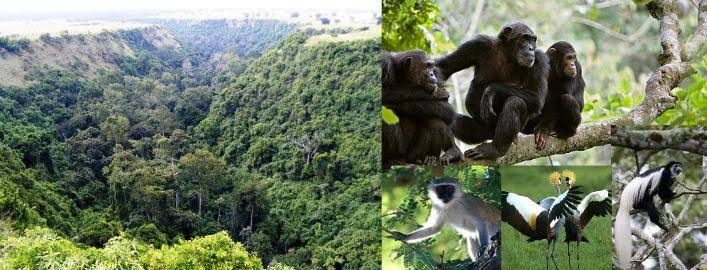
If you are planning a Uganda safari, you have likely heard all about Kibale. However, Kyambura Gorge offers an entirely different, wonderfully raw wilderness adventure that remains one of East Africa's best-kept secrets. Affectionately dubbed the "Valley of the Apes," this dramatic 100-meter-deep, 16-kilometer-long emerald gash tears right through the flat savannah of Queen Elizabeth National Park. Stepping onto the trail feels like discovering a hidden, prehistoric world. While it may not have the mainstream fame of other premier spots, embarking on a chimpanzee tracking expedition here provides a thrilling sense of genuine discovery. You are not just walking down a well-trodden path; you are actively tracking a brilliant, isolated community of about 30 chimpanzees in a sunken tropical rainforest. For travelers who crave a touch of rugged exploration, spectacular scenery, and a deeply authentic wildlife encounter without the massive crowds, this breathtaking gorge delivers an unforgettable, untamed experience that punches far above its weight class.
4-days-queen-elizabeth-park-and-chimpanzee-tracking-in-kyambura-gorge
Budget-Friendly Adventure
The financial accessibility of Kyambura Gorge is a massive win for independent travelers and budget-conscious adventurers alike. A chimpanzee tracking permit here costs just $50 USD for foreign non-residents. When you contrast that with premier locations like Kibale National Park, where permits sit at $200 USD, or Budongo Forest at around $130 USD, the savings are incredibly significant. For a family of four, choosing Kyambura means saving $600 USD on permits alone—money that can easily be redirected toward upgrading your lodge or adding an extra night of game drives. It makes experiencing the magic of wild primates accessible without breaking the bank.
Stunning "Lost World" Scenery
The physical landscape of Kyambura is so visually striking that the hike alone is worth the trip. As you stand on the edge of the sun-drenched savannah, the earth suddenly drops away into a lush, subterranean rainforest fed by the rushing Kyambura River. The sheer contrast of descending 100 meters into this sunken valley feels like stepping onto a movie set. You are surrounded by towering mahogany trees, giant ferns, and vines that blot out the harsh African sun, creating a cool, misty microclimate. Tracking chimps while walking along the riverbanks, listening to the water rush past and watching colobus monkeys leap through the canopy, turns the trek into a sensory masterpiece.
Seamless Travel Convenience
Logistically, Kyambura Gorge is a dream addition to any classic western Uganda itinerary. Because it is located right on the eastern edge of Queen Elizabeth National Park, you don't have to spend a whole day driving to a different part of the country just to see primates. You can easily spend your morning watching elephants and tree-climbing lions on the Kasenyi plains, head into the gorge for an afternoon chimp trek, and finish your day with a relaxing sunset boat cruise along the nearby Kazinga Channel. This geographic proximity maximizes your holiday time, cutting out hours of bumpy road travel and allowing you to check off multiple bucket-list wildlife encounters effortlessly.
The Reality of Lower Sighting Rates
While premier parks offer near-guaranteed sightings, Kyambura requires a bit more patience, with success rates hovering around 70% to 80%. Because the gorge is a relatively narrow, enclosed eco-corridor, this isolated community of roughly 30 chimpanzees moves fast and can be quite elusive. There are days when the chimps cross deep into parts of the forest that are inaccessible to humans, meaning you might spend your morning listening to their distant, echoing pant-hoots without actually catching a glimpse of them through the thick foliage. It is a genuine wildlife hunt, which adds excitement but requires managing your expectations.
A Physically Taxing Hike
Trekking through Kyambura is not a casual stroll in the park; it demands a good level of physical fitness. The journey requires conquering a steep, 200-meter descent down the slippery escarpment and, crucially, climbing back up at the end of the day. The forest floor can be muddy, tangled with roots, and requires scrambling over fallen logs or navigating humid riverbanks. For travelers with knee issues or limited mobility, the steep incline and rugged terrain can be genuinely grueling, making it a much tougher physical challenge than the relatively flat trails found in Kibale.
A Smaller, Elusive Community
Unlike larger parks that host multiple habituated communities accustomed to large groups of humans, Kyambura features just one small, tight-knit group. Because their numbers are limited, they don't display the loud, boisterous social dynamics of a massive 100-member troop. They can occasionally be shy, spending more time high up in the 30-meter-tall tree canopy rather than hanging out on the ground right in front of your camera. It creates a highly authentic, non-commercialized experience, but it also means you have to work a little harder and look a little closer to truly appreciate their behavior.
Why the "Valley of the Apes" Devides Opinion
The debate over whether chimpanzee tracking in Kyambura Gorge is underrated comes down to what you value as a traveler. If your primary goal is a guaranteed, effortless photo of a primate on the ground, you might overlook it. But if you crave a raw, cinematic adventure that feels like a real expedition, it is arguably the most undervalued experience in East Africa. It is a striking, subterranean rainforest slashed right through the savannah, offering a wild chase that rewards the journey as much as the destination.
Is Kyambura Gorge a budget-friendly option for travelers?
Yes, it is arguably the most cost-effective place for chimpanzee tracking in Uganda. A permit here costs just $50 USD for foreign non-residents. When you compare that to the $200 USD permit fee at Kibale National Park, the savings are incredibly stark. For a couple traveling together, choosing Kyambura saves a flat $300 USD on activities alone. That extra cash can easily cover two nights of mid-range lodging or a private boat cruise on the Kazinga Channel. While you are trading away a 95% sighting guarantee, you are gaining a massive financial advantage. For budget-conscious adventurers or families trying to stretch their safari capital, this $150 USD price difference makes Kyambura an unbeatable entry point into the world of wild primate tracking without compromising the raw, authentic thrill of the African jungle.
How deep is the gorge where chimpanzees live?
The gorge plunges a dramatic 100 meters (roughly 328 feet) below the surrounding flat savannah of Queen Elizabeth National Park. This geological marvel stretches for 16 kilometers long and is about 500 meters wide. Standing at the viewpoint, the earth literally drops away into a vibrant, emerald-green chasm. This structural depth creates a completely isolated microclimate. While the plains above are hot and dry, the bottom of the gorge is a humid, dense tropical rainforest fed by the rushing Kyambura River. Descending into this 100-meter-deep "lost world" feels like stepping back in time. Towering mahogany trees stretch upward toward the light, creating a canopy that traps moisture and sound, making the echoing pant-hoots of the resident chimpanzees sound incredibly intense and ghostly as they bounce off the steep sandstone walls.
What is the sighting success rate for chimpanzees?
The sighting success rate in Kyambura Gorge hovers around 70% to 80%. In the safari world, this is considered a bit of a gamble compared to Kibale National Park, which boasts a near-perfect 95% success rate. The reason for the lower percentage is simple math and geography: Kyambura is home to a single, isolated community of roughly 30 chimpanzees. Because their home is a narrow, 16-kilometer forested corridor, they can easily move into dense, inaccessible pockets of the valley or cross the river where humans cannot follow. On a bad day, you might spend your three-hour trek listening to their vocalizations without ever seeing a flash of black fur. However, this 75% average chance means that four out of five groups do find them, making the encounter feel like a genuine reward rather than a staged tourist attraction.
Is the trek physically difficult for average hikers?
Yes, the hike is widely considered physically demanding and much tougher than other tracking locations. The journey requires a steep descent down a 100-meter escarpment along muddy, unpaved switchbacks, and a matching, strenuous climb back out at the end. Once inside the gorge, the terrain is a rugged maze of tangled roots, fallen logs, and swampy riverbanks where the mud can pull at your boots. A typical trek lasts between 2 to 4 hours, covering anywhere from 3 to 6 kilometers of highly uneven ground. The high humidity inside the sunken forest—often pushing past 80%—adds an extra layer of exhaustion. For travelers with knee issues, respiratory challenges, or poor balance, climbing a 200-meter incline on the return leg can be genuinely grueling, meaning a baseline level of physical fitness is absolutely essential.
How many chimpanzees live inside this isolated gorge?
The gorge is home to a fragile, isolated community of approximately 30 chimpanzees. This small number is a double-edged sword for a Uganda safari. On one hand, a population of just 30 individuals means they don't form the massive, boisterous super-troops of 100+ chimps seen in Kibale, which can limit the variety of social behaviors you witness. On the other hand, tracking a small group of 30 apes makes the experience profoundly intimate. You aren't surrounded by dozens of other tourists; instead, a maximum of 8 visitors per morning session are permitted to enter. When you do find them, it feels like a private audience. Because this community is ecologically marooned by surrounding human settlements and savannah, wildlife conservationists monitor these 30 individuals intensely, making your visit part of a vital ecosystem preservation effort.
Can you combine this trek with other safaris?
Logistically, Kyambura is incredibly convenient, sitting right on the eastern boundary of Queen Elizabeth National Park. This prime location allows you to combine chimpanzee tracking with classic savannah adventures seamlessly in a single day. For example, you can spend your morning on a 3-hour game drive across the Kasenyi plains spotting lions and elephants, head into the gorge at 2:00 PM for your chimp trek, and be back in time for a 5:00 PM sunset boat cruise down the Kazinga Channel, which is just a 15-minute drive away. This tight geographic proximity saves you from the grueling 5-to-7-hour road transfers required to link other primate parks with savannah reserves, making it the perfect multi-sport wildlife day for travelers operating on a tight, 10-day country itinerary.
What other wildlife lives in the hidden valley?
While you descend into the gorge for the chimpanzees, the rich ecosystem serves up an abundant bonus of biodiversity. The 16-kilometer forest strips are home to a vibrant community of other primates, including black-and-white colobus monkeys, red-tailed monkeys, baboons, and vervet monkeys. It is not uncommon to see three different species feeding in the same fruiting tree. Down on the forest floor, hippos and forest elephants frequently wander into the gorge from the savannah to cool off in the Kyambura River, leaving massive footprints in the mud. For birders, the gorge is a goldmine, sheltering rare species like the African Finfoot, the brilliant Great Blue Turaco, and various kingfishers. This rich variety means that even if the chimps evade you, your 3-hour hike is packed with world-class wildlife encounters.
Does the gorge offer a crowd-free experience?
Yes, this is one of Kyambura’s greatest, most underrated strengths. To protect the fragile community of 30 chimps, the park authorities strictly limit tracking to just two sessions per day—morning and afternoon—with a maximum of 8 permits issued per session. This means only 16 people walk these trails every 24 hours. Compare this to premier tracking hubs where dozens of permits are sold daily, and groups can occasionally bottleneck on the trails. In Kyambura, you are wrapped in absolute solitude. The only sounds are the rushing river, the hum of insects, and the wind rustling the canopy 30 meters above. This absence of crowds ensures a deeply personal connection to the wild, making you feel like an explorer discovering an untouched ecosystem rather than a tourist on a conveyor belt.
How tall is the forest canopy inside Kyambura?
The subterranean rainforest boasts an impressive canopy, with ancient mahogany, fig, and ironwood trees soaring up to 30 and 40 meters (roughly 100 to 130 feet) into the air. This towering height plays a massive role in how you experience chimpanzee tracking. Because the trees are so tall, the chimps often spend their mornings feeding or nesting high above the ground. Spotting them requires craning your neck and peering through thick layers of green foliage, which can make photography challenging. However, watching a chimp navigate branches 100 feet in the air, leaping effortlessly across gaps with gravity-defying agility, is a spectacular display of their natural power. The towering canopy creates a majestic, cathedral-like atmosphere that underscores just how small we are in their ancient, wild world.
Do local guides enrich the tracking experience?
Absolutely. The local rangers and guides from the Uganda Wildlife Authority transform a challenging hike into an educational masterclass. Armed with years of field experience and a deep emotional connection to the gorge, these guides can identify individual chimps by their facial features or scars from past territory battles. They read the forest like a book, tracking the apes by spotting fresh knuckle prints in the mud, discarded wild fig skins, or listening to subtle breaks in the morning bird calls. Because the sighting rate is 75%, their expertise is what tips the scales in your favor. Furthermore, their storytelling about the gorge's history, local folklore, and conservation challenges adds a beautiful, human soul to the adventure, ensuring you leave with a profound understanding of this fragile ecological wonder.
Booking chimpanzee tracking in Kyambura with us Roads of Adventure safaris
Ready to step into the "Valley of the Apes"? Roads of Adventure Safaris makes booking your Kyambura Gorge trek completely effortless. They will lock in those limited $50 USD chimp permits and seamlessly wrap the 2-to-5-hour trek into a classic Queen Elizabeth National Park safari, complete with game drives and a Kazinga Channel cruise.
To help me tailor this perfect itinerary for you, what are your ideal travel dates, how many adventurers are coming along, and do you prefer cozy mid-range comfort or a splash of luxury for your lodges? Let’s get this wild journey started!
