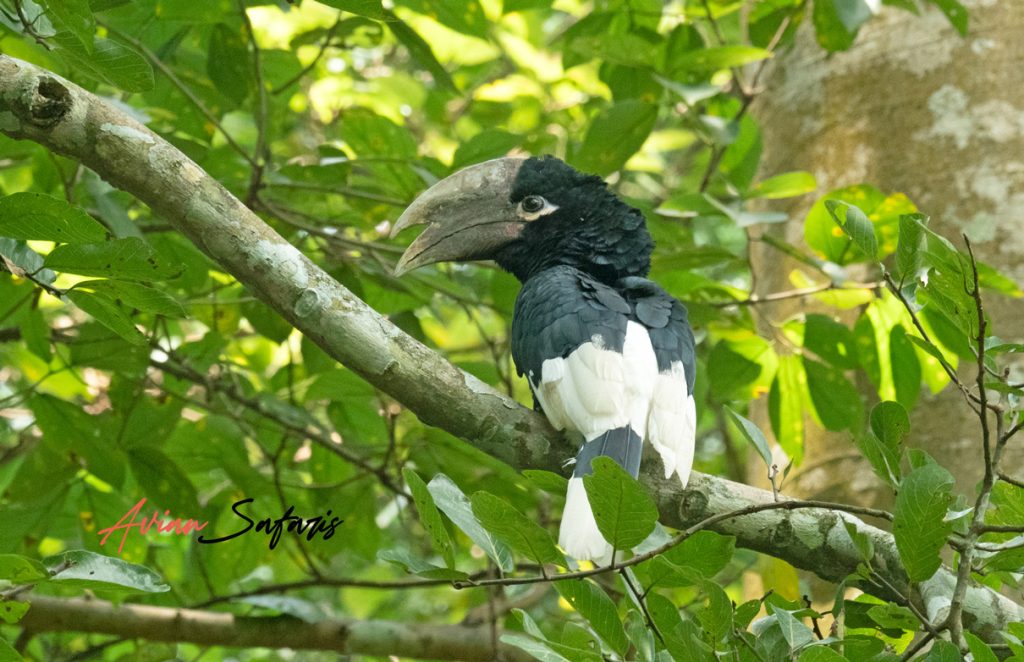
The most sought-after birds on Uganda birding safari in the Budongo Royal Mile include the Chocolate-backed Kingfisher, African Dwarf Kingfisher, Blue-breasted Kingfisher, Ituri Batis, Chestnut-capped Flycatcher, Nahan's Francolin, White-thighed Hornbill, and the Black-eared Ground Thrush
1-day-perfect-mabamba-swamp-shoebill-stork-uganda-birding-safari
5-days-uganda-bird-watching-safari-lake-victoria-shores-and-lake-mburo
7-days-best-uganda-birding-safari-tour
8-days-best-uganda-birding-safari-and-wildlife-watching-tour-package
9-days-best-uganda-birding-safari-tour-from-swamps-to-savannah-eastern-route
9-days-classic-uganda-birding-safari-tour
11-days-uganda-birding-safari-and-primate-experience
12-days-uganda-birding-tour-looking-for-rift-valley-endemic-birds-west-circuit
14-days-classic-uganda-birding-safari-expedition
17-days-uganda-birding-safari-itinerary
19-days-best-photography-uganda-birding-safari-and-wildlife-adventure
21-days-uganda-birding-safari-extravaganza-to-best-uganda-safari-parks
30-days-best-uganda-birding-safari-extravaganza-and-wildlife-safari
Kingfishers and Forest Specials
Chocolate-backed Kingfisher (Halcyon badia)
Meet the deep-forest dandy that breaks all the typical "water-loving" kingfisher rules. I am a creature of the shaded mid-canopy, preferring a life spent hunting grasshoppers and lizards over chasing fish. On a Uganda birding safari, you will find me looking incredibly dapper in my velvety chocolate-brown hood, snowy white underparts, and an electric-blue lower back that flashes brilliantly when I take flight. I am quite the home decorator too; I excavate my nurseries directly inside active arboreal termite mounds up in the vines. Finding me requires a mix of patience and an open ear. I like to sit perfectly still on a favorite perch, meaning you will likely hear me long before you see me. Keep your ears tuned for my signature territorial song: it starts with a tiny, barely audible "pee" note before rolling into a series of 12 to 17 long, clear, melancholy flutelike whistles that echo beautifully through the trees.
African Dwarf Kingfisher (Ispidina lecontei)
I might be the smallest kingfisher on the planet, weighing just about 9 grams, but I carry a massive reputation among avid world listers. I am a true forest minimalist, draped in deep indigo blue with a rich rufous crown and a tiny, sharp bill. I absolutely love the dark, moody atmosphere of the forest undergrowth, where I sit quietly on low-hanging twigs waiting to pounce on passing beetles or ants. Because I keep so low to the ground and blend seamlessly into the forest gloom, I am easily missed by the untrained eye. However, I am a mandatory target on any serious Uganda birding safari, especially around hotspot areas like the famous Royal Mile in Budongo Forest. If you want to track me down, listen closely for my ultra-high-pitched, insect-like whistle. My call sounds like a sharp, thin "sisi-sisiseu-sisi..." piercing through the dense humid air.
Blue-breasted Kingfisher (Halcyon malimbica)
If you are looking for pure, unadulterated forest glamour, I am your bird. Standing at a bold 25 centimeters, I am a large, loud, and unmissable presence in Uganda's riverine woodlands and mature lowlands. I sport a brilliant azure-blue coat, jet-black shoulders, a dual-colored red and black bill, and a striking blue band across my chest. I am highly territorial and love to put on a show; if you catch me courting or defending my patch, you will see me spread my wings wide to flash my bright white underwing linings. When I am hunting, I prefer to sit patiently in deep shade before exploding into a rapid, direct flight to snatch up large insects, frogs, or even oil palm fruits. I am a noisy neighbor, and my energetic voice is a staple sound on a Uganda birding safari. Listen out for my ringing, rapid-fire whistled cascade: a loud, echoing "pu-pu-pu-pu-ku-ku-ku-ku".
Ituri Batis (Batis ituriensis)
I am the ultimate crown jewel of the canopy—small, highly localized, and incredibly elusive. As a specialized forest flycatcher, I spend my days restlessly hopping through the highest leaves of the trees, gleaning termites and small insects. I look quite smart in my clean black-and-white plumage, featuring a narrow dark breast band across my front. Because I spend almost all my time in the mid-to-upper canopy layers of secondary and degraded lowland forests, catching a glimpse of me requires a steady pair of binoculars and an experienced guide on your Uganda birding safari. I am a master of hiding in plain sight amidst the foliage, but I can’t resist singing to defend my year-round territory. My vocalizations are high-pitched, clear, piping whistles delivered straight from the treetops. My partner and I often sing in a tight, synchronized duet, creating a beautiful acoustic map of our home.
Chestnut-capped Flycatcher (Erythrocercus mccallii)
I am the definition of boundless energy in the lower and middle canopy layers. Dainty, social, and constantly on the move, I am a tiny flycatcher characterized by my rich chestnut-colored crown and a warm, rufous tail that I love to fan out expressively while I forage. I rarely travel alone; instead, I love to lead dynamic, fast-moving mixed-species foraging flocks through the forest understory, keeping everyone together with my social nature. Watching me on a Uganda birding safari is pure entertainment, as I perform aerobatic sallying flights to snap up gnats and midges mid-air. I am a very chatty little bird, constantly keeping in touch with my flock mates through a series of dry, chattering notes and sharp, buzzy "tsit-tsit" contact calls. My restless movement and constant tail-flicking are sure to put a smile on your face as you track me through the green vines.
Rare and Elusive Ground Birds
Nahan's Francolin (Pternistis nahani)
I am one of the forest’s best-kept secrets, a true phantom of the undergrowth. Highly endangered and intensely secretive, I spend my life skulking through the dense, primary forest floors of places like Budongo and Bugoma. I look quite striking with my barred black-and-white underparts, a bright red ring around my eye, and sturdy red legs, but you will rarely catch me out in the open. I am a ground-dweller through and through, preferring to scratch through leaf litter for insects and seeds beneath the safety of massive buttress roots. If you startle me, I won't fly; I will vanish into the thickets like smoke. For birders on a Uganda birding safari, I am a ultimate prize. To find me, you must rely on your ears at dawn. My voice is an unforgettable, rhythmic duet performed with my mate—a loud, accelerating series of high-pitched, piping double-notes that sounds like "ti-ku, ti-ku, ti-ku-ti-ku-tiku", echoing through the morning mist.
Black-eared Ground Thrush (Geokichla camaronensis)
If there is one bird that defines the thrill of the chase in the deep woods, it is me. I am a scarce, enigmatic beauty that calls the moist, dark leaf litter of Budongo Forest home. Draped in soft earthy browns with distinctive black facial markings near my ears, I am perfectly camouflaged for a life spent in the shadows. I am an incredibly patient feeder, walking slowly across the forest floor, flipping over leaves to uncover hidden snails, worms, and beetles. The moment I sense footsteps, I freeze, becoming completely invisible against the earth. Spotting me requires a quiet step, a sharp eye, and an expert guide on your Uganda birding safari. I rarely sing out loud, but when I do, my voice is a beautiful, melancholic reflection of my solitary lifestyle. I produce a series of thin, high-pitched, and sweet whistled notes that rise and fall, a fleeting melody that cuts softly through the silent forest interior.
White-thighed Hornbill (Bycanistes albotibialis)
I am the complete opposite of my quiet, ground-dwelling neighbors—I am loud, proudly theatrical, and impossible to miss! As a highly charismatic giant of the canopy, I rule the treetops in boisterous, noisy family groups. I sport a massive, creamy-white casque atop my bill, a glossy black coat, and distinctive fluffy white feathers on my thighs that look like stylish trousers. We love to gather wherever wild figs are ripe, crashing through the upper branches in a chaotic, joyful frenzy. When we fly, our massive wings produce a loud, rhythmic rushing sound like a miniature steam engine chugging through the air. No Uganda birding safari is complete without witnessing our canopy dramas. We are exceptionally vocal, and our social chatter is a wild soundtrack of the forest. Listen out for our bizarre, nasal, laughing choruses—a series of loud, cackling "kak-kak-kak-kak" shrieks that can be heard from miles away.
How many bird species reside within Budongo Forest?
Across my sprawling 826 square kilometers of protected canvas, I proudly shelter a checklist of over 360 spectacular bird species. What makes me a legendary crown jewel on a Uganda birding safari is my incredible diversity: I host 60 distinct West and Central African bird species that have a very limited distribution elsewhere in East Africa. Avid birders travel from across the globe to step into my humid undergrowth, desperate for a glimpse of my canopy royalty, including the prized Chocolate-backed Kingfisher, the dazzling Blue-breasted Kingfisher, and the elusive Ituri Batis. Because I protect such an expansive, pristine tract of medium-altitude semi-deciduous forest, my avian populations thrive in massive numbers. From tiny, nine-gram kingfishers hiding in the low shrubs to massive, roaring birds of prey circling above the ironwood trees, my diverse ecosystems offer a nonstop treasure hunt. I am widely recognized as one of the most rewarding single birding spots in the entire country.
When do the morning birding walks typically begin?
To catch my avian residents at their absolute best, our morning birding expeditions push out onto the trails precisely at 06:30 AM. This specific time is highly strategic: the forest is just waking up, the dense morning mist is clinging to the mahogany trees, and the first golden rays of sunlight are hitting the upper canopy. This triggers the "dawn chorus," a magical window where birds are incredibly vocal as they defend territories and signal to mates. Stepping onto the trail at this hour ensures you catch secretive undergrowth dwellers like the Puvel's Illadopsis before they retreat into silence for the day. You will want to have your binoculars adjusted and your camera settings ready by 06:15 AM at the trailhead. Setting out early also keeps you ahead of the midday tropical heat, which typically causes bird activity to drop significantly after the sun peaks.
How long is the famous Royal Mile birding trail?
The legendary Royal Mile, located in the Busingiro block, is a perfectly flat, wide avenue measuring exactly 1.6 kilometers (one mile) long. Originally cut by historical royalty, this trail is widely celebrated as the single best birding track in all of East Africa. Because it provides a wide, open clearing directly through the heart of dense, towering primary forest, it offers unparalleled, unobstructed viewing angles into both the lower understory and the high, 60-meter-tall canopy layers. On a standard Uganda birding safari, walking this single mile takes anywhere from 3 to 5 hours because the bird density is so high. You will find yourself stopping every few meters to tick off gems like the African Dwarf Kingfisher, the Chestnut-capped Flycatcher, and the Nahan's Francolin. It is a leisurely, world-class birding experience where you never have to scramble up steep ridges.
What is the permit cost for a birding walk?
To explore my rich trails with an expert local site guide, a standard 3-hour birding permit costs USD 60 per foreign non-resident. If you are a truly dedicated enthusiast wanting an immersive, dawn-to-dusk experience, a full-day birding permit is priced at USD 110. These fees are paid directly to the National Forestry Authority (NFA) or through the eco-lodge, ensuring the vital protection of my ancient mahogany trees and the continuous monitoring of endangered species. Your permit includes the undivided attention of a highly specialized local bird guide who knows every single call, whistle, and alarm note in these woods. Please note that if you are accessing my trails via the northern park boundaries, standard Murchison Falls National Park entry fees of USD 40 per person also apply to your itinerary.
Which two species are found nowhere else in East Africa?
I hold the exclusive honor of protecting two highly sought-after forest specialists found nowhere else in East Africa: the Yellow-footed Flycatcher and Puvel's Illadopsis. The Yellow-footed Flycatcher (Muscicapa sethsmithi) is an ultra-localized canopy dweller that lives almost exclusively in my mature, undisturbed ironwood forest blocks. Spotting its clean, compact silhouette requires a sharp eye and a patient guide. On the other hand, Puvel's Illadopsis (Illadopsis puveli) is a master of camouflage that prefers the thick, tangled terrestrial undergrowth. It is incredibly difficult to see, meaning a successful Uganda birding safari here relies heavily on tracking its distinct, melodic whistled call. Missing these two species anywhere else means your African lifelist remains incomplete, making me a mandatory, high-priority pilgrimage for serious world listers.
How many hours should I dedicate to a day?
For a truly rewarding and successful birding excursion, you should dedicate at least 3 to 4 hours for a half-day trek. If you are targeting the full elite checklist, a 10-hour full-day safari split into morning and evening sessions is highly recommended. The morning session runs from 06:30 AM to around 10:30 AM, capitalizing on high feeding activity. After a midday rest at the lodge while the forest goes quiet, the evening session kicks off around 03:30 PM and runs until 06:30 PM. This evening window is fantastic for catching canopy birds like the White-thighed Hornbill moving toward their night roosts. Dedicating these specific hours ensures you aren't rushing through the dense foliage, allowing your guide plenty of time to use playbacks and scopes to lock onto skulkimg ground thursh species.
When do migratory birds arrive on a Uganda birding safari?
Palearctic and intra-African migratory birds flood my canopy and understory from November through April annually. During these specific months, my resident avian populations are joined by thousands of travelers escaping the harsh European winter, creating an absolute feeding frenzy. Combined with my resident birds, this window offers the highest overall species count of the year. However, if your primary goal on a Uganda birding safari is focusing on my rare, resident Guinea-Congo forest specials, the months of June through September are magnificent. This is my primary fruiting season, meaning wild figs and berries are overflowing. Food is incredibly abundant, causing birds to don their brightest, most vibrant breeding plumage and become highly active and vocal throughout the day.
What time do forest hornbills become highly active?
You can expect my loud, charismatic hornbill populations to dominate the canopy between 07:00 AM and 09:30 AM. This 2.5-hour morning window is when the sun hits the upper branches, warming up the forest and signaling breakfast time. The massive White-thighed Hornbill and its cousin, the Black-and-white-casqued Hornbill, gather in boisterous family groups to raid wild fruiting trees. Because they travel in large numbers, their social feeding frenzies are impossible to miss. You will hear the heavy, rhythmic chugging sound of their wings cutting through the air before you see them. They are exceptionally vocal during these peak morning hours, filling the canopy with a wild soundtrack of nasal, cackling laughter that echoes across the forest blocks.
How many primate species might I spot while birding?
While your eyes are glued to the canopy for feathers, you will easily cross paths with 9 distinct primate species sharing my ancient trees. I am world-famous for protecting a thriving population of approximately 600 wild Chimpanzees (Pan troglodytes), and it is incredibly common to hear their booming pant-hoots echoing through the woods while you are birding. As you walk the Royal Mile, you will likely look up to find elegant Black-and-white Colobus monkeys leaping through the branches, vibrant Red-tailed monkeys foraging in the mid-canopy, and playful Blue monkeys watching you from the vines. Tracking down a rare bird on a Uganda birding safari here is uniquely thrilling because you are completely surrounded by a bustling, complex world of wild primates at every single turn.
Wikipedia
How long is the drive from Masindi town?
Reaching my main birding gates from the nearby hub of Masindi town takes a smooth 1.5 hours to cover the roughly 40-kilometer journey. Most birders choose to base themselves out of historic hotels in Masindi the night before, waking up early for a 05:00 AM departure to ensure they arrive at my Kichumbanyobo gate right as the birds wake up. The drive carries you past local farmlands before plunging you directly into the dramatic, towering green walls of my primary forest reserve. A sturdy 4x4 safari vehicle is highly recommended for this stretch, as the forest access roads can become slick and muddy with the morning dew or sudden tropical showers. It is a quick, beautiful transit that positions you perfectly for a world-class day on the trails.
Booking Uganda birding safari to Budongo Royal Mile with us Roads of Adventure safaris
Ready for an unforgettable birding adventure? Let’s customize your perfect 3-to-17-day journey into Uganda's premier forest gems, focusing directly on capturing rare Congo-Guinea biome species, Albertine Rift endemics, and legendary canopy royalty. Your custom trip features a walk along the famous Royal Mile—a flat, 1.6-kilometer historic forest avenue where you can check off up to 60 incredible species in just three hours—while targeting elite lifelist goals like the cryptic Nahan's Francolin, shimmering Chocolate-backed Kingfishers, and the ultra-rare Puvel’s Illadopsis. Best of all, we can seamlessly pair your avian search with thrilling wild chimpanzee tracking and classic savanna game drives in neighboring Murchison Falls for the ultimate wild Ugandan experience!
