A visit to the Kanangorok Hot Springs in Kidepo Valley National Park takes you to the far northeastern corner of Uganda near the South Sudan border.
3-days-luxury-fly-in-kidepo-valley-national-park-tour-package
14-days-complete-uganda-safari-tour-and-primate-safari-experience
11-days-uganda-wildlife-safari-jinja-kidepo-valley-tour-package
11-days-uganda-wildlife-safari-to-off-beaten-path-unique-tour-including-kidepo-valley
7-days-murchison-falls-uganda-safari-trip-via-ziwa-rhinos-kidepo-valley-and-jinja
6-days-best-of-murchison-and-kidepo-uganda-safari-via-ziwa
7-days-murchison-falls-uganda-safari-trip-via-ziwa-rhinos-kidepo-valley-and-jinja
Location & Remote Setting
A journey to the Kanangorok Hot Springs takes travelers into one of the most secluded and pristine wilderness regions in East Africa. Situated in the far northern perimeter of Kidepo Valley National Park, the springs lie approximately 11 kilometers past the sand bed of the Kidepo River and about 40 kilometers from the central administrative hub at Apoka Rest Camp. Located just a short distance from the international border with South Sudan, this remote sector provides a true wilderness experience far away from standard tourist tracks.
Reaching the site requires an overland journey across wide, open landscapes framed by the towering crags of Mount Lotuke in South Sudan and the surrounding Napore-Nyangea mountain ranges. The isolation of this northern expanse offers a sense of uninterrupted solitude. Because of its frontier location near the border, visitors travel accompanied by an armed Uganda Wildlife Authority (UWA) ranger. The drive up from Apoka serves as an adventure in itself, carrying you across rugged terrain, seasonal dry river basins, and expansive savanna plains that showcase the untouched scale of northern Karamoja.
Water Specs & Geothermal Dynamics
The Kanangorok Hot Springs offer a compelling display of natural geothermal activity beneath the surface of the East African Rift system. Thermal water bubbles continuously up from deep underground fractures, emerging at temperatures averaging around 50°C (122°F)—a temperature high enough to cook an egg if left submerged in the main vent. The spring maintains a steady, natural flow rate of approximately one liter per second, channeling warm mineral water out through a shallow stream bed that winds through the surrounding rocks.
As the geothermal water reaches the surface, it releases distinct sulfurous gases and dissolves heavy mineral compounds, including calcium, magnesium, and sodium salts. The continuous interaction between the thermal water, sulfur deposits, and surrounding earth coats the stream bed in unique mineral crusts and dark sediment formations. Observing the steaming water bubble out of the dry northern landscape provides a striking visual contrast to the surrounding semi-arid savanna, demonstrating the dynamic geological forces active beneath Kidepo's surface.
Name, Cultural Significance & Local Lore
The name Kanangorok originates from the local Karamojong language, translating roughly to the "place of black stones"—a reference to the dark, heat-stained volcanic rocks and mineral deposits surrounding the thermal vents. For generations, the indigenous Karamojong pastoralists and neighboring communities have held the springs in high cultural and spiritual regard, treating the site as a sacred landmark within their ancestral lands.
Local traditions hold that the mineral-rich waters possess natural healing properties, spiritual cleansing abilities, and restorative energies. Elders and community members historically visited the site to offer prayers, seek blessings during times of drought, or bathe in the warm downstream pools to treat skin ailments and joint aches. Today, visitors often take off their shoes to dip their feet in the cooler downstream channels, taking part in a tradition long observed by the local inhabitants while listening to ranger guides share ancient folklore and traditional stories surrounding the origin of the springs.
Wildlife Viewing En Route
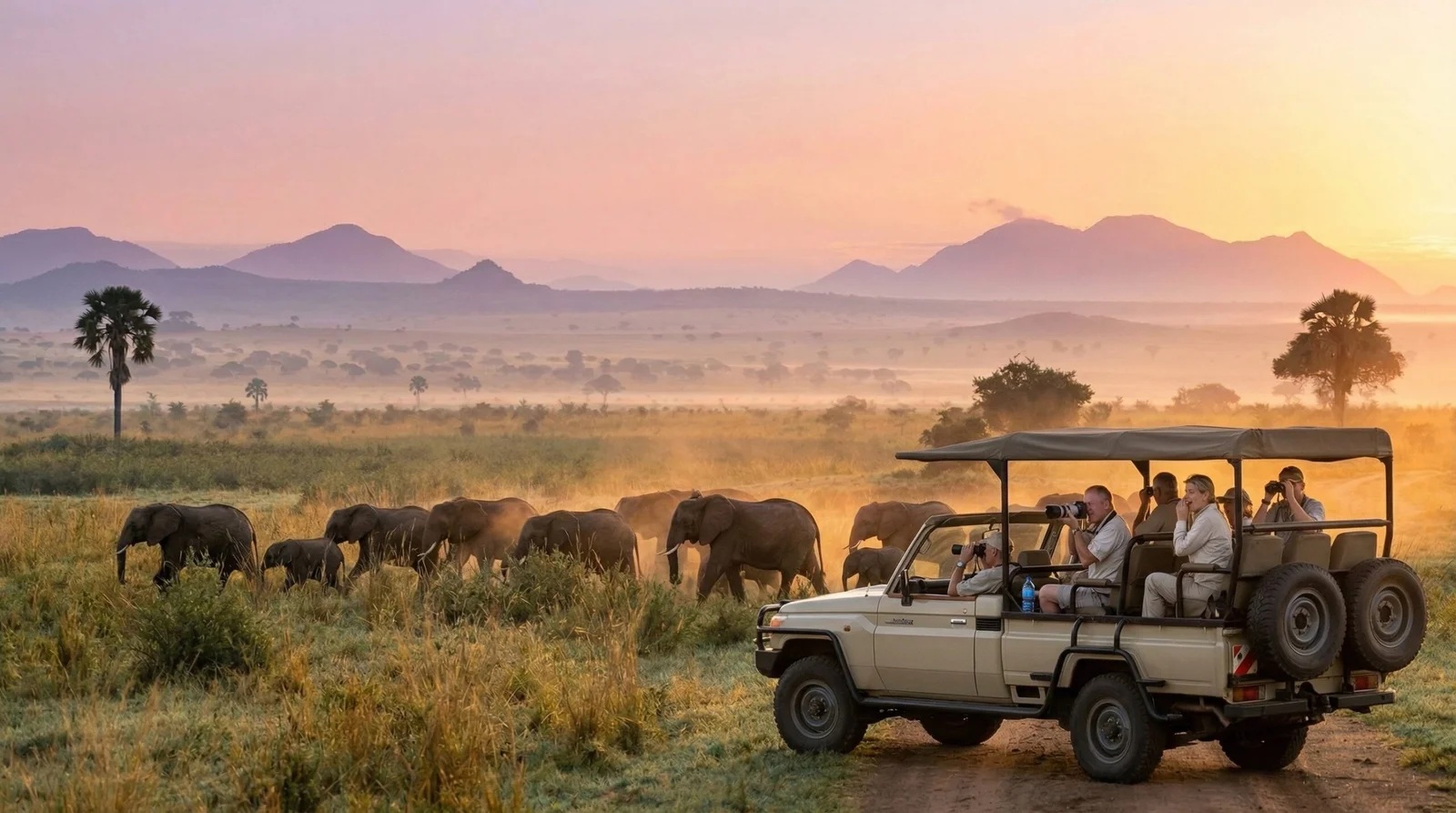
The drive from Apoka to Kanangorok Hot Springs passes through diverse ecosystems, providing excellent opportunities for game viewing and birdwatching along the way. Traversing savanna grasslands, acacia thickets, and dense Borassus palm forests along the Kidepo River, the route offers a rich cross-section of the park’s northern habitats. During the dry season, crossing the wide, white sands of the dry Kidepo Riverbed yields magnificent views of palm-lined channels where elephants dig into the sand to reach underground water.
The northern sector is prime territory for specialized wildlife, serving as the best area in Uganda to spot wild Common Ostriches strutting across the open plains. Game drives along this track routinely yield sightings of Rothschild’s giraffes, plains zebras, Cape buffaloes, and herds of African elephants. Predators such as lions, leopards, and side-striped jackals are frequently tracked around the dry river thickets, while Secretary birds, Abyssinian ground hornbills, and various raptors soar overhead, making the excursion to the springs a complete wildlife safari experience.
What other places can you visit in Kidepeo valley national park
Beyond the famous Narus Valley wildlife circuits and Kanangorok Hot Springs, Kidepo Valley National Park features several distinct geographical landmarks, cultural enclaves, and scenic viewpoints worth adding to your safari itinerary:
1. Mount Morungole & the Ik Community
Rising to 2,750 meters above sea level in the southern boundary of the park, Mount Morungole dominates Kidepo’s southern horizon. The mountain serves as the ancestral home of the Ik people, the smallest and most isolated ethnic group in Uganda (numbering roughly 10,000). A guided full-day hike up the steep slopes of Morungole takes you to their remote villages to experience their unique culture, agricultural lifestyle, and traditional heritage high above the savanna plains.
2. Apoka Tourism Centre & Apoka Rock
Positioned at the heart of the park, Apoka acts as the primary visitor hub, headquarters, and central lookout point. Built around massive granite kopjes (rock outcrops), Apoka offers elevated panoramic views across the Narus Valley savanna. Waterholes around Apoka frequently attract elephants, buffaloes, and antelopes right up to the lodge grounds, making it a prime spot for relaxed wildlife viewing between game drives.
3. Lomej Hills
Located just a short drive from the park headquarters, the Lomej Hills consist of rolling highland terrain that divides the Narus and Kidepo valley systems. The elevated tracks along Lomej offer spectacular landscape photography vantage points and serve as prime habitat for spotting mountain reedbucks, baboons, and various raptors.
4. Namamukweny Valley
Situated in the northwestern sector of the park, the Namamukweny Valley translates in the local language to the "place without birds"—though ironically, it is one of the richest birding micro-habitats in Kidepo. This isolated valley features quiet riverine bushlands and acacia thickets, making it a key spot for birdwatchers tracking dry-country specials like the Abyssinian Roller, White-crested Turaco, and Green Wood Hoopoe away from standard safari tracks.
5. Katurum Kopje & Katurum Loop
Located along the southwestern boundary of the Narus Valley, Katurum Kopje is a historic granite outcrop offering panoramic vistas over the valley floor towards the Napore-Nyagia Mountain Range. Driving the Katurum circuit provides prime opportunities for tracking big cats—especially lions that use the elevated rock ledges as lookout posts—and viewing mega-herds of buffalo grazing in the lowlands below.
6. Lonyili Mountains
Stretching along the northern border between Kitgum district and South Sudan, the Lonyili Mountains are covered in dense montane forest. While road access to this rugged mountain range is limited due to rough terrain, the area forms an essential ecological boundary for the park, harboring specialized forest primates like black-and-white colobus monkeys.
When is the best time to visit Kidepo valley national park
The ideal time to visit Kidepo Valley National Park is during the dry season, from September through March. During these dry months, surface water across the park evaporates, compelling massive herds of buffaloes, elephants, and giraffes to gather around the permanent water sources of the Narus Valley. The thinned vegetation improves line-of-sight for tracking big cats like lions, leopards, and cheetahs across open plains. While the wet season from April to August turns the landscape into a vibrant emerald green with exceptional birdwatching opportunities, dry months deliver the most consistent game viewing conditions and reliable driving tracks.
Where to stay in Kidepo valley national park
Accommodation around Kidepo caters to diverse budgets and travel preferences. For absolute luxury, Apoka Safari Lodge offers canvas cottages featuring outdoor stone bathtubs set on granite kopjes inside the park overlooking the Narus Valley. For mid-range comfort, Kidepo Savannah Lodge provides self-contained safari chalets and tents just outside Kalokudo Gate with sweeping views, while Nga'Moru Wilderness Camp offers cozy cabanas on a hill along the park border. Budget travelers can stay directly in the heart of the wilderness at the park-managed Apoka Rest Camp, which features comfortable self-catering bandas and basic budget cottages.
Booking Kidepo valley national park with us Roads of Adventure safaris
Booking your Kidepo safari with Roads of Adventure Safaris guarantees a seamlessly managed expedition to Uganda’s most remote national park. Based in Kampala, our expert team manages all operational details, including custom 4x4 safari Land Cruisers, domestic flight seats via Aerolink, UWA park entry permits, ranger arrangements, and lodge reservations matched to your preferred comfort tier. To lock in lodge availability and flight seats, we require an advance deposit upon booking confirmation, with the balance payable before travel or in cash upon arrival. Contact our experts at +256 701041637, +256 744 137657,or email info@roadsofadventuresafaris.com.