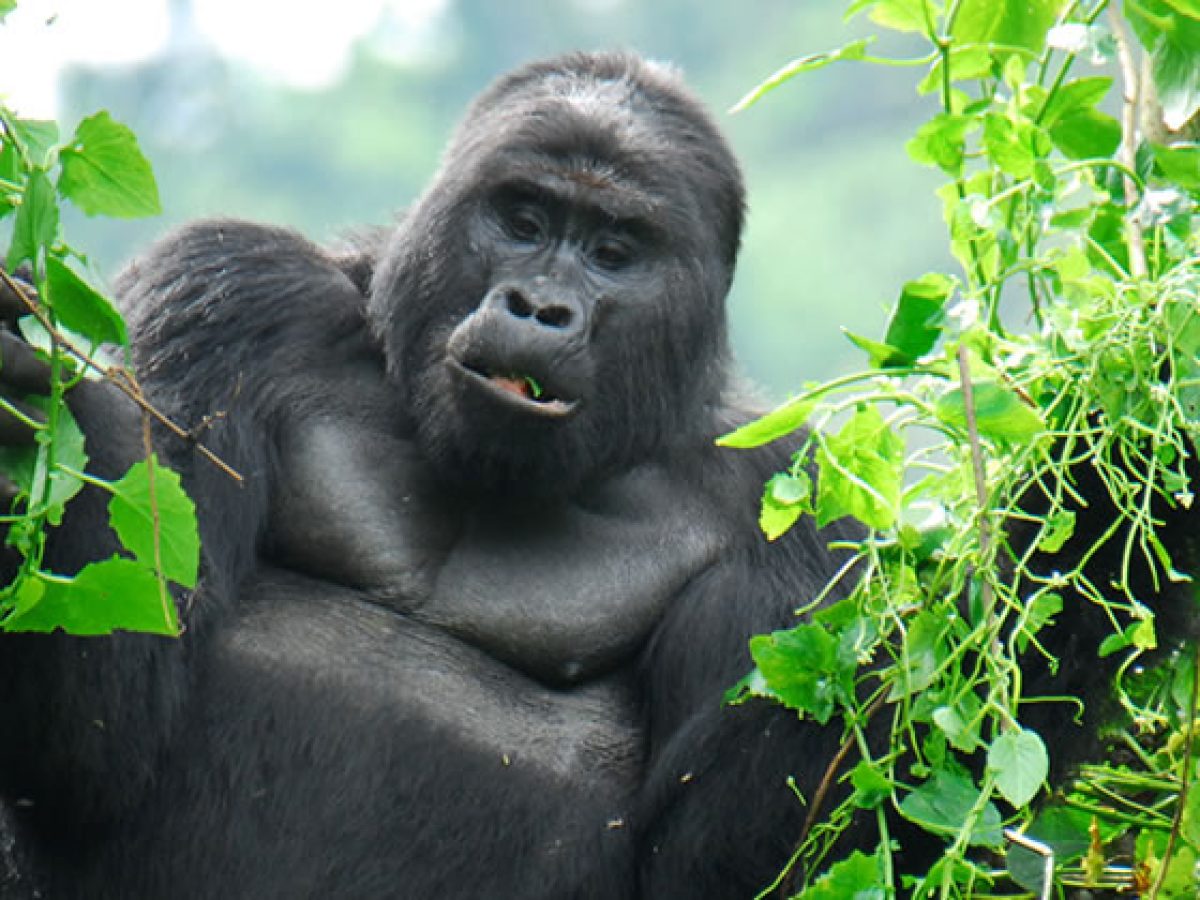
Yes, Uganda is significantly cheaper than Rwanda for gorilla trekking, primarily due to lower permit fees ($800 vs $1,500) and more budget-friendly accommodation options. While Rwanda offers a luxury, shorter-transit experience, Uganda provides better value, more trekking permits, and additional primate experiences like chimpanzee tracking.
11-days-best-africa-big-five-safari-in-rwanda-and-gorilla-trekking-in-uganda
8-days-best-of-rwanda-safari-tour-uganda-and-ending-in-kigali
3-days-bwindi-gorilla-trekking-tour-and-batwa-forest-dweller-cultural-visit
4-days-gorilla-trekking-and-gorilla-habituation-experience
4-days-budget-queen-elizabeth-park-and-chimpanzee-tracking-in-kalinzu-forest
4-days-ultimate-gorilla-and-uganda-safari-and-chimpanzee-tracking
5-days-uganda-big-five-safari-and-chimpanzee-tracking-in-kibale-forest-park
6-days-5-nights-midrange-uganda-safari-holiday-vacation
7-day-uganda-gorilla-trekking-chimpanzee-wildlife-safari-tour-and-culture
8-days-ultimate-uganda-gorilla-trekking-and-safari-in-uganda
9-days-best-of-uganda-and-rwanda-combined-tour-package
10-days-uganda-rwanda-primate-safari-vacation-and-game-drive-safari
Trekking Permits
The permit is the most significant individual expense of any primate safari. In 2026, Uganda remains the more accessible option, with a standard gorilla permit priced at $800 USD for foreign non-residents. However, the Uganda Wildlife Authority has announced a price adjustment to $1,000 USD effective 1st January 2027. This means that for the current 2026 travel season, Uganda offers nearly identical wildlife encounters to its neighbour at roughly half the entry cost.
In contrast, Rwanda maintains a premium pricing strategy, with permits set at $1,500 USD year-round. While Rwanda occasionally offers seasonal discounts (reducing permits to $500 for Africans and foreign residents during low-season months like May and November), the standard international rate remains the highest in the world. This price difference is a deliberate conservation choice by the Rwanda Development Board to fund high-end infrastructure and community projects, positioning Volcanoes National Park as an exclusive, luxury-tier destination.
Accommodation
The accommodation landscape highlights the distinct "personalities" of each destination. Uganda is celebrated for its diversity; because Bwindi is divided into four sectors, a vast competitive market of lodges has emerged. You can find comfortable budget guesthouses starting at $100 per night, mid-range forest camps for $300, and high-end luxury lodges like Clouds Mountain Gorilla Lodge or Sanctuary Gorilla Forest Camp that rival the best in Africa. This variety makes Uganda the preferred choice for families, backpackers, and mid-range travellers who want quality without a four-figure nightly rate.
Rwanda has leaned heavily into the "high-end, low-impact" model. The areas surrounding Volcanoes National Park are home to some of the world’s most prestigious eco-luxury brands, such as Singita Kwitonda, One&Only Gorilla's Nest, and Bisate Lodge. In these establishments, nightly rates frequently exceed $1,500 to $2,500 per person. While there are a handful of mid-range options in Musanze, the overall market is geared toward the "ultra-luxury" traveller. For those staying in Rwanda, the lodge is often as much of a destination as the gorillas themselves, offering private heated plunge pools, butler service, and world-class culinary experiences.
Overall Packages
When looking at the "bottom line" for a 3-day safari, the price gap becomes quite stark. A 3-day Ugandan package—including the $800 permit, mid-range accommodation, a private 4x4 vehicle, and a guide—typically starts around $1,450 to $1,900 USD. This package usually involves a long but scenic 8-to-9-hour drive from Entebbe or a shorter 4-hour hop from Kigali, Rwanda (a popular cross-border shortcut).
A comparable 3-day Rwandan package rarely starts below $2,800 to $3,200 USD. The primary drivers of this cost are the $1,500 permit and the higher average cost of local transport and high-end lodging. However, Rwanda offers a logistical advantage that some find worth the premium: Volcanoes National Park is only a 2.5-hour drive from Kigali International Airport on smooth, paved roads. For time-poor travellers who want to fly in, see the gorillas, and fly out within 72 hours, the efficiency of the Rwandan circuit often justifies the higher price tag.
Comparative Analysis: Uganda vs. Rwanda for Primate Safaris
Permit Price
The financial commitment required for a permit is the most immediate differentiator between the two nations. In Uganda, the current $800 USD permit represents exceptional value for money. This price point allows for a more inclusive demographic of travellers, from passionate naturalists to families. It also makes "double-trekking"—the practice of visiting gorillas on two separate days to see different families—financially feasible for many. However, with the upcoming 2027 price hike, 2026 is the final "value year" for the Ugandan circuit.
Rwanda's $1,500 USD permit is a statement of exclusivity. By settting the price at nearly double that of its neighbour, Rwanda has successfully branded itself as a premium, low-density destination. This high cost directly funds a sophisticated conservation model that includes a generous revenue-sharing programme with local communities, which has led to a significant reduction in poaching. For the traveller, this fee provides entry into a meticulously managed environment where the "high-end" ethos is reflected in every touchpoint of the journey.
Accessibility
Logistics often dictate the choice of destination for time-sensitive travellers. Uganda requires a degree of "journey over destination" mindset. The 8 to 10-hour drive from Entebbe to Bwindi is a full day’s expedition. While the drive is stunning—passing through the Equator and the "Switzerland of Africa"—it can be taxing. To mitigate this, many now opt for a 1.5-hour domestic flight into Kisoro or Kihihi airstrips, though this adds roughly $500 to the total trip cost.
Rwanda is the undisputed champion of convenience. The drive from Kigali International Airport to the foothills of the Volcanoes National Park is a mere 2 to 3 hours on impeccably maintained, paved roads. This proximity allows for a "Gorilla Express" itinerary where a traveller can arrive in the morning, trek the following day, and be home shortly thereafter. For those who find long road transfers a barrier to travel, Rwanda’s compact geography makes it the most accessible gorilla habitat in the world.
Trek Difficulty
The physical nature of the trek varies significantly due to the local flora. Uganda’s Bwindi is an "impenetrable" forest characterized by ancient, thick vegetation and steep, tangled ridges. Treks here are generally more rugged and physically demanding, often involving hacking through vines to find a group. The altitude varies greatly, and a session can easily turn into an all-day hike. It is an experience suited for those who relish a true "jungle" challenge and the reward of a hard-earned sighting.
Rwanda’s Volcanoes National Park consists largely of bamboo forests. This habitat is more open, making the hiking somewhat easier and the visibility for photography often clearer. While the altitude is high—starting at roughly 2,500 metres—the terrain is generally less "cluttered" than Bwindi. The treks are often (though not always) shorter, and the paths are more established. This makes Rwanda a slightly more palatable option for those who may be concerned about their physical stamina or those who prefer a less "wild" undergrowth experience.
Experience Type
The "vibe" of each destination is distinct. Uganda offers an authentic, adventurous wilderness experience. It feels like a classic African expedition where the lodges are often tucked away in remote corners and the interaction with nature is raw and unscripted. It appeals to the "explorer" who doesn't mind a bit of dust and a long road if it means a deeper immersion into a vast, diverse ecosystem. It is a destination where the adventure is found in the unpredictability of the bush.
Rwanda provides a polished and exclusive experience. From the moment you arrive at the state-of-the-art Kigali Airport to the briefing at the park headquarters (where you are often served local coffee and treated to traditional dance performances), the process is seamless. The tourism infrastructure is world-class, designed to cater to high-net-worth individuals who expect a refined, "boutique" atmosphere. It is less about the "frontier" and more about a sophisticated, highly curated encounter with one of nature’s most magnificent creatures.
Additional Activities
If you want a "one-stop shop" for African wildlife, Uganda is the clear winner. Its wide variety of ecosystems allows you to combine your primate trek with a classic Big Five safari in Murchison Falls, a boat cruise on the Kazinga Channel, or chimpanzee tracking in Kibale. You can see the Nile, the savannah, and the rainforest all in one trip. This diversity makes it the superior choice for a comprehensive, multi-week nature holiday that covers more than just primates.
Rwanda’s offerings are more focused. Beyond the gorillas, the primary activities in the park are golden monkey tracking and hiking to Dian Fossey’s grave. While Akagera National Park offers a savannah experience and Nyungwe provides chimpanzee trekking, they are smaller in scale compared to Uganda’s flagship parks. However, Rwanda excels in cultural and urban tourism. A day in Kigali visiting the Genocide Memorial and the vibrant local art galleries offers a profound and moving look at the country's incredible journey of rebirth, providing a different kind of depth to your travel.
Summary
- Choose Uganda if you are seeking the best value for your money, plan a longer multi-activity safari, or want a more adventurous trek.
- Choose Rwanda if you have limited time, prefer a luxury-oriented experience, or want shorter travel distances
Is Uganda cheaper than Rwanda for gorilla trekking?
Yes, Uganda remains the significantly more affordable option for the 2026 travel season. When calculating the total cost of a safari—incorporating permits, transport, and lodging—travellers typically save between $800 and $2,000 by choosing Uganda. This price gap is primarily anchored by the permit cost, but it extends into the service sector. In Uganda, the competitive landscape of the tourism industry has fostered a robust mid-range market, whereas Rwanda’s tourism strategy is intentionally exclusive. For a solo traveller or a couple, these savings can often fund an entire additional week of wildlife viewing in other parks like Queen Elizabeth or Murchison Falls, making Uganda the logical choice for those looking to maximise their "wildlife per dollar" ratio.
How much is a gorilla permit in Uganda?
As of April 2026, a standard Gorilla Trekking Permit in Uganda costs $800 USD for foreign non-residents. This permit allows for one hour of observation with a habituated gorilla family. For those seeking a deeper encounter, Uganda also offers the Gorilla Habituation Experience for $1,500 USD. This unique permit allows you to spend four hours with a group currently undergoing the habituation process, accompanied by researchers and trackers. It is important to note that while $800 is the current 2026 rate, the Uganda Wildlife Authority has scheduled a price increase to $1,000 USD starting in January 2027. Therefore, booking a 2026 trek represents the final opportunity to experience the gorillas at the sub-thousand-dollar price point.
How much is a gorilla permit in Rwanda?
A single gorilla trekking permit in Rwanda is priced at $1,500 USD. This is a flat rate for all foreign non-residents and is currently the most expensive primate permit in the world. Rwanda does not offer a tiered system for standard trekking versus habituation; the $1,500 fee covers the standard one-hour encounter. While there are occasional promotional rates—such as a $500 permit for African citizens or foreign residents living in Rwanda—these are strictly regulated and typically only available during the "low season" months of May and November. For the vast majority of international tourists, the $1,500 entry fee is a fixed, non-negotiable cost of doing business in the "Land of a Thousand Hills."
Why is Rwanda more expensive?
Rwanda’s pricing is a deliberate pillar of its "High-End, Low-Impact" tourism model. By maintaining a high permit price, the government effectively manages the volume of visitors, reducing the human footprint on the delicate volcanic ecosystem. This exclusivity ensures that the mountain gorillas—of which only about 1,000 remain in the wild—are not overwhelmed by mass tourism. Furthermore, a significant portion of this $1,500 fee is reinvested into high-spec infrastructure and sophisticated conservation technology. Rwanda positions itself not just as a safari destination, but as a premium global brand, comparable to luxury experiences in the Maldives or the Swiss Alps, targeting a demographic that prioritises convenience, luxury, and elite conservation credentials.
Are accommodation costs cheaper in Uganda?
Absolutely. Uganda’s accommodation market is highly diverse, catering to a broad spectrum of budgets. Near the Bwindi sectors, you can find budget campsites and community-run guesthouses for $50–$100 per night. The mid-range sector is particularly strong, with numerous "eco-lodges" offering full-board stays for $250–$400. This variety allows travellers to tailor their spending. In contrast, Rwanda has focused almost exclusively on the ultra-luxury tier. While there are a few mid-range hotels in the town of Musanze, the lodges closest to the park headquarters are world-renowned luxury estates where prices frequently start at $1,500 per night. For a traveller who prefers comfortable, "rustic-chic" lodging over five-star opulence, Uganda provides far better value and choice.
What is the total cost difference between a Uganda and Rwanda safari?
For a standard 3-day itinerary, the cost difference is staggering. A 3-day Uganda safari typically ranges from $1,400 to $1,900, including the $800 permit. A 3-day Rwanda safari using mid-to-high-end lodging rarely falls below $3,000 to $4,500. Even when you account for the "Rwanda Shortcut" (where people fly to Kigali and drive 4 hours to Uganda to avoid the long Entebbe drive), the $700 difference in permit price remains a major factor. For a family of four, choosing Uganda over Rwanda results in an immediate saving of $2,800 on permits alone—an amount that could easily cover the cost of international flights or an extended stay at a luxury lodge in the Serengeti.
Is it worth paying more for Rwanda?
The "value" of Rwanda depends entirely on your priorities. If time is your most precious commodity, Rwanda is worth the premium. The 2-to-3-hour drive from Kigali to the gorillas is vastly superior to Uganda’s 10-hour road journey. Rwanda is also the better choice for those who demand uncompromising luxury and world-class service; the lodges there are among the finest on the planet. However, for the "nature lover" who enjoys a bit of adventure and a longer, more "raw" trek through the forest, Uganda is often cited as the more rewarding experience. If you are on a budget or want a multi-week adventure, Uganda is the clear winner; if you want a seamless, 48-hour luxury "bolt-on" to a wider African trip, Rwanda is the best.
How does transport cost compare?
This is the one area where the price gap narrows slightly. Most of Uganda’s gorilla sectors are a 10-hour drive from Entebbe International Airport. To avoid this, many travellers book internal flights (Aerolink or Bar Aviation), which cost approximately $500–$600 round-trip. When you add this flight cost to the $800 permit, the "Uganda price" moves closer to Rwanda’s $1,500 entry fee. However, Rwanda also has transport costs; while the drive is shorter, private transfers in Rwanda tend to be priced at a premium. Even with the added cost of a domestic flight or a long private car hire, Uganda usually remains the more economical choice by several hundred dollars, particularly because fuel and guide fees are generally lower than in Rwanda.
Are there luxury options in Uganda?
While Uganda is the budget king, it is a mistake to think it lacks luxury. Lodges like Clouds Mountain Gorilla Lodge, Sanctuary Gorilla Forest Camp, and Bwindi Lodge offer world-class amenities, exceptional service, and stunning views. The difference is "value for luxury." A high-end lodge in Uganda might cost $800–$1,200 per night, whereas a lodge of similar standing in Rwanda could easily be $2,500+. Uganda’s luxury tends to be more "boutique" and "integrated with nature," whereas Rwanda’s luxury is more "architecturally grand" and "international." If you want the five-star treatment without the "celebrity price tag," Uganda’s luxury sector provides an incredibly sophisticated experience at a significantly more palatable price.
Which country is better for budget travelers?
Uganda is the undisputed champion for the budget-conscious traveller. Not only is the permit nearly half the price, but the surrounding infrastructure supports low-cost travel. From public transport (buses to Kabale or Kisoro) to community-owned campsites, Uganda makes it possible to see the gorillas without spending a fortune. Furthermore, the "add-on" activities in Uganda—such as visiting the Batwa people, birding walks, or boat trips on Lake Bunyonyi—are priced for the mid-market. In Rwanda, even the "budget" activities like golden monkey tracking are priced higher than comparable experiences in Uganda. For a backpacker or a student, Uganda is the only realistic way to see mountain gorillas in 2026.
Are permits easier to get in Uganda?
Yes, logistically, Uganda offers more opportunities. Because Bwindi is such a vast forest, it has more habituated gorilla groups (roughly 20+ families) than Rwanda’s Volcanoes National Park (roughly 12 families). This means Uganda issues significantly more permits per day—approximately 160 permits compared to Rwanda’s 96. This higher volume makes it slightly easier to find availability if you are booking closer to your travel date. However, because Uganda is the "budget" choice, its permits are in extremely high demand. In 2026, the demand is so high that both countries still require 4–6 months' notice for peak season, but Uganda's multiple sectors (Buhoma, Ruhija, Rushaga, and Nkuringo) provide more geographical options to find a slot.
Is the experience the same?
In both countries, the core experience is identical: you spend exactly one hour with a habituated gorilla family. The gorillas are the same species, and their behaviour is consistent across the border. However, the "texture" of the experience differs. Uganda is often described as a "raw" and "wild" adventure. The Bwindi forest is denser, the treks are usually longer, and you feel more like you are "exploring" the jungle. Rwanda is more "ordered" and "manicured." The bamboo forests are easier to see through, and the park headquarters experience is more ceremonial. If you want to feel like an explorer in the deep heart of Africa, go to Uganda; if you want a smooth, highly professional wildlife encounter, go to Rwanda.
Is there a 4-hour trekking option in Uganda?
Yes, this is a major "selling point" for Uganda that is not available in Rwanda. The Gorilla Habituation Experience in the Rushaga sector of Bwindi allows a maximum of four tourists to spend four hours with a gorilla group that is still being habituated. This is a scientific and educational experience where you observe the gorillas’ reactions to human presence alongside researchers. At $1,500, it is the same price as a standard one-hour trek in Rwanda, but you get four times the duration. For photographers and serious primate enthusiasts, this is widely considered the best-value permit in the world, offering unparalleled time to observe complex social interactions and get the perfect shot.
What are the hidden costs of gorilla trekking?
Beyond the permit, both countries have small but important added costs. Hiring a porter is the most common; it costs roughly $20 USD (plus a tip) and is highly recommended as it supports the local economy and makes your trek much easier. Tipping your guides and trackers is also standard practice; usually $10–$20 per traveller per session. You also need to factor in the cost of specialized gear like waterproof hiking boots and gaiters. Generally, these service costs—from porter fees to meals and souvenirs—are slightly lower in Uganda. In Rwanda, the "luxury tax" tends to filter down, making even the small items like a local coffee or a hand-carved gorilla souvenir slightly more expensive.
Does the community benefit from these fees?
Both countries have pioneered "revenue-sharing" models to ensure that local people see the benefit of conservation, which reduces poaching. Uganda currently gives 20% of the park entry fees (which are part of the permit cost) back to the local communities surrounding the parks. This money is used for schools, clinics, and roads. Rwanda recently increased its revenue-sharing to 10% of the total permit revenue. Because Rwanda’s permits are so much more expensive ($1,500 vs. $800), the actual dollar amount per permit going to the community is quite high in both nations. By trekking in either country, you are directly contributing to the survival of the gorillas by making them worth more alive than dead to the people who live alongside them.
Booking Rwanda for gorilla trekking with us Roads of Adventure safaris
Booking a Rwanda gorilla trekking safari with Roads of Adventure Safaris offers a specialized experience, with the company rated highly for its customized primate tours in Rwanda and Uganda. They are recognized for providing memorable mountain gorilla trekking adventures, along with wildlife safaris in East Africa.
