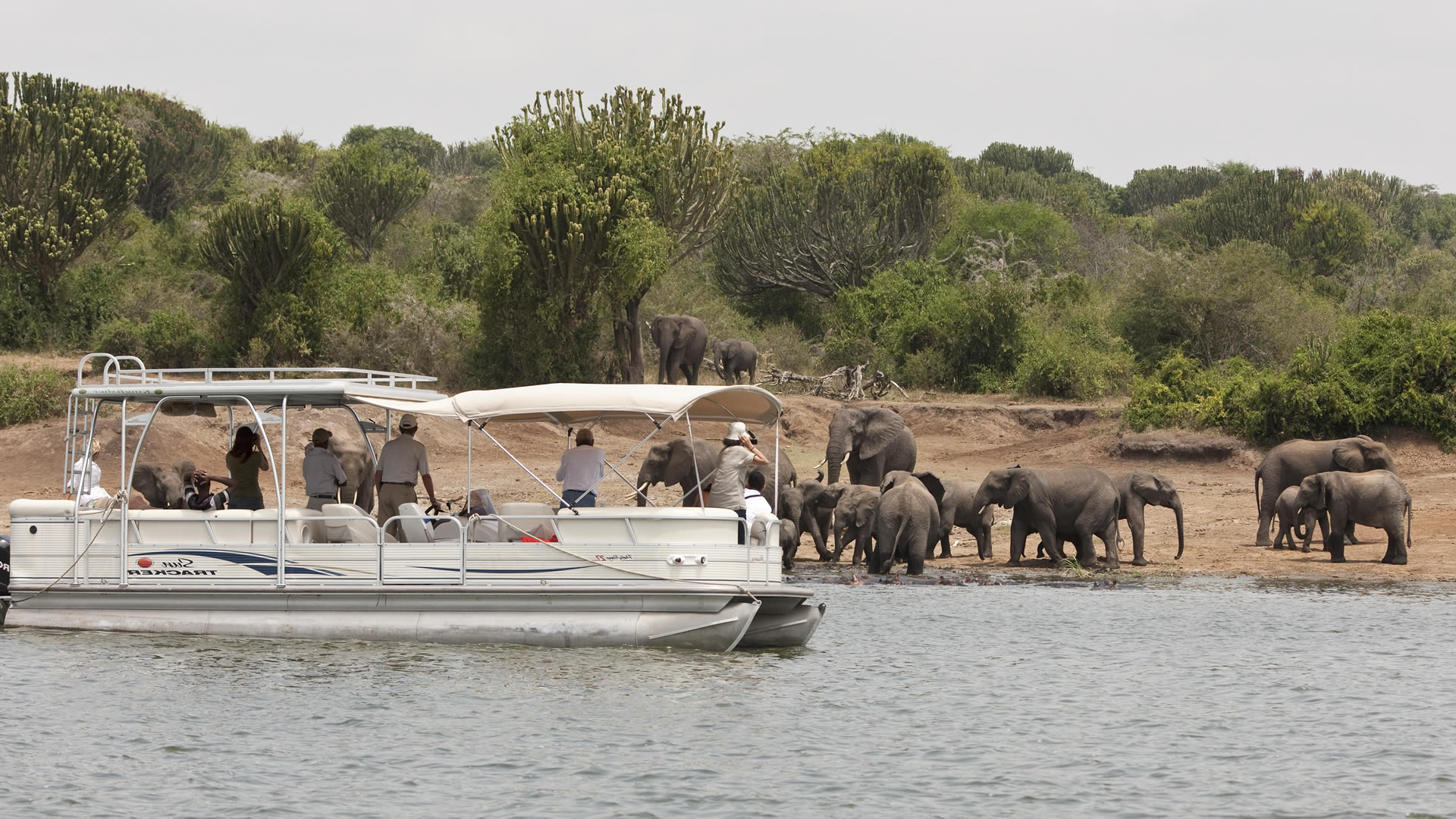
Yes, the Kazinga Channel boat cruise is widely considered the absolute highlight and a must-do activity when visiting Queen Elizabeth National Park. If there is one experience that defines a safari in Queen Elizabeth National Park, it is the famous Kazinga Channel boat cruise. This 32-kilometer natural waterway linking Lake George and Lake Edward acts as the park's ultimate wildlife magnet, drawing staggering concentrations of wildlife directly to its shores.
Cruising along the banks brings you face-to-face with one of the world's highest populations of hippos, giant Nile crocodiles, bathing elephant herds, and over 100 species of waterbirds. Whether you are a wildlife photographer, an avid birdwatcher, or a first-time safari traveler, this guide breaks down everything you need to know about the Kazinga Channel launch trip—from timing and logistics to ticket costs and what to expect on the water.
Most popular tour packages to Queen Elizabeth national park
3-days-trips-to-queen-elizabeth-national-park-for-chimpanzee-tracking-in-kyambura-gorge
3-days-uganda-safari-itinerary-to-queen-elizabeth-national-park
3-days-budget-queen-elizabeth-park-uganda-wildlife-safari-holiday
3-days-fly-luxury-uganda-safari-to-queen-elizabeth-national-park
2-days-affordable-budget-uganda-safari-to-queen-elizabeth-national-park
2-days-quick-escape-to-queen-elizabeth-park-safari-holiday
Close Animal Encounters
A water-based safari transforms how you experience African wildlife by offering unobstructed, eye-level vantage points that standard land vehicles simply cannot match. On a traditional game drive, animals often retreat into dense riverine thickets or hide behind thorn bushes, keeping their distance from rumbling engines. Out on the water, a silent, slow-cruising boat glides smoothly along bank contours, allowing you to approach within meters of wildlife without causing alarm or disturbance.
The perspective from the water level completely shifts your view of animal behavior. You find yourself directly adjacent to massive pods of wallowing hippos, watching their territorial displays and listening to their echoing grunts. Nile crocodiles bask along muddy banks with open jaws just feet from the hull, while herds of elephants wade into deep channels, splashing, swimming, and trunk-snorkeling through the currents. Because animals view the boat as a non-threatening part of the aquatic environment, they remain calm and relaxed, granting you rare, front-row opportunities to observe authentic wild behavior up close.
Birdwatching Haven
For birdwatchers and nature enthusiasts, riverbanks and lake shores represent one of the richest, most vibrant ecosystems in the African wilderness. Traveling by boat places you right in the center of an avian paradise where over a hundred water bird species congregate, nest, and hunt along the shoreline. The constant movement of water and abundance of fish create a thriving habitat, ensuring every bend in the river brings new species into view.
As your boat moves quietly along the reeds, you will spot massive colonies of great white pelicans gliding across the water, cormorants drying their wings on exposed branches, and colorful kingfishers hovering above ripples before diving for prey. The muddy banks host delicate waders, storks, and herons, while patient observers may spot the elusive, razor-billed African skimmer slicing through the calm surface on the wing. Without the noise or obstruction of a land vehicle, you can listen to complex bird calls, photograph vivid plumage in natural light, and observe intricate hunting behaviors without disturbing their habitat.
Relaxing Pace
After days spent navigating bumpy dirt tracks in a 4x4 safari vehicle, a boat safari offers a welcome, restorative change of pace while maintaining continuous wildlife viewing. Land game drives demand constant focus as you brace against rough terrain and scan dense brush for hidden predators. Stepping onto a comfortable, shaded boat allows you to stretch out, unwind, and let the scenery float gently past.
The rhythmic glide of the boat, combined with cool river breezes and the gentle sound of moving water, creates a soothing atmosphere that lets you take in the wilderness through all your senses. You can enjoy a refreshing drink, relax under a sun canopy, and absorb sweeping panoramic views of the surrounding landscape without dust or engine vibration. Despite the unhurried tempo, the wildlife quality remains exceptional. The relaxed environment makes a water safari the ideal midday or golden-hour activity, perfectly balancing active game viewing with genuine rest and relaxation on the water.
Is the Kazinga Channel boat cruise considered a top attraction in Queen Elizabeth National Park?
Yes, the Kazinga Channel boat cruise is widely recognized as the centerpiece experience of Queen Elizabeth National Park. This 40-kilometer natural channel connects Lake George and Lake Edward, bisecting the park and acting as a central oasis for the region's wildlife.
During a two-hour launch trip, the boat glides within meters of the shoreline, offering unmatched views of dense animal congregations. Unlike land-based game drives where animals can retreat into thick savannah brush, the water creates a natural gathering point, particularly during the dry afternoon hours. Visitors routinely spot massive pods of hippos, Nile crocodiles, bathing elephant herds, buffaloes, and hundreds of waterbird species lining the banks. The high concentration of game, paired with the comfort of a covered boat, makes it a must-do highlight for virtually every traveler visiting southwestern Uganda.
How close can you get to hippos and elephants during the Kazinga Channel cruise?
The Kazinga Channel boat cruise allows you to get remarkably close to large mammals—often within 10 to 15 meters—without causing stress or disturbance. Because wildlife along the channel has grown accustomed to the daily presence of slow-moving passenger boats over decades, they view the vessels as non-threatening elements of the landscape.
You can observe hippos submerged up to their nostrils, surfacing to spout water and grunt right alongside the hull. Elephant herds frequently descend the muddy slopes to drink, bathe, and spray themselves with water, occasionally swimming across the channel with their trunks raised like snorkels. Water buffaloes wallow in shallow mud banks just feet away, entirely unbothered by passengers taking photos. This close proximity offers exceptional photo opportunities that are rarely possible from the raised windows of a land vehicle.
What types of boat options are available for the Kazinga Channel safari?
Travelers can choose between double-decker public launch boats operated by the Uganda Wildlife Authority (UWA) and smaller, private speedboats or pontoon vessels managed by luxury lodges. The UWA double-decker boats are large, stable vessels seating 40 to 50 passengers, featuring a shaded top deck that offers elevated, 360-degree views over the reed beds and shorelines.
Private motorboats and pontoon launches typically accommodate smaller groups of 4 to 12 people. These smaller craft sit lower in the water, offering an eye-level perspective for photographers and greater flexibility to pause near specific sightings, such as a hunting kingfisher or a swimming elephant. Both options feature experienced local coxswains and UWA park rangers who navigate the waters safely while providing detailed commentary on animal behavior and ecosystem dynamics.
What is the best time of day to take the Kazinga Channel boat trip?
The afternoon cruise—typically departing at 3:00 PM or 4:00 PM—is widely considered the best time for maximum wildlife activity. As sun temperatures peak during the heat of the day, land animals emerge from the dry savannah trees and migrate down to the banks to drink, cool off, and wallow in the mud.
During the late afternoon, golden-hour light illuminates the western shoreline, creating ideal conditions for photography against the backdrop of the park's rolling hills. Alternatively, morning cruises (around 9:00 AM or 11:00 AM) offer cooler temperatures, calmer water surfaces, and active birding, as kingfishers, fish eagles, and pelicans hunt for fish before midday heat sets in. For the highest density of large mammals, the late afternoon slot remains the top recommendation.
Why is the Kazinga Channel home to one of the world's highest concentrations of hippos?
The Kazinga Channel provides an ideal habitat for hippopotamuses due to its permanent water supply, abundant aquatic vegetation, and soft, sloping mud banks. Spanning 40 kilometers with a gentle current, the channel maintains stable water levels year-round, giving hippos safe aquatic territory to thermoregulate and shelter their young.
It is estimated that over 2,000 hippos inhabit the Kazinga Channel ecosystem, making it one of the densest populations in Africa. During the day, they raft together in territorial pods every few hundred meters along the shallows to keep their sensitive skin cool and protected from sun exposure. At night, they emerge onto the surrounding savannah grasslands to graze, returning to the channel waters before sunrise.
What bird species can birdwatchers expect to spot along the Kazinga Channel?
The Kazinga Channel is an internationally recognized birding haven, boasting over 100 species of waterbirds along its 40-kilometer stretch. The combination of shallow mudflats, papyrus swamps, and fish-rich waters attracts resident waders and migratory species alike.
During a single boat trip, birdwatchers frequently spot African fish eagles perched high in euphorbia trees, African skimmers skimming the water's surface, and hundreds of great white pelicans swimming in tight formations. Other common sightings include pied and malachite kingfishers hovering above ripples, goliath herons, yellow-billed storks, saddle-billed storks, cormorants, and Egyptian geese. Between November and April, European migratory birds arrive, making the channel a top destination for ornithologists in East Africa.
How long does the Kazinga Channel boat cruise take, and where does it depart from?
The standard Kazinga Channel boat cruise lasts approximately two hours, covering a round-trip route from Mweya Peninsula down toward Lake Edward or Lake George before returning to the dock. This duration provides ample time to view multiple hippo pods, observe elephant herds on the shoreline, and photograph bird life without feeling rushed.
Most boat trips depart directly from the main landing site below the Mweya Safari Lodge on the Mweya Peninsula, located in the northern sector of Queen Elizabeth National Park. The jetty is easily accessible by road from most lodges around the Katunguru and Kasenyi sectors, featuring an orientation area where passengers board their designated vessels under ranger supervision.
Is the Kazinga Channel boat cruise safe for tourists, including children and seniors?
Yes, the Kazinga Channel boat cruise is an exceptionally safe safari activity suitable for travelers of all ages, including young children and seniors. The water in the channel remains calm with minimal wave action, ensuring a smooth, steady ride without sea sickness.
Vessels are equipped with mandatory safety gear, including life jackets for all passengers, radio communications, and experienced coxswains who maintain safe distances from territorial hippos and large crocodiles. UWA park rangers accompany every cruise to manage safety and enforce park rules. Because the experience involves sitting comfortably on a covered deck rather than walking over rough terrain or bouncing in a 4x4 vehicle, it is one of the most accessible wildlife encounters in Uganda.
How does a Kazinga Channel boat cruise compare to a traditional land game drive in Queen Elizabeth National Park?
While a land game drive in the Kasenyi Plains or Ishasha sector focuses on tracking lions, leopards, hyenas, and kobs across open savannah, the boat cruise offers guaranteed close-up encounters with aquatic and riverine wildlife. Land drives require active searching and can involve long stretches over bumpy roads with variable animal sightings.
In contrast, the boat cruise delivers continuous, high-density wildlife viewing along a fixed water route. Animals gather predictably at the water's edge, allowing guests to relax, stretch out, and take clear photographs without dust, vehicle vibration, or dense brush blocking the view. Combining a morning game drive across the Kasenyi Plains with an afternoon Kazinga Channel cruise provides a complete, well-rounded wildlife experience in the park.
Can you spot lions or leopards drinking along the Kazinga Channel?
While big cats are primarily terrestrial predators that spend daytime hours resting in thickets or euphorbia trees, lions and leopards are occasionally spotted along the Kazinga Channel. Sightings occur most frequently during the dry season (January to February and June to August) when water sources in the interior savannah dry up.
Lions may descend the grassy banks in the late afternoon to drink water before beginning their evening hunts, while leopards are sometimes seen resting in the branches of large trees overhanging the water's edge. While big cat sightings on the boat trip are considered a rare bonus rather than a daily guarantee, keeping a sharp eye on the tree line and riverbanks can yield incredible predator encounters.
What is the Katunguru fishing village, and do you pass it during the cruise?
Katunguru is a sanctuary fishing village located along the banks of the Kazinga Channel inside Queen Elizabeth National Park. During the boat cruise, you will pass near this human settlement, providing an interesting glimpse into how local communities coexist directly alongside wild riverine habitats.
You will see colorful wooden fishing boats (dugout and motorized canoes) pulled up along the shore, local fishermen mending nets, and children playing near the water's edge—often just a short distance from resting hippo pods and water birds. The village operates under specific environmental regulations managed by the Uganda Wildlife Authority to ensure sustainable fishing practices while maintaining safety guidelines regarding hippos and crocodiles.
Are Nile crocodiles common along the Kazinga Channel, and how big do they get?
Nile crocodiles are abundant along the Kazinga Channel, particularly on the sandy mudbanks near the entrance to Lake Edward. For many years, crocodiles were absent from the channel due to historical volcanic activity that altered water chemistry, but they naturally recolonized the area over past decades and now thrive.
Passengers routinely spot massive Nile crocodiles basking in the sun with open jaws to regulate their body temperature. Specimens along the channel often reach lengths of 3 to 5 meters (10 to 16 feet). Seeing these prehistoric reptiles lying stationary on the mud flats—often surrounded by unbothered waterbirds like plovers—provides a fascinating look at the channel's complex food web.
How much does the Kazinga Channel boat cruise cost, and how do you book it?
As of current rates, the official Uganda Wildlife Authority (UWA) public boat cruise costs approximately $30 USD per foreign non-resident passenger (plus the standard Queen Elizabeth National Park daily entry fee of $40 USD). Private boat options operated by luxury lodges or independent outfitters range from $150 to $300 USD per boat trip depending on vessel size and duration.
Reservations can be made directly at the UWA visitor center at Mweya, through licensed tour operators, or via your safari lodge. During peak travel seasons (June through September and December through February), booking your boat cruise seats a few weeks in advance is highly recommended to secure your preferred afternoon departure time.
What should you wear and pack for a Kazinga Channel boat cruise?
Packing for a Kazinga Channel boat cruise requires preparation for sun exposure, light wind on the water, and photography needs. Lightweight, breathable clothing in neutral tones (tan, khaki, green) is ideal, along with a wide-brimmed hat, sunglasses, and high-SPF sunscreen to guard against afternoon sun glare off the water.
Key items to carry in your daypack include:
- A pair of quality binoculars for scanning distant riverbanks and identifying small kingfishers or roosting raptors.
- A camera with a telephoto zoom lens (200mm to 400mm) fitted with a neck strap.
- Insect repellent to ward off evening mosquitoes or tsetse flies near reed beds.
- A light windbreaker or jacket, as breeze over the open water can feel cool during late afternoon returns.
What are the dry and wet season differences for wildlife viewing along the channel?
The dry seasons (December to February and June to August) offer the highest wildlife densities along the Kazinga Channel. As inland watering holes dry up across the savannah, animals are forced to trek to the channel daily to hydrate, resulting in massive herds of elephants, buffaloes, and antelopes congregating along the shores.
The wet seasons (March to May and September to November) bring lush green landscapes, lower tourist crowds, and active birdwatching as migratory species arrive. While wildlife disperses slightly more into the interior savannah due to temporary rain pools, resident hippo pods, crocodiles, and waterbirds remain permanently along the channel, ensuring excellent viewing year-round regardless of season.
Can you see mountain gorillas or chimpanzees during the Kazinga Channel trip?
Mountain gorillas do not inhabit Queen Elizabeth National Park; they live in the high-altitude rainforests of Bwindi Impenetrable National Park or Mgahinga Gorilla National Park, located a 4- to 6-hour drive south. However, habituated chimpanzees live nearby inside Queen Elizabeth's Kyambura Gorge and the adjacent Kalinzu Forest.
It is common for travelers to combine a morning chimpanzee trekking excursion in Kyambura Gorge or Kalinzu with an afternoon boat cruise on the Kazinga Channel on the same day. Following your boat trip, you can travel south to Bwindi for gorilla tracking, making the Kazinga Channel a central link in a comprehensive Uganda primate and wildlife safari.
How does the Kazinga Channel boat cruise fit into a standard Queen Elizabeth itinerary?
A typical 2- to 3-day Queen Elizabeth National Park itinerary incorporates the Kazinga Channel cruise as the primary afternoon highlight. A popular daily routing includes:
- Morning: Early morning game drive across the Kasenyi Plains to track lions, Uganda kobs, and giant forest hogs, followed by a visit to the Katwe Salt Lake.
- Midday: Rest, lunch, and swimming at your lodge on Mweya Peninsula or along the park boundary.
- Afternoon: 3:00 PM Kazinga Channel boat cruise for close-up aquatic wildlife viewing.
- Following Day: Travel south to the Ishasha sector to search for tree-climbing lions before continuing onward to Bwindi.
What makes the geography of the Kazinga Channel unique in the East African Rift Valley?
The Kazinga Channel is a natural 40-kilometer-long water structure formed by tectonic activity within the Western branch of the East African Rift Valley (the Albertine Rift). It connects two major rift lakes: Lake George to the east and Lake Edward to the west.
Lake George is a shallow, papyrus-lined lake fed by rivers running down from the Rwenzori Mountains, while Lake Edward is a deeper rift lake straddling the border between Uganda and the Democratic Republic of Congo. The Kazinga Channel acts as a natural spillway, carrying water gently westward from Lake George into Lake Edward. This constant, slow water flow creates rich nutrient deposits that support abundant fish populations, which in turn sustain hippos, crocodiles, and thousands of waterbirds.
Can you spot tree-climbing lions during the Kazinga Channel boat cruise?
Tree-climbing lions are famous in Queen Elizabeth National Park, but they inhabit the Ishasha sector, located in the far southern region of the park roughly 2.5 to 3 hours' drive south of the Kazinga Channel. Consequently, you will not see tree-climbing lions directly from the boat cruise.
Lions around the northern Mweya and Kasenyi sectors near the channel are typical terrestrial hunters that rest in thickets or under bushes. To see tree-climbing lions resting in the canopy of fig and acacia trees, schedule a dedicated half-day or full-day game drive through the Ishasha sector while traveling between Mweya and Bwindi Impenetrable National Park.
Are private boat charters worth the extra cost for photography enthusiasts?
For serious wildlife and bird photographers, booking a private small boat or pontoon charter on the Kazinga Channel is well worth the extra investment. Public launch boats follow fixed timetables and routes, staying slightly further off shore to accommodate larger passenger capacity.
A private charter allows you to tailor your departure times—such as leaving earlier in the morning for soft light or staying out until sunset. Furthermore, smaller craft sit lower to the waterline, allowing eye-level photographic angles of bathing elephants, swimming hippos, and plunging kingfishers. The captain can also cut the engine and drift silently into shallow reeds, giving you stable, vibration-free positioning to capture crisp wildlife shots without competing for rail space with other tourists.
What fish species live in the Kazinga Channel, and is sport fishing allowed?
The Kazinga Channel supports a thriving fish population dominated by tilapia (Oreochromis niloticus), catfish (Clarias gariepinus), and lungfish. This rich aquatic life fuels the entire local ecosystem, feeding thousands of pelicans, cormorants, fish eagles, and crocodiles, as well as sustaining local fishing villages like Katunguru.
Commercial and subsistence fishing by licensed local villagers is strictly regulated under UWA zoning policies. Recreational sport fishing for tourists is generally restricted within the core national park boundaries of the channel to protect wildlife habitats. However, catch-and-release sport fishing excursions can be arranged on designated stretches of Lake Edward or Lake George through specific lodge concessions.
How do local boat captains ensure safety around territorial hippo pods?
Navigating around hippos requires experienced boatmanship, as hippos are protective of their aquatic territories and can be aggressive if cornered. Local coxswains operating boats on the Kazinga Channel undergo extensive marine training and maintain deep knowledge of hippo behavior.
Captains keep a safe buffer distance (typically 10 to 15 meters) from established pods, approaching slowly from downstream or open water so hippos are never trapped against the shore. They monitor warning signs—such as wide mouth gapes, water snorting, or sudden submersions—and idle or back away immediately if a dominant bull shows agitation. Because the vessels are significantly larger than individual hippos, animals view the slow-moving boats as non-threatening objects, allowing safe passage along the entire channel.
What scenic views can you expect during the Kazinga Channel launch trip?
Beyond the wildlife encounters, the Kazinga Channel offers magnificent scenic landscapes framed by the East African Rift Valley escarpment. As your boat glides down the channel, you are surrounded by rolling green hills, tall papyrus reed beds, and open acacia savannah slopes running down to the water's edge.
On clear days, the distant, snow-capped peaks of the Rwenzori Mountains ("Mountains of the Moon") rise dramatically along the northern horizon, providing a breathtaking background for landscape photography. To the west, the expansive waters of Lake Edward stretch toward the blue ridges of the Virunga mountain range in the Democratic Republic of Congo, offering a backdrop during golden-hour sunset cruises.
Can you spot giant forest hogs or waterbucks along the channel shores?
Yes, giant forest hogs and Defassa waterbucks are frequently spotted along the Kazinga Channel. Queen Elizabeth National Park is one of the best places in East Africa to view the giant forest hog—the world's largest wild suid species—which is usually shy and nocturnal in other African reserves.
During afternoon boat cruises, giant forest hogs often emerge from dense bush cover to drink at the water's edge and wallow in soft mud banks. Defassa waterbucks—distinguished by their long, shaggy coats and prominent white rings on their rumps—are also common, grazing in small family groups along the moist grassy shorelines alongside bushbucks, Uganda kobs, and warthogs.
Are there mosquitoes or tsetse flies on the Kazinga Channel boat trip?
Because the boat cruise takes place on open water during daylight hours, biting insects like mosquitoes are rarely a problem on the boat itself, as breeze from the vessel's movement keeps them away. Mosquitoes become active primarily after sunset once you return to shore or your lodge.
However, tsetse flies—small biting flies found in wooded African savannahs—can occasionally be present along heavily forested bank sections or near buffalo herds. To prevent bites, wear long-sleeved shirts and full-length trousers made from lightweight fabric. Avoid wearing dark blue or black clothing, as these colors naturally attract tsetse flies; stick to neutral tones such as khaki, beige, and light green, and apply insect repellent to exposed skin.
How has conservation management protected the Kazinga Channel ecosystem?
The Kazinga Channel is protected under the joint management of the Uganda Wildlife Authority (UWA) and international conservation partners. Daily marine patrols combat illegal poaching, monitor water quality, and enforce regulation of human fishing settlements like Katunguru to prevent encroachment into core wildlife zones.
Conservation initiatives also focus on invasive species management, such as clearing water hyacinth mats that can choke shallow bays and disrupt fish breeding grounds. Furthermore, revenue-sharing programs redirect a portion of national park gate and boat cruise fees back into local border communities, funding schools, health clinics, and clean water projects to foster community support for wildlife preservation along the channel.
Is the Kazinga Channel cruise suitable for budget travelers?
Yes, the Kazinga Channel cruise is one of the most cost-effective top-tier wildlife experiences in East Africa. For $30 USD per ticket on the official UWA public boat, budget travelers enjoy two full hours of high-density wildlife viewing that rivals expensive private game drives found in other regional parks.
Budget travelers can stay at affordable guesthouses, tented camps, or community lodges in Katunguru or Rubirizi outside the main park gates, taking a short taxi or boda-boda ride to the Mweya jetty for the afternoon cruise. Because the public boat offers excellent elevated views and guaranteed animal sightings, it delivers exceptional value for budget-conscious safari goers.
What happens during the boat cruise if it rains unexpectedly?
Brief tropical rain showers can occur in southwestern Uganda, particularly during transition months between wet and dry seasons. Most public launch boats and private safari vessels operating on the Kazinga Channel feature sturdy canvas roofs or hard-top overhead decks that protect passengers from rain and midday sun.
If a light shower passes through during your cruise, the boat continues its route while passengers step under the central canopy. Animals along the channel often remain active during light rain, continuing to graze and bathe along the shoreline. In the event of heavy downpours or high winds, experienced coxswains adjust speed or pause in sheltered bays until conditions clear, ensuring passenger comfort and safety throughout the trip.
Can you walk along the banks of the Kazinga Channel on foot?
Walking along the banks of the Kazinga Channel on foot without armed ranger escort is strictly prohibited due to high concentrations of dangerous wildlife. Hippos, Nile crocodiles, and cape buffaloes pose severe safety hazards to unescorted pedestrians along the shoreline. Hippos graze on land and can charge if startled, while crocodiles lie camouflaged in shallow water near the bank edge.
For travelers who wish to explore the park on foot, UWA offers authorized, ranger-guided nature walks in designated low-density sectors, such as the Kyambura Gorge, Maramagambo Forest, or along guided trails at Mweya Peninsula under the protection of armed wildlife rangers.
Why is the Kazinga Channel boat cruise considered a "must-do" on a Uganda safari?
The Kazinga Channel boat cruise is considered an essential Uganda safari experience because it offers a rare combination of high wildlife density, effortless comfort, and intimate animal encounters. Within two hours, travelers witness an extraordinary cross-section of African biodiversity—from giant elephant herds and wallowing hippo pods to prehistoric crocodiles and vivid waterbirds—all active along a single stretch of water.
It provides a welcome physical break from long hours spent driving in safari vehicles across rough dirt roads, allowing you to sit back, relax, and watch the wild rhythm of Africa unfold naturally along the riverbanks. Whether you are a wildlife photographer, an avid birdwatcher, or a first-time safari visitor, the Kazinga Channel delivers one of the most memorable aquatic wildlife spectacles on the African continent.
Booking things to do in Queen Elizabeth national park with us Roads of Adventure safaris
To book things to do in Queen Elizabeth National Park with Roads of Adventure Safaris, you can choose multi-day packages that bundle 4x4 transport from Kampala, park permits, and local guides. Top activities include Kasenyi Plains game drives, Kazinga Channel boat cruises, and Kyambura Gorge chimpanzee trekking
