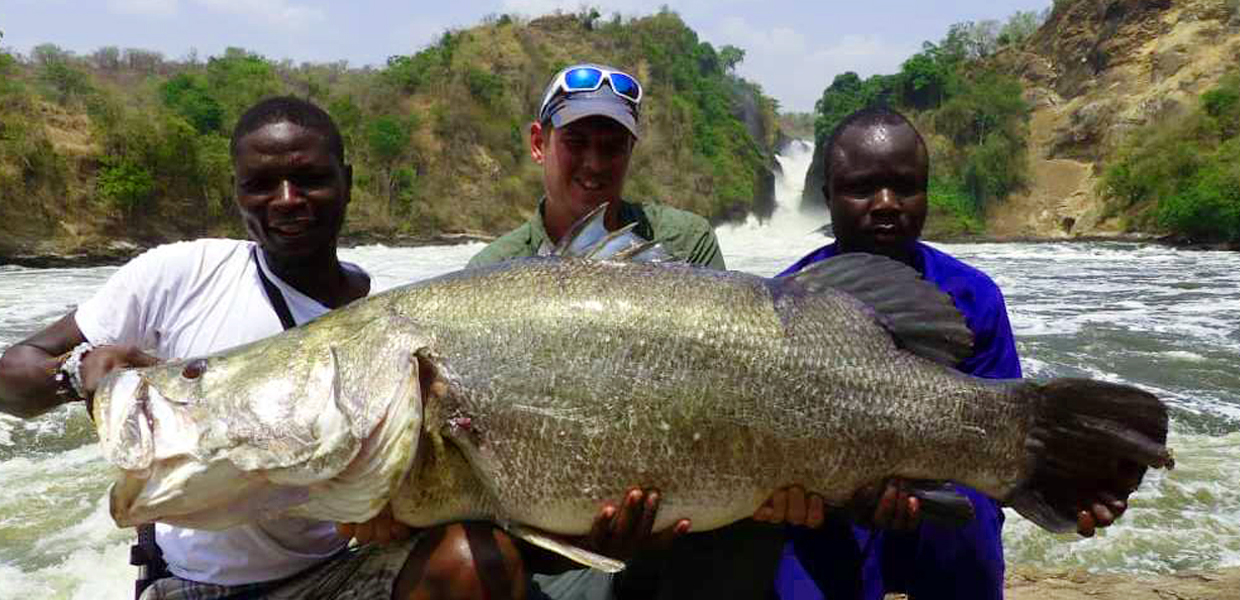
Yes, sport fishing for the massive Nile perch is an absolutely extreme and highly thrilling experience and things to do in Murchison Falls National Park. Battling a prehistoric giant that frequently exceeds 50 kg requires immense physical endurance, as the powerful, oxygen-rich currents of the Victoria Nile (especially in turbulent spots like the Devil's Cauldron) make the fight physically demanding and intensely rewarding. This activity is strictly a catch-and-release sport for larger fish, where anglers use methods like casting heavy lures and spinning to hook the legendary, hard-fighting Nile perch or fierce tigerfish. You'll need to secure a designated UWA sport fishing permit and hire a local guided boat, which adds an element of raw survival to your adventure—as you'll be actively fishing right alongside massive hippos and basking Nile crocodiles.
Popular Uganda safari tour packages to Murchison falls national park
3-days-sports-fishing-murchison-falls-safari
3-days-murchison-falls-national-park-best-uganda-safari-road-trip
3-days-best-honeymoon-uganda-safari-escape-to-murchison-falls-national-park
5-day-best-safaris-to-uganda-kidepo-and-murchison-falls-national-parks
5-days-kidepo-valley-uganda-safari-via-ziwa-rhino-sanctuary
6-days-best-of-murchison-and-kidepo-uganda-safari-via-ziwa
7-days-murchison-falls-uganda-safari-trip-via-ziwa-rhinos-kidepo-valley-and-jinja
7-days-uganda-tour-to-murchison-falls-via-ziwa-kibale-and-queen-elizabeth-national-park
9-days-africa-big-five-safari-in-uganda-safari-parks-and-gorilla-trekking
Extreme Sport Fishing in Murchison Falls
Sport fishing for Nile perch (Lates niloticus) in Murchison Falls is the ultimate test of an angler's endurance. The turbulent, oxygen-rich waters below the waterfall create an environment where these fish thrive and grow to monumental sizes.
- Target Species: Nile perch, which frequently weigh between 10 kg and 50 kg. The local park record landed on rod and line weighs a staggering 113 kg.
- Other Catch: Various catfish (such as the Sudan and Vundu catfish), tigerfish, and tilapia.
- Method: Almost entirely operated as a catch-and-release program to conserve fish populations.
- Permits: Mandatory daily or multi-day sport fishing permits are required, issued by the Uganda Wildlife Authority (UWA).
Prime Fishing Locations
Fishing is strictly permitted in designated, UWA-authorized sections of the Victoria Nile.
- The Devil's Cauldron (Bottom of the Falls): The most extreme, rewarding, and challenging spot. It is highly oxygenated, but the fierce currents dictate that you fish from the rocky banks or slightly downstream from a boat.
- Below Karuma Falls: Near Chobe Safari Lodge, this area offers additional spots for casting lures and spinning.
Is sport fishing for Nile perch genuinely considered an extreme activity in Murchison Falls?
Sport fishing in Murchison Falls National Park is widely ranked among East Africa's most adrenaline-fueled outdoor pursuits. What separates it from routine freshwater angling is the sheer scale of the target predator combined with the raw hostility of the environment. Hooking a Nile perch that weighs upwards of 50 kilograms in the churn of the Victoria Nile is less like traditional fishing and more like an intense tug-of-war against a underwater freighter. You are standing on slick, slippery riverbank rocks or balancing in a boat right along swirling whitewater while fighting a fish capable of stripping hundreds of meters of line in seconds. Furthermore, the setting adds an unmistakable edge of wild danger: you are actively casting in waters heavily populated by territorial pods of hippos and massive Nile crocodiles. Between the required physical stamina, unforgiving river currents, and proximity to apex wildlife, the experience earns its reputation as an extreme adventure.
Why do Nile perch grow to such massive sizes right below Murchison Falls?
The waters immediately downstream of Murchison Falls create an ideal ecosystem for apex freshwater predators. As the entire Victoria Nile forces its volume through a narrow seven-meter gorge before plunging 43 meters, the water becomes extraordinarily oxygenated. This oxygen-rich environment dramatically boosts the metabolic efficiency and activity levels of aquatic life. Additionally, the sheer force of the waterfall acts as a natural separator: smaller fish species, like tilapia and tigerfish, often get stunned or swept down through the violent plunge pool, creating an endless conveyor belt of easy prey. Nile perch (Lates niloticus) take full advantage of this constant food supply. Supported by warm year-round water temperatures and protected within national park boundaries from commercial net fishing, these fish reach immense physical proportions that are rarely seen in open, heavily fished lakes.
What is the current record weight for a Nile perch caught on rod and line at Murchison Falls?
The official rod-and-line record landed in the park stands at an astounding 113 kilograms (roughly 249 pounds). Beyond this legendary catch, anglers targeting the gorge regularly hook specimens weighing between 10 kg and 50 kg. Catching a perch over 40 kg is considered a landmark achievement, requiring specialized heavy-duty tackle, skilled line management, and a great deal of physical endurance. Because the park operates strict conservation standards, large fish are measured, photographed, and carefully revived before being released back into the currents. Rumors among local boat captains and rangers suggest that even larger specimens lurk in the deeper, inaccessible pools of the river bed, where heavy riverbed structure makes landing them almost impossible.
What makes the physical battle with a giant Nile perch so demanding?
A fight with a mature Nile perch is an endurance test for your arms, back, and core. When hooked, a large perch relies on its broad lateral surface area and massive tailfin to dive straight into the river's main current, multiplying its effective weight against your line. The fight often lasts anywhere from 30 minutes to well over an hour. During this time, the fish executes sudden, powerful runs, head shakes, and explosive leaps above the water surface to dislodge heavy lures. Anglers must keep constant, heavy tension on the rod without snapping the line or pulling the hook free. Holding a fully bent heavy-action rod while standing on shifting rocks under the equatorial sun rapidly drains physical strength, making every landed fish feel like a hard-won victory.
What is the "Devil’s Cauldron" and why is it famous among sports anglers?
The Devil’s Cauldron is the turbulent pool situated directly at the base of Murchison Falls. It is celebrated as one of the most productive yet challenging freshwater fishing spots in the world. Here, the thundering white water creates immense water pressure, deep eddies, and rapid currents that hold high concentrations of prey fish. Large Nile perch gather in the oxygenated swirls and slack-water pockets along the edges to ambush disoriented prey. However, fishing the Cauldron demands absolute focus: the roaring noise makes communication difficult, the spray keeps gear wet, and navigating a boat or finding secure footings on the rocky shoreline requires constant vigilance. It is the core epicenter of extreme fishing in Uganda.
Where is sport fishing permitted within Murchison Falls National Park?
To protect wildlife and preserve riverbank habitats, the Uganda Wildlife Authority (UWA) restricts sport fishing strictly to designated zones. The primary location is the stretch of the Victoria Nile extending from the base of the falls downstream toward the park's river banks. Another prominent area is located further upriver below Karuma Falls, particularly around Chobe Safari Lodge, where rocky outcrops and fast rapids provide excellent casting opportunities for both boat-based and shore-based anglers. Fishing outside these pre-approved zones or without an official escort is illegal, ensuring that human activity remains controlled and sustainable throughout the sanctuary.
Is sport fishing in Murchison Falls strict about catch-and-release practices?
Yes, sport fishing in Murchison Falls operates primarily under a mandatory catch-and-release ethic to preserve the river's trophy fish population. Once a Nile perch or catfish is brought alongside the boat or onto the shore, guides help anglers handle the fish using wet hands or protective sling mats to avoid removing their protective slime coating. Quick photos are taken, hooks are safely removed using long-nosed pliers, and the fish is held facing into the current to allow oxygenated water to flow over its gills until it swims away under its own power. Exceptions are occasionally made for smaller fish intended for personal consumption at designated safari lodges, but all large breeding specimens are released without exception.
What other fish species can anglers catch while targeting Nile perch?
While the Nile perch is the main draw, the Victoria Nile harbors a diverse mix of hard-fighting freshwater species. Anglers frequently hook Tigerfish (Hydrocynus), famous for their razor-sharp teeth, rapid strikes, and high-jumping acrobatics. Catfish are also widespread; the predatory Sudan catfish (Clarotes laticeps) and the massive Vundu catfish (Heterobranchus longifilis) frequently hit heavy lures intended for perch. Vundu catfish in particular can grow over 30 kg and fight with brute, bottom-dwelling force. Additionally, various species of Tilapia inhabit the quieter margins and serve as both a target for lighter tackle and live bait for targeting monster perch.
What type of fishing tackle and gear is required for targeting Nile perch?
Standard freshwater tackle will quickly fail against a Nile perch. Anglers use heavy-action, 8-to-10-foot spinning or casting rods rated for 30 to 80-pound line test, paired with high-capacity reels featuring reliable, smooth drag systems. Braided line testing between 50 and 80 pounds is standard, combined with a heavy monofilament or fluorocarbon shock leader (80 to 100 lb test) to resist abrasion from sharp gill plates, rocks, and submerged timber. Terminal tackle must feature heavy-duty split rings and reinforced treble hooks, as standard commercial hooks are easily straightened out by the crushing jaw pressure and violent head-shakes of a large perch.
What are the most effective artificial lures for catching Nile perch here?
Deep-running minnow-style plugs and crankbaits are the benchmark artificial lures in Murchison Falls. Lures ranging from 15 to 25 cm in length with strong, wide-wobbling actions mimic the movement of injured prey in fast water. Popular colors include red head/white body, chartreuse, gold, and realistic firetiger patterns. In deep, fast-flowing pools like the Devil’s Cauldron, heavy cast metal spoons and large soft-plastic swimbaits rigged on heavy jig heads are also effective for reaching bottom-dwelling fish. The key is ensuring every lure is retrofitted with heavy-duty hardware that won't fail under intense pressure.
Is live-bait fishing allowed, and how does it compare to artificial lures?
Live-bait fishing is permissible and often yields high success rates, particularly when artificial lures fail to trigger bites during slow feeding periods. Anglers typically catch live Tilapia or smaller schooling fish on light tackle beforehand and rig them using single or tandem hooks attached to a heavy leader. The live bait is drifted into deep pools or held near current seams where large perch wait in ambush. While casting lures offers a more active, hands-on style of fishing, live-baiting often entices the largest, most cautious trophy fish that prefer an easy meal requiring minimal chase effort in heavy currents.
Why is boat fishing considered safer and more effective than bank fishing?
Boat fishing provides better access to prime holding spots that cannot be reached from shore, such as deep river channels, current seams, and eddy lines below the falls. A purpose-built aluminum or fiberglass boat guided by an experienced skipper allows anglers to reposition quickly and maintain optimal angles when fighting a large fish. From a safety perspective, being on a sturdy boat elevates you above the waterline, significantly reducing risks associated with hippos and Nile crocodiles that frequent the slippery riverbanks. It also enables the guide to maneuver into open water if a giant perch pulls toward hazardous rocks.
What unique dangers do anglers face when bank fishing along the Victoria Nile?
Bank fishing delivers an intense, raw experience, but it comes with distinct hazards. The rocks near the water's edge are continuously sprayed with mist and algae, making them exceptionally slippery. A slip can drop an angler into swift, turbulent water where swimming is extremely dangerous. Furthermore, Nile crocodiles regularly sun themselves on these banks or lie submerged near the shoreline, relying on stealth to ambush prey. Hippos also graze along the banks and can become aggressively territorial if blocked from returning to the water. Because of these factors, bank fishing requires total situational awareness and a dedicated ranger or guide keeping watch.
What wildlife encounters should an angler prepare for during a fishing trip?
Fishing in Murchison Falls is essentially an active safari on the water. Beyond the constant presence of hippos grunt-snorting in nearby shallows and Nile crocodiles basking on sandbars, anglers frequently see herds of elephants cooling off along the riverbanks. Giraffes, buffalos, and waterbucks regularly come down to drink. Birdlife is equally abundant, featuring African fish eagles swooping down for prey, Goliath herons standing in the reeds, and colorful kingfishers hovering over shallow water. Anglers must remain attentive, as wildlife movements dictate where it is safe to anchor or land a boat.
How do professional local guides enhance both safety and success?
Local sport fishing guides possess detailed knowledge of the river's underwater topography, seasonal flow changes, and fish holding patterns. They know precisely where deep drop-offs and snag hazards lie, saving anglers hours of unproductive casting. Beyond fish-finding, guides manage boat positioning in tricky currents, handle heavy landed fish safely to prevent injury to both angler and catch, and maintain a constant watchful eye for territorial wildlife. Fishing alongside a professional guide significantly increases your chances of hooking a trophy perch while keeping safety risks fully managed.
What permits are required to go sport fishing in Murchison Falls, and how are they obtained?
All anglers must secure a dedicated Sport Fishing Permit issued by the Uganda Wildlife Authority (UWA) in addition to paying standard park entrance fees. Permits can be purchased on a daily basis or as multi-day passes through registered tour operators, sport fishing charter companies, or directly at the park headquarters. The revenue generated from these permits goes directly toward park conservation efforts, anti-poaching patrols, and maintaining aquatic research programs along the Nile. It is essential to carry physical copies of your permits at all times during fishing excursions.
What is the best time of year to plan a sport fishing trip to Murchison Falls?
While Nile perch can be caught year-round, the dry seasons—specifically from December to February and June to September—offer the most favorable conditions. During these months, lower rainfall results in clearer water conditions and lower river turbidity, making it easier for visual predators like Nile perch to locate lures. Additionally, boat navigation is smoother, and bank footings are less treacherous compared to the wet seasons (March to May and October to November), when heavy rains cause water levels to rise and turn the river muddy, reducing lure visibility.
How do seasonal water level fluctuations affect Nile perch feeding behavior?
Water clarity and volume directly influence how Nile perch hunt. During high-water rain periods, the river becomes murky with runoff silt, reducing underwater visibility significantly. Perch adapt by moving closer to current breaks, shallow river margins, and rock ledges where they rely more on their lateral line system to detect vibrations from passing prey. In contrast, during low-water dry periods, the clear water allows perch to spot lures from greater distances, leading to aggressive surface and mid-depth strikes. Understanding these seasonal shifts helps anglers select the right lure color, weight, and retrieval speed.
What physical fitness level is recommended for an angler undertaking this trip?
A moderate to high level of physical fitness is recommended. Fighting a 30+ kg fish in strong river currents requires solid core strength, grip stability, and back endurance. Furthermore, casting heavy 100-gram lures continuously for hours under tropical heat and high humidity can cause quick fatigue. Anglers should be prepared for sudden physical exertion, balancing on unsteady surfaces, and enduring long hours exposed to the sun. Adequate hydration, sun protection, and light physical conditioning beforehand ensure you can handle the physical strain of landing a big fish.
What safety precautions are taken regarding boat operations near the falls?
Safety protocols near the Devil’s Cauldron are strictly enforced. Boats must be equipped with twin outboard engines to guarantee redundancy in case one motor fails in strong currents. Marine-grade life jackets are mandatory for all passengers, and vessel captains carry throw-ropes, anchor systems, and first-aid kits. Captains maintain a safe operating distance from the main plunge pool to avoid getting caught in recirculating eddies or under surface mist that can compromise visibility and engine air intake.
Can beginners attempt sport fishing in Murchison Falls, or is it strictly for experts?
Beginners can certainly participate and enjoy success, provided they book with experienced charter operators who supply professional guides. Guides assist beginners with casting techniques, lure selection, line handling, and landing procedures. However, novice anglers should be aware that the gear is heavy and the strikes can be sudden and powerful enough to pull a rod from an unprepared grip. With proper instruction and willingness to learn, even complete novices have a realistic shot at landing a memorable Nile perch.
How does sport fishing in Murchison Falls compare to fishing in Lake Victoria?
While Lake Victoria produces large Nile perch, fishing there primarily involves trolling across vast expanses of open water. In contrast, sport fishing in Murchison Falls is dynamic and action-packed. Anglers cast directly into fast-moving river currents, rocky structure, and whitewater seams. The dramatic scenery of the gorge, combined with close-up wildlife sightings and the physical challenge of river currents, creates a much more intimate, wilderness-driven experience than open-lake trolling.
What role does sport fishing play in conservation and community support?
Regulated sport fishing provides vital support for the ecosystem. The high value of sport fishing permits directly funds UWA anti-poaching units that patrol the river for illegal gill nets and longlines. Furthermore, fishing operations employ local captains, guides, and lodge staff, creating sustainable economic opportunities tied directly to keeping the river's fish population alive and healthy. Catch-and-release practices ensure that trophy fish remain in the system to spawn, preserving genetic diversity for future generations.
What clothing and personal gear should anglers pack for a day on the Nile?
Dressing for extreme fishing in Uganda requires protection against both intense equatorial sun and moisture. Recommended attire includes lightweight, quick-drying long-sleeve shirts and pants with built-in UV protection. Polarized sunglasses are essential for cutting through surface water glare to spot submerged rocks, fish, and wildlife. Wide-brimmed hats, high-SPF sunscreen, non-slip footwear (such as deck shoes or closed-toe water sandals), and insect repellent for evening hours complete the necessary personal kit.
Are there night fishing opportunities available in the park?
Night fishing is generally restricted by park regulations due to high safety risks associated with nocturnal hippos, poor visibility near fast currents, and wildlife movement along the riverbanks. However, fishing during the early morning dawn and late afternoon dusk periods is highly encouraged. These low-light transition periods trigger intense feeding activity among big Nile perch, offering some of the best topwater and lure-casting action of the day.
How do anglers handle hook removal safely on fish with sharp gill covers?
Nile perch possess razor-sharp, bone-like gill plates (operculum) that can easily cause severe lacerations if handled incorrectly. Guides and anglers use specialized lip-gripping tools (such as a BogaGrip) to secure the fish's lower jaw while it remains in the water. Long-handled pliers or hook removers are then used to extract treble hooks cleanly without placing hands near the gill covers or teeth. Proper handling tools protect both the angler from injury and the fish from unneeded stress.
What happens if a large fish breaks your line in the rocks during a fight?
Line breakage is an inevitable part of river angling due to sharp submerged rocks, submerged tree trunks, and intense current tension. To minimize this, guides inspect lines regularly for abrasions and replace worn shock leaders after every major fight. If a line snaps, high-quality, barbless or crushed-barb hooks are often used on lures so that the fish can shed the lure quickly over time. Anglers should bring an ample supply of spare lures, leaders, and terminal tackle to replace gear lost to the river's structure.
What accommodation options cater specifically to sport anglers in Murchison Falls?
Several safari lodges along the Victoria Nile cater directly to sport fishing itineraries. Lodges like Paraa Safari Lodge, Murchison River Lodge, Baker's Lodge, and Chobe Safari Lodge offer private boat launches, experienced fishing guides, equipment rental, and customized packed breakfasts or lunches for early-morning river excursions. Staying at a riverfront lodge allows anglers to maximize their time on the water during prime feeding hours.
How far in advance should you book a sport fishing safari to Murchison Falls?
Because UWA sport fishing permits and specialized charter boats are limited in quantity to avoid overcrowding on the river, it is advisable to book 3 to 6 months in advance, especially if visiting during peak dry seasons (December to February or July to August). Booking early ensures you secure daily permits, dedicated boat captains, and preferred lodge accommodations close to prime fishing zones.
Why is sport fishing in Murchison Falls considered a bucket-list trip for global anglers?
Sport fishing in Murchison Falls combines world-class freshwater angling with an authentic African river safari. The chance to battle one of the world's largest freshwater game fish in the shadow of a thundering waterfall, surrounded by wild hippos, crocodiles, and game animals, is an experience matched by few places on Earth. It offers a rare mix of physical challenge, stunning natural scenery, and raw wilderness adventure that makes it a definitive bucket-list journey for passionate sports anglers worldwide.
Booking things to do in Murchison falls park with us Roads of Adventure safaris
Roads of Adventure Safaris is straightforward. Simply reach out via email or phone with your travel dates to get a tailored itinerary Roads of Adventure Safaris Murchison Falls Guide. They handle all logistics—including permits, transportation, and lodge bookings—typically requiring a 30% deposit Roads of Adventure Safaris Murchison Falls Guide.
