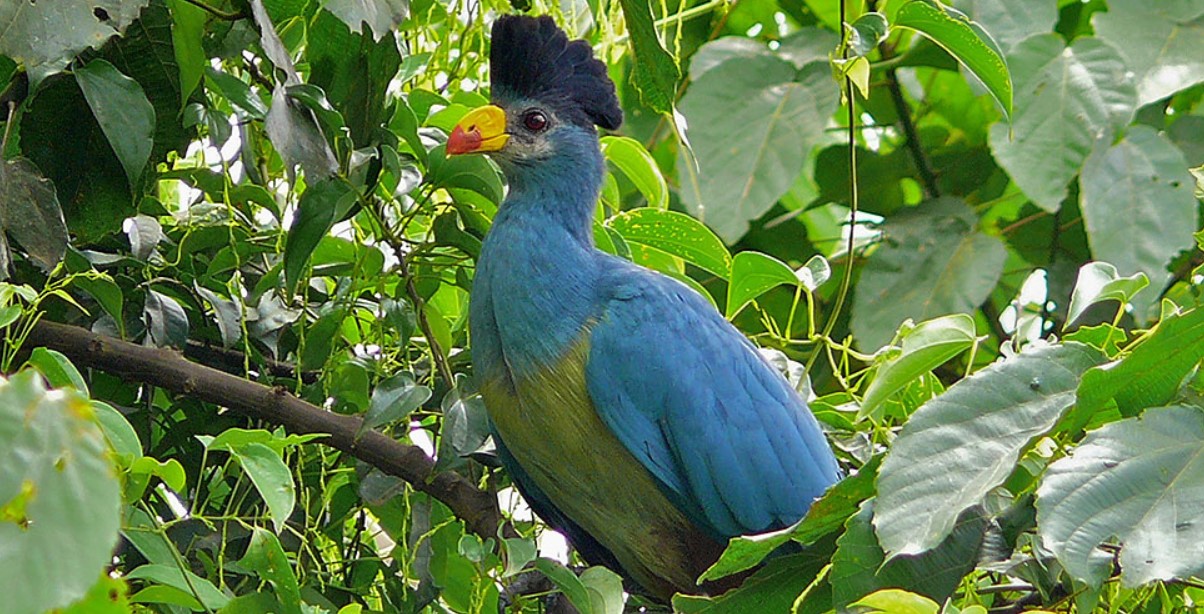
Yes, Semuliki National Park is an exceptional premier birding destination on a Uganda safari, frequently described as a true birder's haven. It boasts over 441 recorded bird species, representing roughly 40% of Uganda's total bird species and 66% of the country's forest bird species.
25-days-complete-uganda-birding-safari-extravaganza-with-wildlife-viewing
22-days-best-uganda-primate-and-birding-safari-adventure
21-days-uganda-birding-safari-extravaganza-to-best-uganda-safari-parks
20-days-uganda-birding-safari-to-uganda-national-park
20-days-uganda-birding-safari-wildlife-gorilla-and-chimpanzee-tracking
14-days-classic-uganda-birding-safari-expedition
12-days-uganda-birding-tour-looking-for-rift-valley-endemic-birds-west-circuit
10-days-best-uganda-birding-safari-and-wildlife-experience
Unique Avifauna: The Congo Extension
Semuliki National Park holds a singular status in East Africa as the only tract of lowland tropical forest that represents an eastward extension of the massive Ituri Forest and the Congo Basin. Because it sits on the floor of the Albertine Rift, it acts as a biological bridge. The vegetation here isn't the typical savannah or montane forest found elsewhere in Uganda; it is a lush, humid, ironwood-dominant canopy that mirrors the heart of Central Africa. This unique botanical makeup allows the park to host 46 Guinea-Congo biome species that are found nowhere else in the East African region. For a birder, stepping into Semuliki is effectively like taking a trip into the Democratic Republic of Congo without ever leaving Uganda.
The ecological significance of this "Congo extension" cannot be overstated. The heavy rainfall and low elevation (670m to 760m) create a microclimate that supports a high diversity of insects, amphibians, and fruits, which in turn sustains a specialized avian population. These birds are biologically distinct from their East African cousins, often displaying different nesting habits and vocalizations adapted to the dense, multi-layered canopy of a true lowland rainforest. When you walk through the forest, the air is thick with the calls of species that haven't changed for millennia, protected by the natural barrier of the Rwenzori Mountains. It is a living laboratory of African biodiversity, offering a glimpse into an ecosystem that is otherwise largely inaccessible due to the political and logistical challenges of traveling deep into the Congo Basin.
Key Species: The Rarities of Semuliki
The allure of Semuliki lies in its "specials"—birds that are essentially myths to those who only stick to the standard safari circuits. The Nkulengu Rail is perhaps the most sought-after; a shy, ground-dwelling bird known for its haunting, rhythmic duets that echo through the forest at dawn and dusk. Spotting one requires immense patience and a guide who can track its specific movements through the undergrowth. Similarly, the Congo Serpent Eagle haunts the mid-canopy, a specialist predator that thrives in the humid interior, rarely venturing toward the forest edges.
The park is also a stronghold for an incredible array of hornbills, which are the charismatic "architects" of the forest. The Piping Hornbill, Red-billed Dwarf Hornbill, and the spectacular White-crested Hornbill are frequent highlights. The latter is particularly striking with its snowy-white head feathers contrasting against a dark body, often seen hopping through the branches in search of insects. The Black-wattled Hornbill is another heavyweight of the canopy, identifiable by its massive casque and prehistoric appearance. Beyond the hornbills, the Yellow-throated Nicator represents the more cryptic side of Semuliki birding. It is a master of camouflage, blending perfectly with the foliage, its presence often only given away by its rich, melodic song. These species represent the "Holy Grail" for many African birders, as seeing them in Semuliki is often the only way to tick them off a life list without venturing into the deep, roadless interior of Central Africa.
Prime Locations: Trails of Discovery
To find these elusive species, birders focus on three primary zones, each offering a different perspective of the forest. The Kirumia Trail is widely considered the premier birding track in the park. This 13km trail winds through the heart of the lowland forest toward the Semliki River. Because it penetrates the deep interior, it is the best place to find the Guinea-Congo biome endemics. The trail is flat but can be muddy, requiring a slow, methodical pace. Birders often spend an entire day moving just a few kilometers, as the high canopy requires constant scanning. This is where the rarities like the Nkulengu Rail and various honeyguides are most frequently encountered.
The Sempaya Trail offers a different experience, centered around the famous Sempaya Hot Springs. The boardwalks and paths here pass through patches of swamp forest and palm cocoa, which attract different sets of birds, including the localized Hornbills and various Sunbirds. The thermal activity of the springs creates a unique micro-habitat, and the surrounding forest is excellent for spotting primates alongside birds. Finally, the area along the Semliki River itself provides a chance to see water-associated species and those that prefer the forest edge. The river acts as a natural boundary and a flight path for larger raptors and storks. Each of these locations requires a different birding "gear"—Kirumia demands stealth and patience, Sempaya offers easier access and high visibility, and the river provides the scale needed to see the giants of the sky.
Specialty Sightings: The Shoebill Stork
While the forest interior holds the Congo rarities, the edges of Semuliki near Lake Albert offer one of Africa’s most prehistoric sights: the Shoebill Stork. Though technically located just outside the main forest boundaries in the southern marshes of Lake Albert, specialized boat trips from the Semliki area are the most common way to see them. The Shoebill is a massive, blue-grey bird that looks more like a dinosaur than a modern avian species. It is famous for its "clog-shaped" bill, which it uses to lunge at lungfish, baby crocodiles, and water snakes in the shallow, papyrus-choked waters.
Spotting a Shoebill is a lesson in stillness. These birds are ambush predators, often standing motionless for hours, blending into the reeds until a fish moves within reach. The boat trips through the swampy deltas are quiet affairs, as guides use small engines or paddles to navigate the narrow channels. Seeing a Shoebill take flight is an unforgettable experience; their wingspan can reach over eight feet, and the sound of their wings beating against the air is surprisingly loud in the silence of the swamp. While the Mabamba Swamp near Entebbe is more famous for Shoebills, the population near Semliki and Lake Albert is often considered "wilder" and less crowded, providing a more authentic encounter with a bird that has remained virtually unchanged for millions of years.
Best Time to Visit: Weather and Bird Cycles
Timing a visit to Semuliki is a balance between bird activity and physical accessibility. While the park is located near the equator and birding is technically a year-round activity, the drier months of March to May and September to November are generally considered the "sweet spots." During these windows, the trails—particularly the Kirumia Trail—are more manageable. In the peak of the rainy seasons, the lowland forest can become significantly flooded, turning trails into muddy streams that make quiet movement and tripod setups difficult.
The drier months also coincide with the breeding seasons for many species. During this time, birds are more vocal as they defend territories and attract mates, making them much easier to locate by sound. It is also the time when many trees are in fruit, creating "bird parties" where dozens of species congregate in a single fruiting Fig or Ironwood tree. However, for those interested in the Shoebill, the water levels in Lake Albert are crucial; lower water levels often concentrate the birds in specific hunting grounds, making sightings more reliable. If you visit during the "short rains," you might also catch Palearctic migrants—birds fleeing the European winter to spend time in the lush, insect-rich forests of Africa. Regardless of the month, Semuliki requires
1. Is Semuliki National Park Good for Bird Watching?
Semuliki National Park is widely regarded as one of Africa’s premier birding destinations, often referred to as a "True Birder’s Haven." Its reputation stems from its extraordinary biodiversity, hosting over 441 bird species. To put this into perspective, this single park contains roughly 40% of all bird species found in Uganda and approximately 66% of the country’s forest bird species.
The park's unique position as a lowland tropical rainforest allows it to support a dense population of avian life that is difficult to find elsewhere. Unlike the open savannah parks, birding here requires patience and keen ears, as many species inhabit the thick canopy or the dense undergrowth. However, the sheer volume of birds—ranging from majestic hornbills to tiny, colorful sunbirds—ensures that even a short walk can result in a massive "lifelist" update for enthusiasts.
Beyond just the numbers, Semuliki is a critical site for conservation. It serves as a sanctuary for many species that are increasingly threatened by habitat loss in other parts of the continent. For serious birders, a trip to Uganda is considered incomplete without visiting Semuliki, as it offers the highest "species-per-square-kilometer" ratio in the region. The park is an Important Bird Area (IBA) and continues to surprise researchers with new sightings, solidifying its status as a must-visit location for anyone looking to experience the pinnacle of African forest birding.
2. Unique Birding: The Congo Basin Extension
What truly sets Semuliki apart from other famous Ugandan parks like Murchison Falls or Queen Elizabeth is its ecology. Semuliki represents the easternmost extension of the vast Ituri Forest from the Democratic Republic of Congo. This means the park is essentially a West African jungle located within East Africa.
Because of this "biome bridge," a birding safari here offers the chance to see Guinea-Congo biome species that are found nowhere else in East Africa. For a birder, this is the only place in the region to spot Central African specialties without crossing the border into the DRC. While other parks focus on savannah or mountain-dwelling birds, Semuliki is the kingdom of the lowland forest specialist.
The forest structure itself is unique; it is a dense, multi-layered canopy that creates distinct niches for different species. You might see the Congo Serpent Eagle soaring above the trees while the Nkulengu Rail calls from the dark forest floor. This overlap of Central and East African species creates a unique "melting pot" of biodiversity. Travelers often find that the birds here look and behave differently than the species they encounter in the more open woodlands of the Albertine Rift, making Semuliki an essential contrast to the rest of the Ugandan birding circuit.
3. Species Count: Over 441 and Counting
Semuliki National Park boasts a staggering record of over 441 bird species. This high number is a result of the park's diverse habitats, which include lowland tropical rainforest, riverine forests along the Semuliki River, and swampy areas near Lake Albert.
Among these 441 species, the park is home to 46 Guinea-Congo biome species that are strictly limited to this type of habitat. Additionally, the park records include several migratory birds that use the forest as a stopover point, and at least five species endemic to the Albertine Rift. The density of species means that even within a small area, the variety of calls and sightings can be overwhelming for a novice but exhilarating for an expert.
The checklist for Semuliki includes a wide array of families, from the massive Black-casqued Wattled Hornbill to the minute African Piculet. The diversity also extends to water birds found along the riverbanks and the nearby lake shores, such as the African Fish Eagle and various kingfishers. This massive species count is why professional birding tours often dedicate several days to this park alone; with over 400 possibilities, every morning brings the potential for a rare or completely new encounter.
4. Top Sought-After Species
In the world of birding, Semuliki is famous for its "specialties"—birds that are high on the bucket list of any serious enthusiast. The most sought-after species include the Piping Hornbill, which is iconic for its loud, nasal calls, and the elusive Nkulengu Rail, a bird more often heard than seen in the thick underbrush.
Other "star" birds include:
- Congo Serpent Eagle: A majestic forest raptor.
- Long-tailed Hawk: Known for its striking silhouette as it darts through the canopy.
- Black Dwarf Hornbill & Red-billed Dwarf Hornbill: Two of the smallest and most specialized hornbills in the region.
- White-bellied Kingfisher: A tiny, jewel-like bird found near forest streams.
- Lyre-tailed Honeyguide: Famous for its spectacular aerial displays.
These birds are highly prized because they are difficult to find in any other East African country. Spotting a Maxwell’s Black Weaver or a Blue-billed Malimbe is considered a major highlight of a Ugandan safari. The presence of these rare Central African species makes every sighting feel like a significant discovery, providing a sense of exclusivity that you won't find in the more crowded parks.
5. Albertine Rift Endemics
While Semuliki is primarily celebrated for its Guinea-Congo biome species, it is also situated within the Albertine Rift, one of the most biodiverse regions on earth. As a result, the park provides habitat for several Albertine Rift Endemics—species that are found only in this specific mountain and valley system.
Although the park is at a lower altitude than other endemic-heavy areas like Bwindi Impenetrable Forest, it still hosts species like the Oberländer’s Ground Thrush and the Blue-headed Sunbird. Some checklists also include sightings of the Red-throated Alethe, though these can be elusive.
The interplay between the lowland "Congo" species and the "Albertine" endemics creates a fascinating ecological overlap. Visitors can essentially "double-dip," seeing birds that belong to the heart of the African continent alongside those that evolved specifically within the Rift Valley's unique geography. This dual identity makes Semuliki an important link in the chain of Albertine Rift conservation, protecting a low-altitude portion of the corridor that is often overlooked in favor of the high-altitude cloud forests.
6. Best Birding Locations: Kirumia and Sempaya
Within the park, two main areas stand out for bird watching. The Kirumia Trail is widely considered the "holy grail" for forest birders. This 13km trail cuts through the heart of the lowland forest, leading toward the Semuliki River. Because it passes through varied forest densities, it is the best place to find specialized species like the African Piculet and various Hornbills. It is a full-day excursion that requires a good level of fitness but rewards you with the highest species diversity in the park.
The area around the Sempaya Hot Springs offers a different, but equally rewarding, experience. The "female" and "male" springs are surrounded by forest patches and clearings that are excellent for spotting birds that prefer the forest edge. Here, it is much easier to see the Great Blue Turaco and the Ross’s Turaco as they move between the fruiting trees.
Additionally, the Red Monkey Trail provides opportunities to see woodland birds and primates simultaneously. For those looking for water-associated birds, the banks of the Semuliki River are unbeatable. Whether you are deep in the forest on the Kirumia trail or standing in the steam of the hot springs, the park is designed to offer multiple "windows" into its avian world, depending on how much hiking you are willing to do.
7. Best Time to Visit
The timing of your visit can significantly impact your birding success. Generally, the dry seasons (December to February and June to August) are considered the best times to visit. During these months, the forest trails—especially the Kirumia trail—are much easier to navigate as they are less muddy. Birds are also easier to spot when they aren't hiding from heavy downpours.
However, the wet seasons (March to May and September to November) have their own advantages. This is the primary breeding season for many species. During this time, birds are often in their vibrant breeding plumage and are more vocal as they defend territories or attract mates. The increased activity and calling can make finding elusive species easier, provided you are prepared for rain and muddy conditions.
For those interested in migratory birds, the period from November to April is ideal, as Palearctic migrants from Europe and northern Africa join the resident species. Ultimately, Semuliki is a year-round destination, but if you want the best balance of bird activity and trail accessibility, the "shoulder" months at the end of the dry seasons (like late February or early September) are often perfect.
8. The Rare Shoebill Stork
One of the biggest draws for any birding safari in Uganda is the prehistoric-looking Shoebill Stork. While Semuliki National Park itself is a dense forest, it sits adjacent to the southern shores of Lake Albert. Visitors can take a short drive to the lake and arrange a boat trip into the marshy bays.
The swampy fringes of Lake Albert are one of the most reliable places in Uganda to see the Shoebill. Unlike the crowds sometimes found at the Mabamba Swamp near Entebbe, the Lake Albert experience is often more private and rugged. Watching this giant bird stand motionless in the papyrus as it waits for lungfish is a bucket-list experience.
Combining a forest walk in Semuliki with a boat trip on Lake Albert allows you to see two completely different worlds in a single day: the dark, enclosed rainforest and the wide-open, sun-drenched wetlands. The boat trip also offers sightings of other water birds like the Papyrus Gonolek, Blue-breasted Bee-eater, and various herons, making it a vital addition to any Semuliki itinerary.
9. Recommended Duration: 2–3 Days
While some tourists visit Semuliki as a quick day trip from Fort Portal, serious birders should plan for at least 2 to 3 days in the park. The forest is dense, and many of the most sought-after species are shy and elusive.
- Day 1: Typically involves exploring the Sempaya Hot Springs and the shorter nature trails. This serves as a great introduction to the common forest-edge species and allows you to visit the hot springs.
- Day 2: Is usually dedicated to the Kirumia Trail. Because this trail is 13km long and takes about 8 hours to complete at a "birding pace," it requires a full day. This is where you will find the rare Guinea-Congo biome specialists.
- Day 3: Can be used for a boat trip on Lake Albert to find the Shoebill or for "mopping up" any species missed on the previous days by revisiting specific forest patches.
Spending three days allows you to account for weather changes and gives you the best chance of encountering "mixed-species flocks"—groups of different birds that move through the forest together. In a forest as complex as Semuliki, time is your best asset.
10. Bird Photography Opportunities
Semuliki offers excellent, albeit challenging, opportunities for bird photography. The lush, green backdrop of the Ituri forest extension provides a stunning setting for shots of vibrant species like the Yellow-throated Nicator or the Crested Malimbe.
The Sempaya area is particularly good for photography because the canopy is slightly more open around the hot springs and the park office. This allows for better light and clearer sightlines for birds like the White-crested Hornbill and Great Blue Turaco, which often frequent the taller trees at the forest edge.
For those with high-end gear, the Kirumia Trail offers the chance to capture rare species in their natural, deep-forest habitat. However, photographers should be prepared for low-light conditions and use fast lenses. The park is also famous for its butterflies (over 300 species), which are often easier to photograph than the birds and add a splash of color to any portfolio. With patience and a good flash or high-ISO camera, you can capture images of birds that are rarely photographed by the average tourist.
11. Combining with Other Safaris
A birding trip to Semuliki is rarely done in isolation. It is perfectly positioned to be part of a "Western Uganda Circuit." Most tours combine Semuliki with Kibale National Park, which is just a 2-hour drive away. Kibale is famous for Chimpanzee trekking but is also the best place in Africa to see the Green-breasted Pitta.
From Semuliki, travelers often continue south to Queen Elizabeth National Park. This creates a perfect "habitat sandwich": you move from the dense lowland forest of Semuliki to the medium-altitude forest of Kibale, and finally to the open savannahs and craters of Queen Elizabeth. This progression allows birders to see a massive variety of species, from forest interior specialists to raptors and water birds.
Some itineraries also include the Rwenzori Mountains (for high-altitude endemics) or Bwindi Impenetrable Forest (for the African Broadbill). Because Semuliki is so unique in its West African feel, it provides the "missing piece" to a comprehensive Ugandan birding list that other parks simply cannot offer.
12. Specialized Bird Guides
To get the most out of Semuliki, using a specialized guide is highly recommended. The park employs local guides at the Ntandi headquarters who have spent years learning the subtle calls and hiding spots of the resident birds. In a thick rainforest, your ears are often more important than your eyes, and these guides can identify a bird from a single "chip" or whistle.
Many of these guides are part of the Uganda Bird Guides Association and are trained in both identification and the ethics of birding (such as minimizing disturbance). They know exactly which fruiting trees are currently active and where the Nkulengu Rail was last heard.
For international visitors, booking through a specialized birding safari company ensures that you have a lead guide who understands the needs of serious "listers" (such as early starts and long hours on the trail). Having a guide who can use playback (sparingly) or point out the subtle differences between various Greenbuls can be the difference between a good trip and a legendary one.
13. Other Wildlife Sightings
While birding is the main draw, Semuliki is incredibly biodiverse in other areas. The park is home to 53 recorded mammal species. During your birding walks, you are very likely to encounter several of the 8 primate species found here, including the Red-tailed Monkey, Grey-cheeked Mangabey, and the Central African Red Colobus.
If you are lucky, you might spot "forest versions" of more familiar animals, such as the Forest Elephant or Forest Buffalo, which are smaller and more reddish than their savannah cousins. The park also hosts elusive predators like the Leopard and several species of Viverrids (civets and genets).
The Sempaya Hot Springs themselves are a major non-birding attraction. Watching the water boil up at over 100°C and seeing the steam rise through the forest canopy is a surreal experience. The park is also a haven for butterflies and moths, with some of the most spectacular species in Africa fluttering across the trails. This "bonus" wildlife makes the long walks in the forest even more rewarding for general nature lovers.
14. "Guinea-Congo Biome" Species
The term "Guinea-Congo Biome" refers to the massive belt of rainforest that stretches across Central and West Africa. Semuliki is the only place in East Africa where this biome truly exists. This means the birds here are adapted to high-rainfall, lowland environments and are often different from the species found in the rest of Uganda.
Key Guinea-Congo species in Semuliki include:
- Blue-billed Malimbe: A striking weaver with a bright red chest and a distinct blue bill.
- Maxwell’s Black Weaver: A dark, forest-dwelling weaver that lives in the canopy.
- Yellow-throated Nicator: A bird with a unique, bubbling song and olive-green plumage.
- Black-casqued Wattled Hornbill: One of the most spectacular large birds in the forest, known for its massive, textured beak.
These species are "specialists," meaning they cannot survive in the drier woodlands or mountains. By protecting this small corner of the Ituri forest, Uganda ensures that these unique African lineages remain accessible to researchers and birders alike. Seeing these birds is like taking a portal into the heart of the Congo without ever leaving Uganda.
15. Park Accessibility
Semuliki National Park is located in Bwamba County in Western Uganda, near the town of Bundibugyo. It is roughly 52 km from Fort Portal, a drive that takes about 1.5 to 2 hours due to the winding roads that descend the northern tip of the Rwenzori Mountains. The views during this drive—overlooking the Semuliki Valley and the floor of the Rift Valley—are some of the best in the country.
From the capital city of Kampala, the park is approximately a 5 to 6-hour drive via the Fort Portal Road. While the main road to Sempaya is paved and generally in good condition, the internal tracks and the access to some lodges can become challenging during the peak of the rainy season. A 4x4 vehicle is essential for anyone planning a birding safari here.
For those on a tight schedule, there are bush flights available to small airstrips in the nearby Semuliki Wildlife Reserve, though most visitors choose the scenic drive. Despite its "remote" feel, the park is quite accessible for those already visiting the popular western circuit, making it an easy and highly rewarding add-on for any traveler seeking the best of Uganda's wild side.
Booking Uganda birding safari with us Roads of Adventure safaris
Booking a birding safari in Uganda with Roads of Adventure Safaris offers tailored, expert-led tours targeting over 1,065 species, including the rare Shoebill Stork and Albertine Rift endemics. Based in Kampala, they provide customized itineraries ranging from 5 to 28 days that combine premier birding with gorilla and chimpanzee tracking.
