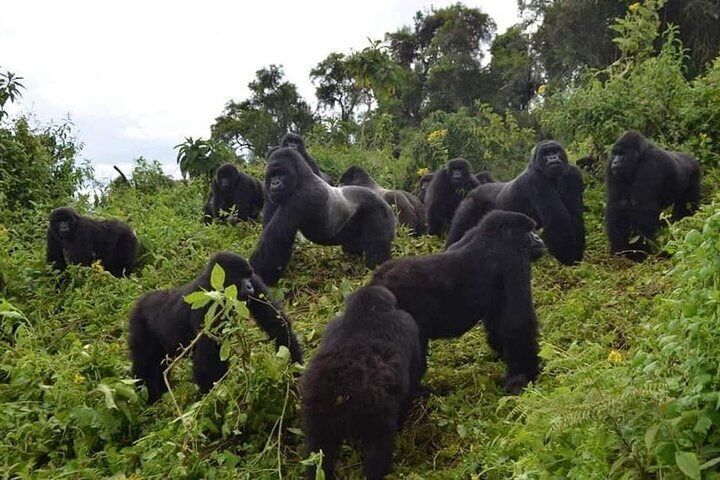
Yes, a 10-day Uganda gorilla trekking and wildlife safari is absolutely worth it, widely considered one of the most thrilling wildlife encounters in Africa. This duration allows for a perfectly paced journey, combining gorilla trekking in Bwindi with chimpanzee tracking and savannah game drives, avoiding a rushed experience.
10-days-best-photography-uganda-wildlife-safari-holiday-and-gorilla-trekking
10-days-luxury-uganda-gorilla-trekking-safari-and-big-five-safari-vacation
10-days-budget-uganda-safari-holiday-vacation-tour-road-trip
10-days-best-honeymoon-uganda-safari-tour-vacation-holiday
10-days-best-uganda-birding-safari-and-wildlife-experience
10-days-best-of-uganda-and-rwanda-all-big-five-animal-and-gorilla-trekking
10-days-uganda-gorilla-trekking-and-safari-tour-vacation-holiday
10-days-9-nights-midrange-uganda-wildlife-safari-and-cultural-experience
10-days-uganda-safari-all-big-five-gorilla-and-chimpanzee-tracking-adventure
10-days-uganda-rwanda-primate-safari-vacation-and-game-drive-safari
10-days-exclusive-family-uganda-safari-with-kids
Ultimate Wildlife Combination
The primary reason a 10-day safari is worth the investment is the ability to complete the "Primate and Predator" circuit. In shorter trips, travelers are often forced to choose between the great apes of the rainforest and the big cats of the savannah. With ten days, you don't have to compromise. You begin with the "Primate Double": tracking chimpanzees in Kibale Forest, where the high-energy social drama of our closest relatives plays out in the canopy, and then transitioning to the ancient, silent dignity of the mountain gorillas in Bwindi.
Complementing these primate encounters are the classic "Big Five" searches. A 10-day itinerary provides enough time to traverse the Ishasha sector of Queen Elizabeth National Park, specifically to find the rare tree-climbing lions. Unlike their cousins in the Serengeti, these prides spend their afternoons draped over the limbs of massive sycamore-fig trees—a sight that requires patience and multiple game drives to witness. This duration ensures that your wildlife portfolio is diverse, covering everything from the smallest colobus monkey to the most majestic lion.
Diverse Ecosystems
Uganda is an ecological crossroads where the East African savannah meets the West African jungle. A 10-day journey allows you to witness this dramatic transition firsthand. You start on the golden, open plains of Murchison Falls or Queen Elizabeth, where the horizon is defined by acacia trees and wandering elephant herds. Then, the topography shifts into the lush, emerald crater lakes region, and finally into the prehistoric, tangled undergrowth of the Impenetrable Forest.
The inclusion of water-based safaris adds a layer of diversity that vehicle-only trips lack. A boat cruise on the Kazinga Channel or the Victoria Nile offers a "theatre of the wild" from a unique vantage point. You can drift within meters of wallowing hippos, massive Nile crocodiles, and buffalos cooling off in the reeds. For birdwatchers, these ecosystems are a paradise; within ten days, you can spot over 300 species, ranging from the prehistoric-looking shoebill stork in the swamps to the vibrant Great Blue Turaco in the rainforest canopy.
Proximity to Gorillas
While the cost of a gorilla permit in 2026 ($800) is significant, a 10-day trip contextualizes this expense as a high-value conservation investment. The "worth" of the safari is crystallized in the sixty minutes you spend with a habituated gorilla family. This is not a zoo experience; it is an intimate entry into their living room. Standing just meters away from a 400-pound silverback while he watches his infants play is frequently described by travelers as the single most moving wildlife encounter on Earth.
The 10-day format enhances this experience by allowing for acclimatization. You aren't trekking while jet-lagged or exhausted from travel. By the time you reach Bwindi on Day 8 or 9, you have already adjusted to the altitude and the rhythm of the bush. This mental and physical readiness allows you to be fully present for the encounter. Furthermore, the permit fees contribute directly to the 24-hour protection of these endangered apes and the development of local communities, making the "high cost" a tangible contribution to the survival of a species.
Perfect Pace
The most underrated benefit of a 10-day safari is the human element of travel. Uganda is roughly the size of Great Britain, and the roads between national parks can be winding and unpaved. A 1-week trip often feels like a marathon of "dashboard time." In contrast, a 10-day itinerary builds in "buffer days" and leisure stops that prevent safari fatigue.
This pace allows for a multi-night stay at Lake Bunyonyi after your gorilla trek. Known as the "Place of Many Little Birds," this lake is one of the few in Africa safe for swimming and is dotted with 29 emerald islands. These extra days provide a space for reflection, where you can process the intensity of the wildlife tracking while enjoying a dugout canoe ride or a community walk. By reducing back-to-back 7-hour drives, the 10-day trip ensures you return home with vivid memories of the animals and people, rather than just the view from a car window.
10-Day Itinerary Highlights
Gorilla Trekking: Bwindi Impenetrable National Park
In 2026, mountain gorilla trekking in Bwindi remains the most transformative wildlife encounter on Earth. This "Impenetrable" UNESCO World Heritage site is home to nearly half the world’s remaining mountain gorillas. The experience begins with an early morning briefing in one of four sectors—Buhoma, Ruhija, Rushaga, or Nkuringo—where you are assigned to a habituated family. The trek is a physical dialogue with nature, as you navigate steep, tangled slopes and ancient ferns at altitudes reaching 8,500 feet. When you finally encounter a silverback, the world goes silent. You are granted one hour to observe their strikingly human social dynamics: mothers nursing infants, juveniles wrestling, and the patriarch’s watchful, amber-eyed gaze. In 2026, permit fees ($800) are a direct investment in the 24-hour protection of these apes, ensuring that your presence supports the survival of a species once on the brink of extinction.
Chimpanzee Tracking: Kibale Forest National Park
Known as the "Primate Capital of the World," Kibale Forest is a high-octane contrast to the quiet dignity of Bwindi. Home to 13 primate species, the star attraction is a population of over 1,500 chimpanzees. Unlike the slow, deliberate movements of gorillas, chimpanzees offer a high-energy spectacle of vocalizations, tool-use, and acrobatic chases through the 50-meter canopy. Tracking begins at the Kanyanchu Visitor Center, where expert guides lead you through a forest of massive mahogany trees. In 2026, the success rate for finding a community is over 95%. You will witness the complex "politics" of the forest—panting hoots that signal a fruit discovery or the frantic drumming on buttress roots. The experience is often paired with a visit to the Bigodi Wetland Sanctuary, where you can spot the Great Blue Turaco and learn how community-led tourism has turned former hunters into the forest’s most fierce protectors.
Savannah Safaris: Murchison Falls & Queen Elizabeth NP
These two iconic parks provide the "classic" African safari backdrop. Murchison Falls is Uganda's largest park, bisected by the Victoria Nile. It is the only place in 2026 to see the endangered Rothschild’s giraffe in such massive numbers. A game drive here offers views of elephants, lions, and leopards against the backdrop of the world’s most powerful waterfall. Moving south, Queen Elizabeth National Park offers a more diverse habitat, famous for its volcanic crater lakes and the "underground" forest of Kyambura Gorge. The highlight here is the Ishasha Sector, where lions famously climb sycamore-fig trees to escape the afternoon heat—a rare behavior found in few other places. These savannah days are punctuated by boat cruises on the Kazinga Channel and the Nile, where hippos and crocodiles are so dense they appear like stones in the water, providing a relaxing but high-yield perspective on the African "Big Five."
Rhino Tracking: Ziwa Rhino Sanctuary
Because rhinos were poached to extinction in Uganda's larger parks by the 1980s, the Ziwa Rhino Sanctuary is a critical, high-stakes stop on the 10-day circuit. Located in Nakasongola en route to Murchison Falls, this 7,000-hectare sanctuary is the only place in the country to see rhinos in the wild. The tracking experience is uniquely intimate because it is conducted on foot. Accompanied by armed rangers who provide 24-hour surveillance for the 32 resident white rhinos, you will trek through the bush to find these three-ton giants grazing just meters away. This close-up encounter allows you to hear the rhythmic "crunch" of their grazing and see the intricate texture of their skin. By 2026, Ziwa has become a global model for rewilding; the goal is to eventually relocate these rhinos back into Murchison Falls, making your visit a direct contribution to the restoration of Uganda's full "Big Five" heritage.
1. Is 10 days too long or too short for a Uganda safari?
Ten days is the "sweet spot" for a comprehensive Ugandan itinerary. Because the country's top attractions—Murchison Falls, Kibale, Queen Elizabeth, and Bwindi—are spread across a vast western arc, shorter trips often result in "dashboard fatigue," where travelers spend more time in a vehicle than in the wild. A 10-day window allows for a relaxed, immersive pace. It accounts for the 5-to-7-hour drives between parks, ensuring you have at least two nights at each major destination. This allows for "slow safari" moments: a quiet morning birdwatching on the balcony, a community walk in Bigodi, or a sunset boat cruise on the Nile. By day ten, you will have experienced a holistic transition from the thundering falls of the north to the misty, prehistoric jungles of the south without feeling rushed.
2. What wildlife can I see besides gorillas?
Uganda is an ecological crossroads where the East African savannah meets the West African jungle, resulting in a staggering variety of species. In Queen Elizabeth National Park, you can find the famous tree-climbing lions of the Ishasha sector—a rare behavioral trait seen in few other places. Murchison Falls is the stronghold for the endangered Rothschild’s giraffe and massive herds of elephants and buffaloes. The water-based safaris on the Kazinga Channel and the Nile reveal thousands of wallowing hippos and some of Africa’s largest Nile crocodiles. Beyond the "Big Five," you will see the "Primate Triple Crown": chimpanzees, golden monkeys, and black-and-white colobus monkeys. For birders, the prehistoric-looking shoebill stork remains the ultimate prize in the marshlands.
3. Is gorilla trekking worth the high cost?
In 2026, the cost of a gorilla permit is viewed not as a "ticket price," but as a direct conservation investment. Most travelers describe the sixty minutes spent with a habituated gorilla family as a life-altering, spiritual experience. Unlike a traditional game drive from a vehicle, trekking involves entering the gorillas' "living room" on foot. Standing just meters away from a 400-pound silverback while he watches his infants play is an intimate encounter that words often fail to capture. Furthermore, the high permit fees fund the 24-hour armed rangers who protect these apes from poachers and support community infrastructure—schools and clinics—that ensures local people see the gorillas as an asset rather than a threat.
4. How much does a gorilla permit cost?
For the 2026 season, permit prices remain a standardized part of the travel budget. For Foreign Non-Residents, the permit is $800. For Foreign Residents (with a valid work permit), it is $700, and for East African Citizens, it is 300,000 UGX. While this is a significant upfront cost, it is all-inclusive of park entry fees for the day, the services of expert trackers and armed rangers, and a certificate of completion. It is important to note that permits are limited to eight people per gorilla family per day to minimize human impact; therefore, booking 6–12 months in advance is essential to secure your spot in your preferred sector of Bwindi or Mgahinga.
5. What is the best time for a 10-day safari?
Uganda is an equatorial country, meaning it is a year-round destination, but the Dry Seasons (June to September and December to February) are the premier windows. During these months, the forest floors of Bwindi and Kibale are less slippery, and the vegetation is thinner, making it easier to track and photograph primates. In the savannah parks, wildlife tends to congregate around permanent water sources like the Nile and the Kazinga Channel, leading to high-density sightings. However, the "Emerald Season" (wet season) has its own charm: the air is dust-free, the landscapes are vibrantly green, and some luxury lodges offer reduced rates, making it an excellent time for photographers and budget-conscious travelers.
6. Are the gorillas safe to be around?
Yes, provided you follow the strict safety protocols established by the Uganda Wildlife Authority (UWA). The gorillas you will visit are "habituated," a process that takes two to three years of daily contact with researchers to ensure the animals are comfortable with human presence. While they are wild and powerful, habituated gorillas generally view humans with "neutral curiosity." You are required to maintain a 10-meter distance and speak in low tones. Armed rangers accompany every trek, not to protect you from the gorillas, but to guard against forest buffaloes or illegal activity. The rangers are experts in gorilla "body language" and will guide your movements to ensure the encounter remains peaceful.
7. How hard is the gorilla hike?
Gorilla trekking is a physical challenge that varies daily. You are hiking in a high-altitude rainforest (1,160m to 2,607m) where the terrain is steep, tangled, and often muddy. A trek can last anywhere from 2 to 7 hours depending on where the gorilla family spent the night. However, the UWA rangers are master "pace-setters"; they adjust the speed of the hike to the slowest member of the group. If you can walk for a few hours on a hilly trail at home, you can likely handle the trek. The physical exertion is part of the story—reaching the gorillas feels like a hard-earned reward, making the final encounter even more profound.
8. Can I see gorillas if I have a disability?
Uganda is a leader in accessible primate tourism. For travelers with physical disabilities or limited mobility, the "sedan chair" (often called the "helicopter" by locals) is a modern, comfortable solution. You are carried into the forest by a team of eight to twelve professional porters who navigate the steep terrain with incredible skill. This ensures that the life-changing experience of seeing mountain gorillas is not restricted by age or physical ability. Many seniors and travelers with mobility challenges successfully complete their treks this way, often citing the kindness and strength of the porters as a highlight of their journey.
9. Should I hire a porter?
Hiring a porter for $15–$20 is one of the best decisions you can make on a 10-day safari. Beyond the physical benefit of having someone carry your camera gear and water, porters provide a steadying hand on slippery slopes and can literally "push and pull" you through difficult sections of the trail. More importantly, hiring a porter is a form of direct community support. Most porters are former poachers or local residents who rely on this income to pay school fees and support their families. By hiring one, you provide a tangible economic incentive for the local community to protect the forest and its inhabitants.
10. What is the difference between trekking and habituation?
Standard Gorilla Trekking allows a group of eight people to spend exactly one hour observing a fully habituated family. This is usually enough for most visitors to get incredible photos and feel the "magic." The Gorilla Habituation Experience, available only in the Rushaga sector of Bwindi, allows a maximum of four visitors to spend four hours with a family that is still in the process of becoming used to humans. Accompanied by researchers and trackers, you play a role in the habituation process. It is a more "raw," educational, and in-depth observation that is ideal for serious photographers and wildlife enthusiasts who want to see more complex behaviors.
11. Do I need to take malaria medication?
Yes. Uganda is a high-risk malaria zone, and the mosquitoes are most active at night. It is highly recommended to consult a travel clinic at least four weeks before your 10-day safari to get a prescription for malaria prophylaxis (such as Atovaquone/Proguanil or Doxycycline). In addition to medication, you should practice "integrated pest management": wear long sleeves and pants in the evening, use insect repellent with at least 30% DEET, and always sleep under the mosquito nets provided by the lodges. Being proactive ensures that your holiday isn't interrupted by preventable illness.
12. What should I pack for this trip?
Packing for Uganda requires a "multi-climate" approach. Essential items include:
- Sturdy hiking boots with good ankle support (worn-in before you arrive).
- Trousers and long-sleeved shirts (lightweight and moisture-wicking) to protect against stinging nettles and ants.
- Gardening gloves: Essential for gripping vines and branches during the steep forest climbs.
- A waterproof rain jacket: It can rain at any time in the rainforest, even in the dry season.
- A wide-brimmed hat and polarized sunglasses for savannah game drives.
- A daypack with a rain cover to keep your camera gear and lunch dry.
13. Will I definitely see a gorilla?
While no wildlife encounter can be 100% guaranteed, the success rate for gorilla sightings in Uganda is over 95%. This high probability is due to the "advanced trackers" who head into the forest at dawn to locate the family at the spot where they nested the night before. These trackers communicate via radio with your lead guide, directing your group toward the gorillas' current location. If a family moves significantly, the rangers will track them through the dense brush. In the extremely rare event that a family cannot be found, the UWA typically offers a second trek the following day or a partial refund.
14. Is it worth visiting Kibale National Park on this trip?
Absolutely. Kibale is the "Primate Capital of the World" and is the perfect complement to a Bwindi gorilla trek. While gorillas are calm and sedentary, chimpanzees are high-energy, vocal, and acrobatic. Seeing both offers a fascinating comparison of our closest living relatives. Kibale’s chimpanzee tracking has a success rate similar to Bwindi’s gorillas. Furthermore, the park is home to 12 other primate species, including the rare L’Hoest’s monkey and the Red Colobus. Including Kibale in your 10-day itinerary ensures you experience the full "Great Ape" spectrum of Africa in two very different forest environments.
15. How does 10 days in Uganda compare to Kenya/Tanzania?
Uganda offers a "jungle-meets-savannah" experience that is more intimate and rugged than the vast, open plains of Kenya or Tanzania. While Kenya and Tanzania are the undisputed kings of the Great Migration and massive herds, Uganda provides a more diverse "all-in-one" package. Within 10 days, you can experience the thunderous Nile, the dense rainforests of the Congo basin, and the classic East African savannah. Uganda is less about "mass tourism" and more about exclusive, deep-forest encounters. If your goal is to see primates in their natural habitat while still enjoying a Big Five safari, Uganda is the superior choice for a single-country 10-day holiday.
Booking 10 days Uganda safari with us Roads of Adventure safaris
Booking a 10-day Uganda safari with Roads of Adventure Safaris (info@roadsofadventure.com) typically involves a curated itinerary featuring gorilla tracking, chimpanzee trekking, and wildlife viewing in national parks like Murchison Falls, Kibale, and Queen Elizabeth. Specialized in personalized journeys, they handle logistics including transport, accommodations, and permits
