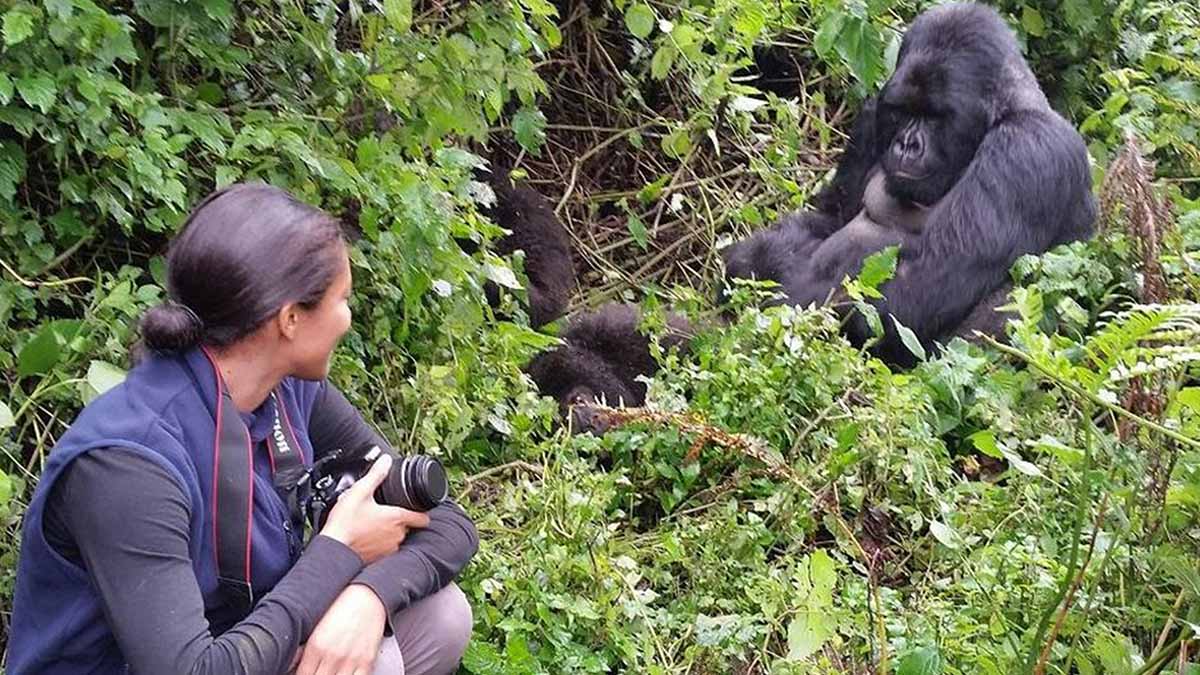
To combine Uganda and Kenya, fly between Entebbe (EBB) and Nairobi (NBO) using regional carriers like Kenya Airways or RwandAir. Start in Kenya for vast plains (Masai Mara), then fly to Uganda for primate treks (Bwindi gorillas, Kibale chimps). Secure the East Africa Tourist Visa ($100) to cover both nations
18-days-exclusive-kenya-tanzania-safari-to-uganda-primate-safari
17-days-luxury-kenya-tanzania-safari-and-bwindi-gorilla-trekking-in-uganda
16-days-kenya-tanzania-safari-and-rwanda-gorilla-trekking
14-days-uganda-gorilla-trekking-kenya-wildlife-safari-parks-and-diani-beach
13-days-kenya-tanzania-safari-and-uganda-gorilla-trekking
12-days-kenya-and-uganda-primate-and-savanna-circuit
9-days-combined-safari-in-kenya-and-primate-experience-in-uganda
8-days-best-of-uganda-gorilla-trekking-chimps-and-kenya-big-five-safari-combo
Flights & Cross-Border Travel
By Air: The 1-Hour Regional Flight
Flying between Entebbe International Airport (EBB) in Uganda and Nairobi’s Jomo Kenyatta International Airport (NBO) is by far the fastest and most seamless way to travel between the two nations. Lasting just around an hour, these direct daily connections—frequently operated by regional carriers like Kenya Airways or Uganda Airlines—turn what would be a full day’s journey on the road into a swift hop across Lake Victoria. For travelers on tighter itineraries or those looking to maximize their time on safari, this route offers unmatched efficiency.
From an operational standpoint, air travel eliminates the delays associated with physical border crossings. You handle customs, security, and immigration in structured, modern terminals designed for transit. If you hold the East Africa Tourist Visa (or relevant entry approvals), transitioning through immigration at EBB or NBO is typically straightforward.
However, convenience comes with trade-offs. Regional flights carry higher ticket costs compared to ground options, and strict baggage limits apply—especially on regional jets or feeder connections flying into smaller wildlife airstrips like Wilson Airport (WIL). Heavy luggage or rigid suitcases may require excess fees or cargo re-arrangements, so packing light in soft-sided duffel bags is recommended.
Overall, air travel caters to travelers prioritizing speed, comfort, and minimal fatigue. You can easily eat breakfast in Entebbe, board a mid-morning flight, and land in Nairobi in time for lunch or a quick afternoon game drive, preserving your energy for the adventure ahead.
Overland: The 10 to 14-Hour Road Journey
For budget-conscious travelers, backpackers, and seekers of an authentic local experience, taking an overland bus or driving from Kampala to Nairobi offers a compelling, albeit long, journey. Covering roughly 650 kilometers (400 miles), the trip takes anywhere from 10 to 14 hours depending on traffic, road conditions, and border processing times. Standard long-distance coach operators like Jaguar Executive, Mash East Africa, and Modern Coast depart daily, connecting the two regional capitals.
The route takes you through rural East Africa, passing lush tea plantations, small trading towns, and rolling hills before reaching the primary border crossings at Malaba or Busia. Crossing the border on foot requires queuing up at One-Stop Border Posts (OSBP), where immigration officials inspect passports, process visas, and check Yellow Fever vaccination cards. While these facilities are designed to streamline immigration and customs under one roof, wait times can fluctuate wildly depending on freight truck traffic and queue lengths.
Taking the bus drastically lowers your transport budget, leaving more funds for safari permits and activities. It also provides a raw, unfiltered perspective on day-to-day life in Uganda and Kenya that you simply miss from 30,000 feet.
That said, the journey requires resilience. Long hours on bumpy roads, unexpected border delays, traffic bottlenecks into Nairobi, and minimal onboard amenities mean it is not suited for everyone. If you choose the overland route, pack snacks, plenty of water, a portable charger, and extra patience for the border processing.
Visas & Documentation
Visas & Entry Documentation
Crossing borders between Kenya and Uganda is remarkably hassle-free thanks to the East Africa Tourist Visa (EATV). Costing $100, this joint multi-entry pass grants you up to 90 days of seamless travel across Uganda, Kenya, and Rwanda. Instead of buying individual visas for each stop, this single permit keeps your itinerary moving smoothly.
The ultimate golden rule? Apply through the portal of the nation you enter first.
- Kenya First: Apply online via Kenya's official eCitizen / eTA portal.
- Uganda First: Apply online via the Uganda Electronic Visa System.
Keep in mind that the EATV stays valid only while you remain within the three participating nations. If you take a side trip to Tanzania or head home, the visa instantly expires.
To apply online, prepare clear digital copies of the following:
- Passport: Valid for at least six months past your return date.
- Yellow Fever Certificate: Mandatory for entry into both nations.
- Passport Photo & Travel Itinerary: Proof of return flights and safari bookings.
Sorting these documents ahead of time guarantees a painless transition at airport customs or border checkpoints like Malaba.
Gorilla & Chimpanzee Tracking Permits
Securing your primate permits is the most critical step when planning the Ugandan leg of your trip. To protect these vulnerable species, the Uganda Wildlife Authority (UWA) strictly limits daily visitor numbers, releasing permits on a strict first-come, first-served basis.
For mountain gorilla trekking in Bwindi Impenetrable or Mgahinga National Park, permits cost $800 for foreign non-residents. This covers park entry, armed rangers, and an unforgettable one-hour encounter with a habituated gorilla group once located. Because entry is capped at just eight visitors per group daily, permits sell out months ahead. Reserve yours 3 to 6 months in advance, especially for peak dry months.
Over in Kibale National Park—the primate capital of the world—chimpanzee tracking permits cost roughly $250 for foreign non-residents. You'll spend an exhilarating hour observing active chimp communities foraging and playing in the canopy.
Keep these mandatory rules in mind:
- Age Limits: Minimum age is 15 years for gorilla trekking and 12 years for chimpanzee tracking.
- Health Policy: Because primates share over 98% of human DNA, anyone displaying contagious illness symptoms (like colds or flu) will be turned away to protect the animals.
Top Safari Highlights
Kenya: Masai Mara & The Savannah Icons
Kenya’s Masai Mara National Reserve remains the world’s gold standard for classic, open-savannah game viewing. Spanning rolling golden grasslands dotted with acacia trees, the reserve is home to exceptional densities of wildlife year-round. Here, tracking the classic Big Five—lions, leopards, elephants, buffaloes, and rhinos—feels remarkably natural, with big cats routinely spotted lounging on rocky kopjes or stalking game through the afternoon heat.
The Mara's ultimate spectacle unfolds between July and October during the legendary Great Wildebeest Migration. Over a million wildebeest, zebras, and gazelles surge across the Mara River from Tanzania’s Serengeti in search of fresh grazing. Witnessing these massive herds brave crocodile-infested river crossings while hungry predators wait along the banks is a raw, heart-pounding encounter with nature that defines African safari travel.
Beyond the major wildlife moments, the Mara captivates through its rich cultural heritage and expansive horizons. Floating above the plains in a sunrise hot air balloon or sharing stories with local Maasai warriors adds an unforgettable human dimension to the landscape.
Uganda: Bwindi Gorillas & Kibale Chimpanzees
In striking contrast to Kenya’s wide-open plains, Uganda offers deep immersion into ancient, emerald rainforests housing world-renowned primate sanctuaries.
In Bwindi Impenetrable National Park, trekking through mist-shrouded, vine-draped hills leads to one of Earth’s most profound encounters: standing face-to-face with habituated mountain gorillas. Crouled silently in the jungle while watching a powerful silverback guard his family or watching playful juveniles wrestle in the brush is a deeply moving experience that makes every steep climb worthwhile.
Heading north to Kibale National Park—often celebrated as the primate capital of the world—the atmosphere shifts to high-energy excitement. Home to 13 distinct primate species, Kibale’s star attraction is its vibrant wild chimpanzee populations. Guided treks take you deep into the canopy, where echoing pant-hoots announce active chimp communities foraging, grooming, and leaping through the trees.
How do I fly between Entebbe and Nairobi smoothly?
Taking a direct flight between Entebbe International Airport (EBB) and Nairobi’s Jomo Kenyatta International Airport (NBO) is the simplest way to connect your Uganda and Kenya safaris. Regional carriers like Kenya Airways and Uganda Airlines offer multiple daily non-stop flights that take just around an hour. Instead of spending an entire day traveling over bumpy roads, you can enjoy a quick hop across Lake Victoria, leaving you with plenty of energy for your next adventure.
To ensure everything goes smoothly, plan to arrive at the airport about two to three hours before departure to clear security and immigration. Keep your travel documents—like your passport, visa confirmation, and Yellow Fever health certificate—handy in your carry-on.
It is also wise to keep luggage limits in mind. Small regional jets and safari bush planes strictly enforce weight allowances, so packing your gear in soft-sided duffel bags rather than hard shell suitcases will save you from repacking or paying extra fees. In just a short hop, you can move from Uganda's lush jungles to Kenya’s sprawling savannahs without missing a beat.
Is taking an overland bus between Kampala and Nairobi practical?
Traveling by land between Kampala and Nairobi is a viable option, particularly for budget-conscious travelers, backpackers, or those who enjoy slow travel. Established long-distance bus operators run daily services connecting both capitals. The full journey covers roughly 650 kilometers and generally takes anywhere from 10 to 14 hours. Along the way, you will drive through rural East African landscapes, passing tea plantations, small trading towns, and rolling green countryside.
While the affordable bus fare saves you money compared to airfare, you should be prepared for a long day on the road. Traffic heading into Nairobi and border processing at Malaba or Busia can cause unexpected delays. At the border, passengers must disembark with their luggage to walk through immigration and customs at the One-Stop Border Post.
If you choose the bus, bring plenty of drinking water, snacks, a fully charged power bank, and a flexible mindset. It offers an authentic look at daily life in the region, but it requires resilience and extra patience.
How does the East Africa Tourist Visa work across borders?
The East Africa Tourist Visa (EATV) is a joint travel permit designed to make multi-country trips seamless and cost-effective. For a flat fee of $100, this single visa allows non-resident foreign tourists multiple entries across Uganda, Kenya, and Rwanda for up to 90 days. It eliminates the hassle and expense of purchasing separate entry visas for each country you visit along your itinerary.
The most important rule to remember is that you must apply through the online portal of the country you enter first. If your flight lands in Nairobi first, you apply through Kenya’s electronic portal. If your trip starts in Entebbe, you apply via the Uganda Electronic Visa System.
Additionally, the EATV remains valid only while you stay within the three member nations. If you step outside the region—for example, taking a side trip to Tanzania or returning home briefly—the visa instantly expires, and you will need to apply for a new one to re-enter. Sorting out this visa in advance ensures a fast and stress-free experience at airport customs and border crossings.
What mandatory health documents do I need before traveling East Africa?
When traveling between Uganda and Kenya, carrying the right health documentation is just as critical as having your passport and visa. The single most important health requirement for entering both nations is a valid international Yellow Fever vaccination certificate. Immigration officials and airline staff will check for this document before allowing you to board flights or pass through land borders, so keep it easily accessible in your travel binder.
The Yellow Fever vaccine must be administered at least 10 days before your arrival date to be considered officially valid by border authorities. Aside from Yellow Fever, it is strongly recommended to consult a travel clinic prior to your trip regarding malaria prophylaxis, as both countries sit in malaria-endemic zones.
Routine travel vaccinations—such as Hepatitis A, Typhoid, and Tetanus—are also recommended for general safety. If you plan to trek with mountain gorillas or chimpanzees, ensure you are in good overall health. Primates share over 98% of human DNA, meaning travelers showing signs of contagious illness like a cold or flu will be barred from trekking to protect wild populations.
When should I book my gorilla and chimpanzee tracking permits?
Securing your primate permits as early as possible is the single most vital step when planning a Ugandan safari. The Uganda Wildlife Authority strictly limits the number of daily visitors to protect wild primate populations and their natural habitats. Because demand consistently exceeds supply, permits sell out fast—especially during the primary dry seasons from June to September and December to February.
Gorilla tracking permits in Bwindi Impenetrable or Mgahinga National Park cost $800 for foreign non-residents. Since only eight travelers are allowed to visit a specific gorilla family each day, you should book your permits three to six months in advance to secure your preferred dates and trekking sectors.
Chimpanzee tracking permits in Kibale National Park cost roughly $250 for foreign non-residents. While chimp permits are slightly more abundant than gorilla permits, they also sell out quickly during peak travel months. Working with a registered local tour operator guarantees that your permits are reserved properly alongside your accommodation and transport, preventing last-minute disappointment.
What makes the Masai Mara Great Migration experience so unique?
The Great Wildebeest Migration in Kenya’s Masai Mara National Reserve is widely considered one of the greatest natural wildlife spectacles on Earth. Every year between July and October, over a million wildebeest, alongside hundreds of thousands of zebras and gazelles, travel northward from Tanzania’s Serengeti into the Mara in search of fresh green pastures. The sheer scale of animal herds moving together across open golden grasslands creates an unforgettable atmosphere.
The most dramatic moments occur during river crossings at the Mara and Talek Rivers. Driven by instinct and hunger, massive herds gather along the riverbanks before plunging into treacherous, rushing waters. Travelers watch in awe as animals navigate steep embankments while attempting to evade massive Nile crocodiles and lurking savannah predators like lions and leopards waiting on the banks.
Beyond the migration itself, the Masai Mara boasts exceptional big cat populations year-round. Paired with wide horizons and magnificent sunrises, witnessing this raw surge of life across the savannah offers a powerful safari experience unlike anywhere else in the world.
What should I expect during a mountain gorilla trek in Bwindi?
Trekking mountain gorillas in Bwindi Impenetrable National Park is an intense, deeply rewarding adventure that puts you directly into the heart of an ancient rainforest. Your day begins early with a safety briefing at park headquarters, where rangers assign you to a specific habituated gorilla family based on fitness levels. Armed rangers and expert trackers then lead small groups of up to eight visitors into the dense, jungle terrain.
The hike itself can range anywhere from one to six hours depending on where the gorilla family moved overnight. You will navigate steep hillsides, thick foliage, and muddy trails, making a good level of physical fitness and sturdy hiking boots essential.
Once your team locates the gorillas, all the physical effort instantly vanishes. You are permitted to spend one quiet hour observing these gentle giants as they feed, groom, and interact in their natural habitat. Watching a massive silverback guard his family while playful juveniles tumble through the vines is a breathtaking, emotional encounter that stays with you forever.
How does chimpanzee tracking in Kibale differ from gorilla trekking?
While both activities bring you face-to-face with wild primates in Uganda, chimpanzee tracking in Kibale National Park offers a distinctly different pace and atmosphere compared to gorilla trekking. Bwindi’s terrain involves steep, slow-paced climbs through thick mountain jungle, whereas Kibale features flatter, gentler forest paths. However, the animals themselves move much faster, making the tracking experience dynamic and high-energy.
Chimpanzees are highly active and vocal creatures. Long before you spot them, you will hear echoing pant-hoots and tree-drumming reverberating through the rainforest canopy. Once located, you might find them foraging on the forest floor, grooming in small groups, or swinging skillfully through the high trees.
Unlike mountain gorillas, who tend to remain relatively still while munching on vegetation, chimpanzee communities are constantly on the move. Following a chimp group requires quick footwork and a keen eye as they leap between branches overhead. Spending an hour in the middle of a lively chimp community provides a thrilling look into the social complexity and intelligence of our closest living animal relatives.
What is the best season to combine both Uganda and Kenya?
Choosing the right time to visit ensures you get optimal weather for both savannah game drives and forest trekking. The absolute best windows to combine Kenya and Uganda are during the region's two distinct dry seasons: January to February and June to October.
The January to February period brings warm, dry weather across East Africa. In Kenya, shorter grass makes spotting big cats easier around waterholes, while Uganda’s forest trails dry out, making gorilla and chimp trekking far less slippery. It is an ideal window for travelers seeking great wildlife conditions with slightly fewer tourists.
The June to October window is the classic high season. In Kenya, this period aligns perfectly with the Great Migration in the Masai Mara, providing non-stop predator action and river crossings. In Uganda, clear skies and minimal rain make navigating Bwindi’s steep jungle ridges much easier. Because this coincides with international summer holidays, booking your permits, flights, and lodges well in advance for these months is essential.
How should I pack for both savannah and rainforest environments?
Packing for a combined Kenya and Uganda safari requires preparing for two very different environments: open, dusty savannahs and cool, humid rainforests. The key to comfortable travel is packing versatile, lightweight layers in neutral, earthy tones like khaki, tan, or olive green. Avoid bright colors that scare off wildlife, as well as dark blue or black clothing, which can attract biting tsetse flies in certain wilderness areas.
For Kenya’s game drives, bring breathable clothing, a wide-brimmed sun hat, sunglasses, and a warm jacket for chilly early morning drives. For Uganda’s rainforests, sturdy waterproof hiking boots with good ankle support are non-negotiable. You will also need lightweight, long-sleeved shirts and long pants to protect your skin against nettles, thorny vines, and insects.
Essential accessories include high-traction gardening gloves for gripping forest vegetation on steep climbs, a reliable rain jacket, insect repellent, and dry bags to protect your camera gear from sudden rain showers. Keeping your total gear in soft-sided luggage ensures smooth transfers on regional flights.
Booking Uganda Kenya safari with us Roads of Adventure safaris
Ready to plan your cross-border escape? Booking a combined Uganda-Kenya journey with Roads of Adventure Safaris is simple. Contact our team directly at info@roadsofadventuresafaris.com, call +256 701041637, or send an inquiry right through the Roads of Adventure Safaris website.
We handle all complex logistics, from securing competitive rates to reserving your $800 gorilla e-permits and organizing seamless transfers into Kenya’s Masai Mara. A 30% deposit locks in your permits and accommodations, with the remaining balance due 60 days before departure. Let us design a smooth, custom itinerary built entirely around your dream adventure!
