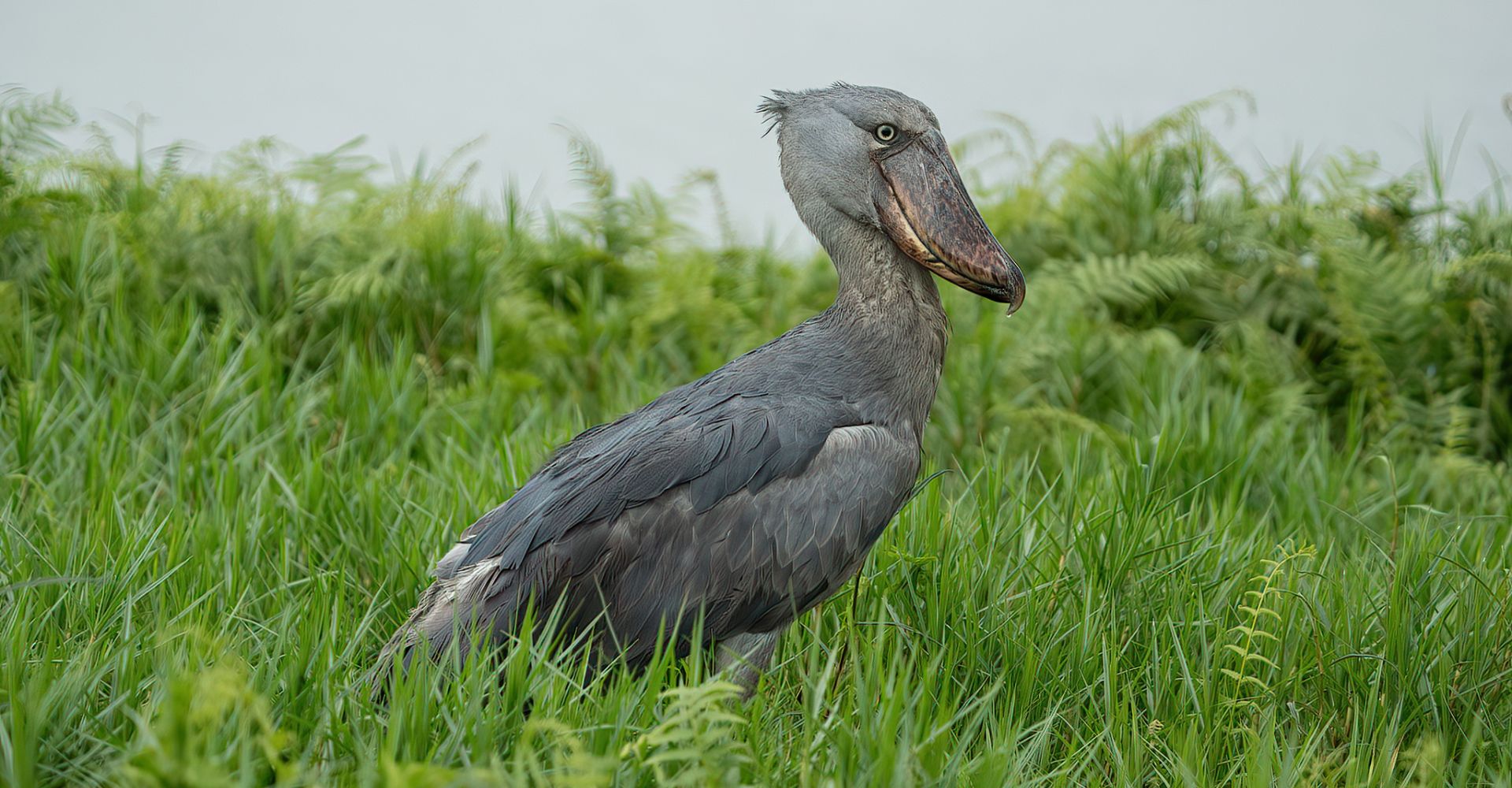
A 20-day Uganda birding safari covers key sites like Mabamba Swamp, Lake Mburo, Bwindi, Queen Elizabeth, Kibale, Semuliki, and Murchison Falls, often starting in Entebbe. Travelers typically use specialized 4x4 vehicles with local expert birding guides to spot over 1,000 species, including the Shoebill, plus gorillas and chimps
30-days-best-uganda-birding-safari-extravaganza-and-wildlife-safari
25-days-complete-uganda-birding-safari-extravaganza-with-wildlife-viewing
22-days-best-uganda-primate-and-birding-safari-adventure
21-days-uganda-birding-safari-extravaganza-to-best-uganda-safari-parks
20-days-uganda-birding-safari-wildlife-gorilla-and-chimpanzee-tracking
20-days-uganda-birding-safari-to-uganda-national-park
19-days-best-photography-uganda-birding-safari-and-wildlife-adventure
Best Time to Visit
Timing a 20-day birding odyssey in Uganda requires balancing the country’s equatorial climate with the breeding and migratory cycles of its 1,070+ species. While Uganda is a perennial birding destination, the primary dry seasons (June to September and late December to February) are widely considered the most productive. During these windows, forest trails in Bwindi and Kibale are firmer, making it easier to navigate the steep terrain in search of secretive undergrowth dwellers. Furthermore, many Albertine Rift endemics are more vocal during these periods, and the lack of dense rain-wash improves visibility through the canopy.
For those interested in Palearctic and Afrotropical migrants, the months of October to April are spectacular. Millions of birds escape the northern winters, flooding Uganda’s savannahs and wetlands. If your goal is to see the iconic Shoebill, the dry months are advantageous as the water levels in marshes like Mabamba recede, concentrating the birds in predictable fishing spots. However, even the "wet" seasons (March to May) have their charms; the landscape is vibrantly green, offering stunning photographic backdrops, and many species display their most brilliant breeding plumages. Because a 20-day trip covers vast distances and multiple altitudes, the dry season ensures that your logistical schedule remains on track, avoiding the "black cotton" mud that can occasionally bog down vehicles in the remote north or the Semuliki valley.
Mabamba Wetland
Located on the edge of Lake Victoria near Entebbe, Mabamba Wetland is arguably the most famous birding site in East Africa, primarily because it offers the highest statistical probability of sighting the Shoebill. This prehistoric-looking bird, often described as a "living fossil," haunts the extensive papyrus fringes and water lily pads of the swamp. The experience is intimate and unique: you navigate the narrow channels in a traditional wooden canoe paddled by local community guides who possess an uncanny ability to spot the bird's grey silhouette against the reeds.
Beyond the Shoebill, Mabamba is a RAMSAR site of international importance. As your canoe glides through the marsh, you are likely to see the Lesser Jacana, African Pygmy Goose, and the Blue-breasted Bee-eater. The swamp is also a stronghold for the Papyrus Gonolek and the White-winged Swamp Warbler. Birding here is often done in the early morning when the air is cool and the Shoebill is most active, standing motionless for hours as it hunts for lungfish. For many birders, Mabamba is the "prologue" to their Ugandan adventure, providing a high-impact start just minutes away from the international airport.
Lake Mburo National Park
Lake Mburo is a compact but biologically rich park that serves as the perfect transition from the humid Victoria basin to the western highlands. It is the only place in southern Uganda where you can find acacia-associated species in abundance. The park's mosaic of sculpted hills, rolling savannah, and ancient Precambrian rocks provides a habitat for the Red-faced Barbet (a regional endemic), the Tabora Cisticola, and the Green-capped Eremomela. The park is also famous for its high concentration of African Finfoots, which are best seen via a boat launch on the lake itself.
The African Finfoot is a notoriously shy and elusive bird, but in the quiet inlets of Lake Mburo, it can often be seen paddling near the overhanging roots of the fringing trees. While on the water, birders can also spot the White-backed Night Heron and the African Fish Eagle. On land, the presence of large herbivores like Burchell’s Zebra and Eland creates a unique ecosystem where Yellow-throated Longclaws and Rufous-bellied Herons thrive. Because the park lacks elephants and lions, it is one of the few places where "bush walks" are permitted, allowing birders to get off the vehicle and approach species with a level of intimacy not possible in the larger, more predatory savannah parks.
Bwindi Impenetrable National Park
Bwindi is the "Holy Grail" of African birding. This ancient, mist-shrouded rainforest is home to 23 of Uganda’s 24 Albertine Rift endemics. The park is divided into several birding sectors, with Ruhija being the most critical for serious listers. This high-altitude region provides access to the Mubwindi Swamp, the only place in the world where you can reliably find the African Green Broadbill. This tiny, lime-green bird is a master of camouflage, but seeing it is a crowning achievement for any world birder.
The "Impenetrable" forest lives up to its name, with birding often conducted along the steep main road or specialized forest trails. You’ll be searching for the Grauer’s Warbler, Short-tailed Warbler, and the Regal Sunbird. The Buhoma sector, at a lower elevation, offers sightings of the Black-billed Turaco and the Black-faced Rufous Warbler. Because Bwindi’s altitude varies significantly, the species turnover is rapid; a 500-meter change in elevation can reveal a completely different set of birds. The forest is also the primary home of the Mountain Gorilla, meaning your birding sessions are often punctuated by the sound of snapping branches and the grunts of our primate cousins.
Mgahinga Gorilla National Park
Mgahinga is Uganda's smallest national park, but its position on the slopes of three extinct volcanoes makes it an essential stop for high-elevation specialists. The park is the Ugandan equivalent of Rwanda's Volcanoes National Park, offering access to the unique "Afro-alpine" and bamboo zones. The primary target here is the Shelley’s Crimsonwing, one of the rarest and most beautiful finches in the world. While sightings are never guaranteed, the park's "Gorge Trail" between Mt. Gahinga and Mt. Sabinyo is the most likely spot to find them.
The birding here is physically demanding but visually spectacular. As you ascend through the montane woodland, you encounter the Rwenzori Turaco, with its brilliant red wing patches, and the Archer’s Robin-Chat. The bamboo zone is home to the Mountain Yellow Warbler and the Kivu Ground Thrush. Because of its high altitude, the park is often cooler and mistier than Bwindi, creating a mystical atmosphere. Mgahinga also offers the chance to see the Golden Monkey, an endemic primate that shares this high-altitude habitat. For a 20-day trip, Mgahinga provides the specialized "top-tier" species that round out a comprehensive Albertine Rift checklist.
Queen Elizabeth National Park
Queen Elizabeth National Park (QENP) offers a dramatic shift in scenery, featuring open savannah, crater lakes, and the famous Kazinga Channel. With a bird list of over 600 species, it boasts one of the highest diversities in the world for a park of its size. The star attraction here is the boat launch on the Kazinga Channel, which allows birders to drift within feet of massive concentrations of waterbirds. You will see hundreds of Great White Pelicans, Yellow-billed Storks, and African Skimmers—the latter often seen gracefully "skimming" the water’s surface with their elongated lower mandibles.
On the plains of Kasenyi and the Ishasha sector, the birding focus shifts to raptors and grassland specialists. You might spot the Martial Eagle (Africa’s largest eagle), the Bateleur, and the Grey-crowned Crane. The park’s unique volcanic craters provide a habitat for the Lesser Flamingo during certain times of the year. For those interested in nocturnal birds, QENP is excellent for Nightjars, including the Square-tailed and Slender-tailed varieties. The sheer volume of birds here is staggering; it is not uncommon to tick off 100 species in a single day, making it a highlight for those who enjoy high-speed, high-reward birding.
Kibale Forest National Park
Kibale is globally renowned as the "Primate Capital of the World," but for birders, it is the home of the Green-breasted Pitta. This bird is perhaps the most difficult to find in Africa; it is legendary for its "display" at dawn, where it hops onto a branch and lets out a single, sharp "phew" call. Because the Pitta is active for only a short window in the early morning, birders often start their trek in the dark, guided by the pre-dawn calls of the forest.
Beyond the Pitta, Kibale is a lush lowland-to-montane forest transition zone. It holds over 330 species, including the Black Bee-eater, Blue-breasted Kingfisher, and the Yellow-spotted Barbet. The nearby Bigodi Wetland Sanctuary, a community-run project, is a haven for the Great Blue Turaco, which can be seen clumsily hopping through the canopy. While birding, you will undoubtedly encounter many of the 13 primate species, including the Chimpanzee. The soundscape of Kibale is intense, with the screams of chimps often competing with the melodic songs of the African Grey Parrot. It is a sensory-overload destination where the density of life is palpable in every square meter of foliage.
Semuliki National Park
Semuliki National Park is a unique destination because it represents the easternmost extension of the Ituri Forest (Congo Biome). For a birder, this means access to over 40 species that cannot be found anywhere else in East Africa. The forest is characterized by giant trees and a humid, lowland climate. The primary targets here are the Hornbills; Semuliki is home to the Black-casqued Wattled Hornbill, Piping Hornbill, and the White-thighed Hornbill. These large, prehistoric-looking birds are often seen flying across the road or feeding in fruiting trees.
The "Kirumia Trail" is the most famous birding path in the park, leading deep into the heart of the Congo-style jungle. Here, you can find the Nkulengu Rail, Yellow-throated Cuckoo, and the African Piculet. The park is also home to the Sempaya Hot Springs, where the boiling water creates a unique microclimate that attracts different bird life. Birding in Semuliki is often hot and humid, but the reward is a "mini-expedition" into a Central African habitat without leaving Uganda. For those looking to maximize their species count, Semuliki is an essential "expansion pack" to the traditional Ugandan safari.
Murchison Falls & Budongo Forest
Murchison Falls National Park, combined with the adjacent Budongo Forest, offers a spectacular finale to a 20-day trip. Murchison is Uganda’s largest park, split by the Victoria Nile. The northern savannah is home to the Abyssinian Ground Hornbill, Denham’s Bustard, and the Northern Carmine Bee-eater. A boat trip to the base of the falls is a must, offering a chance to see the Rock Pratincole perched on the spray-drenched rocks and, occasionally, the Shoebill in the delta area where the Nile enters Lake Albert.
Nearby, the Budongo Forest holds the "Royal Mile," widely regarded as one of the best birding tracks in Africa. This wide, flat forest road allows for easy viewing of canopy species like the Chocolate-backed Kingfisher, Dwarf Kingfisher, and the Ituri Batis. The Royal Mile is famous for its towering mahogany trees, which provide a home for the Lemon-bellied Crombec and the Chestnut-capped Flycatcher. Budongo also offers some of the best chimpanzee tracking in the country, allowing you to combine high-end forest birding with world-class primate viewing in a single day.
Optional Activities: Primates
While birding is the primary focus of a 20-day trip, Uganda’s "Big Three" primates—Mountain Gorillas, Chimpanzees, and Golden Monkeys—are impossible to ignore. Most birding itineraries are designed to seamlessly integrate these encounters. In Bwindi or Mgahinga, you can swap your binoculars for a trekking pole for one day to visit a gorilla family. This experience is often described as spiritual; sitting just meters away from a 400-pound silverback is a profound reminder of our place in the natural world.
Similarly, in Kibale or Budongo, chimpanzee tracking offers a high-energy contrast to the patient pace of birding. Watching a troop of chimps hunt, play, and vocalize in the canopy is an exhilarating experience. For many birders, these primate encounters provide a welcome "reset" for the eyes after days of squinting at small, brown warblers in the canopy. These activities also contribute significantly to the conservation of the forests you are birding in, as the revenue from primate tourism is the primary driver for protecting these vital habitats from encroachment.
Logistics: 4x4 Transportation
Navigating Uganda’s diverse terrain over 20 days requires a robust 4x4 safari vehicle. While the main highways are generally paved and in good condition, the access roads to national parks like Bwindi, Semuliki, and Kidepo can be challenging. During the rainy season, these tracks can turn into deep mud, and during the dry season, they can be incredibly dusty and corrugated. A vehicle with high ground clearance and a 4WD system is essential for reaching the best birding spots, which are often "off the beaten path."
A specialized safari vehicle, such as a customized Toyota Land Cruiser, usually features a "pop-up roof," which is an invaluable tool for birders. This allows you to stand up and scan the canopy or savannah from an elevated position without leaving the safety of the vehicle. These cars are also equipped with long-range fuel tanks and heavy-duty suspension to ensure comfort over the long distances between parks. For a 20-day itinerary, your vehicle is essentially your mobile base camp, and having a reliable, well-maintained machine is the difference between a successful trip and a logistical nightmare.
Logistics: Specialized Guides
In the world of birding, a specialized birding guide is your most valuable asset. Unlike general safari guides, birding specialists are trained in "ear birding"—the ability to identify hundreds of species by their calls alone. In dense forests like Bwindi or Kibale, where 90% of the birds are heard rather than seen, this skill is the only way to find target species. A great guide knows the specific territories of rare birds and can use a "pasha" (a low-volume playback or whistle) to bring secretive species into view.
Beyond identification, a specialized guide manages the logistics of your 20-day journey. They coordinate with local "site guides" at places like the Royal Mile or Mabamba, ensuring you are in the right place at the right time. They understand the behavior of the birds—knowing, for example, which fruiting tree is currently attracting Turacos or where a specific owl roosts during the day. Because Uganda is a multi-lingual country, your guide also acts as a cultural bridge, helping you navigate local communities. Investing in a top-tier birding guide is the single best way to ensure you maximize your "life list" and understand the complex ecology of the region.
Logistics: Documentation
Preparing for a 20-day Ugandan safari involves essential paperwork. Most travelers are required to apply for a Uganda Tourist Visa or the East African Tourist Visa (if combining with Rwanda or Kenya) via the official online portal. Gone are the days of "visa on arrival" at Entebbe; you must have your e-visa approval letter printed before you board your flight. The process is generally straightforward but should be initiated at least three weeks before departure to avoid last-minute stress.
Health documentation is equally critical. A Yellow Fever vaccination certificate is a mandatory requirement for entry into Uganda. You will likely be asked to present your "Yellow Card" to health officials at the airport. Additionally, because you will be spending time in mosquito-prone wetlands and savannahs, taking malaria prophylactics is strongly recommended. For those planning to trek gorillas or chimpanzees, ensure you have travel insurance that covers "emergency evacuation," as these activities take place in remote, high-altitude areas. Having all your documents—digital and physical copies—organized in a waterproof folder will ensure your transitions through airports and park gates are seamless.
20-Day Uganda Birding Safari: The Pearl of Africa Avian Odyssey
Uganda is widely considered the ultimate African birding destination, boasting a checklist of over 1,070 species within a remarkably compact geographical area. This 20-day odyssey is meticulously designed to traverse the most significant ecological zones of the "Pearl of Africa," from the vast Victoria Basin and the Albertine Rift montane forests to the semi-arid savannahs of the north. You will seek out the legendary Shoebill in the papyrus swamps of Mabamba, hunt for the elusive African Green Broadbill in the mists of Bwindi, and explore the Congo-biome specialties of the Semuliki Valley.
Beyond the extraordinary birdlife, this itinerary seamlessly integrates world-class primate encounters, including trekking for Mountain Gorillas and Chimpanzees. Led by expert local birding guides who possess an uncanny ability to identify species by call alone, this journey offers a deep immersion into the biodiversity of the Nile’s headwaters. Prepare for a sensory-rich adventure through crater lakes, tropical rainforests, and thunderous waterfalls in search of Africa's most coveted avian rarities.
Days 1–2: Entebbe and Mabamba Wetland
Day 1: Arrival and Entebbe Botanical Gardens Your journey begins on the lush shores of Lake Victoria. After a warm welcome at Entebbe International Airport, a short transfer brings you to your hotel. The afternoon is spent at the historic Entebbe Botanical Gardens, a haven for "garden birding." Here, you’ll encounter the Great Blue Turaco, Ross’s Turaco, and the Orange-tufted Sunbird. The towering trees are often alive with the chatter of Black-and-white-casqued Hornbills, while the lakeside reeds host the Slender-billed Weaver and Golden-backed Weaver. It is the perfect, low-pressure introduction to Uganda’s vibrant colors and diverse calls before the more intensive forest birding begins in the days to follow.
Day 2: The Search for the Shoebill at Mabamba Swamp An early start takes you to the Mabamba Wetland, a RAMSAR site famous for the prehistoric Shoebill. Navigating the narrow papyrus channels in a traditional wooden canoe, you’ll search for this "Living Fossil" as it hunts lungfish. The swamp is also a stronghold for the Papyrus Gonolek, Blue-breasted Bee-eater, and African Pygmy Goose. Watch for the Lesser Jacana skipping across lily pads and the Malachite Kingfisher perched on reed stalks. After an exhilarating morning on the water, you return to Entebbe to finalize preparations for the drive inland. This day often provides the first "life bird" for many, setting a high standard for the remainder of the safari.
Days 3–4: Lake Mburo National Park
Day 3: Transit to Lake Mburo and Evening Game Drive The drive west takes you across the Equator, stopping for a quick photo before entering the acacia-dotted landscapes of Lake Mburo National Park. This park is the only place in southern Uganda to see certain acacia-associated species. An evening game drive offers sightings of the Tabora Cisticola, Green-capped Eremomela, and the Red-faced Barbet. As the sun sets, you might spot the Pennant-winged Nightjar (seasonal) or the Square-tailed Nightjar fluttering over the tracks. The presence of Burchell’s Zebra and Impala adds a classic safari backdrop to your birding, while the whistling calls of the Yellow-throated Longclaw echo across the short-grass plains as night falls.
Day 4: Boat Launch on Lake Mburo and Bush Walk A morning boat cruise on the tranquil waters of Lake Mburo is the best way to see the elusive African Finfoot and the White-backed Night Heron. The shoreline is frequented by Giant Kingfishers and African Fish Eagles. In the afternoon, a guided bush walk allows for a silent approach to birds like the Red-headed Lovebird and Greater Blue-eared Starling. Walking through the scrub provides a different perspective than a vehicle, allowing you to hear the subtle movements of the Coqui Francolin. You’ll also scan the "Black-bellied Bustard" in the open glades. Lake Mburo’s compact size ensures high species density, making it a highly productive stop for diverse checklists.
Days 5–6: Mgahinga and Bwindi (Ruhija)
Day 5: Birding Mgahinga’s Gorge Trail Head to the southwestern tip of Uganda to Mgahinga Gorilla National Park, located on the slopes of the Virunga Volcanoes. Birding the "Gorge Trail" between Mount Gahinga and Sabinyo is physically demanding but rewarding, as it is the prime spot for high-altitude specialists. Look for the Rwenzori Turaco, Archer’s Robin-Chat, and the Rwenzori Double-collared Sunbird. The bamboo zone is a favorite for the Mountain Yellow Warbler. While birding, keep an eye out for the endemic Golden Monkey leaping through the bamboo stalks. The thin, mountain air and dramatic volcanic scenery make this one of the most atmospheric birding locations in Africa, offering species that are simply unavailable in the lowlands.
Day 6: Transfer to Bwindi (Ruhija Sector) Drive toward the Ruhija sector of Bwindi Impenetrable National Park, ascending into the mist-covered highlands. The roadside birding along "The Neck" is exceptional, offering chances for the Black Bee-eater and Cassin’s Flycatcher. Upon arrival in Ruhija, the air is noticeably cooler and the forest more ancient. The evening is spent scouting the forest edges for the Grauer’s Warbler and the Mountain Illadopsis. This sector is the highest point of the park and serves as the gateway to the most sought-after Albertine Rift endemics. The anticipation builds as you prepare for the hike into the famous Mubwindi Swamp the following day, arguably the most important birding site in Uganda.
Days 7–10: Bwindi Impenetrable Forest
Day 7: The Holy Grail – Mubwindi Swamp This is a day of high endurance and high reward. Descending deep into the forest to the Mubwindi Swamp, your primary target is the African Green Broadbill, found nowhere else in East Africa. The trail is also excellent for the Grauer’s Broadbill, Short-tailed Warbler, and the Regal Sunbird. The swamp itself hosts the Grauer’s Swamp Warbler. The dense, moss-draped trees create a challenging but magical environment where every shadow could be a rarity.
Day 8: Mountain Gorilla Trekking Swap your binoculars for a trekking pole as you set off to find the Mountain Gorillas. While this is a primate-focused day, the hike through the primary forest often reveals the Bar-tailed Trogon or Fine-banded Woodpecker. Sitting with a silverback in the "Impenetrable" forest is a spiritual experience that complements the intensity of your birding quest.
Day 9: Birding the Buhoma Sector Transfer to the lower-elevation Buhoma sector. Birding the waterfall trail provides sightings of the Black-billed Turaco, Kivu Ground Thrush, and White-bellied Robin-Chat. The change in altitude introduces new species like the Pink-footed Puffback and Luhder’s Bush-shrike. The forest here is more open, allowing for better light and photography of canopy-dwelling specialists.
Day 10: Buhoma Forest Trails Spend a full day exploring the diverse trail systems around Buhoma. Target the Many-colored Bush-shrike, Blue-throated Roller, and the African Broadbill with its distinctive mechanical "display" flight. The forest edges are productive for sunbirds and weavers, while the overhead skies are frequently patrolled by Ayres’s Hawk-eagle and Cassin’s Hawk-eagle, making for a comprehensive forest checklist.
Days 11–12: Queen Elizabeth National Park
Day 11: Birding Ishasha and the Southern Plains Drive north into the Ishasha sector of Queen Elizabeth National Park, famous for its tree-climbing lions. However, for birders, the riverine forests and savannahs are the draw. Look for the Grey Kestrel, Ross’s Turaco, and Broad-billed Roller. The open grasslands host the White-browed Coucal and Black-bellied Bustard, while the fig trees provide nesting sites for various raptors and starlings.
Day 12: Kazinga Channel Boat Trip Transfer to the Mweya Peninsula for a boat launch on the Kazinga Channel. This is a visual feast, offering close-up views of African Skimmers, Great White Pelicans, and Yellow-billed Storks. On the return drive, explore the Kasenyi plains for the Martial Eagle, Temminck’s Courser, and the Red-capped Lark. The sheer volume of waterbirds against a backdrop of hippos and elephants is unforgettable.
Days 13–15: Kibale and Fort Portal
Day 13: Transfer to Kibale Forest The journey continues toward Kibale National Park, passing through the scenic crater lake region. Stop at the Bigodi Wetland Sanctuary, a community-run boardwalk trail that is exceptional for the Great Blue Turaco, White-spotted Flufftail, and Hairy-breasted Barbet. The sanctuary is also home to eight species of primates, providing a lively and noisy birding environment in the secondary forest.
Day 14: Chimpanzee Trekking and Birding The morning is dedicated to tracking Chimpanzees in the high-canopy forest. While moving through the trees, keep an ear out for the Green-breasted Pitta, which displays at dawn. The forest floor is home to the Red-chested Owlet and Scaly-breasted Illadopsis. In the afternoon, focus on the forest edges for the Black-and-white Shrike-flycatcher and the Yellow-spotted Barbet.
Day 15: Birding Fort Portal Crater Lakes Explore the lush environs of Fort Portal. The garden birding around the crater lakes is superb, featuring the Slender-billed Starling, Mountain Wagtail, and Black-throated Apalis. The dramatic views of the Rwenzori Mountains (Mountains of the Moon) provide a stunning backdrop as you scan the reed beds for the Fan-tailed Widowbird and the Northern Brown-throated Weaver.
Days 16–19: Semuliki and Budongo Forest
Day 16: Semuliki – Congo Biome Birding Enter Semuliki National Park, a lowland forest that represents an extension of the Congo Basin. This is the place for "specialties" like the Black-casqued Wattled Hornbill, Piping Hornbill, and Nkulengu Rail. The heat and humidity are high, but the chance to see species like the Yellow-throated Cuckoo and African Piculet makes it an essential stop for serious collectors.
Day 17: The Royal Mile (Budongo Forest) Drive to Masindi to visit the "Royal Mile" in Budongo Forest, widely considered one of the best birding tracks in Africa. This wide, flat road through towering mahogany trees allows for easy viewing of the Chocolate-backed Kingfisher, Dwarf Kingfisher, and Ituri Batis. The canopy is alive with Chestnut-capped Flycatchers and Lemon-bellied Crombecs, offering world-class forest birding.
Day 18: Murchison Falls – Savannah and Water Enter Murchison Falls National Park. A boat trip to the base of the world's most powerful waterfall offers sightings of the Rock Pratincole and Giant Kingfisher. On the northern bank, the savannah is home to the Abyssinian Ground Hornbill, Denham’s Bustard, and Northern Carmine Bee-eater. The Victoria Nile delta is also another prime location for the Shoebill.
Day 19: Budongo Chimps and Raptors A final morning in Budongo’s Kaniyo Pabidi sector targets the Puvel’s Illadopsis, found only here in East Africa. Spend the afternoon scanning the skies above the Nile for the Bateleur, Martial Eagle, and Osprey. The mix of riverine forest and open woodland ensures a high species turnover as you wrap up your northern Uganda checklist.
Day 20: Departure
Day 20: Transfer to Entebbe and Departure After a final breakfast overlooking the Nile, you begin the drive back to Entebbe. The road trip offers a last chance to spot roadside birds like the Long-crested Eagle and Augur Buzzard. You’ll stop at the Ziwa Rhino Sanctuary for a lunch break before arriving in Entebbe for your evening flight, concluding an epic 20-day journey through Africa’s birding heartland.
Booking Uganda birding safari with us Roads of Adventure safaris
Experience the ultimate Uganda birding safari with Roads of Adventure Safaris. Uganda is a birder’s paradise, home to over 1,000 species, including the prehistoric Shoebill Stork and the endemic Great Blue Turaco. Our expert-led tours take you through diverse habitats—from the lush Bwindi Impenetrable Forest to the vast wetlands of Mabamba Swamp. We tailor every itinerary to your pace, ensuring sightings of rare Albertine Rift endemics and vibrant savannah species. With our professional guides and seamless logistics, you’ll enjoy an immersive, soul-stirring journey through Africa’s "Pearl." Book today for an unforgettable avian adventure!
