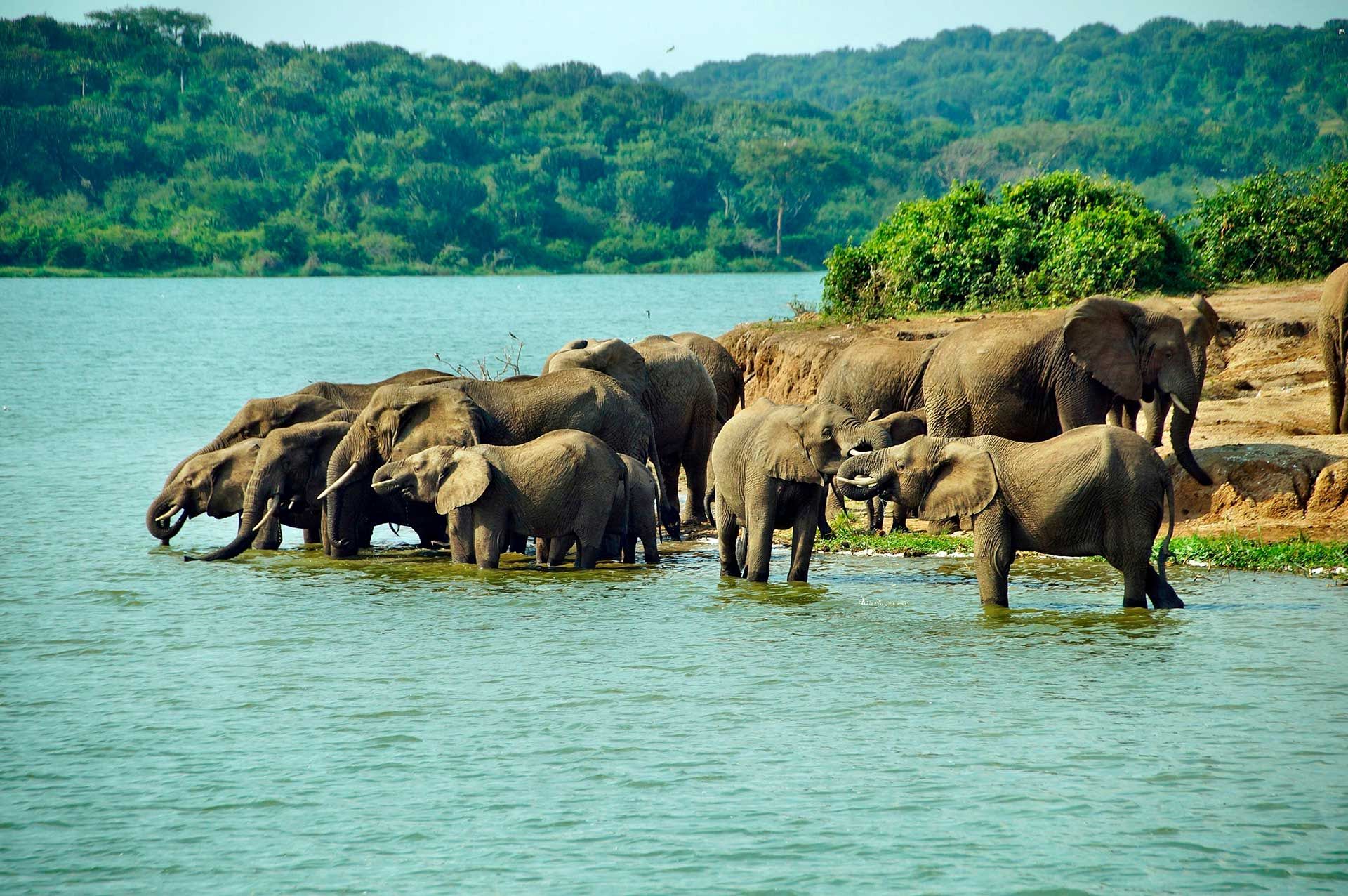
A 3–4-day Uganda safari to Queen Elizabeth National Park in Uganda typically features early morning game drives in the Kasenyi Plains for lions and elephants, afternoon boat cruises on the Kazinga Channel, and optional chimpanzee trekking in Kyambura Gorge. The trip usually includes a stop at the Equator and scenic drives through the Ishasha sector to spot tree-climbing lions
Queen Elizabeth National Park in Uganda stands as a compact powerhouse of African wildlife, aquatic wonders, and dramatic landscapes. This high-value, fast-paced 3-day itinerary is designed for travelers who want a concentrated dose of the park’s flagship experiences: the rolling Kasenyi Plains, the Kazinga Channel’s dense hippo and birdlife, and the forested corridors around Kyambura Gorge and Maramagambo. Beginning with an early-start transfer from Kampala, the plan capitalizes on animal activity in the cooler hours and leverages a classic mix of game drives, boat safaris, and light walking experiences to maximize sightings in a short window. The route foregrounds iconic motifs—rampant lions on the savannah, the density of hippos and crocodiles along the Kazinga Channel, and the forest-dwelling chimpanzees that punctuate Kyambura Gorge—while offering optional night drives and cultural community visits that deepen understanding of the region’s people and practices. While pace is brisk, the itinerary remains flexible enough to adapt to wildlife timing and road conditions, ensuring a fulfilling snapshot of one of Uganda’s most celebrated parks.
Day 1: Transfer from Kampala to Queen Elizabeth National Park (150 words)
Depart early from Kampala, aiming to start the journey around 6:30 AM. The drive toward Western Uganda sets the stage for a wildlife-forward surprise itinerary, with the road gradually opening to expansive savannahs and distant hills. A scheduled stop at the Uganda Equator in Kayabwe provides a photo opportunity and a chance to stretch before continuing toward Mbarara for a lunch break. As you roll into Queen Elizabeth National Park in the evening, you’ll check into your lodge and have a relaxing evening to decompress from the road. If time allows, a short introductory game drive offers a gentle first connection with the park’s dominant residents—elephants, Uganda kob, buffalo, and perhaps a distant silhouette of a lion or leopard. The day balances travel logistics with an immediate immersion into Queen Elizabeth’s evolving landscape, priming you for the wildlife-rich days to come.
Day 2: Game Drive & Kazinga Channel Boat Cruise (150 words)
Begin with a morning game drive in Kasenyi Plains, where the grassy savannahs host concentrations of Uganda kob, buffalos, and herds of elephants. Lions and leopards are possible along the edge cover and termite mounds, with patient guides maximizing chances during the cooler hours. Return to the lodge for a brief rest and then head to the Kazinga Channel for a two-hour boat cruise (around 2 PM). The cruise is famed for one of the world’s densest hippo populations, as well as abundant crocodiles, buffalos, and an aerial parade of waterbirds along the channel’s banks. The waterway offers exceptional photographic moments—reflections on the water, hippos yawning, and the river’s constant motion. An optional night game drive later in the day provides a chance to glimpse nocturnal species such as leopards, hyenas, and perhaps an elusive big-cat or two, depending on luck and sightings.
Day 3: Chimpanzee Tracking & Return to Kampala (150 words)
Morning options center on Kyambura Gorge or Maramagambo Forest: Kyambura Gorge offers chimpanzee tracking through a wooded river canyon, where the forest’s canopy harbors primates and the surrounding savanna road-weighs in with diverse birdlife. If chimp trekking isn’t feasible, an alternative nature walk in Maramagambo Forest provides an intimate encounter with forest-dwelling species, plant life, and the therapeutic hush of dense woodland. A community-focused alternative is a Lake Katwe Salt Mining visit, offering cultural insight and a look at local livelihoods alongside wildlife viewing. After the morning activity, depart for Kampala or Entebbe, planning for an evening arrival. The drive back affords reflections on Queen Elizabeth’s biodiversity—the mix of savannah, forest, wetlands, and crater lakes that characterize this park’s distinctive ecosystem.
Queen Elizabeth National Park in Uganda offers a compact, diverse snapshot of East Africa’s wildlife heritage. A 4-day itinerary like this balances savannah game viewing, water-based wildlife on Kazinga Channel, and forest encounters in Ishasha, with opportunities to connect with local communities along the way. The pace is relaxed enough to savor standout highlights without feeling rushed, yet efficient enough to fit the park’s signature experiences into a short break. Expect rolling Kasenyi Plains for lion and kob sightings, a boat cruise along Kazinga Channel brimming with hippos and crocs, and a visit to Ishasha to seek the legendary tree-climbing lions that define the southern sector. Interludes with local communities and optional nature walks add cultural texture and a different rhythm to the safari. Weather in this region can be variable, so layered clothing and sun protection are wise. With good guiding and well-chosen accommodations, this itinerary promises a memorable, well-rounded Queen Elizabeth experience.
Day 1: Transfer from Kampala/Entebbe to Queen Elizabeth National Park (150 words)
Begin with an early departure from Kampala or Entebbe, aiming to reach Queen Elizabeth National Park by late afternoon. The drive sets the stage for Uganda’s diverse landscapes, from coffee estates to rolling savannah and distant hills. A planned stop en route offers a chance to stretch, refuel, and sample a few local sights. Upon arrival, you’ll check into your lodge and have time to settle in before a short introductory game drive or a sunset orientation stroll along the lodge grounds. Even on Day 1, you’ll start to sense the park’s mosaic of habitats—open grassy plains, dense thickets, and watercourses that attract a wide variety of wildlife. The evening can be spent enjoying a welcome briefing, a refreshing meal, and a first glimpse of the park’s silhouettes against the African dusk.
Day 2: Morning game drive in Kasenyi, afternoon Kazinga Channel boat cruise (150 words)
Rise early for a game drive in Kasenyi Plains, where the moist savannahs teem with Uganda kob, buffalo, and elephants, and where pride dynamics can reveal themselves over termite mounds and grassy clearings. Lions and leopards may be spotted along the edges, especially during the cooler morning hours when big cats are most active. Return to your lodge for a midday break and preparation for the afternoon activity. In the late afternoon, transfer to the Kazinga Channel for a two-hour boat cruise, a flagship Queen Elizabeth experience. The Channel hosts one of the world’s densest concentrations of hippos, plus crocodiles, waterbirds, and elephants that come to the water’s edge. The combination of land and water habitats in one day offers a broad, dynamic wildlife canvas and excellent photography opportunities.
Day 3: Morning drive to Ishasha Sector (150 words)
Today you venture southward to Ishasha, famed for its tree-climbing lions and distinctive acacia woodland. The morning drive through the park’s southern corridors provides wildlife encounters tailored to this sector’s specialized scenery. Look for large herds of Uganda kob, buffalo, and maybe elephants, with a focus on the Ishasha plains where lions may be observed resting or moving in search of prey. After a hopeful lion-focused morning, visit a local community to learn about daily life, conservation initiatives, and the human dimension of Uganda’s protected areas. The cultural stop complements the wildlife focus with storytelling, crafts, and the chance to support community projects. Return to your accommodation in the Ishasha region or nearby for a relaxed evening, reflecting on the day’s landscapes and the Ishasha lions’ unique habitat.
Day 4: Early morning nature walks or short game drive, then return to Kampala (150 words)
Wrap up with an early morning nature walk or a short game drive in Ishasha or a nearby corridor, offering a closer look at tracks, birds, and smaller wildlife that are easy to miss from a vehicle. A guided walk provides an intimate perspective on the park’s biodiversity and the plant-animal interactions that sustain the ecosystem. After breakfast, depart Queen Elizabeth National Park and begin the journey back to Kampala or Entebbe, with a likely late afternoon or evening arrival. If schedules permit, a final Carthesian checkpoint stop offers a last photo opportunity of the park’s landscapes, reflecting on a four-day itinerary that blended savannah spectacle, riverine activity, forest-edge wildlife, and cultural insight into Uganda’s premier park.
1) What is included in a 3-4 days Uganda safari in Queen Elizabeth Park?
A well-rounded 3–4 day Uganda safari in Queen Elizabeth Park typically centers on delivering a balanced blend of comfortable accommodation, expert guiding, reliable transport, timely park access, and signature park experiences. At the core, most itineraries include comfortable lodging for the duration of the safari, ensuring a stable base from which to explore the park’s famed circuits. A professional driver-guide is a standard inclusion, bringing local knowledge, wildlife behavior insight, and practical logistics to every day of the trip. This ensures efficient routing between habitats and maximizes wildlife-viewing opportunities while maintaining safety and smooth transitions between activities.
A durable 4x4 safari vehicle is nearly universal for park safaris, sized to navigate Queen Elizabeth’s varied terrain—from open Kasenyi plains to forested Kyambura Gorge—while providing safe, unobtrusive passes near wildlife. Park entrance fees are commonly included in the package, granting access to the park’s diverse habitats — savannahs, wetlands, crater lakes, and forest patches — and to essential viewpoints and circuits such as Kasenyi, Mweya, and Ishasha. One of the highlights—the Kazinga Channel boat cruise—is typically part of the offering, delivering close-up views of hippos, crocodiles, buffalos, and a parade of waterbirds along the channel. Rounding out the core inclusions are regular land game drives designed to reveal elephants, lions, leopards, buffalo, kob, topi, warthogs, and a spectrum of other wildlife.
Beyond these essentials, some packages may include light nature walks, village/community visits, or chimpanzee-trekking add-ons (via Kyambura Gorge or Kalinzu Forest) as optional extras. It’s important to verify with the operator exactly what’s included in your specific package, since inclusions can vary by operator, lodge location, and seasonal considerations. Overall, a typical 3–4 day Queen Elizabeth Park safari should reliably deliver comfortable accommodation, a professional driver-guide, a sturdy 4x4, park-entry fees, a Kazinga Channel boat trip, and multiple game drives to create a vivid, well-rounded Uganda wildlife experience.
2) Which activities are highlights of a 3-4 days Uganda safari in Queen Elizabeth Park?
The highlights of a 3–4 day safari in Queen Elizabeth Park are anchored in a quartet of quintessential experiences that showcase the park’s ecological breadth. First, land-based game drives, especially in Kasenyi Plains, are a cornerstone. Here you group up with Uganda kob herds, elephants, buffalo, and other savannah-dwelling species, with opportunistic big-cat sightings around termite mounds and edge habitats. Early-morning safaris maximize animal activity and provide superb photographic opportunities amid open, expansive scenery.
Second, the Kazinga Channel boat cruise stands out as a signature aquatic experience. Spanning roughly two hours, this waterborne safari concentrates hippos in massive pods, with crocodiles lounging along the banks, elephants dipping into the channel, and a rich array of waterbirds, all set against the channel’s reflective waters. It’s a different dimension of wildlife watching compared to land drives and offers dramatic portrait opportunities of wildlife at water.
Third, Ishasha’s tree-climbing lions provide a dramatic and memorable contrast to the savannah circuits. The southern Ishasha sector is famed for these lions perched in the branches of fig trees, an iconic Queen Elizabeth scene that is often included in a 3–4 day itinerary for a complete park panorama.
Finally, chimpanzee tracking adds forest dimension to the trip. Kyambura Gorge is the park’s most famous chimp habitat, with Kalinzu Forest Reserve offering additional trekking options. Observing habituated chimpanzees in a forested canyon alongside savannah and riverine habitats gives visitors a rare, multi-ecosystem wildlife encounter in a compact itinerary. Optional cultural interactions with local communities can also enrich the experience, providing context about livelihoods and conservation.
3) When is the best time for a 3-4 days Uganda safari in Queen Elizabeth Park?
For a 3–4-day Queen Elizabeth Park safari, the best times generally align with the park’s dry seasons, which concentrate wildlife around shrinking water sources and improve visibility. The preferred windows are January to February and June to September. During these dry periods, grasses are shorter and waterholes attract dense wildlife concentrations, making game drives more productive and photography more straightforward.
That said, Queen Elizabeth Park is open year-round, and each season offers its own rewards. The wet seasons—roughly March to May and October to December—bring lush landscapes, water birds, and vibrant migratory dynamics, along with the fresh, dramatic skies that can enhance photography. Birdwatchers in particular may relish the wet season for its increased avifauna in wetlands, crater lakes, and forest edges. When planning a short itinerary, it can be valuable to weigh whether you prioritize dramatic savannah scenes with big-cat potential (dry season) or lush scenery with forest-side dynamics and high birdlife (wet season). Consulting with a seasoned operator helps tailor the timing to your interests, seasonal road conditions, and wildlife timing, ensuring a rewarding 3–4 day window within the park.
4) Can I see tree-climbing lions during a 3-4 days Uganda safari in Queen Elizabeth Park?
Yes. Tree-climbing lions are a standout feature of Queen Elizabeth Park and are most reliably observed in Ishasha, the park’s southern sector. This distinctive behavior—lions resting and moving in the branches of fig trees—offers a memorable and photo-worthy sight that many 3–4 day itineraries include. Ishasha’s acacia woodland and riverine settings provide a contrasting backdrop to Kasenyi’s savannah, enriching the safari’s encounter palette.
To maximize chances of sightings, plan a morning or late-afternoon visit to Ishasha, aligning with animal activity patterns and favorable light for photography. Your guide will optimize the route based on weather, road conditions, and recent wildlife movements. While sightings are never guaranteed, Ishasha is widely regarded as one of the park’s most dependable places to observe tree-climbing lions, making it a natural centerpiece for a 3–4 day Queen Elizabeth safari for those seeking this iconic spectacle. If tree-climbing lions are a priority, ensure your itinerary explicitly includes Ishasha’s southern circuit and discuss contingency options with your operator in case weather or road conditions influence activity timing.
5) How far is Queen Elizabeth Park from Kampala for a 3-4 days safari?
Queen Elizabeth Park sits about 400 kilometers (roughly 250 miles) from Kampala by road. The typical overland journey takes around 6–7 hours, depending on road conditions, traffic, and any en-route breaks you choose to include—such as a stop at the Uganda Equator crossing near Kayabwe for a quick photo and a cultural demonstration. The drive is often structured as a single long day of travel with an eventual evening arrival at a lodge near Mweya or Ishasha, allowing a first exposure to the park’s landscapes and a gentle introduction to the upcoming wildlife plan.
For travelers seeking to minimize transit time, domestic air transfers can be explored, though many itineraries prioritize road travel to maximize time spent inside the park’s habitats and to align with the desire for an integrated land and water safari experience. When booking, confirm the exact travel times with your operator, as roadworks, weather, or seasonal conditions can slightly alter drive durations. A 3–4-day plan generally assumes a comfortable, steady pace that balances travel with park exploration.
6) Is a 3-4 days Uganda safari in Queen Elizabeth Park suitable for families?
Yes, a 3–4-day Queen Elizabeth National Park itinerary is well-suited for families, offering approachable wildlife experiences, relaxed boat trips, and accessible savannah and forest encounters. The park provides a broad, engaging array of activities that can be tailored to family needs, including slower-paced game viewing, predictable boat cruises on the Kazinga Channel, and wildlife-viewing opportunities from a comfortable vehicle. These elements are typically enjoyable for children and adults alike, presenting a vivid, safe introduction to Uganda’s wildlife.
Family-friendly itineraries often emphasize shorter daily drives, generous time for wildlife watching from the vehicle, and optional breaks for rest or picnics. Boat cruises are particularly popular for families, as the water-based vantage point gives a stable, non-technical way to observe hippos, elephants, and a range of water birds. Some itineraries may also include birdwatching segments, community visits, and light nature walks, offering a variety of experiences that can accommodate different ages and energy levels. As always, it’s wise to choose lodges with family-friendly accommodations, confirm safety protocols with your guide, and plan for age-appropriate activities to ensure a smooth, enjoyable safari for everyone involved.
7) Can I do chimpanzee trekking on a 3-4 days Uganda safari in Queen Elizabeth Park?
Yes. Chimpanzee trekking can be incorporated as an optional add-on to a 3–4-day Queen Elizabeth Park itinerary, providing a forested counterpoint to the park’s savannah and riverine experiences. Kyambura Gorge is the park’s primary chimp habitat within Queen Elizabeth National Park, where guided treks can lead visitors to habituated chimpanzee groups. Kalinzu Forest Reserve nearby also offers chimp trekking, with a strong track record of success and opportunities to encounter other forest wildlife and birds.
If chimp trekking is a priority, coordinate with your safari operator so your schedule allows a morning or late-afternoon trek within Kyambura Gorge or Kalinzu Forest, while still accommodating Kasenyi drives and a Kazinga Channel cruise. Permits and guided access are required for chimp trekking to minimize disturbance to the primates, so confirm availability, costs, and timing when booking. Depending on weather and chimpanzee behavior, operators may adjust the day’s plan to optimize your chances of successful trekking within your 3–4-day window.
8) What wildlife can I expect to see on a 3-4 days Uganda safari in Queen Elizabeth Park?
A 3–4-day safari in Queen Elizabeth Park offers a mosaic of wildlife across the park’s varied habitats. On land drives through Kasenyi Plains, you can expect elephants, Ugandan kob, buffalo, warthogs, waterbuck, topi, and a range of other savannah-dwelling species, with potential sightings of lions and leopards in favorable light and terrain. The Kazinga Channel boat cruise concentrates hippos in dense pods, with crocodiles basking along the banks and a diverse array of waterbirds drawing dividers of movement along the waterline.
In Ishasha, the southern sector, you may encounter the park’s famous tree-climbing lions, along with buffalo, kob, and elephants in more wooded terrain. Kyambura Gorge and Kalinzu Forest Reserve offer forest-associated wildlife, including chimpanzees in Kyambura and a suite of forest-dwelling primates, birds, and mammals. Birdlife is prolific throughout the park, with crater lakes and wetlands hosting a broad spectrum of species. Overall, you should expect a robust cross-section of East Africa’s charismatic wildlife: elephants, hippos, crocodiles, lions, leopards, buffalo, kob, topis, and a flavorful mix of birds and primates across savannah, riverine, and forest habitats.
9) Is a boat cruise included in a 3-4 days Uganda safari in Queen Elizabeth Park?
Yes. A boat cruise on the Kazinga Channel is a staple feature of many 3–4-day Queen Elizabeth Park itineraries. The cruise typically lasts around two hours and offers intimate viewing of hippos and crocodiles along the water’s edge, with frequent sightings of buffalos and a broad array of waterbirds. The channel’s calm waters and reflective surface frequently create striking photo opportunities, including hippos yawning or surfacing in unison, and birds in flight along the shorelines.
Bedside the land safaris, the Kazinga Channel cruise creates a balanced program that highlights both terrestrial and aquatic wildlife, enabling photographers and families to experience a full spectrum of park life. Some operators may offer optional enhancements to the boat experience or a second, extended cruise, depending on the itinerary and time. If you particularly want more time on the water or for birdwatching, discuss extensions or add-ons with your guide when planning your three to four days.
10) What should I pack for a 3-4 days Uganda safari in Queen Elizabeth Park?
Packing for a 3–4-day Queen Elizabeth Park safari should emphasize practicality, comfort, and readiness for diverse habitats and weather. Start with lightweight, neutral-colored clothing suitable for tropical climates, designed to blend with the environment and minimize disturbance to wildlife. Include long-sleeve shirts and long pants for sun and insect protection, along with a sturdy pair of walking shoes for forest walks or shorter terrain hikes.
Essential items include a wide-brimmed hat, sunglasses, sunscreen, and insect repellent to guard against sun and mosquitoes, especially during dawn and dusk. A compact rain jacket or poncho is prudent for sudden showers, particularly in the wet seasons. Binoculars and a good camera with extra memory cards are key for wildlife viewing and photography. A small daypack for water, snacks, and personal items during game drives is handy. Don’t forget a basic first-aid kit, any required medications, and copies of travel documents or permits. If you plan to do chimp trekking, bring lightweight, quick-dry clothing and a small towel for post-trek comfort.
11) Are there accommodation options within the park for a 3-4 days Uganda safari in Queen Elizabeth Park?
Yes. Queen Elizabeth National Park offers a range of accommodation options, spanning budget safari lodges, standard safari lodges, and luxury lodges, with many choices near the Mweya Peninsula and Ishasha regions. Within or adjacent to the park, lodges and camps provide easy access to Kasenyi drives, Kazinga Channel boat cruises, Ishasha tree-climbing lions, and Kyambura Gorge treks. On-site facilities typically include dining options, guided safari services, and opportunities to tailor itineraries with optional night drives or community visits.
Choosing a lodge close to Mweya, Ishasha, or Kasenyi can maximize time in the park and minimize long transfers. Budget options tend to prioritize value and straightforward comfort, while mid-range and luxury properties offer enhanced amenities, en-suite rooms, and scenic wildlife views. Booking ahead during peak travel periods helps secure preferred locations and rates, and it’s wise to confirm what activities are included with your stay (for example, afternoon game drives, boat cruises, or guided walks) and whether transfers to and from the park are arranged by the lodge or your operator.
12) Can I combine a 3-4 days Uganda safari in Queen Elizabeth Park with other parks?
Yes. It’s common to pair Queen Elizabeth National Park with other Uganda parks to craft a broader safari itinerary. A popular combination is with Kibale National Park for chimpanzee trekking, adding a prime primate experience to the mix. Another frequent pairing is with Lake Mburo National Park for walking safaris and a different wildlife ensemble, including zebras and impalas. These combinations expand the biodiversity experienced within a single trip and provide a broader sense of Uganda’s landscapes and wildlife.
When planning multi-park itineraries, consider travel logistics and pacing. Driving times between parks can be substantial, and seasonal road conditions may affect transit. Working with a reputable operator helps optimize route sequencing, minimize backtracking, and align park activities with flight connections if you’re moving by air between destinations. This approach ensures you gain a richer, more varied Uganda safari experience without feeling rushed.
13) What is the difference between a 3-day and 4-day itinerary in Queen Elizabeth Park?
The main difference lies in pacing, depth, and the number of included experiences. A 4-day itinerary provides a more relaxed pace and additional opportunities to explore: you might add Ishasha’s tree-climbing lions as a full morning or afternoon, incorporate an extra game drive into a different circuit, or extend a Kazinga Channel experience with a second boat trip. The extra day also allows more forest time—whether Kyambura Gorge treks or Kalinzu Forest walks—without sacrificing time spent on Kasenyi drives or Ishasha.
A 3-day itinerary, in contrast, tends to be more condensed, prioritizing a signature set of activities: one full day of savannah drives (Kasenyi), one day on Kazinga Channel, and a shorter forest or Ishasha component. This compressed schedule emphasizes the park’s flagship experiences and is well-suited for travelers with limited time. In both cases, a skilled operator tailors the sequence to weather, wildlife timing, and accessibility, ensuring a rewarding Queen Elizabeth Park experience within the chosen duration.
14) Are there mosquitoes on a 3-4 days Uganda safari in Queen Elizabeth Park?
Yes. Queen Elizabeth Park is in a tropical environment where mosquitoes are present year-round. Mosquito protection is a practical and prudent precaution, especially during dawn and dusk when bites are more common. Travelers should carry and apply effective insect repellent, wear long sleeves and pants during peak mosquito hours, and ensure accommodations provide screens or nets where appropriate. A light bed net can be useful if your lodge or camp lacks reliable netting.
Prophylaxis and antimalarial medication should be discussed with a travel medical professional before departure, and travelers should follow local guidance regarding mosquito precautions. Along with personal protection, minimizing standing water near campsites and using proper food storage can help reduce mosquito exposure. By combining personal protection with sensible site hygiene, you can significantly reduce mosquito-related concerns while enjoying the park’s many wildlife encounters.
15) Is a 3-4 days Uganda safari in Queen Elizabeth Park safe?
Yes. A 3–4-day Queen Elizabeth Park safari is generally safe when you follow park rules and work with licensed guides and reputable operators. The park is patrolled, and rangers and established tour operators emphasize safety during all activities. Safety considerations include respecting the wildlife by staying at safe distances, listening to guide briefings about predator behavior, and adhering to vehicle guidelines and park regulations (such as sticking to tracks, not driving at night, and avoiding loud noises). Guides are trained in wildlife tracking, first aid, and contingency planning for weather or wildlife timing changes.
Travelers should also plan for typical safari-safety measures: wear appropriate footwear, carry a basic first-aid kit, and stay hydrated. If you’re traveling with children or seniors, inform your operator so they can tailor the pace, seating, and activities to suit the group. Overall, with careful planning, adherence to guidelines, and working with experienced guides, a 3–4-day safari in Queen Elizabeth Park offers a safe, rewarding way to engage with Uganda’s iconic wildlife and landscapes.
Booking Uganda safari with us Roads of Adventure safaris
Book your unforgettable Uganda safari with Roads of Adventure Safaris for expert-guided primate trekking, savannah game drives, and birding tours. We specialize in tailored itineraries—from luxury to budget—handling all logistics, including Gorilla permits, transport, and comfortable lodging. Contact us at info@roadsofadventuresafaris.com or call +256 701041637 to customize your journey. A 30% deposit secures your booking, with tailored, sustainable experiences ensuring a memorable trip to the Pearl of Africa. Plan ahead for the best experience
