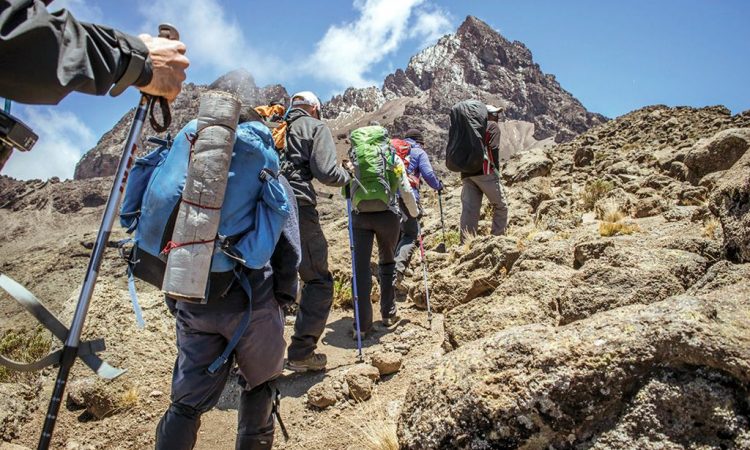
Climbing Mount Kilimanjaro on a six-day trek usually runs between $1,500 and $4,000 per person, depending heavily on your choice of tour operator, route, and group size. While budget options exist under $2,000, mid-range and luxury operators offer better safety, gear, and fair wages for local porters. A massive chunk of this cost goes straight to mandatory park fees, camping permits, and taxes. On top of your package price, you will need to budget extra for crew tips, international flights, visa fees, and any cold-weather gear rentals. It is a serious investment, but proper planning ensures a safe, unforgettable summit.
Cost breakdown for 6 days Kilimanjaro hike
Mandatory Fixed Costs (The Bare Minimum)
When planning a trip up Kilimanjaro, it helps to understand that a massive chunk of your payment goes directly to the local government long before you set foot on the mountain. Mount Kilimanjaro is a heavily regulated UNESCO World Heritage Site, and the Kilimanjaro National Park Authority (KINAPA) charges strict daily fees for every single visitor. These cover conservation fees, camping or hut permits, and essential emergency rescue services. On top of that, Tanzania applies a mandatory 18% Value-Added Tax (VAT) to all tourism services.
Because of these non-negotiable fees, standard park entry alone easily costs between $850 and $1,000 per trekker for a basic 6-day itinerary. This is a vital baseline to keep in mind when shopping around for tour options. If you ever see a company advertising a full package for under $1,200, alarm bells should ring immediately. Since park fees are set in stone and cannot be discounted, a price that low means the company is cutting severe corners elsewhere—usually on food quality, safety equipment, or, worst of all, the fair payment and fair treatment of local porters and mountain crews.
Tour Operator Packages
Choosing the right tour operator comes down to balancing your personal comfort, safety expectations, and overall budget. Budget operators ($1,500 – $2,200) cover your basic permits, standard meals, and shared tents or huts. While functional, these budget-friendly groups are often larger, the gear might show some wear, and menu options tend to be simpler.
Moving up to mid-range operators ($2,500 – $3,500) gives you the sweet spot for value and safety. You get high-quality mountain hardware, smaller group sizes, well-trained wilderness first responders, and delicious, nutrient-dense meals designed to keep your energy up. More importantly, reputable mid-range companies guarantee ethical treatment and living wages for their hardworking crew.
If you prefer maximum comfort, luxury operators ($4,000 – $6,000+) turn a rugged expedition into a premium outdoor experience. Expect walk-in sleeping tents fitted with real cots, private chemical toilets, warm shower tents, gourmet dining, and top-tier medical equipment like extra oxygen canisters and pulse oximeters monitored throughout the day.
Additional Out-of-Pocket Expenses
Beyond your operator's baseline package, you need to factor in critical out-of-pocket travel costs. The largest extra expense is tipping your mountain crew ($250 – $400). Tipping is deeply ingrained in Tanzanian trekking culture; a standard 6-day climb requires a team of guides, cooks, and porters working together to carry gear and prep meals, so setting aside cash for them is essential.
Next, you will need flights into Kilimanjaro International Airport (JRO) ($800 – $1,500+), along with a tourist visa ($50 – $100). Specialized high-altitude travel insurance ($150 – $400) is also required—make sure your policy covers medical evacuation up to 6,000 meters. Lastly, factor in pre- and post-climb hotel stays ($50 – $100 per night) in nearby towns like Moshi or Arusha to rest, along with gear rentals ($100 – $250) if you do not already own heavy down jackets, sub-zero sleeping bags, or trekking poles.
6 days Marangu Route Itinerary
The Marangu Route, affectionately nicknamed the "Coca-Cola" route, is the oldest and most established trail on Mount Kilimanjaro. It holds a unique distinction as the only path offering wooden dormitory-style huts for sleeping rather than outdoor camping. Because of its gradual, steady incline and well-traveled dirt tracks, many trekkers assume it is the easiest route to the top. However, attempting it in a 6-day window requires a disciplined pace to tackle the rapid gain in elevation. Covering approximately 72 kilometers (45 miles) round-trip, this itinerary approaches the mountain from the southeast. The additional acclimatization day at Horombo Hut significantly boosts summit success rates compared to the rushed 5-day option. It is a direct, classic alpine journey to Africa’s roof.
Day 1: Marangu Gate (1,860 m / 6,102 ft) to Mandara Hut (2,700 m / 8,858 ft)
Your expedition begins at Marangu Gate (1,860 m / 6,102 ft), where you complete park registration and meet your guide crew. Leaving the gate behind, you step onto a well-maintained forest trail that winds through Kilimanjaro’s dense, tropical rainforest. The lush canopy overhead hums with wildlife, where you can spot blue monkeys and colobus monkeys leaping between ancient trees. The terrain rises gently across moss-covered roots, offering a comfortable warmup for the days ahead. The trek spans roughly 8 kilometers (5 miles) and takes between 4 and 5 hours of moderate walking. By late afternoon, you reach Mandara Hut (2,700 m / 8,858 ft), nestled in a forest clearing. After settling into your cozy wooden A-frame cabin, you can take a short side walk to Maundi Crater for sweeping views of Northern Tanzania.
Day 2: Mandara Hut (2,700 m / 8,858 ft) to Horombo Hut (3,720 m / 12,205 ft)
After an early breakfast, you leave the forest behind and ascend into the open, brushy moorland zone. The trail steepens as tall trees give way to giant lobelias, heather, and sprawling tussock grasses. As you gain elevation, the thinning air becomes noticeable, making a steady, deliberate pace essential. Along the ridge, you are treated to magnificent panoramas of Kibo and Mawenzi peaks framing the horizon. Today's hike covers approximately 12 kilometers (7.5 miles) over a duration of 6 to 8 hours. You will ascend over 1,000 vertical meters, arriving at the sprawling Horombo Hut complex (3,720 m / 12,205 ft) by mid-afternoon. Situated on a high plateau, Horombo offers cold mountain air, communal dining halls, and stunning sunset vistas above the clouds, providing a picturesque setting to rest, refuel, and sleep.
Day 3: Acclimatization Day at Horombo Hut (3,720 m / 12,205 ft)
To maximize your chances of reaching the summit, Day 3 is dedicated entirely to active acclimatization at Horombo Hut. Following the golden rule of high-altitude trekking—climb high, sleep low—you embark on a rewarding 3-to-4-hour round-trip excursion to the striking Zebra Rocks (3,980 m / 13,057 ft). This unique geological formation features black-and-white striped volcanic cliffs shaped by mineral-rich water runoff over centuries. The walk covers roughly 5 kilometers (3 miles) with an elevation gain of nearly 300 meters before returning to camp. The afternoon is spent resting, rehydrating, and allowing your cardiovascular system to adapt to the lower oxygen levels. Taking this essential rest day significantly improves your stamina and reduces the risk of altitude sickness before pushing into the harsh alpine desert tomorrow.
Day 4: Horombo Hut (3,720 m / 12,205 ft) to Kibo Hut (4,703 m / 15,430 ft)
Departing Horombo Hut, you venture into the stark, lunar landscape of the high-altitude alpine desert. The path crosses the vast "Saddle," a barren expanse connecting the rugged peak of Mawenzi with the massive dome of Kibo. Vegetation disappears completely, replaced by loose volcanic rock, scree, and sweeping mountain winds. You will pass the "Last Water Point" before continuing across this wide, exposed plain. Trekking today covers roughly 10 kilometers (6.2 miles) and takes between 6 and 8 hours of slow, sustained hiking. You arrive at Kibo Hut (4,703 m / 15,430 ft) by late afternoon. Situated at the foot of Kibo's summit cone, this basic stone shelter serves as base camp. You will eat an early dinner around 5:00 PM and rest, preparing for the intense midnight summit push.
Day 5: Kibo Hut (4,703 m / 15,430 ft) to Uhuru Peak (5,895 m / 19,341 ft) down to Horombo Hut (3,720 m)
Your summit attempt begins around midnight under a freezing, starlit sky. You trek up a steep, unrelenting scree slope using headlamps, navigating endless switchbacks toward Gilman’s Point (5,685 m / 18,651 ft) on the crater rim. This 6-to-8-hour night climb is the most physically grueling stretch of the journey. From Gilman’s, you continue along the snow-draped rim for another hour to reach Uhuru Peak (5,895 m / 19,341 ft)—the absolute summit of Africa. After celebrating and capturing photos at sunrise, you begin the steep, dusty descent back to Kibo Hut for a short rest and warm lunch. Afterward, you trek down through the alpine desert to Horombo Hut (3,720 m / 12,205 ft). Total distance covers 22 kilometers (13.6 miles) over 11 to 14 exhausting hours.
Day 6: Horombo Hut (3,720 m / 12,205 ft) to Marangu Gate (1,860 m / 6,102 ft)
On your final day, you awaken to a warm breakfast at Horombo Hut before beginning the long descent back down the mountain. Retracing your steps through the moorland and dense rainforest, the air grows noticeably warmer and richer in oxygen with every kilometer down. The trail covers roughly 20 kilometers (12.4 miles) and takes 5 to 7 hours of steady downhill hiking. Upon reaching Marangu Gate (1,860 m / 6,102 ft), you officially sign out with park authorities and collect your official summit certificates—gold for Uhuru Peak or green for Gilman’s Point. After saying goodbye and tipping your dedicated guide and porter team, a private vehicle transfers you back to Moshi for a well-deserved hot shower and celebration.
6 days Machame Route Itinerary
The Machame Route, famously known as the "Whiskey" route, is Kilimanjaro's most popular camping trail. Known for its scenic variety and dramatic landscapes, it approaches the peak from the southwest, traversing lush rainforests, volcanic plateaus, and glacial ridges. Unlike Marangu, accommodation on Machame is exclusively in tents, offering an immersive outdoor experience. The 6-day itinerary covers approximately 62 kilometers (38.5 miles) from start to finish. While physically demanding with steeper trails and longer daily pushes, Machame features an excellent acclimatization profile—climbing high to Lava Tower before sleeping lower at Barranco Camp. This tactical elevation profile gives trekkers a solid chance at reaching Uhuru Peak while taking in some of the mountain's grandest views.
Day 1: Machame Gate (1,790 m / 5,872 ft) to Machame Camp (3,010 m / 9,875 ft)
Your adventure begins with a 50-minute drive from Moshi to Machame Gate (1,790 m / 5,872 ft) for registration and gear sorting. The trail enters a dense, misty rainforest filled with giant ferns, ancient moss, and towering trees. The path winds steadily uphill along a narrow ridge, where mud and slick roots make trekking poles especially useful. As you climb, keep an eye out for exotic birds and black-and-white colobus monkeys swinging through the thick canopy overhead. Today's hike covers roughly 11 kilometers (6.8 miles) with an elevation gain of over 1,200 meters, taking between 5 and 7 hours. You arrive late afternoon at Machame Camp (3,010 m / 9,875 ft), situated just above the forest line, where your support crew will have your tents pitched and hot drinks waiting.
Day 2: Machame Camp (3,010 m / 9,875 ft) to Shira Camp (3,845 m / 12,615 ft)
Leaving Machame Camp behind, you exit the forest glades and climb steep rocky paths through the sub-alpine moorland zone. The vegetation thins into low heather, wild giant groundsels, and rocky ridges, opening up panoramic views of the Shira Plateau and Kibo’s icy summit. You cross a small valley and navigate a technical river gorge before turning westward across open volcanic landscapes. Today is a shorter but steep trek covering about 5 kilometers (3.1 miles), which takes roughly 4 to 6 hours of steady climbing. By early afternoon, you reach Shira Camp (3,845 m / 12,615 ft), perched on an exposed volcanic plateau. The rest of the day is spent resting, taking in breathtaking sunset views across Mount Meru, and letting your body adapt to the rising elevation.
Day 3: Shira Camp (3,845 m) to Lava Tower (4,630 m) down to Barranco Camp (3,960 m)
Day 3 is a cornerstone for acclimatization as you trek east across the high desert plateau toward the base of Kibo. The trail climbs steadily to the iconic Lava Tower (4,630 m / 15,190 ft), a massive 300-foot volcanic rock formation. Resting here for lunch exposes your body to high altitude before you descend nearly 670 meters down into the scenic Barranco Valley. This "climb high, sleep low" strategy triggers critical physiological adaptations without subjecting you to overnight altitude distress. The entire journey covers roughly 10 kilometers (6.2 miles) and takes 6 to 8 hours. You pitch camp at Barranco Camp (3,960 m / 12,992 ft), nestled beneath the towering Great Barranco Wall and Kibo’s southern glaciers.
Day 4: Barranco Camp (3,960 m / 12,992 ft) to Barafu Camp (4,640 m / 15,223 ft)
Your morning starts with an exhilarating scramble up the famous Great Barranco Wall, a 250-meter rocky cliff face. While it looks intimidating, no technical climbing equipment is needed, and reaching the top rewards you with breathtaking mountain views. From the crest, the path traverses a series of gullies down into the lush Karanga Valley before ascending steep, rocky ridges. Continuing upward, you join the Mweka Trail and head into the barren alpine desert landscape. Today's total distance covers around 9 kilometers (5.6 miles) over 7 to 9 hours of hiking. You arrive at Barafu Camp (4,640 m / 15,223 ft) by late afternoon. Situated on an exposed, wind-swept ridge, this base camp is where you eat an early dinner and sleep before midnight.
Day 5: Barafu Camp (4,640 m) to Uhuru Peak (5,895 m) down to Mweka Camp (3,100 m)
Around midnight, you wake to begin the summit push under freezing temperatures. Walking slow and steady, you navigate steep switchbacks over loose scree, passing between the Rebmann and Ratzel glaciers. After 6 to 8 hours of intense physical effort, you hit Stella Point (5,739 m / 18,828 ft) on the crater rim just as the sun rises. Another 45 minutes along the snow-covered rim brings you to Uhuru Peak (5,895 m / 19,341 ft), the highest point in Africa. After taking photos, you descend scree slopes back down to Barafu Camp for lunch and a short rest. You then pack up and continue descending down to Mweka Camp (3,100 m / 10,170 ft) in the upper forest. Today's trek totals 17 kilometers over 11 to 14 grueling hours.
Day 6: Mweka Camp (3,100 m / 10,170 ft) to Mweka Gate (1,640 m / 5,380 ft)
Your final day on Kilimanjaro begins with a festive celebration as your guides and porters perform traditional songs at Mweka Camp. Afterward, you start the final descent down through the lush, emerald canopy of the rainforest. The trail can be slick and muddy, but the thick, oxygen-rich air makes walking feel light and effortless. Covering approximately 10 kilometers (6.2 miles), this downhill leg takes roughly 3 to 4 hours. You emerge at Mweka Gate (1,640 m / 5,380 ft), where you sign out and receive your official green or gold summit certificates. After enjoying a hot meal with your mountain crew and handing out well-earned tips, your transfer driver picks you up for the short drive back to Moshi for a warm bath and celebration.
What is the absolute minimum total amount I should expect to spend, including extras?
While tour operators quote packages starting around $1,500 to $2,500 for mid-range options, your total all-in out-of-pocket cost will realistically sit between $3,500 and $5,500.
A common mistake first-time climbers make is budgeting solely for the operator's fee. However, unavoidable mandatory expenses add up quickly. Mandatory crew tips alone require $250 to $400 in cash. International flights into Kilimanjaro International Airport (JRO) generally run $800 to $1,500+, and a tourist visa costs $50 to $100. Specialized high-altitude travel insurance—which must explicitly cover medical evacuation up to 6,000 meters—costs about $150 to $400.
Additionally, if you don't already own technical winter gear, renting itemized equipment like sub-zero sleeping bags, heavy down jackets, and trekking poles will add $100 to $250. Finally, factor in pre- and post-climb hotel stays in Moshi or Arusha at $50 to $100 per night. When you sum up the operator fee, airfare, gear, tips, and insurance, $3,500 is the true practical starting line for a safe, comfortable expedition.
Why are Kilimanjaro tour prices so high, and where does the money actually go?
The high baseline price of climbing Kilimanjaro is primarily driven by strict government regulations, conservation mandates, and complex logistics rather than massive profits for operators. Mount Kilimanjaro is a protected national park and UNESCO World Heritage site, and the Kilimanjaro National Park Authority (KINAPA) charges non-negotiable daily fees for every visitor on the mountain.
For a standard 6-day trek, mandatory park entrance, conservation fees, camping or hut permits, and rescue fees total roughly $850 to $1,000 per person. On top of this, the Tanzanian government levies a mandatory 18% Value-Added Tax (VAT) on all tourism services.
The remaining balance of your tour package pays for mountain logistics. Climbing Kilimanjaro requires a large support crew—typically 3 to 4 local staff members per single trekker (including guides, cooks, and porters) to carry tents, food, cooking gas, and safety gear. The money covers crew wages, nutritious food for both guests and staff, transport to and from the gate, and specialized safety gear like pulse oximeters and supplemental oxygen.
Is a cheap Kilimanjaro operator ($1,200 or less) safe to book?
Booking a Kilimanjaro climb for under $1,200 is a major red flag that you should avoid. Because mandatory park fees and taxes take up $850 to $1,000 of every booking, an operator charging $1,200 leaves only $200 to $350 to cover food, transport, gear, and staff wages for six full days.
When a company operates on such thin margins, they are forced to cut critical corners. Most frequently, cheap operators mistreat their mountain crews by paying under-the-table wages far below legal minimums, providing inadequate food, and forcing porters to sleep in freezing, uninsulated shelters without proper winter clothing.
Furthermore, ultra-budget operators often compromise on your physical safety. They may omit basic medical equipment like emergency oxygen or pulse oximeters, employ guides with limited wilderness first-aid training, and provide low-quality, leaky tents or worn-out sleeping gear. Choosing a mid-range company ($2,500+) ensures that you receive proper medical oversight, reliable hardware, and ethical treatment for the porters making your climb possible.
What is the main difference between the 6-day Marangu and Machame routes?
The primary distinction between the Marangu and Machame routes lies in accommodation, scenery, and acclimatization strategy. Marangu (the "Coca-Cola" route) is the only trail on Kilimanjaro that offers wooden, dormitory-style A-frame huts with mattresses, making it ideal for trekkers who dislike camping. It follows a direct, gradual path up and down the southeastern side of the mountain.
Conversely, Machame (the "Whiskey" route) is exclusively a camping trail where you sleep in alpine tents. It is widely considered much more scenic, traversing varied landscapes—from lush rainforests and volcanic plateaus to dramatic glacial ridges—along the southwestern flank.
Crucially, Machame offers a superior acclimatization profile for a 6-day itinerary. On Day 3 of Machame, you climb high to Lava Tower (4,630 m) before descending to sleep lower at Barranco Camp (3,960 m). This "climb high, sleep low" strategy significantly aids your body’s adaptation to altitude, giving Machame higher overall summit success rates than Marangu over the same timeframe.
Why is tipping mandatory, and how much cash should I bring for the mountain crew?
Tipping is an established, vital component of trekking culture in Tanzania. While guides, cooks, and porters receive daily base wages from reputable operators, tips serve as essential income that supports their families in the local economy. A typical 6-day climb requires a surprising number of support staff—often 10 to 15 crew members for a small group of trekkers—to haul heavy gear, set up camp, prepare hot meals, and ensure your safety.
You should budget roughly $250 to $400 per climber in tipping cash for a 6-day trek. Standard tipping guidelines across the industry are:
- Lead Guide: $20 – $25 per day
- Assistant Guide: $15 – $20 per day
- Cook: $12 – $15 per day
- Porter: $8 – $10 per day
Tips are typically pooled together by your group and distributed in cash directly to individual crew members during a traditional farewell ceremony on the final morning at camp. You should bring fresh, crisp US Dollars (printed after 2013) or local Tanzanian Shillings.
What altitude sickness precautions are built into a 6-day itinerary?
Climbing to Uhuru Peak (5,895 m / 19,341 ft) in just six days is a rapid ascent, making altitude management your biggest challenge. To combat Acute Mountain Sickness (AMS), both the 6-day Marangu and Machame itineraries incorporate specific acclimatization strategies into their routing.
On the 6-day Marangu Route, Day 3 is dedicated entirely to active acclimatization at Horombo Hut (3,720 m). Trekkers complete a 3-to-4-hour hike up to Zebra Rocks (3,980 m) before returning to the same hut to sleep, exposing the body to thinner air without the stress of moving camp.
On the 6-day Machame Route, acclimatization happens dynamically on Day 3 via the "climb high, sleep low" rule. You ascend from Shira Camp (3,845 m) up to Lava Tower at 4,630 meters for lunch, then descend to sleep at Barranco Camp (3,960 meters). This brief exposure to higher elevation stimulates red blood cell production, helping your body process limited oxygen more efficiently before the final summit push.
What gear do I need to bring vs. what can I rent locally?
Climbing Kilimanjaro requires preparing for extreme temperature shifts—ranging from 20°C (68°F) in the humid rainforest to -15°C (5°F) with severe windchill at the frozen summit. While you must bring your own broken-in clothing layers and footwear, heavy high-altitude gear can be rented in Moshi or Arusha for $100 to $250.
Essential items you should bring yourself:
- Broken-in waterproof trekking boots and thermal socks
- Moisture-wicking base layers (merino wool or synthetic)
- Fleece jacket and waterproof/windproof outer shell jacket and pants
- Sunglasses, headlamp with extra batteries, and personal toiletries
Items commonly rented locally:
- Sub-zero sleeping bags rated to -15°C / 0°F ($30 – $40)
- Heavy down insulated summit jackets ($25 – $35)
- Adjustable trekking poles ($10 – $15)
- Waterproof duffel bags for porters to carry ($15 – $20)
Renting heavy items locally saves significant luggage space and weight on international flights while ensuring you have properly rated mountain gear.
What is summit night actually like on a 6-day Kilimanjaro trek?
Summit night is universally recognized as the most physically and mentally grueling stretch of the entire expedition. On Day 5, you go to sleep early around 5:00 PM or 6:00 PM at base camp (Kibo Hut on Marangu, Barafu Camp on Machame) and are awakened around 11:00 PM or midnight.
After a light snack and hot tea, you begin climbing under freezing, starlit skies wearing full cold-weather gear and headlamps. The trek involves navigating steep, unending switchbacks over loose volcanic scree for 6 to 8 continuous hours in sub-zero temperatures. The freezing air makes breathing difficult, and the slow, rhythmic pace ("pole pole" in Swahili) is essential to preserve energy.
You reach the crater rim (Gilman’s Point on Marangu or Stella Point on Machame) right around dawn, where you are rewarded with breathtaking sunrise vistas over the glaciers. From the rim, a final 45-to-60-minute push brings you to Uhuru Peak (5,895 m). After spending 15 to 30 minutes at the summit taking photos, you face a steep, dusty 3-hour descent back to base camp for lunch, followed by several more hours of descending to your final campsite. Total time on your feet ranges from 11 to 14 grueling hours.
What are the medical requirements and emergency procedures on the mountain?
Safety on Mount Kilimanjaro relies on daily health monitoring and clear evacuation protocols. Reputable operators conduct twice-daily health checks using pulse oximeters to measure your blood oxygen saturation and pulse rate, combined with a standardized evaluation of altitude sickness symptoms (headaches, nausea, dizziness).
Before departing, you must secure travel insurance that explicitly covers high-altitude trekking and emergency helicopter evacuation up to 6,000 meters. In the event of severe Acute Mountain Sickness (AMS), High Altitude Pulmonary Edema (HAPE), or High-Altitude Cerebral Edema (HACE), the primary treatment is immediate descent.
For minor illness or fatigue, porters can assist you down to lower elevations using specialized wheeled stretchers (available on the Marangu route) or manual carrying. In life-threatening emergencies, certified guides coordinate with local helicopter rescue services (such as Tropic Air or KilimedAir) to fly patients off the mountain to private medical facilities in Moshi or Arusha. Guides also carry supplemental bottled oxygen and comprehensive first-aid kits for emergency stabilization.
How physically fit do I need to be, and how should I train for a 6-day climb?
You do not need to be an elite athlete or technical mountaineer to climb Kilimanjaro, as both Marangu and Machame are non-technical trekking routes. However, a high level of cardiovascular endurance and leg strength is essential to handle back-to-back days of hiking 5 to 14 hours over steep, uneven terrain with a light daypack.
The most effective way to train is hiking on hilly terrain with a loaded backpack (8 to 10 kg / 18 to 22 lbs) for 4 to 6 hours at a time. This conditions your legs, core, and feet for the specific stress of downhill and uphill trekking.
If outdoor trails are unavailable, focus your training on:
- Cardiovascular exercise: Stairmaster machines, inclined treadmill walking, cycling, or swimming 3 to 4 times a week.
- Strength training: Weighted squats, lunges, step-ups, and core exercises to build knee stability and endurance.
Starting your training 3 to 6 months before departure ensures your body can comfortably handle the cumulative fatigue of a 6-day expedition, allowing you to focus on enjoying the journey to the summit.
Booking 6 days Kilimanjaro hike with us Roads of Adventure safaris
Booking your six-day Kilimanjaro trek with Roads of Adventure Safaris is a smooth, straightforward process. Based in Seguku along Entebbe Road in Kampala, Uganda, our expert local team crafts custom itineraries for iconic trails like the scenic Machame "Whiskey" Route or the comfortable Marangu "Coca-Cola" Route. Every package comes fully equipped with mandatory park permits, experienced mountain guides, nutritious meals, and essential safety gear to ensure a smooth, secure climb. To begin planning your dream summit, reach out directly at +256 701 041637, +256 773 796644, or email info@roadsofadventuresafaris.com to secure your spot.
