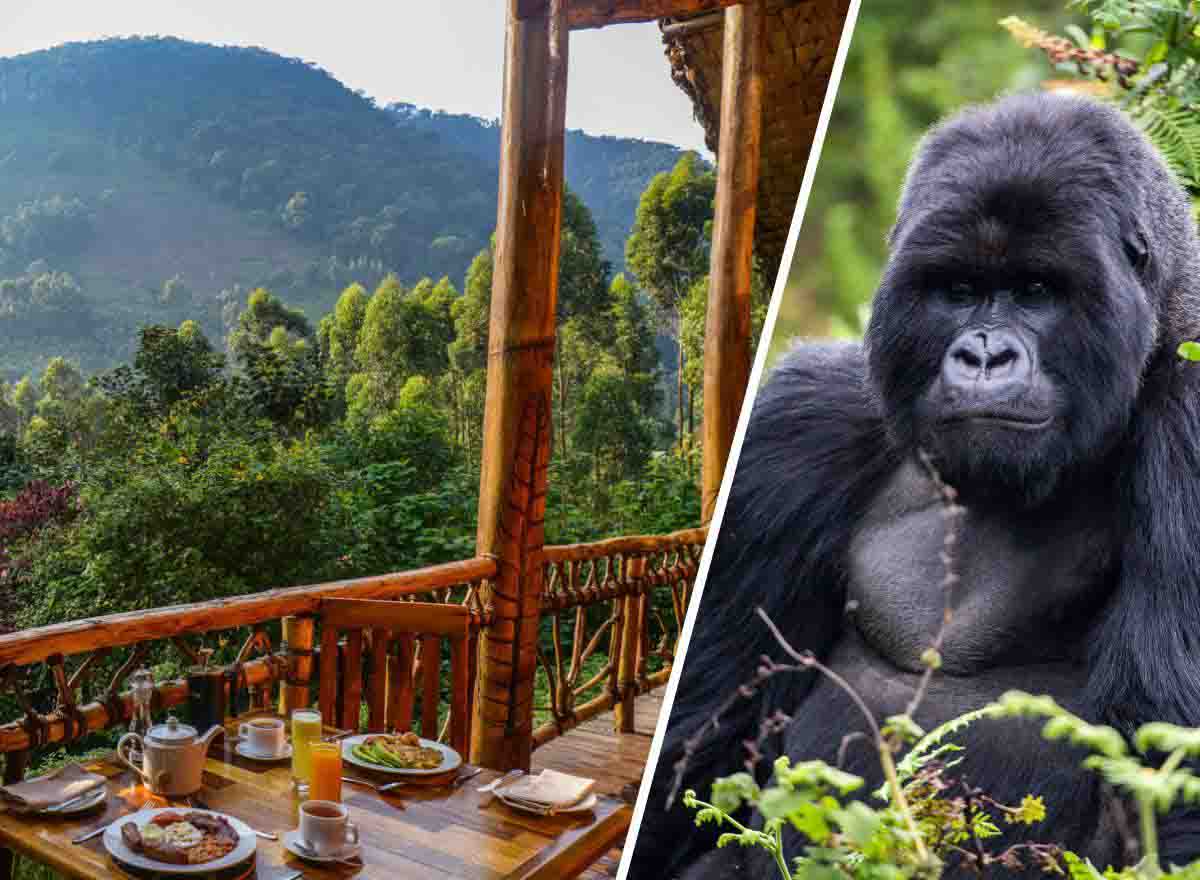
Gorilla trekking in Uganda and Rwandach gives you a rare, unforgettable chance to meet endangered mountain gorillas right inside their misty cloud forests. Down in Uganda, you can head out into the ancient depths of Bwindi Impenetrable National Park or explore the dramatic volcanic slopes of Mgahinga Gorilla National Park, where standard permits go for $800. Just across the border in Rwanda, your adventure takes you into the stunning peaks of Volcanoes National Park, where permits are priced at $1,500.
12-days-best-rwanda-wildlife-safari-and-rwanda-primate-safari-vacation
11-days-best-uganda-rwanda-primate-safari-and-wildlife-from-kigali
10-days-rwanda-uganda-safari-tour-double-gorilla-trekking-itinerary
9-days-8-nights-midrange-rwanda-wildlife-safari-vacation-trip
7-days-best-gorilla-trekking-and-other-highlights-of-rwanda-tour
6-days-5-nights-rwanda-midrange-itinerary-nyungwe-volcanoes
5-day-akagera-bwindi-gorilla-trekking-lake-bunyonyi-and-batwa-experience
What are mountain gorillas and why are they special?
Mountain gorillas are an endangered sub-species of magnificent great apes that exist exclusively in the high-altitude, mist-shrouded mountain and bamboo forests of East and Central Africa. What makes them deeply special is their incredible resilience and complex social structures. Because they cannot survive in zoos, seeing them requires stepping directly into their fragile natural habitat. With only a little over a thousand individuals left in the wild, every encounter feels like a profound, once-in-a-lifetime privilege. Their gentle, expressive eyes and striking human-like behaviors create an immediate, unforgettable emotional connection that leaves lasting impressions on every traveler fortunate enough to track them.
Where in the world can you go gorilla trekking?
You can only go gorilla trekking in three countries worldwide: Uganda, Rwanda, and the Democratic Republic of Congo (DRC). This restricted distribution is due to their specific high-altitude ecological needs and tiny remaining population. Because their natural range is confined to a few protected conservation areas across the Virunga Massif and Bwindi Impenetrable Forest, finding them requires venturing into these exact equatorial mountain strongholds. This geographical exclusivity makes planning a gorilla safari a unique adventure, drawing passionate wildlife enthusiasts from every corner of the globe to these specific East and Central African destinations.
What are the main national parks for trekking in Uganda?
Uganda’s premier destinations for gorilla trekking are Bwindi Impenetrable National Park and Mgahinga Gorilla National Park, both nestled in the rugged southwestern corner of the country. Bwindi is an ancient, dense rainforest renowned for its incredible biodiversity and multiple tracking sectors—like Buhoma, Rushaga, Ruhija, and Nkuringo—each offering unique family groups. Just a short distance away, Mgahinga sits majestically on the slopes of the Virunga volcanoes, providing stunning scenery and a home to the habituated Nyakagezi family. Together, these parks offer incredible trekking diversity, ranging from deep jungle explorations to dramatic volcanic landscapes.
What is the main national park for trekking in Rwanda?
Rwanda’s premier sanctuary for gorilla trekking is Volcanoes National Park, locally known as Parc National des Volcans. Situated in the northwestern region of Musanze, this stunning park protects the Rwandan slopes of the majestic Virunga mountain range. Characterized by soaring dormant volcanoes, sweeping Hagenia forests, and dense bamboo thickets, it offers a breathtaking backdrop for wildlife encounters. Its accessible terrain and well-habituated gorilla families make it one of the most famous and efficient places in the world to experience an intimate, awe-inspiring hour with these gentle giants in their natural home.
How do Uganda and Rwanda differ in landscape?
Uganda and Rwanda offer distinctly different landscapes that shape your overall trekking experience. Uganda features vast, dense, humid, and lower-to-mid elevation primary rainforests in Bwindi, alongside the dramatic volcanic slopes of Mgahinga, creating a wild, deeply immersive jungle atmosphere. In contrast, Rwanda features open, high-altitude bamboo and alpine slopes set against the dramatic backdrop of the Virunga volcanoes. While Uganda’s terrain feels like a mysterious, tangled Eden, Rwanda’s scenery offers sweeping alpine vistas, often with clearer lines of sight across the dramatic volcanic peaks and rolling green hills.
Which country is better if I want a shorter drive from the airport?
Rwanda is the clear winner if you prefer a short, hassle-free drive straight from the airport. Volcanoes National Park is conveniently located just a roughly 2.5-hour drive from Kigali International Airport on smooth, winding tarmac roads that showcase Rwanda’s stunning "Land of a Thousand Hills." In contrast, reaching Bwindi Impenetrable National Park or Mgahinga from Uganda's Entebbe International Airport involves either a full-day scenic 8 to 9-hour overland drive or a quick domestic flight. If you have limited vacation time or wish to avoid lengthy road journeys upon arrival, Rwanda provides unmatched logistical convenience.
Which country is better if I want a budget-friendly or longer-duration trip?
Uganda is the ideal choice if you are looking for a more budget-friendly adventure or want to enjoy a longer-duration holiday. Uganda offers significantly lower gorilla permit costs compared to its neighbor, making it easier on the wallet. Furthermore, its central location allows you to effortlessly combine your gorilla trek with classic savannah wildlife safaris—such as tracking tree-climbing lions in Queen Elizabeth National Park or marveling at the thunderous Murchison Falls—creating a rich, multi-week itinerary that covers diverse ecosystems, chimpanzee tracking, and cultural excursions without feeling rushed.
What is the cost of a standard gorilla permit in Uganda?
A standard gorilla trekking permit in Uganda costs $800 USD for foreign non-residents, based on current Uganda Wildlife Authority (UWA) rates. This fee grants you one hour of direct, up-close observation with a fully habituated gorilla family in either Bwindi Impenetrable National Park or Mgahinga Gorilla National Park. Crucially, a substantial portion of this permit fee goes directly back into local conservation efforts, anti-poaching patrols, and community development projects surrounding the parks, ensuring that tourism actively protects these endangered apes and supports the livelihoods of local residents.
What is the cost of a standard gorilla permit in Rwanda?
A standard gorilla trekking permit in Rwanda costs $1,500 USD for foreign non-residents, in accordance with current Rwanda Development Board (RDB) rates. While carrying a higher price tag, this fee provides access to Volcanoes National Park and includes expert ranger guides, park entry, and conservation support. Rwanda has deliberately positioned its tourism sector around high-end, low-impact travel. The premium pricing directly funds vital habitat expansion, veterinary care through organizations like Gorilla Doctors, and community-based revenue-sharing programs that empower local populations living near the park boundaries.
What is a Gorilla Habituation Experience and how does it differ?
The Gorilla Habituation Experience is an exclusive adventure that allows you to spend up to four immersive hours with semi-habituated gorillas, compared to the standard one-hour limit. Currently available exclusively in the Rushaga sector of Uganda's Bwindi Impenetrable National Park, this unique program costs $1,500 USD per permit. Unlike regular trekking, you accompany researchers and trackers as they work to gently introduce wild gorillas to human presence. It offers a deeper, more educational, and unhurried glimpse into their daily social dynamics, feeding habits, and natural behaviors deep within the forest.
How far in advance should I book my gorilla permit?
You should book your gorilla permits well in advance—ideally 6 to 12 months ahead of your intended travel dates. Because wildlife authorities strictly limit the number of daily visitors to protect the gorillas' health and well-being, permits are in exceptionally high demand, especially during the peak dry seasons. Waiting too long often results in disappointment or forces you to alter your entire travel schedule. Securing your permits early ensures your preferred dates are locked in and allows your tour operator to seamlessly coordinate your lodges, internal transport, and flights.
Can I buy a gorilla permit on my own or do I need an operator?
Yes, you can technically request and purchase gorilla permits independently through the official wildlife authorities, such as the Uganda Wildlife Authority or Visit Rwanda. However, navigating availability calendars, wire transfers, and regional logistics can be quite complex. For this reason, the vast majority of travelers choose to work with a licensed local tour operator. An experienced operator will not only secure your permits effortlessly but also bundle your park logistics, accommodation, 4x4 transport, and driver-guide into a smooth, stress-free travel package tailored to your exact preferences.
What documents are required to reserve a permit?
To successfully reserve and secure your gorilla trekking permits, you must provide a clear copy, scan, or photo of your valid passport's information page. Wildlife authorities require specific details—including your full legal name, date of birth, nationality, and passport number—to officially issue and register the permit in your name. Permits are strictly non-transferable, meaning the name on the permit must match the passport you present at the park headquarters on the morning of your trek during verification.
Are gorilla permits refundable if I cancel?
Gorilla permit refund policies are notoriously strict and depend entirely on how far in advance you cancel your trip. Both the Uganda Wildlife Authority and Rwanda Development Board enforce tiered cancellation schedules, where canceling months ahead might yield a partial refund, while cancellations close to the trekking date usually result in losing your payment entirely. Some flexibility exists for rescheduling under specific medical emergencies, but it is never guaranteed. This strict policy highlights why purchasing comprehensive travel insurance that covers trip cancellation is absolutely essential.
What is the minimum age requirement for gorilla trekking?
The minimum age requirement for gorilla trekking is strictly 15 years old, with zero exceptions made by conservation authorities in both Uganda and Rwanda. This rule is enforced to protect both the human children and the wild gorillas. Teenagers under 15 may lack the physical stamina for unpredictable, rugged hikes, and more importantly, they are often more susceptible to childhood communicable illnesses like chickenpox or measles, which can be fatal to mountain gorillas. Passport checks are conducted at park briefings to verify age.
Is there a maximum age limit?
There is no official upper age limit for gorilla trekking, meaning adventurous travelers well into their seventies and eighties frequently complete the trek and find it deeply rewarding. The primary requirement is not your age, but your personal medical fitness, mobility, and willingness to tackle uneven terrain. If you have concerns about your physical endurance, many national parks offer helpful support services, including hiring local porters to carry your daypack and renting traditional bamboo stretchers so you can enjoy the experience comfortably.
What health requirements or fitness levels do I need?
To enjoy your trek safely, you need a basic-to-moderate level of cardiovascular fitness, steady footing, and the ability to hike across steep, uneven, or muddy forest trails for anywhere from two to six hours. While some gorilla families stay close to the park boundary, others roam deep into the dense undergrowth. Preparing with regular walking, cardio, or stair exercises beforehand makes a huge difference. Additionally, you must be free of any contagious illnesses, as rangers will conduct health screenings to protect the vulnerable apes.
Can I trek if I have a cold, flu, or contagious illness?
No, you cannot trek if you have a cold, flu, cough, or any other contagious illness. Mountain gorillas share roughly 98 percent of our DNA, making them highly susceptible to human respiratory pathogens and infectious diseases against which they have no natural immunity. Even a mild common cold can be fatal to an entire gorilla family. If you show symptoms on the morning of your trek, rangers will bar you from participating. Fortunately, authorities often try to offer a rescheduled trek or partial refund in these rare cases.
Should I purchase travel insurance?
Yes, purchasing comprehensive travel insurance is strongly recommended for any gorilla trekking adventure. Your policy should explicitly cover emergency medical evacuation, trip cancellation, and lost or delayed luggage. Trekking takes place in remote, high-altitude rainforests where unexpected medical issues, flight delays, or sudden travel disruptions can occur. Having robust insurance provides priceless peace of mind, ensuring that if unexpected challenges arise—whether an injury on the trail or a canceled international flight—you and your financial investment are fully protected throughout your journey.
What are the best months of the year to go?
The best months for gorilla trekking are during the dry seasons, which typically run from June to August and from December to February. During these windows, rainfall is significantly lower, making the forest trails drier, firmer, and much easier to navigate on foot. However, because Bwindi and Volcanoes are high-altitude rainforests, rain can fall at any time of year. Trekking actually operates year-round, and the lush "green" shoulder seasons (March to May and September to November) offer quieter trails, beautiful photography lighting, and sometimes easier lodge availability for flexible travelers.
What kind of hiking boots do I need?
Sturdy, waterproof hiking boots featuring high ankle support and deep treads are essential to keep your feet dry and give you reliable grip in slippery rainforest mud. Navigating the dense, often rain-slicked terrain of Bwindi or Volcanoes National Park places immense demands on your footwear. High ankles protect against twists on hidden roots and loose rocks, while aggressive rubber treads prevent slipping on steep, muddy inclines. Investing in a broken-in, high-quality pair before your trip ensures maximum comfort, blister prevention, and stability throughout your multi-hour forest hike, allowing you to focus entirely on the breathtaking wildlife encounter awaiting you rather than your footing.
What clothing is recommended for the jungle?
Wear breathable, moisture-wicking layers topped with long-sleeved shirts and long trekking trousers to protect your skin from sharp thorns, biting insects, and stinging nettles. Rainforest environments are notoriously humid, so synthetic or merino wool base layers help manage perspiration while keeping you cool. Long trousers should be firmly tucked into your socks or gaiters to deter safari ants and ticks. Neutral, earthy tones like olive green, khaki, or brown are ideal for blending into the natural habitat, avoiding bright colors or dark navy shades that might attract insects or startle the wildlife during your approach.
Why do I need gardening or leather gloves?
Sturdy gardening or leather work gloves protect your hands from sharp thorns, stinging plants, and rough vines when you need to grab branches for balance while scaling steep terrain. As you navigate the rugged, uneven volcanic slopes and dense jungle undergrowth, you will frequently find yourself reaching out to steady your footing against trees, roots, and dense foliage. Many plants in East African high-altitude forests feature hidden prickles or abrasive textures. A durable pair of work gloves shields your skin from scratches, cuts, and mud, ensuring a much more comfortable and secure hiking experience.
How should I pack for wet weather?
Always pack a lightweight, packable rain jacket or waterproof poncho, as sudden tropical downpours can occur at any moment in the high-altitude rainforest. Mountain ecosystems are notoriously unpredictable, shifting from bright sunshine to heavy mist or torrential rain within minutes. A breathable, waterproof jacket keeps your core dry and prevents chilling when temperatures drop beneath the forest canopy. Additionally, wrapping your camera gear, extra clothing layers, and important documents inside waterproof dry bags or zip-top pouches inside your daypack provides vital secondary protection against moisture and humidity.
What daypack should I bring on the trek?
A comfortable, water-resistant daypack is ideal for carrying your packed lunch, drinking water, personal camera gear, and essential rain protection during your hike. Since you will be walking for several hours across challenging terrain, your backpack should feature ergonomic, padded shoulder straps and ideally a waist belt to distribute weight evenly. Choose a durable, water-resistant material or include a built-in rain cover to shield your belongings from sudden downpours. Keeping your pack relatively compact and lightweight ensures you can maneuver easily through tight forest gaps and narrow trails without snagging on hanging vines.
Can I hire a porter at the park headquarters?
Yes, hiring local porters at the briefing station is highly encouraged; they carry your heavy daypack and provide a steady physical push or pull on slick slopes. Porters are typically local community members with incredible knowledge of the terrain, and hiring them directly contributes to sustainable tourism by supporting local livelihoods. Beyond lightening your physical load, having a porter assist you transforms the trek into a collaborative team effort. Their practiced hands and steady footing offer invaluable support when navigating notoriously steep, slippery mud or crossing uneven forest ravines.
How much should I tip or pay local porters?
Standard porter hiring fees are set locally (typically around $15 to $20 USD plus a cash tip), directly supporting community livelihoods and family incomes. When you arrive at the park headquarters for your morning briefing, you can easily select a porter, and payment is coordinated through park officials or paid directly upon your return. In addition to the official hiring fee, a generous cash tip of $5 to $10 USD is customary and deeply appreciated for their strenuous physical labor, helpful guidance, and cheerful encouragement throughout your demanding trek.
What camera gear is best for gorilla photography?
A versatile mid-range zoom lens or standard lens with strong low-light capability works best in the dim canopy (remember that flash photography is strictly prohibited). Because gorillas are often encountered at close quarters—sometimes just a few meters away—massive telephoto lenses can actually be too restrictive and difficult to maneuver through tangled vines. A 24-70mm or 70-200mm lens allows you to capture both wide habitat shots and intimate behavioral portraits. Keep your ISO flexible and your aperture wide to compensate for the shadows beneath thick rainforest trees.
Are tripods or monopods allowed?
Generally no, because jungle trails are narrow, dense, and congested, though lightweight monopods are occasionally permitted at the discretion of your lead guide. The forest floor is uneven, cluttered with thick roots, and crowded with eager trekkers, leaving little room to set up bulky tripod legs safely without damaging delicate flora. Furthermore, tracking requires constant movement as you follow the habituated family. If you need stabilization, a lightweight monopod or practicing steady hand-held shooting techniques combined with image stabilization will serve you much better.
What snacks and hydration should I pack?
Bring at least 1.5 to 2 liters of drinking water along with high-energy snacks or a packed lunch box provided by your safari lodge.Trekking can last anywhere from one to six hours across strenuous, high-altitude terrain, making proper hydration and nutrition critical for maintaining your energy levels. Pack lightweight, easily digestible snacks like energy bars, trail mix, bananas, or chocolate. Your lodge will typically supply a neatly packed lunch box on the morning of your trek, ensuring you have everything you need to stay fueled throughout the adventure.
What time does a trekking day start?
Trekking days begin early in the morning, usually between 7:00 AM and 7:30 AM, starting with a mandatory pre-trek briefing at the park headquarters. This early start is essential because finding the gorillas requires setting out into vast, trackless forests where tracking teams must retrace the animals' movements from dawn. Gathering early allows park rangers to check documentation, organize visitors into small groups, and assign tracking teams while weather conditions are cool and optimal for hiking. Arriving punctually ensures a smooth departure and maximizes your daylight hours in the park.
What happens during the morning briefing?
Park rangers verify your permits, check your passports, assign you to a specific habituated gorilla family based on fitness levels, and outline crucial safety rules. During this engaging session, you will also enjoy local cultural performances and sip hot coffee or tea while learning about gorilla conservation. Rangers explain vital code-of-conduct guidelines—such as maintaining a seven-meter distance, avoiding flash photography, and speaking in hushed tones—designed to protect the health and natural behaviors of the endangered apes during your upcoming magical hour in the forest.
How many visitors are assigned to each gorilla family?
A strict maximum of 8 tourists is permitted to visit each habituated gorilla group per day to minimize human disturbance. This careful limitation is a cornerstone of successful conservation management, ensuring that the gorillas do not become overly habituated, stressed, or exposed to excessive human presence. Keeping visitor groups small also guarantees an intimate, peaceful, and immersive experience for travelers, allowing everyone a clear, unobstructed view of the family without overwhelming their natural environment or altering their daily routines.
How are the gorilla families chosen for you?
Rangers carefully assess your physical fitness, age, and any stated preferences to match your group with an easier, moderate, or strenuous trek. Because some gorilla families reside relatively close to park boundaries while others roam deep into rugged, high-altitude ridges, this thoughtful grouping prevents anyone from feeling overwhelmed. If you prefer a shorter walk, rangers will pair you with a family known to stay nearby; if you seek a rigorous wilderness challenge, you can be assigned to a more remote, adventurous group.
Do you know beforehand how long the hike will take?
No, the duration is completely unpredictable and can range anywhere from 30 minutes to over 6 hours depending on where the gorillas nested overnight. Mountain gorillas are wild animals that move freely through their natural habitat, foraging, resting, and building fresh nests every single evening. While advance trackers locate their general whereabouts at dawn, the forest terrain, weather conditions, and the gorillas' own movements mean your hike could be a brief stroll or a full-day endurance test across steep, misty ridges.
Are armed park rangers part of the tracking party?
Yes, experienced armed park rangers accompany every tracking party to ensure safety against other wild forest animals like elephants and buffaloes. While mountain gorillas are peaceful herbivores, the dense rainforests of East and Central Africa are shared with other large, potentially unpredictable wildlife species. The armed rangers are highly trained professionals whose primary role is to monitor the surrounding environment, guarantee tourist safety, and handle any unexpected wildlife interactions smoothly, giving you complete peace of mind during your jungle journey.
How do the advance trackers find the gorillas?
Dedicated advance trackers head out from headquarters at dawn to retrace the tracks and locate where the gorilla family built their nests the previous night. These skilled trackers read subtle signs in the forest—such as broken vegetation, fresh dung, footprints, and chewed bamboo stalks—to follow the family's exact path. Once they successfully make visual contact with the gorillas, they use radio communication to guide your lead ranger and tracking party straight to the group's exact location, ensuring a reliable and efficient encounter.
What happens if the trail becomes too steep or muddy?
Your expert guides and hired local porters will assist you step-by-step, clearing paths, lending a hand, or offering physical support. Navigating slick rainforest mud and sheer volcanic drops can be intimidating, but your support team is exceptionally skilled at handling challenging terrain. Porters will often hold your hand, guide your footing, or provide a steady push from behind to help you surmount tricky obstacles. This collaborative teamwork ensures that every traveler, regardless of minor fitness hurdles, can safely conquer the trail.
What do you do if you need to use the bathroom in the forest?
If nature calls, your guide will use a machete to dig a hole at least 30 cm deep so you can bury waste properly according to eco-rules. Because trekking takes place in pristine, protected national parks with zero permanent infrastructure, strict environmental protocols must be followed to maintain ecosystem hygiene and protect wildlife health. Digging a deep trench ensures that waste is completely concealed and decomposed naturally, preserving the cleanliness of the forest for both the animals and future visitors.
How will you know when you are close to the gorillas?
Advance trackers will signal your lead guide, and you will leave your heavy daypacks behind with the porters just before quietly approaching the family. The sudden hushed whispers and rising excitement among your guides signal that the momentous encounter is seconds away. Shedding your heavy backpacks and walking sticks allows you to move lightly and quietly through the final screen of vegetation. As you step into their clearing, the unforgettable sight and gentle sounds of the gorilla family welcome you into their peaceful world.
Booking Uganda Rwanda gorilla trekking with us Roads of Adventure safaris
Ready to chase the adventure of a lifetime? Let Roads of Adventure Safaris turn your dream mountain gorilla encounter across Uganda and Rwanda into an effortless, worry-free reality. Whether you are itching to trek through Bwindi's ancient, misty rainforests or hike the dramatic volcanic slopes of Volcanoes National Park, our local team handles every little detail from start to finish. From locking down those hard-to-get permits and cozy lodges to setting up rugged 4x4 vehicles and smooth cross-border crossings, we take care of it all. Drop us a line today and let's craft your ultimate East African journey!
