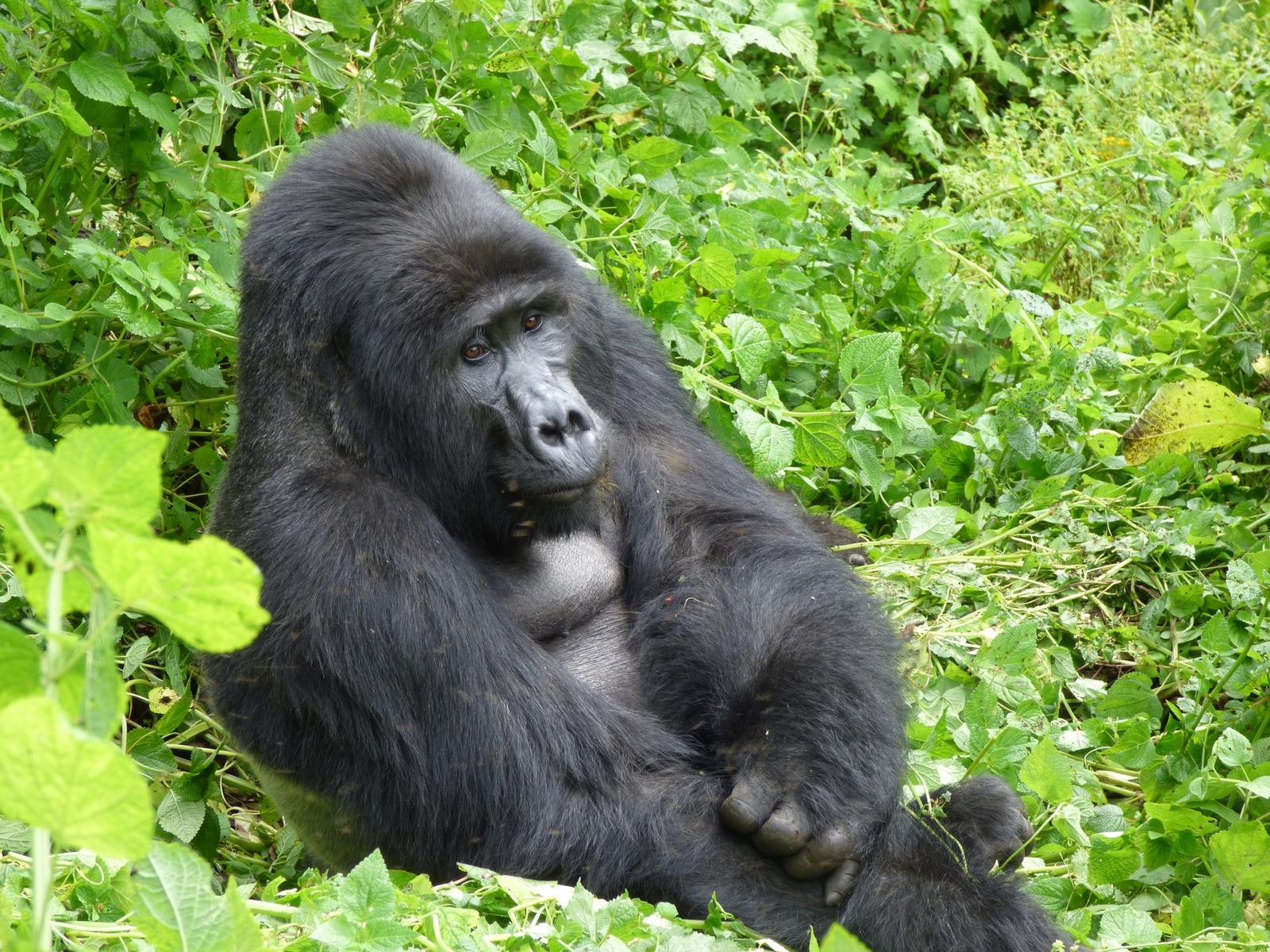
Gorilla trekking in the Buhoma sector of Bwindi Impenetrable National Park offers a premier and accessible wildlife experience. Permits cost $800 for foreign non-residents and UGX 250,000 for East African citizens, granting one hour with habituated gorilla families like Mubare, Habinyanja, or Rushegura
3-days-gorilla-trekking-tour-in-buhoma-sector-of-bwindi-impenetrable-forest-park
1. Where is the Buhoma sector located?
Buhoma is situated in the northern part of Bwindi Impenetrable National Park in the Kanungu District of southwestern Uganda. It lies near the border of the Democratic Republic of Congo, nestled within the ancient, terraced Kigezi highlands, often referred to as the "Switzerland of Africa." Geographically, it serves as the primary gateway into Bwindi's dense primeval forest, sitting at a slightly lower altitude compared to the southern tracking sectors. The sector is positioned approximately 470 kilometers from Uganda's capital city, Kampala, and about 210 kilometers north of Kabale town. Its strategic location makes it highly accessible from the standard safari circuit connecting Queen Elizabeth National Park and the tree-climbing lions of the Ishasha sector. Surrounded by lush tea plantations, local agricultural homesteads, and steep, mist-shrouded hillsides, the physical location of Buhoma provides an immediate visual transition from rural Ugandan communities to one of the oldest, most biologically diverse rainforests on earth. The sector’s specific geographic layout features a well-defined boundary line where the cleared agricultural valleys abruptly meet the towering, unbroken green wall of the protected national park canopy.
2. What makes Buhoma unique?
It is Uganda's original gorilla trekking trailhead (established in 1993) and generally offers the most developed and diverse range of luxury and mid-range safari lodges. This deep historical legacy sets Buhoma apart; it is the birthplace of gorilla tourism in Uganda, where the very first group of international travelers walked into the forest to encounter wild great apes. Over more than three decades, this head start has allowed the sector to cultivate a highly refined hospitality infrastructure that cannot be matched anywhere else in Bwindi. The accommodation choices here range from ultra-exclusive, eco-luxury forest lodges with sweeping canopy views and private butler services to beautifully designed mid-range tented camps and budget-friendly community homestays. Beyond the superior lodging options, Buhoma is unique because its lower elevation profile—averaging between 1,400 meters and 1,500 meters at the starting point—frequently offers a slightly less grueling and less steep hiking experience than the high-altitude southern sectors like Nkuringo. Furthermore, Buhoma has developed a tight-knit, highly symbiotic relationship with the local community. It serves as a bustling hub where conservation directly funds community-led initiatives, such as local hospitals, clean water projects, women’s co-operatives, and indigenous cultural walks, creating a uniquely vibrant and welcoming atmosphere for arriving global travelers.
3. How many gorilla families live in Buhoma?
There are currently four fully habituated gorilla groups: Mubare, Habinyanja, Rushegura, and Katwe. Each of these unique wildlife families possesses a distinct social dynamic, history, and physical structure that trackers and researchers monitor daily. The Mubare group holds legendary status as Uganda’s very first habituated gorilla family, originally opened to tourism in 1993 under the leadership of the famous late silverback Ruhondeza. Though its numbers have fluctuated significantly over the years due to natural transitions and wild conflicts, it remains a foundational pillar of the sector. The Habinyanja group, habituated in 1997, is renowned for its historically large size and complex internal politics, often splitting and recombining under different silverbacks, which makes their daily interactions fascinating to observe. The Rushegura group broke away from the Habinyanja family in 2002 and has earned a reputation for being remarkably calm and inquisitive; they are famous for occasionally wandering out of the forest boundary to relaxed areas around the gardens of nearby luxury lodges. The Katwe group is one of the more recent additions to Buhoma's habituated portfolio, carefully brought into the tourism program to meet the rising global demand for permits while maintaining strict conservation guidelines. Together, these four distinct families display the full spectrum of mountain gorilla behavior, from playful juveniles to protective silverbacks.
4. How many permits are available per day?
Because there are four habituated families and a strict maximum of 8 visitors per group, Buhoma issues exactly 32 gorilla permits daily. This precise limitation is not an arbitrary number but a scientifically calculated conservation threshold enforced by the Uganda Wildlife Authority (UWA). The strict rule limiting human exposure to a maximum of eight individuals per gorilla family is specifically designed to minimize the psychological stress placed on these wild animals and to drastically lower the risk of cross-species disease transmission. Because humans and mountain gorillas share roughly 98% of their genetic makeup, the primates are highly susceptible to human respiratory infections and viruses. Restricting the group size ensures that the gorillas do not feel surrounded or threatened by human presence, allowing them to carry out their natural foraging, grooming, and resting behaviors without behavioral disruption. For travelers, this means that only 32 fortunate individuals have the privilege of tracking from the Buhoma sector on any single calendar date. This creates an inherently exclusive, low-impact tourism environment, but it also means that the availability of slots is exceptionally tight, requiring systematic regulatory control and meticulous logistics to ensure that every permit matches a strictly monitored trekker allocation.
5. How much does a Buhoma gorilla permit cost?
Standard foreign non-residents pay $700, foreign residents pay $600, and East African citizens pay UGX 250,000. It is important to note that these specific numbers reflect historical pricing structures; the Uganda Wildlife Authority periodically adjusts these tariffs to align with changing conservation demands and continental standards. For instance, updated regular tariffs set standard rates at $800 for foreign non-residents, $700 for foreign residents, and UGX 300,000 for citizens of the East African Community, alongside introductory rates for the Rest of Africa category. Regardless of the specific seasonal tariff in place, the revenue generated from these permits is heavily regulated and reinvested directly into the long-term survival of the species. A significant percentage of the permit fee funds the intensive, round-the-clock protection of the park, covering the salaries of armed wildlife rangers, veterinary interventions from organizations like the Gorilla Doctors, and continuous ecological research. Crucially, a mandatory 20% of all park entry and permit revenues is shared directly with the local communities surrounding Bwindi Impenetrable National Park. This direct financial injection builds schools, roads, and health clinics, ensuring that the local population views the mountain gorillas as an invaluable economic asset to protect rather than a source of human-wildlife conflict or poaching targets.
6. Can I do the Gorilla Habituation Experience in Buhoma?
No, the full-day habituation experience (where you spend 4 hours with the gorillas) is only available in the Rushaga sector of Bwindi. While Buhoma is the perfect destination for standard gorilla trekking—where you spend exactly one hour with an already fully habituated group—the intensive, deep-dive Habituation Experience is strictly confined to the southern reaches of the park. The reason for this strict geographic limitation comes down to the specialized management of specific wild groups. Gorilla habituation is the long, delicate, two-to-three-year process of slowly introducing wild gorillas to the non-threatening presence of human researchers, trackers, and rangers. Currently, the specific groups undergoing this gradual training process reside exclusively in the southern sectors like Rushaga. This specialized experience allows a maximum of only four tourists per day to accompany international researchers and park trackers as they follow a semi-habituated family. Because these gorillas are still learning to tolerate human presence, the encounter is wilder, less predictable, and deeply educational, providing an insider's look at how conservationists decipher gorilla vocalizations, nesting habits, and social hierarchies. If you are staying in Buhoma but want to do this experience, you must plan for a multi-hour drive over the ridge to Rushaga or adjust your primary itinerary to base yourself out of the south.
7. How far in advance should I book my permit?
You should book 3 to 6 months in advance. Since only 32 permits are available daily, they sell out rapidly, particularly during the peak dry season months. The window of availability shrinks dramatically during the primary dry seasons, which run from June to September and from December to February. During these dry periods, hiking conditions within the impenetrable forest are significantly more manageable, leading to an intense surge in global travel bookings from international tour operators and independent safari enthusiasts alike. If you intend to travel during these peak months, waiting until the last minute will almost certainly result in disappointment, forcing you to alter your travel dates or switch to a completely different sector of the park. Even during the low-season rainy months of April, May, and November, booking well ahead of time is highly recommended to secure the specific tracking dates that fit your flight schedules. The booking process requires submitting your passport details to the Uganda Wildlife Authority to verify your age and nationality, and payments must be processed securely through registered tour operators or directly through official channels. Securing your permit is always the absolute first step in planning a Ugandan safari; lodging, flights, and vehicle charters should only be finalized once your physical permits are confirmed and held.
8. What is the minimum age for gorilla trekking?
The minimum age requirement is 15 years old. This rule is strictly enforced to prevent exposing the great apes to childhood illnesses (like measles or chickenpox). Mountain gorillas lack the natural immunity to fight off common human childhood contagions, meaning that a minor illness brought into the forest by a young child could easily mutate and devastate an entire gorilla family. Children under the age of 15 are also more likely to contract common childhood viruses without showing immediate, visible symptoms during morning briefings. Beyond the critical medical and epidemiological concerns, the age limit is strictly maintained due to the intense physical demands and safety protocols of the trek itself. Mountain gorilla encounters require a high degree of emotional maturity and strict behavioral compliance; trekkers must remain calm, avoid sudden movements, speak in whispers, and avoid making direct, prolonged eye contact with a silverback if he beats his chest or makes a mock charge. A younger child might panic, scream, or run away if a 400-pound gorilla moves rapidly through the undergrowth, which could trigger a dangerous defensive reaction from the family's silverback. Park authorities carefully check passports during the mandatory 7:00 AM morning briefing at the Buhoma headquarters to verify compliance before groups are assigned.
9. What are my chances of actually seeing the gorillas?
Viewing success rates are extremely high, generally ranging between ≥ 95% to 98%, because expert trackers locate the groups using GPS and radio before your group sets out. This exceptional success rate means an encounter is almost virtually guaranteed, removing the stressful guesswork often associated with typical wildlife safaris. The process works seamlessly due to an advanced, highly coordinated dual-tracking system. Early every morning, long before the tourist groups leave the Buhoma park headquarters, an advanced team of elite park trackers sets out directly into the deep forest. They hike directly to the exact coordinates where the specific gorilla family was left building their ground nests the previous evening. Because mountain gorillas move relatively slowly and rarely travel massive distances overnight unless disturbed by wild elephants or rival groups, the advanced trackers easily find the fresh overnight nests, identify the morning trail of broken vegetation, and locate the family as they begin their morning foraging. Once the gorillas are sighted, the advanced trackers communicate via radio and GPS back to the park headquarters, providing the precise location to your assigned group ranger guide. Your group then hikes directly toward that pinpointed area, ensuring a successful encounter.
10. How long does the trek take?
Treks can be unpredictable. You may encounter your assigned gorilla family within 2 hours, or it could take a full-day hike of up to 7-8 hours. The total duration of the hike depends entirely on the natural movements and daily whims of the gorilla family you have been assigned to track. Mountain gorillas are entirely wild animals in an open, unfenced 321-square-kilometer national park; they do not follow fixed schedules or remain stationary for the convenience of tourists. On some lucky days, a family like the Rushegura group might choose to forage along the lower valleys or near the park boundaries, allowing hikers to comfortably locate them after a gentle 45-minute stroll from the trailhead. On other days, the very same family might decide to scale a steep mountain ridge in search of fresh bamboo shoots or wild celery, requiring a grueling multi-hour trek deep into the untamed interior of the jungle. Because of this inherent natural unpredictability, trekkers must always mentally and physically prepare for a full-day mountain expedition. This means carrying plenty of drinking water, a packed lunch, and wearing proper gear regardless of the morning forecast, ensuring you remain comfortable whether your trek is an easy morning walk or a long afternoon challenge.
11. How difficult is the hike?
The difficulty is rated moderate to strenuous. You will be hiking at an elevation roughly between 1,500m (4,900ft) and 2,000m (6,500ft) through dense, steep, and sometimes muddy rainforest terrain. Bwindi’s terrain is famously rugged and lives up to its name of being completely "impenetrable." There are no paved walkways, manicured trails, or flat boardwalks inside the park boundary; instead, you will be hiking through a dense, trackless wilderness where rangers frequently use machetes to clear a path through thick vines, giant ferns, and tangled undergrowth. The combination of steep volcanic ridges, deep valleys, and loose, slippery mud makes every step a physical workout for your core and leg muscles. Furthermore, the elevation adds an extra layer of physical challenge; hiking at heights up to 2,000 meters means the air is noticeably thinner, which can cause trekkers to tire out and lose their breath much faster than they would at sea level. Tropical rain showers can occur at any time, turning the steep slopes into slick, muddy slides. To ensure everyone's comfort and safety, park rangers always pace the hike to match the slowest person in the group, and tourists are highly encouraged to hire local community porters at the trailhead to carry daypacks and assist them over difficult obstacles.
12. How much time do I get with the gorillas?
Once you find your assigned gorilla family, you are strictly allowed 1 hour of face-to-face observation and photography. This strict 60-minute time limit is a universal conservation standard applied across all mountain gorilla habitations in Uganda, Rwanda, and the Democratic Republic of Congo. The limitation is primarily enforced to safeguard the health and well-being of these endangered great apes. Mountain gorillas are highly sensitive creatures; prolonged, continuous exposure to groups of human visitors can cause their cortisol (stress hormone) levels to spike, which can disrupt their normal mating patterns, suppress their immune systems, and make them far more vulnerable to wild illnesses or behavioral agitation. Limiting the encounter to a single hour ensures that human presence remains a minimal, non-disruptive blip in their daily routine of foraging, social grooming, and resting. For the tourists, this single hour is an incredibly intense, magical, and fast-moving experience. Your ranger guide will keep a strict track of the time, prompting you to put down your camera lenses occasionally to simply absorb the sights and sounds of the family around you before quietly guiding the group out of the nesting area once the 60 minutes are up.
13. What is the required viewing distance?
You must maintain a distance of at least 7 meters (23 feet) from the mountain gorillas to protect them from contracting human illnesses. This spatial boundary is the single most critical behavioral rule of gorilla tourism. Because mountain gorillas share an incredibly close evolutionary history with humans, they are highly susceptible to our respiratory droplets, common colds, influenza, and other infectious pathogens. A simple virus that causes mild discomfort to a human could potentially prove fatal to an entire gorilla troop. The 7-meter buffer zone acts as a natural airborne barrier, significantly reducing the likelihood of cross-species contamination during the observation hour. In addition to the vital health benefits, maintaining this physical distance is a core safety measure for the humans in the group. Respecting their personal space prevents the dominant silverback from feeling cornered, defensive, or overly protective of his nearby infants. During your encounter, the gorillas themselves—particularly the curious, playful juveniles—may choose to break the rule and walk directly toward you; if this happens, your UWA ranger guide will instantly instruct you to step back quietly to re-establish the mandatory safe distance.
14. What happens if I get sick?
If you are ill (e.g., have a cold, flu, or cough), park staff will forbid you from trekking to safeguard the gorillas from human pathogens, and your permit fee may be refunded or rescheduled. The health of the mountain gorilla population takes absolute priority over all tourism considerations. During the morning briefing at the Buhoma headquarters, rangers and park wardens monitor all guests for any signs of active respiratory illness, deep coughing, or sneezing. If you are deemed a health risk to the primates, you will be humanely and strictly barred from entering the forest. While this can feel devastating after months of anticipation and travel, the policy is implemented with fairness to the traveler. The Uganda Wildlife Authority has clear, supportive mechanisms in place to handle these medical cancellations, often allowing permits to be rescheduled to a future date or authorizing partial refunds upon the submission of an official medical report from a certified physician. Trekkers are strongly advised to monitor their health closely in the weeks leading up to their safari, avoid crowded spaces, practice good hand hygiene, and report any early symptoms to their tour guide immediately to explore alternative tracking arrangements.
15. Are cameras with flash allowed?
No. Flashlight photography and video lighting are strictly prohibited, as they can startle and agitate the gorillas. The sudden, intense burst of a camera flash is an unnatural phenomenon in the dim, filtered light of the ancient Bwindi forest canopy. To a dominant silverback, a sudden bright flash of light can be interpreted as an aggressive provocation, a threat, or a sign of danger, which can cause him to instantly react defensively, charge at the group, or retreat deep into the thick forest, cutting your observation hour short. Furthermore, constant flashes can stress the sensitive eyes of young infant gorillas and disrupt the peaceful social cohesion of the entire family. Trekkers must thoroughly check their camera settings, smartphones, and tablets before entering the forest boundary to ensure that the auto-flash feature is completely turned off. Because the forest interior is naturally shaded and dark, you should prepare your camera equipment by using high ISO settings, wide apertures, and fast shutter speeds to capture crisp, beautiful images without relying on any external artificial light sources.
16. What should I pack for the trek?
Essential gear includes sturdy waterproof hiking boots, long trousers, a long-sleeved shirt, a waterproof rain jacket, gardening gloves, a wide-brimmed hat, insect repellent, and a daypack for water and snacks. Every single item on this list serves a practical, protective purpose against the harsh elements of the rainforest. Heavy-duty, waterproof hiking boots with deep ankle support are absolutely vital for navigating the slick mud and steep volcanic slopes safely. Long trousers and long-sleeved shirts protect your skin from sharp thorns, stinging nettles, and biting insects. Many experienced trekkers specifically choose to tuck their trousers directly into their socks to prevent aggressive safari ants from crawling up their legs. Tough gardening gloves are another highly recommended addition; you will frequently need to grab onto branches, vines, and roots to stabilize yourself on steep inclines, and the gloves prevent painful cuts and stings. A lightweight, high-quality rain jacket must live inside your daypack at all times, as Bwindi's tropical climate can produce sudden, heavy downpours with little to no warning, even during the height of the dry season.
17. How do I get to Buhoma from Kampala?
Driving from Kampala or Entebbe is an arduous but scenic 8 to 9-hour journey (roughly 470km). The road trip is a long, full-day expedition that takes you completely across the diverse landscapes of central and southwestern Uganda. The journey begins on smooth, paved highways winding out of the bustling capital, passing through local towns and extensive agricultural regions. One of the most popular highlights of the drive is a mandatory stop at the official Equator crossing in Kayabwe, where travelers can stretch their legs, take photographs, and observe local water-drainage experiments. From there, the route cuts through the rolling savanna grasslands of Mbarara, where you will see the iconic, long-horned Ankole cattle grazing along the hillsides. As you approach the Kigezi region, the landscape transforms dramatically into steep, emerald-green terraced hills and winding mountain roads. The final leg of the journey takes you off the main highway onto unpaved dirt roads that wind through local villages and tea plantations directly to the gates of Buhoma. While the drive is physically tiring, it provides an authentic, rich window into rural Ugandan life.
18. Are there flights available to Buhoma?
Yes, you can charter a flight or book a scheduled flight with airlines like Aerolink from Entebbe to Kihihi Airstrip, which cuts the total travel time to about 3 hours (followed by a 1.5-hour drive to Buhoma). Flying is the ultimate choice for travelers looking to maximize their comfort and bypass the long, physically demanding 9-hour road journey across the country. Scheduled flights depart daily from Entebbe International Airport or the smaller Kajjansi Airstrip, utilizing modern, reliable light aircraft. The flight itself is an exceptionally scenic experience, offering stunning, bird's-eye views of Lake Victoria, the meandering rivers of central Uganda, and the dramatic, rising landscape of the Western Rift Valley. The plane lands at the regional Kihihi Airstrip, a small, well-maintained runway located in the lowlands near Queen Elizabeth National Park. Upon landing at Kihihi, your pre-arranged safari guide or lodge vehicle will meet you directly at the aircraft to assist with your luggage. From the airstrip, you will enjoy a comfortable, scenic 1.5-hour drive through local trading centers and lush agricultural valleys directly to the Buhoma sector, allowing you to arrive fresh, relaxed, and fully energized for your upcoming trek.
19. Can I access Buhoma from Rwanda?
Yes, you can fly into Kigali International Airport (Rwanda) and drive across the Katuna or Cyanika borders into Uganda. The drive from Kigali to Buhoma takes roughly 4 to 5 hours. This cross-border route has become one of the most popular logistical strategies for international travelers looking to combine the ease of Kigali’s modern aviation infrastructure with the affordability of Uganda’s gorilla tracking permits. Upon landing in Kigali, you can instantly meet your Ugandan safari guide and hit the road. The drive north through Rwanda features beautifully manicured, winding highways snaking through the country's famous "Land of a Thousand Hills." You will cross into southwestern Uganda via either the Katuna border post near Kabale or the Cyanika border post near Kisoro. Navigating the border requires clearing customs and immigration for both countries, which is incredibly straightforward if you possess an East Africa Tourist Visa—a single, unified visa that permits multi-entry travel across Rwanda, Uganda, and Kenya. Once across the border into Uganda, the drive continues along scenic, terraced mountain roads directly into the northern Buhoma trailhead, easily slicing your total road travel time in half.
20. What other activities can I do in Buhoma?
Beyond trekking, popular activities include the Batwa Cultural Experience, guided tropical waterfall walks, bird watching, and forest nature walks:
- The Batwa Cultural Experience: This community-led program offers a deeply moving journey into the heritage of the region's original nomadic hunter-gatherers. Displaced when the forest became a national park, Batwa elders and youth guides now lead visitors along a forested ridge to a reconstructed traditional homestead. Along the trail, they demonstrate ancient survival skills, showing how they started fire using friction, gathered wild honey, and harvested roots for medicine. They will even invite you to try a traditional bow and arrow before concluding the experience with powerful ancestral songs and dances, providing critical financial support directly back to their community.
- Guided Tropical Waterfall Walks: Tracing a gentle ascent along the crystal-clear Munyaga River, the Waterfall Trail is arguably the most scenic three-to-four-hour trek in the sector. The path windows into a prehistoric world, densely lined with giant tree ferns, wild orchids, and moss-covered hardwoods that block out most of the midday sun. As you walk deeper into the closed-canopy forest, your ranger guide will point out rare plant species and tree-dwelling monkeys. The ultimate highlight is reaching the spectacular, three-tiered Munyaga Waterfall, which tumbles roughly 33 meters down a volcanic cliff into a misty, refreshing plunge pool.
- Bird Watching: Bwindi is a globally recognized Important Bird Area, and Buhoma harbors 23 species entirely endemic to the Albertine Rift Valley. Setting out early in the morning with a specialized guide along the wide paths of the Main and Munyaga River Trails, observers can check off highly sought-after "lifers" like the stunning Great Blue Turaco, the Black Bee-eater, and the elusive Bar-tailed Trogon. The air fills with a complex, multi-layered chorus of bird calls as the forest wakes up, making it a continuous, effortless bonus to your stay.
- Forest Nature Walks: For those who want to experience the tranquil, therapeutic magic of the jungle at their own pace, Buhoma's network of forest nature walks ranges from quick 1-hour loops to strenuous, full-day cross-park expeditions. Accompanied by an armed ranger, trails like the Muzubijiro Loop wrap around a forested ridge with sweeping views of the Virunga Volcanoes and an abundance of butterflies. For the ultimate challenge, the Rushura Hill Trail climbs to the highest point in Buhoma, rewarding hikers with views across the Western Rift Valley floor and over the border into the Democratic Republic of Congo.
Booking Gorilla trekking in Buhoma sector of Bwindi with us Roads of Adventure safaris
Booking your Buhoma gorilla trek with Roads of Adventure Safaris ensures a highly tailored experience. Gorilla permits cost $800 USD for international non-residents. Because Buhoma only issues 24 permits daily, it is recommended to book 6–12 months in advance
