Deep within the emerald canopy of Kibale Forest National Park, a thrilling new chapter in African safaris unfolds. Beyond its world-famous chimpanzees, Kibale shelters one of the continent's most mysterious predators: the African golden cat. Long considered a ghost of the jungle, this elusive, solitary feline is now the focus of a groundbreaking tracking experience launched by the Uganda Wildlife Authority.
Stepping onto the forest floor alongside expert researchers, you break away from typical tourist routes. This research-driven journey invites you to follow hidden pawprints, check remote camera traps, and actively decode the secret rhythms of the rainforest. It is more than a trek; it is an intimate, raw connection with nature’s best-kept secret, perfect for modern explorers yearning for an extraordinary and purposeful wildlife adventure.
Embarking on a journey to understand African golden cat tracking in Kibale National Park opens a window into one of the most exclusive and mysterious wildlife experiences in Africa. Below are 30 comprehensive questions and answers exploring this groundbreaking conservation tourism adventure.
What is African golden cat tracking in Kibale National Park?
African golden cat tracking is an innovative, research-driven tourism experience that allows small groups of travelers to trail the elusive Caracal aurata within the dense rainforests of Kibale, Uganda. Unlike standard game drives, this activity combines active tracking—such as following fresh footprints, analyzing scats, and reviewing camera trap data—with hands-on conservation education. Managed alongside the Uganda Wildlife Authority (UWA) and field researchers, it gives wildlife enthusiasts a rare glimpse into the secret world of Africa’s least-known small-to-medium-sized feline predator. It emphasizes the thrill of the search over guaranteed sightings, as these cats are famously stealthy.
Why is Kibale National Park chosen for golden cat tracking?
Kibale National Park is an ecological powerhouse, featuring a diverse mosaic of tropical rainforest, swamp, and grassland patches that create an ideal habitat for elusive carnivores. Famous primarily for its 13 primate species—including over 1,500 chimpanzees—the park also sustains a massive prey base of rodents, small monkeys, and forest birds, which nourish the resident golden cat population. Furthermore, strict protection zones like the Ngogo area provide minimal human disturbance, allowing these secretive predators to hunt and breed undisturbed in core wilderness sectors.
What does the African golden cat look like physically?
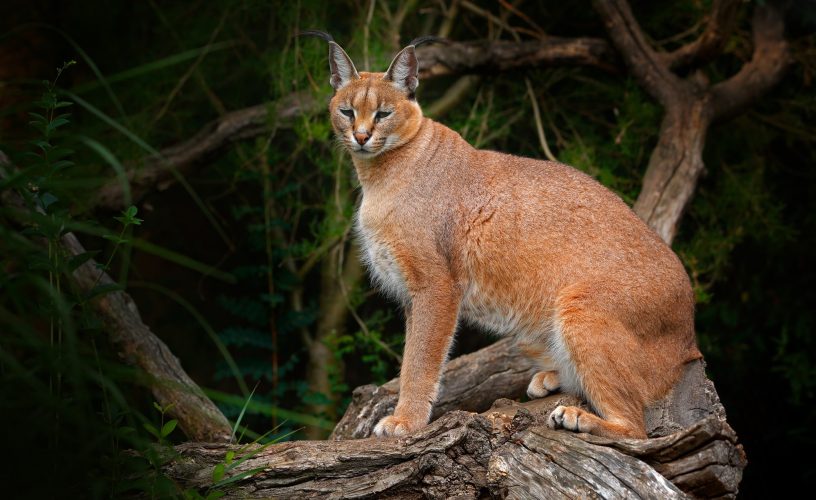
The African golden cat is roughly medium-sized, measuring between 62 to 94 centimeters in body length, complemented by a tail spanning 23 to 97 centimeters, and weighing roughly 8 to 16 kilograms for males and 6 to 8 kilograms for females. Its coat is strikingly variable, ranging from cinnamon-red and chestnut-brown to dark gray or speckled black phases, often patterned with spots or rosettes along the flanks. They possess relatively small rounded heads, short muzzles, and prominent white markings around the eyes, lips, and cheeks that accentuate their intense, wild gaze.
How difficult is it to actually spot a golden cat during tracking?
Spotting a golden cat in the wild is exceptionally rare due to their solitary, nocturnal, and highly secretive nature. Even seasoned researchers who spend years monitoring Kibale's forests catch glimpses of them only on rare occasions. During a tracking excursion, your success is measured by finding fresh pugmarks, checking active camera traps, and understanding forest ecology rather than expecting a guaranteed visual sighting. When rare sightings do happen, they are usually brief, high-adrenaline encounters deep within the thick underbrush.
What role do camera traps play in the tracking experience?
Camera traps are the backbone of golden cat research and tracking logistics in Kibale National Park. Because these cats rarely expose themselves to human observers, researchers deploy motion-activated infrared cameras along known animal highways and ridges. When you participate in the tracking experience, guides often take you to check these remote camera locations. Downloading and reviewing recent footage allows travelers to witness nighttime behaviors, identify individual cats by their spot patterns, and map out active home ranges.
Who leads and guides the golden cat tracking excursions?
Excursions are led by a specialized team combining experienced local UWA guides, armed rangers for safety, and field conservation researchers. These local guides possess an intimate, generational knowledge of Kibale's complex terrain and subtle forest signs. The presence of researchers transforms the trek into an interactive masterclass on rainforest carnivore ecology, tracking methodologies, and wildlife monitoring techniques that go far beyond standard park walks.
What is the financial cost of a golden cat tracking permit?
The specialized tracking permit is priced at $350 per person for foreign non-residents, foreign residents, and rest-of-Africa citizens, while East African citizens can access permits for UGX 350,000. This fee directly supports UWA conservation initiatives, anti-poaching patrols, and ongoing scientific research. Because it is a premium, low-impact activity designed to protect the fragile wilderness, permits are kept limited in availability and must typically be arranged on-site or through specialized tour operators a few days in advance.
How long does the golden cat tracking experience last?
Unlike a standard one-hour chimpanzee trek, golden cat tracking programs in Kibale are structured as intensive multi-day experiences, often spanning up to 5 days. This extended duration is necessary because tracking a low-density, wide-ranging forest predator requires patience, tracking resilience, and multiple field excursions across different sectors of the park like the Ngogo road corridor. Days are broken up into late-afternoon tracking preparations, evening forest sweeps, and early morning sign-reading sessions.
What time of day are golden cats most active?
African golden cats are primarily nocturnal and crepuscular, meaning their peak activity cycles occur during dusk, nighttime, and early dawn. Consequently, tracking routines often involve late afternoon setups around 5:00 PM to 6:00 PM, extending into night-vision or flashlight-assisted forest monitoring after 7:00 PM. However, researchers have occasionally documented them moving during daylight hours, particularly when local weather shifts or when lactating mothers need to hunt intensively to feed their hidden kittens.
What is the ideal time of year to visit Kibale for this activity?
Kibale National Park can be visited year-round, but the best periods for golden cat tracking align with the dry seasons from June to September and December to February. During these months, forest trails are less muddy, making long-distance hiking through dense undergrowth significantly safer and more manageable. Conversely, the wet seasons increase animal movement due to abundant prey, but the slippery footpaths and heavy downpours present considerable physical challenges for tracking teams.
What other wildlife can travelers expect to encounter along the way?
While tracking golden cats, you are fully immersed in Kibale's rich biodiversity, meaning you will frequently encounter other iconic Albertine Rift species. You are likely to spot primates like chimpanzees, L'Hoest’s monkeys, red-tailed monkeys, and black-and-white colobus leaping through the canopy. The forest floor also hosts elusive blue duikers, forest elephants, giant forest hogs, and a vibrant array of Albertine Rift endemic birds, transforming the search into a comprehensive wildlife safari.
What specific habitat features do golden cats prefer within Kibale?
Golden cats display a strong dependency on dense, undisturbed tropical moist broadleaf forests with thick understory vegetation. They favor areas featuring heavy canopy cover, tangled lianas, and fallen logs, which provide natural concealment when stalking prey or resting during daylight hours. In Kibale, they frequent transitional zones and riverine valleys where the thick foliage shelters an abundance of ground-dwelling rodents, hyraxes, and birds that form their primary diet.
How do researchers identify golden cat footprints compared to other animals?
Identifying golden cat pugmarks requires a sharp eye and deep tracking expertise. Their tracks are rounded and compact, typically showing four toes on both front and rear paws without claw impressions, as felids retract their claws when walking. Measuring roughly 4 to 5 centimeters across, a golden cat's print is distinctively larger than a domestic cat's but smaller and narrower than a leopard's. Trackers look for direct-register walking patterns—where the hind paw steps precisely into the imprint left by the front paw—along muddy game trails.
What conservation threats do African golden cats face in the wild?
Despite living inside protected areas like Kibale, golden cats face severe systemic pressures across their wider African range. Habitat fragmentation caused by expanding agriculture and illegal logging shrinks their continuous home ranges. Furthermore, they are heavily impacted by snare-based bushmeat hunting; while poachers usually target duikers or wild pigs, golden cats frequently fall victim to indiscriminate wire snares, alongside direct persecution from local farmers defending livestock.
How does tracking contribute directly to golden cat conservation?
Tourism and research initiatives act as a vital shield for the species. The revenue generated from specialized permits ($350) funds park ranger patrols, anti-poaching sweeps, and snare-removal teams in critical wildlife corridors. Additionally, every tracking expedition contributes real-time citizen-science data. When guides and travelers record fresh scats, direct sightings, or camera trap downloads, they provide biologists with accurate distribution maps needed to lobby governments for stricter rainforest protection laws.
What safety precautions are enforced during golden cat tracking?
Safety is maintained through strict adherence to Uganda Wildlife Authority guidelines. Every tracking party is accompanied by armed park rangers trained in wilderness defense and emergency protocols. While golden cats are small enough to pose zero physical threat to adult humans, the forest itself houses larger mammals like forest elephants and habituated wild buffaloes. Trekkers are strictly required to remain behind their lead guide, avoid wandering off isolated paths, and obey immediate instructions if large wildlife is near.
What gear and clothing should travelers pack for the expedition?
Navigating Kibale’s humid, dense rainforest requires specialized outdoor equipment. Essential items include waterproof, high-ankle hiking boots to conquer muddy terrain, and thick, neutral-colored long-sleeved shirts and trousers to protect against stinging nettles, thorns, and biting insects. Additionally, travelers should pack a reliable rain jacket, insect repellent containing DEET, a durable pair of binoculars for low-light canopy viewing, and a dry bag to protect electronics from sudden tropical downpours.
How does the golden cat compare in size and behavior to the leopard?
While both are stealthy forest felids, the leopard (Panthera pardus) is significantly larger, weighing between 30 to 60 kilograms, and is built to tackle heavy prey like large antelopes. The golden cat is much smaller (under 16 kg) and specializes in smaller fauna like rodents, birds, and small monkeys. Behaviorally, leopards are highly adaptable generalists capable of living in open savannahs, whereas golden cats are strict forest specialists requiring continuous dense canopy cover to survive.
What is the typical reproductive biology and lifespan of the species?
African golden cats have a slow reproductive rate, which makes their populations vulnerable to sudden declines. Females typically give birth to a litter of just one or two kittens after a gestation period of roughly 75 days. The kittens are born in heavily concealed dens inside hollow trees, rock crevices, or dense brush. In the wild, their average lifespan is estimated to be around 12 years, though natural mortality among juveniles due to larger predators or disease remains relatively high.
Can golden cat tracking be combined with chimpanzee trekking in Kibale?
Yes, combining both experiences creates an exceptional, well-rounded safari itinerary. Because chimpanzee tracking typically occurs in the morning hours (lasting 3 to 4 hours), travelers can easily schedule their golden cat tracking activities for the late afternoon and evening sessions. This pairing maximizes the value of a single day in Kibale, allowing tourists to experience both the high-energy daytime world of habituated primates and the mysterious nocturnal realm of hidden carnivores.
How do local communities view the African golden cat?
In many traditional communities bordering Kibale National Park, the golden cat occupies a deeply symbolic and mythical status. Historically, among certain local ethnic groups, possessing a golden cat skin or encountering its tracks was viewed as a powerful omen or a sign of great hunting prowess—often referred to as a rare blessing. Today, conservation education programs run by UWA help shift these traditional views toward modern ecotourism stewardship, showing villagers that a live golden cat generates sustainable community revenue through specialized tourism.
What makes Kibale’s Kanyanchu and Ngogo sectors ideal for this activity?
The Kanyanchu tourism center and the famous Ngogo research corridor serve as the primary logistical bases for tracking operations. Ngogo is internationally renowned for housing the largest chimpanzee community ever recorded, but its surrounding mature timber stands and river systems also support a dense concentration of smaller mammals. This dense concentration of prey acts as a magnet for golden cats, making these specific corridors the most statistically viable zones for deploying camera traps and conducting ranger-led searches.
How are tourist groups structured to minimize environmental impact?
To protect the fragile rainforest ecosystem and keep the experience intimate, golden cat tracking tours are strictly restricted to small, private groups—usually capping out at a maximum of 4 to 6 travelers per trek. This low-impact approach ensures minimal noise disruption, prevents trail erosion, and reduces the psychological stress placed on sensitive wildlife, keeping the wilderness pristine for both the animals and future generations of visitors.
Are there any physical fitness requirements for participants?
Yes, participating in golden cat tracking requires a moderate to high level of physical fitness. Because trackers often venture off established tourist boardwalks and deep into untamed sections of the forest following fresh signs, you may find yourself hiking for several hours across steep valley slopes, thick tangles, and muddy substrates. Travelers with mobility challenges or severe medical conditions should consult their tour operators beforehand to tailor the intensity of the forest excursion.
How do researchers study golden cats when they cannot be easily seen?
Because direct visual observation is exceptionally rare, biologists rely heavily on indirect methods to study golden cat ecology. These include deploying passive infrared camera traps to capture coat patterns, collecting scats (feces) for DNA and dietary microhistological analysis, tracking radiocollared individuals, and mapping spatial movements via GPS telemetry. These advanced techniques allow scientists to estimate population densities and understand how habitat fragmentation affects their territorial behaviors.
What other national parks in Uganda offer potential golden cat habitats?
While Kibale National Park serves as the premier hub for structured tracking programs, African golden cats also inhabit other dense protected areas across Uganda. These include the misty ravines of Bwindi Impenetrable National Park, the lowland rainforests of Semuliki National Park (bordering the Congo basin), and the isolated montane woodlands around Mount Morungole in Kidepo Valley National Park. However, structured tracking tourism remains most active and accessible within Kibale.
How does golden cat tracking differ from traditional African safaris?
Traditional safaris—such as open-vehicle game drives in Queen Elizabeth or Murchison Falls—focus on high visibility, wide savannahs, and spotting the "Big Five" with guaranteed photographic results. In stark contrast, golden cat tracking is an immersive, slow-paced scientific expedition rooted in rainforest exploration. It trades instant gratification for the profound privilege of participating in active field conservation, reading nature's hidden signs, and seeking out one of the rarest cats on Earth.
What happens if it rains heavily during a tracking session?
Tropical rainstorms are common in Kibale due to its rainforest climate, and heavy downpours can temporarily pause tracking movements for safety. When rain hits, guides and trackers utilize natural canopy shelter or portable rain gear while waiting for the precipitation to pass. Interestingly, light rain often softens the soil, making it much easier for rangers to spot fresh, crisp pugmarks left behind by animals moving through the fresh moisture, thereby enhancing tracking success once the skies clear.
Can children participate in African golden cat tracking excursions?
Due to the physically demanding nature of the trek, unpredictable forest terrain, late-night hours, and the quiet discipline required when tracking stealthy predators, minimum age limits typically apply. Most tour operators and the Uganda Wildlife Authority restrict participation to individuals aged 15 years and older. This ensures that all members of the tracking party can maintain the rigorous pace, follow strict safety instructions, and fully appreciate the complex conservation science behind the experience.
How can travelers book a golden cat tracking permit and tour?
Because golden cat tracking is a specialized, newly scaled tourism product, permits are not always listed on standard online booking portals and must be coordinated on the ground 24 to 48 hours in advance. The most seamless way to secure a spot is through licensed Ugandan tour operators specializing in custom safaris. These operators handle the logistics, book your UWA permits, secure expert guide services, and pair your tracking adventure with luxury or mid-range lodge accommodations near Kanyanchu.
Booking golden cat tracking with us Roads of Adventure safaris
You can book a golden cat tracking experience through Roads of Adventure Safaris, which coordinates with the Uganda Wildlife Authority (UWA) to arrange your trip to Kibale National Park
