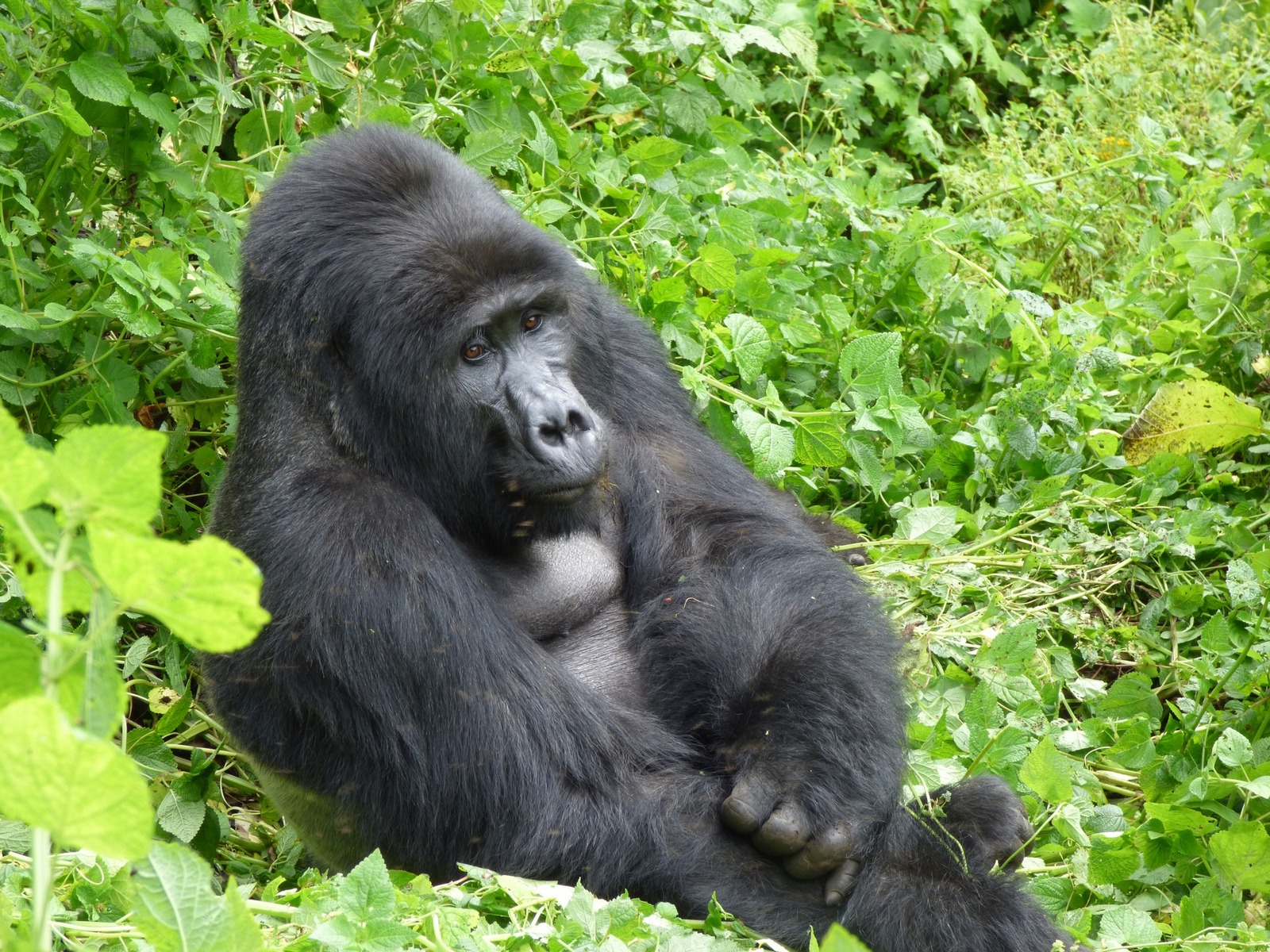
A 10-day Uganda safari perfectly blends primate tracking (Gorillas and Chimps) and savannah game viewing. It covers top destinations like Murchison Falls, Kibale Forest, Queen Elizabeth, and Bwindi Impenetrable National Parks, offering an unforgettable mix of rainforests, boat cruises, and Big 5 wildlife encounters
Popular 10 Days Uganda safari tour packages
10-days-best-uganda-big-five-safaris-and-primate-experience
10-days-uganda-rwanda-primate-safari-vacation-and-game-drive-safari
10-days-uganda-safari-all-big-five-gorilla-and-chimpanzee-tracking-adventure
10 days Uganda safari
A 10 days Uganda safari delivers an unparalleled journey through East Africa's most contrasting ecosystems, bridging vast, sun-bleached savannahs with ancient, mist-shrouded rainforests. This meticulously planned route minimizes road fatigue while strategically positioning you to capture Africa’s iconic wildlife milestones back-to-back. You will track endangered southern white rhinos on foot, witness the raw, roaring hydraulic power of Murchison Falls, and cruise waterways dense with hippos and elephants. The expedition then plunges into dense jungle canopies for high-energy chimpanzee tracking before reaching the ultimate pinnacle: an intimate, face-to-face encounter with mountain gorillas in a prehistoric forest. Perfect for wildlife enthusiasts, photographers, and adventure seekers alike, this all-inclusive itinerary handles every logistical detail—from mandatory permits to private 4x4 transport. It offers a seamless, deeply moving exploration of the "Pearl of Africa," concluding with peaceful lakeside relaxation before your return across the equator for departure.
Day 1: Entebbe to Murchison Falls via Ziwa Rhino Sanctuary
Your highly anticipated 10 days Uganda safari begins early in the morning as your professional driver-guide picks you up from your Entebbe hotel or airport. Leaving Lake Victoria behind, you journey northward through dynamic town centers and rural landscapes toward Nakasongola. Your first major wildlife milestone is the Ziwa Rhino Sanctuary, a critical conservation center dedicated to reintroducing wild rhinos to Uganda. Accompanied by expert, armed rangers, you will set out on foot into the bush to track prehistoric southern white rhinos, observing these magnificent giants safely from a short distance. After this thrilling encounter, enjoy a hot lunch at the sanctuary before continuing north. You will cross the Nile River and enter Murchison Falls National Park, Uganda's largest and oldest protected reserve. Arrive at your lodge in time for a relaxing dinner, surrounded by the sights and wild sounds of the African bush.
Day 2: Morning Savannah Game Drive and Victoria Nile Launch Cruise
Wake up at dawn to explore the sweeping Borassus palm savannahs of Murchison Falls National Park. As the sun rises over the northern sector, predator activity peaks, offering excellent opportunities to spot lions, elusive leopards, hyenas, and majestic Rothschild's giraffes. Your private 4x4 vehicle's pop-up roof ensures unobstructed photography of massive elephant herds and Cape buffaloes moving across the golden grasslands. Return to the lodge for a hearty midday rest and lunch. In the afternoon, board a classic launch cruise heading upstream on the Victoria Nile toward the base of the waterfall. The riverbanks are packed with yawning hippos, giant Nile crocodiles, and thirsty wildlife coming to drink. The boat drops you near the base of Murchison Falls, where the entire Nile violently forces its way through a narrow 7-meter rock gap, creating a thunderous cascade that shapes this dramatic riverine habitat.
Day 3: Scenic Transit South Along the Albertine Rift to Fort Portal
After an early breakfast, your 10 days Uganda safari steers southward on a long but visually rewarding transit day. You will drive along the scenic Albertine Rift Valley escarpment, enjoying panoramic views of Lake Albert and the distant blue mountains of the Democratic Republic of Congo. The journey takes you through bustling market towns, sprawling sugarcane plantations, and vibrant rural villages, offering an authentic window into everyday Ugandan life. As you approach the clean, welcoming town of Fort Portal, the landscape transforms into endless rolling hills draped in lush, bright green tea plantations. Situated beneath the dramatic, snow-capped peaks of the Rwenzori Mountains, this spectacular crater lakes region serves as the gateway to the primate capital. Arrive at your eco-lodge near Kibale Forest National Park in the late afternoon to unwind, enjoy a multi-course dinner, and prepare for tomorrow's rainforest tracking adventure.
Day 4: High-Energy Chimpanzee Tracking and Bigodi Wetland Walk
Today introduces you to the moist, tropical ecosystem of Kibale Forest National Park, home to the highest density and diversity of primates in East Africa. Following a mandatory safety briefing at the Uganda Wildlife Authority headquarters, enter the dense, ancient canopy with an expert ranger team. Kibale boasts a 95% success rate for locating habituated chimpanzees. As you track their vocal pant-hoots echoing through the forest, you will spend one unforgettable hour observing our closest wild cousins. Watch them groom each other, wrestle, and swing effortlessly through giant mahogany and fig trees. After a lunch break, transfer to the nearby Bigodi Wetland Sanctuary for a guided community walk. This boardwalk trail winds through lush papyrus swamps, offering an exceptional opportunity to spot up to eight distinct primate species, including red colobus monkeys, alongside colorful endemic birds like the striking Great Blue Turaco.
Day 5: Volcanic Crater Lakes Exploration and Kazinga Channel Cruise
Bid farewell to the rainforest as your 10 days Uganda safari routes you deeper into the Albertine Rift toward Queen Elizabeth National Park. The drive features dramatic volcanic topography, taking you past pristine twin crater lakes and vast savannah plains framed beautifully by the Rwenzori Mountains. Enter the park and check in to your lodge for lunch. In the afternoon, experience the legendary boat safari along the Kazinga Channel, a natural 32-kilometer waterway connecting Lake Edward and Lake George. This cruise is an absolute highlight, bringing you safely within meters of one of the world's densest concentrations of hippos. You will cruise past massive Nile crocodiles basking on the muddy banks, multi-generational elephant families bathing in the shallows, and an incredible array of colorful waterbirds, including pelicans and kingfishers, gathering along this essential wildlife lifeline.
Day 6: Predator Tracking and the Tree-Climbing Lions of Ishasha
An early morning rollout takes you onto the scenic game tracks of the Kasenyi plains, a primary breeding ground for Uganda kobs. This high concentration of antelope makes Kasenyi the ideal territory for hunting prides of lions and solitary leopards. Your experienced guide will expertly scan the open savannah and acacia trees, reading the bush to maximize your predator sightings. After the morning drive, pack your bags and journey south toward the remote Ishasha Sector, a distinct region of Queen Elizabeth National Park. Ishasha is globally famous for its unique population of lions that routinely rest high up in the sturdy branches of giant fig trees to escape heat and insects. Spend the afternoon driving beneath these massive trees, searching for the iconic sight of lions lounging lazily above. Afterward, continue driving southward toward the rugged, misty highland borders of Bwindi.
Day 7: Journey Into the Misty Highlands of Bwindi Impenetrable Forest
Leave the flat savannah plains behind as your custom 4x4 vehicle begins scaling the steep, winding mountain roads leading into the Kigezi highlands. The air cools significantly as you approach Bwindi Impenetrable National Park, an ancient, mist-shrouded montane forest that successfully survived the earth's last ice age. This UNESCO World Heritage site forms an incredibly dense, isolated fortress of biodiversity, providing the ultimate sanctuary for roughly half of the world's remaining population of endangered mountain gorillas. The drive itself is spectacular, offering breathtaking views of deep terraced valleys, rushing mountain streams, and thick jungle walls dripping with moss and ferns. Arrive at your cozy forest lodge in your designated tracking sector (Buhoma, Ruhija, Rushaga, or Nkuringo). Spend the evening relaxing by the fireplace, double-checking your tracking gear, and resting up for the physically demanding but deeply rewarding day ahead.
Day 8: The Ultimate Mountain Gorilla Trekking Encounter in Bwindi
This is the undisputed crown jewel of your 10 days Uganda safari. Wake up early for a briefing at the park headquarters, where rangers divide trekkers into intimate groups of eight and assign habituated gorilla families. Accompanied by armed rangers, trackers, and local porters, you step directly into the trackless, dense undergrowth. The trek is a raw, unpredictable foot expedition involving scaling steep, muddy ridges and navigating tangled root systems. The hike can last anywhere from two to seven hours depending on the gorillas' movements. When you finally locate the family, an overwhelming thrill settles over the group. You will spend exactly one hour standing just meters away from these gentle terrestrial giants. Watching a massive 400-pound silverback calmly protect his troop while mothers nurse infants and juveniles wrestle in the vines is a profoundly moving, life-changing experience you will cherish forever.
Day 9: Relaxing Transit to Island-Dotted Lake Bunyonyi
After the intense physical exertion of navigating Bwindi's steep jungle ridges, your itinerary winds down with a short, scenic drive to Lake Bunyonyi. Nestled deeply within the Kigezi hills, Bunyonyi is a spectacular, narrow volcanic lake dotted with 29 terraced islands, each carrying its own unique local history. Known affectionately as the "Place of Many Little Birds," this deep lake is entirely free from bilharzia, hippos, and crocodiles, making it one of the safest natural swimming spots in Uganda. Check in to your lakeside resort for lunch and take in the peaceful, mirror-like water views. Spend your afternoon customizing your relaxation: opt for a tranquil boat cruise, explore the calm waters in a traditional dugout canoe, or take a guided nature walk to spot endemic birds and meet local island communities, enjoying a peaceful change of pace.
Day 10: Equator Crossing and Departure via Entebbe International Airport
On the final day of your 10 days Uganda safari, enjoy a peaceful lakeside breakfast before embarking on your return journey back to Entebbe. The drive takes you through the beautiful rolling hills of Mbarara and the expansive cattle corridors of the Ankole region, famous for its iconic long-horned cows. You will stop at the Uganda Equator line in Kayabwe for a delicious lunch and a fun, classic demonstration showing the Coriolis effect in action. This is the perfect opportunity to stand in both the Northern and Southern hemispheres simultaneously for photos and browse the vibrant local craft markets for authentic hand-carved souvenirs. Continue your drive to Entebbe, arriving in the late afternoon or evening. Your guide will transfer you directly to Entebbe International Airport for your outbound flight, concluding an unforgettable, comprehensive adventure through the wildlife highlights of Uganda.
1. What Does a 10-Day Uganda Safari Itinerary Look Like?
A 10 Days Uganda safari offers a comprehensive loop through the country’s top western conservation areas, providing an excellent balance of classic savannah game viewing and deep-jungle primate tracking. Your journey begins upon landing at Entebbe International Airport, situated on a peninsula of Lake Victoria. From Entebbe, you travel northward toward your first major wildlife milestone: the Ziwa Rhino Sanctuary. This dedicated conservation center is the only place in Uganda where you can track wild southern white rhinos on foot, filling an essential gap in your classic checklist before you even enter the formal national park system.
Moving further north, you cross into Murchison Falls National Park, Uganda's largest protected reserve. Here, the landscape transitions into wide-open Borassus palm savannahs bisected by the Victoria Nile. You will spend time tracking predators and large herbivores on early morning game drives before boarding a launch cruise to the base of Murchison Falls itself. At this iconic bottleneck, the entire Nile forces its way through a tiny 7-meter gap in the rocks, creating a thunderous cascade that you can view from the water or via a steep hike to the top of the cliff.
Leaving the northern savannahs behind, your 10 Days Uganda safari steers southward along the Albertine Rift Valley to Kibale Forest National Park. Known globally as a primate capital, Kibale’s ancient canopy is home to 13 distinct primate species, offering unmatched opportunities for close-range chimpanzee tracking. From the moist evergreen forests of Kibale, the route drops back into open savannah as you enter Queen Elizabeth National Park. This segment features a boat cruise along the Kazinga Channel—a natural waterway packed with hippos and elephants—and an adventurous drive through the remote Ishasha Sector, famous for its unique population of lions that routinely rest high up in the branches of giant fig trees.
The ultimate highlight of the trip waits further south in Bwindi Impenetrable National Park, where you leave the safari vehicle behind for an intense, rewarding mountain gorilla trek. After the physical exertion of navigating Bwindi's steep jungle ridges, the itinerary winds down at Lake Bunyonyi, a scenic, island-dotted lake free from bilharzia and dangerous wildlife, making it the perfect spot to rest. Finally, you journey back across the equator to Entebbe for your departure flight.
2. Which National Parks Are Visited on This Safari Loop?
Embarking on a 10 Days Uganda safari brings you face-to-face with an incredibly diverse set of ecosystems, as your route selectively targets four of the country’s most celebrated national parks. The journey begins with Murchison Falls National Park in the northwest. Spanning nearly 3,900 square kilometers, this park is defined by its dramatic split across the Nile River. The northern sector consists of rolling savannah grassland where Rothschild's giraffes, elephants, and lions roam freely, while the southern sector features dense woodland. The definitive geographic feature is the waterfall itself, a raw display of hydrological power that shapes the surrounding riverine habitat and supports massive populations of crocodiles and hippos along the banks.
Heading south, your 10 Days Uganda safari moves into the moist, tropical ecosystem of Kibale Forest National Park. Unlike the open plains of Murchison, Kibale is a majestic matrix of lowland and montane rainforest. This dense canopy acts as a critical ecological refuge, harboring the highest density and diversity of primates in all of East Africa. Walking beneath its giant mahogany and fig trees reveals an active world of forest elephants, colorful bird species, and vocal primate troops moving through the upper layers of the jungle.
Next on the loop is Queen Elizabeth National Park, which offers an entirely different visual landscape dominated by dramatic volcanic features, vast crater lakes, and open savannah plains framed by the Rwenzori Mountains. The park is uniquely divided by the Kazinga Channel, a central lifeline for wildlife that connects Lake Edward and Lake George. Finally, your route climbs into the rugged highlands of Bwindi Impenetrable National Park. Bwindi is an ancient, mist-shrouded montane forest that survived the last ice age. Its incredibly steep ridges and tangled undergrowth create a highly protected, isolated fortress that provides the ideal habitat for roughly half of the world's remaining population of endangered mountain gorillas.
3. What Are the Chances of Spotting the "Big Five"?
A common question for travelers booking a 10 Days Uganda safari is whether they will successfully spot all members of Africa’s iconic "Big Five"—lions, leopards, elephants, buffaloes, and rhinos. Uganda is one of the few destinations where this is entirely achievable, though it requires exploring a mix of open national parks and a dedicated wildlife sanctuary. Because wild rhinos were completely wiped out in Uganda during the civil conflicts of the 1970s and 1980s, you will not find them roaming freely in the main savannah parks. Instead, your itinerary utilizes the Ziwa Rhino Sanctuary in Nakasongola to tick off the first member of the list. Guided by expert rangers, you track these massive, prehistoric-looking southern white rhinos on foot, observing them safely from a short distance in their natural breeding environment.
Once you enter the true national parks on your 10 Days Uganda safari, the remaining four members come into play across the savannahs of Murchison Falls and Queen Elizabeth National Park. Cape buffaloes and African bush elephants are incredibly abundant throughout both parks; you will frequently encounter huge buffalo herds wallowing in the mud and multi-generational elephant families moving gracefully across the tracks or gathering to drink along the riverbanks.
Spotting the large predators requires a bit more patience and an early start. Lions are highly active during the cooler dawn hours, and you will search for them along the game tracks as they scan the plains for prey. In Queen Elizabeth National Park's Ishasha sector, you get the bonus of searching for them lounging in trees. Leopards are the most elusive of the Big Five due to their solitary nature and masterful camouflage. Your experienced driver-guide will carefully check the branches of large acacia and sausage trees during morning and late-afternoon game drives, maximizing your chances of spotting a leopard resting with its kill.
4. What Should You Expect From the Gorilla Trekking Experience?
The undisputed crown jewel of any 10 Days Uganda safari is the mountain gorilla trekking experience inside Bwindi Impenetrable National Park. This is not a standard wildlife drive; it is a raw, immersive foot expedition into a prehistoric rainforest. Your day starts early at the UWA park headquarters with a mandatory safety briefing, where trackers divide visitors into small groups of eight. Each group is assigned a specific habituated gorilla family based roughly on the physical fitness levels of the trekkers. From there, you set out into the jungle accompanied by armed park rangers, trackers, and local porters who help carry daypacks and navigate the difficult terrain.
The trek itself is unpredictable and physically demanding. Bwindi’s terrain involves scaling steep, muddy ridges, navigating tangled roots, and pushing through thick undergrowth with no clear paths. The hike can last anywhere from 2 to 7 hours depending entirely on where the gorilla family moved since the previous evening. When the trackers finally locate the nest, a quiet thrill settles over the group. You drop your walking sticks, step forward, and spend exactly one hour standing just meters away from a wild gorilla family.
Watching a massive, 400-pound silverback calmly oversee his troop while mothers nurse infants and juveniles wrestle in the vines is a profoundly moving experience. The gorillas are fully aware of your presence but completely habituated, viewing humans with a calm, casual tolerance. To protect these vulnerable primates from human diseases, visitors must maintain a strict distance of 10 meters and wear surgical masks. It is a sweaty, exhausting, and transformative hour that anchors the memory of your entire safari.
5. How Does Chimpanzee Tracking Compare to Gorilla Trekking?
While both are major highlights of a 10 Days Uganda safari, chimpanzee tracking in Kibale Forest and gorilla trekking in Bwindi are completely distinct experiences in terms of physical exertion, terrain, and animal behavior. Chimpanzee tracking is generally considered the less physically demanding of the two. The terrain in Kibale Forest consists of relatively flat, undulating forest paths rather than the steep, mountain ridges found in Bwindi. Furthermore, because chimpanzees are loud and highly vocal, their locations are much easier for rangers to pinpoint, meaning your time spent searching through the forest is typically shorter and less unpredictable.
The core difference lies in the social dynamics and behavior of the primates themselves. Chimpanzees are highly active, fast-moving, and arboreal. During your tracking hour, you will often find them high up in the fruit tree canopies, swinging rapidly through the branches, grooming one another, and communicating with deafening pant-hoots that echo across the forest. You will spend a fair amount of time looking up, occasionally jogging through the undergrowth to keep pace with the troop as they move along the forest floor.
In contrast, mountain gorillas are gentle, terrestrial giants. They move slowly and spend the vast majority of their day on the forest floor, resting, socializing, and consuming massive amounts of vegetation. This makes your one-hour encounter with a gorilla family a far more stationary and intimate experience. The silverback sits like an anchor, allowing you to quietly stand nearby and take in the group's subtle interactions. While chimpanzee tracking offers high-energy excitement and an unfiltered look at raw primate intelligence, gorilla trekking provides a serene, powerful connection with a majestic cousin. Both are essential puzzle pieces on a well-rounded African itinerary.
6. What Optional Activities Can Be Added to the Itinerary?
A standard 10 Days Uganda safari covers an exceptional foundation of wildlife and primate viewing, but it also offers a flexible framework where you can inject unique, optional activities to tailor the adventure to your specific interests. For those looking to elevate their time in the northern savannahs, a hot air balloon safari in Murchison Falls National Park is an extraordinary add-on. Rising before dawn, you float silently over the plains as the sun comes up, watching herds of elephants, buffaloes, and giraffes move across the golden grasslands from an aerial perspective. The flight concludes with a classic bush breakfast and a glass of champagne in the wild.
If you are passionate about community tourism and human history, adding the Batwa Pygmy Cultural Experience while visiting the Bwindi region is highly recommended. The Batwa are an indigenous tribe who lived as hunter-gatherers inside the ancient forest for thousands of years before it was gazetted as a national park. Led by Batwa guides, this walk takes you through the forest edges where they demonstrate traditional hunting techniques, identify medicinal plants, share ancient fire-making secrets, and perform traditional dances, providing vital context regarding the complex relationship between local communities and modern conservation.
Finally, as your 10 Days Uganda safari nears its conclusion, you can opt for tranquil boat cruises or canoeing excursions on Lake Bunyonyi. Known as the "Place of Many Little Birds," this deep, volcanic lake features 29 scattered islands, each with its own history—such as Punishment Island, where unmarried pregnant girls were historically abandoned. Exploring these calm waters via a traditional dugout canoe or a motorized launch offers a deeply relaxing, visual change of pace from the intense jungle trekking and dusty game drives of the preceding days.
7. What Are the Typical Costs Associated With a Uganda Safari?
When budgeting for a 10 Days Uganda safari, it is helpful to look closely at what drives the overall price tag. A typical 10-day itinerary generally falls somewhere between $2,500 and $6,000+ per person, calculated on a double-occupancy basis. The primary variable behind this wide price range is your choice of accommodation and transit options. Safaris are organized into three distinct tiers: budget, mid-range, and luxury. Budget safaris utilize basic, self-contained safari tents or simple guesthouses outside the park boundaries. Mid-range packages upgrade you to comfortable, permanent eco-lodges with solid amenities and beautiful views, while luxury itineraries feature high-end, boutique forest lodges and tented camps offering premium dining, private plunge pools, and top-tier personalized service.
Another major driver of cost on your 10 Days Uganda safari is how you choose to move between destinations. Road-based safaris utilize customized 4x4 safari vans or classic extended Land Cruisers, which are shared among your private group to keep costs down. If you choose a fly-in safari—swapping long drives for domestic scheduled flights operated by local carriers like Aerolink—the price will jump significantly due to aviation fuel and landing fees.
Crucially, a substantial chunk of your package price is fixed right from the start by government-mandated conservation permits. No matter your choice of lodging, every traveler must pay $800 for a gorilla trekking permit and $250 for a chimpanzee tracking permit. When you factor in multiple national park entry fees ($45 to $50 per day) and boat cruise fees, over $1,200 of your safari cost goes directly toward conservation and park management before factoring in food, lodging, or your guide's salary.
8. How Do You Secure Gorilla Trekking Permits?
Securing a gorilla trekking permit is the single most critical logistical step when organizing a 10 Days Uganda safari. Administered strictly by the Uganda Wildlife Authority (UWA), a single gorilla permit costs $800 for foreign non-residents. This fee grants you access to Bwindi Impenetrable National Park or Mgahinga Gorilla National Park, a dedicated ranger team, and exactly one hour of face-to-face time with a habituated mountain gorilla family. While the price tag is significant, the funds are directly reinvested into conservation, paying for around-the-clock anti-poaching patrols, veterinary care, and supporting local community infrastructure projects to ensure the survival of these endangered primates.
Because UWA strictly limits tracking to eight visitors per gorilla family per day to minimize human impact and protect the animals from stress, permit availability is highly competitive. During the peak dry seasons (June to August and December to February), permits sell out up to six to nine months in advance. It is common practice for tour operators to secure your gorilla permit before confirming any lodge bookings, as the entire structure of your 10 Days Uganda safari depends on this date.
When you receive your permit, it specifies a distinct tracking region within Bwindi—either Buhoma, Ruhija, Rushaga, or Nkuringo. These sectors are miles apart, separated by steep mountain roads, so your accommodations must be booked in the exact same sector as your permit to avoid missing the early morning rollout. Remember to bring your physical passport on tracking day, as rangers verify names against the permit registry before letting you enter the forest.
9. What Do You Need to Know About Chimpanzee Tracking Permits?
Just like the gorilla excursion, participating in primate tracking requires a dedicated permit issued by the Uganda Wildlife Authority. For a standard 10 Days Uganda safari, your chimpanzee tracking permit will typically be booked for Kibale Forest National Park, which costs $250 per foreign non-resident. This fee covers your expert guiding fees, park entry for the activity, and your one-hour encounter with a habituated chimpanzee community. Kibale runs two distinct tracking sessions daily: a morning session starting at 8:00 AM and an afternoon session starting at 2:00 PM, allowing operators to seamlessly weave the activity into a moving itinerary.
While Kibale Forest offers a 95% success rate for locating chimps, travelers looking for an even deeper primate experience on their 10 Days Uganda safari can ask their operator to upgrade to a Chimpanzee Habituation Experience (CHEX). A CHEX permit costs $300 and allows you to accompany researchers and trackers as they follow a chimpanzee group that is still undergoing the multi-year process of getting used to human presence. Instead of the standard single hour, a habituation permit grants you a half-day or full-day experience, watching the chimps wake up from their nests or build new ones at dusk.
It is worth noting that while cheaper chimpanzee tracking alternatives exist in Uganda—such as the Kyambura Gorge in Queen Elizabeth National Park ($100) or Budongo Forest near Murchison Falls ($140)—Kibale remains the gold standard due to its sheer primate numbers and sophisticated tracking infrastructure. Like gorilla permits, chimp permits must be booked well in advance, particularly for the morning sessions which are highly favored by travelers.
10. What Is Typically Included in a Safari Package?
When booking a 10 Days Uganda safari through a reputable tour operator, the package is typically structured as an all-inclusive experiential tour, meaning almost all core expenses are pre-arranged and handled up front. A standard, well-organized safari package covers full-board accommodations across your entire journey. This means all your overnight stays at safari lodges, eco-camps, or hotels are included, along with three meals a day (breakfast, packed or sit-down lunch, and multi-course dinners). Lodges are well-accustomed to catering to international travelers, routinely accommodating various dietary needs if notified prior to arrival.
Ground transportation is another foundational inclusion. Your package covers a private, robust 4x4 safari vehicle—typically a customized Toyota Land Cruiser or a safari van—equipped with a pop-up roof for clear photography, charging ports, and a fridge filled with bottled drinking water. Crucially, this includes the daily fees and services of a professional, licensed driver-guide whose deep knowledge of tracks, bird calls, and animal behaviors is essential for a successful trip.
Furthermore, all essential activity fees are embedded within your 10 Days Uganda safari quote. This includes your highly valuable gorilla trekking permit ($800) and chimpanzee tracking permit ($250), alongside daily national park entrance fees for the vehicle and passengers. Scheduled group activities, such as the Nile launch cruise in Murchison Falls, the Kazinga Channel boat safari in Queen Elizabeth National Park, and the guided rhino tracking walk at Ziwa, are fully covered. Generally, the only out-of-pocket expenses left for you are international flights, tourist visas, tips, alcoholic drinks, and personal souvenir shopping.
11. What Are the Ground and Air Transportation Options?
Navigating the geography of a 10 Days Uganda safari involves a mix of scenic, bumpy road travel or optional domestic flights, depending on your budget and preference for comfort. The classic, most popular method of travel is by road in a sturdy, private 4x4 safari vehicle. These vehicles are modified with heavy-duty suspension systems to handle rough dirt roads, and they feature large pop-up roofs that lift up during game drives, allowing you to stand up and take unobstructed photos of wildlife. A road trip gives you an authentic window into Ugandan life, passing through rural villages, bustling market towns, and sprawling tea plantations.
However, road travel in Uganda requires a patient mindset. While the primary highways connecting major hubs are paved and smooth, the access roads leading into national parks like Bwindi or Ishasha consist of rough, corrugated dirt tracks that turn slick and muddy during rains. A drive from Queen Elizabeth National Park up into the Bwindi highlands can take 4 to 6 hours of winding, bumpy travel—a phenomenon affectionately known as the "African massage."
For travelers who prefer to minimize travel fatigue and maximize time inside the parks, a fly-in 10 Days Uganda safari is an excellent alternative. Local aviation operators run scheduled domestic flights using Cessna Caravans out of Entebbe International Airport. These flights connect directly to small wilderness airstrips like Pakuba (for Murchison Falls), Kasese (for Kibale and Queen Elizabeth), and Kisoro or Kihihi (for Bwindi). Opting to fly reduces day-long drives down to a comfortable 60-to-90-minute flight, though you will still be met at the airstrips by a 4x4 vehicle for your daily game drives.
12. When Is the Absolute Best Time to Visit Uganda?
Timing your 10 Days Uganda safari correctly is key to ensuring comfortable trekking conditions and excellent wildlife sightings. Uganda sits directly on the equator, meaning it does not experience dramatic summer and winter shifts; instead, its tropical climate is dictated by alternating dry and rainy seasons. The absolute best times to visit are during the country’s two distinct dry seasons: from June to August and from December to February. These months offer the most reliable weather for the diverse demands of a multi-destination itinerary.
During the dry seasons, wildlife viewing in savannah parks like Murchison Falls and Queen Elizabeth National Park is at its peak. As seasonal water holes dry up across the plains, animals are forced to gather in high concentrations along permanent water sources like the Nile River and the Kazinga Channel, making them incredibly easy to spot from a boat safari. Additionally, the savannah grasses are short, which greatly improves visibility for spotting lions and elusive leopards.
For the primate tracking portions of your 10 Days Uganda safari in Kibale and Bwindi, the dry months make a massive difference underfoot. Rainforest trails are significantly less muddy, steep ravines are safer to scale, and the overall physical toll of a 5-hour hike is greatly reduced. That said, Uganda’s rainforests are true to their name and can experience sudden downpours at any time of year, so waterproof gear is always mandatory. The shoulder rainy months (March to May and September to November) bring heavier downpours and slicker trails, but they offer lush green landscapes, excellent birdwatching, and far fewer crowds at major sightings.
13. What Health Precautions and Vaccinations Are Required?
Prioritizing your medical preparation is an essential step when planning a 10 Days Uganda safari. First and foremost, you must secure a Yellow Fever vaccination certificate before booking your flights. This is not optional; Ugandan immigration authorities strictly enforce this entry requirement, and you will be asked to present your physical "Yellow Card" at border control upon landing in Entebbe. The vaccine must be administered at least 10 days before your arrival date to be considered valid by immigration officials.
Malaria is another serious health consideration, as the disease is endemic across most parts of Uganda. You should schedule a consultation with a travel medicine clinic or your primary doctor several weeks before your 10 Days Uganda safari to secure a prescription for malaria prophylaxis. Common options include Atovaquone/proguanil (Malarone) or Doxycycline. Beyond taking pills, prevention is your best line of defense: pack an insect repellent with a high concentration of DEET, and always wear long sleeves, long pants, and socks during evening hours when malaria-carrying mosquitoes are most active.
Your doctor will also likely recommend updating standard immunizations, including Hepatitis A and B, Typhoid, Tetanus, and Polio boosters. Since a safari involves moving through remote areas with limited access to advanced medical facilities, it is wise to pack a personalized first-aid kit containing anti-diarrheal medication, rehydration salts, broad-spectrum antibiotics, blister pads, and any personal prescriptions. Finally, stick exclusively to bottled or purified water throughout your trip—even when brushing your teeth at high-end lodges—to prevent waterborne stomach bugs from disrupting your travels.
14. What Are the Visa Requirements for Entering Uganda?
Navigating the entry paperwork smoothly ensures your 10 Days Uganda safari gets off to a stress-free start. Most international travelers require a tourist visa to enter the country. Uganda has completely transitioned away from issuing physical visas upon arrival at Entebbe International Airport, meaning you must apply and pay for your visa online using the official Uganda Electronic Visa Application System before departing your home country. Attempting to board your flight without an approved eVisa approval letter can result in being denied boarding by your airline.
When applying for your visa, you generally have two main routes depending on your broader travel plans. If your 10 Days Uganda safari is confined strictly to Uganda, you should apply for a standard Uganda Tourist Visa, which costs $50 and is typically valid for a single entry within a three-month window. You will need to upload digital copies of your passport bio-data page (valid for at least six months past your travel dates), a recent passport photograph, your yellow fever immunization card, and a copy of your flight itinerary.
If your vacation includes crossing borders into neighboring countries, you should choose the East Africa Tourist Visa. This joint visa costs $100 and allows for multi-entry travel between Uganda, Kenya, and Rwanda over a 90-day period. To secure this, you must apply through the online immigration portal of whichever country serves as your initial point of entry. Once your online application is processed and approved, immigration will issue an eVisa barcode document via email, which you print out and present at Entebbe airport to receive your passport sticker.
15. What Should You Put on Your Safari Packing List?
Packing correctly for a 10 Days Uganda safari requires balancing the warm, dusty conditions of the open savannah with the cool, wet environments of the mountain rainforests. For savannah game drives in Murchison Falls and Queen Elizabeth National Park, stick to lightweight, breathable clothing in neutral tones like khaki, green, and tan. Avoid wearing bright whites (which get coated in red dust quickly) and dark blue or black clothing, as these dark colors are known to actively attract tsetse flies, which carry a painful bite.
When preparing for the primate tracking days in Kibale and Bwindi, your wardrobe strategy needs to shift toward protection. You will need thick, long-sleeved shirts and durable long pants to protect your skin from sharp thorns, stinging nettles, and biting ants. A critical insider tip for gorilla trekking is to pack a pair of heavy-duty gardening gloves; you will frequently need to grab onto wild vines and thorny branches to balance yourself along steep, trackless ridges. You should also pack long hiking socks so you can tuck your pants directly into them, preventing safari ants from crawling up your legs.
Footwear can make or break your trip. Invest in broken-in, waterproof hiking boots with deep ankle support and excellent grip for navigating muddy mountain slopes. Bring a high-quality, lightweight rain jacket, a wide-brimmed sun hat, polarized sunglasses, and a waterproof daypack cover to shield your camera gear from sudden jungle downpours. Lastly, don't forget a high-quality insect repellent (DEET) and a pair of compact binoculars to get clear views of distant predators or colorful forest birds.
16. Are There Age Limits for Primate Trekking Activities?
If you are planning a family trip, understanding the strict age restrictions enforced on a 10 Days Uganda safari is essential for shaping your itinerary. The Uganda Wildlife Authority enforces a firm minimum age limit of 15 years old for both mountain gorilla trekking in Bwindi and chimpanzee tracking in Kibale Forest. These rules are non-negotiable and strictly checked at the park briefing centers on the morning of the trek, where park rangers cross-reference your physical passport against your tracking permit details before clearing you to enter the forest.
These age limits are designed for both human safety and primate conservation. The jungle environments of Bwindi and Kibale are physically demanding, requiring trekkers to scramble up steep, slippery slopes and push through dense undergrowth for hours on end. Children under 15 may struggle with the intense physical exertion, potentially delaying the group or creating safety risks in remote areas. Furthermore, wild primates are highly sensitive to human behavior. Adults are generally better equipped to follow complex safety commands—such as maintaining a quiet demeanor, avoiding sudden movements, and standing your ground if a large silverback beats his chest or makes a mock charge.
There is also a significant health component involved. Chimpanzee and mountain gorillas share roughly 98% of our DNA, making them highly susceptible to human contagious diseases. Children frequently carry common childhood illnesses and cold viruses to which wild primates have zero natural immunity. If you are traveling with children under 15, your tour operator can help arrange alternative activities, such as guided village walks, junior wildlife game drives, or supervised lodge activities while the adults are tracking in the forest.
17. How Safe and Secure Is Traveling on a Uganda Safari?
Safety is a top priority for anyone booking a 10 Days Uganda safari, and the reassuring reality is that Uganda is widely considered one of the safest, most stable, and welcoming travel destinations in East Africa. Tourism is a primary economic driver for the country, and the Ugandan government goes to great lengths to safeguard international visitors. The entire national park system is heavily managed and protected by the Uganda Wildlife Authority (UWA) rangers, who are well-trained, armed, and constantly patrol the park boundaries and tracking sectors to ensure no illegal activities disrupt the reserves.
Furthermore, Uganda deploys a specialized Tourism Police force across all major safari routes, park gates, and key tourist hubs. When you head out on a walking safari at Ziwa or enter the deep jungles of Kibale and Bwindi for primate tracking, you are always accompanied by armed, professional UWA rangers who are in constant radio communication with park headquarters. These rangers are experts in reading animal behavior, ensuring you maintain a safe distance from wildlife while steering clear of any natural hazards.
Standard international travel precautions still apply, particularly when moving through major urban transit centers like Kampala or Entebbe. Keep an eye on your personal belongings in busy public markets, avoid walking alone at night in unlit city areas, and utilize your safari lodge's room safes to lock away your passport, extra cash, and expensive electronic gear when you head out on game drives. Once you leave the cities and enter the safari circuit, the atmosphere shifts to a relaxed, peaceful environment where your primary focus can remain entirely on the incredible wildlife.
18. How Should You Manage Currency and Cash Options on the Trip?
Managing your money effectively is key to a smooth 10 Days Uganda safari. The official local currency is the Uganda Shilling (UGX), which handles daily transactions across the country. While major mid-range and luxury safari lodges, upscale restaurants, and the Uganda Wildlife Authority accept international credit cards, transactions often come with a mandatory 3% to 5% processing surcharge. Additionally, out in the remote national parks, power outages and spotty satellite connections can cause card readers to fail unexpectedly. Therefore, carrying physical cash is essential for your everyday needs.
Booking 10 days Uganda safari with us Roads of Adventure safaris
Booking a 10-Day Uganda Safari with Roads of Adventure Safaris is an excellent way to experience the absolute highlights of the "Pearl of Africa" on a seamless comprehensive western circuit loop. Your trip will combine iconic primate encounters—such as mountain gorilla trekking and chimpanzee tracking—with classic savannah game drives and boat cruises
